Wednesday, December 24, 2025
Home Blog Page 2446

Iran Prisons Chief Apologizes over Misconduct at Evin

Mohammad Mehdi Hajmohammadi said in a tweet, “I take responsibility for the improper behavior at Evin Prison”. He promised that authorities will do their best to prevent the occurrence of such “bitter incidents” in future, saying those who violated the rules will be punished. 

Hajmohammadi however noted that the services of noble prison guards will not be ignored because of such misconducts. 

Iran’s Judiciary deputy chief also reacted to the report. Hojatoleslam Mohammad Mosaddegh said officials are investigating the issue and it’s unclear what really happened at Evin Prison. 

Mosaddegh also said the Judiciary will give an update on its findings Wednesday.

In recent days videos purportedly obtained by hackers show prisoners at Evin House of Detention in northern Tehran being beaten by security forces.

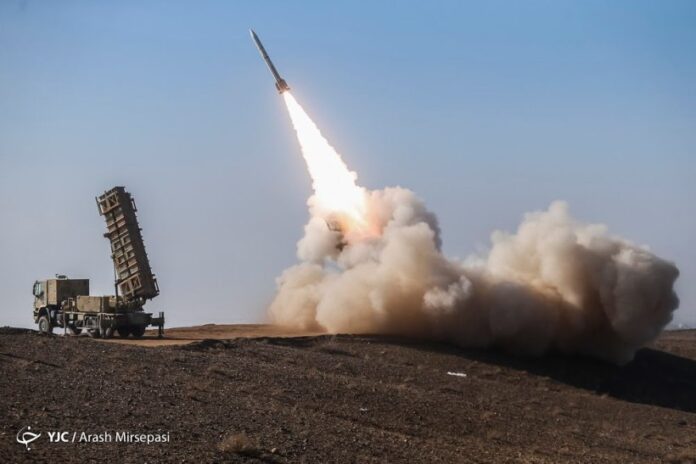
Iran to unveil new domestic missile defense system

Brigadier General Mehdi Farahi told IRIB’s Channel Two that Iranian armed forces have managed to realize all domestic potentials to achieve self-sufficiency in the defense industries.

Farahi said Iran has made very good progress in developing radar systems, drones and missiles as well as in ground combat and naval capabilities. He cited defense systems like Bavar-373 and Khordad 3 as examples of homegrown air defense systems.

Iran’s deputy defense chief noted that the arms embargoes on Iran made it to try and produce its own defense systems and the Islamic Republic developed them using domestic possibilities and at a way lower cost.

Farahi referred to Iran’s missile capabilities and the Defense Ministry’s plans to further develop Iran’s missile program, saying, “Under God’s auspices, there are many good potentials in the field; we began developing five types such as cruise, ballistic and surface-to-air missiles and we have made great achievements”.

He noted that The Defense Ministry takes a number of parameters into consideration when it comes to the issue of missile development with one parameter being accuracy. Farahi said, “We’ve done a lot over the past years and I proudly announce that Iran now has precision-guided missiles”.

According to the deputy defense minister, Iran has also been trying to make stealth projectiles and some of its weapons are capable of easily evading the enemies’ radar systems.

As for satellite carriers, Farahi said the Islamic Republic of Iran has made very good progress in the area adding it produced Simorgh-1 and 2 and also Zoljanah.

Iran Marks Natl. Doctor’s Day Amid Virus Pandemic

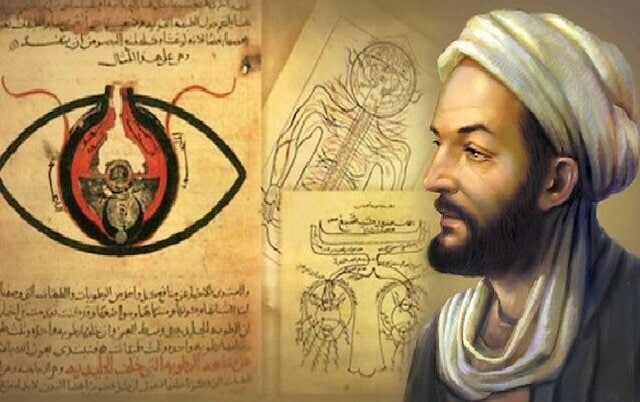
Iran marks the day on the birth anniversary of Ibn Sina, otherwise known by the Latinized name Avicenna, which falls on August 23 every year. 

He is among the many individuals in the history of the country whose names are sealed in the memory of the world of science. 

Ibn Sina, a polymath of the 10th and 11th centuries, is considered one of the most influential Iranian and Islamic philosophers and scientists of all times.

He has also been widely commended across the world for his work in the fields of medicine and philosophy.

Ibn Sina’s Legacy

Ibn Sina, the great Iranian Physician, philosopher and scientist, was born in the city of Bukhara in the northern parts of the then Iran, on August 23, 980. 

His major works are the two scientific and philosophical encyclopedias, al-Shifa (meaning “cure”) on philosophy and Daneshnameh-ye Alai (Alai treatise), as well as Al-Qanun fi’l Tibb (Canon of Medicine), which is one of best-known works in the history of medicine, and according to the University of Tennessee’s Internet Encyclopedia of Philosophy, was taught as a medical textbook in Europe and in the Islamic world until the early modern period. 

Avicenna was a child prodigy and was among the well-esteemed scientists and special court physicians during the rule of Samanid Emir Noah in Bukhara.

He wrote 450 books, which cover various topics, but the bulk of them are on medicine and philosophy. 

He is “arguably the most influential philosopher of the pre-modern era”, the University of Tennessee’s encyclopedia says, and his philosophical concepts “had a decisive impact upon European scholasticism”, the dominant philosophical movement in the west from the 9th until the 17th century, including on such philosophers as Thomas Aquinas as well as on the key Iranian philosopher of the 17th century, Mulla Sadra.

“Ibn Sina was at the peak of fame in medicine in his own time. His name is cited in all books in the history of medicine, except where there is a grudge against him. This shows how special Ibn Sina is. Undoubtedly, Ibn Sina had a major impact in the history of medicine. He imitated no one in medicine,” says Najafqoli Habibi, the former chancellor of Allameh Tabataba’I University of Tehran, who has spent the past years preparing an edition of Al-Qanun.

His view is shared by Seyed Sadreddin Taheri, a professor of philosophy and a faculty member of the same university. 

“Ibn Sina, coming after al-Kindi and Farabi, is the first heir of translations from Greek. He had the opportunity to create a special philosophy. In fact, this philosopher is the first to revive the Islamic philosophy,” he says.


Iran Warns Google over Removal of Iranian Apps

“Following the Google company’s recent monopolistic moves, i.e., the removal of frequently used Iranian applications such as Rubika and Zarebin, Iran’s National Cyberspace Center condemns this action and announces that these companies have jeopardized the stability and sustenance of Iranian businesses in the virtual space by exercising this method of ruling, and abuse their monopolistic position in the market in order to counter the emergence of rivals on local markets, hence violating the cultural, social and economic rights of millions of Iranian citizens and businesses,” said the center.

“Given that the Google Company has, on numerous occasions around the world, been tried and found guilty of violating anti-monopoly rules, we will pursue this matter through international legal channels and competent courts to compensate for the losses inflicted,” the center added.

The cyberspace authority dismissed Google’s move as unilateral and interventionist, and a clear example of “breach of social responsibilities by companies” with regards to respecting citizens’ rights, namely their right to develop legal businesses.

“Such moves are also regarded as a threat to the country’s national sovereignty in the cyberspace,” the center added.

“If Google fails to stop such moves and repeats its anti-competition behaviour, the center will take deterrent legal actions vis-à-vis the company’s activities in Iran,” Iran’s National Cyberspace Center explained.

Raeisi: Iran ready to work for peace in Afghanistan

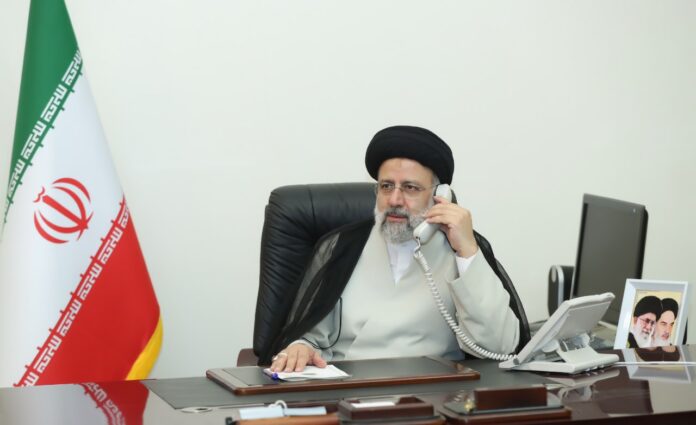
President Ebrahim Raeisi made the comments in a Monday phone call with Austria’s Chancellor Sebastian Kurz.

Raeisi said Tehran believes that the US is to blame for the problems of Afghanistan. He said Afghans have not seen a single calm day since the US-led invasion of their country in 2001. Raeisi also said all Afghan factions should find common ground after the US withdrawal and form a government accepted by all Afghans.

The Austrian chancellor, in his turn, said he’s worried about what’s been unfolding in Afghanistan in recent days. He however thanked the Iranian people and government for their hospitality toward Afghan refugees.

President Ebrahim Raeisi also hailed the long-running relations between Iran and Austria as an invaluable asset for the future of ties.

He voiced hope the two country’s five-century-long relationship will continue. The Iranian president said both sides should make efforts to not let ill-wishers harm their relations.

Kurz also expressed hope ties with Iran will further expand.

Iran, UN discuss Syria situation

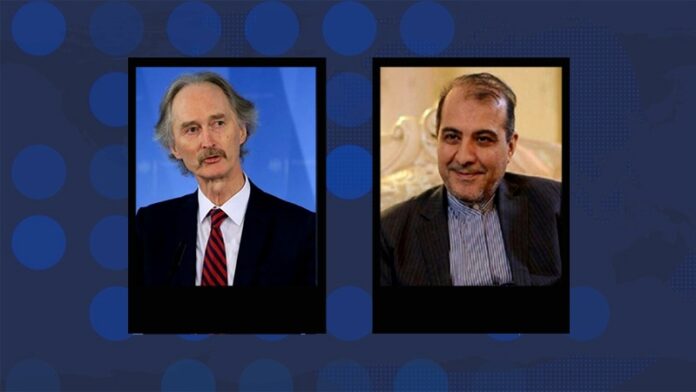
Khaji and Pederson agreed that the 6th Syrian Constitutional Committee must convene to advance talks to peacefully resolve the Syria crisis.

Khaji opposed Western pressures and sanctions on the Syrian government. He referred to the hardship the Syrian people face due to the sanctions and the Covid-19 pandemic and called for efforts to increase humanitarian assistance for Syrians and to speed up aid deliveries.

The UN Envoy for Syria thanked Iran’s efforts to help end the Syria conflict. Pederson also called for expanding cooperation between the UN and Iran to resolve the Syria crisis.

Missile might top priority of Raeisi’s pick for Defense Ministry

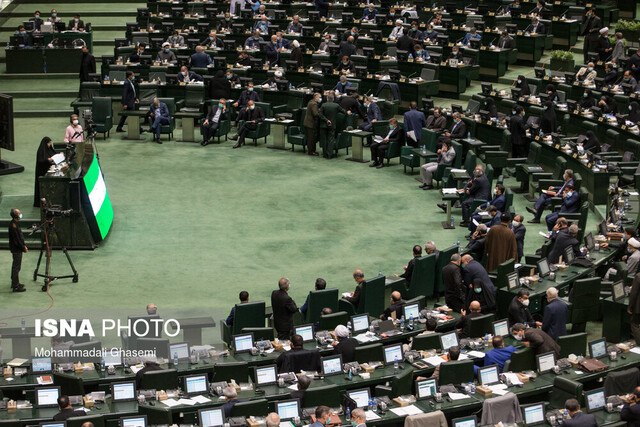
Media reports say Parliament Speaker Mohammad Bagher Ghalibaf declared the end of the deliberations in the later hours of Monday afternoon.

At the meeting, Iranian lawmakers examined the qualifications of President Raeisi’s picks for the cabinet posts, most notably Health Minister, Minister of Cooperatives, Labour, and Social Welfare, Justice Minister, Defense Minister, and Roads and Urban Development Minister.

The MPs have been discussing the qualifications of the proposed ministers since Saturday. They have so far examined the eligibility of 11 picks.

In his remarks before Parliament, the proposed Defense Minister, Brigadier General Mohammad Reza Gharaei Ashtiani, was given half an hour to outline his plans. He said his top priority as Iran’s Defense Minister will be beefing up the nation’s deterrence, especially its missile might. He added that under his command, Iran’s armed forces will give a decisive and appropriate response to any act of aggression against the Islamic Republic.

Gharaei Ashtiani further spoke of regional stability and peace. He said another priority for the Defense Ministry under his command will be fighting terrorism and countering the presence of extra-regional forces in West Asia and the Persian Gulf.

Meanwhile, the proposed Health Minister, Bahram Einollahi, promised that, if he is approved for the post, all citizens will be inoculated until February 2022. Einollahi said, “Today is not 100 years ago when Iran was overwhelmed by famine and pandemics. We can defeat this heinous virus.” He also noted that if he becomes the Health Minister, all obstacles to domestic production of food, medication and medical equipment must be removed as ordered by Leader of Iran’s Islamic Revolution Ayatollah Seyyed Ali Khamenei.

An MP however opposed Einollahi’s endorsement as Health Minister. Mohammad Javad Askari, representing the city of Darab in the Iranian Parliament, claimed Einollahi is one of the signatories to a letter that demanded a ban on importing Covid vaccines from abroad. He said Einollahi signed the letter and “now says we will import from any country which would be prepared to sell us vaccines”. Askari added, “Picking ministers is a highly important task but choosing the [right] Health Minister is vital because people’s lives are at stake”.

The proposed Roads and Urban Development Minister, Rostam Ghassemi, also elaborated on his plans at Parliament on Monday. He vowed to tackle and eliminate “nepotism” and what he called “golden signatures” in the ministry. Ghassemi said thousands of kilometers of highways as well as inter-urban and rural roads are in dire conditions and all these problems must be tackled.

Ayatollah Khamenei: Mr. Hakimi polymath, literary man, innovative thinker

In the Name of God, the Beneficent, the Merciful

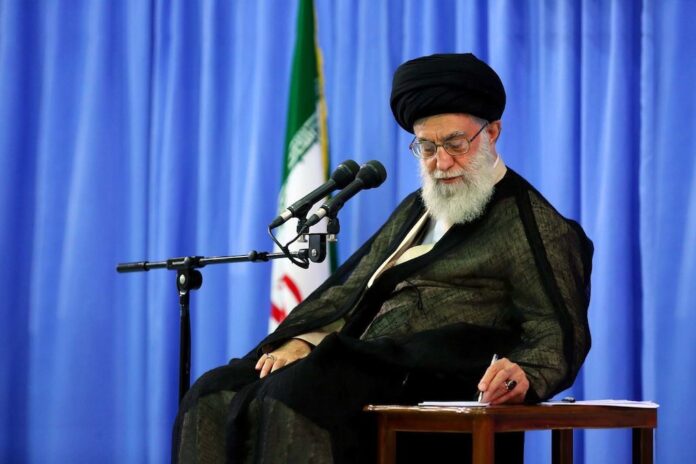
With deep regret and sorrow, I received the news of the demise of the prominent scholar and thinker, Mr. Muhammad Reza Hakimi (May God bless him). He was a polymath, an accomplished literary man, an innovative thinker, and a just researcher of Islam. Independent of worldly desires, he spent his life in the service of the elevated teachings of the Holy Quran and Sunnah and left great works.
Having benefited from the valuable and spiritual presence of great masters of knowledge and spirituality in the holy city of Mashhad had brought this dear personality a reserve of reliance on God, devotion and richness of character, helped him remain strong and upright until the end of his blessed life. I offer my condolences to the honorable family of Hakimi, especially his great brother, as well as to all the friends and admirers of the deceased, and I ask for God’s mercy and forgiveness for him.
Sayyid Ali Khamenei,

Shahrivar 1, 1400
August 23, 2021

Ayatollah Khamenei: Mr. Hakimi polymath, literary man, innovative thinkerMuhammad Reza Hakimi, great Iranian philosopher, died on Sunday at 86. He has published scores of books on different subjects, many of which are insightful in the Islamic world.


Iran to Import 20mn Dozes of Pfizer Vaccine by End of 2021: Official

“The government would like to expedite vaccine imports and make globally produced and approved vaccines more accessible to people,” said Nassre Riahi, the head of the Union of Medicine Importers.

He said the private sector needed official permission from the government to be able to seriously pursue the import of vaccines into the country.

“In some countries where the health ministry or a state watchdog body did not monitor the process of imports, some countries imported vaccines and then sold them on unofficial markets,” he explained.

“In order to keep this from happening in Iran, we subjected any vaccine imports to a permit from the health ministry and the government, and we have been pursuing the same strategy till now,” he added.

Riahi underlined an order issued by the president recently to facilitate vaccine imports by the private sector can be very helpful in this regard.

The number of Covid-19 infections and deaths in Iran has been rising dramatically in recent days.

Well over 36 thousand new daily cases were registered in the country on August 22, 2021, with a whopping 684 new fatalities.

Iran had originally planned to rely on domestic vaccine production to counter the coronavirus epidemic, but the plan failed to take off the ground as planned originally due to several reasons, namely US sanctions.

This led to a rise in the number of deaths as well as extensive criticism of the government’s program to tackle the disease.

COVIran Barekat is a home-grown covid-19 vaccine developed by Iran’s Pharmed Industrial Group.

Zarif Issues Goodbye Message during Final Days in Office as Iran FM

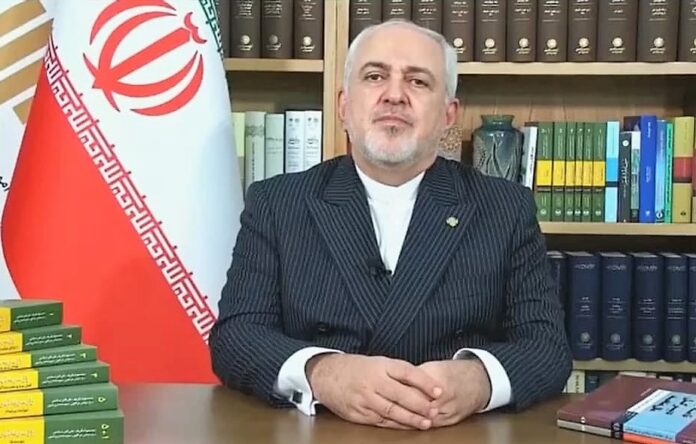
In an Instagram posting, the top diplomat said that during his tenure as the head of the country’s diplomacy apparatus, he had not always been able to say whatever he desired due to national security concerns.

“In order to safeguard national security, I was not able to always speak the way I liked and even defend my performance,” said Zarif in his message.

He also expressed his gratitude to people for their welcoming behaviour toward him, and apologized for “all shortcomings and defects.”

“Definitely, we were unable to achieve all our objectives in the foreign policy domain,” the message read.

“History will judge both the value of our accomplishments and the reasons behind our failures,” he explained. 

“However, I tried my best in cooperation with my good and competent colleagues to make foreign policy a tool for promoting people’s tranquility, health and welfare, and to protect the rights of people, national economy and the country’s progress,” said Zarif.

“We tried to play a role, albeit a small one, in solving the problems, and we wished to bring smile to your faces and see the manifestation of national pride in you,” he noted.

Before assuming office as foreign minister in the administration of Iranian President Hassan Rouhani, Zarif had served as Iran’s ambassador to the UN for years.

Moreover, many conservatives had always been critical of Zarif specially for his key role in negotiating the 2015 Iran nuclear deal known as the Joint Comprehensive Plan of Action (JCPOA).