Tuesday, December 23, 2025
Home Blog Page 2444

Iranian Artist Wins Appreciation Plaque of Acclaimed Photography Federation

During a festival called “Photo Emotion” which was held in Bosnia and Herzegovina “The Sculpture” by Mehdi Kazemi Boomeh received the prize of the IAAP Photography Association.

The event was held in four sections of coloured photos, monochrome, tourism and emotions.

In this festival, which was jointly held by the International Federation of Photographic Art (FIAP) and the Photographic Society of America, works by photographers who are members of the Focus Photo Club (FIAP representative in Iran) were accepted. Iranian artists including Mehdi Kazemi Boomeh, Marjan Taghipour Fahandari, Omidreza Pournabi, Seyyed Ehsan Mortazavi, Seyyed Ahmad Reza Alavi Pouya, Abbas Haji Hossein Kalantar, Ali Samei, Hadi Dehghanpour, Ahmad Samei and Mir Ali Parandak sent their works to this international festival.

International Federation of Photographic Art (FIAP), recognized as an international institution in the field of photography by The United Nations Educational, Scientific and Cultural Organization (UNESCO), was founded in 1946 and since then has been a medium for communication between national photography institutes in different countries of the world.

Major Iran Sugar Company Returned to Public Sector

The IRIB has quoted Iran’s Judiciary as announcing the return of the company to the public sector. The private sector however said it has not been served the ruling yet. A picture of the verdict, effective immediately, showed the date February 2021. According to the ruling, from the date of issuance thereof, the Iranian government will be responsible for production at Haft Tappeh Sugar Factory and also for payment of personnel salaries.

The company, located in the southern province of Khuzestan, was founded in 1975 to produce sugarcane and related products.

The transfer of the sugar mill to the private sector in 2015 triggered protests and strike by its workers, and its return to the public sector is seen as a victory for them. Following the transfer to the private sector, the workers faced delays in payment of their salaries, which made them angry.

There are also conflicting reports about the arrest of the company’s CEO Omid Asadbeigi. After protests happened at the factory, then Judiciary Chief Ebhraim Raeisi [now Iran’s president] visited the site of the factory and promised the personnel to redress their grievances.

Iran MPs discuss qualifications of President Raisi’s cabinet picks

The proposed Minister of Industry, Mines and Trade, Minister of Science and Technology, outlined their plans before parliament. Then proponents and opponents gave their views.

The proposed Minister of Industry, Mines and Trade, Seyyed Reza Fatemi Amin defended his plans to get Iran to achieve its rightful economic, scientific and cultural place in West Asia. To that end, Fatmei Amin said, the Ministry of Industry, Mines and Trade under his command will rely on scientific production, high-speed and sustainable economic growth and increased income levels.

He added all this will help Iran achieve its development targets. Fatemi Amin added that it’s tricky to achieve the 2025 development goals and “we need to redress our backwardness”.

He also said as the Minister of Industry, Mines and Trade, he will neuter the anti-Iran sanctions and that he will prioritize economic diplomacy and will get help from the Foreign Ministry for this purpose.

Kazem Mousavi, the member of the Presiding Board of the Economic Commission of Parliament, endorsed Fatemi Amin as a trustworthy person and a young revolutionary. He said the plans outlined by the proposed Minister of Industry, Mines and Trade are good.

However, Ardeshir Motahari, Garmsar’s representative, opposed Fatemi Amin’s confirmation. He questioned Fatemi Amin’s promise to increase the daily production of cars to 3 million and export of 1 million automobiles to other countries. Motahari said the proposed minister has no feasible plans to provide basic goods and balance the market.

The proposed Minister of Science and Technology Mohammad Ali Zolfi Gol also outlined his plans. He said under his supervision, the Ministry of Science and Technology will do its utmost to increase the pace of Iran’s scientific drive and to encourage university students and professors to help with the effort to turn Iran into a global scientific source.

Zolfi Gol said he will reduce the ministry’s dependence on state budget through commercializing the discoveries of Iranian researchers and increasing the revenues of universities from royalties on research projects.

An opponent of Zolfi Gol’s confirmation as Minister of Science and Technology was Tehran’s representative at parliament Ruhollah Izadkhah. He said Zolfi Gol’s plans are “merely general policies”.

Izadkhah however praised Zolfi Gol’s scientific background and his academic seat as a prominent chemistry professor and noted that all this has nothing to do with the Ministry of Science and Technology.

Another MP, Mohammad Khodabakhshi, Aligoudarz’ representative at Parliament, supported Zolfi Gol’s endorsement. He described the proposed Minister of Science and Technology as “being prudent” and “a revolutionary”.

The lawmakers also discussed the qualifications of the proposed Minister of Culture and Islamic Guidance, Mohammad Mehdi Esmaeili at Parliament. He also explained his plans. More than 90 percent of those plans for the fields of culture and art were unanimously approved by the members of Parliament’s Cultural Commission.

They described Esmaeili’s programs as realistic, futuristic, transparent and without ambiguities.

But an MP opposed his confirmation. Ali Asghar Khani, the representative of Shahroud, said the proposed Minister of Culture and Islamic Guidance is a graduate of Political Science and his background does not match the post for which he has been picked. Khani added that Esmaeili won’t be able to interact with writers, the media and cinematographers given his working and academic background.

Esmaeili is known for his critical views regarding Iranian cinema and music. Several days ago, the proposed Minister of Culture and Islamic Guidance ripped the House of Cinema [Iran’s largest professional organization for film makers] and the House of Music [the musical equivalent of the House of Cinema]. Esmaeili said the House of Cinema “lacks any legal basis” and described the House of Music as “the premier source of crisis”.

Esmaeili says the House of Cinema is with the “the Islamic Revolution’s opposing cultural front” while the House of Music is responsible for “a horrific increase in the entry of foreign [musical] bands”.

His comments caused outrage among many people involved in music and film industries.
Reports say confirmation process for President Raisi’s proposed cabinet members will end on Wednesday.

With 709 killed, Covid deaths hit new record high in Iran

Iran’s Health Ministry figures on Tuesday showed 709 new fatalities over the past day. The total death toll now stands at 103,357. Unofficial sources however say the number of people killed by the disease is much higher than what authorities say.

Health Ministry officials also on Tuesday registered over 40-thousand new infections in 24 hours. Iran’s total Coronavirus caseload has crossed the grim milestone of 4.7 million.

Authorities in Iran blame the fifth wave of the pandemic including deaths and infections on the more contagious Delta variant of Covid-19.

Iran started a nationwide vaccination drive months ago to contain the disease. The Iranian Health Ministry says 17,233,661 Iranians have so far received the first dose of the vaccine while 6,476,773 people have been fully inoculated.

The Health ministry also announced on Tuesday more than 572,000 people have been vaccinated over the past 24 hours. The Iranian government is getting criticized by many citizens for its handling of the Coronavirus crisis. This came after vaccine imports happened with delay. Iran is among few Middle Eastern nations that domestically develop vaccines including COVIran Barekat to fight the pandemic.

The Iranian Health Ministry has now classified 359 cities and towns as Covid red zones where the rate of infections and hospitalizations are very high.

Teahouse Paintings: Iran’s History in Pictures

As political revolutions are born from within lower and middle classes of society, teahouse paintings, too, emerged from low and labour classes of society without belonging to any special school of art, thus turning into a school itself and a trailblazer in the field of art.

The “teahouse painting” is an expression used to describe a type of narrative oil painting illustrating concepts such as wars, religion and rituals.

Teahouse Paintings: Iran’s History in Pictures
Moslem leaves for Kufa, a painting by Hassan Esmailzadeh

Teahouse paintings were created by artists not officially trained in any school of art during the Constitutionalism Era.

These works of art were based on popular-religious traditions and were inspired by the naturalistic style of painting which was all the rage at the time.

Teahouse Paintings: Iran’s History in Pictures
A painting by Hossein Gholler Aghasi
Hossein Gholler Aghasi (1890-1966) & Mohammad Modaber (died 1967) were among the most prominent teahouse painters.

Meanwhile, some believe the teahouse painting dates back to the Safavid era.

Teahouse paintings have, for three centuries, been used to decorate the walls of teahouses, religious sites, etc.

Teahouse Paintings: Iran’s History in Pictures
Iman Hussein’s Tent, by Seyyed Arab, kept at the storeroom of the Reza Abbasi Museum

Teahouse paintings are sometimes referred to as “imaginary” paintings as artists involved in this art consider themselves as imaginative painters.

Teahouse Paintings: Iran’s History in Pictures
The Ashura Event, by Mohammad Modaber

“The Ashura Imaginary Paintings” is the title of an exhibition which opened on August 13, 2021 in Tehran and showcases the works of Nargess Eshghi with the “Teahouse Painting” theme.

“As, in the past, teahouses where popular hangouts for the general public, and imaginary illustrations met the cultural needs of society under different circumstances, especially during mourning ceremonies and religious occasions, the holding of such an exhibition can be in line with this original Iranian-Islamic culture,” explains Eshghi.

“The teahouse painting is a popular art which emerged at the time of the encroachment of foreign arts by drawing on the original Iranian art associated with the national-religious culture,” she adds.

She says at the moment, tourists, collectors and enthusiasts make the majority of the audience of teahouse paintings.

She believes it is possible to amalgamate the teahouse painting style with other forms of arts.

Read more

Iran: No Kabul-bound plane hijacked

Mohammad Hassan Zibakhsh said the Boeing-737 belonging to Afghanistan’s Kam Air landed in the Iranian city of Mashhad for refueling and flew to the Ukrainian capital city of Kiev from Mashhad at 9 pm local time where it landed safely.

Western media outlets earlier quoted Ukraine’s officials as saying the plane that landed in Kabul to evacuate Ukrainian nationals from Afghanistan was hijacked by unknown people who flew it into Iran.

Iran: US Afghan entry a plight, its withdrawal a mess

khatibzadeh-Iran

“The Islamic Republic of Iran invites all parties to exercise restraint, believes the establishment of peace and stability in Afghanistan is what people of the country and the regional countries wish and hopes that Afghan people and factions use, to the best, the opportunity created by the withdrawal of foreign forces to from an inclusive, transparent and accountable government that reflect [the wishes of] all Afghan ethnicities and keeps good relations with neighboring countries. The history of Afghanistan shows the crisis in the country does not have a military solution and just as occupation was not the solution in the country, there is no military solution for resolving problems. The Islamic Republic of Iran is ready to facilitate an agreement among different parties in Afghanistan.

Over the past 40 years, the Islamic Republic of Iran has always stood next to the Afghan people and will continue to do so in the current sensitive chapter. The Islamic Republic of Iran reiterates to all ethnicities and groups the necessity of protecting the lives, properties, and families of the people as well as historical buildings and assets and scientific achievements [of Afghanistan],” the spokesman said during his weekly presser.

“The Islamic Republic of Iran has been hosting millions of Afghan refugees over the past 40 years. The people of Afghanistan are our neighbors. We have deep ties with them and they are within our civilizational sphere. Therefore, we have done as a neighbor would do. In the current situation, we ask all parties to create a calm atmosphere in Afghanistan and focus all efforts on people having peace of mind in their place of residence.”

Khatibzadeh also touched on the United States’ actions in Afghanistan, saying Washington learnt a lesson in the country.

“The US entered Afghanistan as an aggressor. Its entry was a plight and its withdrawal was a mess. This is a historical lesson for all. Wherever the US has stepped in, it has caused destruction, rather than establishing peace and security. Images that came out of Afghanistan breaks the heart of anyone and is historical shame for the self-proclaimed champions of human rights, who do not say a word in this situation, except to justify their acts of aggression. We advise Washington to respect the rights of nations and international law,” he noted.

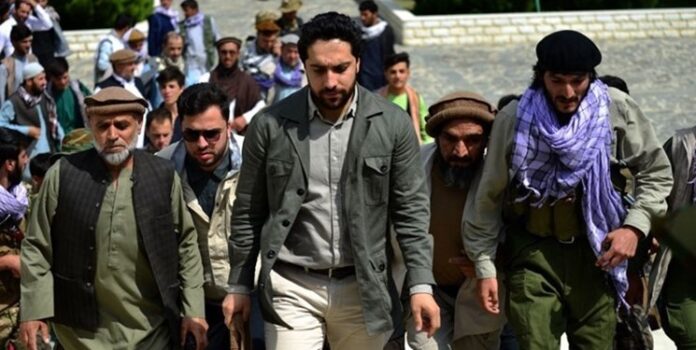
The spokesman was also asked about Iran’s position on the anti-Taliban resistance, taking shape in Panshir Valley of Afghanistan.

“We invite all parties to exercise restraint and engage in talks and seek a political solution.

Everything that happens in Afghanistan and any move toward the formation of a stable government should reflect the population and ethnic structure of Afghanistan and this can be a result of a political solution and talks among Afghans,” he said.

Khatibzadeh also confirmed an upcoming visit by the Pakistani foreign minister to Tehran.
“The visit by the Pakistani foreign minister is planned, at his request, for Thursday. The objective of the visit is surely bilateral issues and especially Afghanistan. It is natural for Iran as a pillar of promotion of peace and security in this region, to have its contacts and consultations with all countries,” he noted.

Khatibzadeh also touched on the Vienna talks concerning the nuclear deal and the change in the executive branch of power in Iran.

“Some changes due to changes in the executive branch of the Iranian government are natural. Of course, the state position of the Islamic Republic of Iran is what have been announced time and again. The negotiating parties should not miscalculate. Our position is what it was; removal of all sanctions related to the nuclear deal and verification of commitment to the agreement. The date [for the next phase of the talks] will be announced after the changes are finalized and we are confident in [the positions] of our negotiating parties as part of the 4+1 [group of countries],” he said.

The spokesman also called energy commerce an ordinary issue, when asked about shipment of Iran’s fuel to Lebanon.

“Normal trade in the energy sector is an ordinary and common decision. We have sold and sell our oil and [other] goods based on our own decision and demand from our clients. On this specific issue, we cannot watch the pain and suffering plotted against the people of Lebanon. The Lebanese are proud people suffering this shortage due to behind-the-scenes horse-trading, in which Zionist elements are involved. This is despite the fact that they are both a rich nation and have the financial means to buy energy shipments. The Islamic Republic of Iran surely does not allow the arrogant powers to treat people of the region like that,” he said.

The spokesman also rejected the joint statement by the UK, France and Germany, in which they expressed concerns about Iran’s nuclear program.
“What Iran has done has been in compliance with the NPT and the Nuclear Safe Guards Agreement, under the supervision of the IAEA and Iran’s activities, and its recent move, have been conducted for peaceful purposes. This political statement does not clear the three European countries of their responsibility for breaching the nuclear agreement. These statements are not only political but also illegal. These three countries should explain where they were and what statement they issued and what step they took after the US withdrawal from the accord and the maximum pressure campaign of the aggressive government of the US against Iran and [Washington’s] state terrorism in the economic sector, and even in the health sector, against the people of Iran,” he said.

“We try to make sure Vienna talks are meaningful if other parties fulfill their obligations.”

The spokesman also talked about the recent visit by the Japanese foreign minister to Iran, saying “there was no talk of mediation” during his meetings with Iranian officials.

He added that a new time will be naturally set for the Vienna talks but he warned that “time is not passing in favor of the nuclear deal”.

The spokesman also addressed the comments by the former US Secretary of State Mike Pompeo on the country’s withdrawal from Afghanistan and his hostile remarks on former Iranian IRGC commander Lieutenant General Qassem Soleimani, who was assassinated by the US in Iraq.
“What was said by the current Fox News commentator and former extremist US secretary of state is regrettable. When he was the state secretary, proper answers were given to him.

Americans, themselves, say that the Trump administration was a circle of villains and this person was well-known among them. He has acknowledged time and again that he masters theft, deception and all other normal process in the intelligence and security services of the US.

“He does not know or has not been told that martyrdom for God is the highest honor for us. The most peace-making General of the region was martyred by the most vicious people. We have announced time and against that we do not allow those who were involved in the cowardly assassination, moved to implement it, made a decision to carry it out and executed it escape without punishment. What we did in Ain al-Asad [Airbase] was a response to their [Americans’] act of aggression, not their assassination of General Soleimani. Definitely, we will hold to account all those involved in this. We have held no meeting with other countries or with international organizations except that we raised this issue there,” he said.

“The Fox News commentator should watch on what topic he comments. Anyone who witnesses what has happened in Afghanistan [clearly] sees the mess the US has created for the people in the region and Afghanistan.”


Iran Prisons Chief Apologizes over Misconduct at Evin

Mohammad Mehdi Hajmohammadi said in a tweet, “I take responsibility for the improper behavior at Evin Prison”. He promised that authorities will do their best to prevent the occurrence of such “bitter incidents” in future, saying those who violated the rules will be punished. 

Hajmohammadi however noted that the services of noble prison guards will not be ignored because of such misconducts. 

Iran’s Judiciary deputy chief also reacted to the report. Hojatoleslam Mohammad Mosaddegh said officials are investigating the issue and it’s unclear what really happened at Evin Prison. 

Mosaddegh also said the Judiciary will give an update on its findings Wednesday.

In recent days videos purportedly obtained by hackers show prisoners at Evin House of Detention in northern Tehran being beaten by security forces.

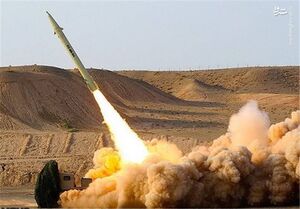
Iran to unveil new domestic missile defense system

Brigadier General Mehdi Farahi told IRIB’s Channel Two that Iranian armed forces have managed to realize all domestic potentials to achieve self-sufficiency in the defense industries.

Farahi said Iran has made very good progress in developing radar systems, drones and missiles as well as in ground combat and naval capabilities. He cited defense systems like Bavar-373 and Khordad 3 as examples of homegrown air defense systems.

Iran’s deputy defense chief noted that the arms embargoes on Iran made it to try and produce its own defense systems and the Islamic Republic developed them using domestic possibilities and at a way lower cost.

Farahi referred to Iran’s missile capabilities and the Defense Ministry’s plans to further develop Iran’s missile program, saying, “Under God’s auspices, there are many good potentials in the field; we began developing five types such as cruise, ballistic and surface-to-air missiles and we have made great achievements”.

He noted that The Defense Ministry takes a number of parameters into consideration when it comes to the issue of missile development with one parameter being accuracy. Farahi said, “We’ve done a lot over the past years and I proudly announce that Iran now has precision-guided missiles”.

According to the deputy defense minister, Iran has also been trying to make stealth projectiles and some of its weapons are capable of easily evading the enemies’ radar systems.

As for satellite carriers, Farahi said the Islamic Republic of Iran has made very good progress in the area adding it produced Simorgh-1 and 2 and also Zoljanah.

Iran Marks Natl. Doctor’s Day Amid Virus Pandemic

Iran marks the day on the birth anniversary of Ibn Sina, otherwise known by the Latinized name Avicenna, which falls on August 23 every year. 

He is among the many individuals in the history of the country whose names are sealed in the memory of the world of science. 

Ibn Sina, a polymath of the 10th and 11th centuries, is considered one of the most influential Iranian and Islamic philosophers and scientists of all times.

He has also been widely commended across the world for his work in the fields of medicine and philosophy.

Ibn Sina’s Legacy

Ibn Sina, the great Iranian Physician, philosopher and scientist, was born in the city of Bukhara in the northern parts of the then Iran, on August 23, 980. 

His major works are the two scientific and philosophical encyclopedias, al-Shifa (meaning “cure”) on philosophy and Daneshnameh-ye Alai (Alai treatise), as well as Al-Qanun fi’l Tibb (Canon of Medicine), which is one of best-known works in the history of medicine, and according to the University of Tennessee’s Internet Encyclopedia of Philosophy, was taught as a medical textbook in Europe and in the Islamic world until the early modern period. 

Avicenna was a child prodigy and was among the well-esteemed scientists and special court physicians during the rule of Samanid Emir Noah in Bukhara.

He wrote 450 books, which cover various topics, but the bulk of them are on medicine and philosophy. 

He is “arguably the most influential philosopher of the pre-modern era”, the University of Tennessee’s encyclopedia says, and his philosophical concepts “had a decisive impact upon European scholasticism”, the dominant philosophical movement in the west from the 9th until the 17th century, including on such philosophers as Thomas Aquinas as well as on the key Iranian philosopher of the 17th century, Mulla Sadra.

“Ibn Sina was at the peak of fame in medicine in his own time. His name is cited in all books in the history of medicine, except where there is a grudge against him. This shows how special Ibn Sina is. Undoubtedly, Ibn Sina had a major impact in the history of medicine. He imitated no one in medicine,” says Najafqoli Habibi, the former chancellor of Allameh Tabataba’I University of Tehran, who has spent the past years preparing an edition of Al-Qanun.

His view is shared by Seyed Sadreddin Taheri, a professor of philosophy and a faculty member of the same university. 

“Ibn Sina, coming after al-Kindi and Farabi, is the first heir of translations from Greek. He had the opportunity to create a special philosophy. In fact, this philosopher is the first to revive the Islamic philosophy,” he says.