Monday, April 27, 2026
Home Blog Page 244

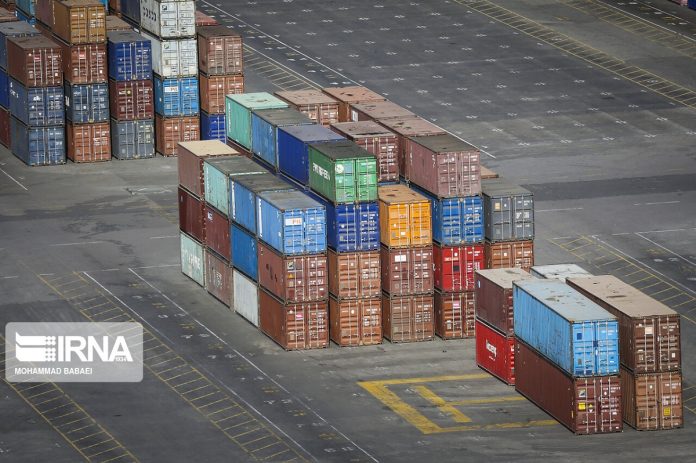
Iran-Afghanistan trade via Dogharoun border exceeds $3 billion annually

Iran Trade

He described Dogharoun as Afghanistan’s most significant economic gateway with Iran, emphasizing that enhancing bilateral trade would boost investor confidence and expand economic activities.

Marhamati noted that Afghan investors have shown increasing interest in areas such as mining, agriculture, and other sectors along the border and in Iran’s Razavi Khorasan Province.

Plans are underway to host a summit aimed at facilitating joint investment, he added.

He further pointed out that simplifying investment procedures and improving infrastructure are key to attracting Afghan investors and ensuring economic sustainability in the border region.

Razavi Khorasan remains Afghanistan’s top export partner, and the Dogharoun crossing is the primary economic hub in eastern Iran. Marhamati concluded that shared cultural ties, regional security, and the quality of Iranian goods continue to enhance Afghanistan’s interest in deepening economic ties with Iran.

Tehran wants indirect talks with Washington, warns regional countries over attacks against it

Iran US Flags

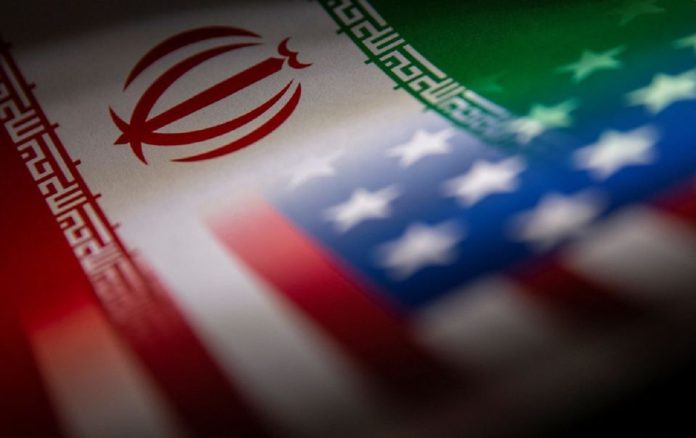
Although Iran has rejected U.S. President Donald Trump’s demand for direct talks, it wants to continue indirect negotiations through Oman, a longtime channel for messages between the rival states, said the official, who spoke to Reuters on condition of anonymity.

“Indirect talks offer a chance to evaluate Washington’s seriousness about a political solution with Iran,” stated the official.

Although that path could be “rocky”, such talks could begin soon if U.S. messaging supported it, the official added.

Iran has issued notices to Iraq, Kuwait, the United Arab Emirates, Qatar, Turkey and Bahrain that any support for a U.S. attack on Iran, including the use of their air space or territory by U.S. military during an attack, would be considered an act of hostility, the official continued.

Such an act “will have severe consequences for them”, the official said, adding that Supreme Leader Ayatollah Seyyed Ali Khamenei had placed Iran’s armed forces on high alert.

Spokespeople for the governments of Iraq, Kuwait, the UAE, Qatar and Bahrain did not immediately respond to requests for comment. Turkey’s Foreign Ministry announced it was not aware of a warning but that such messages could be conveyed by other channels.

Iran’s ally Russia said on Thursday that U.S. threats of military strikes against the Islamic Republic were unacceptable and on Friday called for restraint.

Iran is trying to gain more support from Russia, but is sceptical about Moscow’s commitment to its ally, stated a second Iranian official.

This “depends on the dynamics” of the relationship between Trump and Russian President Vladimir Putin, the official added.

Trump has stated he would prefer a deal over Iran’s nuclear programme to a military confrontation.

The first Iranian official said a first round of indirect talks could involve Omani mediators shuttling between the Iranian and U.S. delegations. Ayatollah Khamenei has authorised Foreign Minister Abbas Araqchi or his deputy, Majid Takht-e Ravanchi, to attend any talks in Muscat.

However, the official believed there was a window of around two months to agree a deal, citing worries that Iran’s long-time foe Israel might launch its own attack if talks took longer, and that it could trigger a so-called “snap back” of all international sanctions on Iran to prevent the country from acquiring a nuclear weapon.

Iran has long denied wanting to develop a nuclear weapon.

Iran faces 37% rainfall deficit, drought concerns mount

Snow Iran

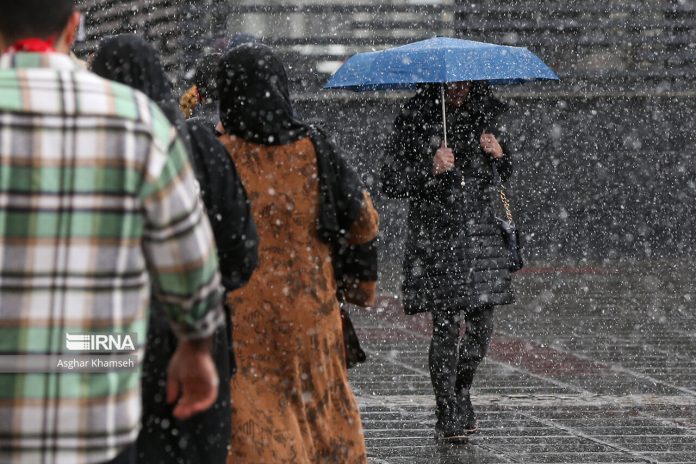
Hormozgan Province recorded the most severe deficit (-75.9%), followed by Sistan-Baluchestan (-75.4%) and East Azerbaijan (-60%)

Mazandaran was the sole province with increased rainfall (+2.2%)

Tehran saw a 41.4% reduction (81mm less than historical average)

The water crisis persists despite marginal improvement from a 37.5% deficit reported in mid-March.

Experts warn the prolonged drought could threaten agricultural output, strain urban water supplies, and exacerbate dust storms in southeastern regions.

Authorities are expected to implement water rationing in affected provinces ahead of peak summer demand.

Ancient Persian inscription of Darius I faces critical deterioration

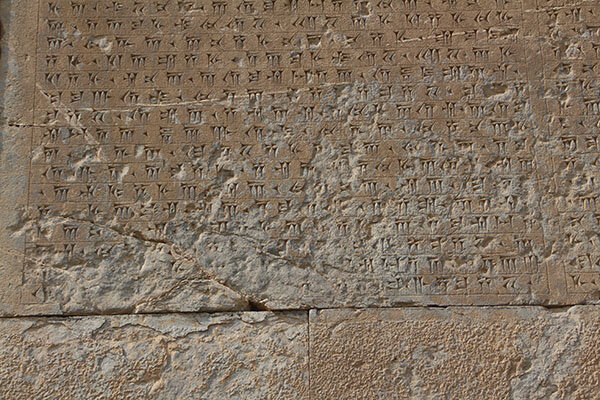
The massive stone tablet, known as “Darius’s First Decree,” has suffered significant erosion and partial collapse in recent years.

Controversial conservation attempts in 2020, when authorities removed protective structures without proper approval or studies, reportedly accelerated the damage.

“This isn’t just any artifact; it’s the founding document of Persepolis itself,” said Siavash Arya, a cultural heritage activist who recently documented the inscription’s condition. “The text reveals Darius’s worldview, his respect for workers, and even early monotheistic beliefs in Persia.”

The limestone inscription contains 22 lines of cuneiform script describing the construction of Persepolis and the empire’s governance. Archaeologists consider it the most valuable written record from the Achaemenid period (550-330 BCE).

Authorities at the Persepolis World Heritage Site announced new restoration efforts this week, but experts remain concerned about irreversible damage. The inscription has become increasingly vulnerable to temperature fluctuations and humidity since its protective canopy was removed over four years ago.

“This was a preventable tragedy,” said Farzad Amiri, an ancient Near Eastern historian at Shiraz University. “The inscription survived millennia only to deteriorate under our watch due to poor decisions.”

Police: Iran deported over 1.12 million undocumented Afghan nationals last year

Afghan Refugee in Iran

General Saeed Montazer-al-Mahdi, the police command’s spokesperson, reported that security forces conducted 1,090 operations nationwide to locate and repatriate illegal immigrants.

“These individuals were identified through systematic border control measures and subsequently returned to their countries of origin,” General Montazer-al-Mahdi stated, referring to Afghan nationals.

The unprecedented deportation figures come amid heightened regional migration pressures and Iran’s ongoing economic challenges and water stress.

According to unofficial figures, Iran hosts over 10 million Afghan refugees, one of the world’s largest refugee population.

Authorities plan to upgrade surveillance technology along eastern border provinces, where most undocumented crossings occur.

Iran’s military chief: Tehran not to initiate war, to respond decisively to threats

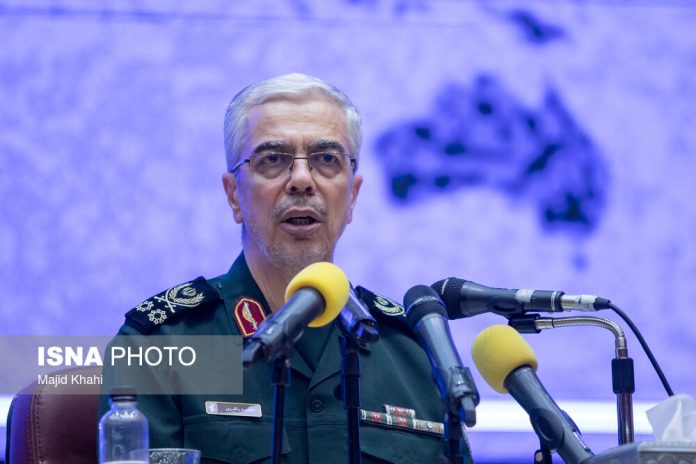
Mohammad Bagheri

Major General Mohammad Baqeri, Chief of the General Staff of the Iranian Armed Forces, addressed commanders, officials, and personnel of the General Staff and the Khatam al-Anbiya Central Headquarters on Sunday morning.

He added that another part of the measures taken in response to Trump’s letter emphasizes that Iran seeks stability in the region, is not pursuing nuclear weapons, and will not engage in direct negotiations, though indirect talks are not an issue.

Major General Baqeri noted that Iran’s response made it clear that the US has been the most unreliable and untrustworthy party in past negotiations, stressing that there is no trust in America.

He pointed out that Trump, following his recent letter to the Supreme Leader, received a fitting response—one that reflected the Leader’s directives and strategic considerations.

Baqeri described the US president as a narcissistic and bullying individual, adding that he has clashed not only with enemies but also with friends and allies.

Major General Baqeri emphasized that the people of Iran and the world should know that the strategy of the Islamic Republic of Iran is to defend its interests, pursue progress, and advance toward its envisioned horizons.

He pointed out that the Islamic Republic of Iran does not seek war, but it will not accept bullying and coercion and will stand firm against it.

IAEA chief asserts Iran has no nuclear weapons

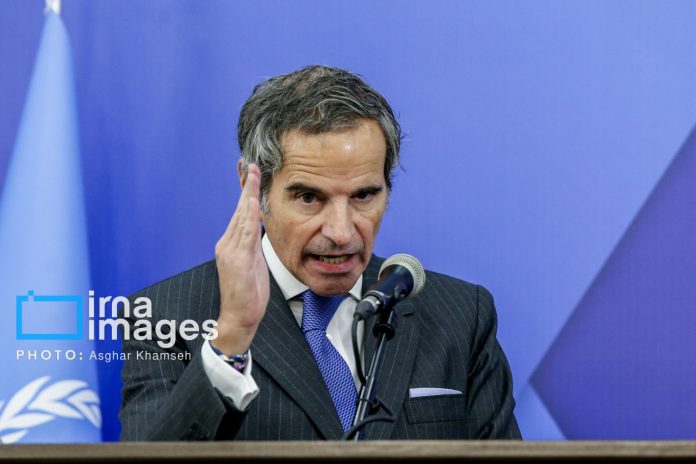
Rafael Grossi

Grossi, who plans to visit Iran in the coming weeks, framed his trip as an effort to “reduce the risk of confrontation” between Tehran and Washington.

Regarding capabilities, Grossi avoided technical details but noted Iran’s uranium enrichment now exceeds civilian needs. “They have the materials required for weapons production,” he said, while reiterating that no actual weapons exist.

The IAEA chief confirmed ongoing coordination with Iranian Foreign Minister Seyed Abbas Araghchi to “clarify outstanding issues” regarding Tehran’s nuclear program.

He warned that any military escalation would prove “devastating,” though he provided no specifics about which aspects of Iran’s activities required clarification.

The visit comes amid heightened tensions following US President Donald Trump’s simultaneous calls for negotiations and threats of military action against Iran.

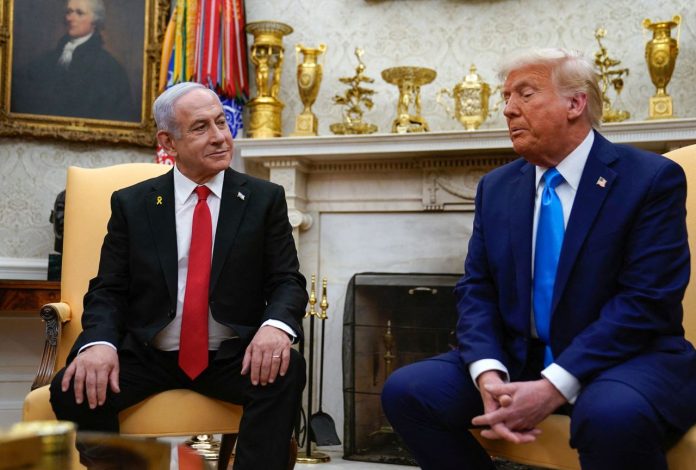
Netanyahu set for talks with Trump over Iran, tariffs

The agenda for the trip will include Turkiye-Israel relations, “the Iranian threat”, Israel’s ongoing war on Gaza, tariffs and the “fight against the International Criminal Court,” the Israeli prime minister’s office said on Saturday.

US media reports citing unnamed US and Israeli officials said the meeting would take place at the White House on Monday.

Trump’s invitation came after a phone call on Thursday between the two leaders. Netanyahu raised the issue of tariffs during the conversation. Israel faces a 17-percent tariff under Trump’s so-called “reciprocal tariffs”.

Israel recently moved to cancel remaining tariffs on US imports. Their free trade agreement, signed four decades ago, ensures that about 98 percent of US goods enter Israel tax-free.

Netanyahu is currently visiting Hungary on his first trip to Europe since 2023 in defiance of the International Criminal Court’s (ICC) arrest warrant against him for alleged war crimes in Gaza.

Hungary’s government announced its withdrawal from the ICC just before Prime Minister Viktor Orban welcomed his Israeli counterpart.

The United States is not a member of the court.

Also on the agenda will be stalled efforts to reach a new agreement on a Gaza ceasefire deal and the return of Israeli captives held by Palestinian groups there. Israel renewed its attacks on Gaza last month, shattering a short-lived truce with the Palestinian group Hamas.

Trump also has pressed Iran to enter negotiations on a new agreement regarding its nuclear programme. Iran has stressed it would be willing to hold indirect talks.

Western countries, led by the US, have, for decades, accused Tehran of seeking nuclear weapons. Iran rejects these allegations and maintains that its nuclear activities exist solely for civilian purposes.

Iran’s FM: Response to Trump’s letter ‘proportional,’ diplomatic channels remain open

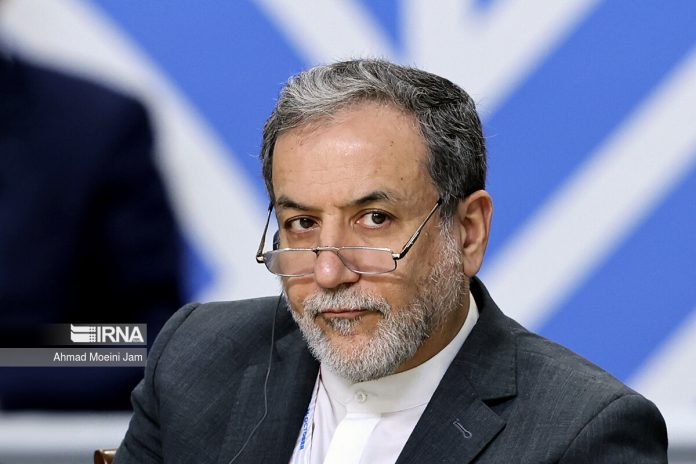
Abbas Araghchi

Speaking at a Nowruz, Persian New Year, reception on Saturday evening attended by diplomats and senior officials, Araghchi emphasized Iran’s “principled and responsible” foreign policy.

However, he dismissed direct talks with a party that “repeatedly threatens force” and sends “contradictory messages.”

The Iranian foreign minister said, “In principle, direct negotiations with a party that constantly threatens to use force in violation of the UN Charter and expresses contradictory positions through its various officials would be meaningless. Nevertheless, we remain committed to diplomacy and are prepared to explore the path of indirect talks.”

He criticized the US for unilateral withdrawal from the 2015 nuclear deal (JCPOA) but expressed readiness for “trust-building talks” if “unjust sanctions” are lifted.

Reflecting on regional challenges, Araghchi condemned the humanitarian crises caused by Israeli actions in Gaza, Lebanon, and Syria, as well as US policies in Yemen. He called for global solidarity to alleviate the suffering of Palestinians and halt aggression in the region.

British foreign secretary slams Israel for denying two Labour MPs entry

Yuan Yang and Abtisam Mohamed were rejected because they were suspected of plans to “document the activities of security forces and spread anti-Israel hatred”, according to a statement from the Israeli immigration ministry cited by Sky News and Politics UK.

Yang, who represents Earley and Woodley in Berkshire, and Mohamed, the MP for Sheffield Central, both flew into Ben Gurion airport from Luton with their aides, according to reports.

The foreign secretary, David Lammy, said in a statement on Saturday: “It is unacceptable, counterproductive, and deeply concerning that two British MPs on a parliamentary delegation to Israel have been detained and refused entry by the Israeli authorities.

“I have made clear to my counterparts in the Israeli government that this is no way to treat British parliamentarians, and we have been in contact with both MPs tonight to offer our support,” he added.

“The UK government’s focus remains securing a return to the ceasefire and negotiations to stop the bloodshed, free the hostages and end the conflict in Gaza.”

Since renewed military operations last month ended a short-lived truce in its war with Hamas, Israel has pushed to seize territory in the Gaza Strip in what it said was a strategy to force the group to free hostages still in captivity.

The health ministry in Hamas-run Gaza said more than 1,300 people have been killed since Israel resumed intense bombing last month, bringing the overall death toll since the war began to over 50,600.

The 7 October 2023 attack on Israel that sparked the war resulted in 1,200 deaths, mostly civilians, according to official Israeli figures.