Friday, December 26, 2025
Home Blog Page 2414

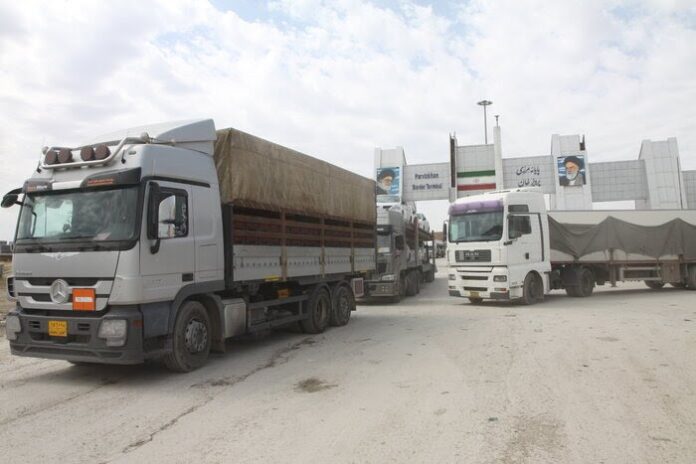
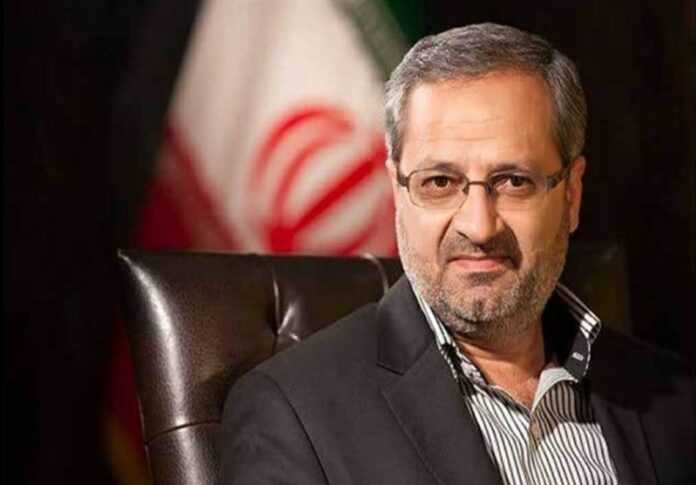
Iran’s exports to Iraq rises by 31%

Seyyed Ruhollah Latifi added that Iran’s imports from Iraq also increased by 430 percent in value during this period.

According to Latifi, Iraq is the second largest buyer of Iranian goods in recent years but, due to the outbreak of the Covid pandemic, several border crossings with Iraq were closed for months last year, and like many other countries, trade with Iraq decreased during the period.

In the first five months of the Persian year of 1400 and with Covid’s impact on foreign trade blunting, Iran saw a rise in economic exchanges, and this was also the case with Iraq as Iran’s second largest export partner, Latifi said.

He pointed out that Iran’s exports to Iraq by the end of August was more than 12,024 tons worth more than $3,163,000 which saw a 31% growth in value and a 53% rise in weight.

Regarding imports from Iraq, the Iranian customs spokesman said, “In the first five months of this year, 313,612 tons of goods worth more than $175,989,000 were imported from Iraq, which translates into a 970% rise in weight and a 430% rise in value compared to the same period last year. Figures show Iran’s total foreign trade in the first five months of this year reached 59.3 million tons worth $34 billion, with a positive balance of $1 billion.

World Bank: Climate change could force migration of 216m people

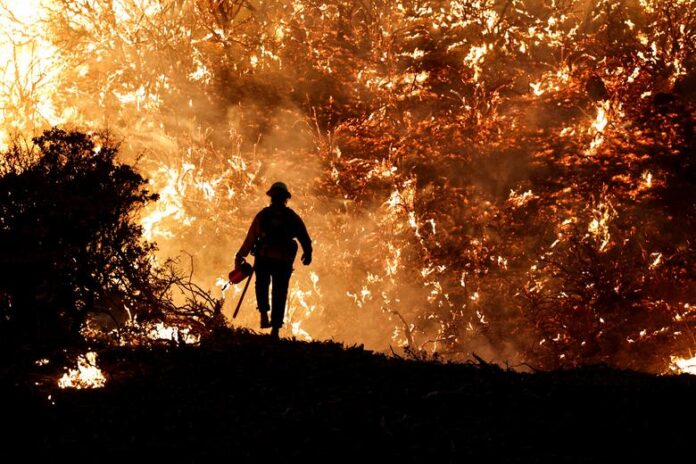
Climate change is a powerful driver of internal migration because of its impacts on people’s livelihoods and loss of livability in highly exposed locations, the report noted, adding that hotspots of internal climate migration could emerge as early as 2030 and “continue to spread and intensify” by 2050.

By 2050, Sub-Saharan Africa could see as many as 86 million internal climate migrants; East Asia and the Pacific, 49 million; South Asia, 40 million; North Africa, 19 million; Latin America, 17 million; and Eastern Europe and Central Asia, 5 million, according to the report.

The report is a “stark reminder” of the human toll of climate change, particularly on the world’s poorest, those who are contributing the least to its causes, said Juergen Voegele, vice president of sustainable development at the World Bank.

“It also clearly lays out a path for countries to address some of the key factors that are causing climate-driven migration,” stated Voegele.

The report added immediate and concerted actions to reduce global emissions and to support green, inclusive, and resilient development could reduce the scale of climate migration by as much as 80 percent.

Source: Xinhua news agency

Gunmen raid Nigerian prison, free over 260 inmates

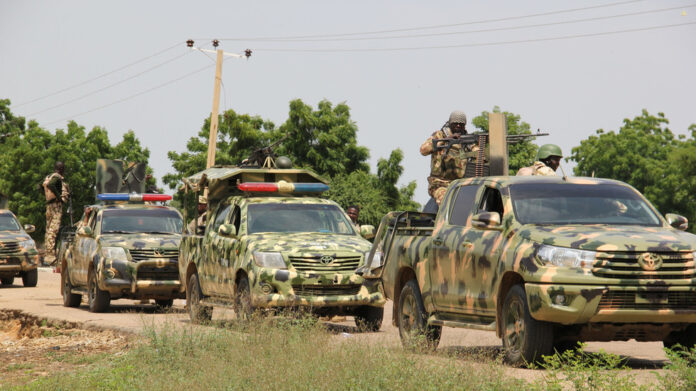
Almost all of the inmates of a prison in south-central Nigeria were broken when armed gunmen breached the perimeter fence of the facility, freeing 266 prisoners.

A soldier and a police officer were killed in the attack and two guards were missing, the interior ministry reported. It was the second major jailbreak in Nigeria this year.

The attackers used explosives to destroy the fence on three sides and fought a gun battle with guards at the medium-security prison at Kabba in Kogi state, southwest of the federal capital Abuja, authorities stated.

Nigeria is struggling with security problems across its vast territory, including armed robberies by criminal gangs, an insurgency in the northeast and a spate of mass school abductions in the northwest.

Twenty-eight out of the 294 inmates at Kabba had not escaped, the interior ministry added, meaning 266 had got away. The prison service had initially put the number of fugitives at 240.

It was the second major jailbreak this year after gunmen attacked a prison in Owerri in southeastern Imo State in April, freeing more than 1,800 inmates.

Police blamed the Owerri jailbreak on a banned separatist movement, the Indigenous People of Biafra (IPOB), which campaigns for several southeastern states to split from Nigeria. IPOB denied any involvement.

Kogi state is not part of the region IPOB wants to see secede. The authorities said the Kabba attackers had not been identified, and they did not suggest a reason for the raid.

The prison service said the Kabba jail was established in 2008 with a capacity for 200 inmates. At the time of the attack there were 224 pre-trial detainees and 70 convicted offenders in the jail, it added.

Suspects can spend years in pre-trial detention in Nigeria. Human rights groups say prisons are often overcrowded and legal procedures inefficient.

The interior ministry announced there were 15 soldiers, 10 police officers and 10 armed prison guards on duty at the Kabba jail at the time of the raid.

Source: Reuters

US Capitol fence to return ahead of pro-rioters rally

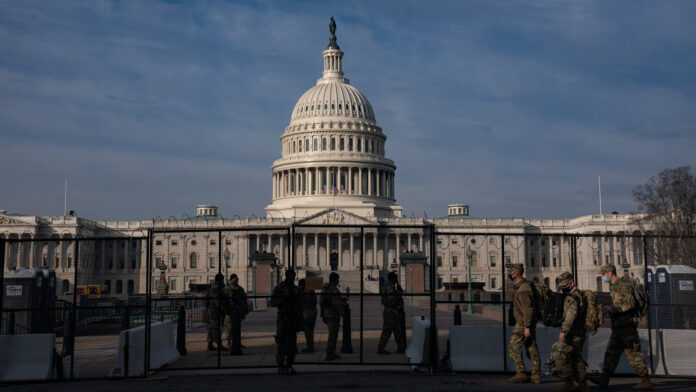
The fence surrounding the US Capitol is set to return ahead of the pro-Trump rally on Sept. 18, the head of the Capitol Police confirmed Monday.

“The fence will go up a day or two before, and if everything goes well it will come down very soon after,” Capitol Police Chief Thomas Manger told reporters in the Capitol.

The remarks came just moments after Manger, along with the sergeants-at-arms in both chambers, had briefed the top congressional leaders on the intelligence gathered by law enforcement ahead of Saturday’s “Justice for J6” rally at the Capitol, which will protest the treatment of the hundreds of people arrested in connection with the Jan. 6 riot.

Leaving the intelligence briefing, Senate Majority Leader Charles Schumer (D-N.Y.) declined to comment on the threat level posed on Saturday. But he said he’s confident there won’t be another security debacle like that of Jan. 6.

“They seemed very, very well prepared — much better prepared than before Jan. 6. I think they’re ready for whatever might happen,” he added.

The briefing was held just hours after US Capitol Police officers arrested a 44-year-old California man for allegedly possessing a bayonet and a machete just outside the Democratic National Committee headquarters, which sits just south of the Capitol building. Both items are illegal in Washington.

The man was driving a truck laden with white supremacist slogans, and said he was “on patrol”, according to Capitol Police.

The original Capitol security fence was erected in the days following the deadly rampage at the Capitol on Jan. 6, and quickly became a symbol of both the failure of law enforcement to prepare for violence that day and the ongoing effort by Trump to overturn his election defeat.

It also infuriated Republicans in Congress, who accused Democrats of politicizing Jan. 6 by exaggerating the violent threat posed by Trump’s supporters. Closer to home, neighbors in the vicinity of Capitol Hill also pushed hard to have the fence removed.

Heading into the intelligence briefing, Speaker Nancy Pelosi (D-Calif.) agreed with Schumer’s assessment that law enforcement was taking the threat of potential violence more seriously than they did before Jan. 6.

“I think there’s much better preparation and knowledge about what to expect,” she said, adding, “I do observe much better communication.”

Source: The Hill

Iranians mine $1 billion Bitcoins annually

In a report, the Parliament’s Economic Commission said 19,500 out of the total 324,000 Bitcoins of the world are mined in the Islamic Republic in an unofficial manner each year.

The report added that 700 Bitcoins are traded each day that are valued at 40 million dollars. It said citizens mine these cyrptocurrencies without official permission.

The Parliament’s Economic Commission also called for developing a national cryptocurrency given the anti-Iran sanctions.

The cryptocurrencies have jumped in value over the past year. Bitcoin hit highest price ever in April when it reached 60 thousand dollars.

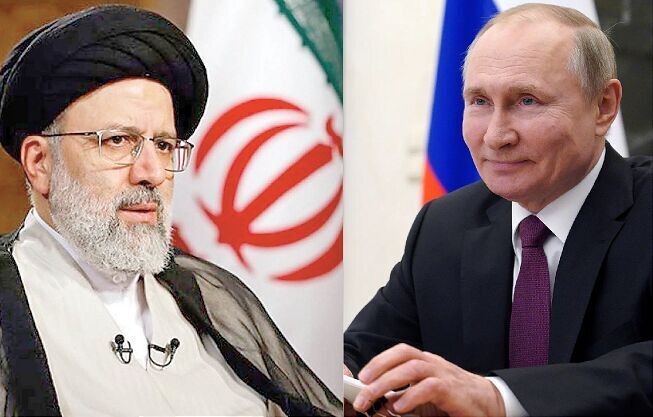
Putin, Raeisi seek meeting in near future

The phone conversation between Putin and Raisi came after the Russian leader cancelled a trip to Tajikistan where he had been scheduled to meet with the Iranian president on the sidelines of a summit of the Shanghai Cooperation Organization.

The Russian president is self-isolating after several members of his inner circle tested positive for COVID-19.

During their phone conversation, Putin called for continued cooperation between the two sides in the battle against the coronavirus and in the joint production of Russia’s Sputnik V vaccine.

The Iranian president said Tehran seeks to expand cooperation with Moscow in all fields.

He also stressed the need for continued cooperation between Iran and Russia in the battle against the coronavirus including the production of vaccines.

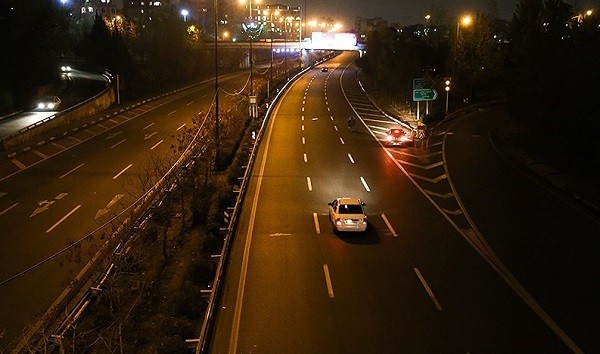
Confusion over lifting night-time traffic curfew in Iran

It all began on Sunday when the taskforce’s spokesman Alireza Raesi announced an end to the night time traffic restrictions.

Raeisi said the ban has been lifted because the number of coronavirus vaccination centers nationwide has increased and many of these centers work round the clock.

The announcement led to a considerable increase in traffic in Iranian cities after 22:00 p.m.

But traffic police was quick to announce that it has not been officially informed about the decision to end the restrictions, and that it is still issuing traffic tickets for cars that violate the night-time ban.

The deputy head of Iranian Traffic Police said, “Police act based on official communication, we will enforce a communication when we receive it.”

Teymour Hosseini said, however, that fines recorded over the past days will be cancelled if a future communication from the National Task Force Against Coronavirus officially states that the ban was lifted on Sunday.

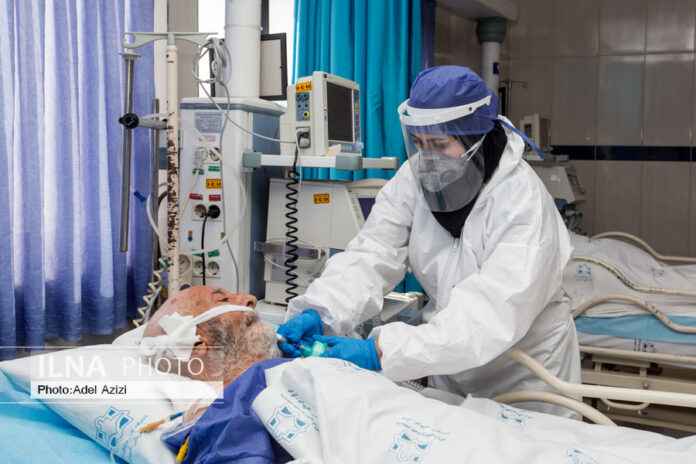
Iran Covid death toll tops 115 K

Iran’s health ministry officials said on Tuesday 408 more people have died of the disease over the past 24 hours. The total death toll now stands at 115,167.

The total number of cases is approaching five-point-two million. Covid fatalities and infections hit record highs several times in Iran last month. The more contagious Delta variant has been blamed for the latest peak of the Covid pandemic in Iran.
But the daily deaths, infections and hospitalizations have seen a downward trend over the past days. That’s partly due to the vaccination campaign Iran is pursuing nationwide.

The inoculation drive was initially slow in Iran. But now it’s going ahead fast thanks to a rise in vaccine imports and production inside Iran.

Iran bans 2030 document on education

Iran’s caretaker Education Minister Alireza Kazemi underlined the ban on using the document, saying the governing documents and regulations and the basis of action regarding education are only upstream documents approved by the Supreme Council of the Cultural Revolution and the Islamic Consultative Assembly.

Kazemi added that regulations contrary to the document of fundamental change and the other documents are null and void.

He said general directors of education across Iran and other relevant officials are obliged to explain the issue by creating specialized working groups and holding workshops.

Kazemi noted all authorities are obliged to continuously monitor the proper implementation of this decree and to deal with the violators legally.

Earlier, Saeed-Reza Ameli, the secretary of the Supreme Council of Cultural Revolution announced President Ebrahim Raisi’s decision, saying “Any international document that would supersede the Islamic Republic’s educational policies is rejected.”

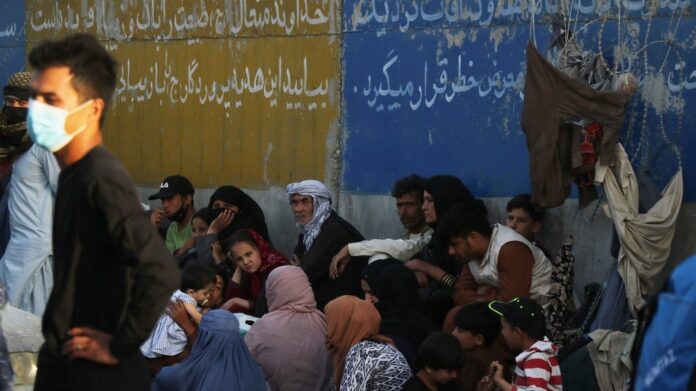
UN chief urges intl. community to provide ‘lifeline’ for Afghans

Speaking to ministers gathered for a donor conference for the violence-torn country, Guterres insisted that “the people of Afghanistan need a lifeline”.

“After decades of war, suffering and insecurity, they face perhaps their most perilous hour,” he said at the UN’s European headquarters in Geneva.

“Let us be clear: This conference is not simply about what we will give to the people of Afghanistan. It is about what we owe,” he added.

The UN Secretary General’s comments came just under a month after the Taliban swept into power in Afghanistan, sparking a chaotic exit for the United States and its allies after 20 years in the country.

The half-day conference is seeking to raise the $606 million which humanitarian agencies say is urgently needed to provide life-saving aid to millions of Afghans over the four final months of the year.

Among other things, the money is needed for critical food and livelihood assistance for nearly 11 million people and essential health services for 3.4 million.

Guterres stressed that Afghans were experiencing “one of the worst humanitarian crises in the world” even before the Taliban takeover on August 15.

Some 40 percent of the country’s GDP was already drawn from foreign funding, and half of the population was already dependent on humanitarian aid, according to the UN.

Afghanistan is also facing a devastating drought and mass displacement in addition to the impact of COVID-19.

Fears now abound that other countries’ reluctance to deal with the Taliban could push Afghanistan over the edge.

Guterres announced that the UN would release $20 million from its Central Emergency Response Fund to support the humanitarian operation in Afghanistan.

But he stressed that more money is needed — and quickly.

A number of UN agency and other aid chiefs echoed that sentiment.

“We could have mass-migration, destabilisation in the region, and for certain starvation among millions of Afghan people,” David Beasley, head of the World Food Programme, warned, urging countries to “please step up, step up now so that we can do our job”.

Filippo Grandi, head of the UN refugee agency, addressing the conference via video-link from Kabul, urged donors to provide flexible funding, to make it possible to address a rapidly shifting displacement crisis in the country.

And the head of the International Committee of the Red Cross, Peter Maurer, just back from Afghanistan, said “the magnitude of need is evident”, and warned that “the risk of destabilising the entire region is real”.

Beyond the humanitarian crisis, Guterres and others also highlighted the need to safeguard human rights in the country, and especially to protect the gains made for women and girls over the past two decades.

“Afghan women and girls want to ensure that gains are not lost, doors are not closed and hope is not extinguished,” he added.

The hardliners have pledged a more moderate brand of rule than in their notoriously oppressive 1996-2001 reign.

UN humanitarian chief Martin Griffiths, who also visited Kabul last week, told Monday’s conference that the Taliban had committed in writing to protect humanitarian workers, and also to respect the rights of women and minorities, within the confines of religion.

But on the ground, they have moved swiftly to crush dissent and there are worrying signs when it comes to the rights of women.

“In contradiction to assurances that the Taliban would uphold women’s rights, over the past three weeks women have instead been progressively excluded from the public sphere,” UN rights chief Michelle Bachelet told the UN Human Rights Council earlier Monday.

She also decried “credible allegations” of reprisal killings of former members of the security forces, and “increasing violence against protesters and journalists”.

Source: AFP