Saturday, December 20, 2025
Home Blog Page 2398

New convoy of Iranian fuel arrives in Lebanon

Lebanon’s Al Mayadeen television channel said the convoy has crossed the border and is moving to areas in need of fuel. 

The fuel tankers are carrying diesel recently discharged by an Iranian ship in Syria’s Baniyas port.

The Iranian vessel was unable to transport directly to Lebanon by sea because of U.S. sanctions and went to Syria for land transfer instead.

It has been estimated that it will require well over 1,000 trucks to transport the cargo to Lebanon.

Lebanese Resistance Movement Hezbollah which is behind the initiative has said hospitals and other key services will get priority access.

On Thursday, a group of eighty lorries with diesel on board crossed the border and were met with celebratory gunfire and people throwing flowers into their path as they drove through Lebanon’s northeast.

Hezbollah has announced that more Iranian fuel ships will soon arrive in Syria under an agreement between the resistance movement and the Islamic Republic.

Hezbollah has said that tankers carrying fuel for the Lebanese people are regarded as Lebanese territory, warning against any attack on the oil tankers by Israel and the US.

Hezbollah Secretary General Sayyed Hassan Nasrallah has warned against any effort to block the transfer. He has warned Israel and the U-S to stay away from the Iranian ships. 

An unprecedented economic crisis has left Lebanon severely short of fuel and other basic necessities.

US admits Kabul attack killed 10 civilians, not Daesh militants

An investigation by U.S. Central Command has determined that an Aug. 29 drone strike in Kabul killed an innocent aid worker and nine members of his family, not a member of the Daesh terrorist group, a top general announced Friday.

The command now assesses that “it is unlikely” the man and vehicle targeted was affiliated with Daesh or “a direct threat to U.S. forces”, Gen. Frank McKenzie, head of U.S. Central Command, told reporters Friday.

“This strike was taken in the earnest belief that it would prevent an imminent threat to forces at the airport,” McKenzie stated, noting, “Our investigation now concludes that the strike was a tragic mistake.”

The news comes as the administration of President Joe Biden is already facing criticism over its Afghanistan withdrawal and the fact that the effort left hundreds of Americans and thousands of at-risk Afghans in the country at the end of August. More than 120,000 people were airlifted from Hamid Karzai International Airport before U.S. troops pulled out.

The revelation also comes one week after a New York Times investigation determined the target actually worked for an American aid organization.

Central Command ordered the Aug. 29 strike based on intelligence that the man was planning an “imminent” attack on the airport, where the military was scrambling to evacuate tens of thousands of American citizens and at-risk Afghans before the clock ran out on the withdrawal.

Gen. Mark Milley, chairman of the Joint Chiefs of Staff, in early September called the strike “righteous”.

But instead, the strike “tragically” killed “as many as 10 civilians”, including up to seven children, McKenzie said.

Milley on Friday acknowledged the mistake, calling the “heart wrenching” strike “a horrible tragedy of war”.

“In a dynamic high threat environment, the commanders on the ground had appropriate authority and had reasonable certainty that the target was valid,” Milley announced in a statement, adding, “But after deeper post strike analysis our conclusion is that innocent civilians were killed.”

McKenzie on Friday stood by the intelligence the military used to determine the target, noting the threat to the airport was posed by a “white Toyota Corolla”, the same type of car that was destroyed in the strike, and that the military had “no indication that the strike would result in civilian casualties”.

The strike must be considered “in the context of the situation on the ground”, McKenzie continued, adding that just days before a Daesh suicide bombing had killed 13 U.S. service members and more than 100 civilians at the airport.

In the 48 hours before the strike, the military had “a substantial body of intelligence” indicating that there would be another attack, and one recurring theme was that Daesh would use a white Toyota Corolla as a key element, McKenzie stated.

Based on that intelligence, the military began surveilling the car belonging to the target, identified as Zemari Ahmadi, the morning of the strike, and continued observing its movements for eight hours, McKenzie said.

The strike was executed at 4:53 p.m. that afternoon because the military determined there was little potential for civilian casualties, McKenzie stressed. That assessment turned out to be wrong, he acknowledged.

McKenzie declined to comment as to whether anyone will be disciplined over the strike, noting that the investigation is ongoing. 

“I have nothing for you now because that involves personnel issues,” he said.

Source: Politico

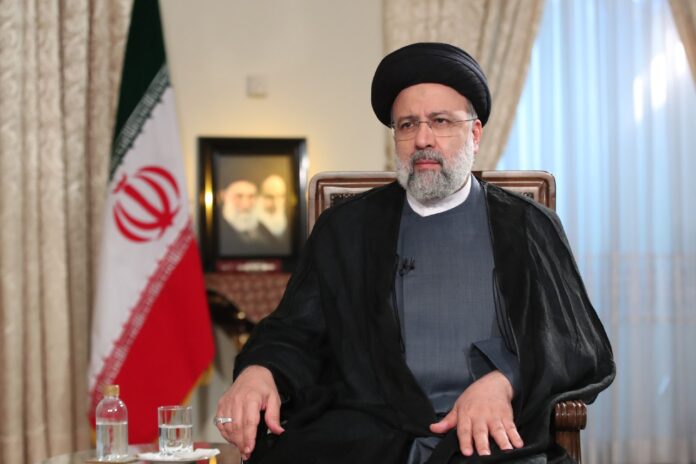
Iran, Tajikistan leaders Discuss Closer Cooperation

In a Saturday meeting in the Tajik capital, Dushanbe, the two sides underscored the common religion, culture and language between the two nations.

They expressed hope both sides will work towards opening a new chapter in closer ties and cooperation between the two sides on economic, cultural and political fronts.

Raisi said there exists good potential in both countries to enhance mutual relations and cooperation.

“The deepening and promotion of reciprocal relations and interactions will also pave the way for the enhancement of regional cooperation between the two countries,” said the Iranian president.

“Iranian and Tajik officials should, through regular meetings and talks, establish lasting and all-out relations between the two Persian-language countries which will set a good example at the regional level,” Raisi noted.

Rahmon, for his part, expressed his gratitude to the Iranian president for accepting his invitation to attend the 21st summit of the Shanghai Cooperation Organization (SCO) in Dushanbe and for visiting Tajikistan during his first overseas trip as president.

The Tajik president touched upon the history of Tehran-Dushanbe cooperation as well as the joint ventures undertaken by Iranian experts in Tajikistan, and added the friendship and affection which exist between the people and governments of both countries lay the groundwork for the promotion of bilateral cooperation and relations.

Rights groups say EU failing Afghans trying to flee Taliban

Several refugee groups have also called on the bloc to increase its support for refugees trying to flee Afghanistan.

“The EU should be sharing, rather than shirking, the responsibility to offer them protection,” a joint statement read.

The letter was signed by 24 non-governmental organisations, including Amnesty International, Caritas Europa, the International Rescue Committee, Oxfam, and the Red Cross.

The groups warned that 18 million people are in urgent need of humanitarian assistance in Afghanistan – nearly half the population – and that thousands still want to leave the country.

They called on the EU to set up safe pathways for Afghans in need of protection, as well as an “ambitious” resettlement programme in Europe.

More than 630,000 people have been forced from their homes so far this year due to violence and drought.

In excess of 100,000 people were airlifted out of Kabul late last month after President Joe Biden announced that US troops would withdraw, and the Taliban seized control of Afghanistan in just a few weeks.

According to new figures from the European Asylum Support Office (EASO), asylum applications by Afghans numbered 7,300 in July – a 21% increase over June and the fifth consecutive monthly rise. Almost 1,200 were unaccompanied minors, EASO reported.

More than half of asylum applications by Afghans in Europe are rejected.

Despite the rise in applicants, the EU face no immediate arrivals, with most Afghans are sheltering in neighbouring Iran and Pakistan, as well as Uzbekistan and Tajikistan.

Some European governments have also expressed concern about a repeat of the 2015 migrant crisis when more than one million people entered Europe, many fleeing conflicts from Syria.

“We regret the misleading and alarmist rhetoric expressed by some European leaders in the past weeks,” the rights groups said.

The organisations added that these concerns could “raise barriers” to the integration of refugees into European societies.

Source: The AP

US says no plan for Blinken to meet Iran’s FM at UN

Indirect talks between Iran and the United States in Vienna on reviving a 2015 deal stopped in June. Tehran has announced its nuclear program is for peaceful energy purposes only.

Iran’s President Ebrahim Raisi took office in August and Amirabdollahian is due to travel to New York for the U.N. General Assembly.

“We have been engaged with the Iranians in Vienna, and those discussions will continue,” Thomas-Greenfield, told reporters.

“We have not made any direct plans for bilateral meetings while they are here, but that doesn’t mean that we don’t see value in having discussions with the Iranians because we do want to move forward on issues related to the JCPOA,” she added.

The nuclear deal between Iran, the United States, France, Britain, Germany, Russia and China is referred to as the Joint Comprehensive Plan of Action (JCPOA). Under the agreement Iran accepted curbs on its nuclear program in return for a lifting of many foreign sanctions against it.

However, former U.S. President Donald Trump abandoned the pact in 2018 and reimposed harsh sanctions, prompting Tehran to start violating some of the nuclear limits in 2019.

Source: Reuters

Poll: Majority of Americans believe democracy is under attack

The survey, conducted by CNN and SSRS, found that 56 percent of respondents believe American democracy is under attack.

Thirty-seven percent of those polled said American democracy is being tested but is not under attack, and 6 percent said American democracy is in no danger.

When observing Republicans and Republican-leaning independents, individuals who say former President Donald Trump is the leader of the GOP are far likelier to say democracy is under threat compared to those who do not believe he should lead the party, 79 percent to 51 percent, respectively.

Americans, however, were virtually split when it came to confidence in U.S. elections reflecting the will of the people.

Forty-eight percent of respondents said they were very or somewhat confident in American elections, compared to 52 percent who said they were just a little or not at all confident.

With a margin of error of 2.8 percentage points, those levels are deadlocked.

Those numbers, however, begin to split when looking at the party breakdowns. The poll found that 75 percent of Republicans believe that democracy is under attack, compared to 46 percent of Democrats.

The poll also found that 51 percent of respondents say it is very likely or somewhat likely that in the next few years some elected officials will successfully overturn the results of a U.S. election because their party did not win. Forty-nine percent of respondents said such a situation is not too likely or not likely at all.

The polling comes after Trump and his allies waged a campaign that argued that the 2020 presidential election was fraudulent, despite there being scant evidence to bolster those claims.

A number of GOP-led states have since introduced legislation to combat the alleged fraud.

According to the Brennan Center, as of July 18 states have already enacted 30 laws that will make it more difficult for Americans to vote.

Afghan neighbors Call for “Inclusive” Govt. in “Independent” Afghanistan

The statement was issued by foreign ministers of the four countries on the sidelines of the summit of the Shanghai Cooperation Organization and Common Security Treaty Organization held in the Tajik capital Dushanbe on Friday.

The ministers reaffirmed their intention to promote peace, security and stability in Afghanistan and in the region as a whole.

They also called for the implementation of the principle of “Afghan-led, Afghan-owned” and protection of Afghans’ right to pursue peace, stability, development and prosperity.  

The ministers also stressed the importance of engaging the states which should bear primary responsibility for post-conflict socio-economic reconstruction of Afghanistan, urging them to provide the country with urgently needed economic, livelihood and humanitarian assistance.

They also underlined the need to conclude national reconciliation in Afghanistan to ensure an inclusive government that takes into account the interests of all ethno-political forces in the country.

The ministers also touched on the security challenges rooted in Afghan soil. They called for coordinated efforts to counter threats, especially the spread of terrorism and drug trafficking, in order to ensure regional stability and address legitimate concerns and interests of neighboring states.

The top diplomats also expressed concern about the precarious humanitarian and socio-economic situation in Afghanistan and the possible risk of a refugee influx in the region. 

They called for restoration of peaceful life and economic recovery in Afghanistan and demanded continued humanitarian assistance by the international community.   

The ministers also agreed to continue their coordination on the subject at the ministerial, special envoy and the ambassadorial levels.

Yemen: Saudi Arabia, US allies source of terrorism

Sharaf stressed that Yemen will never be a safe haven for any terrorist groups, adding that instead of Yemen, the US should blame Saudi Arabia and its allies for supporting terrorist groups in Yemen and the region.

Earlier, Director of the US National Intelligence Avril Haines claimed the greatest threat to the US from international terrorists comes from nations such as Yemen, Somalia, Syria and Iraq, with Afghanistan further down the priority list after the two-decade American troop presence ended.

Since the beginning of the Saudi-led war on Yemen in 2015, Saudi Arabia has supported and used terrorist groups to exert more pressure on Yemeni army in several areas including the oil-rich province of Ma’rib, the last stronghold of Riyadh in northern Yemen.

Observers say the US accusation is part of a larger plan to cover up Washington’s failure in Afghanistan. They believe that the US is creating excuses to launch a new war against Yemenis, especially after the failure of its Saudi proxy in the region to break the steadfastness of the war-ravaged nation.

Source: Press TV

Australia to host US military aircraft, nuclear-powered subs

(L-R) Australian Defense Minister Peter Dutton, Foreign Minister Marise Payne, US Secretary of State Antony Blinken and Defense Secretary Lloyd Austin pose for a group photograph at the State Department in Washington, DC, on September 16, 2021. - The US announced a new alliance September 15 with Australia and Britain to strengthen military capabilities in the face of a rising China, with Canberra to get a nuclear submarine fleet and US cruise missiles. (Photo by Andrew Harnik / POOL / AFP) (Photo by ANDREW HARNIK/POOL/AFP via Getty Images)

US Secretary of State Antony Blinken hailed the recently unveiled AUKUS treaty as a sign of “the country’s shared commitment to safeguard peace and stability in the Indo-Pacific now and in the future” during a Thursday press conference in Washington, DC, adding that the US has concerns about Beijing economically pressuring Australia.

Australian Foreign Minister Marise Payne praised the newly strengthened US-UK alliance as “well-suited for countering economic coercion”.

Giving an overview of the “historic new chapter” unveiled on Wednesday by President Joe Biden during his first meeting with the Australian Prime Minister Scott Morrison since becoming president, Blinken noted the signatory nations would be “strengthening joint capabilities and interoperability in cyber, AI, quantum technologies, additional underseas capabilities”, information sharing, industrial bases, and supply chains.

The first project to be undertaken under the treaty is delivering nuclear-powered submarines to Australia, Blinken announced, clarifying that it would be the three nations in the new alliance that would be responsible for sourcing the subs.

In addition to helping to source nuclear-powered subs, the US will provide “rotational deployments of all types of US military aircraft” to Australia, shoring up its air defenses, Defense Minister Peter Dutton said during the news conference.

Cushioning the news a bit, Blinken insisted he “welcomed” the US’ European allies playing an “important role in the Indo-Pacific”, looked forward to continued close cooperation with NATO, the EU, and “others in this endeavor”, and most emphatically denied the existence of any “regional divide” separating the interests of Washington’s Atlantic and Pacific allies.

“France in particular is a vital partner on this and so many other issues, stretching back generations, and we want to find every opportunity to deepen our transatlantic cooperation in the Indo-Pacific and around the world,” Blinken insisted.

Despite the official’s nod to France, however, Paris remains jilted over the announcement that it was the US and UK that would be supplying Australia with a fleet of submarines – something the French already had a $40 billion contract to do. The French government even canceled a gala meant to mark the 240th anniversary of the Battle of the Capes, celebrating US-France relations, over the submarine deal.

Even UK Defense Minister Ben Wallace expressed sympathy for the French following the announcement of the AUUKUS partnership, though he insisted the alliance is not meant to be a “betrayal” of Paris by the trio of allies.

Blinken also promised the US would stand by Australia in the event of attempted Chinese economic coercion, hailing the two countries’ “unshakable alliance” and ability to defend the “international rules-based order”.

Australia will remain undeterred on its path towards obtaining nuclear-powered submarines with the help of the US, despite stern warnings from China, the country’s defense minister said.

“This is not the first time that we have seen different outbursts from China in terms of Australia’s positioning,” Dutton stated, adding that Australia will continue to stand by its neighbors to ensure peace and make the Indo-Pacific “a safer region”.

“That’s the reality. No amount of propaganda can dismiss the facts,” he continued.

Dutton and Payne traveled to Washington to meet with their US counterparts Lloyd Austin and Blinken shortly after the announcement of a trilateral security pact between the US, UK and Australia, known as AUKUS. Under the deal, which rattled China, Washington and London are to help Canberra build nuclear-powered submarines using American and British technology.

Dutton dismissed the fiery tone in the Chinese state-run media condemning the deal as “counterproductive, immature, and, frankly, embarrassing”.

“There is no sense in us pretending if we ordered 100 subs tomorrow we could compete with a superpower like China,” the minister told Sky News.

Asked about a possible “battle” over Taiwan, Dutton replied, “I don’t think it should be discounted.”

“Nobody wants to see conflict but that really is a question for the Chinese,” he noted.

On Friday, China’s Foreign Ministry Spokesperson Zhao Lijian called the AUKUS agreement “extremely irresponsible”, arguing that Australia’s nuclear submarine program will bolster an arms race and undermine regional peace and stability.

“The export of highly sensitive nuclear submarine technology to Australia by the US and the UK proves once again that they are using nuclear exports as a tool for geopolitical game and adopting double standards,” he stressed.

Source: RT

Iran ministry: Corona virus kills 364

According to the ministry figures, the total Covid death toll now stands at 116,436. Unofficial sources however say the number of people killed by the disease is much higher than what authorities say.
Health Ministry officials also registered 17,605 new infections in 24 hours.
Iran’s total Coronavirus caseload has risen to 5,396,013. The number of infections and deaths are now lower than the early days of the fifth wave of the Coronavirus pandemic. Authorities attribute this to the huge number of daily Covid vaccinations.
Hospitalizations are also down now. Iran started a nationwide vaccination drive months ago to contain the disease. The Iranian Health Ministry says 27,790,835 Iranians have so far received the first dose of the vaccine while 13,459,625 people have been fully inoculated.
The age limit for vaccination in Tehran has been lifted and people from all age groups can now get their jabs. The rising pace of the vaccination is due to a hike in vaccine import and production inside Iran.
Officials say all Iranians will be fully vaccinated in a few months.