Saturday, December 27, 2025
Home Blog Page 2380

Futsal World Cup: Iran’s Glareh Nazemi to adjudicate final match

This is the first time an Iranian referee is adjudicating the final match in a big tournament like this. 

The final match of the FIFA Futsal World Cup will start at 20:30 on Sunday, October 3, 2021, in the Lithuanian city of Kaunas. 

The third place play-off will pit Kazakhstan against Brazil. The match will also start at 18:30 on Sunday. 

Iran played against Kazakhstan in the quarter-finals and lost the match to the Kazakh national team and got knocked out. 

In the opening match of the FIFA Futsal World Cup between Lithuania and Venezuela, Glareh Nazemi was the third referee and another Iranian, Ebrahim Mehrabi, was the Fourth Official.

Iran to import 60 million doses of Sinopharm vaccine

The authorities also say Iran’s Red Crescent Society has no plans to import Pfizer vaccines.  

Iran has stepped up its vaccination drive in recent weeks using imported and domestically produced jabs and it’s inoculated more than half of its population. 

The country has witnessed a downward trend in death, infections and hospitalizations as a result. 

Officials say the worst of the fifth Covid peak is over in most of Iran. They also say the entire population will be vaccinated within a few months.

UK official warns fuel crisis could continue

Motorists could face another “week or so” of long queues at the filling stations as demand for fuel remains strong, said Kit Malthouse Minister of State for Crime and Policing at the Home Office.

Malthouse said there needs to be an “improvement” in the situation in the coming days and that Prime Minister Boris Johnson stands ready to review matters if there is any deterioration.

His downbeat assessment contrasted sharply with comments by other ministers in recent days that the situation would swiftly return to normal as drivers resumed their usual buying patterns.

It follows a warning by the Petrol Retailers Association that filling stations were running out of fuel faster than they could be resupplied, with one in four forecourts having run dry.

Malthouse told the BBC Radio 4 Today programme: “We are still seeing strong demand in parts of the country around fuel. The distribution mechanism is trying to respond to this unprecedented demand.”

“My latest briefing is that the situation is stabilising, that we are seeing more forecourts with a greater supply of fuel and hopefully that, as demand and supply come better into balance over the next few days, week or so, that we will see a return to normality,” he said

“I think if things started to deteriorate further, obviously the Prime Minister and the Secretary of State for Energy, whose responsibility this is, will have to review the situation,” he added.

His comments came just 24 hours after another minister – Treasury Chief Secretary Simon Clarke – claimed the situation was “absolutely back under control”.

Earlier this week Johnson ruled out granting priority access to fuel to healthcare staff on the grounds that it was unnecessary as the situation was “stabilising”.

However Malthouse noted there were “pockets” of the country where there were still problems – with London and the south-east reported to be among the hardest hit.

He said efforts were being made to balance out the situation with areas where supplies were strong, but he indicated they were being constrained by the numbers of tankers available.

“What we need to see is a stabilisation and improvement over the next few days,” he continued, adding, “Obviously there are only so many tankers that can be used to get this fuel around. They are trying their best to get around as fast as possible.”

“There is co-ordination now across the country looking at where there are pockets of supply problems and demand strength and trying to bring the two into balance,” he noted.

Petrol Retailers Association executive director Gordon Balmer said that while there were signs of improvement, it was happening “far too slowly”, with 26% of filling stations still completely out of fuel.

He added independent operators in particular were not getting the supplies they needed.

“Whilst the situation is similar to recent days, there are signs that it is improving, but far too slowly,” he said, adding, “Until independents start getting frequent supplies, we will continue to see long queues at forecourts.”

On Wednesday, the Business Secretary, Kwasi Kwarteng announced that the Government was sending out its reserve tanker fleet – driven by civilian drivers – to support the distribution efforts.

However, it is yet to deploy the 150 military drivers who have been on standby since the start of the week to assist with the operation.

Malthouse’s comments raise the prospect that Johnson will go into the Conservatives’ annual party conference – which begins in Manchester at the weekend – with the issue still hanging over the Government.

The crisis began after reports that a shortage of tanker drivers had led a number of BP stations to close, which triggered a wave of panic buying that has yet to fully subside.

EU, Australia trade talks postponed over submarine deal

EU commission chief spokesman Eric Mamer added the decision to delay the meeting was taken by the EU’s executive arm. Asked whether it was a retaliation measure, Mamer stated “the EU is not in the business of punishing anybody.“

Miriam Garcia Ferrer, the EU commission spokesperson in charge of trade, insisted the delay does not mean the end of discussions while Australian Trade Minister Dan Tehan said he would continue planning to meet with his EU counterpart Valdis Dombrovskis next week to discuss the negotiations now set for November.

“A free trade agreement is in the interests of Australia and the European Union and will strengthen our relationship that is built on a shared commitment to democracy, human rights, the rule of law and economic openness,” Tehan announced in a statement.

“We understand the French reaction to our submarine decision, but ultimately any nation must act in its national interest – which is what Australia has done,” he added.

The EU launched negotiations for a trade agreement with Australia in 2018. The 12th round of talks was scheduled to take place later this month via videoconference.

Australia signed the 90 billion Australian dollar ($66 billion) deal with French majority state-owned Naval Group in 2016 to build 12 conventional diesel-electric submarines. But Prime Minister Scott Morrison canceled the deal last month as part of an alliance with the United States and Britain that will give Australia at least eight nuclear-powered submarines.

The move infuriated France, and prompted criticism from European Commission president Ursula von der Leyen.

An EU official directly aware of the matter said the submarine row played a role in the decision to delay this month’s talks but insisted a deal was not ready to be sealed in any case. The person spoke anonymously because they were not authorized to speak publicly about the case.

France has accused the United States and Australia of betrayal over the canceled contract and the replacement trilateral alliance negotiated in secret. France briefly recalled its ambassador from Washington in protest; there is no word of when a French ambassador might return to Australia.

According to EU data, the 27-nation EU represented Australia’s third-largest trading partner in 2020, after China and Japan, ahead of the United States.

After the previous round of talks in June, the EU announced discussions were held in a “good and constructive atmosphere and showed a shared commitment to negotiate an ambitious and comprehensive agreement”.

Garcia Ferrer stated the monthlong delay would allow both sides to prepare better for the next round.

Source: AP

Shahin Cyclone Hits Chabahar in Southeast Iran

Shahin has now turned to a strong cyclone and is expected get more intense with winds of up to 120 kilometres per hour, announced the provincial weather office.

“Torrential rain, thunder and lightning, strong winds and dust storms, flooding, rising water levels at the sea and seasonal rivers, a rise in wave heights and the sea getting rough are among the most climatic hazards caused by the tropical cyclone,” the head of the weather office added.

After warnings by the weather office, all relief agencies as well as local state institutions, governors and the armed forces were put on high alert.

As authorities have raised the alarm about possible torrential rain and ensuing traffic restrictions, all government offices in Chabahar were closed on Saturday,  with the exception of utility and emergency institutions, including the water and sewage, energy and firefighting departments as well as the Red Crescent Society and hospitals.

Putin, Erdogan discuss building nuclear plants in Turkey

The Russian and Turkish presidents addressed the possible construction of two more nuclear power plants (NPPs) in the republic with Russia’s assistance, Kremlin Spokesman Dmitry Peskov said on Friday.

“Indeed, [this topic] has been discussed,” the Kremlin spokesman noted.

Peskov stated that the leaders touched upon “the development of a virtually new branch of the economy” in Turkey. 

“The construction of new power units has been discussed [at the meeting]. [The leaders] mentioned some specific locations where Turkey would plan to build them,” the spokesman added.

Furthermore, Peskov stated that the presidents addressed the possibility of continuing such cooperation.

The talks between Putin and Erdogan took place on Wednesday in Sochi, lasting about three hours. Among other things, the leaders discussed economics and international relations, while energy issues were also on the agenda.

Muslims living under Islamophobia in U.S.

Some 67.5% of the Muslims living in the US has experienced Islamophobia at least once in their life, according to the report.

Women reported more Islamophobic experience than men as the rates stood at 76.7% for Muslim women compared to 58.6% Muslim men, the Othering & Belonging Institute said in a press release on Wednesday.

According to the survey, two out of three Muslims were exposed to Islamophobic acts, while 33% of respondents said they had hidden their religious identities at some moments to in fear of Islamophobic acts and 88.2% stated that they avoided certain speeches and actions for fear of facing backlash.

An overwhelming 93.7% of the respondents stated that Islamophobia affects their emotional and mental health.

Nearly 45% of those aged between 18-29 were more likely than any other group to have hidden their religious identity.

“The survey, conducted two decades after the 9/11 attacks which led to a surge of hate crimes and prompted government policies targeting Muslims, provides insight into the experiences, lived realities, and psychological impacts of Islamophobia on millions of US residents,” the press release read.

A total of 1,123 Muslims, roughly half women and half men, joined the survey. The participants live and/or work in the US and they are both citizens and non-citizens. Among them are Muslims of various ages, national and ethnic backgrounds, and educational levels. The survey includes over 60 questions.

Bahrain’s Welcoming Israeli FM ‘Blatant Treason’ against Palestinian Cause: Iran

“The Bahraini government’s welcoming the foreign minister of the Israeli regime amounts to blatant treason against the cause of the oppressed and resistant Palestinian people,” said Amirabdollahian in a tweet.

“We only recognize one country called ‘Palestine’ with Quds as its capital,” he added.

“Undoubtedly, Tel Aviv only brings insecurity to Bahrain and the region,” the top Iranian diplomat said.

Israeli Foreign Minsiter Yair Lapid visited Manama on Thursday to open the Israeli embassy there and hold talks with Bahraini officials, including King Hamad bin Isa Al Khalifa.

Manama and Tel Aviv also established direct flights during the visit.

Lapid’s trip to Bahrain drew strong criticism from several Muslim countries as well as Palestinian groups. Bahrainis also held anti-Israel protests a day after the opening of the Israeli embassy. 

Bahrain was one of the four Arab states to normalize relations with the Israeli regime under the US-brokered deal called “Abraham Accords, that was announced in 2020.

Biden’s approval rating over handling of COVID, economy declining

Biden faces a critical moment for his agenda, Americans’ confidence in his handling of a range of issues is eroding, a new ABC News/Ipsos poll finds.

Specifically, the poll shows declining public approval of Biden’s handling of the pandemic, immigration, the situation at the southern border, the economy, gun violence and infrastructure.

While the decline is fueled largely by Republicans and independents, the poll also shows Biden’s ratings declining among Democrats.

Biden’s strongest issue remains his handling of the coronavirus pandemic, with nearly 57 percent still approving. Yet it’s down 15 points from a poll in late March.

The percentage of Americans who disapprove of Biden’s handling of the economy has increased seven points since late August. About 51 percent approve, while now 48 percent disapprove.

The new poll, conducted from September 24-28, also comes after the Biden administration faced sharp criticism over the withdrawal of U.S. troops from Afghanistan. Amid the chaos there, a terrorist attack at Kabul’s Hamid Karzai International Airport killed 13 U.S. service members.

Biden’s administration has also faced criticism for its response to the terrorist attack. It involved a drone strike that resulted in the deaths of 10 Afghan civilians, including seven children.

The Pentagon initially claimed the strike had killed a Daesh fighter. That turned out not to be true. The head of Central Command, Gen. Frank McKenzie, apologized and took blame for the mistake, but no disciplinary action has been taken. Pentagon leaders have faced questioning in Congress this week over the chaotic withdrawal.

In the latest poll, Biden also has a 33 percent approval rating on immigration. In the August poll, 41 percent approved of his immigration work.

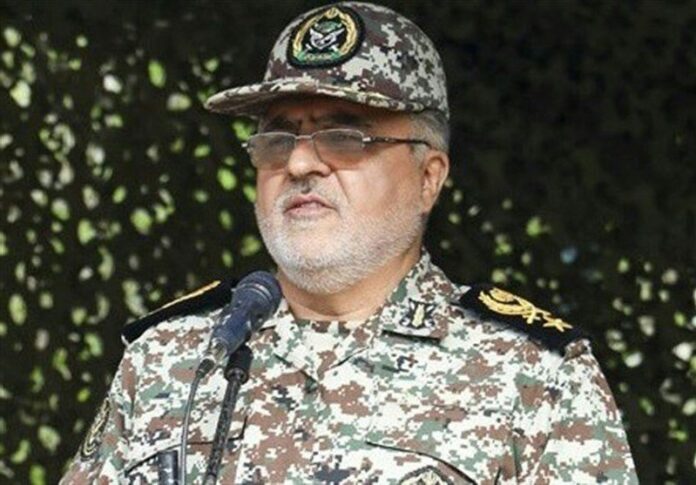
Iran general: Northwestern borders will not change

“All legal borders must be preserved, and the possible weakness of one country in protecting its borders does not justify another country, with foreign aid, changing the borders, and the Islamic Republic of Iran does not allow this,” the general stated.

Heidari warned about Israeli efforts to destabilize the border between Iran and Azerbaijan Republic.

“In this region, we have an uninvited element that disturbs security…which is the illegitimate Zionist regime, and since this regime has come to this area, our vigilance about this border has grown, we are fully monitoring their activities,” he noted.

Iran has repeatedly warned that the Israeli regime is plotting to undermine friendly relations between Tehran and Baku.

Heidari touched on Armenia’s occupation of Nagorno-Karabakh, noting that Iran has always stressed the territorial integrity of Azerbaijan Republic and never approved the occupation.

The Army commander also said Iran is still concerned about terrorists that came from Syria to the area close to Iranian borders during the Nagorno-Karabakh conflict last year, and that their withdrawal has not yet been established.

The high-ranking general said Iran’s military drills in the northwestern part of the country and elsewhere are carried out after careful planning and are aimed at testing weapons, military equipment and assessing the combat readiness of the armed forces in defending the borders.

On Friday, the Army’s Ground Force launched military drills codenamed ‘Fatehan Kheibar’ in Iran’s northwest.

Heidari noted that the Islamic Republic of Iran has never been an aggressor over the last two centuries and has only defended itself.