Monday, December 22, 2025
Home Blog Page 238

#GazaIsStarving trends on social media

Gaza War

On Sunday, the Arabic version of the hashtag had appeared in more than 227,000 posts on X, where it recently topped the platform’s trending list. On Instagram, the hashtag has been used in more than 5,000 posts.

Most posts are attributing to a post from October 31, 2023, quoting Palestinian surgeon Ghassan Abu Sittah’s warning: “People have started going hungry.”

Nearly two years later, the phrase has become a global rallying cry as Israeli forces kill dozens of starving Palestinians every day.

The social media trend also came amid warnings from the United Nations and other aid agencies that Israel is starving Palestinian civilians, including more than a million children, by blocking food and medicines from entering the enclave.

Since May, nearly 900 Palestinians have been killed near aid sites run by GHF, a notorious aid agency backed by Israel and the United States.

Under the hashtag #GazaIsStarving, social media platforms have been flooded with images and videos showing the extent of the humanitarian crisis, which many countries and rights groups have called a genocide.

Israel has killed nearly 59,000 Palestinians, most of them women and children, in Gaza since October 2023. The relentless bombing has destroyed the enclave, almost collapsed the health system, and created famine-like conditions.

Last November, the International Criminal Court issued arrest warrants for Israeli Prime Minister Benjamin Netanyahu and his former Defense Minister Yoav Gallant for war crimes and crimes against humanity in Gaza.

Israel also faces a genocide case at the International Court of Justice for its war on the enclave.

Tehran to shut down on Wednesday amid soaring temperatures, water crisis

Water Crisis

In a statement shared on social media, Mohajerani said the Cabinet’s decision comes as the Iranian capital, Tehran, endures unusually high temperatures and the country faces a worsening water shortage.
“This is an opportunity for rest, short travel, or spending time with family – while observing safety measures and energy-saving guidelines,” she wrote.

The decision follows growing concerns over the compounded impact of the heatwave and Iran’s long-standing water crisis. Authorities recently confirmed that water reserves in Tehran’s main dams have reached their lowest level in over a century, while the capital faces one of the most severe droughts in 60 years.

Meteorological forecasts indicate that temperatures in Tehran are expected to soar above 40°C (104°F) this week, exacerbating the strain on energy and water infrastructure. Officials continue to urge the public to minimize non-essential consumption of electricity and water during peak hours to prevent further pressure on national grids.

Iran’s army commander says Tehran replaced air defenses damaged in Israeli attacks

Speaking on Sunday, Rear Admiral Mahmoud Mousavi said Iran’s radar and air defense systems were among the first targets of Israel in its 12-day cowardly assault, but the Air Defense Force personnel remained at their stations around the clock and confronted the enemy.

“The Zionist enemy sought to destroy Iran’s defense capabilities, and some of our defense systems were damaged in this war,” he added.

“With the efforts of my comrades, however, the damaged systems were replaced and deployed at pre-determined locations.”

Mousavi also noted that by using the existing air defense systems and the new replacements, the Iranian forces managed to cover the country’s skies, and thus the enemy failed to achieve its objectives.

He further stated that Israel did not enter the war alone and that the United States and NATO helped it.

“The capacity of the Iranian Armed Forces is beyond what the illegitimate Zionist regime can counter. However, the supporters of this usurping regime have been aiding it for months by gathering intelligence, and we consider the US complicit in the Zionist regime’s crimes,” he pointed out.

The commander also emphasized that the Iranian nation stood alongside the country’s Armed Forces during last month’s aggression and demonstrated unbreakable unity.

On June 13, Israel launched a blatant and unprovoked aggression against Iran, killing at least 1,060 people, including military commanders, nuclear scientists, and ordinary civilians.

More than a week later, the United States also entered the war by bombing three Iranian nuclear sites in a grave violation of international law.

In response, the Iranian Armed Forces targeted strategic sites across the occupied territories as well as the al-Udeid air base in Qatar, the largest American military base in West Asia.

On June 24, Iran, through its successful retaliatory operations against both the Israeli regime and the US, managed to impose a halt to the terrorist assault.

President Pezeshkian: Tackling Iran’s water crisis requires structural, region-specific solutions

Speaking on Sunday at a government-academic symposium focused on sustainable water management, he emphasized that the water shortage is not a temporary issue but a long-term national challenge.

“The crisis cannot be solved through fragmented projects,” Pezeshkian said.

“We need consistent efforts anchored in five key pillars: integrated water-soil-crop engineering, effective education, incentive policies, strict legal enforcement against violations, and continuous evaluation and oversight.”

He called for the establishment of expert joint task forces between government bodies and academic institutions to design context-specific solutions at the provincial and county levels, noting the vast climatic and geographical differences across Iran.

Pezeshkian also highlighted the importance of raising public awareness.

“Both policymakers and citizens must understand the urgency. We must make water data widely accessible and embed water conservation into educational curricula.”

Meanwhile, Tehran’s water utility announced that current reserves in the capital’s main dams have reached their lowest levels in a century, citing an unprecedented five-year drought and record-low rainfall as contributing factors. The province now faces its most severe water stress in six decades.

Over 1,000 dead in week of fighting in Syria’s Sweida

Humanitarian convoys were readying to enter Sweida to ease the impact of days of sectarian violence that broke out last weekend between Syrian Bedouin, Druze and government forces.

Since midnight, “Sweida has been relatively calm”, the Syrian Observatory on Human Rights (SOHR) reported, saying more than a thousand people had been killed over the past week.

The deaths included 336 Druze fighters and 298 Druze civilians, 194 of whom were “summarily executed by members of the Defense and Interior Ministries”.

Also among the dead were 342 members of government security forces and 21 Bedouin, including three civilians, who were “summarily executed by Druze fighters”.

In addition, 15 members of government forces were killed in Israeli strikes, according to the SOHR.

The observatory added security forces had blocked roads leading to the province on Sunday to prevent the arrival of factional fighters.

The interior ministry announced overnight that the city had been evacuated of all tribal fighters and that the clashes had ceased following President Ahmed al-Sharaa’s announcement of a ceasefire on Saturday.

A spokesperson for the Syrian Council of Tribes and Clans told Al-Jazeera that the fighters had left the city “in response to the presidency’s call and in accordance with the terms of the agreement”.

Residents have been left confined to their homes without electricity and water, while food supplies are scarce.

The US special envoy for Syria, Tom Barrack, stated on Sunday that the country was at a “critical moment”, calling for “peace and dialogue to prevail”.

“All factions must lay down their arms,” he wrote on X.

Fighting between Druze factions, Bedouin groups and troops loyal to Sharaa’s administration has rocked the region since last weekend, exacerbated by Israeli air strikes.

The Druze of Sweida had largely stayed out of Syria’s 14-year war, and the governorate saw protests over living conditions in the last few years of former President Bashar al-Assad’s rule.

Following his ouster in December, many Druze have remained wary of the new government led by Sharaa, the former leader of an al-Qaeda affiliate that carried out sectarian attacks on the community during the war.

Although Sharaa has rejected his previous affiliation and attempted to rebuild ties, several groups in Sweida have actively opposed his government.

Israel has also spent several days attacking Syria, citing the defence of the Druze community.

On Saturday, Washington declared it had brokered a truce between Israel and Syria to avoid further escalation.

Israel had bombed government positions in Sweida and Damascus earlier in the week, with some targeting the Syrian defence ministry, military headquarters and the vicinity of the presidential palace.

Iranians told to use less water amid shortages

Iran Water Crisis

Water scarcity is a major issue in Iran, particularly in arid provinces in the country’s south, with shortages blamed on mismanagement and overexploitation of underground resources as well as the growing impact of climate change.

On Saturday, the national meteorological service said Iran was experiencing its hottest week of the year so far, with temperatures exceeding 50C in some areas.

“People should conserve water to avoid drops in pressure,” stated Tehran city council chair Mehdi Chamran.

Authorities across Iran have issued similar appeals in recent days, asking residents in several provinces to limit water usage.

Tehran’s provincial water management company called to reduce usage by “at least 20 percent” to help ease the shortages.

In a statement, it announced that “the reservoirs of the dams supplying water to Tehran are currently at their lowest level in a century” following years of steady decline in rainfall.

Javan, a daily newspaper, reported on Saturday that authorities had reduced water pressure in parts of the capital in a bid to mitigate the crisis, resulting in “water outages lasting between 12 and 18 hours” in some areas.

Iran’s interior minister: Security indicators improved since war with Israel

Speaking on Sunday, Momeni stated that current insecurity indicators are better compared to the same period last year.

“The general security situation in the country is excellent,” he said, attributing the outcome to strong cooperation between citizens and the military, law enforcement, and intelligence agencies.

He noted that even in provinces where adversaries were reportedly planning to incite unrest, the security situation has significantly improved. “Our preparedness and unity have proven effective,” Momeni added.

Regarding preparations for the upcoming Arbaeen pilgrimage to Iraq’s shrine cities of Najaf and Karbala attended by millions of Iranians as well as Pakistanis and Afghans, the minister said the government had initiated planning months ago.

“We recently held a trilateral meeting with the interior ministers of Iraq and Pakistan to coordinate efforts and streamline the process for pilgrims,” he said.

Momeni emphasized that while recent conflict-related issues are still being managed, ongoing national events are not being neglected.

Israel holding talks with Hamas for first time on possibility of ending Gaza war: Report

Israel Hostages

“This negotiation is different than the ones that brought about the previous deals,” said the source, according to the Haaretz newspaper.

“While the previous deals dealt with the release of the hostages … this deal touches on the issue of ending the war. Therefore, everything is interconnected. This is a very complex deal,” he noted.

The source added that a proposed agreement includes a 60-day ceasefire during which 10 living Israeli hostages would be released, and intensive negotiations on ending the war would begin.

He stated the talks “touches on issues of how the war will end or continue, what will happen in Gaza and how all the hostages will be returned. Within the framework of the deal, there is an entire clause that deals with issues to be discussed regarding the end of the war. Both parties can add topics, and they will be discussed within the 60-day cease-fire.”

The source claimed that “the Israeli delegation embarked to Doha with a broad scope of action and a satisfactory mandate. There is enough flexibility to reach an agreement, without compromising on issues such as Israel’s security needs.”

Israeli media outlets, including the public broadcaster, KAN, reported Friday that Israel is considering sending a second delegation to Doha if the Palestinian side agrees to discuss the deal’s details, amid mediation by Qatar, Egypt and the US.

The proposals reportedly include a 60-day ceasefire, during which 10 living hostages and 18 bodies would be released, with final negotiations on ending the war to resume during the truce.

Despite gaps on issues such as the mechanism for aid delivery and Israeli troop deployment, Israeli sources still see the deal as possible, according to the Israeli broadcaster.

US President Donald Trump announced late Friday that 10 hostages in Gaza would be released soon.

Trump, whose administration offers unconditional support for Israel in its war on Gaza, did not provide details.

During the last 21 months, multiple rounds of indirect negotiations have been held between Israel and the Palestine resistance group, Hamas, to reach a ceasefire and carry out prisoner exchanges.

Two partial agreements were reached in November 2023 and in January.

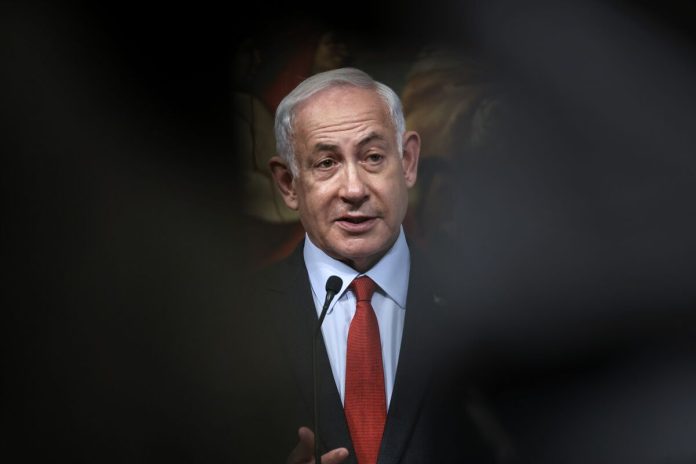
Israeli Prime Minister Benjamin Netanyahu, who is wanted by the International Criminal Court, avoided finalizing the latest agreement and resumed the war on March 18.

Hamas has repeatedly stated its willingness to release all Israeli hostages “in one batch” in exchange for ending the genocide and a full Israeli military withdrawal from Gaza.

Rejecting international calls for a ceasefire, the Israeli army has pursued a brutal offensive on Gaza since the end of 2023, killing nearly 59,000 Palestinians, most of them women and children.

The relentless bombardment has destroyed the enclave and led to food shortages and the spread of diseases.

Last November, the International Criminal Court issued arrest warrants for Netanyahu and his former Defense Minister Yoav Gallant for war crimes and crimes against humanity in Gaza.

Israel also faces a genocide case at the International Court of Justice for its war on the enclave.

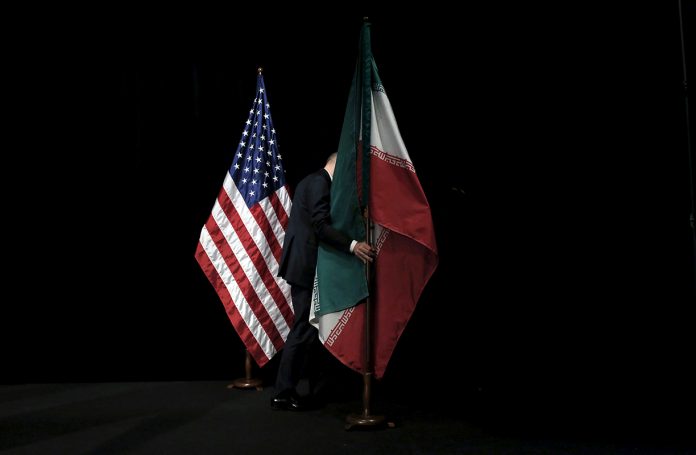
Iran, EU3 agree to resume nuclear negotiations: Tasnim

Nuclear Talks in Vienna

The informed source told Tasnim that Tehran and the European troika have come to an agreement in principle on the resumption of the talks about Iran’s nuclear program, but the timing and location of the negotiations are under debate.

The decision as to which country will be hosting the upcoming talks has not been finalized yet, the source said.

Tasnim had obtained information earlier that Iran was considering a request from the EU3 about the resumption of talks on the nuclear issue and the removal of sanctions.

Reports suggest that the next round of talks will be held at the level of deputy foreign ministers of Iran, the UK, France and Germany.

Tens of thousands of Israelis rally in Tel Aviv demanding Gaza ceasefire

Israel Protest

The Yedioth Ahronoth newspaper said demonstrators marched from Hostage Square in central Tel Aviv toward the US Embassy branch on HaYarkon Street, demanding a comprehensive agreement.

The daily reported that protesters carried banners and chanted for an end to the war and the immediate return of the hostages.

Former hostages released by Hamas also reportedly took part in the march.

Participants issued direct appeals to Israeli leaders and US President Donald Trump to move toward finalizing a comprehensive deal.

The paper added hundreds of demonstrators held similar protests in other areas, including Karkur Junction and Rothschild Street in Caesarea in the north.

During the last 21 months, multiple rounds of indirect negotiations between Israel and Hamas have been held to end the war and facilitate a prisoner exchange.

Two partial agreements were reached in November 2023 and in January.

Israeli Prime Minister Benjamin Netanyahu, who is wanted by the International Criminal Court, backed away from finalizing the latest agreement and resumed the war on March 18.

Hamas has repeatedly affirmed its readiness to release all Israeli hostages “in one batch” in exchange for an end to the genocide and the withdrawal of Israeli forces from Gaza.

Rejecting international calls for a ceasefire, the Israeli army has pursued a brutal offensive on Gaza since the end of 2023, killing nearly 59,000 Palestinians, most of them women and children.

The relentless bombardment has destroyed the enclave and led to food shortages and the spread of diseases.

Last November, the International Criminal Court issued arrest warrants for Netanyahu and his former Defense Minister Yoav Gallant for war crimes and crimes against humanity in Gaza.

Israel also faces a genocide case at the International Court of Justice for its war on the enclave.