Monday, December 22, 2025
Home Blog Page 2379

Seoul says North Korea launches ‘unidentified projectile’

According to Seoul-based Yonhap News Agency, South Korea’s Joint Chiefs of Staff gave no indication of what type of missile had been fired. However, the senior brass typically only issue alerts if they believe the test was of a ballistic missile.

The DPRK has used the Sea of Japan to test a number of new short-range ballistic missiles in recent years, but the socialist country also recently unveiled a new missile fired from a train car, intended to enhance its survivability from a strike by another nation. They have also recently tested a long-range cruise missile.

According to Japan’s Kyodo News, the Japanese Defense Ministry reported the DPRK had fired a single missile and there was a low possibility it had landed in Japan’s exclusive economic zone.

The US military later announced there is no immediate threat from the North Korean missile launch.

“We are aware of the missile launch and are consulting closely with our allies and partners. While we have assessed that this event does not pose an immediate threat to U.S. personnel or territory, or to our allies, the missile launch highlights the destabilizing impact of the DPRK’s illicit weapons program,” the United States Indo-Pacific Command (USINDOPACOM) said in a statement.

“The U.S. commitment to the defense of the Republic of Korea and Japan remains ironclad,” it added.

The test launch came just moments before the DPRK’s ambassador to the United Nations was set to address the UN General Assembly underway in New York.

Taking the podium in New York, Ambassador Kim Sung said no one can deny the DPRK’s right to self defense and to test weapons, given the hostile policies of other nations.

“The possible outbreak of a new war on the Korean Peninsula is contained not because of the U.S.’s mercy on the DPRK,” Kim stated, adding, “It is because our state is a growing reliable deterrent that can control the hostile forces in the attempts of a military invasion.”

However, he indicated that if the US gives up its “hostile policy, we are also prepared to respond willingly at any time”.

Kim added that if the US is serious about ending the Korean War, it should give up its hostile policy and stop its military exercises aimed at the DPRK, as well as the deployment of strategic weapons.

“But it is our judgment that there is no prospect at the present stage for the US to really withdraw its hostile policy,” Kim said.

Earlier on Monday, a spokesperson for the US Department of State noted Washington is “prepared to meet with the DPRK without preconditions and we certainly hope that the DPRK will respond positively to our outreach”.

The test comes a day after Kim Yo Jong, Deputy Department Director of the Publicity and Information Department of the Workers’ Party of Korea, also said the country remains open to an inter-Korean summit with leaders from the Republic of Korea, as the South is officially known, but only if mutual “respect” and “impartiality” are guaranteed and the South drops its double-standards.

Last week, South Korean President Moon Jae-in called for a joint declaration on ending the state of war with the DPRK. The two nations discussed such an endeavor in 2018 amid a historic rapprochement and laid the groundwork for it in two declarations in April and September of that year. However, as peace talks between North Korean leader Kim Jong Un and then-US President Donald Trump stalled, so did inter-Korean talks.

The largest stumbling blocks have been strangling economic sanctions against the DPRK intended to force it to give up its ballistic missile and nuclear weapons programs, and the continued presence of 28,000 US troops in South Korea. Seoul has continued to engage in military drills with the US, which the North has announced indicate the South’s lack of seriousness about peace.

A state of war has existed since 1950 between the DPRK on one side and South Korea and the United States on the other. When the Japanese Empire surrendered to the Allies in 1945, ending World War II, the Soviet Union had only liberated half of Korea, which was a Japanese colony. Consequently, a socialist government prevailed in the north, and a capitalist government formed in the south, which passed to American control. The divide erupted in a civil war in 1949 that the North threatened to win, but a US-led military intervention in 1950 pushed the communist Korean People’s Army back almost to the Chinese border.

A Chinese all-volunteer force under North Korean command helped turn the tide of the war, and by the time a ceasefire was signed in 1953, the front lines had been pushed almost to where they were when the war began. However, the brutal war, which included massacres on both sides and US strategic bombing that leveled North Korean cities, left more than 2 million Koreans dead. A permanent peace treaty has never been signed, and Korea remains divided by a heavily defended demilitarized zone.

Taiwan seeking weapons against China


Taiwan needs to have long-range, accurate weapons in order to properly deter a China that is rapidly developing its systems to attack the island, the DM stated.

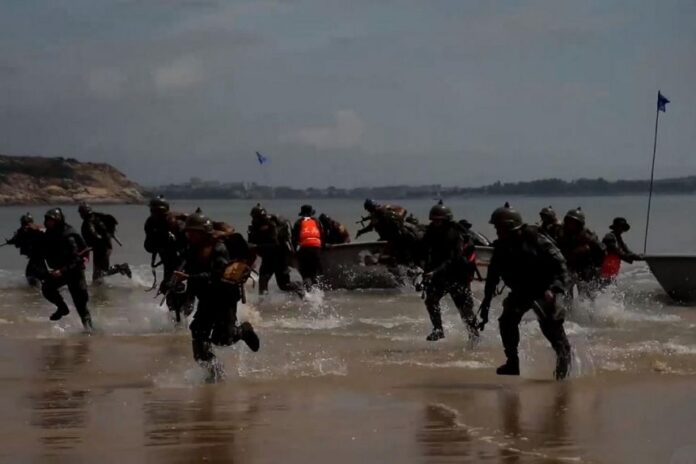
Taiwan this month proposed extra defence spending of almost $9 billion over the next five years, including on new missiles, as it warned of an urgent need to upgrade weapons in the face of a “severe threat” from giant neighbour China, which claims Taiwan as its own territory.

Speaking in parliament, Chiu noted Taiwan needed to be able to let China know they could defend themselves.

“The development of equipment must be long range, precise, and mobile, so that the enemy can sense that we are prepared as soon as they dispatch their troops,” he added, referring to Taiwan’s missile capability.

In a written report to parliament to accompany Chiu’s appearance, the ministry announced both medium- and long-range missiles were being used in intercept drills at a key test facility on Taiwan’s southeastern coast.

Chiu declined to give details to reporters of how far Taiwan’s missiles could reach, something the government has always keep well under wraps.

Taiwan offered an unusually stark assessment of China’s abilities in its annual report on China’s military, saying they could “paralyse” Taiwan’s defences and are able to fully monitor its deployments.

Chiu said it was important that Taiwan’s people were aware of the danger facing them.

Asked what China would attack first in the event of a war, Chiu answered that it would be Taiwan’s command and communications abilities.

“On this the Chinese Communists’ abilities have rapidly increased. They can disrupt our command, control, communications and intelligence systems, for example with fixed radar stations certainly being attacked first,” he continued, adding, “So we must be mobile, stealthy and able to change positions.”

President Tsai Ing-wen has made bolstering and modernising defences a priority, to make the island into a “porcupine” that is hard to attack.

Taiwan has complained for months of repeated Chinese military activity near it, particularly of air force jets entering Taiwan’s air defence zone.

China has been ramping up efforts to force the democratically governed island to accept Chinese sovereignty. Most Taiwanese have no shown no desire to be ruled by autocratic Beijing.

Source: Reuters

Iran Loses to Kazakhstan in 2021 FIFA Futsal World Cup Quarterfinals

Iran’s national futsal squad lost 3-2 to their rival and failed to advance to the quarterfinals.

Iran finished the first half 2-0, but Kazakhstan piled up the pressure and managed to score three goals only to find themselves among the top four teams.

In the semifinals, Argentina will face Brazil on Wednesday and Kazakhstan will play against Portugal on Thursday.

Belarus says jointly with Russia to respond to NATO drills

The United States is actually creating NATO bases in Ukraine under the guise of training centers, Lukashenko said at a meeting with top officials from the security, defense and law enforcement agencies on Monday.

“Ukraine-related issues require special attention. You can see that NATO troops are being dragged there. The United States is establishing bases in Ukraine. Clearly, we need to respond to that,” he pointed out, as cited by the BelTA news agency.

According to Lukashenko, he has repeatedly discussed the issue with Russian President Vladimir Putin. 

“The Russian president and I have been holding consultations on the issue, we have agreed that we need to take some action,” Lukashenko emphasized. 

“Otherwise, we will have to face an unacceptable situation on the border of Belarus and Russia, even missiles of the necessary range may be deployed there. We did not sign up for it and we cannot let it happen,” the Belarusian president stressed.

“Unfortunately, the Ukrainian authorities don’t care a bit about their own people and they don’t hear our concerns,” Lukashenko added.

Ukraine began joint military exercises with the US and other NATO countries last week, amid increased activity of the Western military alliance near Russia’s borders.

The Kremlin also warned on Monday that the expansion of NATO military infrastructure in Ukraine crossed a red line for Moscow. 

Source: TASS

China condemns UK warship sailing off Taiwan Strait

The HMS Richmond transited the narrow body of water separating China from Taiwan on Monday on its way to Vietnam. Taiwan’s military is monitoring the area and is on top of the situation there, according to the island’s Ministry of National Defense.

The Chinese military is “ready for any threat or provocation” and will as always be on high alert, said a military spokesperson after a UK warship transited the Taiwan Straits on Monday.

The Eastern Theater Command of the Chinese People’s Liberation Army (PLA) monitored the British Royal Navy warship HMS Richmond as it passed through the Taiwan Straits, stated Senior Colonel Shi Yi, spokesperson for the theater command.

This ill-intentioned behavior undermines peace and stability in the Taiwan Straits and exposes the speculative mentality of the UK, he added.

Tehran Slams Israel PM’s Anti-Iran Rhetoric as “Lies

Majid Takht-Ravanchi decried Bennett’s rhetoric, saying his speech about Iran was full of lies.

“Iranophobia peaked at the UN,” wrote Takth-Ravanchi in a tweet.

In his speech at the UN General Assembly on Monday, Bennett rehashed Tel Aviv’s rhetoric and accusations against Tehran’s peaceful atomic program.

Bennett acknowledged that Iran had taken a giant leap in the field of nuclear research and development over the past years, and added one cannot stop the centrifuges with words.

He claimed that Iran’s nuclear program had reached a point of quote no return and gone beyond all the red lines.

This comes as according the international monitoring organizations, Israel has a stockpile of about 400 nuclear warheads. 

The Israeli prime minister said Iran is seeking to promote Islamism, destroy Israel and expand its influence in Iraq, Lebanon, Syria and Gaza, claiming Tehran is trying to bring the whole Middle East under its nuclear umbrella.

“The speech by the Israeli premier about Iran was full of lies. This regime cannot talk about our peaceful nuclear program at a time when it has hundreds of nuclear warheads itself,” the Iranian official said.

“His (Bennett) silence toward Palestine indicates their determination to strip Palestinians’ of their rights,” the top Iranian diplomat said.

Officials: Fourth round of Iran-Saudi talks held in Iraq

The meeting held last week discussed “pending issues between the two countries according to a previously agreed on roadmap, including diplomatic representation between the two countries”, according to one Iraqi official.

The official, who spoke on condition of anonymity because he was not authorized to give official statements, said the meeting was not on a ministerial level, but described the talks as positive.

Iraq has recently played the role of mediator between the two regional foes whose rivalry has often played out to deadly consequences in Iraq and elsewhere in the region.

Multiple rounds of discussions have been held in Baghdad since the first direct talks between Riyadh and Tehran took place in early April. Saudi Arabia has sought talks with Iran as the kingdom tries to end its years-long war in Yemen against Iran-backed Houthi rebels, having lost an unflinching supporter in President Joe Biden’s predecessor, Donald Trump. Iran, meanwhile, appears to have calculated that a gradual detente with Saudi Arabia, a longtime U.S. ally, will work in its favor during renewed nuclear talks with Washington and world powers.

Last month, Baghdad hosted a regional conference that brought together Arab heads of state and senior officials including the foreign ministers of Iran and Saudi Arabia. The meeting, meant to ease Mideast tensions, cemented Baghdad’s new role as mediator. 

The meeting last week is the first since Iranian hard-line President Ebrahim Raisi took office in August. It was not clear how much progress, if any, has been made in the talks.

Iran and Saudi Arabia have long been regional rivals. Relations worsened considerably in 2016, when Riyadh removed its diplomats after protesters attacked its embassy in Tehran and consulate in Mashhad in retaliation for the kingdom executing a prominent Shiite cleric, Nimr al-Nimr.

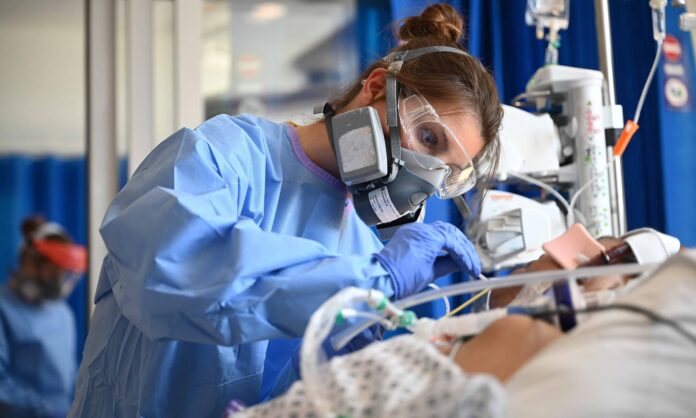
WHO to re-launch inquiry into coronavirus origins

The World Health Organization in Geneva has faced criticism from President Trump over its handling of the pandemic.

The new probe comes after an initial WHO inquiry — including visits to Wuhan, China, the site of the first confirmed COVID-19 outbreak in late 2019 — found that that the data provided by Chinese scientists was insufficient to answer critical questions about the virus’ origin. 

WHO officials stated that the new team of scientists, named the Scientific Advisory Group for the Origins of Novel Pathogens, may be charged with examining whether the novel virus emerged from a lab, as well as broader inquiries into future virus risks and the links with human behavior, according to the Journal.

The new team of scientists includes specialists in laboratory safety and biosecurity and experts in geneticists and animal disease. 

The United Nations agency is also saying that the new initiative will help accelerate an investigation that risks running out of time, and blood samples from early COVID-19 victims become unusable. 

U.S. officials such as Secretary of State Antony Blinken have been pressing WHO Director-General Tedros Adhanom Ghebreyesus to renew the inquiry. 

Chinese officials have insisted for months that the organization should be looking into other countries such as Italy and the U.S. regarding the origins of the virus.

China’s President Xi Jinping told the UN general assembly that his country will continue to support global science-based opinions, but are still opposed to “political maneuvering in whatever form”.

Source: The Wall Street Journal

Report: US plotted abducting or assassinating Assange

The US authorities are not really fans of Assange, but the CIA under Directors Mike Pompeo and Gina Haspel took the hate for the WikiLeaks founder to a whole new level – up to planning his assassination, a group of Yahoo News investigators claims, citing accounts of anonymous former officials.

Prior to their appointment, the top US spy agency’s plans were limited to reclassifying Assange and many other journalists as “information brokers” thus extending the capabilities for surveillance over them, the media claims. 

Upon his appointment as director of the CIA, Pompeo first suggested calling WikiLeaks a “non-state hostile intelligence service”. Yahoo News claims it was not an accidental phrase – should the whistleblowing site be reclassified, it would allow the CIA to treat it as a foreign intelligence agency and act against it without any oversight.

“I don’t think people realise how much [the] CIA can do under offensive [counterintelligence] and how there is minimal oversight of it”, a former official said.

Everything changed after WikiLeaks released Vault 7 – a special toolkit used by the CIA in its cyber offensive operations. Yahoo’s sources claim that afterward Pompeo and then-CIA chief Haspel wanted Assange’s blood. In 2017, they reportedly explored various avenues to carry out a “rendition” – to snatch the WikiLeaks’ founder from the Ecuadorian Embassy in London he had been hiding in, transport him to a third country, which, in turn, would hand him over to the US.

“There was a discussion with the Brits about turning the other cheek or looking the other way when a team of guys went inside and did a rendition. But the British said, ‘No way, you’re not doing that on our territory, that ain’t happening’,” one of the media’s sources recalled.

The CIA’s reported plans escalated even further, when the American intelligence community was purportedly tipped off about Russia allegedly planning to bust Assange out of the UK. The US spy agency then started planning ways to intercept the whistleblower, the Yahoo investigation claims: crashing a car into a Russian diplomatic vehicle carrying the man, shooting out the tyres of a Russian plane with the journalist on board, or outright starting a gunfight on London’s streets with Kremlin operatives.

“It was beyond comical. It got to the point where every human being in a three-block radius [around the Ecuadorian Embassy] was working for one of the intelligence services – whether they were street sweepers or police officers or security guards,” one anonymous former senior official told Yahoo.

The media outlet’s sources insist that there was even a plan to outright assassinate Assange, just to prevent him from falling into Russian hands and escaping US prosecution. There was also reportedly more mild plots – such as dragging Assange out of the Ecuadorian Embassy and handing him over to the British authorities, who wanted him on charges of breaching his bail conditions.

There were various reasons why the CIA’s wild plans were never put into motion, Yahoo claims. Some American officials strongly objected to getting Assange this way, especially in the National Security Council. One intelligence official slammed the plot as “ridiculous”, pointing out that “this isn’t Pakistan or Egypt – we’re talking about London”.

The Trump administration, for its part, reportedly worried that in the event of a failure, such operations would render Assange’s prosecution impossible under US laws thus jeopardising the case against him.

In the end, none of these plans reported by Yahoo News came to fruition, including the plot to bust Assange out of the UK that Yahoo’s sources claimed Russia was planning. Instead, Assange is still in the UK and is fighting the US extradition attempts – even after a British judge already rejected one endeavour.

Macron hit by egg at Lyon’s trade fair

The man who threw the egg was immediately removed from the room after the incident and detained.

The egg bounced off Macron’s shoulder without breaking.

“If he has something to say to me, let him come,” the French President said, asking to see the man.

The incident happened during Macron’s visit to the stands of the International Catering, Hotel, and Food Show (SIRHA).

In June, Macron was also hit in the face by a man on the sidelines of a trip to Tain-L’Hermitage.

The French President was warmly greeted by restaurant professionals at the trade fair in Lyon, with many thanking Macron’s government for providing state aid to the industry during the COVID-19 pandemic.