Monday, December 22, 2025
Home Blog Page 2377

Taliban threatens US over drone mission in Afghanistan

In a statement on Tuesday, the group pointed to its responsibility for the country’s territory, including its airspace, and recalled Washington’s obligations under the February 2020 Doha peace agreement.

“The United States has recently violated all international law and its commitments to the Islamic Emirate in Doha, Qatar, and Afghanistan’s sacred airspace is being occupied by US drones. These violations must be corrected and prevented,” the Taliban stressed.

“We will call on all countries, especially the United States, to abide by their international commitments and laws in order to prevent any negative consequences,” the Taliban stated.

The group did not elaborate on what these “consequences” might be.

Late last month, a US drone strike targeting Daesh militants responsible for the 26 August attack on the Kabul Airport ended up accidentally killing ten civilians, including seven children and an aid worker. Washington has reserved itself the right to continue drone strikes throughout the country against suspected terrorists.


After taking over Afghanistan last month, the Taliban captured an arsenal of mostly US-made weapons worth tens of billions of dollars, including small arms and light weapons, grenade launchers, mine-resistant vehicles, thousands of Humvees, mobile and towed artillery, and howitzers, bulldozers, excavators. What’s more, they now posses a small number of aircraft, most of which are partially disassembled helicopters, but also drones, scout attack choppers, and UH-60 Black Hawks.

Countries in the region have expressed concerns over the fate of this arsenal, with Russia expressing hope last month that the arms would not be used in a potential civil war. Others have warned that part of the haul may end up on the international arms market, or in the hands of terrorist groups such as Daesh and al-Qaeda. The United States gifted Afghan security forces some $28 billion in weapons between 2002 and 2017, with virtually all of this equipment, apart from that which has been destroyed, falling into the Taliban’s hands.

Source: Sputnik

FBI data show record rise in 2020 US homicides

The U.S. murder rate increased nearly 30% in 2020, according to the FBI, the largest percentage increase in modern U.S. history, with almost 5,000 more murders last year than the year before, though the rate is still down from the heights reached during the violent 1990s.

The bureau released its Uniform Crime Report statistics and estimated there were 21,570 murders in the United States last year, an increase of 29.4% from 2019, with 4,901 additional murders in 2020. In raw numbers, 2020 saw more total murders than any year since 1995, when an estimated 21,610 people were murdered in the U.S., though the total U.S. population has expanded by tens of millions of people since then, meaning the overall murder rate in the U.S. is still lower.

The data shows the murder rate rising to large heights in the summer of 2020 and then remaining above normal the rest of the year. The jump is the biggest since this data started being collected like this in the 1960s.

The bureau said that 15,897 federal, state, county, city, college, and tribal agencies submitted data for the 2020 report. The murder rate is believed to have continued to increase in 2021 from 2020, though at a slower rate than the difference between 2020 and 2019, although data on that is much more limited.

The murder rate in 2020 was roughly 6.5 per 100,000 people, which is still down from the homicide rates of the 1980s and 1990s but is unprecedented in recent years.

Nationwide unrest was unleashed last year after George Floyd, a 46-year-old unarmed black man, died in police custody on May 25, 2020, after Minneapolis police officer Derek Chauvin pinned him down by placing a knee on his neck and back for more than nine minutes as Floyd and onlookers called on the police to stop. Chauvin, 45, was found guilty in April on charges of second-degree unintentional murder, third-degree murder, and manslaughter.

Footage of Floyd’s death in police custody set off a wave of outrage, leading to protests in major cities across the nation, many of which became violent as protesters rioted, looted stores, destroyed property, burned buildings, and clashed with police. Rioting in Minneapolis resulted in hundreds of millions of dollars in damages, with many buildings destroyed never replaced. The Black Lives Matter movement helped lead the protests in the U.S. and around the world, with calls to “defund the police”. Some Democrats embraced the “defund the police” messaging too.

The rise in violence also occurred amid a global COVID-19 pandemic which, according to Johns Hopkins University, has killed 688,000 people in the U.S. and 4.75 million people worldwide. The coronavirus pandemic was accompanied by lockdown orders from many governors and mayors, schools being shut down, rises in unemployment and economic uncertainty, and more. Drug overdose deaths in 2020 rose to roughly 93,000 in 2020 — also a 29% increase from 2019.

The FBI added that “for the first time in four years, the estimated number of violent crimes in the nation increased when compared with the previous year’s statistics”, with an overall 5.6% increase in violent crime in 2020 and 1.3 million violent crimes recorded. The bureau stated that aggravated assault offenses rose 12.1% and the volume of “murder and nonnegligent manslaughter offenses” increased by 29.4%. The bureau noted that property crimes dropped 7.8 %, however, making last year the 18th consecutive year when such crimes declined. The FBI said the number of robberies dropped by 9.3% and the number of rapes fell by 12%.

The Joe Biden Justice Department unveiled a new strategy in May to combat violent crime, arguing the Donald Trump DOJ’s Operation Legend approach last year was insufficient.

Source: Washington Examiner

Probe: Women sexually abused by WHO staff in DRC

An independent investigation commissioned by the WHO has identified more than 80 alleged cases of sexual abuse during the global health agency’s response to an Ebola outbreak in the DRC, including allegations implicating 20 staff members.

The 35-page report released on Tuesday exposed the most widescale sexual wrongdoing linked to a United Nations institution in years, committed by personnel hired locally as well as members of international teams in the country from 2018 to 2020.

It described how “Jolianne” – said to be the youngest of the alleged victims – had recounted that a WHO driver had stopped to offer her a ride home as she sold phone cards on a roadside in the town of Mangina in April 2019.

“Instead, he took her to a hotel where she says she was raped by this person,” the report added. 

Alleged victims “were not provided with the necessary support and assistance required for such degrading experiences”.

Malick Coulibaly, a member of the independent panel, said during a media briefing that there were nine allegations of rape. The women interviewed said the perpetrators used no birth control, resulting in some pregnancies. Some women said the men who had abused them forced them to have abortions, Coulibaly added.

The commission interviewed dozens of women who were offered work in exchange for sex, or who were victims of rape.

The investigators were able to obtain the identity of 83 alleged perpetrators, both Congolese nationals and foreigners. In 21 cases, the review team was able to establish with certainty that the alleged perpetrators were WHO employees during the Ebola response.

Their report painted a grim picture, citing “clear structural failures” and “individual negligence”. It noted “the scale of incidents of sexual exploitation and abuse in the response to the 10th Ebola outbreak, all of which contributed to the increased vulnerability of ‘alleged victims’ who were not provided with the necessary support and assistance required for such degrading experiences”.

It also decried belated training for staffers to prevent sexual abuse or exploitation, a refusal from managers to consider cases that were only provided verbally and not in writing, and other breakdowns and managerial shortcomings in handling the alleged misdeeds in nine separate cities or villages in the region.

Passy Mulabama, founder and executive director of the Action and Development Initiative for the Protection of Women and Children in the DRC (AIDPROFEN), stated the findings were “unacceptable”.

“The DRC has been affected by conflicts for so many years … and it’s just unacceptable that humanitarians can still be responsible for sexual assault and sexual exploitation of women and children,” Mulabama told Al Jazeera.

“[The people] who are responsible for this exploitation and abuse have to be punished for what they’ve done,” she added.

WHO Director-General Tedros Adhanom Ghebreyesus called the document “harrowing” reading and offered his apology to the victims and survivors.

“It is my top priority that the perpetrators are not excused but held [to] account,” he told a news conference.

Matshidiso Moeti, the WHO’s regional director for Africa, said the agency was “heartbroken” by the findings.

“We in the WHO are indeed humbled, horrified and heartbroken by the findings of this inquiry,” she said.

“We apologise to these people, to the women and the girls, for the suffering they have had because of the actions of our staff members and people that we have sent into their communities,” she added.

Tedros appointed the panel’s co-chairs to investigate the claims last October after media reports said unnamed humanitarian officials sexually abused women during the Ebola outbreak that began in the DRC in 2018.

At the time, the WHO chief declared he was “outraged” and pledged that any staffers connected to the abuse would be dismissed immediately.

Reports quoting Western diplomatic sources said four people have been fired and two placed on administrative leave, based on a closed-door briefing involving WHO that was provided to diplomatic officials in Geneva.

Julie Londo, a member of the Congolese Union of Media Women (UCOFEM), a women’s organisation that works to counter rape and sexual abuse of women in the DRC, applauded WHO for punishing staffers involved in the abuse allegations but said more was needed.

“WHO must also think about reparation for the women who were traumatized by the rapes and the dozens of children who were born with unwanted pregnancies as a result of the rapes,” she noted.

“There are a dozen girls in Butembo and Beni who had children with doctors during the Ebola epidemic, but today others are sent back by their families because they had children with foreigners … We will continue our fight to end these abuses,” she continued.

Source: Al Jazeera

Japan’s ex-FM to become next PM

Kishida won the governing party leadership election on Wednesday and is set to become the next prime minister of Japan, facing the imminent task of addressing a pandemic-hit economy and ensuring a strong alliance with Washington to counter growing regional security risks.

Kishida replaces outgoing party leader Suga, who is stepping down after serving only one year since taking office last September.

As new leader of the Liberal Democratic Party, Kishida is certain to be elected the next prime minister on Monday in parliament, where his party and coalition partner control the house.

Kishida beat popular vaccinations minister Taro Kono in a runoff after finishing only one vote ahead of him in the first round where none of the four candidates, including two women, was able to win a majority.

Results showed Kishida had more support from party heavyweights who apparently chose stability over change advocated by Kono, who is known as something of a maverick.

The new leader is under pressure to change the party’s high-handed reputation worsened by Suga, who angered the public over his handling of the coronavirus pandemic and insistence on holding the Summer Olympics in Tokyo.

The long-ruling conservative Liberal Democratic Party desperately needs to quickly turn around plunging public support ahead of lower house elections coming within two months.

Kishida called for growth and distribution under his “new capitalism”, saying that the economy under Abe had only benefited big companies.

Overall, little change is expected in key diplomatic and security policies under the new leader, said Yu Uchiyama, a political science professor at the University of Tokyo.

All of the candidates support close Japan-U.S. security ties and partnerships with other like-minded democracies in Asia and Europe, in part to counter China’s growing influence and a threat from nuclear-armed North Korea.

Wednesday’s vote was seen as a test of whether the party can move out of Abe’s shadow. His influence in government and party affairs has largely muzzled diverse views and shifted the party to the right.

Kishida is also seen as a choice who could prolong an era of unusual political stability amid fears that Japan could return to “revolving door” leadership.

“Concern is not about individuals but stability of Japanese politics,” Michael Green, senior vice president for Asia at the Center for Strategic and International Studies, told a telephone briefing ahead of the vote. 

“It’s about whether or not we are entering a period in Japanese politics of instability and short-term prime ministership,” he stated, noting, “It makes it very hard to move forward on agenda.”

Suga is leaving only a year after taking office as a pinch hitter for Abe, who suddenly resigned over health problems, ending his nearly eight-year leadership, the longest in Japan’s constitutional history.

Source: The AP

IAEA chief: AUKUS deal tricky inspection-wise

The head of the United Nations atomic agency has said the AUKUS deal in which Australia will obtain nuclear submarine technology from the United States is a “very tricky” issue in terms of inspections but in can be managed.

The submarine deal is part of a three-way defence agreement announced by Washington, London and Canberra last month which infuriated France because Australia said it would cancel an existing order for French diesel-powered submarines.

It would also be the first time that a party to the nuclear Non-Proliferation Treaty obtains nuclear submarines, apart from the five nuclear weapons states recognised by the NPT – the United States, Russia, China, France and Britain. India, which has not signed the NPT, also has nuclear submarines.

“It is a technically very tricky question and it will be the first time that a country that does not have nuclear weapons has a nuclear sub,” Grossi, whose agency polices the NPT, told the BBC’s HardTalk programme in comments broadcast on Tuesday.

Grossi confirmed that an NPT signatory can exclude nuclear material from IAEA supervision, also known as safeguards, while that material is fuelling a submarine. It is a rare exception to the IAEA’s constant supervision of all nuclear material to ensure it is not used to make atom bombs.

“In other words, a country … is taking material away from the inspectors for some time, and we are talking about highly, very highly enriched uranium,” he added.

“What this means is that we, with Australia, with the United States and with the United Kingdom, we have to enter into a very complex, technical negotiation to see to it that as a result of this there is no weakening of the nuclear non-proliferation regime,” he stated.

He did not indicate how long those negotiations would last.

Source: Reuters

France signs military contract with Greece after losing sub deal

Europe needs to stop being naive when it comes to defending its interests and build its own military capacity, French President Emmanuel Macron stated on Tuesday after Greece sealed a deal for French frigates worth about €3 billion euros ($3.51 billion).

The strategic defence and security cooperation pact signed by the French and Greek presidents is part of efforts to increase European military autonomy, something Macron has said is even more vital after the reversal of the submarine deal with Australia.

“It contributes to European security, to the strengthening of Europe’s strategic autonomy and sovereignty, and thus to international peace and security,” Macron told a news conference alongside Greek Prime Minister Kyriakos Mitsotakis.

“This will tie us for decades,” Mitsotakis said of the agreement. 

Athens also has an option to buy a fourth frigate from France. It has already ordered some 24 Dassault-made Rafale fighter jets this year, making it the first European Union country to buy the warplane.

France was incensed earlier this month to find out that Australia had signed a deal with the United States and Britain for nuclear-powered submarine technology under a new AUKUS security partnership, in the process abandoning a 2016 deal in which Canberra had agreed to buy French diesel-powered submarines.  

The incident caused much soul-searching in Paris over its traditional alliances. Speaking for the first time in public on the issue, Macron on Tuesday seized the opportunity to urge more European autonomy as Washington increasingly reorientates its interests towards China and the Indo-Pacific.

“The Europeans must stop being naive. When we are under pressure from powers, which at times harden (their stance), we need to react and show that we have the power and capacity to defend ourselves. Not escalating things, but protecting ourselves,” Macron stressed.

But Australia’s decision will not change France’s own strategy in the Indo-Pacific region, he noted Tuesday, adding that the cancellation would have a relatively limited impact on France, concerning only a few hundred jobs.

Source: FRANCE24

Beijing rejects western media reports over safely in China

Beijing has dismissed “rumors” that Westerners are not safe in China and that they may be used as hostages in future diplomatic disputes, after two Canadians were released as Ottawa dropped charges against Huawei’s CFO.

On Tuesday, Chinese Foreign Ministry spokeswoman Hua Chunying hit back at the Western media and several “absurd rumors” after she was asked whether China had set a precedent by releasing two Canadians who were allegedly held as hostages, after Ottawa dropped charges against Huawei executive Meng Wanzhou. 

“It is exactly the same as the absurd rumors that some people in the United States and the West are accustomed to making, inciting appalling rumors on China-related issues,” Hua told gathered media at a daily press conference.

She contended the West and its media were simply trying to stir up negative feelings and slander China. The spokeswoman claimed that foreigners were indeed safe in China and that one must remember that Michael Spavor and Michael Kovrig were criminals. They had written confessions and even repented, she added.

The two men had been arrested on accusations of espionage on December 10, 2018, just nine days after Huawei CFO’s detention in Canada. Ottawa claimed the moves were retaliatory for the detention of Meng. Both men were sent back to Canada after Meng was released last week. 

Focusing on the US, Hua contended that everyone is aware that Washington is the inventor of hostage diplomacy, and such practices were below Beijing. “Through its own policies and actions, the United States has provided the world with many classic cases of coercive diplomacy,” she added.

The spokeswoman also pointed to the case of Frédéric Pierucci, a former executive of French multinational Alstom, who was detained in the US, accused of corruption. Pierucci contended he was an “economic hostage” as his arrest came at a time when US giant General Electric was negotiating the purchase of Alstom’s energy section. 

On Friday, Meng, who was arrested in Canada on a US warrant in 2018, left North America in a deal with US prosecutors. She was being held in Canada awaiting extradition to the US amid accusations she conspired to violate US trade sanctions with Iran.

Beijing frequently contended the move was an attempt to maintain US hegemony in the technology sector.

Spavor and Kovrig were released from China just hours later.

Source: RT

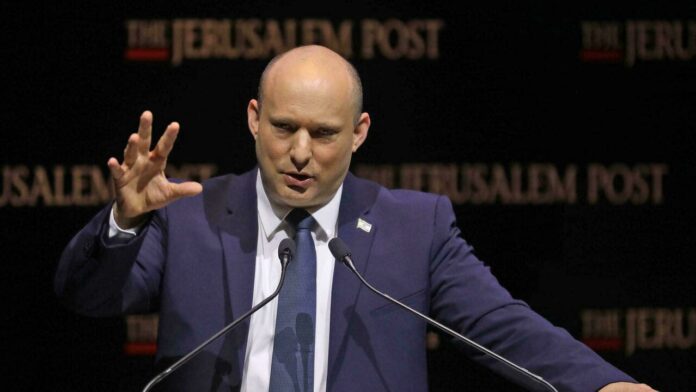
Biden refuses Israel’s proposal on US consulate location

During last month’s bilateral meeting at the White House, Bennett had apparently suggested that the US consulate – which had served as America’s de facto embassy to the Palestinians until it was shut down in 2019 by former President Donald Trump – be reopened on the outskirts of Ramallah in the West Bank or the town of Abu Dis to the east of Jerusalem.

But Biden was not interested in the idea, The Times of Israel reported on Tuesday.

Earlier this month, other reports emerged that Biden had repeatedly raised the issue during the meeting and stressed that he had made a campaign pledge to reopen the consulate in Jerusalem.

When Trump shifted the US embassy from Tel Aviv to Jerusalem, the consulate for Palestinians was incorporated into the embassy as the Palestinian Affairs Unit. The move angered Palestinians, who view East Jerusalem as the capital of a potential future Palestinian state.

A similar proposal to reopen the consulate outside of Jerusalem’s boundaries had reportedly been touted by former Israel PM Benjamin Netanyahu – and the Trump administration had designated Abu Dis and other neighborhoods on the outskirts of Jerusalem as the capital territory of a future Palestine. However, the plan prompted pushback from Palestinians.

Israel has strongly opposed the idea of reopening the consulate, with Bennett insisting that his “clear position” was that Jerusalem would remain the capital of “one country only: Israel”.

Foreign Minister Yair Lapid described Biden’s plan as a “bad idea” earlier this month and several right-wing ministers have said it would be an infringement on Israeli sovereignty. According to Lapid, reopening the mission would both “send the wrong message” and might “destabilize” Israel’s “delicate” governing coalition.

Besides being a diplomatic sore spot, there are also fears that opening the consulate might trigger a rift within Bennett’s broad coalition. The issue has now become a point of attack for Netanyahu, who is now opposition leader.

According to Israeli media reports, although Biden originally planned to reopen the consulate as part of his campaign pledge to restore ties with the Palestinian Authority, the US had put the brakes on this plan in order to prevent another Israeli election and until Bennett’s government passes a budget in November.

Since the Israeli government needs to approve any plans to reopen the consulate, it could collapse if even one member of its razor-thin majority in Parliament were to defect over the issue.

According to an Axios report, Bennett is seeking a “no drama” relationship with the Biden administration and hopes to settle the issue as quietly as possible after the budget passes.

US generals say disagreed with Biden over full Afghanistan withdrawal

The remarkable testimony pits top military brass against the commander-in-chief as the Biden administration continues to face tough questions about what critics are calling a botched withdrawal that directly led to the deaths of 13 American service members, scenes of chaos at the Kabul airport, and the abandonment of American citizens and at-risk Afghans in the war-torn country.

Gen. Kenneth “Frank” McKenzie, the commander of U.S. Central Command, told the Senate Armed Services in a hearing Tuesday that he recommended maintaining a small force of 2,500 troops in Afghanistan earlier this year.

He also noted that in the fall of 2020, during the Donald Trump administration, he advised that the U.S. maintain a force almost double the size, of 4,500 troops, in Afghanistan.

In answering questions from Sen. Jim Inhofe (R-Okla.) about his advice, McKenzie said he would not share his “personal recommendation” to the president.

But he went on to say that his “personal view”, which he said shaped his recommendations, was that withdrawing those forces “would lead inevitably to the collapse of the Afghan military forces and, eventually, the Afghan government”.

McKenzie also acknowledged that he talked to Biden directly about the recommendation by Gen. Scott Miller, the commander of U.S. Forces Afghanistan until July, that the military leave a few thousand troops on the ground, which Miller detailed in closed testimony last week.

“I was present when that discussion occurred and I am confident that the president heard all the recommendations and listened to them very thoughtfully,” McKenzie added.

McKenzie’s remarks directly contradict Biden’s comments in an Aug. 19 interview with ABC’s George Stephanopoulos, in which he said that “no one” that he “can recall” advised him to keep a force of about 2,500 troops in Afghanistan.

During the interview, Stephanopoulos asked Biden point blank: “So no one told — your military advisers did not tell you, “No, we should just keep 2,500 troops. It’s been a stable situation for the last several years. We can do that. We can continue to do that”?

Biden answered: “No. No one said that to me that I can recall.”

During the hearing on Tuesday, Inhofe next asked Gen. Mark Milley, chair of the Joint Chiefs of Staff, if he agreed with the recommendation to leave 2,500 troops on the ground. Milley answered affirmatively.

Sen. Dan Sullivan (R-Alaska) attempted to pin Milley down on Biden’s August remarks, repeatedly asking the general whether the comments constituted “a false statement”.

Milley declined to give a direct answer, stating only that “I’m not going to characterize a statement of the president of the United States”.

Sullivan then grilled McKenzie about the accuracy of the president’s statement, stressing that the general does not “have a duty to cover for the president when he’s not telling the truth”.

McKenzie again declined to criticize the president, noting only that “I’ve given you my opinion and judgment”.

Later in the hearing, Sen. Tom Cotton (R-Ark.) asked Milley if he should have resigned when the president decided to fully withdraw from Afghanistan against the generals’ advice.

Milley argued that resigning in protest would have been a “political act”, and that the president has no obligation to agree with his military advice. 

“It would be an incredible act of political defiance for a commissioned officer to just resign because my advice is not taken,” Milley said, stating that “this country doesn’t want generals figuring out what orders we are going to accept and do or not. That’s not our job”.

Milley added that his decision was also informed by the experience of his father, who fought at Iwo Jima.

“[My father] didn’t get a choice to resign,” Milley continued.

“Those kids there at Abbey Gate, they don’t get a choice to resign,” Milley underlined, referring to the 13 American service members who died during the evacuation from Kabul in late August when a Daesh suicide bomber detonated an explosive vest. 

“They can’t resign so I’m not going to resign. There’s no way,” he underscored.

Milley described the end of America’s two-decade war in Afghanistan as a “strategic failure”.

Appearing alongside Milley and McKenzie at a Senate Armed Services Committee hearing, Defense Secretary Lloyd Austin also acknowledged various mistakes the Biden administration made amid the drawdown, even as he touted the scale of the U.S. military’s massive evacuation effort out of Kabul’s main airport.

The question-and-answer session represented one of the first opportunities for congressional lawmakers to grill the Pentagon’s top brass on the planning and execution of the Afghanistan pullout, which devolved into chaos in August as the Taliban quickly overran the country and forced a hectic evacuation mission.

In his opening statement, Austin told senators that while the Pentagon “planned to evacuate between 70,000 and 80,000 people” from Hamid Karzai International Airport, American forces were ultimately successful in transporting more than 124,000 people out of Afghanistan.

The U.S. military also evacuated more than 7,000 people per day after initially planning “to move between 5,000 and 9,000 people per day”, Austin said, and “at the height of this operation,” an aircraft carrying evacuees “was taking off every 45 minutes”. 

“It was the largest airlift conducted in U.S. history, and it was executed in 17 days.” Austin continued, adding, “Was it perfect? Of course not.”

The defense secretary was similarly frank in assessing some of the longer-term oversights of the United States’ 20-year military presence in Afghanistan, concluding that “we helped build a state … but we could not forge a nation”.

“The fact that the Afghan army that we and our partners trained simply melted away — in many cases without firing a shot — took us all by surprise,” Austin said, adding, “And It would be dishonest to claim otherwise.”

Milley, in his own opening statement, described the withdrawal as a “10-year, multi-administration drawdown”, and told senators it was “clear” and “obvious” the war in Afghanistan “did not end on the terms we wanted, with the Taliban now in power in Kabul”.

The Joint Chiefs chair became more blunt as the hearing progressed, saying on at least two occasions that the end of the war in Afghanistan had been a “strategic failure”, despite the fact that the noncombatant evacuation that ended in late August was a “logistical success”.

“There’s been four presidents, 20 commanders on the ground, seven or eight chairmen of the Joint Chiefs, dozens of secretaries of Defense, et cetera” throughout the U.S. war in Afghanistan, Milley said, adding, “And outcomes like this are not determined in the last five days, the last 20 days or the last year, for that matter.”

“Outcomes in a war like this,” he continued, “an outcome that is a strategic failure — the enemy is in charge in Kabul, there’s no way else to describe that — that outcome is a cumulative effect of 20 years, not 20 days. And there are a huge amount of strategic, operational and tactical lessons that need to be learned from this.”

Both Milley and McKenzie also said the Trump administration agreement brokered last February in Doha, Qatar — which called for a gradual drawdown of U.S. troops in Afghanistan, with a total withdrawal set to be completed by May 1 of this year — negatively affected the morale of the Afghan security forces.

Milley went on to emphasize that the Taliban “was and remains a terrorist organization, and they still have not broken ties with al Qaeda”.

“I have no illusions who we are dealing with,” Milley said of the militant group now in control of Afghanistan, adding, “It remains to be seen whether or not the Taliban can consolidate power or if the country will further fracture into civil war.”

Milley stated the Pentagon “must continue to protect the United States of America and its people from terrorist attacks coming from Afghanistan,” warning that “a reconstituted al Qaeda or Daesh with aspirations to attack the United States is a very real possibility.”

The White House on Tuesday sought to minimize the impact of congressional testimony from top military officials that contradicted Biden’s past assertions that he was not urged to keep thousands of troops in Afghanistan.

“I think it’s important for the American people to know that these conversations don’t happen in black and white, like you’re in the middle of a movie,” press secretary Jen Psaki said during the daily press briefing.

Just prior to the briefing, Psaki pointed to part of Biden’s mid-August interview with ABC News in which the president acknowledged that military advisers were “split” on whether to leave a residual force in Afghanistan rather than having the U.S. completely withdraw.

“There was a range of viewpoints, as was evidenced by their testimony today, that were presented to the president, that were presented to his national security team, as would be expected,” Psaki told reporters Tuesday.

“He did not think it was in the interest of the American people, or the interest of our troops,” to keep forces in Afghanistan, she said.

She also downplayed the divergence between the testimony of military leaders and the White House on the withdrawal strategy, stating that Biden was not looking for “a bunch of yes men and women”.

“Ultimately, regardless of the advice, it’s his decision,” Psaki added.

Poll: 42% of Americans disapprove of Biden’s performance

Forty-seven percent of registered voters approve of Biden’s job in the White House, a new Hill-HarrisX poll finds, slightly down from his approval rate in August. 

The Sept. 24-25 survey found that 42 percent of voters disapprove of Biden’s job as president, while 11 percent said they neither approve or disapprove.

The same survey conducted on Aug. 20-21 found that 49 percent of registered voters approved of Biden’s job performance, compared to 43 percent who disapproved and 8 percent who were neutral.

On Monday, Biden received his COVID-19 booster shot after the Centers for Disease Control and Prevention (CDC) recommended boosters of the Pfizer vaccine for Americans over age 65 last week.

Controversy over his administration’s handling of boosters has been just one of many high-profile problems facing the president recently. A chaotic withdrawal from Afghanistan and the recent surge of Haitian migrants on the southern border have also put Biden on the defensive.