Friday, April 10, 2026
Home Blog Page 2376

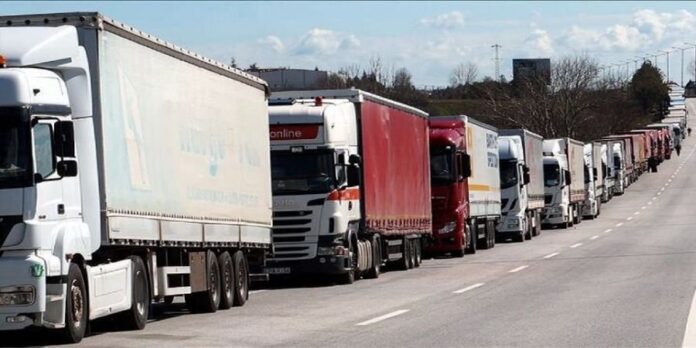
“Azerbaijan Republic frees detained Iranian truck drivers”

Iran’s Fars News Agency quoted a western news outlet as saying the release happened a day after Iran’s Foreign Minister Hossein Amir Abdollahian and his Azeri counterpart Jeyhun Bayramov spoke over the phone in the first direct effort to address tensions that began escalating two weeks ago.

Iran blames the tensions on the Israeli regime’s presence in the Azerbaijan Republic, saying the issue poses a threat to the Islamic Republic’s national security.

In response to the threat, Iran conducted military drills near the border with the Republic of Azerbaijan. The drills drew criticism from Baku, which denies the presence of the Israeli regime in the Republic of Azerbaijan.

Iran’s trade ties with Armenia also emerged as a flashpoint after Azerbaijan began imposing a road tax on Iranian trucks that use a critical trade corridor to ship goods to the Armenian capital.

That’s the Goris-to-Kapan highway. Azeri forces detained the two Iranian truck drivers on the highway.

During Tuesday call, Amir Abdollahian urged Bayramov to ease the transit of Iranian trucks and release the two Iranian truck drivers.

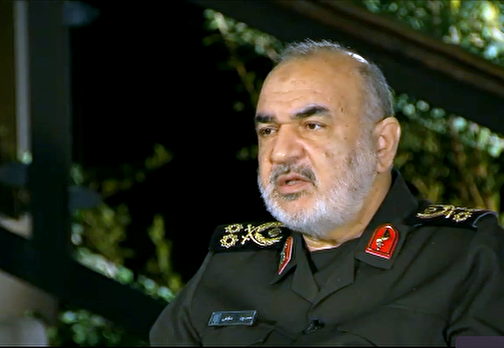
IRGC chief: Iran has developed sophisticated air defense systems

Salamai was speaking on Wednesday on the sidelines of the joint air defense drills codenamed Modafean Asemane Velayat 1400 in central Iran.

He added every year, Iran conducts this joint air defense drills in the face of various threat scenarios from the enemies. “I have been able to participate in these exercises annually, witness these developments closely, and judge and measure the rate of technological and tactical growth and development in the field of air defense”, he said. According the IRGC’s commander, the exercise featured an advanced profile of all aspects of air defense against an unpredictable scenario.

Salami noted that during the drills, there were two orange and blue forces in the role of the enemy and own forces and that all the targets that entered the area were shot down by the air defense systems.

He said the IRGC Air Force and the Army Air Defense have developed very modern and advanced systems.

He added, “We assure the honorable and dear people of Iran that the Army and Iran’s Islamic Revolution Guard Corps, as one force in two uniforms, will defend the territorial integrity and airspace of our Islamic homeland by developing very modern air defense systems against the most advanced powers in the world”.

The Commander-in-Chief of Iran’s Islamic Revolution Guard Corps said the message of the drills is unity.

Salami noted that the Army and the IRGC have a common goal although they are two separate organizations.

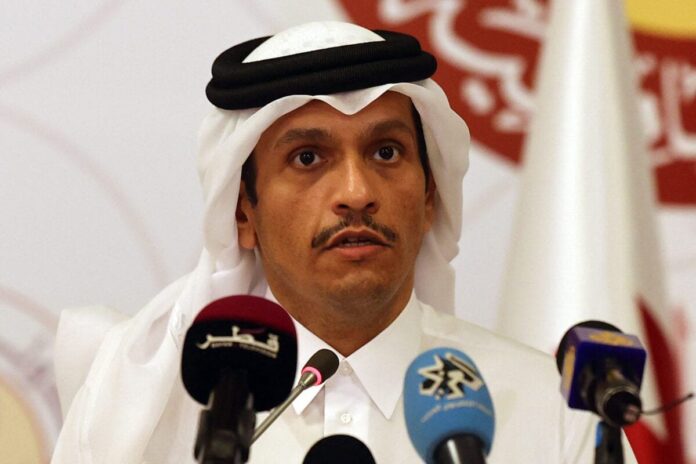
Qatar calls for (P)GCC engagement with Iran

“Engagement [with Iran] is important for all of us as the GCC countries,” the foreign minister stated.

“Our aim is to achieve a regional security understanding between the GCC and Iran,” he added.

“Iran is our neighbour, a player in our region … we cannot change geography. Our disagreements can be resolved around a table, they can’t be resolved by confrontation,” he continued.

Speaking about Qatar’s possible role in reviving Iran’s nuclear talks with world powers, he said, “It is in our interests to see the nuclear deal with Iran back in place and to see that there is no risk of a nuclear race in our region.”

“We are going to provide any support needed by all parties. We are talking and engaging with Iran, encouraging them and the US to go back to the deal,” the FM added.

“We have managed to contain several situations from exploding. Qatar will continue with this role because it is in our national interest. Iran is our neighbour, we share borders, water, gas fields … we need to see Iran flourishing and being an active, positive player in our region,” he stated.

Taliban blasts west for keeping mum on Afghanistan dire situation

Afghanistan is on the verge of a major humanitarian catastrophe, and Western countries continue to talk about separate issues, such as the education of women, Taliban spokesman Mohammad Naeem told Sputnik.

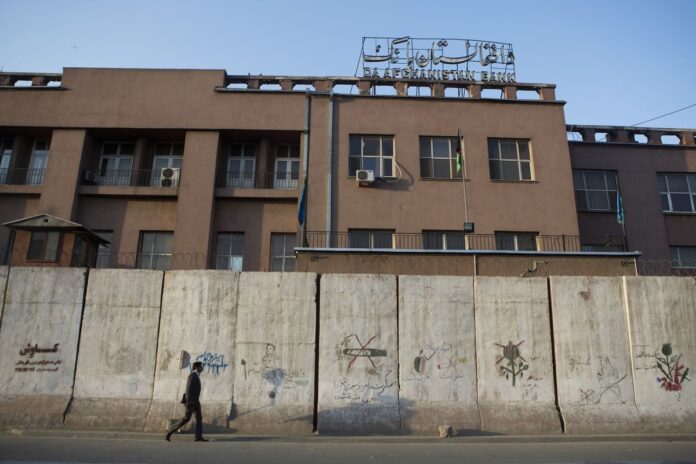
Representatives for the U.S., U.K. and several other western nations had opted to keep quiet about the Taliban’s ongoing request to unfreeze Afghan assets, he said.

Western countries refused to respond to the Taliba’s request to unfreeze foreign Afghan assets in Western banks, the spokesperson noted.

“Today, the Afghan government delegation met with representatives of the United States and about 15 European countries, including Norway, Italy, Germany, France, the UK, Sweden. We discussed well-known problems — human rights, women’s rights, the creation of a safe corridor for entry and exit from the country, as well as unfreezing Afghan foreign assets, which are the money of the people,” he added.

“It is the right of the people to return this money. However, we have not received any answer yet, they are silent and do not give us any answer. They mention the provision of humanitarian aid for certain amounts, but that’s all temporary solutions,” Naeem stated.

The Afghan delegation, which included members of the new government, made its first overseas visit to Qatar.

According to the spokesman, there is a difference between humanitarian and political issues, but ordinary people should not suffer from problems in politics.

According to the Taliban government, about $9-$10 billion of Afghan funds have been frozen in Western banks.

US State Department spokesperson Ned Price weighed in on the topic of Afghan assets on Tuesday, telling reporters during a news briefing that the US will make a decision regarding Afghanistan’s financial reserves on the basis of the future government’s conduct.

“When it comes to central bank reserves,… we will judge and interact with any future Afghan government on the basis of its conduct and its conduct in… key areas,” Price said during a press briefing.

The Joe Biden administration has decided to freeze billions of dollars of Afghanistan government reserves held in the US financial institutions to halt the Taliban from accessing these funds.

After the Taliban entered Kabul in mid-August, leading to the collapse of the US-backed Afghan government, the World Bank and the International Monetary Fund suspended financial aid to the new Afghan government. Their support accounted for nearly 75% of Afghanistan’s public expenditure. The United States has also frozen billions of dollars in assets belonging to the Afghan Central Bank.

Meantime, the Group of 20 (G20) has agreed to work together to avoid a humanitarian disaster in Afghanistan, even if it means having to coordinate efforts with the Taliban, Italian Prime Minister Mario Draghi said after hosting an emergency summit.

The European Union opened the talks on Tuesday by pledging one billion euros ($1.2bn), which will go to urgent humanitarian needs and also to assist neighbouring countries taking in Afghans who have been fleeing since the Taliban took control of the country on August 15.

Meanwhile, Naeem stated the Taliban is not going to remove ministers from the government under threat of US and UN sanctions; it is carrying out purges in the Interior Ministry and the Defense Ministry from people who have stained themselves with crimes.

On Monday, it was reported that the Afghan interim government held a meeting at which it was decided to expel “unwanted persons” from positions in the Taliban government or the leadership of the movement. Details were not provided.

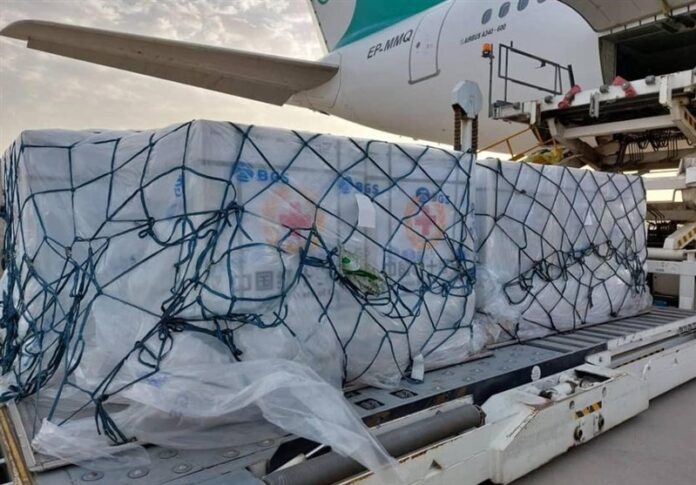
Iran receives new batch of Sputnik-V vaccine

The shipment contains 400 thousand doses of the vaccine including 200 thousand first shots and 200 thousand second shots of the jab. 

Iran has speeded up its vaccination campaign in recent weeks to contain the Coronavirus pandemic. The inoculation caused the fifth Covid-19 peak to subside in Iran. 

Authorities also put in place strict health protocols that were conducive to the downward trend in deaths, infections and hospitalizations. 

Most Iranians have received at least one dose of the vaccine now. Millions have also been fully inoculated. But officials are warning against laxity in observing the health protocols, saying that could lead to the sixth peak of the pandemic. 

The decrease in the number of new infections prompted authorities to relax some health measures like nighttime driving and traveling bans. This has tempted citizens to travel to tourist destinations across Iran by their millions. A report aired by the IRIB said that the boom in travels within a few days has increased the number of infections over the past few days. 

According to the Wednesday report of the Health Ministry, Covid-19 has killed 194 more people in Iran over the past 24 hours. The deaths push the total fatalities to 123,275 since the pandemic started. Meanwhile, 12,298 people tested positive for Covid in the last day, of whom 1,699 people were hospitalized.

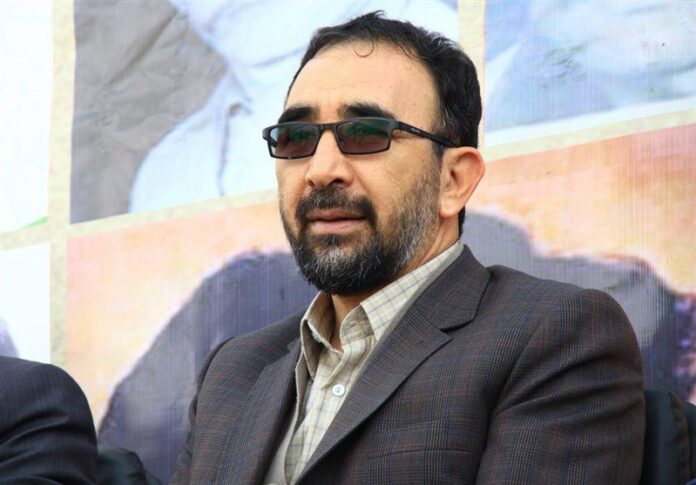
Khorasan Razavi’s new governor appointed

The governor of Khorasan Razavi is a key post given that the province is highly important strategically. 

Khorasan Razavi borders Afghanistan. The province exports huge quantities of goods to Afghanistan itself and is also used as a transit route for exports from other parts of Iran and even from other countries like Turkey to the neighboring country. 

Khorasan Razavi that houses the holey shrine of Imam Reza, the eighth Shia Imam, also hosts millions of pilgrims from across Iran and foreign countries each year who.  A study has shown that tourism in the province has the highest contribution to economic growth.

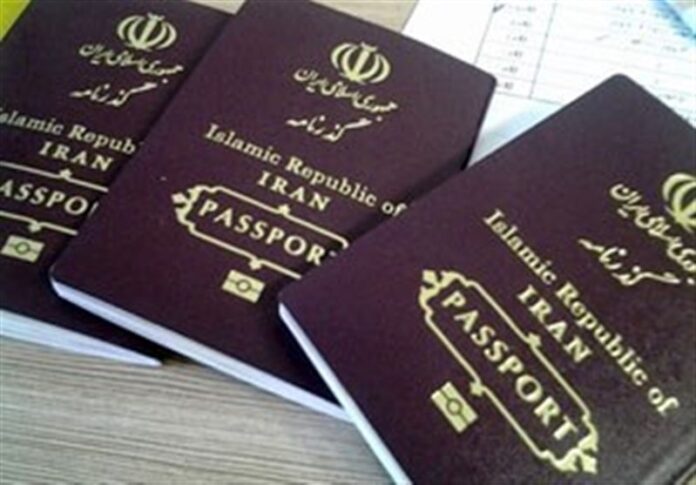
Mandatory visas to be waived for air travelers between Iran, Iraq

“According to Iraqi Prime Minister al-Kadhimi…visas are currently to be waived on air routes…this has not yet been implemented, meaning that the first pilgrim without a visa has not yet entered Iraq. But there is a permit and it can be hoped that when sending pilgrims resume visas will be abolished,” Alireza Rashidian noted on Wednesday. 

He also explained that the two sides have not yet set any date for resuming travels, but according to the experience of Arbaeen pilgrimage, and the permission the Hajj and Pilgrimage Organization received from the National Task Force against coronavirus, this organization is pursuing limited travels so that the health ministry’s protocols will be met.

Rashidian also said necessary preparations are underway to meet the pilgrims’ needs such as hotels, transportation and food.

Iraq is a major source of tourists visiting Iran. And a very large number of Iranian pilgrims head for the holy Iraqi cities of Najaf and Karbala each year. But coronavirus restrictions have drastically reduced the number of Iranians and Iraqis visiting the neighboring countries.

Iran, China topping agenda of Blinken talks with Israel, UAE FMs

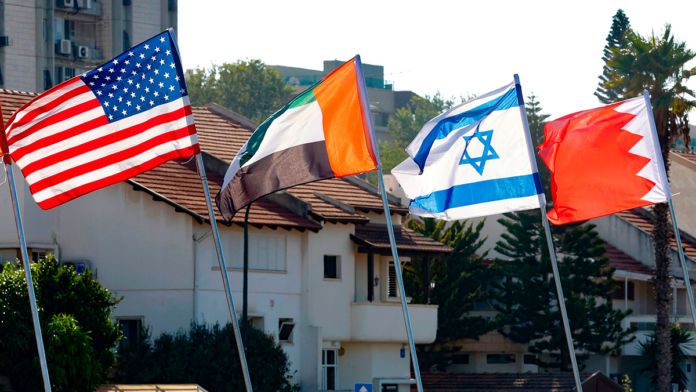
The secretary is hosting Israeli and Emirati officials in Washington to mark the one-year anniversary of the Abraham Accords, the normalization agreement orchestrated by the Donald Trump administration that established ties between Jerusalem and Abu Dhabi.  

Blinken will meet separately with Israeli Foreign Minister Yair Lapid and U.A.E. Foreign Minister Sheikh Abdullah Bin Zayed Al Nahyan. Then the top diplomats will hold a trilateral meeting, during which they will announce a joint working group on religious coexistence, and water and energy issues.

Since announcing the accord to normalize relations in August 2020, Israel and the U.A.E. have established embassies in their respective countries and exchanged ambassadors, as well as signed more than a dozen bilateral agreements.  

The meeting in Washington is an effort to build on the ties between the three parties. All three face pressing issues related to regional security, such as Iran, and global stability, with the U.S. focused on China’s efforts to gain a foothold in the Middle East. 

“As the secretary has noted with allies and partners worldwide, we’ll be candid with our Israeli friends over risks to our shared national security interests that come with close cooperation with China,” a State Department official stated in a briefing with reporters on Tuesday. 

Chinese companies have worked on and continue to bid on Israeli infrastructure projects.

Last month, a Chinese state-owned firm inaugurated its management of a port in the Israeli city of Haifa, in a project that had earlier garnered pushback from the U.S., which docks ships and runs joint naval exercises with Israel out of the sea-side city.  

U.S. intelligence officials have also reportedly raised concerns that relations between the U.A.E. and China risk the security of the F-35 program, with Abu Dhabi set to take delivery of the advanced fighter jets as part of the original negotiations of the Abraham Accords. 

The State Department official on Tuesday declined to highlight any specific concerns about Israel and the UAE’s relations with China.  

“The U.S. views China as a competitor that challenges the existing international rules-based order,” the official said. 

On Iran, the Israeli government has put forth a tempered criticism of the Joe Biden administration’s intent to rejoin the Joint Comprehensive Plan of Action (JCPOA), the 2015 nuclear agreement that established oversight of Iran’s nuclear activities.

Lapid, during his meeting Tuesday with national security adviser Jake Sullivan, discussed “the need for an alternative plan to the nuclear agreement,” according to a readout of the meeting from the Israeli embassy. 

“When it comes to the trilateral meeting…  the leaders involved will discuss a range of regional issues and they will touch on this,” the State Department official noted, referring to Iran. 

“And we’ll also be heavily focused on the affirmative agenda of working to realize the full benefits of normalization, and the unity of America’s partners in this region in new ways, I think will send a powerful message as well,” the official added.

In the bilateral meetings between the U.S. and U.A.E., Blinken will discuss with his counterpart efforts to achieve a ceasefire in Yemen’s war and the “shared desire” to see reforms implemented in Lebanon “to rescue the country’s deteriorating economy.” 

Another point of contention is likely to arise in the U.A.E. reportedly agreeing to enhance economic cooperation with Syria.

“Our focus remains on reducing the suffering of Syrian people and working with our allies to advance a broader political solution to the conflict in which accountability for the atrocities committed by the Bashar Assad regime will be a necessary component,” the State Department official stated.

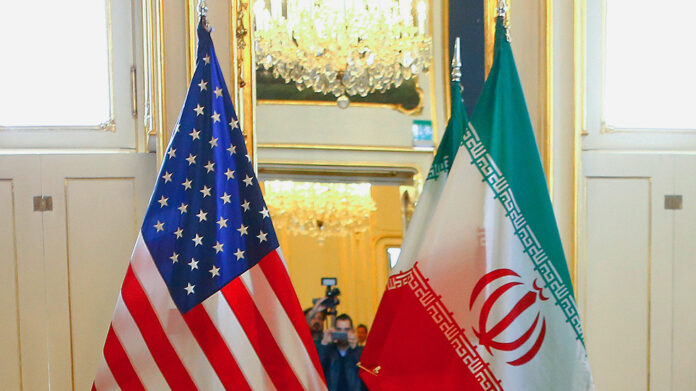
US says prefers diplomacy in Iran nuclear case, but time limited

“We, of course, keep our partners abreast of our efforts to pursue a diplomatic path forward as it relates to the P5+1 talks with Iran,” White House Press Secretary Jen Psaki told reporters on Tuesday.

“That continues to be our preferred path, our preferred choice. We believe diplomacy should always be the first option,” she continued.

“And I think you may have all seen the Secretary of State convey this weekend that time is not unlimited, and that remains the case. But we continue to pursue those negotiations. Our team remains prepared to return for another round of discussions, but I don’t have an update on when those might occur,” the press secretary added.

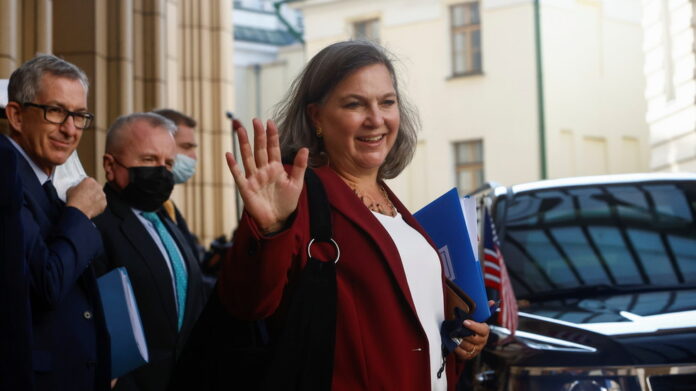
US Department of State spokesperson Ned Price has also noted During Under Secretary of State for Political Affairs Victoria Nuland visit to Moscow, she discussed the JCPOA among other things.

Negotiations have been underway in Vienna since April by Iran and the international quintet (Russia, Britain, Germany, China and France) on restoring the Iranian nuclear deal to its original form. The sides have been discussing the issue of canceling US sanctions against Iran, Tehran’s compliance with its commitments in the nuclear sphere and the United States’ return to the JCPOA.

Representatives from the countries that are parties to the agreement have also been holding separate consultations with US emissaries without Iran’s participation. Originally the delegates had hoped to be through with this work by the end of May, and then at the beginning of June. In late September, Iranian Foreign Ministry spokesman Saeed Khatibzadeh stated the talks on restoring the nuclear deal to the full extent would begin in Vienna within a few weeks.

President Ebrahim Raeisi has dismissed the idea of holding negotiations over the revival of the country’s nuclear agreement under pressure, saying such tactics has never yielded the US and Europe any result.

“Negotiation and dialog have always been and will continue to be part of the instruments that are in the service of diplomacy. We do not balk at negotiation and dialog,” he stated early September.

“But the Americans and the Westerners are after negotiation in conjunction with pressure,” he added, “This is while negotiations are there to avoid pressure.”

Such pressure tactics have nothing to do with negotiation, the Iranian chief executive said, adding, “I have directed them (the country’s authorities) to include negotiation on the agenda, but not under the shadow of the pressure that they (the West) are pursuing.”

The United States and the Europeans have experienced this in the past too that applying such tactics to negotiation procedures “do not work,” Raeisi noted.

At the same time the country rules out any such notion as “negotiation for the sake of negotiation” the president stressed.

He, therefore, urged that any interaction of the type reward the country with its expected results, namely the removal of Washington’s oppressive sanctions targeting the Iranian nation.

Moscow warns Russia-US relationships could worsen

Relations between Russia and the US could worsen in the wake of long-awaited negotiations between the two countries that are making less progress than originally hoped, Ryabkov stated.

The verdict comes after Nuland arrived in the country on Monday to hold three days of talks with Russian officials. 

On Tuesday, local media reported that negotiations between Nuland and Ryabkov were floundering as the diplomats struggled to find common ground.

Earlier this week, Moscow lifted sanctions on Nuland, which allowed the US undersecretary of state to enter the country for a summit with her Russian counterparts.

Despite Nuland saying that she is “glad to be back in Russia to deal with bilateral relations,” Ryabkov said there is a high chance that the state of affairs will only worsen as a result.

“I cannot say that we have made great progress. The topics of visas, the operating conditions of diplomatic missions, the rotation of diplomatic staff, the overall normalization of the activities of Russian foreign missions in the United States and the United States in Russia retain a significant crisis potential, and it cannot be ruled out that some further exacerbations are possible in these areas,” he stressed.

“The positions of the parties do not fit well. Americans do not listen to our logic and our demands. But nevertheless, the conversation was useful,” he added.

While talks are still ongoing, Ryabkov has noted that Moscow does not want tensions between Russia and the US to escalate further and asked for international restrictions to be removed. Particular attention was paid to issues concerning the missions of Russia and the United States on each other’s territories. The Russian side emphasized that hostile anti-Russian actions will not remain unanswered, but Moscow does not seek further escalation. 

“We propose to remove all restrictions introduced by both sides over the past few years,” he continued.

The negotiations come just days after four US senators urged President Joe Biden to expel 300 Russian diplomats and take “immediate action to increase staffing at the US embassy in Moscow” over disparity between the number of personnel in the Russian and US embassies.

“Russia must issue enough visas to approach parity between the number of American diplomats serving in Russia and the number of Russian diplomats serving in the United States,” the senators said, adding, “If such action is not taken, we urge you to begin expelling Russian diplomats, to bring the US diplomatic presence to parity.”

The same week, NATO decided to slash the size of Moscow’s delegation to the military bloc’s headquarters by half, forcing Russia to bring home eight envoys from its permanent mission to the alliance’s headquarters in Brussels. 

“These actions, of course, do not allow us to pretend there is a possibility of normalizing relations and resuming dialogue with NATO. Instead, these prospects are undermined almost completely,” Kremlin spokesman Dmitry Peskov stated at the time.