Monday, December 22, 2025
Home Blog Page 2375

UK army to drive fuel tankers amid crisis

Kwarteng confirmed soldiers will be driving the tanker fleet within days – despite claims from his colleague George Eustice that the Army would not be deployed to help with the petrol crisis.

Panic-buying at petrol stations has triggered a shortage of fuel at the pumps over the last week.

This is because there are not enough HGV drivers to distribute the product around the country at the moment, leading to speculation that the government would call on the Army to assist.

When pressed about why the Army was only on standby and not currently mobilised by ITV News, the business secretary stated, “Anyone versed in military defence issues knows it takes a couple of days, sometimes a few days to get troops on the ground.”

Speaking on Wednesday, he noted, “We’ve decided to do that – and I think in the next couple of days, people will see some soldiers driving the tanker fleet.”

His comments are a direct contrast to remarks from environment secretary Eustice on Monday.

He told Sky News, “We have no plans at the moment to bring in the Army to actual do driving, but we always have a civil contingencies section within the Army which is always on standby if we need them, but we don’t judge that is necessary at the moment.”

Kwarteng also tried to reassure the public that, despite ongoing queues outside petrol stations and fights breaking out across the country, the fuel crisis is “clearly stabilising”.

He continued, “If we look at the inflows yesterday of petrol – they were matched yesterday by the sales, so that means the situation is stabilising.”

“I think people are behaving quite responsibly, actually,” he stated, adding, “Clearly we have the Army on standby, we’ve made preventative measures, we’ve tried to alleviate the HGV driver shortage by changing visa rules.”

Johnson echoed this message and noted the situation was “stabilising” on Tuesday, while transport secretary Grant Shapps stated things were “getting better on the forecourt”.

However, industry sources told The Times that the disruption could stretch over several weeks because the petrol stations will need time to restock.

BP is reportedly expected to experience issues throughout the next month.

Death toll in Ecuador jail riot tops 110

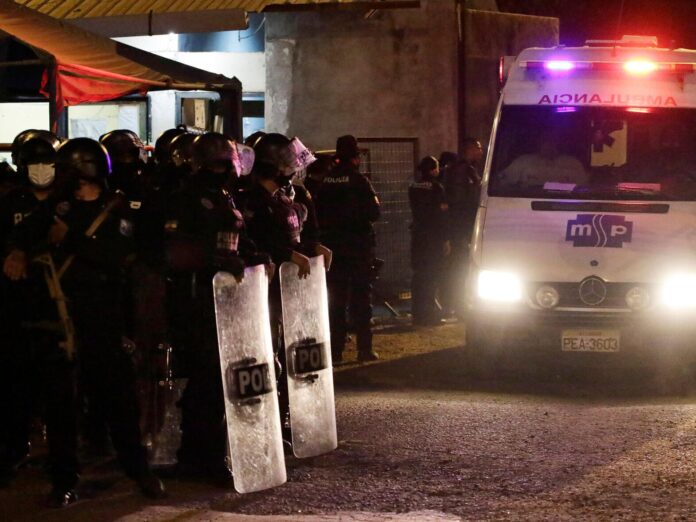
A prison massacre that erupted Tuesday in Ecuador has killed 116 people and wounded about 80, Ecuador’s President Guillermo Lasso said Wednesday.

The death toll represents a significant uptick from earlier estimates after Tuesday’s bloody clashes at the Litoral Penitentiary, located on the outskirts of the coastal city of Guayaquil.

In a speech televised Wednesday, Lasso indicated the prison was not yet entirely secured, and urged inmates’ relatives and families to stay away from the area.

“I wish I was able right now to say that yes, we have completely secured the Litoral Penitantiary, but frankly I cannot. This meeting we just had was to organize the next steps forward, and I hope in the next few hours you will see some of the plans we agreed in action,” he stated in a televised address.

Lasso also added more bodies might be found in the next few hours.

Ecuadorian prison agency SNAI had earlier reported detonations and “fights between criminal gangs” in one of the pavilions of the prison.

Those killed and injured suffered from injuries resulting from bullets and grenades, according to regional police commander Fausto Buenaño.

“The inmates call us (saying) Sister they are killing me. Call the police, they need to enter the pavilion (prison wing) five,” the sister of one inmate told Reuters.

At least five of the deceased prisoners were beheaded before responding police and the tactical forces “managed to restore order”, the governor of Guayas Province, Pablo Arosemena, noted Tuesday.

Ecuador’s prisons have been wracked with bloodshed this year, with more than 140 violent deaths reported, according to SNAI figures.

In response to the latest deaths, the government has declared a 60-day state of emergency across Ecuador’s prisons. The measure allows military troops to be deployed to penitentiaries, and limits inmates’ rights to privacy and free association in order to allow searches and other surveillance measures.

The state will devote $24 million to the prisons system during the state of emergency, Lasso added during his speech.

IAEA Should Not Turn into Plaything for Terror Groups: Iran

Eslami Iran nuclear chief

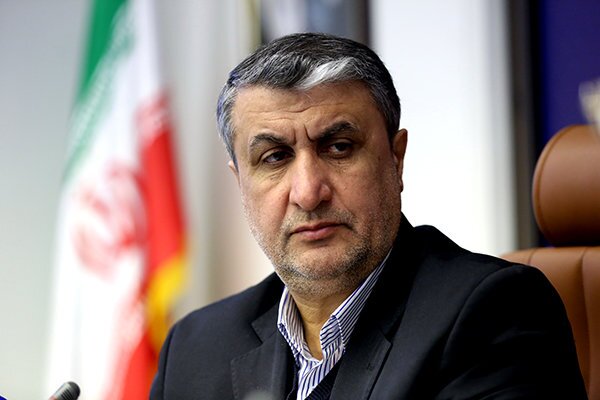
Mohammad Eslami added “nuclear terrorism” has levelled accusations against Iran’s nuclear program using “seditious ploys and … undocumented evidence.”

“Such behaviour has become threadbare,” said Eslami, who is also the vice president.
The AEOI chief, who is in Moscow for talks with Russian nuclear officials, made the comment in an interview with the Sputnik news agency.

He also weighed in on the level of uranium enrichment in Iran, saying Tehran remains committed to regulations within the framework of the Additional Protocol and lives up to its obligations under the Nuclear Non-Proliferation Treaty (NPT).

“The Islamic Republic of Iran’s nuclear program is peaceful, and uranium is enriched to a level which could be used for peaceful projects,” he added.

He then touched upon he IEAE’s recent position on Iran’s nuclear policy and the agency being denied access to monitoring cameras at a nuclear site in the city of Karaj west of the Iranian capital, Tehran.

“Under the Safeguards Agreement, the IAEA has been operating monitoring cameras in Iran for years and the agency conducts inspections on a regular basis,” he said.

“Unfortunately, due to shenanigans and animosities against Iran, a politically-motivated and double-standard approach has been adopted toward Iran’s nuclear program,” said the AEOI chief.

“Such behaviour is completely illegal and rejected,” he said.

North Korea refuses US offer for talks

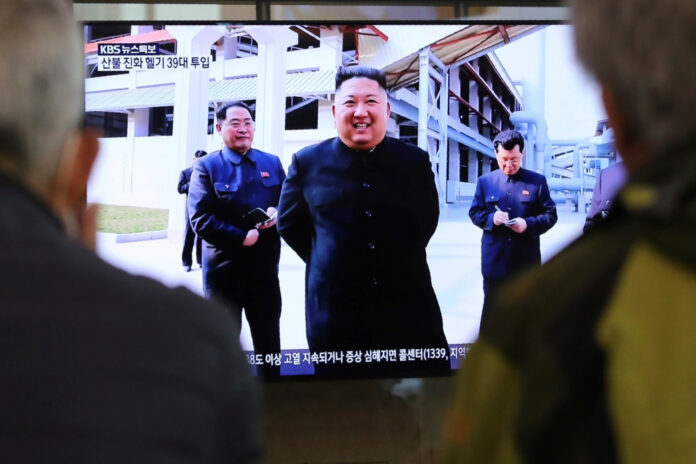
Kim expressed his willingness to restore stalled communication lines with South Korea in early October to promote peace while shrugging off U.S. offers for dialogue as “cunning ways” to conceal its hostility against the North, state media reported Thursday.

Kim’s statement is an apparent effort to drive a wedge between Seoul and Washington as he wants South Korea to help him win relief from crippling U.S.-led economic sanctions and other concessions. Pyongyang this month has offered conditional talks with Seoul alongside its first missile firings in six months and stepped-up criticism of the United States.

The U.N. Security Council scheduled an emergency closed meeting Thursday at the request of the United States, United Kingdom and France on North Korea’s recent tests.

During a speech at his country’s rubber-stamp parliament on Wednesday, Kim said the restoration of cross-border hotlines — which have been largely dormant for more than a year — would realize the Korean people’s wishes for a peace between the two Koreas, according to the official Korean Central News Agency (KCNA).

Kim still accused South Korea of being “bent on begging external support and cooperation while clamoring for international cooperation in servitude to the U.S.”, rather than committing to resolving the matters independently between the Koreas.

Kim repeated his powerful sister Kim Yo Jong’s calls for Seoul to abandon “double-dealing attitude” and “hostile viewpoint” over the North’s missile tests and other developments, adding the fate of inter-Korean ties is at a critical juncture. 

Some experts say North Korea is pressuring South Korea to tone down its criticism of its ballistic missile tests, which are banned by U.N. Security Council resolutions, in a bid to receive an international recognition as a nuclear power.

South Korea’s Unification Ministry responded that it’ll prepare for the restoration of the hotlines that it said is needed to discuss and resolve many pending issues. It said the “stable operation” of the channels is expected because their restoration was directly instructed by Kim Jong Un.

On the United States, Kim Jong Un dismissed repeated U.S. offers to resume talks without preconditions, calling them an attempt to hide America’s “hostile policy” and “military threats” that he stressed remain unchanged.

The Joe Biden administration “is touting ‘diplomatic engagement’ and ‘dialogue without preconditions’ but it is no more than a petty trick for deceiving the international community and hiding its hostile acts and an extension of the hostile policy pursued by the successive U.S. administrations,” Kim stated.

He added, “The U.S. remains utterly unchanged in posing military threats and pursuing hostile policy toward (North Korea) but employs more cunning ways and methods in doing so.”

North Korea has long called U.S.-led economic sanctions on it and regular military drills between Washington and Seoul as proof of U.S. “hostile policies” on them. Kim Jong Un has noted he would bolster his nuclear arsenal and not resume nuclear diplomacy with Washington unless such U.S. hostility is withdrawn.

U.S. officials have repeatedly expressed hopes to sit down for talks with North Korea “anywhere and at any time”, but have maintained they will continue sanctions until the North takes concrete steps toward denuclearization. The diplomacy has been stalled for 2 ½ years due to disagreements over easing the U.S.-led sanctions in return for limited denuclearization steps.

Prior to the launch Tuesday of what North Korea announced was a new hypersonic missile, it also this month launched a newly developed cruise missile and a ballistic missile from a train. Both of those weapons could carry nuclear bombs to attack targets in South Korea and Japan, both key U.S. allies where a total of 80,000 American troops are stationed.

UN warns famine looming in Ethiopia region

The crisis in Ethiopia is a “stain on our conscience”, the UN humanitarian chief said, as children and others starve to death in the Tigray region under what the U.N. has called a de facto government blockade of food, medical supplies and fuel.

Griffiths issued one of the most sharply worded criticisms yet of the world’s worst hunger crisis in a decade after nearly a year of war, in an interview with The Associated Press.

Memories of the 1980s famine in Ethiopia, which killed some 1 million people and whose images shocked the world, are vivid in his mind, “and we fervently hope is not happening at present,” he said.

“That’s what keeps people awake at night,” Griffiths added, “is worrying about whether that’s what is in prospect, and in prospect soon.”

He described a landscape of deprivation inside Tigray, where the malnutrition rate is now over 22 percent — “roughly the same as we saw in Somalia in 2011 at the start of the Somali famine”, which killed more than a quarter-million people.

The war in Ethiopia began last November on the brink of harvest in Tigray, and the U.N. has announced at least half of the coming harvest will fail. Witnesses have said Ethiopian and allied forces destroyed or looted food sources.

Meanwhile just 10 percent of needed humanitarian supplies have been reaching Tigray in recent weeks, Griffiths said.

“So people have been eating roots and flowers and plants instead of a normal steady meal,” he continued, adding, “The lack of food will mean that people will start to die.”

Last week The AP, citing witness accounts and internal documents, reported the first starvation deaths since Ethiopia’s government imposed the blockade on the region of 6 million people in an attempt to keep support from reaching Tigray forces.

But the problem is not hunger alone.

The U.N. humanitarian chief, who recently visited Tigray, cited the lack of medical supplies and noted that vulnerable children and pregnant or lactating mothers are often the first to die of disease. Some 200,000 children throughout the region have missed vaccinations since the war began.

And the lack of fuel — “pretty well down to zero now”, Griffiths noted — means the U.N. and other humanitarian groups are finding it all but impossible to reach people throughout Tigray or even to know the true scale of need.

Phone, internet and banking services have also been cut off.

Billene Seyoum, the spokeswoman for Ethiopia’s Nobel Peace Prize-winning Prime Minister Abiy Ahmed, did not respond to questions. The government has blamed problems with humanitarian aid delivery on the Tigray forces, who long dominated the national government before Abiy sidelined them. Abiy’s government also has alarmed U.N. officials and others by accusing humanitarian workers of supporting the Tigray fighters.

Griffiths called such allegations unacceptable and unfair. He said he has told the government to share any evidence of misconduct by humanitarian workers so the U.N. can investigate, but “so far as I’m aware, we haven’t had such cases put to us”.

Ethiopia’s crisis has led the U.N., the United States and others to urge the warring sides to stop the fighting and take steps toward peace, but Griffiths warned that “the war doesn’t look as if it’s finishing any time soon”.

Molavi’s Works Interpreted Differently in Iran, West: Expert

Rumi, better known as Molavi in Iran, authored a poetic collection of anecdotes and stories known as “Masnavi,” which is regarded as his magnum opus, along with several other literary works.

What follows is an interview with Tamimdari conducted by Khabaronline about how Molavi, as the author of Masnavi, is known in Iran and how he is known around the world through his translated works, namely the ones translated by Coleman Barks

  How different is the “Rumi” introduced to the world through Coleman Barks’ translations from the literary figure that we Iranians know as “Molvavi”?

Tamimdari: In fact, these two have nothing to do with each other. Of course, several translators have rendered his works into other languages. 

For instance, we can mention Arthur John Arberry. Another one is Reynold Alleyne Nicholson, whose translations of Rumi’s works are the most famous ones and are more adducible as he was an expert in the Arabic language and was familiar with Islamic and mystic concepts.

Anyone who wants to translate Rumi’s poets from one language to another should know Persian and Arabic, should be familiar with the Quran and hadiths and should be familiar with poets who came before Rumi.

We can say that Coleman Barks’ translation of Rumi’s works was just an indulgence.

Barks knew neither Persian nor Arabic. Moreover, in his translations, Barks has omitted all Quranic verses and hadiths and added his own interpretation of Rumi’s poems.

I remember one of our professors kept saying that Madonna had read Rumi’s poems! And we told him that Madonna was a mediocre, uneducated singer and unable to have any understanding of Rumi’s works. The reason is that mystic works are commonly referred to as the “second language,” which needs interpretation.

Even in our own country, people who interpret Masnavi are different. Some regard Masnavi as a misleading book while some adore it as a second Quran. However, that is not the case with distinguished Iranian poet Hafez. I believe all this emanates from the extent of the reader’s familiarity with the Quran and hadiths and his understanding of Islamic knowledge.

In fact, the Westerners are mostly into love, eating and that kind of thing and, hence, have a superficial interpretation of Persian poetry.

Biden ignores Palestine’s Abbas request for meeting

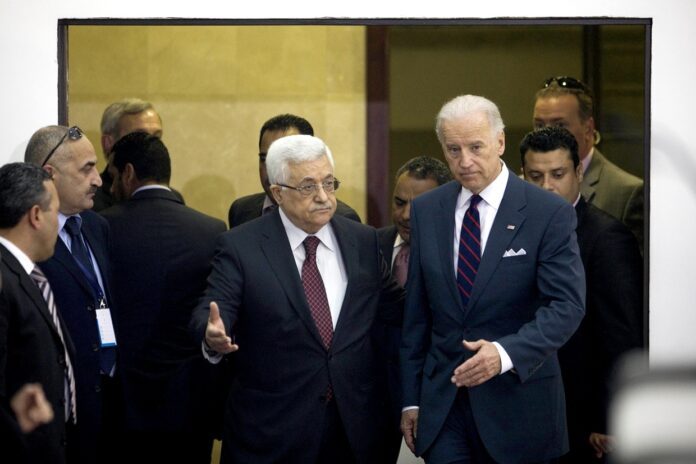
It’s unusual for a U.S. president to reject a meeting request from the Palestinians, and it could be seen as further indication of how low the Israeli-Palestinian issue is on Biden’s foreign policy priority list.

Several weeks ago, when Abbas and his aides were discussing whether to visit the UN in person, they decided to check the possibility of meeting Biden on the sidelines in New York or soon afterward in Washington.

The White House told the Palestinians, Biden wouldn’t be doing any bilateral meetings in New York and his schedule wouldn’t allow for a meeting in Washington, U.S. and Palestinian sources said.

That contributed to Abbas’ decision not to travel to New York and to send a videotaped speech instead, the sources added.

In the end, Biden visited New York only briefly, but he did have three bilateral meetings there. The White House declined to comment for this story.

In his speech at the UN last Tuesday, Biden did stress that he supports a two-state solution, but acknowledged that “we are a long way from that goal at this moment”.

Abbas warned in his own speech that Israel’s actions would result in a “one-state solution”, and he gave Israel a one-year ultimatum to end its occupation of the West Bank, after which time the Palestinians would consider withdrawing their recognition of Israel on the 1967 lines.

Abbas also indirectly criticized U.S. policy toward Israel, saying, “There are some countries that refuse to acknowledge the reality that Israel is an occupying power, practicing apartheid and ethnic cleansing.”

“These countries proudly state that they have shared values with Israel. What shared values are you referring to? This has emboldened Israel, only furthering its arrogance and allowing it to reject and violate all UN resolutions,” he added.

Israeli Prime Minister Naftali Bennett, speaking on Monday at the UN, didn’t mention the Israeli-Palestinian conflict at all.

Bennett’s aides say he felt there was already more than enough discussion of the topic at the UN and that Israel didn’t need to be viewed through that prism.

The Biden administration’s point man on Israel-Palestine, deputy assistant secretary of state Hady Amr, will travel to Jerusalem and Ramallah next Monday for meetings with Israeli and Palestinian officials.

Pentagon officials blame State Department for Afghan messy exit

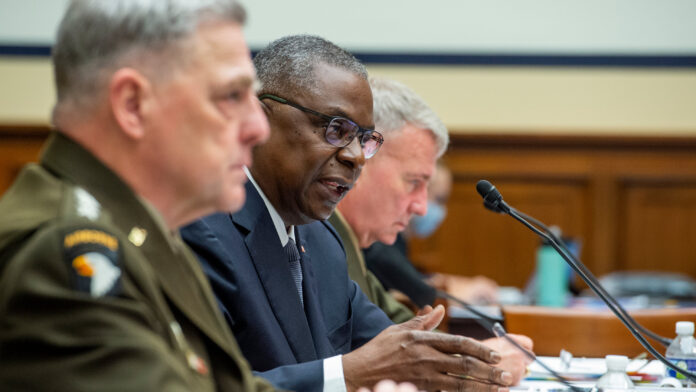
Top Pentagon officials blamed the State Department for not beginning evacuations of civilians from Afghanistan sooner, calling the efforts “chaotic”, while defending the “skill and leadership” of U.S. troops during a hearing before the House Armed Services Committee focused on the military withdrawal. 

The U.S. military withdrawal from Afghanistan was complete on Aug. 31, after successfully evacuating more than 124,000 individuals from Kabul – including 6,000 American citizens. Despite the large number of evacuations prior to the withdrawal date, at least 100 American citizens and thousands of Afghan allies remain in Afghanistan.

Pressed on why evacuations did not begin sooner, Austin said it was a “State Department call”.


“We provide an input, as I said in my opening statement, to the State Department,” Austin added, explaining, though, that officials were “being cautioned” by the Ghani administration that “if they withdrew American citizens and SIV applicants at a pace that was too fast, it would cause a collapse of the government that we were trying to prevent”.

“I think that went into the calculus,” Austin continued.


He added, though, that military officials “provided our input” to the State Department. 

“We certainly would have liked to see it go faster or sooner,” Austin said, noting, “But, again, they had a number of things to think through as well.” 

Later, Milley described the evacuation efforts in the days leading up to the Aug. 31 troop withdrawal deadline as “chaotic”, when asked about the best way to extract U.S. military from Afghanistan. 

“I just want to be clear – we’re talking about two different missions,” Milley said, adding, “The retrograde of troops … that is complete by mid-July, and that was done, actually, without any significant incident. And that’s the handover of 11 bases, the bringing out of a lot of equipment … that was done under the command of Gen. Miller.” 

“Noncombatant evacuation operation is different,” Milley noted, referring to the Joe Biden administration’s efforts to airlift Americans and Afghan allies from Kabul prior to the troop withdrawal deadline. 

“Noncombat operation – that was done under conditions of great volatility, great violence, great threat,” he continued.

Milley said the U.S. military “inserted 6,000 troops on relatively short notice because there were some contingency plans to do that”.

“That’s a different operation,” Milley stated, adding, “And I think, that, in the first two days as we saw, were not only chaotic, but violent and high-risk.” 

Milley said, though, that “because of the skill and leadership of our troops, they were able to get control of a situation in an airfield, in a country that was falling apart and then execute the operation”.

“So, I think it would have been difficult under any circumstances, and I think our soldiers performed extraordinarily well actually in 48 hours, getting control of an airfield in another country, eight and a half time zones away,” Milley added. 

Milley and Austin’s testimony comes nearly a month after the Biden administration on Aug. 31 withdrew all U.S. military assets from the region after having a presence there for 20 years following the attacks on Sept. 11, 2001.

An Aug. 26 suicide bombing outside of Kabul’s Hamid Karzai International Airport took the lives of 13 U.S. service members – 11 Marines, one Navy sailor and one Army soldier. Eighteen other U.S. service members were wounded. The bombing also left more than 150 civilians dead.

As the Biden administration began the withdrawal of military assets, provincial capitals across Afghanistan began to fall to the Taliban. By mid-August, the Taliban attained control of two-thirds of Afghanistan. And by the time the U.S. withdrew all U.S. troops from the country on Aug. 31, Kabul had also fallen to the Taliban. In mid-August, U.S. intelligence assessments projected the capital city could fall to the Taliban within 90 days. 

Administration officials have admitted to leaving more than 100 American citizens behind. Officials, though, said their mission in Afghanistan had shifted from a military mission to a diplomatic one, with some saying they were working with the Taliban to ensure safe passage for those Americans and U.S. visa holders, as well as some Afghan allies, to evacuate the country. 

Milley, during the hearing Wednesday, called the war in Afghanistan a “strategic failure” for the United States, and warned that the Taliban “remain a terrorist organization” and maintain ties with al Qaeda. 

“The Taliban was and remain a terrorist organization and they still have not broken ties with al Qaeda,” Milley testified, noting, “I have no illusions who we are dealing with.” 

He added, again, that the Taliban “have not broken with al Qaeda.”

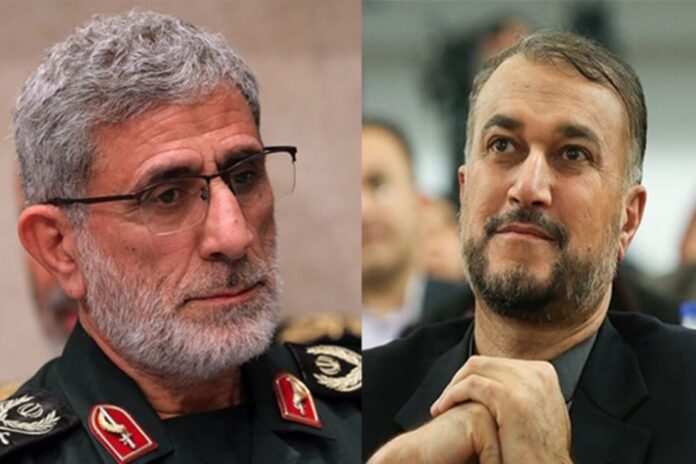
Iran FM, IRGC’s Quds Force Cmdr. Stress War on Terror

In a meeting with Quds Force Commander Brigadier General Esmail Qaani at the foreign ministry, the top Iranian diplomat highlighted the key role that late former Quds Force Commander Lieutenant General Qassem Soleimani played in fighting terrorism.

“If it weren’t for the special role of this martyr and hero in fighting terrorism and Zionism, our region would be in another state now,” said Amir Abdollahian.

“If the ISIS terrorist group had succeeded in Syria and Iraq, the whole world would be facing terrorism and extremism today,” the foreign minister added.

He described the IRGC’s Quds Force as a “soldier without borders” which plays a pivotal role in ensuring security and peace both in the region and across the world.

“The foreign ministry of the Islamic Republic of Iran will proudly follow in the footsteps of the lord of peace, general Soleimani, when it comes to institutionalizing peace and friendship with regional countries fighting terror,” he added.

General Qaani, in turn, congratulated Amirabdollahian on his appointment as Foreign Minister.

The top general also underscored the foreign ministry’s special role in ensuring the country’s national interests.

Poll: Americans do not trust Biden on COVID

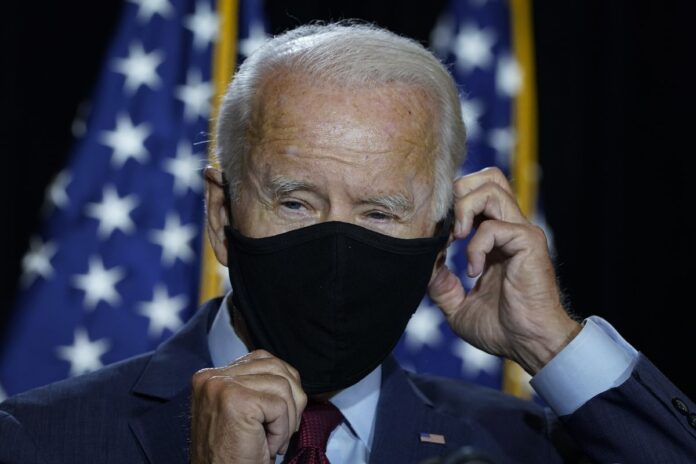
A majority of Americans questioned in a new survey says Biden cannot be trusted on the coronavirus pandemic, the Axios-Ipsos poll showed.

Fifty-three percent of respondents said they didn’t have very much trust or no trust at all in Biden to provide accurate information about the coronavirus. Forty-five percent trust the president either a great deal or fair amount, according to the survey. 

When Biden first took office in January, 58 percent said they trusted him to provide accurate information about COVID-19.

The new poll found that 81 percent of Democrats trusted Biden on the coronavirus, compared to 11 percent of Republicans and 42 percent of independents.

The results come as the nation deals with a rise in coronavirus infections fueled by the delta variant. While the U.S. has not gone back to the same lockdowns seen at this time last year, there’s still no clear end to the pandemic in sight.

The Axios-Ipsos survey found that declining trust over the pandemic is also an issue among other institutions.

Forty-nine percent of respondents said they trusted the federal government to provide accurate information on COVID-19, compared to 54 percent who said as much two weeks ago.

In addition, 50 percent said they trusted their state government to provide accurate information on COVID-19, also down from 54 percent who responded that they trusted the government earlier this month.

Further, 64 percent said they trusted the Centers for Disease Control and Prevention, down 2 percentage points from when the last survey.

Sixty percent said they trusted “national public health officials” to provide accurate information about COVID-19, down 2 points.