Monday, December 22, 2025
Home Blog Page 2374

Strategic mistakes of Azerbaijan republic and Armenia

How did it start?

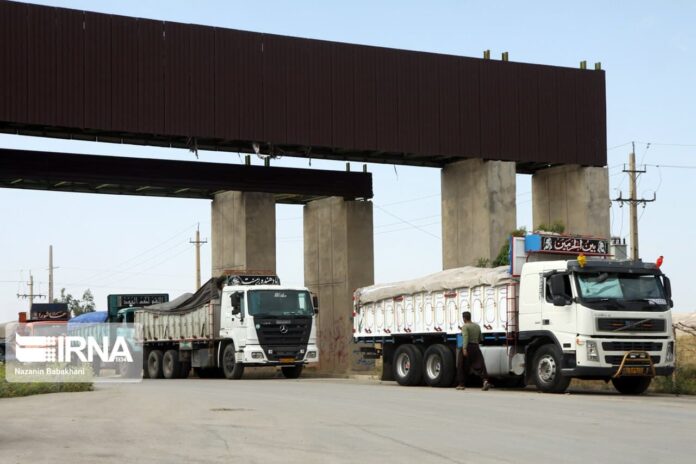
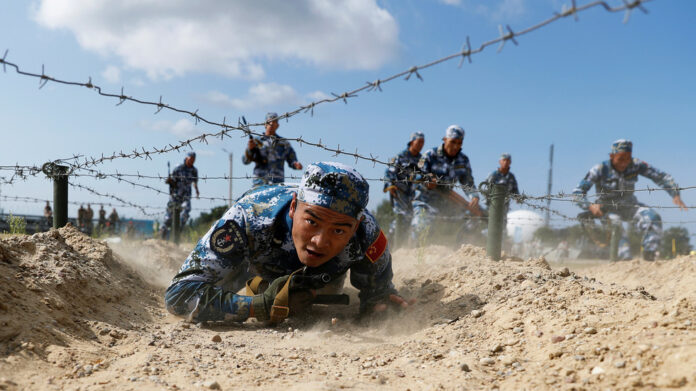
Several issues have been the main cause of tension in the region: First, the military forces of the Republic of Azerbaijan have blocked the Goris-Qapan axis and do not allow heavy vehicles to pass through this route. In addition, the joint military maneuver of Azerbaijan Republic, Pakistan and Turkey in recent days near the Iranian border was another issue that caused sensitivities in our country.

Another issue was the sharp and undiplomatic remarks of the members of Azeri Parliament against the territorial integrity of the Islamic Republic of Iran. The last thing was the possibility of border changes and a deal over some areas in the Armenian territory and the Republic of Azerbaijan, as a result of which part of the territory of Armenia bordering the Islamic Republic of Iran will be ceded to Azerbaijan Republic and Armenia will effectively lose its border with Iran.

What is the context of this story?

The statements of Azeri officials or some movements such as the ban on Iran’s exports to Armenia are not issues that can escalate the conflict to this high level. What is important is that the United States and Israel would scramble for proxy actions on the northwestern borders of our country.

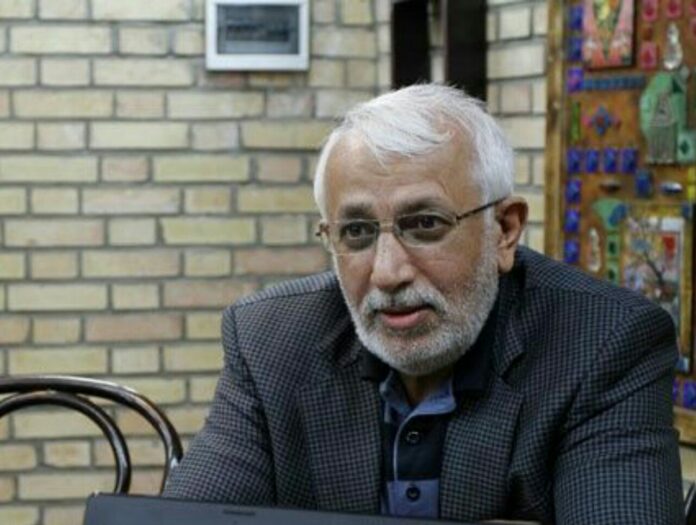
Political analyst Saadollah Zarei wrote in a note, “The Armenian government and Prime Minister Pashinian, who is considered pro-Western compared with the former government, have joined the US-Turkey project in the hope of enjoying political and economic benefits, which is a betrayal of Armenia.”

In this case, instead of a direct and obvious presence, the United States uses the Zionist regime’s nearly 30 years of security ties with Azerbaijan Republic and Armenia. Although exact figures are not available, numerous reports indicate the growing security presence of the Israeli regime, especially in Azerbaijan Republic, mostly at the “Qibla Air Base”.

The number of Israeli forces is between 500 and 1,000, while this criminal regime has gained significant influence in the last decade in the pillars of Azerbaijan Republic and the family of Elham Aliyev such that the Zionist leaders referred to Azerbaijan Republic as “Lebanon of Israel”. In this way, we have said, we can entangle the Islamic Republic in a long-term border security challenge and blunt its impact in the region. However, it’s absolutely clear that such claims and their capability to translate them into action are far apart.

What is clear is that a trans-regional event is taking place that is the result of linking neo-Ottoman tendencies with Zionism, and in the meantime, Turkey is trying to play its role well in line with these developments.

What is the mistake of Azerbaijan Republic and Armenia?

For many years, Azerbaijan Republic has been a haven for pro-Israel currents and even allowed the direct presence of Zionism in the region. It has forgotten that in the time of serious and historical crises in this region, it was Iran that supported Azerbaijan Republic’s territorial integrity and did not allow the extra-regional powers to disrupt the strategic order of this region. Iran has also played its rightful role as a neighbor to Armenia.
Iran has tried to have secure and strong neighbors according to a grand strategy. But now Armenia, with its pro-Western president, and the Republic of Azerbaijan, with a pro-Israeli government, are seeking to play a proxy role in confronting the Islamic Republic of Iran. Azerbaijan Republic is a Shia Muslim country and will naturally, in the short term, come into social confrontation with the anti-religious and anti-Shia currents of the West and Israel. This is the main mistake of the Republic of Azerbaijan.

Armenia must also realize how important countries in the region play their roles, and in this case, if the important and influential role of such countries as Iran and Russia is not taken into account, it will certainly not be possible to move forward in regional equations.

What does Iran want?

Iran pursues two main issues: First, Iran does not accept the strong presence of Israel on its borders and cannot allow the enemies of the Iranian people to equip themselves around Iran’s borders. The second issue is that Iran can in no way accept border changes in its northwestern regions. The principle of good neighborliness is an issue that neighbors should respect. Iran has always wanted security and power for its neighbors, and they are also expected to reciprocate.

France’s Sarkozy sentenced to one year jail term

A French court Thursday convicted Sarkozy of illegal campaign financing over massive overspending on his 2012 re-election campaign, and sentenced him to one year in prison. The verdict came six months after Sarkozy was found guilty of corruption in a separate trial.

Sarkozy, who spent nearly twice the legal limit on his failed bid for a second term in office, wasn’t present at the Paris court for the announcement of the verdict.

The 66-year-old right-winger pulled out all the stops in 2012 to try fend off the ultimately victorious Socialist candidate, François Hollande.

A series of lavish US-style election rallies caused his costs to spiral, with the final bill coming to at least 42.8 million euros $49.7 million), nearly double the legal limit of 22.5 million euros.

The case is known as the Bygmalion affair, after the name of the public relations firm that set up a system of fake invoices to mask the real cost of the events.

Prosecutors sought a one-year prison sentence, half of it suspended, for the former president. He is in any case unlikely to go to jail immediately as he would be expected to appeal the sentence.

It was the second guilty verdict this year for Sarkozy, who led France from 2007 to 2012 and retains influence among conservatives despite falling from grace over his legal woes.

Report: Three in four Venezuelans living in extreme poverty

The 2020-2021 National Survey of Living Conditions found that the percentage of Venezuelans living in extreme poverty rose by nearly 10 percentage points from last year, the wire service noted, from 67.7 percent last year to 76.6 percent this year.

Roughly 95 percent live in poverty when only looking at income levels, according to the study, run by researchers from Andres Bello Catholic University, which surveyed 14,000 households in 21 of the country’s 23 states between February and April.

Among the factors contributing to such dramatic poverty include fuel shortages, COVID-19 and not enough job opportunities.

“It is the absence of opportunities,” Pedro Luis Espana, sociologist from Andres Bello Catholic University who worked on the report, told Reuters.

“It is sitting in front of the door of the house, doing nothing, not because you do not want to do anything, but because there is nowhere to do it,” he added.

The report comes as the country is mired in political and economical crisis, which includes shortages of critical supplies like medicine and food, hyperinflation and a lack of power, according to the BBC.

Some argue that the conditions to the mismanagement of the country’s economy, Reuters noted.

The administration of President Nicolas Maduro has pointed the blame on U.S. sanctions for the reasoning behind the country’s predicament.

However, the U.S. has also continued to give financial assistance to the country, including a recent contribution of $336 million in humanitarian and economic assistance. According to the State Department, the U.S. has given over $1.9 billion in financial assistance to the country since 2017.

‘Afghan Central Bank cleared out before Kabul collapse’

Economic officials from international financial organizations like the World Bank and International Monetary Fund (IMF) criticized the bank’s former leaders on how they handled the crisis in a two-page brief. The officials stated that the bank was running low on cash before the Taliban took control.

“FX (foreign exchange) reserves in CB’s (central bank) vaults in Kabul have depleted, the CB cannot meet … cash requests,” the report said, adding, “The biggest source of the problem is the mismanagement at the central bank prior to the Taliban takeover.”

Soon after the Taliban took power, the IMF and World Bank cut Afghanistan off from accessing global resources due to the ongoing uncertainty over recognizing the Taliban as the country’s legitimate government. The Biden administration also froze Afghan government reserves being held in U.S. bank accounts in August.

Billions in Afghan government funds are reportedly being held in the U.S.

Sources close to the matter told Reuters that the overthrown Afghan government had relied on cash shipments of $249 million every three months.

Chairman of the central bank’s audit committee Shah Mehrabi, who remained in the position after the Taliban takeover, noted the bank was trying to prevent a run on Afghan currency.

Reuters reported that former central bank governor Ajmal Ahmady, who fled Afghanistan one day after Kabul fell, has blamed cash shortages on bank account freezes overseas.

Ahmady claimed that no money was stolen from any reserve accounts.

The central bank is in charge of distributing aid from countries like the U.S. and said on Wednesday that it has finalized a plan to satisfy Afghanistan’s foreign currency needs.

According to the report obtained by Reuters, the bank moved some of its cash reserves to other provincial branches, increasing the amount kept in these branches from $12.9 million in 2019 to $202 million by the end of 2020.

“Some money is reportedly lost (stolen) from ‘some’ of the provincial branches,” the officials wrote.

Earlier this month, the United Nations urged the international community to release frozen funds to Afghanistan, warning that an economic collapse could be imminent and that such as event would serve to benefit terrorists seeking to build strength in the country.

“The economy must be allowed to breathe for a few more months, giving the Taliban a chance to demonstrate flexibility and a genuine will to do things differently this time, notably from a human rights, gender, and counter-terrorism perspective,” stated Deborah Lyons, the U.N. secretary-general’s special representative for Afghanistan.

Iran bans imports of home appliances to support domestic manufacturers

Earlier, Leader of Iran’s Islamic Revolution Ayatollah Seyyed Ali Khamenei ordered a ban on the imports.

A letter sent by the leader to President Ebrahim Raeisi says, “This is a highly important issue. If the news (the resumption of imports from the two South Korean companies) is correct, then that means the breaking of the back of Iranian home appliance producers that have managed to stand on their own feet. Take serious measures to prevent this”.

Several weeks ago, tens of thousands of Iranians working at home appliance manufacturing companies signed a petition, calling for a ban on imports of foreign products. The signatories warned officials not to endanger jobs and livelihoods of Iranian workers.

Reports say foreign manufacturers of home appliances are likely to return to Iran after they left the country amid mounting US sanctions under former US president Donald Trump.

A source close to the Iranian home appliances guild union said earlier the US is paving the way for the return of Samsung and LG to Iran so that they pay back South Korea’s debt to Iran through supplying the Iranian market with their products.

South Korea has failed to pay back its debt to Iran so far. It blames this on anti-Iran US sanctions.

Vaccination of homeless people kicks off in Tehran

Authorities say the vaccination will continue until all people get inoculated.

US military officials: Qaeda, Daesh could rebuild in Afghanistan

While testifying before the House Armed Services Committee, Milley said the terrorist threat from Afghanistan is less than it was on 9/11 but that “the conditions could be set for a reconstitution of al-Qaeda and/or Daesh.

Secretary of Defense Lloyd Austin also agreed with Milley during his own testimony. According to Austin, “there is clearly a possibility” for the terrorist groups to regenerate now that U.S. forces have left the country.“Al Qaeda has been degraded over time,” Austin said. “Now, terrorist organizations seek ungoverned spaces so that they can train and equip and thrive and, and so, there is clearly a possibility that that can happen here, going forward.”

The Taliban promised the Trump administration in February 2020 that it would not allow terrorist organizations to use the country as a launching pad for attacks if the U.S. withdrew its forces.

However, defense officials are less-than-certain that the Taliban will honor its promise.

Austin said he wouldn’t rule out the possibility that the U.S. will have to return to Afghanistan. During testimony before the Senate Armed Services Committee one day earlier, Austin noted that the military could monitor and conduct strikes against the terrorist groups from bases far away, if necessary. General Kenneth McKenzie, CENTCOM commander, also spoke before Congress. He said it’s “yet to be seen” whether the U.S. can deny al-Qaeda and Daesh the ability to use Afghanistan to launch attacks.

US President Joe Biden has been harshly criticized for his handling of Washington’s withdrawal from Afghanistan. Biden has pinned the blame on his predecessor, saying he inherited a bad agreement from Trump.

Iran Pres. Urges Implementation of Smart COVID-19 Management Plan

Ebahim Raeisi underlined the importance of observing health protocols in controlling and containing the COVID-19 disease, urging people to abide by the protocols.

He also underlined the need to expedite the process of public vaccination, especially for school and university students.

“Public immunization is required to remove coronavirus restrictions. Accordingly, medical personnel should receive the third dose of the COVID-19 vaccine as they are prone to danger,” he explained.

The president added discussions are underway at the National Coronavirus Task Force on gradually opening schools and removing coronavirus restrictions for many businesses.

Bahrainis protest Israel FM visit to the Persian Gulf country

Israel’s Foreign Minister Yair Lapid arrived Manama on Thursday to inaugurate Tel Aviv’s embassy.

An Israeli foreign ministry statement said Lapid, who had been invited by his Bahraini counterpart, will inaugurate the Israeli embassy in Manama on Thursday and is “expected to sign a list of bilateral agreements”.

“This will be the first official visit by an Israeli minister to (Bahrain),” the statement added.

After Lapid landed, Bahrain carrier Gulf Air launched its first direct flight between Manama and Tel Aviv.

Following negotiations spearheaded by former US President Donald Trump, the United Arab Emirates, followed quickly by Bahrain and Morocco, last year became the first Arab states in decades to normalise relations with Israel.

The deals enraged the Palestinians, who felt a betrayal of their national cause. They saw it as an abandonment of a longstanding commitment in the Arab world not to normalise relations with Israel until there was progress in resolving the decades-long occupation of Palestinian land.

Israel had earlier reached peace treaties with neighbouring Egypt and Jordan.

Protesters burned tyres on the outskirts of Manama early Thursday, sending clouds of black smoke into the air, and the hashtag #BahrainRejectsZionists in Arabic was circulating on social media.

Extra security was stationed on the route to the airport and no Israeli flags were visible on main roads. Opposition activists have called for further protests later on Thursday.

Since the normalisation agreements, known as the Abraham Accords, were signed, ties have expanded between Israel and its new Gulf partners, notably including direct flights and economic deals.

Lapid is the main architect of the Israeli coalition government that removed ex-premier Benjamin Netanyahu, who signed the Abraham Accords.

Lapid has also visited the UAE and Morocco since becoming foreign minister in June.

The Israeli delegation to Bahrain arrived in earlier this week and joined the country’s tiny Jewish community in marking the Jewish holiday of Simchat Torah.

Lior Haiat, spokesman for the Israeli Foreign Ministry, said it was the first time in over 75 years that the community could mark the holiday in its synagogue.

“The fact that we could celebrate it yesterday was a very joyful event for us and for the community as well,” he added.

Iran Army to Stage Drills in Northwest of Country

Commander of the Ground Force of the Iranian Army Brigadier General Kioumars Heidari said armoured, artillery, drone and electronic warfare units backed by choppers of the Aviation Unit of the Army will take part in the maneuvers.

He noted the drills are aimed at honing Army troops’ combat skills, adding part of the equipment and combat capabilities of Army units will be displayed during the exercises.