Friday, December 26, 2025
Home Blog Page 2364

Iranian film wins award in Belgrade festival

The festival began with the motto “Eternal Footprint” last week and ended on Friday after awards were granted. 

The International Festival of Ethnological Film in Belgrade featured 56 movies from more than 30 countries including Iran, Britain, France, Germany, Japan and India. The 56 films were selected from among 160 ones by prominent Serbian director Vladimir Perović for the competition. 

Three movies directed by young Iranian filmmakers contested the award and Marjan Khosravi’s “Snow Names” won the award for the best film in the student sector. 

Head of the Cultural Center of the Iranian embassy in Belgrade Mohammad Taghi Rahmani received the award on behalf of the Islamic Republic. 

Rahmani told Ms. Tiana Popović, the head of Serbia’s Ethnological Museum that this is the first time during his tenure that works of Iranian artists including films and cartoons are selected for an award in the festival and “this shows the good level of cultural cooperation between the two countries”. 

Ms. Popović noted that the Iranian directors failed to show up at the festival due to the Covid-19 pandemic and expressed hope that this cultural cooperation between Iran and Serbia will continue.

Report: 140k U.S. kids affected by COVID-related deaths of parents

Tens of thousands of children in the U.S. have lost a parent to Covid-19, according to research published Thursday in Pediatrics — a devastating consequence of the coronavirus pandemic that experts say will have ramifications for years to come.

The research, which pulls from a wide range of data about births, deaths and household compositions, estimated that 129,630 children lost a primary caregiver to Covid-19.

Another 22,007, according to the new research, lost a secondary caregiver, such as a grandparent who was living in the home. 

Even that may be an underestimate, said the study’s lead author, Susan Hillis, a member of the Centers for Disease Control and Prevention’s Covid-19 Response Team. 

The study included data only from April 2020 through the end of June 2021 — just as the supercontagious delta variant was beginning to take hold.

“Once a child loses a parent or caregiver, they’re going to need help until they’re at least 18 to 24,” Hillis noted, stating, “It will be a problem that lasts for many years.”

The president of the Robert Wood Johnson Foundation, Dr. Richard Besser, a former acting director of the CDC, agreed.

“When we talk about Covid, so much of the conversation is around how many cases of Covid and how many people have died and how many people have been hospitalized,” stressed Besser, who was not involved with the research.

“What this study points to is that the impacts of Covid go way beyond that,” he added.

Besser, a pediatrician, said children who lose a primary caregiver are at risk of other problems, such as the risk of eviction and having to switch schools.

Nearly a quarter of U.S. children live with just one parent, according to Pew Research released in 2019, the latest year for which data are available.

The same year, an estimated 4.5 million children lived with a grandparent who provided housing, according to the Pediatrics study. Black, Hispanic and Asian children were twice as likely as white children to live with a grandparent. 

The new estimate of children left without a parent is much higher than previous assessments were. 

Rachel Kidman, a social epidemiologist at Stony Brook Medicine in New York, reported in April in JAMA Pediatrics that up to 43,000 U.S. children were affected by a parent who died of Covid.

Kidman noted she was saddened to see the rise in the numbers of affected children.

“We have had more deaths in 2021 since the vaccine became available than we had in all of 2020,” she continued, adding, “These deaths are skewing younger, which means more parents are dying.”

Losing their parents will have long-term impacts on the lives of children, Kidman said, adding they are “the most important adults in their life — the person who nurtures them, who protects them, who provides for them”.

The new CDC research also found tremendous racial and ethnic disparities. While 1 out of 753 white children lost a caregiver to Covid-19, 1 out of 412 Hispanic children were similarly affected, and 1 in 310 Black children had a parent or a caregiver die.

The study found that 1 in 168 American Indian and Native Alaskan children lost a parent.

The ratios deviate dramatically from the actual racial and ethnic breakdown of the U.S.

“It is clear that this pandemic has hit every community in America,” Besser said, “but it hasn’t hit every community with the same ferocity.”

Census data show that about 60 percent of the U.S. population is white and that about 40 percent identify with racial or ethnic minority groups.

In contrast, 65 percent of children who lost parents to Covid-19 are in racial and ethnic minority groups, compared to 35 percent who are white, Hillis added.

“It’s really one of the most extreme disparities I have ever seen,” she continued.

Iran, Russia against Foreign Interference in Region: Russian Analyst

Baburin said the top Iranian diplomat’s trip will have a positive impact on Iran-Russia cooperation at bilateral, regional and international levels.

A former Russian presidential election contender, Baburin added the Iranian foreign minister’s visit to Russia had good accomplishments and showed the two countries have common ground or very close views on regional and international issues.

He said Amirabdollahian’s most important achievement was that Tehran and Moscow agreed to settle regional issues without the intervention of non-regional players, who have proven on many occasions that they seek to interfere and gain a foothold in the region.

Elsewhere in his remarks, Baburin noted that the South Caucasus region ranks as the number-one regional issue given the interference of certain powers in this region.

The Russian analyst said Iran and Russia want South Caucasus issues to be resolved through negotiations and without leading to political tensions.

Like Russia, he said, Iran enjoys cordial relations with Armenia and the Azerbaijan Republic and wouldn’t like to see war and bloodshed between the two countries.

He then touched upon the 2015 Iran nuclear deal known as the Joint Comprehensive Plan of Action (JCPOA).

He underlined that a considerable part of discussions between the Iranian and Russian foreign ministers was dedicated to the JCPOA.

Baburin reiterated that Iran has not violated the provisions of the Non-Proliferation Treaty (NPT) while the US has sometimes breached the NPT.

He said another achievement of Amirabdollahian’s trip to Russia was talks on the promotion of Iran’s relations with the Eurasian Economic Union.

He noted Tehran has shown its willingness for membership in this key regional union and is set to boost its economic cooperation with it.

Capacity of Iran’s Bushehr Nuclear Power Plant to be tripled

“We are delighted that the Bushehr Power Plant is operating at its maximum nominal capacity and produces one thousand megawatts of electricity, and this amount will triple in its development phases,” Raeisi said during a visit to the nuclear power plant in southern Iran on Friday as part of his sixth provincial trip since he took office in early August.

He also said the Atomic Energy Organization of Iran has been tasked with increasing the country’s nuclear electricity production capacity to ten thousand megawatts.

“The Islamic Republic of Iran’s definite policy is the use of peaceful nuclear energy and we will not give up on that,” Raeisi, who was accompanied by Iran’s Atomic Chief Mohammad Eslami, told reporters.

He also said the Atomic Energy Organization of Iran should supply part of water consumed in Bushehr through nuclear water desalination.

The Iranian president went on to say “Nuclear knowledge will determine the scientific development and the tremendous progress of countries in the future, and we should not lag behind the world’s scientific movement. Significant growth and development of nuclear knowledge will lead to advances in other technologies and techniques.”

The Bushehr plant is Iran’s first nuclear power station. It was connected to the national electricity grid in 2011. Iran has planned to build several more atomic power stations to meet its rapidly increasing power needs.

Envoy: Reports about closure of Iran-Turkey border crossings baseless

Sajjad Soltanzadeh said from October 8, 2021, the three crossings on the Iran-Turkey border were reopened by both sides to passengers provided that they observe health protocols such as showing vaccination proof and PCR test result.

He added that some 900 trucks pass through the border crossings each day and that the traffic is normal. Soltanzadeh noted that Ozjan Aras, the head of the Iran-Turkey Trade Expansion Association, officially denied the reports. Aras reiterated the association’s goal to expand trade between Iran and Turkey.

Aras had been quoted by Russia’s Sputnik news agency as saying that trucks were banned from passing through the crossings.

According to Soltanzadeh, Iranian deputy Foreign Minister Ali Bagheri is now in Ankara for talks with Turkish officials and that the two sides have stressed their determination to maintain the best neighborly relations and to boost their friendship and the regional peace.

Iran FM: Agreements reached with Saudi Arabia on some issues

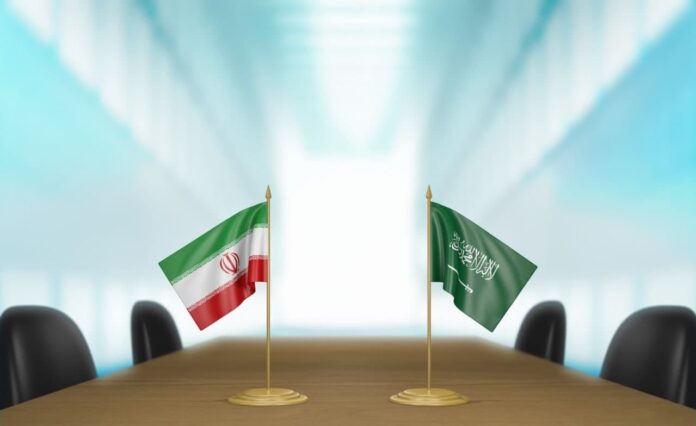
“We and Saudi Arabia have reached agreements in some areas and we welcome these talks,” Amirabdollahian told Lebanon’s Al Mayadeen TV channel on Friday.

The Iranian foreign minister said the talks between Iranian and Saudi negotiators are in the interest of the region.

“This is a constructive dialog. Iran and Saudi Arabia are two important countries and play an important role in stabilizing regional security,” he added.

Amirabdollahian stated that Iran believes that the equation of dialogue and welcoming the views of other countries can bring the region a bright future.

The Iranian top diplomat also said the main goal of the Iranian administration is a comprehensive multilateral economic plan adding that the results of Iran’s initiatives to establish peace and security in the region will be seen in the near future.

Iranian and Saudi officials have held several rounds of negotiations in the Iraqi capital Baghdad over the past months on mending relations which were cut in 2016.

Later in his remarks, Amirabdollahian touched on the negotiations between Iran and the remaining parties to the Iran nuclear deal.

“We will not waste our time negotiating unless the other side is serious about returning to it. If the United States is serious about returning to the nuclear deal, we can count on it,” he noted.

The U.S. unilaterally withdrew from the JCPOA and re-imposed sanctions on Iran in 2018, but now says it wants to be part of the nuclear deal again.

Iran and other remaining parties to the Joint Comprehensive Plan of Action, namely Russia, China, Britain and Germany have held several rounds of talks in recent months on a possible U.S. return to the JCPOA.

Iran says it will soon resume negotiations in the Austrian capital Vienna.

UN drops Yemen war crimes investigation

Members of the UN rights body pushed through a vote on Thursday to end war crimes investigations in Yemen, with 21 countries voting against the motion, 18 in favor and seven abstentions.

The vote marked the first time a resolution has been defeated in the UN Human Rights Council’s 15-year history.

The resolution, led by the Netherlands, would have given independent investigators another two years to monitor atrocities perpetrated by the Saudi-led coalition during Yemen’s protracted conflict.

Dutch ambassador Peter Bekker denounced the vote as a major setback, saying, “I cannot help but feel that this Council has failed the people of Yemen.”

“With this vote, the Council has effectively ended its reporting mandate, it has cut this lifeline of the Yemeni people to the international community,” he added.

Radhya Almutawakel, chairperson of the independent Yemeni activist group Mwatana for Human Rights, said she was deeply disappointed by Thursday’s vote.

“By voting against the renewal of the GEE today, UN member states have given a green light to warring parties to continue their campaign of death and destruction in Yemen,” she added, referring to the investigators known as the Group of Eminent Experts.

John Fisher of Human Rights Watch said the failure to renew the mandate was “a stain on the record of the Human Rights Council”.

“By voting against this much-needed mandate, many states have turned their back on victims, bowed to pressure from the Saudi-led coalition, and put politics before principle,” he added.

The vote came as several rights advocacy groups revealed earlier this week that Saudi Arabia, which is not a voting member of the UN Human Rights Council, had been heavily lobbying against the resolution that would extend the mandate of UN investigators in Yemen.

“Saudi Arabia, a leading party to the conflict in Yemen accused of serious violations including likely war crimes, together with its coalition allies, is engaging in a tireless lobbying campaign to deter states at the Human Rights Council from renewing the inquiry mandate,” Afrah Nasser, Yemen researcher at US-based group Human Rights Watch, said in a statement.

Nasser added if the panel bowed to Saudi pressure and failed to extend the mandate by two years, it would be “a stain on the credibility of the Council and a slap in the face to victims”.

Stephane Dujarric, a spokesman for UN Secretary-General Antonio Guterres, said the UN chief still believes there is a need for accountability in Yemen.

“We will continue to press for accountability in Yemen, a place … in which civilians have seen repeated crimes committed against them,” Dujarric added.

The Group of Eminent Experts, set up by the council in 2017, has found repeatedly that Saudi air raids and shelling during the seven-year conflict may amount to war crimes.

Kamel Jendoubi, head of the group, said in presenting its latest report last month that airstrikes launched by the coalition “continue to exact a huge toll on the civilian population”.

Since March 2015, Jendoubi added, it is estimated that over 23,000 airstrikes had been carried out by the coalition and that over 18,000 civilians had been killed or wounded.

Saudi Arabia, backed by the US and regional allies, launched a war on Yemen in March 2015, with the goal of bringing the former Riyadh-backed regime back to power and crushing popular Ansarullah resistance movement.

The war has left hundreds of thousands of Yemenis dead, and displaced millions more. It has also destroyed Yemen’s infrastructure and spread famine and infectious diseases.

Downward trend in Covid deaths continues in Iran

Coronavirus

The Friday announcement of the Iranian Health Ministry says 185 people died of the disease in the past 24 hours.

Medical officials also reported 9,897 new infections including 1,424 hospitalizations.
The latest deaths push the total number of Covid fatalities in Iran to 122,197 since the pandemic began in early 2020.

The downward trend of deaths and infections began a couple of weeks ago. This has prompted officials to lift many Covid-related restrictions like traveling and nighttime driving bans.

Iranian officials attribute the downward trend to a rise in vaccine production and imports as well as the acceleration of the vaccination process in Iran. They, however, urge people to care for social distancing, wear masks and refrain from gathering.

Healthcare centers and many hospitals across Iran have been working round the clock to inoculate the entire population.

Now only 7 cities in Iran are marked red, which is the highest level of risk from Covid. 108 cities are orange, 248 ones yellow, and 85 other blue.

65-million-year-old wonder cave in Isfahan Province

Experts believe that the cave East of Alavijeh city in Najafabad County in Isfahan Province, dates back to the Cretaceous period 65 million years ago.

Caving instructor Hassan Ghandehari says the cave was first discovered by the elders and local people of the village.

Then, he said, cavers identified 7 halls adding that the depth of Sangriz cave has not yet been discovered due to the difficult underground passages.

The limestone chandeliers, which were formed millions of years ago and gave a special beauty to the cave, are being destroyed and crushed today due to natural and human factors, the caving instructor warned.

Iran’s West Azarbaijan Province reopens all border crossings

All five land borders of the province which are Bazargan, Razi and Sarv on the border with Turkey, Tamerchin on the border with Iraq and Poldasht on the border of the Republic of Azerbaijan are open from today, Friday, the director general of highways and road transport of West Azerbaijan Province announced on Friday.

Arsalan Shokri added that those who want to leave the country through the province’s land borders need to have a valid vaccination card and a negative PCR test result.

He noted that passengers entering Iran from the land border crossings must also present a negative PCR test certificate and a valid vaccination card at the border; otherwise they will be barred from entering.

Shokri said before the coronavirus outbreak, more than 5 million passengers traveled through the land borders of West Azarbaijan Province annually adding that the number fell to 1 or 2 percent of that figure when the pandemic broke out.