Tuesday, December 23, 2025
Home Blog Page 2363

Cyclone Shahin causes heavy material damage in southern Iran

Deputy for Planning and Economic Affairs of Sistan and Baluchestan’s Agricultural Jihad Organization Farideddin Salimi said fisheries’ subdivisions in the southern coast of the province suffered 166 billion and 555 million tomans in losses.

Salimi noted that the most damage was to Sistan and Baluchestan’s fisheries, adding fishing piers, breakwaters and protective walls and fishing ponds suffered most. These installations are in the cities of Konarak, Dashtiari, Chabahar and Zarabad.

Meanwhile, Jalal Zaee the director general of Sistan and Baluchestan’s Cultural Heritage, Tourism and Handicrafts Department says historical monuments in the south of the province and also the Chabahar Museum suffered 2 billion tomans in losses when Cyclone Shahin struck.

The cyclone also has left at least 6 people dead in southern Iran.

Gas price in Europe breaks new record high

European gas prices have soared above $1,900 per 1,000 cubic meters. It’s equivalent to $186 per megawatt-hour in household terms.

According to data from the Intercontinental Exchange (ICE), the price of November futures on the TTF hub in the Netherlands rose to $1,936 per 1,000 cubic meters, as of 8:28am GMT.

Natural gas prices retreated to $1,769 per 1,000 cubic meters by 08:47 GMT, or $170 per megawatt hour.

The price of gas on the European market has nearly tripled since the beginning of September, when October futures cost around $730 per thousand cubic meters.

Energy prices in Europe have continued to spike as the first string of the Nord Stream 2 pipeline from Russia to Europe is being filled with natural gas. According to pipeline operators, procedures are being carried out to test the pipeline’s capacity, but deliveries to the continent have not yet begun. Nord Stream 2 is still awaiting final authorization from German regulators to turn on the taps.

According to a recent report from Saxo Bank, the start of operations by Nord Stream 2 in the fourth quarter of this year could drive natural gas prices in Europe down to historic lows.

US, China agree to abide by Taiwan agreement

“I’ve spoken with Xi about Taiwan. We agree… we’ll abide by the Taiwan agreement,” Biden said at a press briefing at the White House on Tuesday, adding, “We made it clear that I don’t think he should be doing anything other than abiding by the agreement.”

It wasn’t immediately clear what agreement Biden was referring to, but he appeared to be reiterating the “One China” policy, under which the US recognizes Chinese sovereignty over Chinese Taipei.

Biden also seemed to be referring to the “Taiwan Relations Act”, which makes clear that Washington’s decision to establish diplomatic ties with Beijing instead of Taipei rests upon the expectation that the future of the self-governed island will be determined by peaceful means.

Following Biden’s remarks, Chinese Taipei’s foreign ministry announced it had sought clarification from the US and had been reassured that Washington’s policy toward the island had not changed.

China considers Chinese Taipei a breakaway province that should be reunited with the mainland. Under the “One China” policy, almost all world countries recognize that sovereignty. The US, too, recognizes Chinese sovereignty but has long courted Taipei in an attempt to unnerve Beijing.

The latest development comes days after a record number of Chinese military aircraft flew into Taipei’s self-designated air defense zone.

On Wednesday, Taipei’s defense minister Chiu Kuo-cheng warned that China already had the ability to invade the self-ruled island but would be completely prepared to mount a full-scale invasion by 2025.

“By 2025, China will bring the cost and attrition to its lowest. It has the capacity now, but it will not start a war easily, having to take many other things into consideration,” he stated at a parliamentary committee.

Chiu further described the current situation as “the most serious” in the more than 40 years since he joined the military, adding that there was a risk of a “misfire” across the strategic Taiwan Strait.

“For me as a military man, the urgency is right in front of me,” he added.

His comments came as Taipei’s legislature reviewed an extra military spending of $8.6 billion for home-made weapons, including missiles and warships. The defense ministry pointed to China’s increased military spending and alleged, stepped-up Chinese air force and navy activity near Taipei.

“The military threats and provocation are even more than before,” the ministry said, adding that any crisis was likely to escalate fast.

China flew 150 planes over Taipei’s self-designated air defense identification zone in the first five days of October. Taipei’s defense ministry described the show of force as an “incursion”.

The US State Department accused China of “provocative military activity” by flying dozens of fighter jets as part of an air power show near the self-governed island. In response, China called on the US to withdraw support for anti-Beijing separatist forces in Chinese Taipei.

China has in the past said its military exercises near Chinese Taipei are a “solemn warning” to secessionist factions in the self-ruled island and their foreign backers, particularly the United States.

China has also warned Taipei against playing with fire, saying “war may be triggered at any time”.

Chiu’s commentary follows similar remarks voiced by Taiwanese President Tsai Ing Wen, who recently called on the US to up its presence in the region. In a submission for the New York-based media outlet Foreign Affairs, Tsai wrote that there would be “catastrophic” consequences if Taiwan were to fall.

Meanwhile, US National Security Adviser Jake Sullivan is due to hold talks with Chinese foreign policy adviser Yang Jiechi in the Swiss city of Zurich later in the day.

The meeting comes at a time of heightened tensions between the world’s two largest economies over a range of issues, including trade and Chinese Taipei.

In a statement, the White House announced that the meeting follows up on Biden’s call with Xi last month.

The meeting will be Sullivan’s first face-to-face meeting with Yang since their summit in Alaska in March, which also involved US Secretary of State Antony Blinken and ended without reaching an agreement.

China’s Foreign Ministry also stated in a brief statement that Yang and Sullivan will “exchange views on China-US relations and relevant issues” during their Zurich meeting.

With trade tensions also at the top of the US-China agenda, US Trade Representative Katherine Tai has expressed hope to hold discussions soon with Chinese counterparts.

The Global Times, a Chinese state-run tabloid, also reported China is willing to build mutually beneficial trade with the US but will not make concessions on principle and is not afraid of a drawn-out contest.

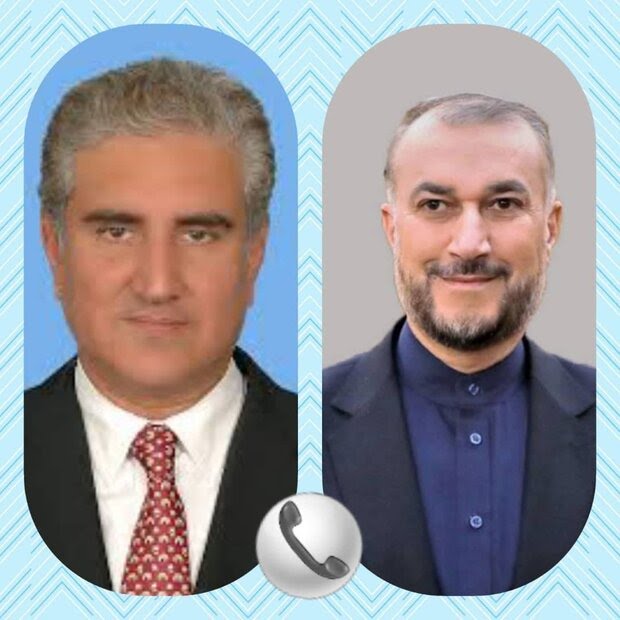
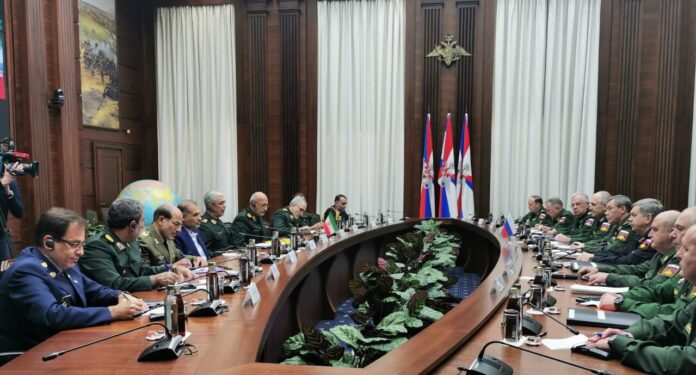
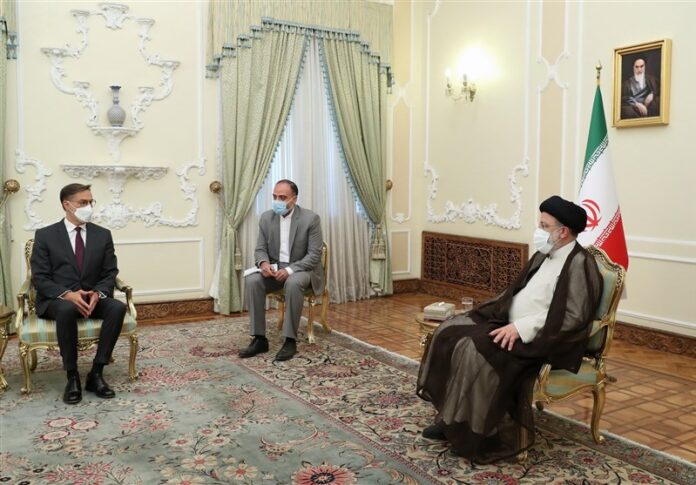
Iranian, Russian FM’s outline results of talks in Moscow

Referring to the high level of relations between Iran and Russia, Lavrov said, “Fortunately, ties between Tehran and Moscow are at the best level and I am confident that these relations will expand even more with the coming to office of the new government [in Tehran].”

Lavrov added that the Iran nuclear deal, otherwise known as JCPOA, is one of the most central issues over which Russia has constantly consulted with Iran and other signatories to the agreement.

He said if the United States wants to return to the UN Security Council, both Washington and the other parties must know that this agreement must be implemented without any changes and with the same obligations as enshrined in the text thereof.

According to the Russian foreign minister, he and Amirabdollahian discussed a wide range of regional and international issues, including Syria, Afghanistan, Yemen and the developments in the Caucasus.

He noted that Iran and Russia share the same view and cooperate on many of these issues.

Amirabdullahian also said in this joint press conference he and Lavrov talked about various bilateral and international issues and that the two share similar views about many matters.

He noted that in the near future, Iran and Russia will sign a strategic document on bilateral relations, which can be the basis of ties between the two countries.

The Iranian foreign minister stressed that obstacles to the boost of bilateral relations must be removed. Amirabdollahian expressed hope that trade between the two major and important neighboring countries will increase.

Amirabdollahian added, “We discussed Afghanistan in detail and in the near future we will hold a meeting of foreign ministers of Afghanistan’s neighbors plus Russia.” He also touched on the Caucasus. The foreign minister said Iran is concerned over Israel’s presence in the Caucasus, adding the region has no room for fresh unrest. Amirabdollahian said Iran will not tolerate the presence of Zionists and terrorists in the Caucasus.

Amirabdollahian also said Iran and Russia have agreed to make arrangements for a meeting between the two countries’ presidents Ebrahim Raeisi and Vladimir Putin in the near future.

He described relations between Iran and Russia as strategic and excellent, adding, “We view Russia as a strategic partner”.

US senators seeking to expel of 300 Russian diplomats

A bipartisan group of US senators asked Biden to take measures to increase the staff of the US Embassy in Moscow and, should Russia refuse that, to expel 300 Russian diplomats, according to a statement, published on Mark Rubio’s (R-Fla) website Tuesday.

According to the statement, Rubio, as well as other senators sent a letter to the US president, asking to “to take immediate action to increase staffing at the US embassy in Moscow and, if the Russian Government does not cooperate, to expel 300 Russian diplomats”.

Senators announced that “this disproportionality in diplomatic representation is unacceptable”.

US senators who demand Biden expel 300 Russian diplomats if Moscow refuses to expand the US embassy staff obviously want all US diplomatic missions in Russia to be closed, a Russian foreign ministry official told TASS on Tuesday.

“Those who call for such a step obviously want American diplomatic missions in Russia to be closed. They should understand that the responsibility for it will rest on them,” the official stressed.

Apart from that, the ministry official noted, that Russia doesn’t have that many diplomats in Washington.

“Or, maybe, lacking any knowledge in international relations, the senators counted Russian diplomatic personnel working at the permanent mission to the United Nations,” he added.

Ali Salehabadi appointed as Iran’s new central bank chief

Ehsan Khandouzi the finance and economic affairs minister said in a Twitter post that the cabinet convened on Wednesday and gave a vote of confidence to the 43-year-old.

The minister underlined that the central bank governor’s responsibilities include maintaining the value of money, curbing inflation, directing credit to productive activities and effective supervision of the banking network.

Salehabadi holds a PhD in financial management from the University of Tehran.

In 2005, he was appointed as Secretary General of the Tehran Stock Exchange Brokers Organization.

A year later he was elected by the Supreme Exchange Council as the head of the organization and for about a decade, he was in charge of leading the country’s capital market.

One of the most serious challenges facing Ali Salehabadi will be containing Iran’s rate of inflation which now officially stands at over 40 percent.

The inflation has been skyrocketing in recent years largely because of the US-led sanctions and Washington’s pressure on banks around the world to freeze Iranian money.

Mali summons French envoy over Macron remarks

This is the latest salvo in a tense dispute between Mali and its key military partner France over reports Bamako could recruit Russian mercenaries as Paris reshapes its 5,000-strong counter-terrorism mission in the region.

Mali’s prime minister has accused France of abandoning it in the joint fight against insurgents. Macron last week rejected the charge and questioned the legitimacy of the Malian authorities overseeing a transition to elections after two coups in just over a year.

In response, the Malian foreign ministry said it had summoned the French ambassador to inform him of the authorities’ indignation and disapproval.

At the meeting, Foreign Minister Abdoulaye Diop “strongly protested (Macron’s) regrettable remarks, which are likely to harm the development of friendly relations”, the ministry announced in a statement.

It added Diop also called for the two sides to take a constructive approach and prioritize countering the insurgency in the region.

Violence in the Sahel, a band of arid land that borders the south edge of the Sahara Desert, has intensified in recent years despite the presence of thousands of United Nations, regional and Western troops.

Diplomatic and security sources have told Reuters that Mali’s year-old military junta is close to recruiting the Russian Wagner Group, and France has launched a diplomatic drive to thwart it, stating such an arrangement is incompatible with a continued French presence.

Macron has also stated his “wish is for a calming down” between France and Algeria after relations soured amid a row over visas and the French leader’s remarks about the African nation’s post-independence leadership.

Speaking on Tuesday, Macron attempted to ease tensions that had emerged in recent days, with Algeria recalling its ambassador from Paris and barring all French military planes from entering its airspace, denying France a key transport route for its West African operations.

“My wish is for a calming down because I think it’s better to talk and to make progress,” the French president said in an interview, adding that he believes relations are “truly cordial” between his administration and Algerian President Abdelmadjid Tebboune.
The row between the two sides was sparked after Paris announced that it will cut visas granted to Algerians in half, while Macron criticized the African country’s post-independence leadership, claiming the “political-military system” has “totally rewritten” its history. The critical remark from the French president came when he spoke to descendants of the Algerian war of independence, arguing that the history bestowed on citizens by the nation’s administration is “not based on truths” and pushes a “discourse of hatred towards France”.

Algeria’s president condemned the actions as unnecessary and unacceptable “interference” in the nation’s domestic affairs. Macron has been more vocal than his predecessors about France’s colonial history in Algeria, recently admitting to the “injuries” that have stemmed from that time period, pledging to “recognise all of these memories” and work to tackle inevitable “tensions”.

The Algerian government has not yet said whether it will redeploy its ambassador to Paris or remove the restrictions on its airspace. France uses the air route over Algeria to move troops and supplies to the Sahel region, where it has engaged in Operation Barkhane, tackling insurgents in the area, alongside Burkina Faso, Chad, Mali, Mauritania, and Niger.

The visa reduction applied to people from Algeria, Morocco, and Tunisia, former French colonies, with government spokesperson Gabriel Attal stating it was necessary as those nations have refused to take back enough migrants kicked out of France. While Attal admitted France’s move is “a drastic decision and unprecedented”, he said that it followed attempts to engage in dialogue, and threats, and when those were rejected, Paris was forced to begin “carrying out those threats” in an attempt to induce “more cooperation”.

Saudi Arabia executes Shia man over ‘terror charges’

The Saudi Press Agency (SPA), citing the ministry of interior, reported on Tuesday that the man, identified as Muslim bin Muhammad al-Muhsin from the al-Awamia neighborhood, was also accused of participating in the murder of a citizen and possessing and making a Molotov cocktail bomb in order to attack security personnel.

The SPA added that the terrorist cell had sought to destabilize the country’s internal security. The agency reported the execution was carried out as a punishment for al-Muhsin in Eastern Province’s Dammam. The kingdom “will not fail to deter anyone who seeks to harm its security and stability, its citizens and residents,” the agency quoted the interior ministry as saying.

Saudi security authorities claimed that they arrested al-Muhsin after investigations proved he was involved in the crimes.

The execution ruling was upheld by the country’s Specialized Court of Appeal and the Supreme Court. However, a royal order was issued to enforce the ruling.

In Saudi Arabia, Crown Prince Mohammed bin Salman has been leading a crackdown against pro-democracy campaigners. In September, authorities executed a young man from Qatif over trumped-up allegations of terrorist activities.

The Saudi Interior Ministry alleged that the national had “smuggled weapons to and from the kingdom and was part of a terrorist cell that aims to destabilize security in the country”.

Saudi Arabia has also stepped up politically-motivated arrests, prosecution and conviction of peaceful dissident writers and human rights campaigners, in particular in Eastern Province, which has been the scene of peaceful demonstrations since February 2011.

Protesters have been demanding reforms, freedom of expression, the release of political prisoners, and an end to economic and religious discrimination against the oil-rich region.

Russia urges US to lift “illegal restrictions” on Iran, its partners

“Our Iranian friends and we proceed from the assumption that the road for restoring the agreement that was approved by the UN Security Council’s Resolution 2231 lies through systematic and gradual implementation by all sides of the balance of interests it originally established.

Moscow and Tehran are unanimous that the Vienna talks must be resumed as soon as possible. The Iranian side, as my counterpart has confirmed, is prepared for this,” Lavrov told a news conference following talks with his Iranian counterpart Hossein Amir Abdollahian on Wednesday.

At the same time, he went on to say, there is the understanding that the negotiations are not an end but a means.

“The world community is waiting for the United States to return to the legal space of the nuclear deal and to cancel the illegal restrictions against Iran and against all of its trading and economic partners,” he added.

“We regard as hopeless and futile attempts by some countries to link the JCPOA (Joint Comprehensive Plan of Action) with Tehran’s consent to compromise on some issues having nothing to do with the deal,” Lavrov stressed.

He pointed out that the situation in the region must be discussed beyond the JCPOA framework collectively at one negotiating table.

“This approach constitutes the basis of Russia’s concept of security in the Persian Gulf. This document was made public at the UN General Assembly and the UN Security Council. We are calling upon the Iranian and Arab friends to keep moving closer together along the road of mutual discussions and coordination of any issues in response to the existing concerns,” he added.

Negotiations have been underway in Vienna since April by Iran and the international quintet (Russia, Britain, Germany, China, and France) on restoring the Iranian nuclear deal to its original form. The sides have been discussing the issue of cancelling US sanctions against Iran, Tehran’s compliance with its commitments in the nuclear sphere and the United States’ return to the JCPOA.

Representatives from the countries that are parties to the agreement have been also holding separate consultations with US emissaries without Iran taking part. Originally the delegates had hoped to be through with this work at the end of May, and then in the first day of June. On September 21, Iranian Foreign Ministry spokesman Saeed Khatibzadeh noted the talks on restoring the nuclear deal to the full extent would begin in Vienna within several weeks.

On COVID pandemic, Lavrov stated Moscow and Tehran have agreed to take measures to speed up the delivery of the Russian Sputnik V coronavirus vaccine to Iran, as well as consider the possibility of launching its production in the Islamic republic as soon as possible.

“A contract was signed for the delivery of Sputnik V to Iran. We have agreed to take measures to speed up its implementation. We also looked into the possibility of organizing as soon as possible the production of the Sputnik V vaccine in the Islamic Republic of Iran,” the top diplomat added.

According to Lavrov, the sides are interested in combining forces to combat the spread of coronavirus.

“Our respective agencies are working actively on this,” Lavrov noted.
On Afghanistan, Lavrov said Moscow and Tehran call on the Taliban, which seized power in Afghanistan, to wage an uncompromising fight against terrorism.

“Afghanistan has to stop being a source of regional and global instability. We urge the new Afghan authorities to uncompromisingly fight against terrorist groups and the illegal drug and weapon trafficking,” Lavrov continued.

Ehsan Ghasri, [06.10.21 16:38]
The top diplomat emphasized that Russia and Iran shared the view that the Afghans, “who had been suffering from Washington’s geopolitical experiments for two decades, had a legal right to prosperity and peace on their own land”.

“We see ensuring the balance of all ethno-confessional and political groups, the principle of inclusiveness in the power structures as the guarantee of internal political stabilization,” Lavrov noted.

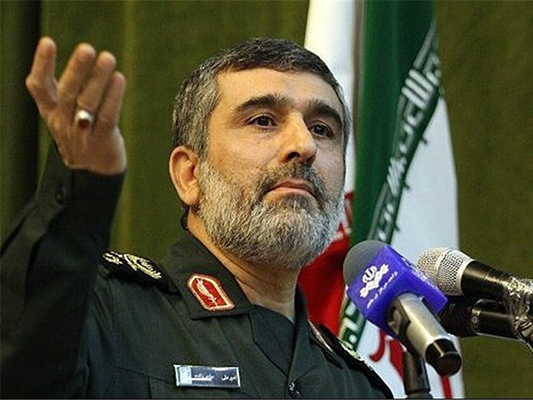
Leader advisor: Iran to Target Hostile Groups Outside Borders

Major General Yahya Safavi touched on the recent operation by the ground forces of the Islamic Revolution Guards Corps against anti-Iran forces in Iraq’s Kurdistan region.

“We have time and again said that the Kurdistan region should not be a hub for gatherings of the anti-Iran groupings. Even before the raids by the IRGC’s ground forces against the places of gathering of these groupings in Iraq’s Kurdistan region, it was officially announced that these areas should not become a hub for anti-Islamic Republic forces,” he said.

“We warn that wherever near our borders the anti-revolution groupings are, and if governments in those regions give these groupings refuge and provide them with equipment and weapons, we will take action against the anti-revolution grouping in those areas.”

The general added that such elements have in the past created some problems in Iranian border areas but they are “no match for the defensive power of the Islamic Republic of Iran”.

Safavi also said the anti-Iran groupings should use the amnesty offered by the Islamic Republic and stop acting as “servants” to the US and the regional countries, which fund them.