Tuesday, December 23, 2025
Home Blog Page 2361

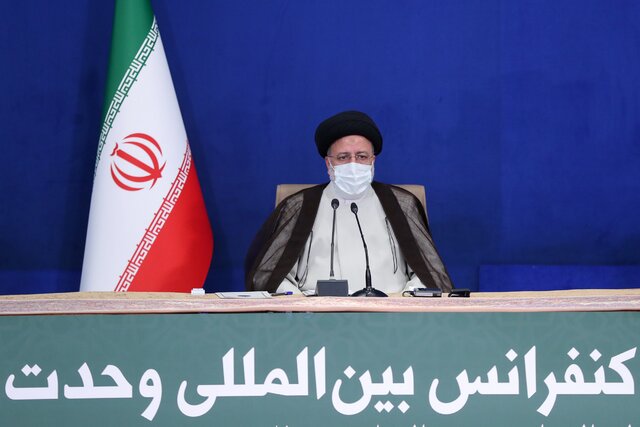
Kremlin: Putin-Raisi could meet by year’s end

Kremlin

Asked at a news briefing on Thursday whether such a meeting could take place this year, Kremlin Spokesman Dmitry Peskov replied, “We must certainly not exclude such a possibility.”

He added that this issue is already being weighed, but the exact date of the meeting would depend on the epidemiological situation.

Peskov noted that Tehran and Moscow share “an understanding that such a meeting is necessary and both parties express their readiness and the preparations are underway”.

“The exact date for this summit will be set via diplomatic channels taking into account the developments regarding the epidemiological situation,” he said.

Iranian Foreign Minister Hossein Amir Abdollahian stated on Wednesday, after meeting his Russian counterpart Sergey Lavrov in Moscow, that Iran hoped for a bilateral summit between Putin and Raisi, either in Moscow or Tehran, to confirm the privileged bilateral relations of strategic cooperation.

The Iranian top diplomat noted, speaking at a news conference in Moscow, that the sides agreed to start discussing the strategic partnership document in the near future and Tehran was ready to provide its suggestions in writing.

“It will be a new roadmap of our long-term bilateral cooperation,” he continued.

Iran beat UAE 1-0 in World Cup qualifiers

In Thursday’s match at the United Arab Emirates‘ Zabeel Stadium, Iranian international Mehdi Taremi was the centerpiece of another victory.

Taremi scored in the second half to give Iran a sweet 1-0 victory over the UAE in their World Cup Group A.

This was the third game of the World Cup 022 qualifying process for both teams, and so far Iran is undefeated in Group A.

Before Thursday’s faceoff, the host actually had a nine-match run without a defeat, attracting lots of attention to the game because of that. The Emiratis were also described as being far from an underdog vis-à-vis Iran. But they were outperformed by Team Melli at the end of the day. The win saw Iran stand decisively at the top of Group A with 9 points.
Iran will host South Korea next Tuesday in Tehran.

Iranian FM says Tehran ready to supply Lebanon with oil and gas

Hossein Amirabdollahian made the remarks in a Thursday meeting with Lebanese Prime Minister Najib Mikati in Beirut.

Amirabdollahian and Mikati discussed bilateral relations, regional developments and international issues.

In the meeting, Amirabdollahian, while congratulating on the formation of the new Lebanese government headed by Najib Mikati, said the Islamic Republic, as always, stands by the Lebanese people in every field and is ready to help this country.

The Iranian foreign minister explained the areas of cooperation between the two countries in the fields of energy, electricity, oil and gas.

He announced Iran’s readiness to help solve the problem of electricity shortage in Lebanon, supply the country with the oil and gas it needs within the framework of international law.
In the recent months the Islamic Republic has dispatched two shipments of fuel to Lebanon to help the country solve energy shortage. That was done under an initiative by the resistance Movement of Hezbullah.

Lebanon’s prime minister expressed gratitude for the good will of the Islamic Republic of Iran in expanding relations with his country. Mikati described Iran as a great and active economic power and stressed that Iran is powerful in the economic field. He said cooperation between the countries of the region and Iran is beneficial for the whole region.
Iran’s foreign minister also explained the policy of the Islamic Republic on the expansion of friendly relations with regional countries and on how to return to the nuclear talks and also its policy on the developments in Afghanistan.

Russia invites Taliban to Afghanistan meeting

Speaking to journalists on Thursday, Zamir Kabulov, who also serves as the director of the second Asian Department at the Russian Foreign ministry, stated that an invite had been extended to Taliban officials as part of efforts to open diplomatic channels with Afghanistan’s de facto new government.

However, the precise details of a meeting and who might attend it have not yet been disclosed.

Despite the Taliban being designated as a terrorist organization and banned in Russia, representatives of its political branch were granted permission to attend talks in Moscow earlier this year in an effort to forge a peace deal. Since then, the militant group has taken control of almost all of Afghanistan following the withdrawal of US troops and their allies.

In July, just weeks before the Taliban took Kabul, Foreign Ministry Spokeswoman Maria Zakharova defended ongoing negotiations with its senior leaders.

“The Taliban movement is prohibited in our country,” she said, adding that Moscow “reaffirms in every possible way its determination to fight against international terrorist activity”.

“There is a small and important nuance,” Zakharova went on, noting, “The Taliban movement is part of the inter-Afghan dialogue. This is the very dialogue that the Security Council [at the UN] has called on all countries to facilitate.”

She stated that by holding talks with all sides, Russia would continue to champion that process.

Any hopes for a peaceful settlement between the warring parties have since disappeared with the collapse of the US-backed government in August.

In past weeks, Taliban leaders have declared Afghanistan to be an Islamic Emirate and taken control of the state. However, no foreign nation has yet recognized the group as the country’s legitimate government.

Kabulov has previously hinted that Russia could grant recognition, while explaining that “we are in no hurry” and that such a move would be dependent on “how the new regime behaves”.

“If we compare how easy it is to negotiate as colleagues and partners, then the Taliban have seemed to me for a long time much more prepared for negotiations than the puppet government were,” he stressed in August.

According to the top diplomat, the former US-backed leadership was “doubtfully elected, ruled badly and ended shamefully”.

However, as well as opening diplomatic channels with the group, Moscow has also moved to shore up security in the region following the departure of American troops. Russian soldiers have staged a series of drills with forces from neighboring Uzbekistan and Tajikistan, insisting that the shared border will be protected.

Iranian FM: US messages not credible for Iran

Amirabdollahian said the US’s oral messages and empty promises of the European troika are no criteria for Iran.

Amirabdollahian was speaking at a press briefing with his Lebanese counterpart Bo Habib on Thursday in Beirut. He said Iran seeks talks that would realize the rights and interests of the Iranian people.

Amirabdollahian noted that Iran will make decisions and take action based on practical measures of the other sides including the removal of sanctions and their return to their obligations under the JCPOA. The foreign minister noted that Iran has been the only party to the deal that stuck by its obligations under the JCPOA to the end and it’s ready to return to full compliance with the agreement if the other signatories do the same.

Iran reduced its commitments under the JCPOA after former US president Donald Trump left it and reinstated sanctions on Tehran.

Amirabdollahian also spoke of ties with Lebanon. He said Tehran is ready to build two electricity power plants in Lebanon within 18 months.

Amirabdollahian also said Iranian companies are prepared to rebuild the Beirut port that was devastated in a massive explosion in 2020.

He added that during his visit, Iran and Lebanon agreed to hold an economic commission. The foreign minister noted that Iran is ready to help Lebanon in all areas.

He said the Lebanese including the people, the army, the government and resistance movement Hezbollah are capable of challenging the Zionist regime.

He also touched on Iran-Saudi Arabia negotiations. The foreign minister described recent talks between the two sides as good and said Iran is after negotiations which would realize the rights of the Iranian people.

The Lebanese foreign minister also expressed hope that talks between Riyadh and Tehran will bear fruit. Earlier, Amirabdollahian spoke with Lebanese President Michel Aoun.

The Lebanese president reiterated his country’s support for Iran’s efforts to strengthen ties between Tehran and regional, most notably Arab, countries through talks. He also said negotiations will bring views closer to each other.

US officially admits keeping 3,750 nuclear tips

The administration of President Joe Biden disclosed the U.S. nuclear stockpile for the first time since 2018, the Donald Trump administration having refused to disclose the information for the past two years.

According to the report provided by the National Nuclear Security Administration (NNSA), the U.S. has 3,750 warheads as of Sept. 2020.

“Increasing the transparency of states’ nuclear stockpiles is important to nonproliferation and disarmament efforts, including commitments under the Nuclear Non-Proliferation Treaty, and efforts to address all types of nuclear weapons, including deployed and nondeployed, and strategic and non-strategic,” said the NNSA.

The agency added that “this number represents an approximate 88 percent reduction in the stockpile from its maximum (31,255) at the end of fiscal year 1967, and an approximate 83 percent reduction from its level (22,217) when the Berlin Wall fell in late 1989”.

The U.S. stockpile includes both active and inactive waheads.

In 2020, the Trump administration informed the Federation of American Scientists (FAS) that it would not be disclosing the size of the U.S. nuclear stockpile for a second time in a row. The FAS had submitted a request a request for the U.S. government to disclose the size of the U.S. nuclear stockpile.

When the U.S. last disclosed the size of the nuclear stockpile in 2018, the size had been reported as 3,822 warheads in 2017.

Hans Kristensen, director of the Nuclear Information Project at FAS, told The Associated Press that this decision by the Biden administration was a return to “transparency”.

According to Kristensen, disclosing the size of its nuclear arsenal will help U.S. diplomats in negotiating arms control negotiations at next year’s Nuclear Non-Proliferation Treaty conference.

Pentagon chief warns default could harm national security

The remarks came after Treasury Secretary Janet Yellen noted she fully expect the U.S. economy to fall into a recession if Congress had fails to raise the debt limit.

Austin warned Wednesday that a U.S. debt default would have far-reaching consequences for national security, and would even endanger pay and benefits for millions of troops, military retirees, survivors and civilian and contractor employees.

“If the United States defaults, it would undermine the economic strength on which our national security rests,” Austin said in a written statement.

The Pentagon chief’s stark warning is the latest effort — this time from the national security wing of the Joe Biden administration — to highlight the cataclysmic effects that could be unleashed by a potential default amid a stalemate over whether to suspend the federal debt ceiling through late 2022.

A default could occur by Oct. 18, the Treasury Department has warned, if the borrowing limit isn’t raised. Democrats and Republicans are at loggerheads as the default looms, with Senate GOP Leader Mitch McConnell of Kentucky so far refusing to back off his position of blocking a swift debt limit boost.

If the federal government is unable to borrow money to finance its debt and operations, Austin noted pay and benefits for millions would be at risk and “seriously harm our service members and their families”.

“[A]s Secretary, I would have no authority or ability to ensure that our service members, civilians, or contractors would be paid in full or on time,” Austin continued.

He outlined several potential impacts of a default, including not being able to pay out benefits to 2.4 million military retirees and 400,000 surviving family members.

Payments to contractors could also be delayed, Austin stressed, threatening jobs and operations in the defense industrial base.

Austin also warned of a hit to U.S. prestige that could be brought on by a debt crisis, which he said would undercut the “the international reputation of the United States as a reliable and trustworthy economic and national security partner”.

“Our service members and Department of Defense civilians live up to their commitments,” he added.

“My hope is that, as a nation, we will come together to ensure we meet our obligations to them, without delay or disruption,” he stated.

Legislation to suspend the debt limit through December 2022, after the midterm elections, passed the House in a near-party-line vote last week. All but one Republican opposed the standalone debt limit increase.

Senate Majority Leader Chuck Schumer is slated to hold a procedural vote Wednesday afternoon to advance debt ceiling legislation aimed at pressuring Republicans on the issue.

That effort is expected to fall short of the 60 votes needed to move forward, due to Republican opposition. GOP senators so far maintain that they won’t help Democrats increase the borrowing limit while they pursue trillions of dollars in new social spending plans.

McConnell has instead insisted Democrats use reconciliation, a more time-consuming budgetary process that circumvents the Senate’s 60-vote threshold, to move debt limit legislation with only Democratic votes.

Report: France ‘stole’ 5mn COVID vaccines from U.K.

A vial of the AstraZeneca/Oxford Covid-19 vaccine is held at the Pontcae Medical Practice in Merthyr Tydfil in south Wales on January 4, 2021. - Britain on Monday began rolling out the Oxford-AstraZeneca coronavirus vaccine, a possible game-changer in fighting the disease worldwide. (Photo by Geoff Caddick / AFP) (Photo by GEOFF CADDICK/AFP via Getty Images)

France has been accused of stealing five million coronavirus vaccine doses destined for the UK. worked with EU chiefs to divert the large batch of Oxford/AstraZeneca jabs to his country earlier this year.

The vaccines were expected to arrive in the UK but were instead redirected from Holland at the eleventh hour, according to The Sun.

The daily quoted senior government sources as saying the “outrageous” move could have cost lives if not for the UK’s successful rollout of the Pfizer jab.

AstraZeneca boss Ruud Dobber had announced publicly on 22 March that a vaccine batch was expected to arrive in Britain from its Halix site in Holland.

But it reportedly never arrived, having instead been diverted to the EU’s scheme.

The newspaper added it was also claimed France made a veiled threat to prime minister Boris Johnson that it would cut off supplies of Pfizer, which would have jeopardised Britain’s vaccine rollout.

The alleged incident is said to have sparked a major row between Johnson and his French counterpart.

It came at a time when Macron was criticising the AstraZeneca vaccine, claiming it was “quasi-ineffective” and telling reporters the jab “doesn’t work the way we were expecting to”.

He also appeared to criticise the UK’s vaccine rollout strategy, which at the time had resulted in more people being given a first dose than any other European country.

The European Union was simultaneously threatening to impose export controls on Covid-19 vaccines after a major row with AstraZeneca, which was accused of cutting initial deliveries to the bloc by up to 60 per cent.

A government source told The Sun, “The French stole our vaccines at the same time as they were slagging them off in public and suggesting they weren’t safe to use”, stating, “It was an outrageous thing to do and not the action of an ally, which was made very clear to them.”

Israel’s FM to discuss Iran during US visit

Israel’s top diplomat will be in Washington from Oct. 12 though Oct. 14, during which time he will hold discussions with Secretary of State Antony Blinken, National Security Adviser Jake Sullivan and Vice President Kamala Harris, multiple news outlets reported on Wednesday, citing Lapid’s office.

The string of meetings come as the U.S. and Iran are at a stalemate in their nuclear talks.

Biden has said he wants Iran to re-enter the Joint Comprehensive Plan of Action (JCPOA) — the nuclear deal that was brokered under the Barack Obama administration in 2015, which former President Donald Trump withdrew from in 2018 — contending that the agreement is the only way the U.S. can stop Iran from obtaining a nuclear weapon.

Nuclear talks had been underway in Vienna but they were ultimately adjourned in June. Now, the U.S. has only been engaging in indirect talks through its allies.

Newly elected Iranian President Ebrahim Raisi, during a speech to the United Nations last month, called for nuclear talks to resume.

Earlier this month, however, the country’s Foreign Minister, Hossein Amirabdollahian, asked that the U.S. unfreeze $10 billion of its funds to restart nuclear discussions.

Israel is now looking to develop a backup plan for if the U.S. talks with Iran fail, according to Axios.

Lapid and Blinken also met in June during a trip to Rome, according to The Jerusalem Post.

Sullivan met with his Israeli counterpart, Israel’s national security adviser Eyal Hulata, on Tuesday, as part of a chain of meetings between the U.S. and Israeli officials to talk about their military, diplomatic and intelligence communities.

The White House emphasized that diplomacy remains the ideal course of action when it comes to nuclear talks.

“We, of course, remain committed to a diplomatic path,” a senior administration official stated.

Israeli Prime Minister Naftali Bennett slammed Iran during his own speech to the U.N. General Assembly, saying that the Islamic republic had crossed all nuclear red lines.

“Iran’s nuclear weapons program is at a critical point. All red lines have been crossed,” Bennett continued.

“Iran’s nuclear program has hit a watershed moment, and so has our tolerance. Words do not stop centrifuges from spinning,” he added, promising that Israel “will not allow Iran to acquire a nuclear weapon”.

Iran’s permanent ambassador to the United Nations has denounced the blame game launched against Iran by Israel.

Majid Takht-Ravanchi decried Bennett’s rhetoric, saying his speech about Iran was full of lies.

“Iranophobia peaked at the UN,” wrote Takth-Ravanchi in a tweet.

Austrian chancellor accused of bribery

The investigation, which prosecutors confirmed hours after raids on the Chancellery, Finance Ministry and the offices of Kurz’s party, is a fresh political threat to Kurz, whom anti-corruption prosecutors placed under investigation separately in May on suspicion of perjury.

Kurz and his People’s Party (OVP) dismissed the investigation as politically motivated.
The suspicion in this investigation is that, starting in 2016 when Kurz was foreign minister and seeking to become party leader, and later as he became chancellor, the conservative-led Finance Ministry paid for advertisements in a newspaper in exchange for polling and coverage favourable to him.

“The Prosecutors’ Office for Economic Affairs and Corruption has placed Sebastian Kurz and nine others as well as three organisations under investigation on suspicion of breach of trust … corruption … and bribery …, partly with different levels of involvement,” the office said in a statement.

The early morning raids took place at locations including the homes and Chancellery desks of three senior Kurz aides.

“I am convinced that these accusations, too, will prove to be false,” Kurz said in a brief statement, adding that text-message exchanges had been taken out of context to “construct” a case against him.

OVP Deputy Chairwoman Gaby Schwarz dismissed the raid on its headquarters as “political staging” aimed at achieving a “show effect” to harm both Kurz and the party. The OVP has repeatedly accused anti-corruption prosecutors of bias against it and Kurz, which prosecutors’ and judges’ organisations deny.

That reaction exposed tensions in the ruling coalition between Kurz’s conservatives and the left-wing Greens, who campaigned on “clean politics” and have avoided saying how far they will support Kurz if the cases against him progress.

“The accusation of show politics is an empty one simply because a judge’s approval is required for this instrument, namely carrying out a raid as part of an investigation,” Greens leader and Vice Chancellor Werner Kogler told a news conference, adding that prosecutors should be able to keep working freely.

MANIPULATED POLLING

Tabloid daily Oesterreich, which Austrian media identified as the newspaper at the centre of the investigation, issued a statement earlier on Wednesday denying taking state money for advertising in exchange for publishing polling.

Without naming the newspaper, prosecutors said they suspect that from 2016 until at least 2018 Finance Ministry funds paid for party-politically motivated and sometimes manipulated polling that was published in the newspaper, and that some of those under investigation could influence what was reported.

Kurz took over as OVP leader in May 2017 and led his party to an election victory later that year.

Finance Minister Gernot Bluemel told a news conference the investigation related to a time before he took office last year and he was not a target. Kurz was due to appear on ORF TV’s evening news at 10 p.m. (2000 GMT).

Austria’s three main opposition parties called for a special session of the lower house of parliament to address the investigation and called on Kurz to resign.