Friday, December 26, 2025
Home Blog Page 2334

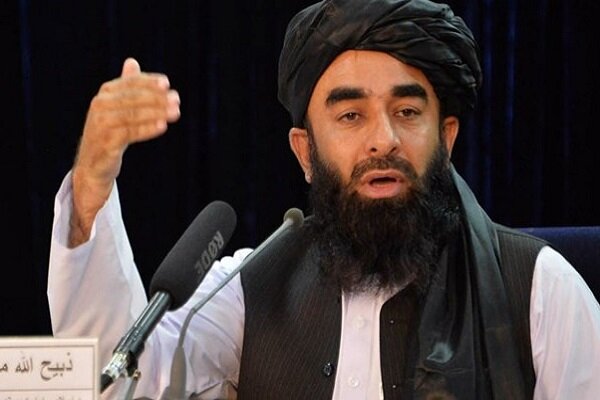
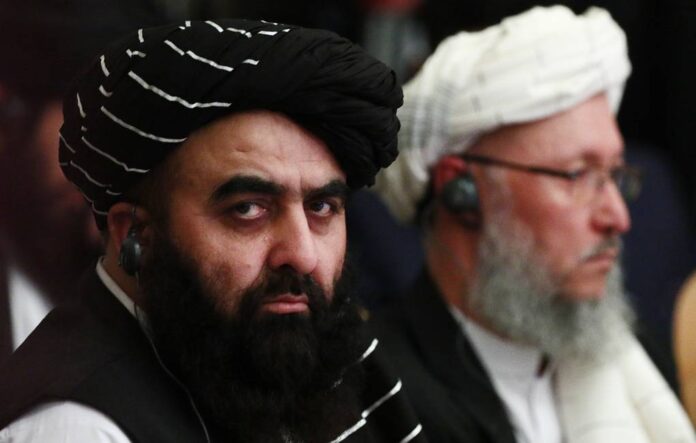
Report: Taliban Deputy PM, Iran Envoy Meet in Moscow

Tasnim News Agency quoted Taliban Spokesman, Zabihullah Mujahid, as saying the two sides discussed bilateral relations and the necessity of seizing economic opportunities in the region.

They also committed themselves to holding talks in the near future about trade as well as water and electricity issues, added the spokesman.

The Wednesday meeting was held on the sidelines of an international summit on Afghanistan, hosted by Russia.

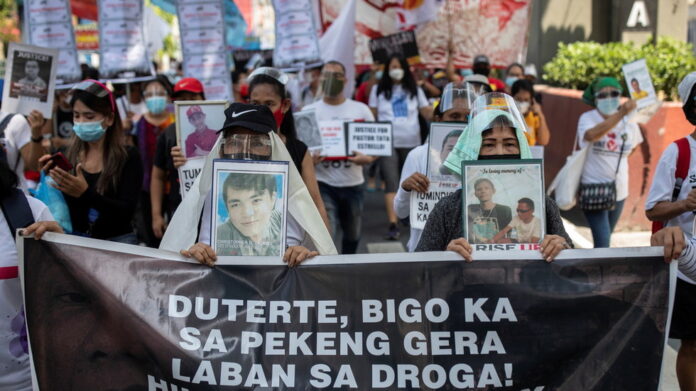
Philippines to investigate thousands of deaths during war on drugs

The Philippines will look into thousands of killings in Duterte’s war on drugs, its justice minister said on Wednesday, after a review of a sample of cases indicated foul play in dozens of deadly police operations.

Menardo Guevarra stated his Department of Justice (DOJ) would expand its review to the more than 6,000 killings during police operations, after which many officers were cleared of wrongdoing in internal police investigations.

“Time and resources permitting, the DOJ will review these thousands of other cases, too,” Guevarra told Reuters.

The decision indicates a shift from the Philippines’ vehement defence of the drugs war, which has seen the government scold critics and activists who alleged there were systematic executions of drug suspects by police.

The Philippines has come under pressure from the United Nations to hold a thorough probe and the International Criminal Court recently announced it would investigate the crackdown.

The government, however, has said it will not cooperate because the Philippine justice system is functioning.

Wednesday’s release of details of 52 drug war deaths marks a rare admission by the state that abuses may have taken place.

In several of those, victims had no traces of gunpowder on their hands, or did not have a gun at all.

The DOJ also announced police had used excessive force, shot suspects at close range and relevant medical and police records were missing.

The findings, which are subject to further case buildup and criminal charges, could challenge the government’s narrative of the war on drugs.

Duterte has for five years defended police and argued that all those killed were drug dealers who resisted arrest. He has publicly said police could kill if they believed they were in danger and he would pardon any who end up in prison.

Duterte’s office did not immediately respond to a request for comment on Wednesday.

Police chief Guillermo Eleazar vowed no cover up.

“We will make sure to hold accountable those who should be held accountable,” he said in a statement.

Carlos Conde, Senior Philippines Researcher at Human Rights Watch, said the war on drugs was about more than a few rogue police.

He criticised what he called light punishment being recommended by police internal affairs, which included suspension, demotion or dismissal.

“Based on these 52 cases alone, it is clear that the drug war is an illegal, murderous state policy being carried out by police force that has been commanded by the president himself to disregard due process,” Conde added.

One of the cases reviewed by the DOJ involved a suspect who was shot 15 times by police.

The DOJ said there was no crime scene report or autopsy, nor were ballistics or paraffin tests carried out to determine if the suspect was armed.

It added it was disclosing the findings so that families of victims could know deaths were being investigated, and to invite witnesses to come forward.

More than 6,000 people have been killed by police in the crackdown, but activists say many thousands more drug users and peddlers were shot dead by mysterious gunmen. Police have denied involvement in those.

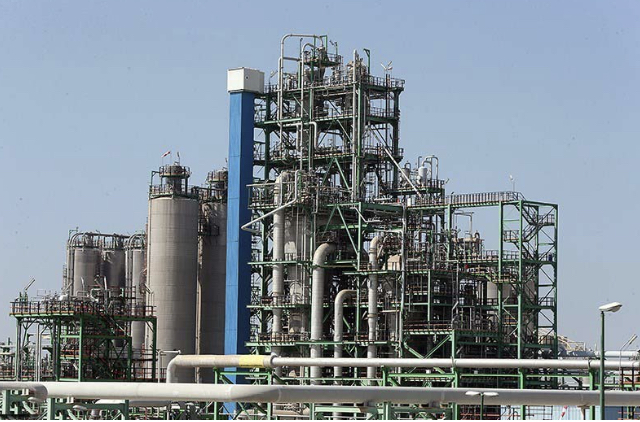
South Pars CEO: investments in gas field close to $80bn.

Hashemzadeh Farhang noted that the daily production of 560 million cubic meters of natural gas, 21,000 tons of liquefied natural gas, 760,000 barrels of gas condensate and 15,400 tons of ethane is the current capacity of Pars Complex.

Hashemzadeh Farhang said that South Pars is a common field with Qatar. According to him Qataris started exploiting this reservoir four years earlier than Iran in 1998. Qatar produced a maximum of 175.7 billion cubic meters in 2020, but Iran overtook the country in 2018, and from 2020, the Islamic Republic set a record by producing 202.3 billion cubic meters of gas from South Pars. 

He added that the share of gas in Iran’s fossil energy basket is 73.7%, of which 50% is allocated to the South Pars complex. 

Hashemzadeh Farhang however pointed out that the average share of natural gas in the energy basket of countries is 23%, but Iran is 71% dependent on gas. 

He added that currently, 17,000 people work in the South Pars Gas Complex.

Iran and Turkey determined to fight terrorism

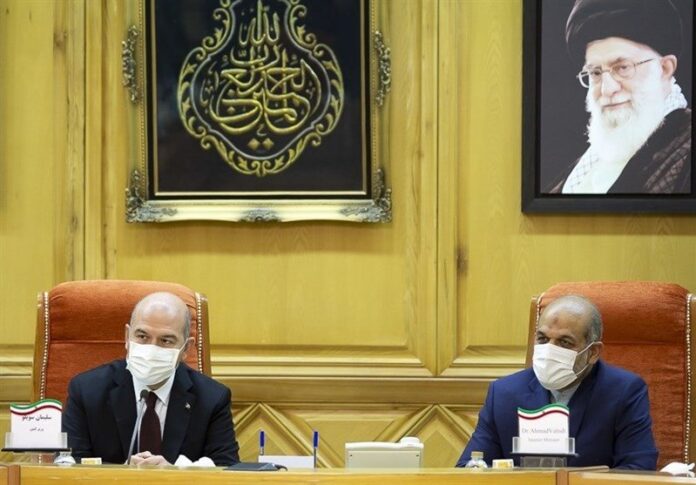
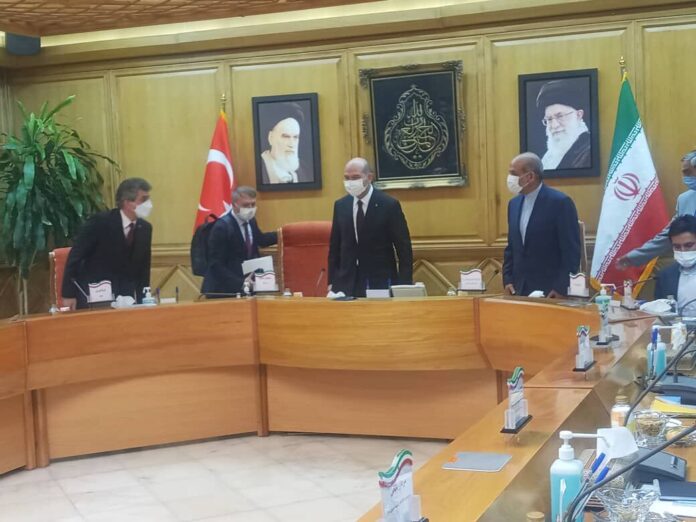
Iran’s Interior Minister Ahmad Vahidi has held talks with his Turkish counterpart Süleyman Soylu in Tehran.

Vahidi said at the news briefing following his talks with Soylu that in the meeting, the development of relations between the two countries in all areas was discussed.

Vahidi added, “We discussed the fight against terrorism, international crime, arms trafficking, the development of cross-border activities, and the development of joint cooperation in all areas, including the issue of immigration.“

He added he and his Turkish counterpart also talked about more general issues such as the destructive role of the US and Zionist regime in the region and the many problems they have created for nations including Afghanistan and the conspiracies they have hatched in the region.

Vahidi noted that the determination of the two countries to develop strategic relations is firm.

He also said Iran and Turkey will not allow others to disrupt their relations.

Soylu also described his talks with Vahidi as important. He said Iran and Turkey cooperate in the fight against terrorist groups including the PKK and they are resolved to combat terror.

Soylu added Iran and Turkey also plan to form an action group for fighting terrorism and narco-trafficking.

Iranian, Turkish interior ministers meet in Tehran

The Turkish official was officially greeted by the Interior Ministry’s Security Deputy Hossein Zolfaghari.

Vahidi and Soylu are finalizing their review of the security memorandum between the two ministries.

Several other officials including the commander of the Turkish Gendarmerie are accompanying Soylu during his visit to Tehran.

Saint Petersburg welcomes Iran’s General Bagheri

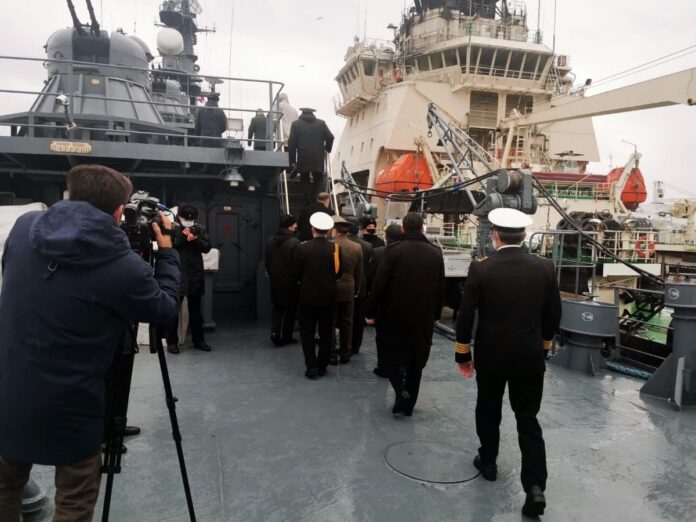
Major General Bagheri arrived in the northern port city of St. Petersburg as he continued his trip to Russia to meet with naval officials and visit naval combat facilities. Admiral Vladimir Kasatonov, Commander of the North Sea Fleet and Deputy Commander of the Russian Navy, and a group of high-ranking Russian generals greeted Major General Bagheri at the Russian Navy headquarters. After the official welcoming ceremony, Major General Bagheri and Admiral Kasatunov inspected the ceremonial guards and then entered into talks with the Ambassador of the Islamic Republic of Iran Kazem Jalali and a group of deputies and high-ranking military officials of the two countries in attendance.

At the beginning of the meeting, the Commander of the North Sea Fleet and the Deputy Commander of the Russian Navy expressed his happiness over the presence of Major General Bagheri in St. Petersburg.

Kasatunov said the Iranian and Russian navies have held numerous naval exercises in recent years and will continue their cooperation.

The senior Russian official referred to the presence of the 75th Strategic Naval Fleet of the Iranian Army in the recent naval parade in St. Petersburg and called for the strengthening of military ties between Tehran and Moscow.

Major General Bagheri also said Iran-Russia relations are expanding as two important partners in the international arena. He added that the naval fleet of the Iranian Army entered the Gulf of Finland for the first time after crossing the Atlantic Ocean and participated in the Russian naval parade.

He said this shows the military and defense clout of Iran’s military and its interest in expanding defense cooperation with Russia.

Bagheri noted that ties, especially military and defense cooperation, have been on the rise in recent years, saying with the conclusion of arms contracts and their implementation in the near future, these relations will expand significantly.

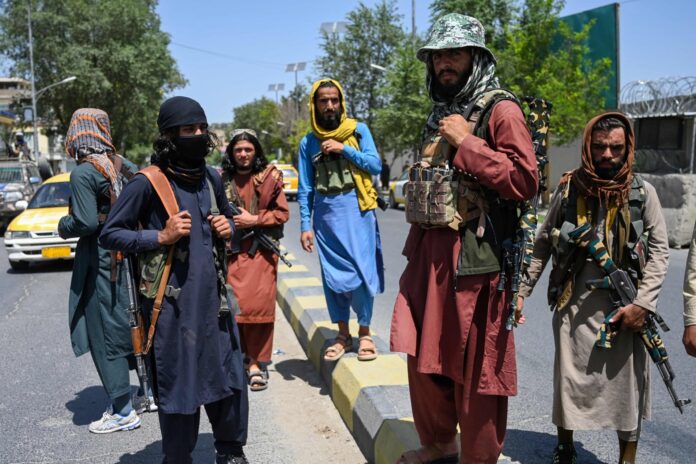
Taliban: Afghan territory not to be used against others

The Taliban movement remains committed to its pledge not to take aggressive action against other countries, he stated.

“We have practically proven with our actions that the soil of Afghanistan will not be used against anyone, and since the day we made our commitment in the Doha agreement, we have remained committed to that clause,” he noted speaking through an interpreter.

The Taliban movement launched a massive operation for establishing control of Afghanistan after the United States last spring declared its troop pullout. On August 15, Afghanistan’s President Ashraf Ghani left the country. The radicals entered Kabul without encountering any resistance. On September 6 the movement declared it had established control of the whole of the country’s territory and the next day, on September 7 it announced the composition of an interim government, whose legitimacy has not been recognized by any country yet.

In February 2020, US officials and the Taliban signed a peace agreement in Doha. The Taliban pledged they would not use the territory of Afghanistan for actions posing a threat to the security of the United States or its allies.

The Taliban movement does not need military aid from abroad, but assistance in restoring the country is required, Deputy Prime Minister of Afghanistan’s interim government Abdul Salam Hanafi told journalists on the sidelines of the third session of the Moscow consultations on Wednesday.

“We do not need military assistance. We need support for peace in Afghanistan, in the restoration of Afghanistan,” he continued.

Iran Says Administered Over 1.1 Covid Jabs in 24 Hours

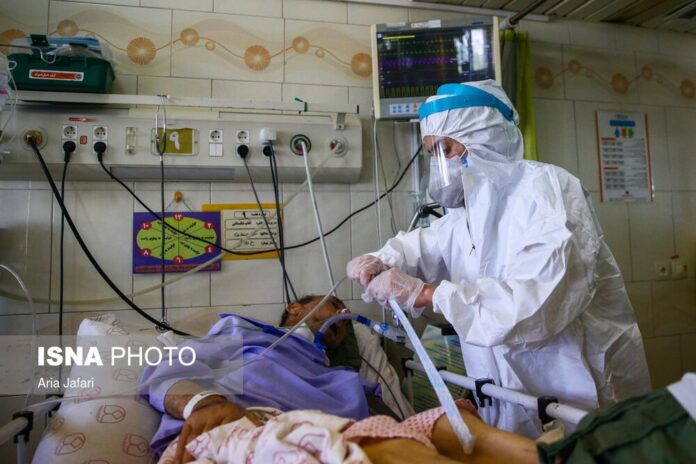
The ministry’s public relations center said over 49 million Iranians have so far received the first dose of the vaccine. It said nearly 27 million people have also received a second dose. That makes total of more than 76 million doses of administered vaccines.

The ministry added that 11,770 new coronavirus infections were detected since Tuesday, including 1,798 people, who were hospitalized.
Over the same period, the ministry said, 162 patients lost their lives to the virus, raising the overall fatalities to 124,585 people since the beginning of the pandemic in early 2020.

The ministry added that 4,559 Covid patients are now in intensive care units due to the severity of their symptoms.

Currently, 9 Iranian cities are marked red, meaning they face a critical stage of Covid outbreak on a scale that lists cities as red, orange, yellow and blue.

US official calls for maintaining sanctions against Taliban

Adeyemo stated he sees no situation where the Taliban would be allowed access to Afghan central bank reserves, which are largely held in the United States.

“We believe that it’s essential that we maintain our sanctions against the Taliban but at the same time find ways for legitimate humanitarian assistance to get to the Afghan people. That’s exactly what we’re doing,” Adeyemo told the Senate Banking Committee on Tuesday.

The Taliban have called for the US to lift a block on more than $9bn of Afghan central bank reserves held outside the country as the government struggles to contain a deepening economic crisis.

The Taliban took back power in Afghanistan in August after the United States pulled out its troops, almost 20 years after the armed group was deposed by US-led forces following the September 11, 2001, attacks on the US.

The US and other Western countries have been grappling with difficult choices as a severe humanitarian crisis loomed large in Afghanistan. They have been trying to work out how to engage with the Taliban without granting them the legitimacy they seek, while ensuring humanitarian aid flows into the country.

“Our goal is to make sure that we are implementing our sanctions regime against the Taliban and the Haqqani network, but at the same time allowing for the permissible flow of humanitarian assistance into the country,” Adeyemo added.

The Haqqani network is a group affiliated with the Taliban based near the border with Pakistan and blamed for some of the worst suicide attacks of the war.

Adeyemo noted the Department of the Treasury was taking every step it could within its sanctions regime to make clear to humanitarian groups that Washington wants to facilitate the flow of aid to the Afghan people, but warned that for humanitarian assistance to flow, the Taliban have to allow it to happen within the country.

The Treasury last month further paved the way for aid to flow to Afghanistan despite US sanctions on the Taliban when it issued two general licences.

UN: 10k children killed or maimed in Yemen war

Yemen War

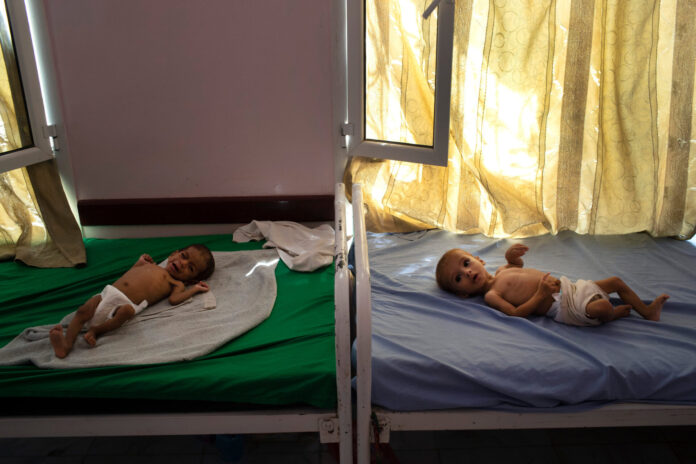
The protracted war in Yemen has killed or maimed at least 10,000 children since the conflict began in March 2015, which is equivalent to four children every day, according to the UN children’s agency.

At a media briefing in Geneva on Tuesday, James Elder, a spokesperson for the UNICEF said these are the cases verified by the agency, while the actual toll could be much higher.

Elder, who recently returned from his visit to Yemen, stated he met scores of people affected by the six-year war, warning that the country was “on the brink of total collapse.”

He added Yemen’s humanitarian crisis represents a “tragic convergence of four threats,” including violent and protracted conflict, economic devastation, shattered services for support systems and a critically under-funded UN response.

Yemen, situated on the southwestern corner of the Arabian Peninsula, has been beset by violence and chaos since 2015, when Saudi Arabia and its allies launched the devastating war to reinstall the former regime of Abd Rabbuh Mansur Hadi in Sana’a. The prolonged war has killed hundreds of thousands of Yemeni civilians and spawned the worst humanitarian catastrophe in modern world history.

The UNICEF spokesperson noted the agency urgently needs more than $235 million to continue its life-saving work in the country till mid-2022; otherwise, it will be forced to wind up its operations.

“Funding is critical. We can draw a clear line between donor support and lives saved. But even with increased support, the war must come to an end,” the UN official stated. “At the current funding levels, and without an end to fighting, UNICEF cannot reach all these children. There is no other way to say this, without more international support, more children – those who bear no responsibility for this crisis – will die,” he warned.

He said four out of every five children need humanitarian assistance in the country, which accounts for more than 11 million kids. At the same time, 400,000 children continue to suffer from acute malnutrition, more than two million children are out of school and another four million are at the risk of dropping out, he noted.

Elder added 1.7 million children have been internally displaced because of violence, and numbers are mounting with the recent escalation in the strategic city of Ma’rib.

A staggering 15 million people, more than half of whom are children, do not have access to safe water, sanitation, or hygiene, the official said, adding that the agency is providing many services to people in the crisis-stricken country but the severity of the humanitarian situation “cannot be overstated.”

“The economy is in a critical condition. GDP has dropped by 40 percent since 2015, when the violence escalated. Huge numbers of people have lost their jobs, and family incomes have plummeted. About one-quarter of people – including many medical workers, teachers, engineers, and sanitation workers – rely on civil servant salaries that are paid erratically, if at all,” Elder added.

Pointing to the lack of means to procure food, he said children in Yemen are not starving because of “a lack of food,” but because their families “cannot afford food.”

“Yemen is the most difficult place in the world to be a child. And, unbelievably, it is getting worse,” he continued.

In August, the UN agency said one child was dying every 10 minutes in Yemen of preventable causes, including malnutrition and vaccine-preventable diseases.

“More than six years ago, adults started a war in Yemen. They did so despite knowing the terrible toll that violent conflict exacts on children,” UNICEF executive director Henrietta Fore told a UN Security Council meeting.

“The war in Yemen, now in its seventh year, has created the largest humanitarian crisis in the world – one made worse by the public health and socioeconomic consequences of the COVID-19 pandemic,” Fore added in corroboration of the situation that has afflicted the country.

Multiple UN-brokered talks between the warring sides have failed to produce a breakthrough over the years as Saudi-backed foreign mercenaries have sought to inflict harm on the people of Yemen. While the Saudi-led coalition continues to lose large swaths of territory it had occupied following the 2015 invasion, Yemeni armed forces and the allied Popular Committees continue to grow in strength.