Monday, April 13, 2026
Home Blog Page 2331

Iran’s Navy foils pirate attack near Bab al-Mandab

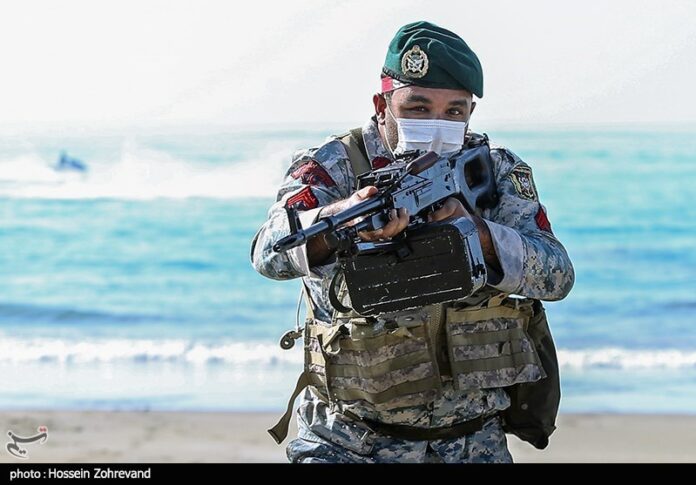
The Iranian naval forces repelled the pirate attack. Reports say the attackers were boarding four boats and tried to approach the Iranian oil tanker Monday morning. But they were forced to flee after the Iranian forces fired warning shots. 

Iran has deployed warships to international waters to protect naval routes and maintain security for Iranian cargo ships. 

In line with international efforts against piracy, the Iranian Navy has also been conducting patrols in the Gulf of Aden since 2008. The mission is aimed at safeguarding merchant containers and oil tankers owned or leased by Iran or other countries. 

Iran’s Navy has managed to foil several attacks on both Iranian and foreign tankers during its missions in international waters over the past 14 years.

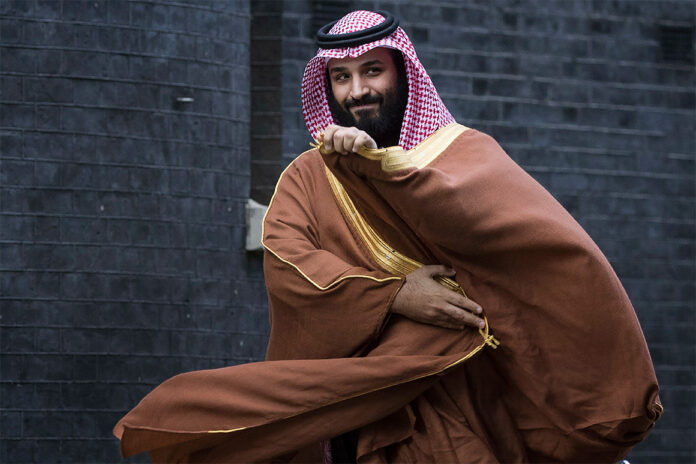
Hezbollah official: MbS lives in “dilemma and anxiety”

Hashim Safi al-Din, head of the Executive Council of Hezbollah, said the diplomatic crisis between Lebanon and Saudi Arabia is rooted in MbS “fear” of the liberation of the Yemeni strategic city of Ma’rib amid Beirut’s support for Yemenis during the Saudi war.

He announced in a statement that it is not “reasonable” to think that the diplomatic crisis is related to remarks made by the Lebanese information minister “but rather it is greater than that.”

“What is happening in Saudi Arabia is a major thing, as the Saudis and the [Persian] Gulf [countries] in general, who have followed the path of forming relations with Israel, cannot bear a voice from Lebanon and others who will criticize them in the future over the Saudi-Israeli relations, which will be made public in the coming days,” he added.

The senior Hezbollah official noted that the Saudi Crown Prince lives in a state of “dilemma and anxiety” and will have to face a great situation after the fall of Ma’rib, emphasizing that MbS is fearful of losing all his illusions.

He warned that all those who work to interrupt the Lebanese government, undermine the country’s stability, and mount US and Saudi sanctions to destroy Lebanon, highlighting Hezbollah’s sacrifices “in order not to lead our country to internal clashes, and for this, we [have striven to] resolve the economic and internal problems of the Lebanese people.”

Safi al-Din emphasized that those who are pushing to fabricate security, diplomatic and political crises in Lebanon are the ones that are working to sabotage the country.

He stated that the future of Lebanon is not in the hands of the Saudis “but in the hands of God and thanks to those who sacrificed for the dignity of the country.”

Saudi Arabia will not tolerate any criticism in the future, especially after its relations with the Israeli regime will be public in the coming days, he noted.

The Saudi-Lebanon row began after George Kordahi, who currently serves as Lebanon’s information minister, said during a television program, which was aired last Monday, that the 2015-present Saudi Arabia-led war on Yemen was an act of aggression by Riyadh and the United Arab Emirates (UAE), the kingdom’s most significant ally in the military campaign.

He called the war “absurd,” adding it had to stop because he was opposed to wars between Arabs. The minister also said the Yemeni army forces and their allied fighters from the Popular Committees were “defending themselves … against an external aggression.”

The Saudi kingdom subsequently recalled its ambassador from Beirut and expelled the Lebanese envoy from the Saudi capital.

As tensions have been running high between Beirut and Persian Gulf states over the Saudi war on Yemen, Mohammed Abdul-Salam, Yemeni popular Ansarullah movement’s spokesman, said on Sunday that Lebanon, its people, and the resistance movement are capable of facing challenges, no matter what they are.

In a post on his Twitter account, Abdul-Salam added that the Lebanese people were the ones who inflicted the first crushing defeat on the Israeli enemy.

True Arabs “are those who confront America and Israel, not those who join them as a tail, and target the nation under the pretext of Arabism,” he tweeted.

Saudi Arabia, backed by the US and regional allies, launched the war on Yemen in March 2015, with the goal of bringing the government of former president Abd Rabbuh Mansur Hadi back to power and crushing the popular Ansarullah movement, which had overthrown the previous Saudi-backed Yemeni government. The Saudi war has left hundreds of thousands of Yemenis dead, and displaced millions more. It has also destroyed Yemen’s infrastructure and spread famine and infectious diseases.

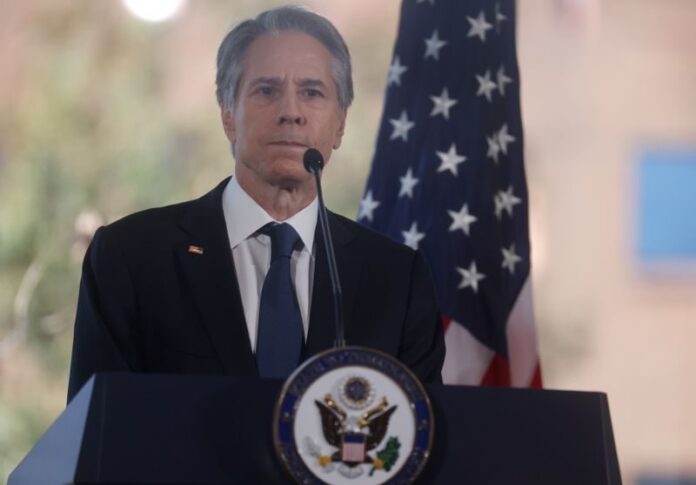
Blinken says diplomacy ‘best path forward’ on Iran nuclear deal

Blinken said on Sunday that the US is “absolutely in lockstep together” with Germany, France, and the United Kingdom on coordinating a plan to get Iran back into a nuclear agreement.

“We continue to believe that diplomacy is the best way to deal with the challenges, the threat posed by Iran’s nuclear program,” Blinken stated on CNN’s “State of the Union”.

Speaking from Rome at the tail end of the G-20 conference, Blinken noted President Joe Biden has met with his German, French and British counterparts to discuss dealing with the threat of Iran’s nuclear program. The new coordination represents a shift in tone for the US, which was part of the international deal negotiated with Iran in 2015 but which, during President Donald Trump’s presidency, withdrew from the agreement. The Biden administration has announced it wants to be part of an agreement with Iran, but talks in Vienna have not resolved the outstanding issues.

The US has urged Iran to come back to nuclear talks in recent weeks following a hiatus caused by its government transition. While Tehran has indicated it will return to talks in Vienna before the end of November, the Biden administration has remained skeptical of Iran’s intentions.

“There’s still a window through which Iran can come back to the talks, and we can come back to mutual compliance with the agreement, and that would be the best result. But it really depends on whether Iran is serious about doing that,” Blinken added.

Blinken added that if Iran chooses not to “engage in a meaningful way and get back into compliance”, then the US and the other countries in the agreement — Russia and China were also part of the 2015 deal — will look “at all of the options necessary to deal with this problem”.

Asked in another Sunday interview — on CBS News’ “Face the Nation” — about what those other options might be and whether they could include military intervention, Blinken said “every option is on the table”.

“Iran, unfortunately, is moving forward aggressively with its program,” Blinken stated.

He added, “And that’s why it was so important that we get together with our close partners in this effort. We are all very much on the same page in terms of the path forward. And we’ll see if Iran is serious.”

Tehran has stated it’s ready to restart talks to save the landmark agreement, but not under western pressure, and that talks should realize the rights of the Iranian people. Iran has stressed the United States must be first to return to its commitments under the nuclear deal and Washington must completely lift sanctions.

Iran has agreed to resume negotiations over the nuclear deal before the end of November, but the United States continues to put pressure on Tehran.

On Friday, the US Treasury Department imposed sanctions on four Iranian individuals and two entities, for their involvement in promoting the Unmanned Aerial Vehicle (UAV) programs of Iran’s Islamic Revolution Guards Corps (IRGC).

Tehran has stressed the sanctions send the message that the Biden administration that talks of returning to the nuclear deal, is not trustworthy. Iran has announced the imposition of new sanctions on the Islamic Republic shows a contradictory behavior on the part of the White House.

Biden says US suffering from Trump’s withdrawal from Iran nuclear deal

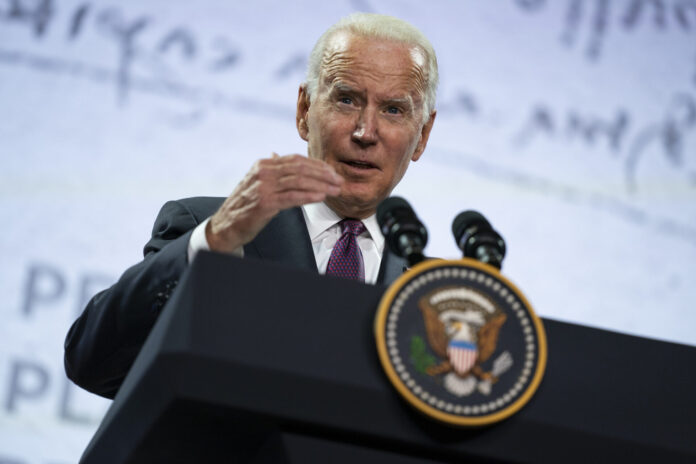
President Joe Biden speaks during a news conference at the conclusion of the G20 leaders summit, Sunday, Oct. 31, 2021, in Rome. (AP Photo/Evan Vucci)

“We’re continuing to suffer from the very bad decisions President Trump made to pull out of the JCPOA,” Biden told reporters at a press conference at the G20 in Rome, using the acronym for the formal name of the nuclear agreement – the Joint Comprehensive Plan of Action.

The Iran nuclear deal was abandoned by the US under the Trump administration and talks to resurrect the deal in Vienna were suspended in late June after six rounds between Iran, China, Germany, France, Russia, the United Kingdom and — indirectly — the United States. The Biden administration has pledged to reenter the deal, but the president’s negotiators have been faced with tough talks and decisions on how to do so. At the same time, Iran began enriching uranium again once the Trump administration pulled the US out of the deal.

Biden held a meeting three of the leaders of nations who are party to that deal — German Chancellor Angela Merkel, French President Emmanuel Macron and British Prime Minister Boris Johnson — on Saturday at the G20. The leaders announced afterward they are “convinced that it is possible to quickly reach and implement an understanding on return to full compliance” of the Iran nuclear deal.

The meeting came two days after the US imposed new sanctions on Iran related to its drone program and less than a week after Tehran announced it would return to nuclear talks in Vienna with following a four-month hiatus.

US officials are highly skeptical that renewed talks over how to handle Iran’s nuclear program will yield the desired results and are actively discussing imposing penalties on Tehran.

Sources in Washington told CNN there is an ongoing debate within the Biden administration about how to proceed and how much to increase the pressure on Iran, with some sources beleiving the US and its allies are now more willing to impose a higher cost on Iran for failing to come to an agreement if Tehran continues to take actions which are inconsistent with the 2015 nuclear deal.

Iran has condemned the US latest sanctions on real and legal Iranian persons, saying the sanctions send the message that the Biden administration that talks of returning to the nuclear deal, is not trustworthy.

Foreign Ministry Spokesman Saeed Khatibzadeh stated the imposition of new sanctions on the Islamic Republic shows a contradictory behavior on the part of the White House.

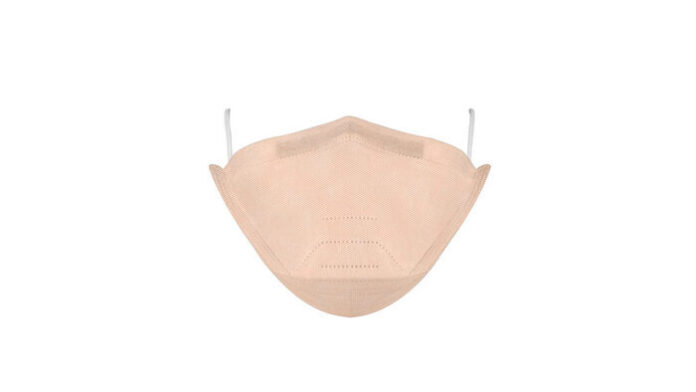
Iran produces copper nanoparticle mask

The company is based in the southern city of Rafsanjan. 

These copper nanoparticles are capable of clearing any biotic and non-biotic contamination that accumulates on their surface. 

If you do anti-viral and anti-bacterial tests on the copper nanoparticle masks after use, they are virus- and bacteria-free. As a result, their life is longer than ordinary masks and they will not spread viruses after being thrown out. 

Iran’s science-based companies have taken long strides in various fields particularly in nanotechnology.

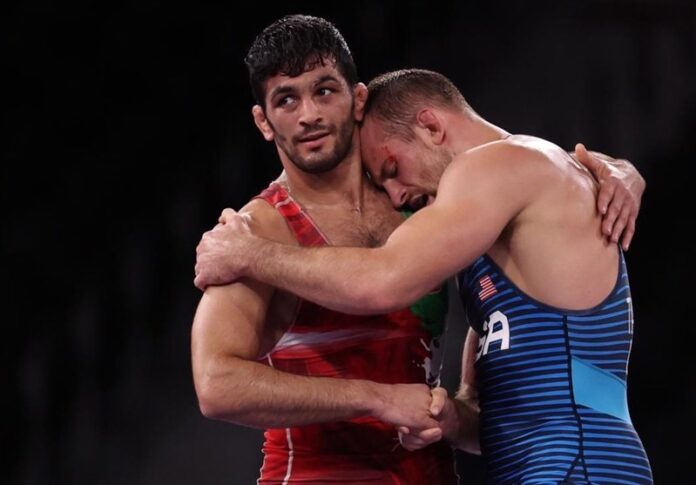
World champion Yazdani wrestles with mentally disabled boy

Yazdani said on the sidelines of his visit to Shahid Beheshti Mental Care Home, “It was a great pleasure to be with these loved ones. I enjoyed it a lot. These kids are very talented in every field and they have professional teachers”.

The world wrestling champion and 2021 Olympic medalist was chosen as the sports ambassador of Shahid Beheshti Mental Care Home after the visit.

Yazdani also referred to his symbolic wrestling with the mentally handicapped boy, saying, “This was the least I could do to make these dear kids happy”.

Yazdani described the boy as “very talented”.

Yazdani is an Olympic and World Champion in freestyle wrestling in two weight categories.

He became Olympic champion in Men’s freestyle 74kg category at the 2016 Summer Olympics. The following year he became World Champion at the 2017 World Wrestling Championships in Men’s freestyle 86kg category. He won his second world title at the 2019 World Wrestling Championships in Kazakhstan and the third one at the 2021 World Wrestling Championships in Norway.

Russia: Moscow accepts no change to JCPOA

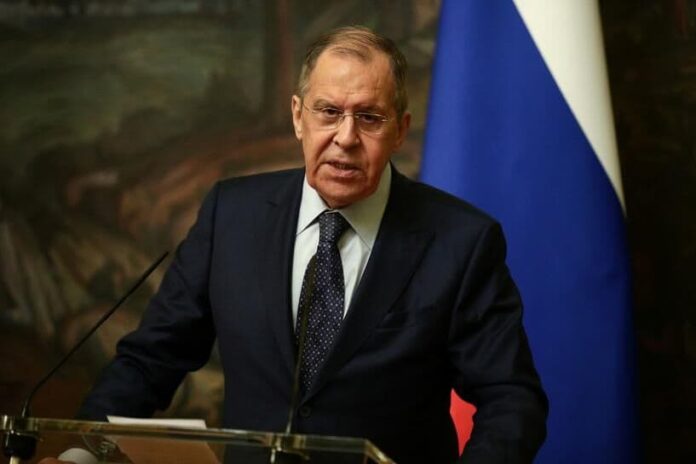
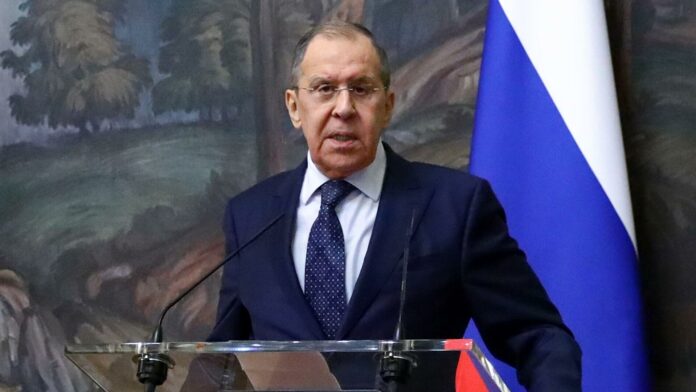
Lavrov was speaking on Sunday to journalists at the end of the G20 summit in Rome.

He said any change to the JCPOA or any interpretation of the deal differing from the original form will be unacceptable.

Larvov referred to the willingness of the other sides to revive the JCPOA, saying the agreement can only be revived as it was first approved in 2015 by the UN Security Council.
The top Russian diplomat said Moscow fully support such an approach.

Iran and the other parties have held six rounds of talks to resuscitate the JCPOA and get the oppressive US sanction on Iran removed. They say talks have made tangible progress but some differences remain.

The JCPOA unraveled in 2018 when former US President Donald Trump left the deal and reinstated sanctions on Iran.

The Trump administration said they were seeking a new JCPOA that would include other issues like Iran’s missiles. Tehran has categorically rejected this.

The current US administration says it’s willing to return to the deal provided that Iran returns to full compliance with the JCPOA.

Iran is sticking by its position that it will return to full compliance only if the US sanctions are removed in a verifiable manner.

Russia underscores returning to JCPOA in original form

Russia fully supports the idea of returning to the Iran nuclear deal in the form it was signed, without any additions or exemptions, Russian Foreign Minister Sergey Lavrov said on the sidelines of the G20 summit in Rome on Sunday.

“If the sides are intensifying contacts, they apparently want to come to resuming the deal. It may be resumed solely in the form it was approved by the UN Security Council in 2015,” Russia’s top diplomat added.

“Any additions and any exemptions are unacceptable for the Iranian side. And we fully support this approach,” Lavrov stated.

Report: Hamas test-fires new missiles

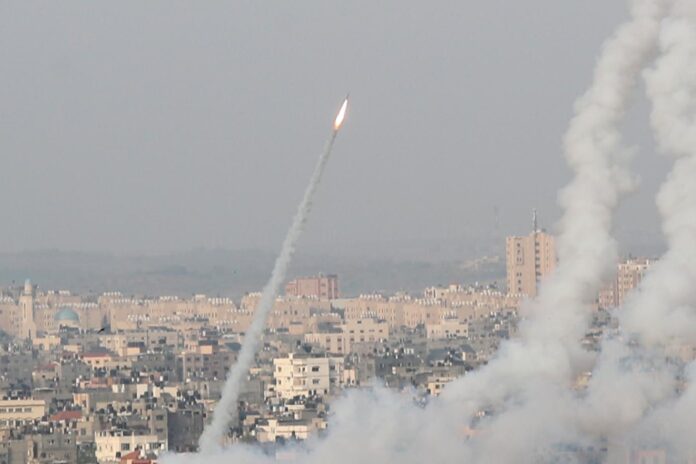
Israeli media reported that Hamas had fired three new missiles into the sea on Saturday morning, as the Palestinian resistance groups steps up efforts to promote its military capabilities in the face of Israeli acts of aggression.

Gaza has been under an Israeli land, air and sea blockade since June 2007, which has caused a decline in the standard of living as well as unprecedented levels of unemployment and unrelenting poverty.

Israel maintains a heavy naval presence off the coast of the impoverished Palestinian enclave, severely affecting the livelihood of fishermen.

The regime also launches bloody bombing campaigns on Gaza, the latest of which occurred in May, with the Palestinian resistance factions firing more than 4,000 rockets towards the occupied lands during the 11-day war.

Apparently caught off guard by unprecedented rocket barrages, Tel Aviv announced a unilateral ceasefire, which resistance groups accepted with Egyptian mediation.

Israeli authorities announced that rocket and mortar attacks from Gaza left 12 people dead and “several hundred” injured.

At least 260 Palestinians, including 66 children, were also killed in the Israeli offensive and almost 2,000 others were wounded, according to the Gaza’s Health Ministry.

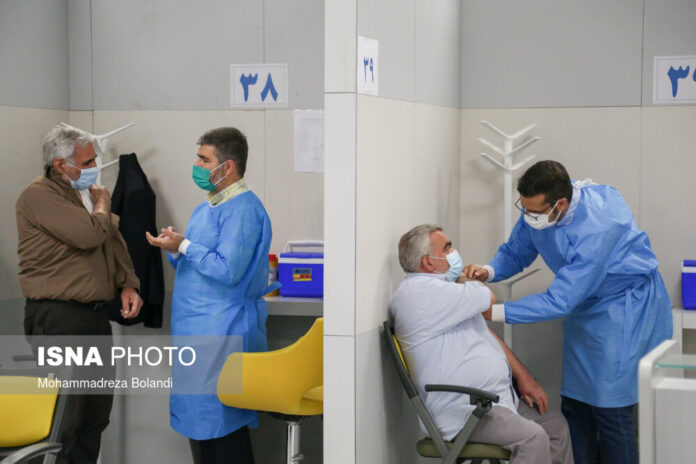
More than 52mn so far vaccinated against Covid in Iran

Meanwhile, healthcare staff have already started to receive booster shots. So far, 88,069 people have received the third dose.

According to the Health Ministry on Sunday, despite the accelerating vaccination process, Covid-19 has killed 177 more people in Iran over the past 24 hours.

The deaths pushed to 126,303 the number of people killed by Covid since the pandemic started around two years ago.

The good news is the downward trend in Covid deaths, infections and hospitalizations has held over the past month. The death tallies in the past few weeks have been way lower than during the peak of the 5th wave of the disease a couple of months ago. At that time, Covid killed hundreds of people daily.

Authorities attribute the downward trend to the rising rate of vaccination against the Coronavirus. They have lifted some Covid-related bans. But they are warning against laxity in health protocols, saying this could trigger a 6th wave of Covid.