Monday, December 29, 2025
Home Blog Page 2327

No Orphan without Sponsor in Iran: Official

Morteza Bakhtiari, the head of the Imam Khomeini Relief Foundation, made the comment at a gathering aimed at promoting a national program to support orphans.

“Since the beginning of the implementation of this program, the number of sponsors of orphans and the needy has risen from 721,000 to 1.1 million,” he added.

The official noted more than Rls. 190 billion ($76 mn) was donated to orphans and the needy by those taking part in the program called Charity Plan.

“Just in one case, one of our major sponsors has formed a network of 800 benefactors, supporting around 137 thousand orphans,” he explained.

He said the government and Parliament are also backing the foundation in the implementation of the charity program.

Iran slams UN rights report as “ill-intentioned”

Kazem Gharibabadi made the remarks on Monday following a new report prepared by Javaid Rehman, the so-called United Nations special rapporteur on the situation of human rights in Iran.

“At a time when the world is suffering from the attitudes and policies of such Western countries like the United States, issuance of such a report against the Islamic Republic, which, itself, is a victim of these countries’ actions is a completely political and diversionary measure,” he said.

The “ill-intentioned” report, the official lamented, had intentionally ignored various instances of extensive progress in the area of human rights in Iran.

The so-called UN official had also used “mendacious claims” made by foreign-based anti-Iran terrorist groups, which themselves are guilty of violating human rights, to devise the report’s central planks, Gharibabadi added.

“The Islamic Republic constantly moves towards enhancement and betterment of human rights, and this is based on religious guidelines not international obligations or political reports,” he noted.

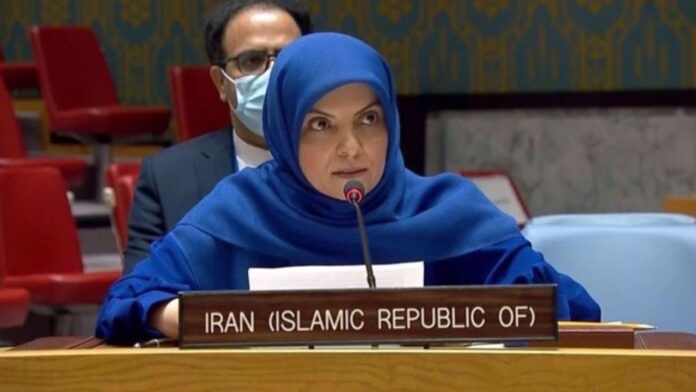
Zahra Ershadi, Iran’s deputy ambassador to the UN, had also slammed the report earlier in the day.

Appointment of a special rapporteur for Iran, which was spearheaded by the West, especially Canada, was done on the basis of political motivations and against the interests of the Iranian nation, she had said.

Afghanistan says willing to buy oil from Iran

It came during a video conference between ACCI officials and Iranian commercial attaché Ebrahim Hosseini. The participants also discussed general trade issues between the two countries.

Kabul is currently struggling to resolve its ongoing issue with petroleum shortages and hopes that Tehran will be able to led a hand. Yet, for this to happen, Iran will have to help its neighbour in resolving a number of issues.

Kabul asked Hosseini to help Afghanistan with them.

“It is imperative for both countries to strengthen economic relations and promote trade and Afghan petroleum importers are in dire need of being provided with the required facilities by the Iranian government,” he stated.

The Iranian commercial attaché vowed to help Kabul to create the conditions necessary for launching the oil trade by “eliminating the existing challenges” and building the facilities required.

It is so far unclear how Kabul plans to pay for the purchase as a major portion of the government’s reserves was frozen in the US following the Taliban takeover in August. Since then, no foreign state, including Iran, has officially recognised the acting Taliban government. In addition, many countries designated the Taliban as a terrorist organisation, hence any taxes and duties paid to its coffers due to trade with the country might fall into the category of terrorist funding and result in criminal charges.

Kabul has called on the world’s nations, and specifically the US, to unlock Afghanistan’s reserves and recognise the new government after the Taliban seized the capital and most of the country practically without a fight. The international community is still considering how to proceed with regard to Afghanistan and its Taliban government, which claims to have severed ties with terrorist groups like al-Qaeda. So far, a plan is being considered to launch humanitarian relief efforts to help desperate Afghans.

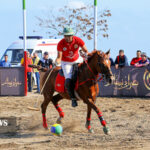
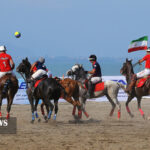
Iran’s first round of beach polo competitions in Gilan


Polo, as a sport, dates back several thousand years in Iran. It is played in about 80 countries, and in Iran, after a long break, the first national polo championship with 6 teams was held in Tehran in 2018 with the host team becoming the champion of the tournament. 

Currently, there are about 50 polo players in Gilan, with 10 playing in the men’s section and eight in the women’s. 

Gilan has two polo fields in Talesh and Rasht, the provincial capital. 

Hamzeh Ilkhanizadeh is known as the father of modern polo and the polo ambassador in Iran. Ilkhanizadeh is attending the first round of the national beach polo championship in Talesh, Gilan, as a special guest.

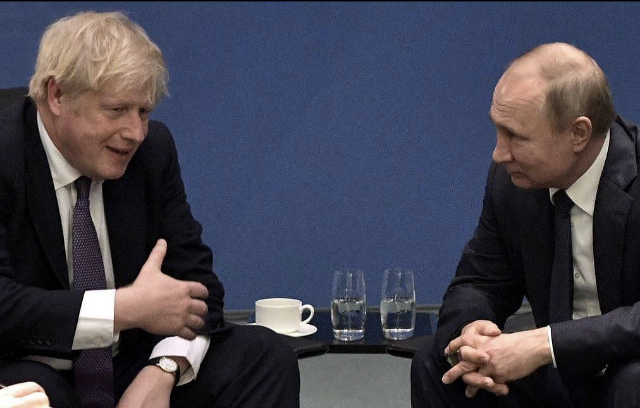
Putin, Johnson talk Iran nuclear deal on phone

“The leaders spoke in favor of preserving the Joint Comprehensive Plan of Action (JCPOA) on the Iranian nuclear program, which is a major factor of ensuring security and maintaining nuclear nonproliferation,” the Kremlin press service said.

It was Putin’s first telephone contact with Johnson since May 8, 2020.

The JCPOA Joint Commission has had several offline meetings in Vienna since April to find ways to restore the nuclear deal in its original form. The sides discuss prospects for the United States’ possible return to the deal, steps needed to ensure full compliance with the deal’s terms by Iran, and issues of lifting the anti-Iranian sanctions.

The JCPOA, also known as the Iran nuclear deal, was signed between Iran, the five permanent members of the United Nations Security Council (Russia, the United Kingdom, China, the United States and France) and Germany in 2015. Under the deal, Iran undertook to curb its nuclear activities and place them under total control of the International Atomic Energy Agency (IAEA) in exchange of abandonment of the sanctions imposed previously by the United Nations Security Council, the European Union and the United States over its nuclear program.

The future of the deal was called in question after the United States’ unilateral pullout in May 2018 and Washington’s unilateral oil export sanctions against Teheran. Iran argued that all other participants, Europeans in the first place, were ignoring some of their own obligations in the economic sphere, thus making the deal in its current shape senseless. This said, it began to gradually scale down its commitments under the deal.

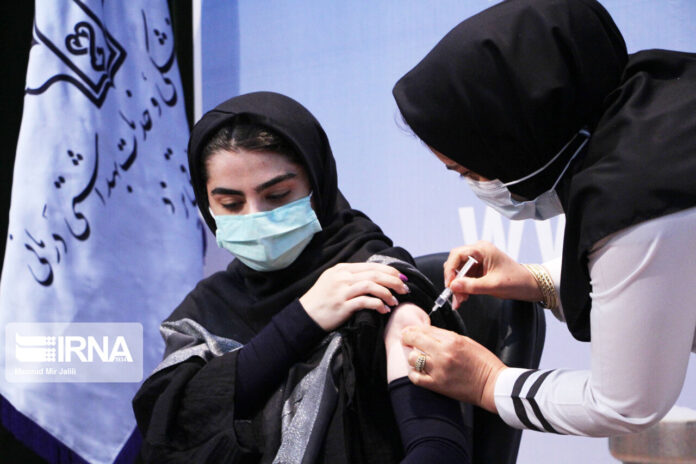
Iran keeps up vaccination pace with about 954,000 new shots

The Health Ministry announced on Monday that a total of over 81,360,000 Covid-19 shots have been administered since the beginning of the outbreak.

Iran was long criticized for its slow pace of inoculations, but it has intensified imports and domestic production of different types of Covid-19 vaccine over the past months in a bid to contain the outbreak.

The ministry’s latest figures also show that 140 more people have lost their lives to the deadly respiratory disease compared to 171 fatalities reported a day earlier. Over 7,500 new infection cases were also reported on Monday.

The number of daily fatalities has been below 200 for several days now but health authorities are warning that the increasing number of infection cases could mean that another wave of the disease could be looming on the horizon.

Iran has so far been hit by five Covid-19 waves with official figures putting the total death toll at over 125,360 since the beginning of the pandemic in early 2020.

Iranian MP calls for reciprocal action against S Korea over frozen assets

Mojtaba Yousefi, who is a member of the presiding board of Iran’s parliament, said Tehran must freeze Seoul’s assets in response.

He also said, “Had we done this before, a country like that would not have treated us this way.”
Yousefi is the representative of the southern city of Ahvaz in Iran’s Parliament.

He added South Korea is making mischievous moves against Iranian nation with an ancient civilization. Yousefi pointed out that South Korea tries to make history and portray itself as a great country by producing TV series.

Meanwhile, a group of Iranians have signed an online petition, demanding the government freeze South Korean assets in Iran.

South Korea has frozen billions of dollars in Iranian assets, claiming it can’t release them due to the US sanctions. Seoul has repeatedly said it will unlock the frozen funds, but it has failed to make good on its promise, drawing harsh criticism from Iran.

Iran president urges EU to distance itself from US expansionism

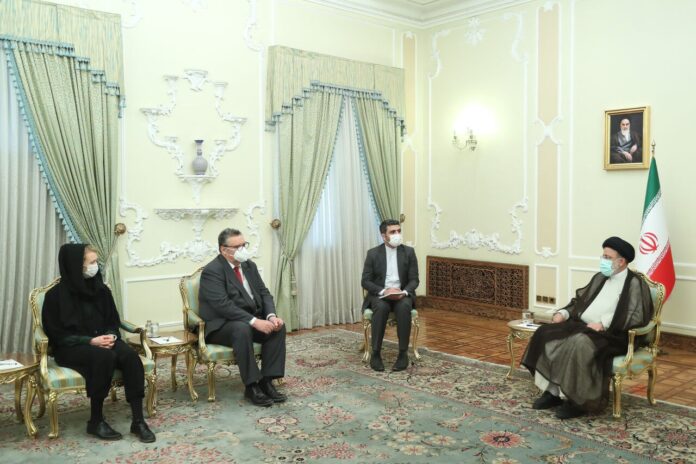
Raeisi was speaking on Monday during a meeting with the new Finnish ambassador to Iran, Kari Kahiluoto, in which he presented his credentials to the Iranian president.

Raeisi said, “We hope that the European Union and European countries will move toward strategic independence”.

Raeisi also called on Europe to live up to its obligations to Iran. He expressed hope that Tehran and Helsinki will further expand their ties during the new ambassador’s tenure and as they approach the 90th anniversary of the establishment of their relations.

The Finnish ambassador also said Iran plays a key role in the region and that Finland is willing to cooperate with the Islamic Republic on regional issues, such as the situation in Afghanistan.

Kahiluoto noted that Finland made good investments in Iran in the past and is willing to restore the same level of relations.

Iran slams UN rights report as biased, based on vague sources

Ambassador and Deputy Permanent Representative of the Islamic Republic of Iran to the United Nations Zahra Ershadi has slammed UN human rights rapporteur’s report on Iran.

She said making use of unofficial, biased vague sources coming from sworn enemies, and taking a selective approach towards human rights achievements in the Islamic Republic of Iran put a serious question mark over the validity and reliability of such a report.

New York, IRNA – Ambassador and Deputy Permanent Representative of the Islamic Republic of Iran to the United Nations Zahra Ershadi rejected country-specific resolutions as antithetical to the cause of human rights and counter-productive for its promotion.

She told the 76th Session of the United Nations General Assembly focusing on “item 74: Report of the Special Rapporteur on the Situation of Human Rights in the Islamic Republic of Iran” that “the Islamic Republic of Iran rejects country-specific resolutions as antithetical to the cause of human rights and counter-productive for its promotion. It only contributes to scapegoating the targeted country at the price of sidelining meaningful interaction and dialogue on human rights. The appointment of a special rapporteur for Iran is an unjust and politically-motivated scheme initiated by the West, especially Canada, in pursuance of its adversarial attitude against our nation. As such, the resolution and its ensuing mandate have only contributed to accumulation of disparaging cliches and malign stereotypes against Iran.

Underneath the Iranian soil lie the bodies of thousands of those who have sacrificed their precious lives to defend our nation and people during the imposed Saddam Hussein’s war against Iran whose financial resources, chemical weapons, tanks, aircrafts and even bullets were supplied by the same Western countries whose representatives are present in this session. But when you dig the grounds in Canada, you discover the remains of thousands of indigenous children who were sexually abused, killed and dumped in mass graves. How many statements have so far been delivered by the representatives of the countries criticizing my country about the vicious campaign of genocide in Canada? NONE. The West is instead leaving no stone unturned to continue the bitter legacy of Canada’s forced-assimilation, and acclimatize our high and decent human rights standards to those of itself. Rest assured, that is not going to happen.

Iran is determined to continue safeguarding its people against the threat of violent extremism and terrorism, rampant in our region principally due to addictive interventions, occupation and aggression by the United States and its allies and clients. It is a bitter irony, if not hypocritical, to pretend to care for human rights of the Iranians and feel relaxed and remain acquiescence vis-à-vis the United States’ unlawful and inhumane unilateral coercive measures, which are purposely attuned to take the heaviest toll on innocent children, women and men in need of medicine and medical care. The Special Rapporteur is also hesitant to condemn or even express concerns about unlawful and inhumane unilateral coercive measures.

Protection and promotion of human rights should be a common cause for all of us. However, the abuse of human rights mechanisms to selectively harass countries enjoying constant progress in the field of human rights, compromises the sense of solidarity and strips this lofty cause of its humane meaning. While we have every reason to genuinely question the existence of any good face in appointing a special rapporteur for Iran’s human rights, we would not be distracted from serving our people by further deepening our truly democratic system of governance and by institutionalizing our accomplishments in terms of protection and promotion of human rights of our citizens.

We even have not shied away from talking frankly to the Special Rapporteur himself about the structural deficiencies and misleading contents of his report. We have also shared with him some of methodological deficits which are inconsistent with Resolution 5/2 on code of conduct for special procedure mandate-holders of the Human Rights Council as well as false allegations, absurd disinformation and hyperbolic exaggerations imported to his flawed report. We clarified to him for instance that capital punishment is only for the most serious crimes and is imposed through a very highly considered due process in accordance with laws. We have clarified to him that titles such as human rights defenders or dual nationality cannot bring impunity for the alleged offenders. Our endeavours and comments to enlighten the Special Rapporteur have fallen on deaf ears. Isn’t it because he wants to appease the so-called champions of human rights?

We regret that one of the main sources of the Special Rapporteur continues to be the same terrorist groups which have long been laundered by their supporters and portrayed as opposition and so-called human rights defenders. Making use of unofficial, biased vague sources coming from sworn enemies, and taking a selective approach towards human rights achievements in the Islamic Republic of Iran put a serious question mark over the validity and reliability of such a report. It is repugnant to glorify terrorists whose hands are stained with the blood of innocent citizens.

The Islamic Republic of Iran will continue its genuine interaction with the Office of the High Commissioner for Human Rights and other competent UN human rights mechanisms as well as other states to collaborate for the protection and promotion of human rights. The Islamic Republic of Iran is of the view that dialogue and cooperation based upon mutual respect and on an equal footing is the only way which guarantees promotion and protection of human rights at the international level. Such a mandate and report in question are only meant to weaponize human rights against certain countries.

Iran top negotiator: JCPOA revival talks must guarantee removal of all sanctions

Iran Rejects UN Special Rapporteur’s Report on Human Rights

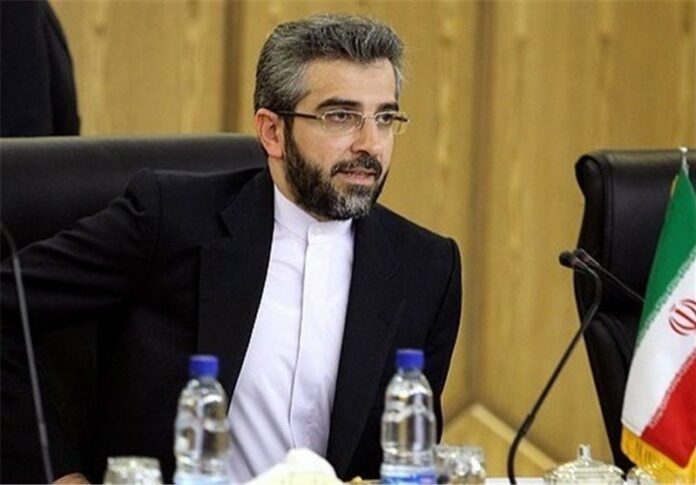
“Tehran is determined to negotiate a full and effective lifting of oppressive and illegal sanctions, to ensure the normalization of trade and economic relations with Iran, and to provide credible guarantees to prevent further non-compliance,” Ali Bagheri Kani said in a twitter post on Monday.

He also announced that he will fly to Brussels on Wednesday for a meeting with European Union Deputy Foreign Policy Chief Enrique Mora to continue discussions on “result-oriented negotiations”.

“The question is whether the other parties (to the nuclear deal) are genuinely prepared to fulfill their obligations, including calling on a non-member violator to abandon the destructive policies and legacy of the past?”, the Iranian deputy foreign minister wrote.

The senior diplomat warned that continuing the failed policy of maximum pressure will certainly not remove the obstacles in the way of negotiations to lift illegal and oppressive sanctions, but will add to the complexities of the negotiations.

Bagheri and Mora, who coordinates talks between Tehran and the P4+1 group, sat down for talks in Tehran earlier in October.

In that meeting, they agreed to continue talks in Brussels over the possibility of further negotiations between Iran and the P4+1 group in the Austrian capital Vienna.