Sunday, December 21, 2025
Home Blog Page 2324

Iran’s General Bagheri visits Astra Khan nefore returning home

Major General Bagheri first visited the port of Salianka, which is 53% owned by the Islamic Republic of Iran.

In a meeting with the Iranian and Russian managers of the port, he said that after Iran’s accession to the Shanghai Cooperation Organization, trade ties with member states thereof will be expanded, and for this purpose, the development of port infrastructure on both sides of the Caspian Sea is essential.

Major General Bagheri added that Iran’s policy is to expand relations with neighbors, and in this regard, the existence of workforce training centers for shipbuilding and new technologies based on the capabilities of two countries should be taken into consideration.

He also said Iran and Russia should actively cooperate in education and exchange their experiences.

Major General Bagheri also visited the Port News shipbuilding industry and discussed joint actions with its managers.

A high-ranking delegation, along with Iran’s ambassador to Moscow, was also accompanying Bagheri during his visits to different places in Russia.

The chairman of Iran’s Joint Chiefs of Staff returned to Tehran Thursday afternoon.

Iran and Russia have boosted their relations in all areas including trade and military. The two countries were key players in the battle against terrorist groups and their defeat in Syria since the war on the Arab country started a decade ago.

IAEA head believes upcoming weeks ‘decisive’ for Iran nuclear deal

Rafael Grossi

Rafael Grossi also said he will hold a meeting with the Iranian officials in Tehran within days over the country’s nuclear programme.

The next few weeks will be “decisive” in determining whether the United States and Iran can return to indirect negotiations and resume efforts to revive the 2015 nuclear deal between them, the IAEA Director General Rafael Grossi said Wednesday.

Iran, in response to an urgent appeal by Grossi, has now extended an invitation for him to meet with its political leaders in Tehran in the coming days, Grossi stated in an interview.

On his agenda are interruptions in international monitoring of Iran’s nuclear program and other questions that, if they are not resolved, could make it virtually impossible to return to the agreement.

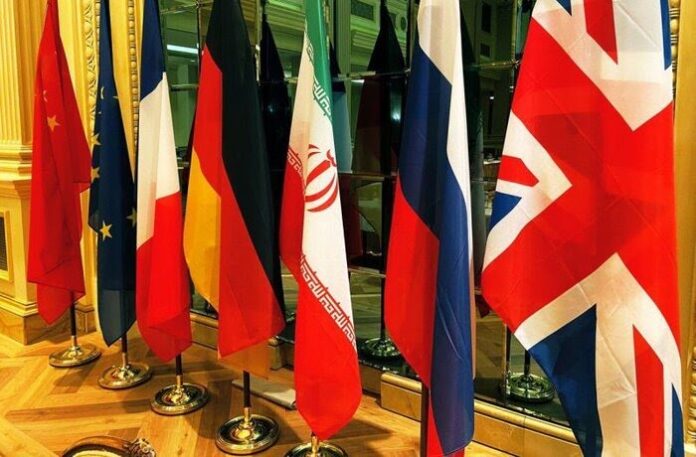
All other parties to the accord — Britain, France, Germany, Russia and China, with the European Union playing a coordinating role — as well as the United States, have confirmed to him that if the monitoring regime is not fully restored, “it would be extremely difficult to have an agreement of this type,” Grossi added.

What amounts to a deadline for returning to the talks is tied to a meeting of the IAEA board of governors scheduled for mid-November. The European parties have repeatedly threatened to issue a condemnation of Iran and consider reimposing sanctions if it does not comply with verification commitments.

The sense of urgency comes as the Joe Biden administration last week indicated a shift in its posture toward the delayed resumption of the talks, from warning that the timeline was not infinite to saying it was prepared to consider what Secretary of State Antony Blinken called “other options if Iran does not change its course.”

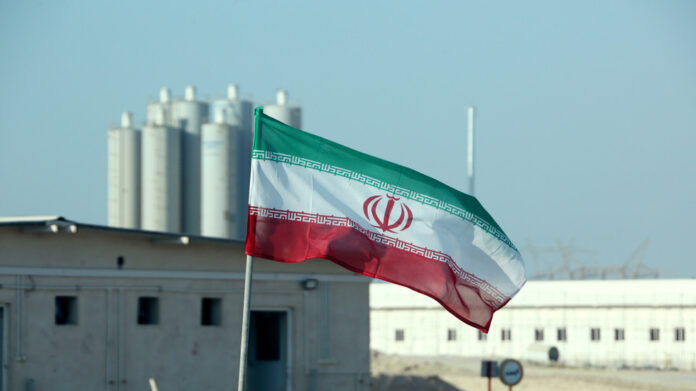
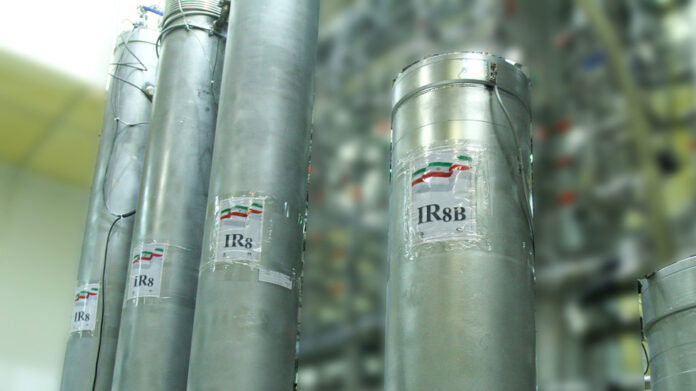
In the dispute over access for the IAEA, the United Nations nuclear watchdog, an advanced centrifuge manufacturing facility has emerged as a key obstacle. Under the 2015 pact, Iran agreed to allow continuous monitoring — including with video cameras — of important nuclear facilities, including the complex of Karaj, just west of Tehran.

In June, the Karaj plant was heavily damaged by an explosion that U.S. officials say they believe was an act of sabotage, presumably by Israel. Some of the IAEA monitoring equipment was damaged or destroyed, and Iran has refused to allow the agency to return it to operation. Meanwhile, months of monitoring data appears to be missing or possibly destroyed.

Earlier, IAEA inspectors had found traces of enriched uranium at three other undeclared facilities that Iran has refused to explain.

“This goes to the heart of the credibility of the Iranian declaration in general,” Grossi noted.

As part of the original agreement, Iran was required to declare facilities in its nuclear program.

Tehran suspended the negotiations in June after six sessions when its newly elected president, a hardline cleric, said he wanted to review what had previously been agreed. The government has said it would return to the table “soon” but has declined to set a date.

Under the original accord, Iran agreed to limits on the quantity and quality of enriched uranium it produced, as well as strict monitoring and verification by the IAEA.

Although Iran has consistently denied it intends to build a nuclear weapon, the United States announced at the time that it was only months away from accumulating enough fissile material for a bomb. Once the deal was in place, that “breakout time” was said to have extended to a year or more.

Former president Donald Trump called the agreement, negotiated by the Obama administration, a “bad deal” and withdrew from it in May 2018, reimposing US sanctions that had been lifted as one of its conditions.

Although the other parties remained in the pact and UN and other sanctions were removed, the weight of the punitive US measures — to which Trump added hundreds more — have exacted a heavy toll on the Iranian economy.

A year after the US withdrawal, Iran said it was justified in violating its terms. It began installing sophisticated new centrifuges and, in recent months, saying it was enriching uranium up to 60 percent, close to weapons-grade. Iran’s “breakout time” is now estimated again at two to three months.

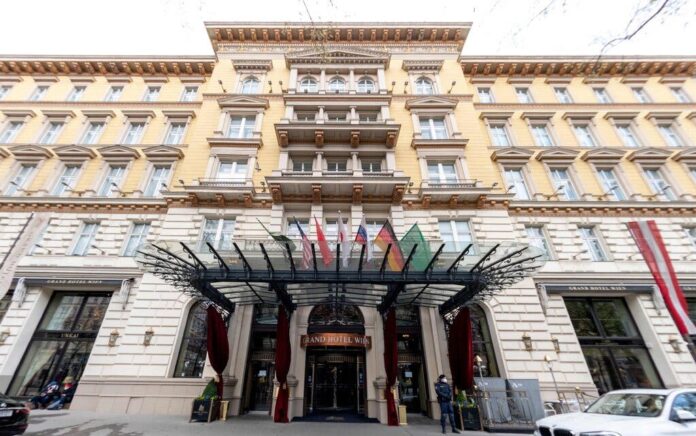
Biden promised during his campaign to reenter the accord, and negotiations in Vienna started in April. Iran refused direct talks with the United States, and the European partners have acted as go-betweens for the two delegations.

Despite public expressions of mistrust, considerable progress was said to have been made to bring both sides back into compliance with the original deal.

Looming over any resumption of talks is the question of whether Iran’s nuclear program has advanced to the point where it would be difficult to return to where it was in 2015.

“It’s obvious to all that the situation on the ground has changed,” stated Grossi, who met in Washington with Blinken on Tuesday.

But the more immediate question, Grossi said, is whether the IAEA can give the others a comprehensive picture of where the Iranian program now stands.

“It’s obvious that if this element is not there, this baseline of information, how can they walk back into an agreement without having an idea of what the reality is on the ground?” he added.

The head of the Atomic Energy Organization of Iran, Mohammad Eslami, has urged the UN nuclear agency, the IAEA, to clarify its stance on the attack on Tessa Kara Complex near Tehran.

Eslami noted the nuclear site once came under a terrorist attack by the Zionist regime and it is necessary that International Atomic Energy Agency clarify its position on the incident.

He also added installing cameras at the facility is not binding under the 2015 Iran nuclear deal and that the IAEA know this.

The agency says Iran has failed to fully honor the terms of a deal struck some three weeks ago to allow the watchdog’s inspectors to service monitoring equipment in the country.

At the same time Iran’s envoy to IAEA has announced that the director general’s report isn’t accurate and goes beyond the agreed terms of the joint statement. Meanwhile, Iran insists that the agency must first condemn the terrorist attacks and acts of sabotage against its nuclear facilities.

Iran FM: Int’l community responsible for Afghan refugees

Hoseeهn Amir Abdollahian, هn a phone conversation with his Indonesian counterpart, underscored the need to help Afghan refugees in neighboring countries, specially Iran.

Iran’s Foreign Minister Hossein Amir Abdollahian has held a telephone conversation with his Indonesian counterpart Ms. Retno Marsudi over the latest developments in Tehran-Jakarta ties as well as regional and international issues of mutual interest including the situation in Afghanistan.

Amir Abdollahian referred to the current situation in Afghanistan and Iran’s active diplomacy in this regard. Amir Abdollahian condemned the recent targeted terrorist bomb blasts in Afghanistan. He underlined the Taliban’s responsibility in providing security for Afghan ethnic groups and followers of various Islamic sects, and underscored the significance of the formation of an inclusive government in Afghanistan.

Also referring to agreements Iran and Indonesia reached in New York during his recent meeting with the Indonesian foreign minister, he said Tehran is making an effort to expand and strengthen relations with Jakarta.

In this Telephone call, Ms. Retno Marsudi also emphasized the need for respecting human rights and the rights of women and described looking after Afghan refugees as a human duty which calls for international attention.

The top Indonesian diplomat also invited his Iranian counterpart to visit Jakarta. She welcomed the idea of deepening all-out ties between Iran and Indonesia, saying the Indonesia government has issued necessary instructions to state organizations in this regard so that defined bilateral projects are finalized and put into practice at a proper pace.

Amir Abdollahian also gave his Indonesian counterpart the latest on Iran’s nuclear talks.

Iran holds nationwide aerial drills

During the main phase of the drills on Thursday, Army Air Force aircraft used heavy weapons including laser-guided missiles.

Iranian aircraft destroyed vital mock enemy targets using indigenous bombs and Yasin 90 standoff missile, while interceptor planes practiced air combat at low altitude.

Islamic Republic of Iran Army Air Force Commander Brigadier General Hamid Vahedi said one of the features of this exercise is that all air force bases across the country are involved in it in a decentralized form with a centralized command control.

General Vahedi said during the main phase, manned aircraft using the latest electronic warfare techniques disabled enemy air defense systems providing a safe route for drone operations.

Kaman-12, Karrar, Kian and Arash combat drones, equipped with different types of warheads and carrying optimized bombs with pinpoint precision, using the principle of surprise, targeted and destroyed vital enemy targets including surface units and ground radars, he explained.

Vahedi also said jet-powered Karrar drones, which were equipped with 500-pound bombs and rockets, successfully and accurately destroyed their targets.

The air force commander said this exercise conveys a message of security, stability, friendship and lasting peace for the countries of the region, a message of reassurance for Iranians and demonstrates readiness to defend and respond decisively in case of mistakes and miscalculations by the enemies.

Iranian armed forces regularly hold military drills aimed at assessing their combat readiness and their capabilities to defend the country’s territorial integrity.

Turkey says likely to deploy heavy weapons in Syria

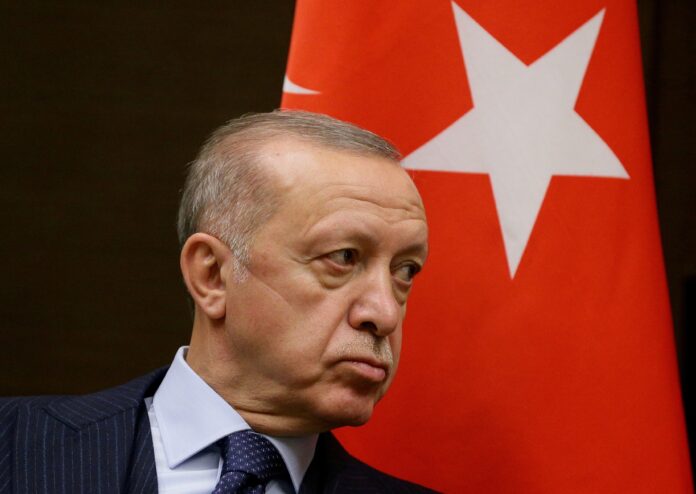
“At the moment, our operations are continuing in the critically important points of the region, there are absolutely no compromises. We are continuing this process in Syria. Right now I don’t know what position the regime [of internationally-recognised Syrian President Bashar Asssad -ed.] will take, but we continue to do everything necessary, especially against this approach in Idlib, and we will continue to respond with all our heavy weaponry. We will not leave this situation as it is,” the Turkish leader told reporters on Thursday.

Erdogan made the comments on his presidential plane while returning from a mini-tour of Africa.

Along with the Syria remarks, the president warned that Turkey might kick out ambassadors from ten countries, including the United States, over demands that detained Turkish Open Society Foundation cofounder and activist Osman Kavala be immediately released.

Turkey has carried out three separate incursions into northern Syria over the past five years, mostly against Washington-backed Syrian Kurdish militias, but also in support of rebranded ‘former terrorist’ militants in the northwestern Syrian region of Idlib.

Damascus has accused both Turkey and the US of illegally occupying and pillaging its territories, and has alleged that Turkish forces engaged in ethnic cleansing. Ankara has denied the allegations, while Washington has disingenuously claimed that its presence in Syria is connected to the threat of a resurgent Daesh.

Last week, two Turkish troops had been killed in Idlib by jihadist militants.

Ankara has been occupying the region since 2017, ostensibly as part of a de-escalation operations. Many of the Syria-based “moderate rebels” and outright jihadists fled to Turkish protection in Idlib after being routed and threatened with destruction in other areas of the country.

On Thursday, local sources told the Syrian Arab News Agency that Turkey had deployed a convoy of military equipment and ammunition-laden trucks into Idlib region for use by Turkish-backed militias in the city of Idlib and its environs. The 31 vehicle convoy was said to have included anti-tank rockets and portable air defence systems.

Also last week, Turkish Foreign Minister Mevlut Cavusoglu accused Russia and the United States of failing to live up to their responsibilities in Syria, and claimed that both countries shared the blame for Syrian Kurdish attacks in Turkish-occupied areas of the country. Cavusoglu’s comments followed threats by Erdogan about Ankara’s patience “overflowing” as a result of constant “terrorist attacks” against Turkish forces and their allies in Syria, and warnings that Turkey would “soon take the necessary steps to eliminate the threats emanating from Syria on our own.”

Syria has been at war with Western-, Turkish- and Gulf sheikdom-backed terrorists and militia groups since 2011. The Syrian military has typically avoided direct engagements with US and Turkish forces, barring occasional flare-ups in fighting sparked by attempts by Syrian troops to liberate their territories from foreign occupiers.

Biden says concerned about China hypersonic missile test

Biden says concerned about China hypersonic missile test

Reports of a Chinese hypersonic missile test have prompted Washington to reach out to Beijing through diplomatic channels, while Biden confirmed to reporters that he was concerned about the technology.

As Biden traveled to Pennsylvania on Wednesday, reporters asked him if he was concerned about Chinese hypersonic missiles.

“Yes,” the president replied.

Earlier in the day, White House spokeswoman Jen Psaki said that the US has raised concerns about the technology with China through “diplomatic channels,” without offering specifics.

Washington’s reaction followed last week’s reporting by Financial Times, alleging that the August launch by the Chinese military involved a glide vehicle that orbited the planet before swooping in on a target faster than the speed of sound. While it’s said to have missed the target, China’s “advanced space capability” came as a surprise to the US intelligence community, according to FT.

Beijing officially denied launching a hypersonic glider, however. Foreign Ministry spokesperson Zhao Lijian said last week that the test involved a spacecraft rather than a missile, and was of “great significance for reducing the use-cost of spacecraft, and could provide a convenient and affordable way to make a round trip for mankind’s peaceful use of space.”

Over the weekend, however, the state-backed outlet Global Times ran an editorial speculating that, if true, FT’s report means that the Chinese nuclear deterrence system has just dealt “a new blow to the US’ mentality of strategic superiority over China.”

Contrary to ballistic missiles developed during the Cold War, hypersonic missiles are capable of coming in fast and low, avoiding detection by radar until it is too late to launch countermeasures. Russia began developing the technology after the US withdrew from the anti-ballistic missile (ABM) treaty in 2001, and has so far fielded the air-launched Kinzhal and ship-launched Zircon weapons systems.

Gas explosion rips through Chinese city

All the injured have been hospitalized. Over 100 firefighters were mobilized for the rescue operation at the scene.

Officials are investigating the cause of the blast, which happened at around 8:20 a.m.

Video footage shared online shows the massive destruction of a three-story building, with debris littered across the area and nearby buildings affected. Cars parked near the restaurant were also damaged.

Witnesses have described the blast “as if a bomb was dropped.”

“There was a loud boom. I was almost blown away,” said the owner of a nearby noodle restaurant, who was about 50 meters away from the scene of explosion on his way to work this morning.

He told China Newsweek that the explosion left a mess with shattered glasses and dust everywhere. His own business was also badly damaged.

The noodle restaurant owner said he saw a passing bus with its windows completely shattered and dozens of wounded people in the street, who continued to be carried onto ambulances.

Media reports citing multiple sources said construction works on the gas pipeline were carried out earlier in the area. The gas company confirmed that construction work took place the previous night.

It is not yet clear whether this was connected to the explosion.

The gas company has reportedly sent workers to the scene to cooperate with the investigation and said an official announcement will be made.

Iranian president says exports must increase

The president was speaking at a meeting with exporters on the occasion of the National Day of Exports in Tehran on Thursday.

Raeisi said stability in rules and regulations results in development, adding that his administration will reconsider rules that hamper exports and economic activities because its policy is to facilitate exports.

The president noted that Iran must export technical and engineering services and science-based products.

Raeisi further referred to Iran’s accession to the Shanghai Cooperation Council, SCO, as a permanent member. He said this has provided a good opportunity for Iranian producers and exporters to take necessary action to develop sales of Iranian goods and services to foreign countries.

The president said Iran’s share of exports to the region and the world as a country with a high potential is meager.

He highlighted transportation problems for foreign trade, saying his administration will soon form a committee to resolve transportation challenges for exporters.

UK threat level against MPs at ‘substantial’

The threat level against MPs has been raised to “substantial”, the home secretary has told the Commons, with police saying they would now work with MPs to review the security they receive.

Patel, making a statement on MPs’ security after the killing of Sir David on Friday, urged them to take the “change in risk seriously” following a review by the Joint Terrorism Analysis Centre.

“While we do not see any information or intelligence which points to any credible or specific or imminent threat, I must update the House that the threat level facing members of parliament is now deemed to be substantial,” Patel told the Commons.

“This is the same level as the current national threat to the United Kingdom as a whole, so I can assure the house that our world-class intelligence and security agencies and counter-terror police will now ensure that this change is properly reflected in the operational posture,” she continued.

This new level corresponds with the national risk guidance on terrorist attacks, meaning that an attack is “likely”. Patel did not state which level the risk to MPs stood at before – the other levels are low and moderate.

A spokesperson for the National Police Chiefs’ Council said: “In light of this announcement, we will be working closely with government, forces and parliamentary authorities to review the security offering for MPs, ensuring a more consistent security response wherever MPs are in the country.

“Any recommendations made to members will need to be bespoke to their individual circumstances,” the spokesperson noted.

Officers had already been in touch with every MP since the killing of Amess in his Southend-on-Sea constituency, the statement added.

Amess’s death came just over five years after Labour MP Jo Cox was murdered by a rightwing terrorist. Ali Harbi Ali, 25, was arrested at the scene in Belfairs Methodist Church in Leigh-on-Sea on suspicion of murder and remains in police custody. He has been detained under section 41 of the Terrorism Act 2000 and detectives are expected to continue to question him until Friday after a warrant of further detention was granted.

US-Mexico border detentions at highest level in decades

Between October 2020 and September 2021, US border authorities detained more than 1.7 million migrants at the country’s southern border, the highest number since 1986, according to new Customs and Border Protection (CBP) data, obtained by The Washington Post daily.

The CBP is due to release the data later this week, according to the newspaper.

The WaPo report comes after Tucson Police Department Chief Chris Magnus, nominated by President Joe Biden to head the CBP, faced tough questioning from Senate Republicans, who in particular pressed him to call the surge in migrant arrivals a “crisis”.

Magnus, however, described it as a “significant challenge”, adding that “the numbers are very high”, something that echoed the Biden administration’s preferred remarks to depict the situation with migrants.

Washington has repeatedly drawn criticism from Republicans over the president’s handling of the refugee crisis at the US southern border, with the White House repeatedly calling the issue a “vital human challenge” instead of a “migration crisis”.

The New York Post has, meanwhile, reported that the Biden administration is secretly flying planes with unaccompanied migrant minors to suburban New York in order to quietly resettle them across the region.

The paper also referred to its analysis of online flight-tracking data, which suggested that around 2,000 unaccompanied migrant minors have arrived at the Westchester County Airport, 30 miles north of New York City, on 21 flights since 8 August.

The latest CBP figures showed that at least 37,805 unaccompanied migrant children have already entered the US.

Shortly after assuming office in January, Biden began to reverse former President Donald Trump’s hardline immigration policies, halting construction of a border wall, moving to end “harsh and extreme immigration enforcement”, and promising to “restore and expand” the asylum system.

Other moves included rescinding the Trump-era travel ban and promising a “path to citizenship” for more than 11 million undocumented immigrants already living in the US.