Sunday, December 21, 2025
Home Blog Page 2323

Biden says US defends Taiwan against China

Biden stated the United States is not seeking a cold war with China, but will not give up on its positions.

“I don’t want a cold war with China. I want China to understand that we are not going to step back and change any of our views,” Biden said at the CNN town hall on Thursday.

“China, Russia and the rest of the world knows we have the most powerful military in the history of the world,” he added.

Biden also said that the United States would defend Taiwan in case China attacks the island.

“Yes, we have a commitment to do that,” he added.

Biden’s nominee for the position US Ambassador to China, Nicholas Burns, stated during his confirmation hearing on Wednesday that China represents the greatest security threat to the United States and the democratic world and unlike Washington, Beijing has no real allies.

Burns called on Congress and Biden administration to scale up security cooperation and arms provisions to Taiwan to defend itself from China.

The Wall Street Journal had reported that US Marines and special operations forces have been secretly training Taiwanese soldiers on the island to defend against possible Chinese aggression. The report said the US soldiers have been operating in Taiwan for at least a year, during which time they have conducted training for Taiwanese ground force units as a way to prepare them for threats coming from China.

Meanwhile, Taiwanese Defense Minister Chiu Kuo-cheng said China might mount a full-scale invasion of the island nation by 2025. China in recent days has sent almost 150 military aircraft close to Taiwan while the US and other allied forces conducted drills in the South China Sea.

Meantime, China’s Ambassador to the United Nations Zhang Jun stated the international community should call on the United States to stop dragging Taiwan into a war.

“Some countries, the US, in particular, is taking dangerous actions, leading the situation in Taiwan Strait into a dangerous direction,” Zhang noted during a press briefing on Thursday, adding that “at this moment, what we should call is that the United States stops such practice. Dragging Taiwan into a war, definitely, is in nobody’s interest”.

Commenting on the drills near the border with Taiwan, China’s Taiwan Affairs Office had announced Beijing’s military exercises are aimed at guarding its national sovereignty and preventing foreign interference in the relations between the mainland and the island.

US hypersonic weapon test fails

A test of hypersonic weapon components for the US Army and Navy was scuppered by rocket failure, sources told Reuters on Thursday.

The incident was separate to three earlier tests successfully carried out.

The Pentagon’s attempted test launch of a hypersonic weapon suffered a “setback” when a booster rocket carrying the weapon failed to lift off, according to people with knowledge of the test launch.

The test was supposed to “validate aspects of one of the Pentagon’s hypersonic glide vehicles in development,” according to two of the sources.

The launch was separate from the three successful tests of hypersonic weapon components carried out on Wednesday, which “successfully demonstrated advanced hypersonic technologies, capabilities, and prototype systems in a realistic operating environment,” according to a statement the Pentagon released on Thursday.

The successful tests, conducted by the US Army and Navy at NASA’s Wallops Flight Facility in Virginia, deployed parts of hypersonic missile systems that are intended to go live within the coming year.

Hypersonic glide vehicles, like the one reported on Thursday to have failed, are launched from a rocket in the upper atmosphere and from there are supposed to glide to their target at more than five times as fast as the speed of sound.

The launches follow successful displays by rivals Russia and China of their own hypersonic missile technology, launches that US President Joe Biden has admitted have caused his administration some concern. While the US has the largest and most expensive military in the world, its technology lags behind that of other countries in several key areas.

Iran minister calls on Afghans not to come to borders

“We have always asked the people of Afghanistan not to come to our borders and if they have any needs, we will provide them in other ways inside Afghanistan and we hope that the rulers of Afghanistan will pay attention to this issue,” Vahidi said in a ceremony held to inaugurate Razavi Khorasan Province’s new governor general. 

Vahidi noted that Afghan immigrants who have come to Iranian borders are treated with respect because the Iranian side considers it an Islamic duty to try to help them, but he asked Afghans to refrain from coming to Iran because of the current limitations.

For decades, the Islamic Republic of Iran has been a major destination for refugees fleeing war in the neighboring country. There are currently millions of registered and undocumented Afghan refugees in Iran. 

The northeastern Razavi Khorasan Province bordering Afghanistan hosts a very large number of Afghans.

Recent developments in Afghanistan have triggered another wave of people leaving their country towards Iran and other neighboring countries.

Gallup: 70 percent of Iranians approve of President Raisi

President Raisi enjoys support from over 70 percent if his nation’s voters and his approval rating is trouncing that of his more moderate predecessor in his final days in office, a new Gallup poll revealed on Thursday.

“In the last survey during (Hassan) Rouhani’s presidency, conducted in November 2020 as the pandemic ravaged Iran, roughly a third of Iranians (32%) approved of the job Rouhani was doing,” according to a press release explaining the poll.

In contrast, Gallup surveys in Iran showed Raisi, who was elected in June, had the backing of 72 percent of the Iranian people who expressed approval of the job he was doing, the release said.

Raisi’s job approval rating and the spike in Iranians’ confidence in their government that coincided with his election should indicate that a leader perceived as hard-line and conservative can still garner substantial public support in Iran, the release added.

While the release cautioned that Raisi’s support could be fragile, Gallup attributed the shift in public sentiment to recent progress battling the coronavirus pandemic.

Prior to Raisi’s election, about 5 percent of the Iranian population was at least partly vaccinated. Since then, the percentage of vaccinated Iranians has risen to nearly 50 percent, according to the release.

The latest data come from Gallup’s survey conducted Aug. 24-31, three weeks after Raisi took office.

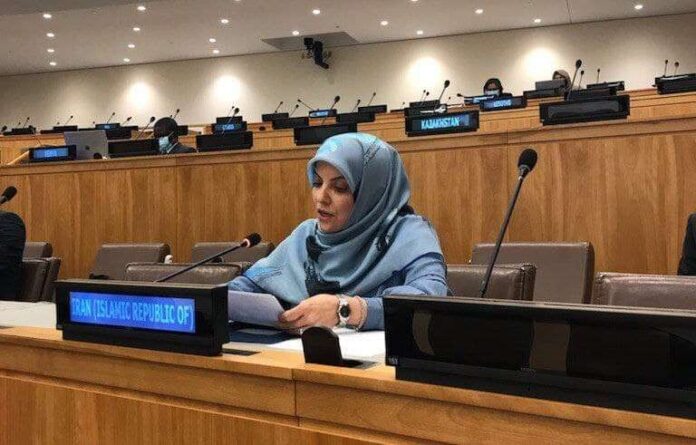
Iran urges UN to hold Zionist regime accountable for its inhumane acts

The Iranian diplomat said the Zionist regime continues to violate the basic rights and dignity of Palestinians and other Arab people in the territories it has occupied.

The diplomat said the Palestinian people are denied their right to their homeland and properties and have been forced to leave their homes through intimidation, terror and aggression.

He added that Palestinians have also been deprived of their right to determine their fate under a so-called “Jewish state”.

Iran’s representatives also said the Zionist regime has stepped up its settlement expansions and land grabs in Palestinian territories at a time when the whole world is busy fighting the Covid pandemic.

The diplomat referred to the Israeli siege of Gaza and the continued occupation of Syria’s Golan Heights by the regime and its encroachment on territories of other regional countries, saying such acts have endangered regional and international peace and security.

Iran’s Permanent Representative at the UN Majid Takht Ravanchi also condemned the Israeli regime’s allegations against the Islamic Republic in a speech at the world body.

Takht Ravanchi said Tel Aviv’s claims are aimed at distracting the international community from tis crimes against Palestinians and from the threat the regime’s nuclear arms pose to the region and the world.

He also urged the international community to force Israel into stopping its nuclear activities and joining the nuclear Non-proliferation Treaty, NPT.

France says militant commander killed in Mali

Nasser Al Tergui, a leading member of the African-based Al Quaeda affiliate Katiba Serma, was killed last week in Mali after an air strike by Barkhane military forces, according to the French army on Thursday.

Katiba Serma is an armed group affiliated with al Qaeda.

Operation Barkhane, under which France has about 5,100 soldiers deployed across five countries in the Sahel region, south of the Sahara desert, was launched in 2014 to combat the jihadi insurgency there.

North Korea accuses US of “double standards” over military activities

A man watches a television report showing a news broadcast with file footage of a North Korean missile test, at a railway station in Seoul on October 19, 2021, after the South's military said a North Korean weapons test was believed to be a submarine-launched ballistic missile. (Photo by Anthony WALLACE / AFP)

US overtures of diplomacy are hypocritical and don’t match Washington’s actions, North Korea said, after a UN Security Council session hastily convened to condemn its recent test of a submarine-launched missile.

“It is a clear double standard that the United States denounces us for developing and testing the same weapons system it already has or was developing, and that only adds suspicions to their sincerity after saying they have no hostility towards us,” the Korean Central News Agency (KCNA) quoted an unnamed Foreign Ministry spokesman as saying on Thursday.

The US and the UN Security Council could face “more grave and serious consequences” if they react inappropriately to the launch, the spokesperson added, warning them against “fiddling with a time bomb.”

The words from Pyongyang came in response to the US convening the UN Security Council over the latest DPRK missile test, this one featuring a short-range missile launched from a submarine.

The US envoy to the UN Linda Thomas-Greenfield called the launch “the latest in a series of reckless provocations” and said such “unlawful activities” are “unacceptable” and “in violation of multiple Security Council resolutions.”

However, she also told reporters that it was “time to engage in sustained and substantive dialogue toward the goal of complete denuclearization of the Korean Peninsula,” and that the US has “made clear that we hold no hostile intent toward the DPRK.”

North Korean leader Kim Jong-un met multiple times with former US President Donald Trump starting in 2018, in what looked like a breakthrough in the decades-long standoff following the armistice that ended the 1953 Korean War.

As talks bogged down in late 2019, Pyongyang lashed out at Trump’s rival, Joe Biden for “insulting” the country and its leadership, calling the Democrat a “rabid dog” who “must be beaten to death with a stick” before it can hurt people. While Pyongyang toned down its rhetoric towards Biden once the Democrat won the 2020 presidential election, the new administration’s calls for resuming talks with North Korea have been met with silence or mistrust. Speaking at a military exhibition earlier this month, Kim stated it would be “foolish” to believe the US is no longer hostile to Pyongyang.

Turkish FM expresses concern over terror attacks in Afghanistan

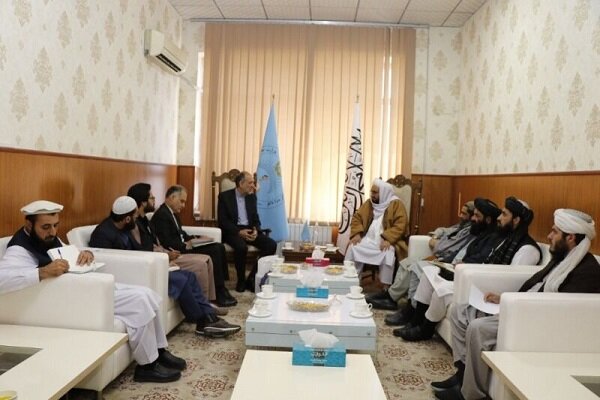
Mevlüt Çavuşoğlu raised the issue in a Thursday phone conversation with his Iranian counterpart, Hossein Amir Abdollahian.

The two top diplomats discussed the latest developments in Tehran-Ankara ties and regional and international issues of mutual interest such as the Afghanistan developments, holding the Astana summit and the 7th strategic meeting between Iran and Turkey.

The top Iranian diplomat expressed concern over a surge in terrorist attacks on worshippers in Afghanistan and said Muslim countries are expected play a more active role in this regard.

Amir Abdollahian described next week’s meeting of Afghanistan’s neighbors in Tehran as an opportunity for the countries to exchange views on ways of paving the way for a stable Afghanistan which would be free of terrorism and violence in order to fulfill the will the Afghan people.

Mevlüt Çavuşoğlu also expressed worry over the rise in terror attacks in Afghanistan. The Turkish foreign minister underlined the need for taking practical measures to prevent acts of terrorism, to form an inclusive government in Afghanistan, and to consolidate efforts to step up the fight against terror groups like Daesh. Çavuşoğlu added that all neighbors of Afghanistan should help with the battle against terrorism.

Iran’s General Bagheri visits Astra Khan nefore returning home

Major General Bagheri first visited the port of Salianka, which is 53% owned by the Islamic Republic of Iran.

In a meeting with the Iranian and Russian managers of the port, he said that after Iran’s accession to the Shanghai Cooperation Organization, trade ties with member states thereof will be expanded, and for this purpose, the development of port infrastructure on both sides of the Caspian Sea is essential.

Major General Bagheri added that Iran’s policy is to expand relations with neighbors, and in this regard, the existence of workforce training centers for shipbuilding and new technologies based on the capabilities of two countries should be taken into consideration.

He also said Iran and Russia should actively cooperate in education and exchange their experiences.

Major General Bagheri also visited the Port News shipbuilding industry and discussed joint actions with its managers.

A high-ranking delegation, along with Iran’s ambassador to Moscow, was also accompanying Bagheri during his visits to different places in Russia.

The chairman of Iran’s Joint Chiefs of Staff returned to Tehran Thursday afternoon.

Iran and Russia have boosted their relations in all areas including trade and military. The two countries were key players in the battle against terrorist groups and their defeat in Syria since the war on the Arab country started a decade ago.

IAEA head believes upcoming weeks ‘decisive’ for Iran nuclear deal

Rafael Grossi

Rafael Grossi also said he will hold a meeting with the Iranian officials in Tehran within days over the country’s nuclear programme.

The next few weeks will be “decisive” in determining whether the United States and Iran can return to indirect negotiations and resume efforts to revive the 2015 nuclear deal between them, the IAEA Director General Rafael Grossi said Wednesday.

Iran, in response to an urgent appeal by Grossi, has now extended an invitation for him to meet with its political leaders in Tehran in the coming days, Grossi stated in an interview.

On his agenda are interruptions in international monitoring of Iran’s nuclear program and other questions that, if they are not resolved, could make it virtually impossible to return to the agreement.

All other parties to the accord — Britain, France, Germany, Russia and China, with the European Union playing a coordinating role — as well as the United States, have confirmed to him that if the monitoring regime is not fully restored, “it would be extremely difficult to have an agreement of this type,” Grossi added.

What amounts to a deadline for returning to the talks is tied to a meeting of the IAEA board of governors scheduled for mid-November. The European parties have repeatedly threatened to issue a condemnation of Iran and consider reimposing sanctions if it does not comply with verification commitments.

The sense of urgency comes as the Joe Biden administration last week indicated a shift in its posture toward the delayed resumption of the talks, from warning that the timeline was not infinite to saying it was prepared to consider what Secretary of State Antony Blinken called “other options if Iran does not change its course.”

In the dispute over access for the IAEA, the United Nations nuclear watchdog, an advanced centrifuge manufacturing facility has emerged as a key obstacle. Under the 2015 pact, Iran agreed to allow continuous monitoring — including with video cameras — of important nuclear facilities, including the complex of Karaj, just west of Tehran.

In June, the Karaj plant was heavily damaged by an explosion that U.S. officials say they believe was an act of sabotage, presumably by Israel. Some of the IAEA monitoring equipment was damaged or destroyed, and Iran has refused to allow the agency to return it to operation. Meanwhile, months of monitoring data appears to be missing or possibly destroyed.

Earlier, IAEA inspectors had found traces of enriched uranium at three other undeclared facilities that Iran has refused to explain.

“This goes to the heart of the credibility of the Iranian declaration in general,” Grossi noted.

As part of the original agreement, Iran was required to declare facilities in its nuclear program.

Tehran suspended the negotiations in June after six sessions when its newly elected president, a hardline cleric, said he wanted to review what had previously been agreed. The government has said it would return to the table “soon” but has declined to set a date.

Under the original accord, Iran agreed to limits on the quantity and quality of enriched uranium it produced, as well as strict monitoring and verification by the IAEA.

Although Iran has consistently denied it intends to build a nuclear weapon, the United States announced at the time that it was only months away from accumulating enough fissile material for a bomb. Once the deal was in place, that “breakout time” was said to have extended to a year or more.

Former president Donald Trump called the agreement, negotiated by the Obama administration, a “bad deal” and withdrew from it in May 2018, reimposing US sanctions that had been lifted as one of its conditions.

Although the other parties remained in the pact and UN and other sanctions were removed, the weight of the punitive US measures — to which Trump added hundreds more — have exacted a heavy toll on the Iranian economy.

A year after the US withdrawal, Iran said it was justified in violating its terms. It began installing sophisticated new centrifuges and, in recent months, saying it was enriching uranium up to 60 percent, close to weapons-grade. Iran’s “breakout time” is now estimated again at two to three months.

Biden promised during his campaign to reenter the accord, and negotiations in Vienna started in April. Iran refused direct talks with the United States, and the European partners have acted as go-betweens for the two delegations.

Despite public expressions of mistrust, considerable progress was said to have been made to bring both sides back into compliance with the original deal.

Looming over any resumption of talks is the question of whether Iran’s nuclear program has advanced to the point where it would be difficult to return to where it was in 2015.

“It’s obvious to all that the situation on the ground has changed,” stated Grossi, who met in Washington with Blinken on Tuesday.

But the more immediate question, Grossi said, is whether the IAEA can give the others a comprehensive picture of where the Iranian program now stands.

“It’s obvious that if this element is not there, this baseline of information, how can they walk back into an agreement without having an idea of what the reality is on the ground?” he added.

The head of the Atomic Energy Organization of Iran, Mohammad Eslami, has urged the UN nuclear agency, the IAEA, to clarify its stance on the attack on Tessa Kara Complex near Tehran.

Eslami noted the nuclear site once came under a terrorist attack by the Zionist regime and it is necessary that International Atomic Energy Agency clarify its position on the incident.

He also added installing cameras at the facility is not binding under the 2015 Iran nuclear deal and that the IAEA know this.

The agency says Iran has failed to fully honor the terms of a deal struck some three weeks ago to allow the watchdog’s inspectors to service monitoring equipment in the country.

At the same time Iran’s envoy to IAEA has announced that the director general’s report isn’t accurate and goes beyond the agreed terms of the joint statement. Meanwhile, Iran insists that the agency must first condemn the terrorist attacks and acts of sabotage against its nuclear facilities.