Tuesday, December 30, 2025
Home Blog Page 2287

Report: US hushed up air raids that killed dozens of civilians in Syria

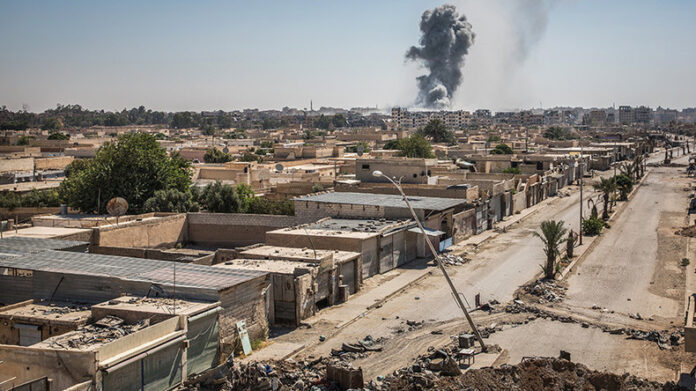
The bombings took place near the town of Baghouz in the eastern Syrian province of Dayr al-Zawr on March 18 that year, the daily said.

An Air Force lawyer present in the operations center at the time believed the strikes were possible “war crimes” and later alerted the US Defense Department’s inspector general and the Senate Armed Services Committee, the newspaper added.

No thorough investigation and no other serious action was, however, launched.

The Department, the paper wrote, sufficed to launching “an inquiry” into the incident, which led to a report that was ultimately “stripped” of any mention of the bombings.

The US Central Command that oversees the American forces in the West Asia region has tried to justify the bloodbath by calling it “legitimate self-defense,” claiming that it ordered the attacks in favor of Washington-backed Kurdish militants.

It also alleges that “appropriate steps were taken to rule out the presence of civilians.”

At the same time, however, the Central Command also alleges that the number of civilians among the 60 fatalities could not be determined because “multiple armed women and at least one armed child were observed” in footage of the events.

The US and its allies invaded Syria in 2014 under the pretext of fighting the Daesh Takfiri terrorist group. The outfit had emerged as Washington was running out of excuses to extend its regional meddling or enlarge it in scale.

The military interference was surprisingly slow in confronting the terrorists, despite the sheer size of the coalition that had enlisted scores of Washington’s allied countries.

Numerous reports and regional officials would, meanwhile, point to the US’s role in transferring Daesh’s elements throughout the region and even airlifting supplies to the terror outfit.

In 2017 and in the height of the coalition’s military campaign in Syria, Russia drew a parallel between the destruction that was being caused by the US-led forces and the wholesale bombing campaign on the German city of Dresden during the World War II.

Russia says sharing stance with Iran on ‘good agreement’ in nuclear talks

Russia’s lead negotiator at the Vienna talks, Mikhail Ulyanov, made the remarks in a post on his Twitter account on Saturday after Iranian Foreign Minister Hossein Amir-Abdollahian noted Tehran and the remaining parties to the landmark nuclear deal of 2015 – officially known as the Joint Comprehensive Plan of Action (JCPOA) – can reach a “good agreement in a short time” only in case of a “serious and positive” approach to the upcoming Vienna talks.

“The Islamic Republic has no intention to be locked in the stalemate remaining from the previous negotiations…I believe that if the opposite sides enter in the Vienna [talks] with a serious and positive approach, it will be possible to achieve a good agreement in a short time,” Amir-Abdollahian stated in a post on Instagram on Friday.

In response to the Iranian foreign minister’s post, Ulyanov said via Twitter that “Russia proceeds from the same understanding.”

In another tweet, the Russian diplomat reacted to earlier remarks made by Iranian Deputy Foreign Minister and chief negotiator Ali Baqeri-Kani on the significance of the removal of all sanctions against Tehran.

In a post on his Twitter account on Friday, Baqeri-Kani announced “effective removal of unlawful sanctions & importance of assurances on non-repetition was emphasized” during earlier visits to France, Germany, Britain and Spain.

In response to the Iranian chief negotiator, Ulyanov stressed, “It is natural that for Iran sanctions lifting comes first.”

The JCPOA was unilaterally abandoned by the US in 2018 despite Iran’s full compliance with its nuclear undertakings, as repeatedly certified by the UN nuclear agency. The US then unleashed a “maximum pressure” campaign against Iran, which practically deprived the country of all of the deal’s economic benefits.

Iran fully honored its nuclear obligations for an entire year, after which it decided to ramp up its nuclear work as a legal “remedial measure” against the US violation of the deal and the abject failure on the part of the other signatories, the E3 in particular, to safeguard its benefits.

Envoys from Iran and the P4+1 are expected to hold the seventh round of discussions in Vienna on November 29. The negotiations were paused in June, when Iran held its presidential election. Since then, the new Iranian administration has been reviewing the details of the six rounds of discussions held under the previous administration.

The US administration of Joe Biden has announced it is willing to rejoin the deal, but it has shown an overriding propensity for maintaining some of the sanctions as a tool of pressure. Tehran insists that all sanctions should first be removed in a verifiable manner before it reverses its remedial measures.

Russian Deputy Foreign Minister Sergei Ryabkov noted on Thursday that the United States needs to revise its policy of draconian sanctions against the Islamic Republic so as to help revive the JCPOA.

“The utmost must be done so that the negotiations ensure the restoration of what’s known as the ‘factory settings’ of the JCPOA,” Ryabkov added, according to TASS.

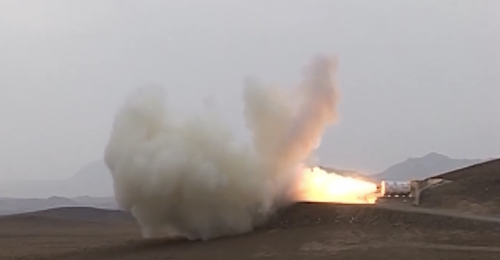
Iran releases video of testing of satellite carrier engine

The test was conducted back in July, 2010.

The engine had an excellent performance during the test.

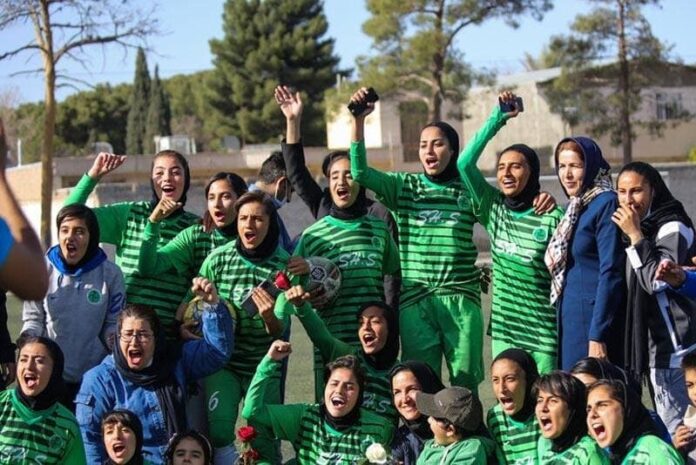
Iran women club wins silver in AFC championships

Shahrdari Sirjan accepted a 2-1 defeat against Jordan’s Amman FC in the final match of the AFC championships securing the silver medal of the contests.

Iran’s single goal was scored by Afsaneh Chatrnour. 

The Iranian club had earlier beaten Uzbekistan’s Bunyodkor and India’s Gokulam Kerala before facing the Jordanian side. 

This was the first time an Iranian women’s club was competing in the Asian championships.

The contests were a west-Asia-only championship after east Asian clubs dropped out due to the coronavirus pandemic.

Labour and Tories urge UK to pay Iranian debt

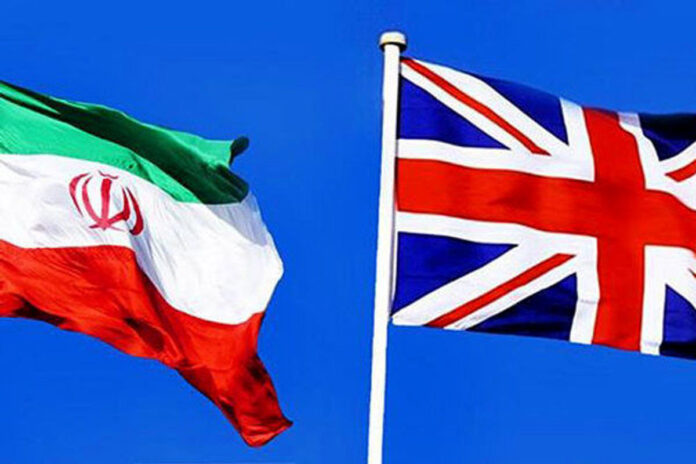
Both Malcolm Rifkind and Jack Straw said that paying the money, relating to the outstanding debt, owed after a cancelled contract for 1,500 Chieftain tanks, could be done without breaching sanctions on Iran or angering western allies. Their plea comes days after Jeremy Hunt, another former foreign secretary, called for the money to be paid.

Rifkind stated that there was no dispute that the sum is due to Iran and that the main problem has been staying in line with international sanctions.

“I find it difficult to believe that there is not some way through this particular problem,” he continued, adding, “I would very much hope that a way through this can be found. We all know what the Iranians are doing and why they’re doing it. They do it not just in relation to Nazanin Zaghari-Ratcliffe, but to many others – taking hostages for political purposes. It’s very distasteful having to deal with that.”

“I would be more despondent if there was a dispute about whether the debt is due in the first place. If that was in dispute, then, like anybody else, I would be very reluctant to give into that kind of blackmail. But the issue is whether there’s a procedure that can enable us to transfer the funds. And it ought to be possible to find a way through that,” he announced.

Straw, the former Labour foreign secretary, said, “The money should have been paid back years ago. I know for certain that in practice, there is no direct impediment on it being paid. There is no question in my mind, I can’t speak for anybody else, that it’s caught up in the issue of Nazanin’s release.”

It has also emerged that in a 2014 Commons debate, Ben Wallace, the current defence secretary, described the unpaid debt as “not only a sorry story, but un-British in that the process … has been marred by double dealing and obfuscation”.

However, some sources who had dealt with the issue of the debt over the years warned that there were genuine complications in repaying it.

“There is no dispute that this money belongs to Iran,” a source stated, adding, “It has been held in a court escrow account for a long time. The questions are around exactly how much the sum due is (it has 40 years of interest and various other elements that have to be calculated) and how it could lawfully be transferred.”

They cited concerns that the money could end up in the hands of those under sanctions, fears about the US’s reaction to the money being paid, the moral issues in handing money to a regime funding terrorism in the region and the practical issues of finding a bank willing to hand over the money, given the possible US reaction.

US officials say Iran did not order strike on Iraqi PM

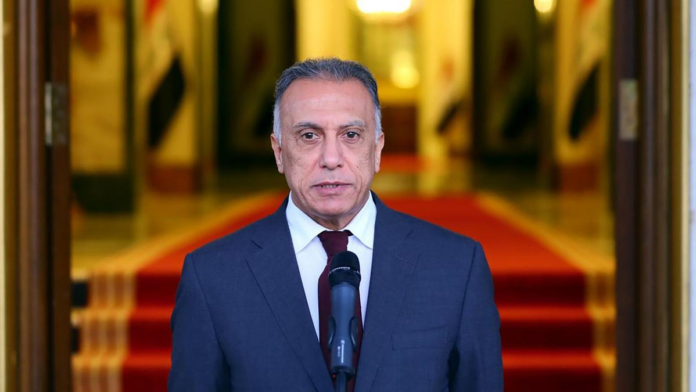
Al-Kadhimi survived an alleged assassination attempt earlier this month. The prime minister said that he survived explosions from a drone attack, though several of his security guards were injured in the event.

“The rockets of treason will not shake one bit of the steadfastness and determination of the heroic security forces,” al-Kadhimi tweeted after the attack, adding, “I am fine and among my people. Thank God.”

Gen. Frank McKenzie at US Central Command earlier this week claimed the attack was carried out by Iranian-backed militias.

Tehran, for its part, has denied responsibility.

A senior US official at the Department of Defense as well as former officials told NBC News the attack was likely not sanctioned by Iran, adding that the Iranian government doesn’t have much control over militias in the area.

“It’s fair to say that Iran does not have as much control over these groups since [Iranian Gen. Qassem] Soleimani was killed,” a Defense official said, according to NBC.

Iraqi officials told Reuters on Nov. 8 that the attack was carried out by Iran-backed militias, Kataib Hezbollah and Asaib Ahl al-Haq, who were upset after losing power in Iraq’s parliamentary elections last month. The groups have claimed that the election was fraudulent, though there has been no evidence provided to back this claim.

NBC News reported that the drones used in the strike resemble those that have been used by Iranian-backed militias since July 2020, according to former officials and regional experts.

President Joe Biden condemned the attack on the prime minister shortly after it occurred on Nov. 7 and ordered an investigation into the attack.

Tensions have increased between Iran and the US and its allies in the Middle East in recent years, especially after the assassination of Soleimani in January 2020.

A senior Iranian security official has stated the assassination attempt on Iraqi PM has roots in foreign think tanks.

“The attempt on the Iraqi premier’s life is a new sedition which should be traced back to foreign think-tanks, which have brought nothing for the oppressed Iraqi people but insecurity, divisions and instability by creating and supporting terrorist groups and the occupation of this country for years,” Ali Shamkhani, the Secretary of Iran’s Supreme National Security Council, wrote on Twitter.

Iran FM: Tehran entering Vienna talks in good faith

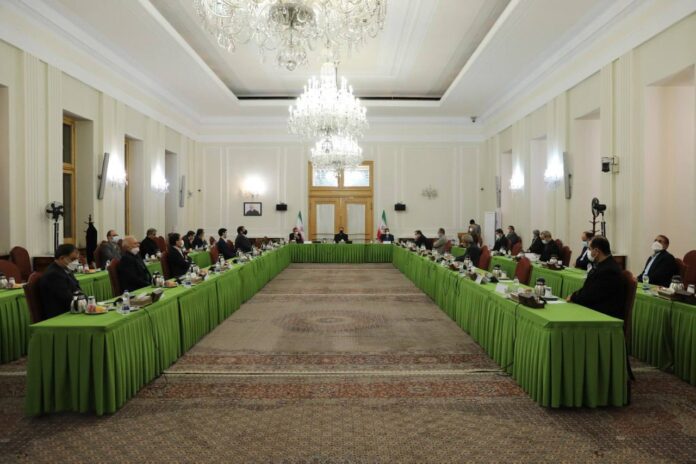
Hossein Amir Abdollahian made the remarks on Saturday night while receiving members of the Advisory Commission of the Public Diplomacy Center of the foreign ministry as well as a host of Iranian analysts, university professors, journalists and ambassadors.

In the meeting, Amir Abdollahian expounded on the foreign policy of the 13th administration, of President Ebrahim Raeisi.

He said Tehran is entering into talks in Vienna in good faith despite the United States’ breach of its commitments under the JCPOA and withdrawing from the deal as well as Washington’s violation of UN Security Council Resolution 2231 not to mention failure by the European parties to the JCPOA to make good on their obligations. 

The top Iranian diplomat elaborated on Iran’s policy on the resumption of negotiations aimed at lifting the United States’ cruel, illegal and unilateral sanctions.

The Vienna talks are scheduled to be held in November’s end. 

Amir Abdollahian had earlier said Iran is ready to reach a good deal. 

The Islamic Republic has time and again called for the return of all JCPOA parties to their full commitments under the deal and the lifting of all anti-Tehran sanctions.

Iran’s minister: Iran role model of resistance

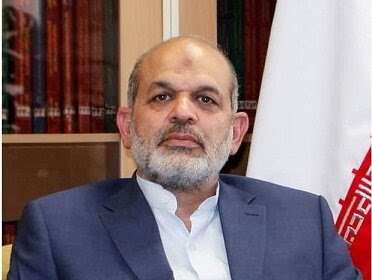
Vahidi said, “Just imagine a world without the Islamic Republic; then what would happen to the world and on whom would the Palestinian people pin their hope as they fought for their rights?”

The Iranian interior minister said the Islamic Republic of Iran is today a glimmer of hope for human beings and makes them hopeful for a great future.

Vahidi said the global arrogance has waged a propaganda campaign and economic war against Iran because of its support for the oppressed of the world.

He added that the US accuses Iran of human rights violations while it killed several people inside its legislature because they were protesting at the result of the presidential election.

He also said Canada has been violating the rights of it indigenous people, dismissing Ottawa’s allegations against Iran.

Vahidi also praised the achievements of the 13th government in Iran. He said the administration of President Raeisi is the symbol of relentless fight against oppression and symbol of reliance on domestic capacities.

He added that momentum is on Iran’s side in terms of using domestic possibilities and that Iran will prevail in this way.

“Iran deals heavy blows to drug trafficking cells”

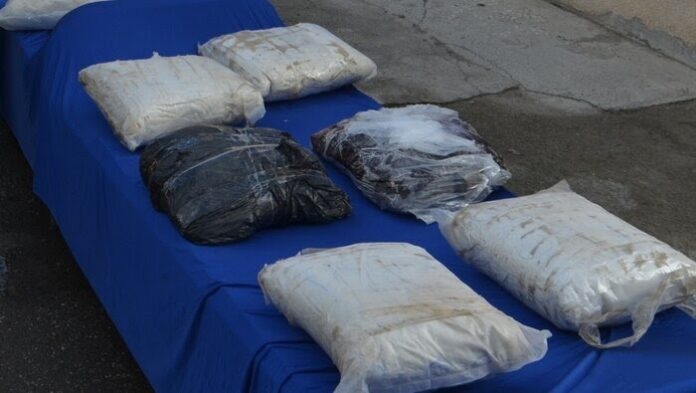
The Public Relations Office of the Intelligence Ministry in the southeastern province of Sistan and Balouchestan noted that operations against drug trafficking cells there resulted in the confiscation of 25 tons of traditional and industrial narcotics, 3 firearms, some munitions and 36 vehicles.

Meanwhile, 36 members of the cells were arrested while 2 others were killed.

Iran faces an uphill task in its fight against drug trafficking as it has a long border with Afghanistan where the main producers of narcotics are based.
Due to being Afghanistan’s neighbor, Iran has paid dearly in its decades-long war on drugs.

Figures show that the Islamic Republic has lost 2500 soldiers in its war on drugs while 5000 troops have suffered injuries.

Iran has been tough on drug trafficking. Otherwise, Europe will be inundated with narcotics which mainly originate from Afghanistan.

The secretary general of the Anti-Narcotics Headquarters recently said Iran, as the flag bearer of fighting narco-trafficking, marked an unprecedented year in its fight against drug trafficking despite a hike in drug production in the region and also in spite of the US’s oppressive sanctions.

According to this official, Iran seized about 1,200 tons of drugs in 2020 showing a 41 percent increase compared to the previous year.

Ex-US official: Abandoned Afghan forces likely to join Daesh

Glenn Pangelinan, nicknamed Pango, is a human intelligence officer who served multiple deployments with the US military in Afghanistan supporting Navy SEALs. Since the US withdrawal, he’s worked tirelessly helping veteran groups extract vulnerable Afghan allies.

“We’re not in the business of leaving people behind,” Pangelinan, a native of Guam, told Fox News.

“This is critical as a statement to those in Europe and those in Asia that when you help the United States, we’re going to stand by you no matter what,” he added.

Pango just returned from a two-week site survey to his native Guam to meet with the governor and see if Guam could serve as a transit hub for thousands of Afghan commandos and their families.

What keeps him and other veteran-led private rescue groups _ as well as certain members of Congress — up at night are the highly trained Afghan commandos who are still in safe houses across Afghanistan, thinking the US is coming to rescue them and are getting increasingly desperate.

“The estimate is 5,600. They’re completely vetted. These are individuals that were given tradecraft by the intelligence community,” Pango explained.

“These are folks who have been given special tactics of weapons training,” he said.

And the US may need them again someday to fight ISIS (ISIL or Daesh).

Rep. Mike Waltz, R-Fla., wants Congress to pass legislation to make it easier for the Joe Biden administration to evacuate these vetted allies.

“These commandos are trained, highly trained, on how we do signals intelligence, how we do human intelligence, how we operate,” Waltz said in an interview.

“We know that the Taliban are hunting them down. They are seeking to force them through coercion to hand over that information so that they can use it and they can understand how we operate,” Waltz added.

Veterans fear if the Afghan commandos get desperate enough, they will sell their skills to terrorist groups like the Taliban and ISIS.

“If people are selling their children at this point in time, which it has been reported they have been in Afghanistan,” Pango explained, “what would a person do to save their children or their family if they’re threatened by ISIS, KP or the Taliban? What would you do? We can only consider the worst.”

The Afghan commando training program was always a favorite for US generals to show off to visiting dignitaries from Washington.

House Speaker Nancy Pelosi, D-Calif., was photographed meeting with Afghan female commandos in 2019. The commandos may in fact be needed again if the US has to go back to Afghanistan.

“The Defense Department is saying ISIS could strike the homeland in the next six months. That means we may have to go back as soldiers,” said Waltz, the first Green Beret ever elected to Congress.

“We may have to send our special operators back to deal with the rising ISIS and al Qaeda threat. Now they all know our tactics, techniques and procedures that puts future American soldiers on the line. So it’s even more critical then, that we get these commandos out,” Waltz added.

When asked at NATO headquarters about the commandos, Defense Secretary Lloyd Austin promised to help.

“We’re not finished. We will continue our work, and so we’ll work as hard as we can as long as we need to take care of as many people as we possibly can,” Austin stated in Brussels last month.

One option is to airlift the commandos to Guam, the US protectorate that has historically served as an evacuation hub for wartime allies. Tens of thousands of South Vietnamese refugees were sent there after the fall of Saigon on orders from President Gerald Ford.

“President Ford in the case of South Vietnam directed the entire federal government and passed legislation in Congress to use Guam for evacuations of our allies that we knew the North Vietnamese would capture, torture, detain and indoctrinate and treat horribly,” Waltz continued.

“Guam has been a kind of way station for the entirety of American history really to help our allies for moral reasons, for national security reasons, but then to also provide a way station for the appropriate vetting before they come to the United States. And I think it would work perfectly fine again now,” Waltz noted.

The governor of Guam wrote to President Biden in June offering the Pacific Island as a solution.

“Guam has stood ready to serve as a safe and secure route for this type of humanitarian effort throughout our history. And today, it is no different. I assure you that my administration is prepared to assist in executing your plans on this matter should Guam be chosen,” wrote Gov. Lourdes Guerrero.

The island has also housed Kurdish fighters whom the US military evacuated after it left Iraq.

Glen Pangelinan says the island protectorate could house up to 30,000 Afghans.

“When it comes to these commandos, they’ve gone through so many different processes for vetting before they’re recruited, while they’re in training and then post-training as each team trades off unit to continue the mission,” Pango, the former intelligence officer explained.

“Those few units vet them again through biometrics and then through other means,” he continued, adding, “These groups are known to be the Counterterrorism Center. They’re known to the the Ground Intelligence Center, the Defense Intelligence Agency. SOCOM. These are folks that have been on the SOCOM payroll for quite some time. So there’s considerable value to bringing them back onto our side versus leaving them in Afghanistan and being available to the various groups that are going to be struggling for power in Afghanistan.”

The State Department airlifted dozens of Afghan pilots who had been stuck in Tajikistan to Abu Dhabi after the New York Times published a story exposing the plight of the heroic pilots, who flew dozens of Afghan warplanes that had been purchased with US aid money to safety in Tajikistan after the fall of Kabul. They were sitting in prison-like conditions in Tajikistan’s capital Dushanbe awaiting help from the US Embassy.

Pentagon press secretary John Kirby was asked about the Afghan pilots on Wednesday during a briefing.

“They arrived very early this morning (in Abu Dhabi.) My understanding is they are still there,” he said, adding, “The Operation Allies Welcome Task Force and the embassy is registering today to begin the processing for their eventual admission to the United States as parolees.”