Thursday, December 25, 2025
Home Blog Page 2250

Iran blasts US support for Israel nuclear weapons program

Iran’s Ambassador and Permanent Representative of the Islamic Republic of Iran to the United Nations Majid Takht Ravanchi made the remark before the second session of the Conference on the Establishment of a Middle East Zone Free of Nuclear Weapons and Other Weapons of Mass Destruction on Monday.

He stated that the Islamic Republic of Iran has a high record of accession, among the Middle Eastern countries, to the international instruments banning weapons of mass destruction. As the initiator of the proposal for the establishment of a nuclear-weapon-free zone in the Middle East presented in 1974, Iran is also a party to the Treaty on the Non-Proliferation of Nuclear Weapons, the Biological Weapons Convention, the Chemical Weapons Convention and the 1925 Geneva Protocol as well as a signatory to the Comprehensive Nuclear-Test-Ban Treaty, with a comprehensive safeguards agreement with the International Atomic Energy Agency (IAEA).

Our Supreme Leader has, on several occasions, elaborated including in his message to the International Conference on Nuclear Disarmament and Non-Proliferation in Tehran in April 2010 that: “We believe that, besides nuclear weapons, other types of weapons of mass destruction, such as chemical and biological weapons, also pose a serious threat to humanity. The Iranian nation, which is itself a victim of chemical weapons, feels more acutely than any other nation the danger caused by the production and stockpiling of such weapons, and is prepared to do everything in its power to counter such threats. We consider the use of such weapons as haram (religiously forbidden) and believe that everyone must make efforts to secure humanity against this great disaster”.

Weapons of mass destruction unquestionably pose an existential threat to both global peace and security. This threat has been clearer and more familiar in the Middle East as those weapons have already been proliferated and utilized in this region. More harrowing still is the threat of use of such weapons which dauntingly continues. The recent history of the region is testament to attempts by certain governments to expand and use weapons of mass destruction. The use of chemical weapons by the then-dictator of Iraq in the 1980s against not only Iranian soldiers and civilians but also Iraqi citizens is a vivid example in this regard.

The resolution adopted by the 1995 NPT Indefinite Extension and Review Conference called for the establishment of an effectively verifiable Middle East zone free of weapons of mass destruction. It also called on all NPT members, in particular the nuclear-weapon states, to extend their cooperation and to exert their utmost efforts to ensure the early establishment by regional parties of the Middle East zone.

It is noteworthy to mention that the processes emanating from the NPT Review Conferences and the UNGA are two independent avenues established to fulfill this long-overdue goal which should be realized with the action-oriented decisions of the two tracks. These two can complement, but not replace, each other.

The Conference on the Establishment of a Middle East zone free of nuclear weapons and other weapons of mass destruction (MEZFWMD) is aimed towards elaborating a legally binding instrument to establish such a zone in an inclusive and transparent manner and with the participation of all invited States based on arrangements freely arrived at by consensus.

Following the failure of past attempts to consider the establishment of MEZFWMD, many international observers believe that the successful convening of the First Conference of the Middle East free zone of WMD was a turning point in addressing such an important issue. Participation in the Conference of all 23 members of the region – except the Israeli regime – and four Nuclear Weapon States, namely China, France, Russia, and the United Kingdom, as well as relevant international organizations, was incredibly remarkable. By claiming that the region is not ready to discuss the issue, the Israeli regime and the United States decided not to attend the conference and instead opted for denouncing it.

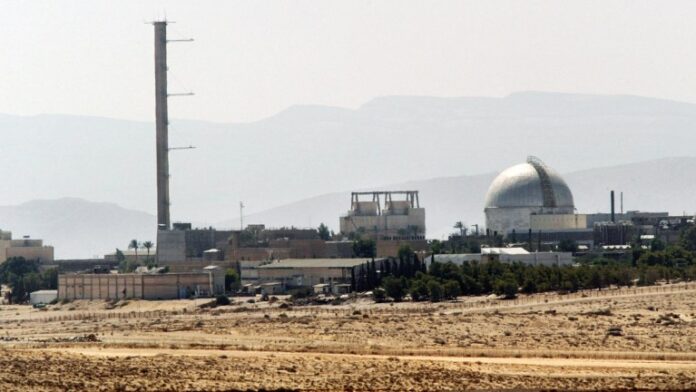
In consideration of the obstacles to the establishment of such a zone, first and foremost, Israel must join all related international legally binding instruments. Above all, it must join the NPT without any precondition while placing all of its nuclear facilities and activities under the comprehensive safeguards of the IAEA.

The US continuous support for Israel, including its condoning of the Israeli regime’s dangerous nuclear weapon program, and the US’s unwillingness to engage constructively in the work of the Conference, have made the realization of the idea of establishing such a zone in the Middle East impossible.

Due to the unique characteristics of the Middle East, there is no doubt that this will be a long process requiring extensive negotiations on an array of issues. Therefore, while urgent, this phase requires a prudent approach bearing in mind the following:

1. Consensus needs to be the only method of working for the Conference and any precondition for the participation in the Conference or on the establishment of such a zone should not be acceptable.

2. The rejection of the U.S. and Israel to participate in the Conference is a major hurdle in its success. Practically, any possible treaty on the establishment of a WMD-free zone in the Middle East will be meaningless and ineffective unless an entity possessing all types of WMD adheres to it. Therefore, necessary measures should be taken to solve these problems. Furthermore, active participation of all NWS, particularly the three co-sponsors of the 1995 Resolution, in the Conference is imperative.

3. Unconditional, non-discriminatory, effective and irrevocable legal assurance by all other NWS to all States of the region against the threat or use of nuclear weapons under any circumstances is an essential requirement for the establishment of a WMD-free zone in the Middle East.

4. The scope of the treaty to be negotiated should merely cover nuclear, biological, and chemical weapons.

5. We underline the essential importance of an efficient verification system for a possible WMD-free zone. We must take advantage of the current related mechanisms in establishing the verification system for the zone, noting that while there exist verification systems agreed upon and implemented in the field of nuclear and chemical weapons, there has been no similar system regarding biological weapons.

6. The official adoption of the text of the draft treaty shall be conducted at a formal meeting of the Conference wherein all regional countries shall be present and participate in its adoption.

We took part in the first session of the Conference actively and constructively, and we will continue to do so in the second and subsequent sessions.

I would like to conclude by underlining that the positive impact of a successful Conference will not be limited to the region and will, instead, have profound effects on the global WMD nonproliferation regimes.

Iran is prepared to play its part and provide its best efforts to this cause.

Today, some delegations raised an unwarranted concerns about Iran’s nuclear program whose peaceful nature has been confirmed on numerous occasions by the IAEA. It is unfortunate that this august meeting is being misused to distract the attention from the real threat to the region, that is the Israeli nuclear weapon program.
Bomb blast in Kabul wounds five people, including Taliban

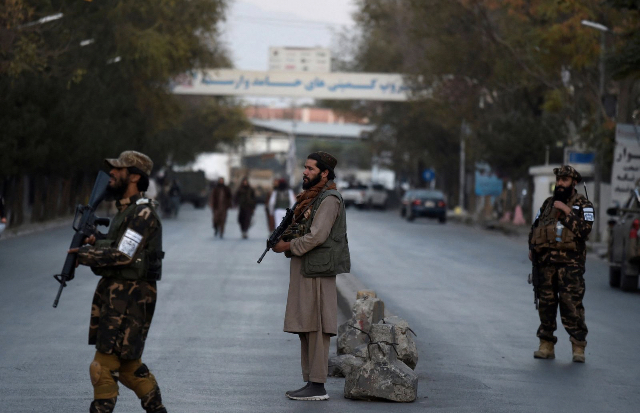
The bomb has targeted a car of the Taliban fighters in the Darulaman area of Kabul.

Spokesperson of the ministry of interior affairs Saeed Khostai confirmed the explosion but denied any financial loss and casualties.

He stated the bomb was planted on the road but eyewitnesses claimed that a magnetic bomb has exploded.

On the other hand, the spokesperson of the police headquarter of Kabul General Mobin noted there are casualties but has not disclosed the exact number of people killed or wounded.

No group has claimed responsibility for the explosion yet.

It is worth mentioning that ISIS-K has been targeting the Taliban fighters since they recapture power on August 15.

Vienna talks: Expert meeting starts; Removal of anti-Iran bans topping agenda

The group was launched as per an agreement reached by Iran and the 4+1, Russia, China, Britain, France plus Germany, during their meeting on Monday. 

The senior diplomats representing the 4+1 and Iran agreed that the lifting of the inhumane US sanctions must be the top priority in negotiations aimed at reviving the JCPOA. The two sides also agreed to form a working group to deal with nuclear issues. But Iran insisted that the removal of sanctions be the top priority. 

EU Foreign Policy coordinator Enrique Mora who presides over the JCPOA’s Joint Commission described the Vienna talks that resumed after a 5-month hiatus as positive. 

Reports say the expert negotiations over the removal of the bans will continue as long as it’s necessary. 

Iranian Foreign Ministry spokesman Saeed Khatibzadeh has said the Iranian negotiators are in Vienna to make sure the sanctions will be lifted. He added that the focus is on the termination of the sanctions and the Islamic Republic will not accept anything short of that. Khatibzadeh added that Iran will not make any extra commitments other than what’s enshrined in the JCPOA. He noted that such issues as step-by-step talks and new policy obligations have no place in the Vienna talks.

Kamran Ghasempour ranked top 92kg freestyle wrestler of 2021

According to the latest UWW ranking, Ghasempour got 76 points followed by Russia’s Magomed Kurbanov with 58 points and the Republic of Azerbaijan’s Osman Nurmagomedov with 39 points.

Ghasempour won a gold medal in the 2021 World Wrestling Championships in Norway by defeating Kurbanov in the final bout.

Meanwhile, Iran’s Hassan Yazdani and Amirhossein Zare also came second in the 86kg and 125kg categories while Mohammad Nokhodi was ranked third in the 79kg.

United World Wrestling’s website says: wrestlers of all three styles and 30 weight categories will receive prize money with the top-ranked wrestler getting $10,000 followed by $7,000 for the second-placed wrestler and $3,000 for the third-ranked wrestler.

Iran nuclear chief: U.S. must remove all sanctions

The head of the Atomic Energy Organization of Iran Mohammad Eslami says talks between Iran and the P4+1 in Vienna are about a return of the United States to the JCPOA and therefore the Americans must effectively remove all their sanctions in a verifiable manner.

Iran and the remaining parties to its nuclear deal resumed their talks in Vienna on Monday with the Islamic Republic’s lead negotiator Ali Bagheri Kani insisting that the talks are aimed at finding ways to remove anti-Iran sanctions imposed since 2018 when the U.S. unilaterally left the international deal.

Also on the latest visit of the head of the International Atomic Energy Agency to Iran, Eslami noted that Rafael Grossi’s trip was part of IAEA’s routine work in Iran.

China says negotiations only way to solve Iran nuclear issue

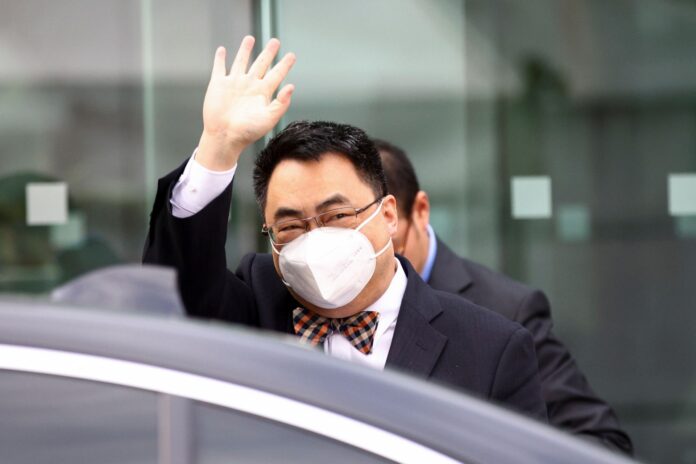
The remarks were made by Wang Qun, Chinese envoy to the United Nations and other international organizations in Vienna, said on Monday.

Welcoming Iranian Deputy Foreign Minister Ali Bagheri Kani’s first participation in the negotiations with a delegation from the new Iranian government, Wang stated that as the nuclear talks resume in Vienna “We hope that all parties concerned will seize the opportunity, adhere to the direction of political and diplomatic solutions, fully reflect goodwill and flexibility, respect each others’ interests, create a good atmosphere and creatively resolve the outstanding issues through negotiations.”

The United States, as the originator of the current Iran nuclear crisis, should lift all related illegal sanctions against Iran and third parties, including China, in order to regain the trust of the international community, while Iran should again comprehensively fulfill its obligations on this basis, Wang noted, adding that China will continue to defend its legitimate rights and interests in the lifting of sanctions and other aspects.

Wang stressed that China has always been committed to upholding the comprehensive Iran nuclear agreement and has worked hard to promote the resumption of the Iran nuclear talks.

China has also conducted intensive communication and coordination with Russia, Iran, the United Kingdom (UK), France, Germany, the United States, the European Union and other relevant parties at different levels with the aim of promoting the resumption of negotiations and making progress as soon as possible, Wang added.

“China will continue to practice genuine multilateralism, participate in the next phase of negotiations in a constructive manner, and work with all parties to promote the early achievement of results in this negotiation,” Wang noted.

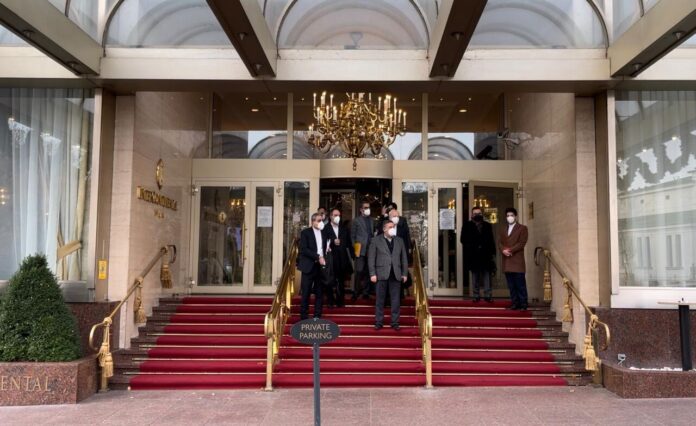
Wang made the remarks as the Iran nuclear talks resumed here on Monday after a hiatus of more than five months. Diplomats from China, Russia, the UK, France and Germany, as well as Iran, convened at the Palais Coburg hotel, where the 2015 nuclear deal was signed. The US, which withdraw from the 2015 agreement in May 2018 under former President Donald Trump, was taking part in the talks indirectly.

Iranian Foreign Minister Hossein Amir Abdollahian said on Friday that his country was serious about the upcoming nuclear talks and wanted “a good and verifiable agreement.”

The previous round of talks on the restoration of the 2015 nuclear deal, formally known as the Joint Comprehensive Plan of Action (JCPOA), was held in June.

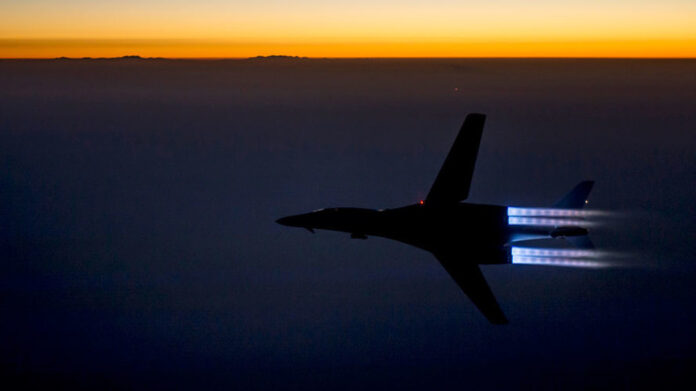
Pentagon to review deadly 2019 US bombings in Syria

Pentagon Press Secretary John Kirby announced the probe on Monday, saying it would be led by General Michael Garrett, the head of US Army Forces Command.

Earlier this month, the US military acknowledged that civilians may have been killed in the bombings in Baghouz, near the Iraqi border in 2019. At the time, Washington-backed Syrian Democratic Forces (SDF) were leading the fight on the ground with American air support.

“Likely a majority of those killed were also combatants at the time of the strike. However, it is also highly likely that there were additional civilian casualties,” Bill Urban, a US military spokesman, said in a statement on November 14.

He added that “investigations were unable to conclusively characterize the status of more than 60 other casualties that resulted from these strikes”.

Urban’s statement came a day after the New York Times, citing anonymous sources and classified documents,  published a report that accused the US military of concealing the bombings.

The newspaper reported that the bombing struck a “crowd of women and children”, killing 64 people.

“Without warning, an American F-15E attack jet streaked across the drone’s high-definition field of vision and dropped a 500-pound bomb on the crowd, swallowing it in a shuddering blast. As the smoke cleared, a few people stumbled away in search of cover. Then a jet tracking them dropped one 2,000-pound bomb, then another, killing most of the survivors,” the Times wrote.

On Monday, Kirby stated the review would look into “record keeping and reporting procedures” and “whether mitigation measures identified in previous investigations into the incident were in fact implemented effectively”.

The probe, which is due in 90 days, will also assess whether “accountability measures” will be appropriate, Kirby added.

The US-led coalition started a bombing campaign against the ISIL (ISIS) group in Syria and Iraq in 2014, and the American military maintains troops in both countries with the stated goal of preventing the group’s resurgence.

Former US President Donald Trump touted the territorial defeat of ISIL (ISIS) as a major policy achievement in his failed 2020 re-election bid.

Rights groups previously accused the US-led coalition of killing civilians during their bombing campaign. A 2019 investigation by Amnesty International, for instance, found that the coalition had killed 1,600 civilians in Raqqa, the ISIL (ISIS) group’s former de-facto capital.

The Associated Press news agency reported on Monday that after the New York Times story was published, Austin received a briefing on the Syria bombings from General Frank McKenzie, the head of US Central Command.

AP reported that McKenzie’s command said “an initial investigation concluded that the strike constituted legitimate self-defence in support of Syrian partner forces under fire from ISIL”.

The probe into the Syria bombings comes after the Pentagon admitted in September that a US drone attack previously described as “righteous” by a top general had killed 10 civilians, including children, in Kabul during the chaotic US withdrawal from Afghanistan.

But a subsequent internal review by the Pentagon concluded that the bombing did not violate the laws of war or amount to criminal conduct or negligence, prompting outrage.

Russian envoy: Mediators on Iran deal to use existing progress

The participants of the meeting of the Joint Commission of Iran and five international mediators (Russia, the United Kingdom, Germany, China, and France) on the issue of restoration of the Joint Comprehensive Plan of Action (JCPOA) during the seventh round of talks decided to continue the work on the basis of the progress achieved during the previous rounds, a Russian top diplomat told Russian reporters on Monday.

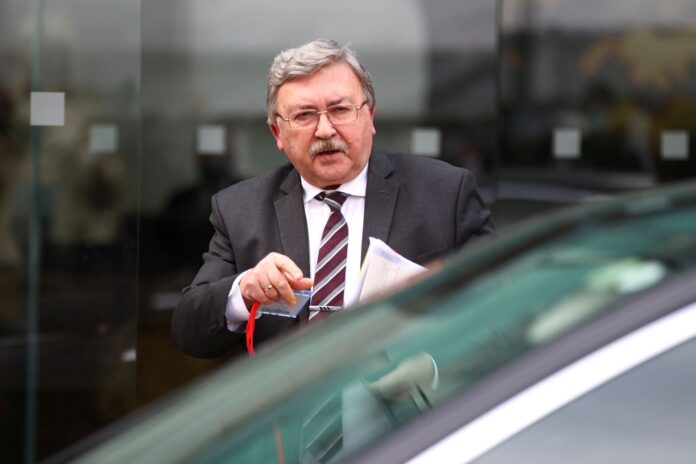
Russia’s Permanent Envoy to International Organizations in Vienna Mikhail Ulyanov considers the result of the November 29 meeting a good start of the working process as representatives of the new Iranian delegation demonstrated certain flexibility on a number of very important issues.

The key thing is that it was decided to resume the talks from the moment they were put on hold on June 20 this year,” he said, adding “The progress of the end of June has become the basis of further work.”

For example, the Iranians, for which the lifting of US sanctions remains the main point, agree that it is necessary to concurrently address the nuclear issue, which suggests Tehran’s return to the initial parameters of the nuclear deal concluded in 2015, Russia’s envoy noted.

An agreement was reached at the meeting on prior steps for the near future, Ulyanov said.

Particularly, two working groups are resuming their activities.

“On November 30, the meeting of the working group on lifting the [US] sanctions will be held, where as we understand, the Iranians are to present the renewed elements of their position,” the diplomat explained.

“On December 1, the meeting of the group on nuclear issues will take place,” he added.

The Joint Commission of Iran and the five international mediators gathered for the seventh round of talks to discuss ways of restoring the JCPOA in Vienna on November 29 after they were suspended this June due to Iranian elections. The sides discuss prospects for the United States’ possible return to the deal, steps needed to ensure full compliance with the deal’s terms by Iran, and issues of lifting the anti-Tehran sanctions.

The Joint Commission of the JCPOA will continue its work with the progress that was reached during the previous rounds of its consultations that were held before June 2021, Ulyanov said.

“It can be said after the meeting that the process has started quite well,” he stated, adding, “The Iranian colleagues demonstrated certain flexibility on a number of very important matters.”

“The most important thing is that it was decided to resume the talks from where they were suspended on June 20, 2021,” he said, adding, “Everything that was discussed in late June is now a basis for further work.”

The new Iranian delegation taking part in the Vienna talks is not ready to directly speak to the US delegation, Ulyanov told journalists.

“Nothing has changed here,” Ulyanov noted in reply to the question whether the new delegation was ready for direct negotiations with US representatives in Vienna.

The Russian envoy stated that the working process aimed at the return to the JCPOA could be considered launched. It will not be easy due to major differences between Iran and Western participants on many items, the diplomat warned.

“However, today’s discussions and our separate conversations with US Special Envoy for Iran Robert Malley showed that all without exception seek to achieve a positive result. This is the most important precondition for the successful continuation and completion of talks,” he explained. 

“There is no and there cannot be a reasonable alternative to the restoration of the JCPOA. All participants confirmed this today, including the Iranians and Americans,” Ulyanov stressed.

Iranian woman oldest person on earth

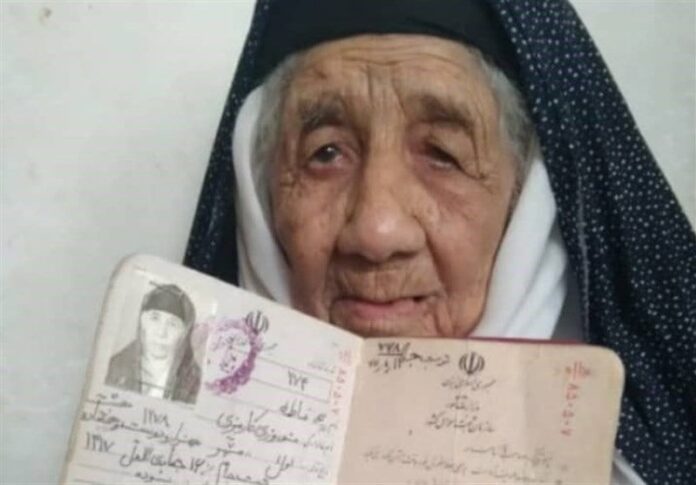
Previously, Kane Tanaka, a 118-year-old resident of Japan’s Fukuoka Prefecture, was declared to be the oldest Japanese woman. Tanaka was recognized as the oldest living person in the world by Guinness World Records.  Fatemeh Norouzi was born on September 23, 1899 and is now more than 122 years old.

Terminally ill teen granted last wish in Iran

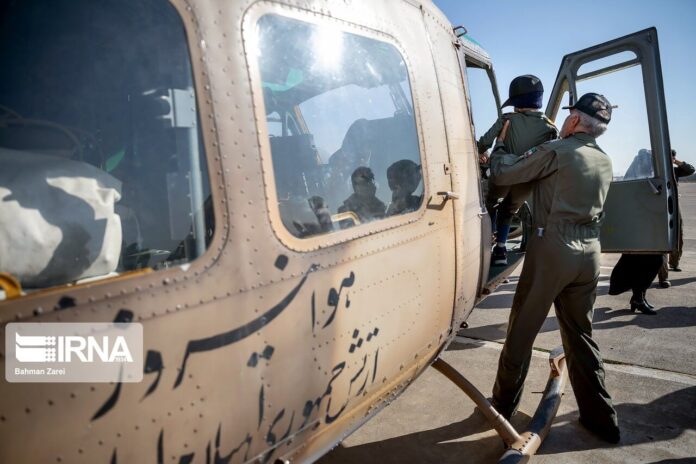
On Monday morning, Mohammad left for the First Airbase of Kermanshah, in western Iran, with a special military ceremony to fulfill his wish. 

After boarding the 214th Air Force helicopter, this dear Iranian child also started shooting with the Cobra helicopter simulator.