Saturday, December 27, 2025
Home Blog Page 2231

Around a dozen injured in blast in Lebanon Palestinian camp

The state-run National News Agency (NNA) reported an unspecified number of deaths, but local media and civil defense workers on scene said there had been no fatalities. A security source also added fatalities had not been recorded.

The NNA reported that the blast emanated from a Hamas weapons depot in the Burj al-Shemali camp and a judge had ordered security forces to launch an investigation.

A number of armed Palestinian factions, including Hamas and the Fatah Movement, hold effective control over roughly a dozen Palestinian camps in the country, which Lebanese authorities by custom do not enter.

Shehab News Agency, seen as close to Hamas, quoted a Palestinian source as saying the explosion was caused by the ignition of oxygen canisters stored for use in fighting the COVID-19 pandemic.

The security source stated the fire had since been brought under control.

Hamas has not officially commented.

The area surrounding the blast had been evacuated and rescue crews had deployed, the Palestinian source added.

Videos from the scene shared by local media show a number of small bright red flashes above the southern city, followed by a large explosion and the sound of glass breaking.

Iran condemns US inhumane, coercive measures against Iranians

In a statement on strengthening of the coordination of humanitarian and disaster relief assistance of the United Nations, including special economic assistance before General Assembly, Ambassador and Chargé d’affaires ad Interim of Permanent Mission of the Islamic Republic of Iran to the United Nations Zahra Ershadi said, “The nature and extent of humanitarian situations have changed dramatically, as new dimensions have emerged over the course of decades. As a result, the international community has faced evolving challenges as it works towards addressing these emergencies in a comprehensive and coordinated manner.”

“With an increasing number of people suffering from the impacts of natural disasters, the extent and frequency of such occurrences have – in addition to hindering the development of disaster-stricken countries – eroded the capacity to address events of such nature. Humanitarian emergencies also occur as a result of ever-increasing armed conflicts and the targeting of innocent civilians. Hence, we concur with the Secretary-General that “Humanitarian needs soared in 2020, propelled by conflict, climate change and the coronavirus disease (COVID-19) pandemic”.

“My delegation acknowledges the leading role of the United Nations Office for the Coordination of Humanitarian Affairs. We are of the view that sustainable tackling of humanitarian situations requires mobilizing resources by taking anticipatory financing approaches in the UN budgetary system. In this regard, those who serve as the main contributors in protracted wars and occupations by their involvement or through the provision of sophisticated weapons should shoulder more burden in financing UN humanitarian responses. This also includes those that have historical responsibility due to GHGs emissions that lead to rapid climate change resulting in natural disasters.”

“This year, we commemorate the thirtieth anniversary of the adoption of landmark resolution 46/182 as a solid foundation for humanitarian activities and responses. Based on this resolution, we believe that all of the principles and purposes of the UN Charter, notably respecting the sovereignty and territorial integrity of States, should be strictly observed by all when providing humanitarian assistance. While emphasizing the primary role and responsibility of States in addressing humanitarian emergencies within their territories, national ownership and leadership in the coordination of humanitarian assistance to ensure its effective delivery must be acknowledged. In the same vein, any humanitarian crises or emergencies, especially those that have been advertently created under a specific and hidden political agenda, must not lead to any foreign intervention under the pretext of responsibility to protect.”

“Taking note of the Secretary-General’s calls for a global ceasefire and humanitarian pause as a temporary solution for providing humanitarian assistance to those in dire need, the Islamic Republic of Iran strongly believes that addressing the root causes of humanitarian crises and emergencies, as well as, greater investment in their prevention is the main sustainable and durable solutions for this global phenomenon. This includes both natural disasters and man-made crises, including but not limited to occupation, foreign military interventions and the imposition of illegal and inhumane Unilateral Coercive Measures. In this regard, we stress the significance of liability and accountability. Therefore, we express our disappointment with the Human Rights Council’s failure to renew the mandate of the Group of Eminent Experts on Yemen on 7 October 2021.”

“While being committed to the protection of the United Nations and humanitarian personnel on the mission, the Islamic Republic of Iran emphasizes that the sanctity of humanitarian assistance activities, including the credibility of the United Nations humanitarian response system, must be preserved by upholding its purely humanitarian nature through observing the humanitarian principles. Legitimate concerns regarding the deviation of humanitarian aid as well as non-humanitarian activities under the guise of providing humanitarian aid must be met immediately with a thorough and independent investigation.”

“We strongly condemn situations wherein the humanitarian needs of populations in dire need are taken hostage as a political means or military tool, including by imposing blockades to starve to death civilians. Furthermore, the United Nations must assure that all humanitarian aid should be distributed among all populations in need indiscriminately and without any interference by donors.”

“There are many humanitarian crises around the world that require our swift attention. Regarding the humanitarian situation in Afghanistan, as winter approaches and the situation of the Afghan people continues to deteriorate, the timely provision of humanitarian assistance and the release of Afghanistan’s frozen assets, which are essential for reviving its economy and saving lives, should in no way be politicized or conditional. Therefore, every effort should be made to ensure that the countries hosting Afghan refugees, especially its neighbors, have unhindered access to humanitarian goods as well as vaccines.”

“With regards to Palestine, in particular the besieged Gaza strip, we note with great concern the obstacles and impediments created by the occupier regime in Palestinian territories on the movements, humanitarian access and operational space as contained in the Secretary-General’s report A/76/78. Since 2000, nearly 22-hundred Palestinian children have been killed. During the same period of time, 18-thousand-five-hundred Palestinian children have also been arrested.”

“The Islamic Republic of Iran considers the inhumane and illegal UCMs not only as one of the main obstacles which hinder international efforts to provide humanitarian assistance but also as one of the main sources in creating humanitarian crises and devastating humanitarian principles around the world. The UCMs also undermine the targeted countries’ abilities, including those of mine, to meet their commitments according to relevant treaties and conventions, including the Sendai Framework for Disaster Risk Reduction. We strongly reject the imposition of UCMs by a number of certain states as political leverage, especially during the COVID-19 pandemic. Even in times of the deadly coronavirus, the United States’ illegal and inhumane unilateral coercive measures have targeted innocent Iranian citizens by freezing our assets in foreign banks – the assets which we desperately wanted to use for the provision of vaccines and other humanitarian needs.”

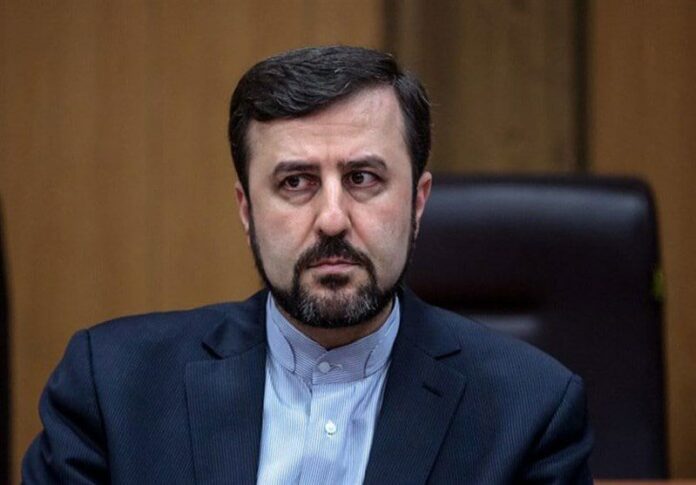
Iran’s “responsible” behavior keeping JCPOA alive: Bagheri

Ali Bagheri Kani made the comment in a tweet following his meeting with Austria’s new Foreign Minister Michael Linhart on Friday.

“In a friendly meeting with the new Austrian foreign minister, I stressed Iran’s seriousness and goodwill in the talks,” said Bagheri Kani in his tweet.

“False propaganda campaigns outside the negotiating room will not dent the negotiators’ determination to reach a deal that would safeguard the Iranian nation’s rights and interests,” he added.

In their meeting, the two sides discussed bilateral and international issues as well as the Vienna negotiations.

The Austrian government, which hosts the talks, would like this diplomatic trend to reach a final result as a positive development in the country’s record of hosting landmark and historic international talks.

Reports coming out of the Vienna talks on Friday suggest the negotiating teams had a better assessment of the discussions than their previous meetings.

In a report, IRNA said Tehran’s proposals have been explained to the other sides and ambiguities are being cleared.

Meanwhile, Russian representative to the meeting Mikhail Olyanov said at the first meeting of the second round of talks that important ambiguities in the talks have been resolved and the negotiations are moving forward.

Reports also indicate the European troika have returned to Vienna with a more realistic approach after examining Tehran’s proposals.

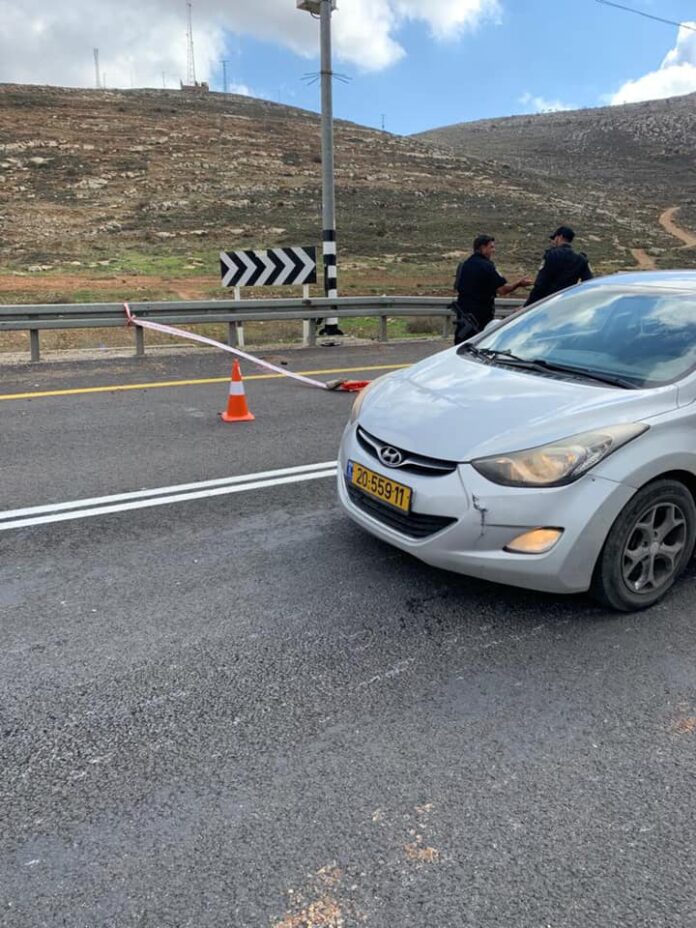
Israeli forces kill Palestinian youth in WB

Jamil Abu Ayyash, 31, sustained a serious injury in the head after being hit with live ammunition by Israeli occupation soldiers in the village. He was rushed to a hospital for urgent treatment, but was announced dead of his wounds about an hour later.

On Saturday, Ahmad Jibril, the head of the Emergency and Ambulance Department at the Palestinian Red Crescent Society (PRCS), stated that Israeli occupation forces opened fire towards the villagers who protested the pillage of their land to construct a new colonial settlement atop Jabal Sbeih (Sbeih Mountain) near the village.

The residents of Beita and the surrounding villages have been holding weekly Friday rallies to protest the construction of the new colonial settlement of Givat Eviatar atop Jabal Sabih as well as the seizure of lands belonging to the villagers of Beita, Huwarra, and Za‘tara to inaugurate a new settler-only bypass road.

Israeli forces have used fatal violence to disperse the rallies, killing nine Palestinians from the village and injuring over 600 others in about six months.

In addition to Mount Sabih, Israeli occupation forces have erected another colonial settlement outpost atop Mount Al-Arma, north of Beita, a few months ago, as both mounts enjoy a strategic location as they overlook the Jordan Valley, a fertile strip of land running west along the Jordan River which  makes up approximately 30% of the West Bank.

Seizing the two hilltops represents a panoptical defensive tool as they would grant the Israeli occupation with a panoramic view over the Jordan Valley and the whole district of Nablus. This is why the Israeli occupation authorities have assigned them a place in its settlement expansion project.

The construction of the two colonial outposts atop Mount Sabih, south of Beita, and Mount Al-Arma, north of the town, besides to a bypass road to the west is an Israeli measure to push Palestinian villages and towns into crowded enclaves, ghettos, surrounded by walls, settlements and military installations, and disrupt their geographic contiguity with other parts of the West Bank.

The number of settlers living in Jewish-only colonial settlements across occupied East Jerusalem and the West Bank in violation of international law has jumped to over 700,000 and colonial settlement expansion has tripled since the signing of Oslo Accords in 1993.

Israel’s nation-state law, passed in July 2018, enshrines Jewish supremacy, and states that building and strengthening the colonial settlements is a “national interest.”

Iran Parliament speaker says Turkey trip “positive, effective”

Upon return home from his trip, Mohammad Bagher Qalibaf elaborated on the achievements of his stay in Turkey and participation in the 16th conference of the Parliamentary Union of the OIC Member States (PUIC).

“During this trip, which came at the invitation of the Turkish parliament speaker, multilateral meetings were held with other participants in; I also held a meeting with the Turkish parliament speaker,” said Qalibaf.

“The agenda of the conference focused on the Afghanistan crisis as well as the condition and fate of Afghan migrants,” he added.

“Looking into issues and topics related to Palestine was among other topics of discussion in the conference,” said the Iranian parliament chief.

“In addition to these meetings, I also met with the Turkish president (Recep Tayyip Erdogan) where mutual trade and political cooperation and activities were discussed,” he noted.

He said Erdogan will visit Tehran in the near future and measures will be adopted with regards to a document on agreements between the two countries.

“We hope this document will be finalized and signed, so that it will further promote economic issues between the two sides,” he said.

Qalibaf added he also sat down with Turkish economic players operating in Iran.

The Inter-Parliamentary Union of the Organization of Islamic Cooperation (OIC) began a two-day meeting in Istanbul on Thursday with the issues of Palestine, immigration and Afghanistan topping its agenda.

Iranian parliament speaker: Palestine Muslim World top priority

He made the comment during a speech at the 16th Conference of Parliamentary Union of the Islamic Cooperation Council’s member states in Istanbul on Friday.

He said the axis of resistance had humiliated the Zionist regime, adding that the continuation of this trend will lead to the destruction of the Israeli regime.

Ghalibaf described unity among Muslim nations as the remedy to their ills.

He said in contrast to unifying moves, the enemies of the Islamic culture, including the Zionist regime and the arrogant government of the US, have focused on differences among Muslims over peripheral issues and have tried to stoke the divisions in order to expand their influence in the Islamic world.

Ghalibaf also spoke of the situation in Afghanistan. He said Afghanistan is also an important issue for the Muslim world.

Ghalibaf blamed the dire conditions in the country on the 20-year occupation by the US and its allies, urging Muslim nations to adopt a collective approach and make an effort to send humanitarian aid to the Afghan people.

Ghalibaf also warned of the threat the Daesh terror group poses to Afghanistan. He said Daesh is bent on igniting ethno-sectarian strife in the war-ravaged country.

Ghalibaf expressed hope that this meeting will be able to play an key role in strengthening unity and solidarity among Muslim nations with the aim of liberating Palestine from the Israeli occupation and also taking an effective step to assuage the hardships of the Afghan people.

The Inter-Parliamentary Union of the Organization of Islamic Cooperation (OIC) began a two-day meeting in Istanbul on Thursday with the issues of Palestine, immigration and Afghanistan topping its agenda.

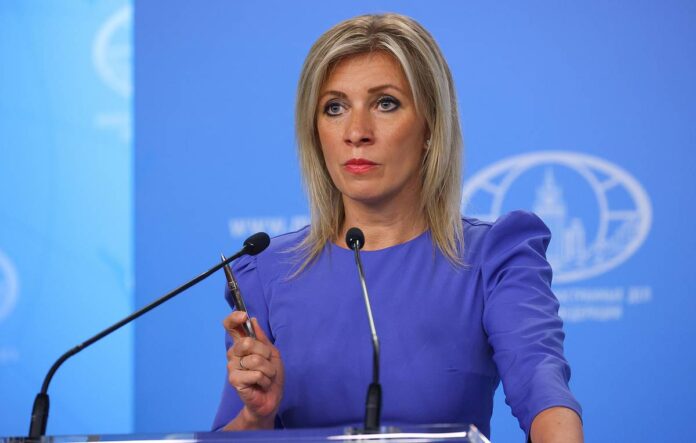
Russia: All Negotiating teams interested in preserving JCPOA

Sergei Ryabkov however described this round of talks aimed at reviving the JCPOA as complicated.
He noted however that the complexity of the task does not justify inaction.
He said this time around, the talks will take time as they are more complex than the previous six rounds of negotiations.
Ryabkov added that all parties to the talks must act in concert to resolve problems.
The Russian diplomat said, “We will try to pave the way for the continuation of talks”. Ryabkov described the Vienna talks as positive, saying multilateral efforts have started to revive the JCPOA.

Iran denounces ‘politicization of sport’ by US and UK

A man walks past the logos of the Beijing 2022 Olympic and Paralympic Games in a park in Beijing, China, December 8, 2021. REUTERS/Thomas Peter

“Whether it’s ‘diplomatic boycott’ of #Beijing22, or depriving Iranian teams from accessing financial resources, everyone should denounce politicization of sport,” Spokesman of Iranian Foreign Ministry Saeed Khatibzadeh wrote in a post on his Twitter account on Thursday.

He added, “Looking forward to participation in the event, we express solidarity with China that is targeted by smear campaign.”

The diplomat’s expression of support for the major international sport event came days after China reacted strongly to reports that US President Joe Biden is contemplating “a diplomatic boycott” of the event, describing the scheme as “a naked political provocation.”

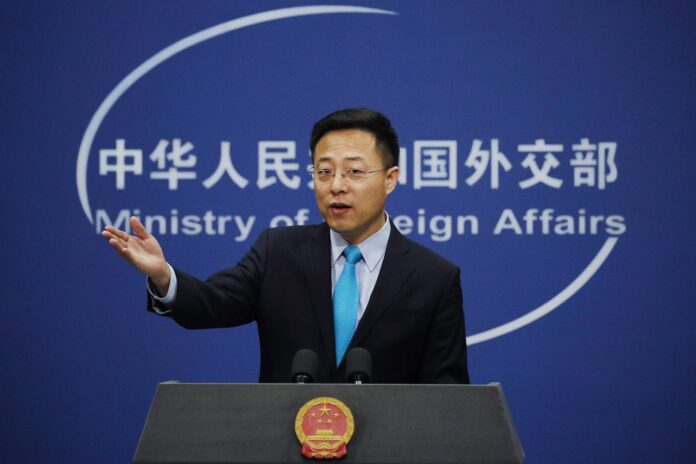
“The Winter Olympics is not a stage for political show and political manipulation,” China’s Foreign Ministry Spokesman Zhao Lijian told a daily news briefing on Monday.

He said a diplomatic boycott would be “a serious stain on the spirit of the Olympic Charter” as well as “a naked political provocation, and a serious offense to the 1.4 billion Chinese people.”

After the formal announcement of the US boycott by White House Press Secretary Jen Psaki later on Monday, the spokesperson threatened on Tuesday to take “resolute countermeasures” against the move and warned about its “grave consequences.”

“Out of ideological bias and based on lies and rumors, the US is trying to disrupt the Beijing Winter Olympics. This will only expose its sinister intention and further erode its moral authority and credibility,” Zhao emphasized.

In announcing Washington’s decision, Psaki stated the Biden administration would not contribute to the “fanfare” of the Olympics.

US diplomat: Saudis need our weapons in Yemen war

Maintainers from the 18th Aircraft Maintenance Squadron and pilots assigned to the 44th and 67th Fighter Squadrons conduct a mass aircraft generation exercise Aug. 22 and 23, at Kadena Air Base, Japan. Maintainers loaded AIM-9 sidewinder missiles, AIM-120 advanced medium-range air-to-air missiles, flares, and M-61A1 cannon rounds onto F-15 Eagles, before the aircraft taxied and were dispersed around the flight line. Kadena participates in a variety of routine training exercises throughout the year to maintain a consistent high standard of readiness and expertise. F-15s assigned to Kadena Air Base taxied on the flight line during a training exercise Aug. 23 while loaded with live ammunition. This training was not in response to or in anticipation of any regional concerns. While no planes took off from the flightline, this routine exercise helped ensure Kadena’s ability to provide air superiority in the defense of Japan and promoting peace and stability throughout the Indo-Asia-Pacific region. (U.S. Air Force photo by Senior Airman Peter Reft/Released)

Brett McGurk, the US National Security Council’s coordinator for the Middle East and North Africa, told The Gulf States Institute in Washington the President Joe Biden’s administration is committed to helping Riyadh defend its territory.

He noted there are “many issues in the bilateral relationship with Saudi Arabia, but we are fundamentally committed to the territorial defence of Saudi Arabia, no questions asked”.

“Helping our partners defend themselves is an axiomatic principle across the region,” McGurk stated, pointing to the recent vote in the Senate that prevented a block on an arms sale to Riyadh.

“The Saudis need [these weapons] because the Houthis, with Iranian backing, are launching dozens of drones and missiles from Yemen into Saudi Arabia,” he stressed.

The Saudis are currently defeating “nine of 10 of these threats”, he claimed, adding, “Of course, we want to get that up to 10 of 10.”

The US State Department has recently approved its first major arms sale to Riyadh under Biden with the sale of air-to-air missiles valued at $650 million, according to the Pentagon.

Saudi Arabia and its allies launched a war against the Arab world’s most impoverished nation in March 2015. The war has been seeking to restore power in Yemen to Riyadh’s favorite officials.

The death toll of the war, now in its seventh year, will reach an estimated 377,000 by the end of 2021, according to a recent report from the UN’s Development Programme.

The fighting has seen some 80 percent of the population, or 24 million people, relying on aid and assistance, including 14.3 million who are in acute need.

As to Syria, McGurk said the US has no intention of withdrawing its small number of troops in the country.

“We are not there for oil, we are not there for regime change,” he stated, explaining that the mission is focused on countering terrorism.

Asked about the US position on Syrian President Bashar Al Assad, McGurk noted the US has accepted the current reality that he is staying in power.

“I think we have to recognise the reality of the staying power of Al Assad and that does not mean, however, we would engage with him,” he added.

The US official announced the Biden administration is looking to prevent the creation of failed states and power vacuums in the region.

He pointed to mistakes in the past 20 years made “not just by the United States, but by other actors in the region, in which the hope was that vacuums might be filled by moderate actors, and in fact, we see vacuums filled by Iranian back networks and extremists of Daesh”.

Syria has been gripped by foreign-backed militancy since March 2011. However, Syrian government forces, backed by Iran and Russia, have managed to win back control of almost all regions from terrorists. The US and its allies invaded Syria in 2014 under the pretext of fighting the Daesh terror group. Washington has long been training militants, collaborating with anti-Damascus militants, and stealing Syria’s oil, ignoring repeated calls by Damascus to end its occupation of the country.

McGurk has also claimed advances in Iran’s nuclear programme are reaching a “crisis point” as negotiators return to Vienna to continue nuclear deal talks. He saw the Vienna talks as more urgent than ever.

The Iranian nuclear programme is “advancing so rapidly that it is approaching a crisis point, [by] the first part of next year, and I think that is lending some urgency to the negotiations”, McGurk said.

He stated the goal of President Biden’s administration is reining in Iran’s nuclear programme in a way that satisfies US, international and regional interests.

“The only way that Iran can come out of the sanctions is through returning — getting its nuclear programme back in a box,” McGurk added.

Last month, McGurk told the Manama Dialogue conference that if diplomacy fails with Iran, the US is “prepared to use other options”.

He drew a distinction between military action aimed at regime change in Iran and at halting its nuclear progress.

“When it came to military force for behaviour change, that is a pretty fuzzy objective for a military force. When it comes to military force to prevent a country from obtaining a nuclear weapon, that is a very achievable objective,” he noted.

Tehran denies seeking nuclear weapons, stressing it wants to master nuclear technology for peaceful purposes. Iranian officials have also stressed the country reserves the right to respond to any adventurism by the United States and Israel.

At the same time, McGurk welcomed dialogue with Iran as well as between major regional players, pointing to how the UAE had reached out to both Turkey and Iran and to Saudi Crown Prince Mohammed bin Salman’s recent visit to Qatar.

“That’s something, by the way, that we very much encourage. We do think, at this time in the world, coming out of the pandemic, coming out of all these crises, it is time to open dialogue across borders,” he stated.