Saturday, December 27, 2025
Home Blog Page 2232

No or 1 Covid death in 18 Iranian provinces

Meanwhile, 79 people died of the disease during the period.

Covid has claimed 130,603 lives in Iran since the pandemic started some two years ago.

A downward trend in Covid deaths and infections has held in the country in recent months thanks to a nationwide vaccination campaign that has seen nearly 110 million doses of vaccine administered to people. Most Iranian cities and towns are marked blue which means they face the lowest level of risk from Covid. There are only two red zones in Iran in terms of threat from the Coronavirus.

Iran says UK discussing how to repay £400m debt

Mohsen Baharvand added he was in live discussions with the Foreign Office over the issue, stating the issues were not insurmountable.

The UK Foreign Office has refused to discuss any details of the payment to Tehran, or what has been holding up the settling of the £400m debt dating back to an arms sale to Iran in the mid-1970s.

Families of the UK dual nationals detained in Iran have repeatedly noted they believe their family members are being held hostage until the debt is paid. The former foreign secretary Jeremy Hunt has also stated he does not think the UK dual nationals will be released until the debt is paid.

Baharvand, speaking to reporters in London on Friday, said Iran and the UK had been close to an agreement on the debt in the summer.

“We wanted to use that deal to ask our people that we are seeing a good sign from the UK and then that gives us a possibility to expedite our efforts to help the dual nationals and things like that. Then we had a deal. We signed it but two days after the signature of that deal the UK government said they could not implement it because of US sanctions,” he continued.

“We are trying. We should not be that pessimistic. We are working with our Foreign Office colleagues maybe to reach that deal. We are in the process of discussions. Last week there was a delegation from the UK in Iran and personally I was talking to the Foreign Office and I am hopeful we will reach an agreement,” he added.

Referring to reports that the money could be paid in the form of humanitarian aid, he said: “It’s not aid. Our money is here and we want our money. That is very simple. We want to receive our money. We are not insisting on interest. Otherwise it would be billions. We are talking to our UK colleagues as to which channel is the most probable to transfer that money to our accounts.”

Asked if the US could give a letter of comfort to the UK to guarantee that the payment would not be sanctioned, he stated: “The US are not doing that. They have to help the UK government to do that. It is not impossible.”

“Obstacles are not insurmountable, but we have to discuss, negotiate and find a way. We are now discussing through what channel that money be transferred. There is a negotiating process now,” he added.

He also stressed that the issue of the detainees’ release was a matter for the Iranian judiciary, and could not be mixed up with the wider issue of the Iran nuclear talks in Vienna.

The Foreign Office has been contacted for comment.

In a question and answer session at the thinktank Chatham House this week, the foreign secretary, Liz Truss, acknowledged that the UK owed the debt. She has met the families of two UK-Iranian dual national detainees, Nazanin Zaghari-Ratcliffe and Anoosheh Ashoori.

New shipment of Covid vaccine arrives in Iran

Mehrdad Jamal Arvanaghi said the shipments contain over a million doses including 218 thousand doses of AstraZeneca vaccine.
Iran has so far imported some 150, 002,708 doses of Covid vaccine. The imports have been credited with the fast vaccination campaign that saw tens millions of people inoculated in a matter of months.
The vaccination process helped contain the Covid. outbreak in Iran

Report: Iran has started positive interaction with IAEA

Nour News noted that new measures are afoot now to pave the way for the IAEA to pursue its work regarding Iran’s atomic program.

The news outlet maintained that this will complement Iran’s active diplomacy and neuter the recent spiteful actions against the Islamic Republic’s nuclear program.

It said Tehran’s close and positive interaction with the UN atomic agency has dispelled ambiguities that were created by the Zionist regime regarding the Iranian nuclear program.

Nour News also said, alongside interaction with the agency, Iran’s active diplomacy and consistent dialog with the European troika as well as China and Russia was conducive to foiling the Israeli regime’s scheme.

The news website added that the Zionists’ false claim that Iran had begun enrichment of uranium to 90 percent purity overshadowed the Vienna talks. It also said the false accusations about the 90% enrichment were aimed at putting pressure on the Iranian negotiating team.

US general says American troops to remain in Iraq

US Forces

he top US commander for the Middle East said Thursday that the United States will keep the current 2,500 troops in Iraq for the foreseeable future. An Iraqi security official had earlier announced the end of the US-led military presence in Iraq.

Gen. Frank McKenzie stated in an interview with The Associated Press at the Pentagon that despite the shift by US forces to a non-combat role in Iraq, they will still provide air support and other military aid for Iraq’s fight against the Islamic State.

Noting that Iranian-backed militias want all Western forces out of Iraq, he noted an ongoing uptick in violence may continue through December.

“They actually want all US forces to leave, and all US forces are not going to leave,” he continued, adding that as a result, “that may provoke a response as we get later into the end of the month.”

The Iraqi government earlier Thursday announced the conclusion of talks on ending the US combat mission against IS. US forces have been largely in an advisory role for some time, so the announced transition changes little. The announcement reflects a July decision by the Joe Biden administration to end the US combat mission in Iraq by Dec. 31.

“We’ve drawn down from bases we didn’t need, we’ve made it harder to get at us. But the Iraqis still want us to be there. They still want the presence, they still want the engagement,” said McKenzie.

“So as long as they want it, and we can mutually agree that’s the case — we’re going to be there,” he added.

He stated he believes Islamic State militants will continue to be a threat in Iraq and that the group will “keep recreating itself, perhaps under a different name.”

The key, he said, will be to ensure that IS is not able to coalesce with other elements around the globe and become increasingly strong and dangerous.

America invaded Iraq in 2003, and at the peak point had more than 170,000 troops battling insurgents in the country and later working to train and advise Iraqi forces. All US forces were withdrawn at the end of 2011, but just three years later, American troops were back to help Iraq beat back the Islamic State group, which had swept across the border from Syria to gain control of a large swath of the country.

The US presence in Iraq has long been a flash point for Tehran, but tensions spiked after a January 2020 US drone strike near the Baghdad airport killed a top Iranian general. In retaliation, Iran launched a barrage of missiles at al-Asad airbase, where US troops were stationed. More than 100 service members suffered traumatic brain injuries in the blasts.

“Iran still pursues a vision of ejecting us,” he said, adding, “And they see the principal battleground for that as being in Iraq. And I believe they are under the view that they can increase friction in Iraq to where we will leave.”

McKenzie, who has headed US Central Command for nearly three years and traveled extensively throughout the region, painted a picture that reflected the recent upheaval in Afghanistan, where US troops departed at the end of August.

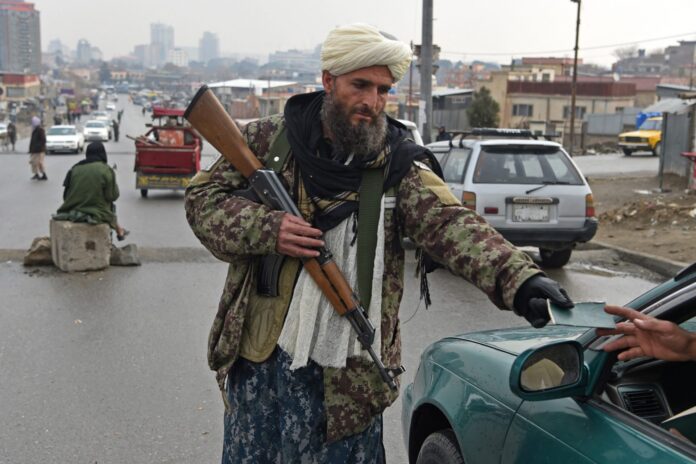
On Afghanistan, McKenzie said the al-Qaida extremist group has grown slightly since US forces left and that the ruling Taliban leaders are divided about their 2020 pledge to break ties with the group. He added the departure of the US military and intelligence assets from the country has made it “very hard, not impossible” to ensure that neither al-Qaida nor the Islamic State group’s Afghanistan affiliate can pose a threat to the United States.

McKenzie said that as NATO begins to expand its presence in Iraq as planned, the US will refine its force there. And the total US force presence will depend on future agreements with Iraq’s government.

The US troops in Syria, currently numbering about 900, will continue to advise and assist Syrian rebel forces, McKenzie stated.

He added it’s not clear how much longer that will be necessary but said, “I think we are measurably closer than we were a couple of years ago. I still think we have a ways to go.”

More broadly, McKenzie noted that the US troop presence across the Middle East has significantly dropped since last year, when it peaked amid tensions with Iran, at as much as 80,000.

The US has identified China and Russia as the top national security threats, labeling China as America’s “pacing challenge,” and has looked to focus more effort and assets in the Pacific.

In its recent review of the positioning of US forces around the world, the Pentagon said little about removing or repositioning troops in the Middle East. McKenzie and other top military leaders have long worried that the US military is concentrated in too few locations in the Middle East and must disperse more to increase security.

“We think it is important to work with our partners in the region to present a more complex targeting problem to Iran,” he continued, adding that US will look at other bases and opportunities to move troops around to achieve that goal.

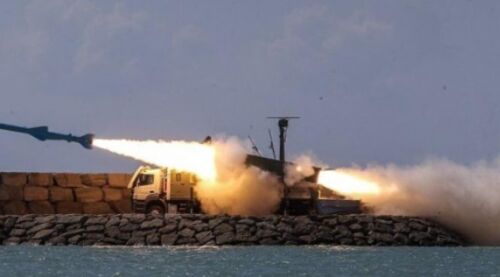
McKenzie stated he is particularly concerned by Iran’s development of ballistic and cruise missiles as well as armed drones.

“And so those things are very concerning to me because they continue to develop them,” he noted, adding, “And they show no signs of abating in their research in this field, and their fielding of new and increasingly lethal and capable weapons.”

Russia diplomat says US-Israeli drills destabilizing factor

“I don’t find it surprising. We certainly believe that the United States and Israel, who are close allies and share a similar view on Iran’s policy and role in the region, can carry out such activities. In our opinion, they should understand that it is a certain destabilizing factor,” he said, when asked to comment on related reports.

“Any training activity in such a volatile region carries the risk that it will entail complications. It’s not what the situation requires at the moment. It would be important to exercise as much restraint as possible and focus on facilitating the negotiation process (on restoring the Iran nuclear deal), which resumed in Vienna in late November after a long break,” the senior diplomat pointed out.

US Department of Defense Spokesperson John Kirby told reporters on Wednesday that the US and Israeli defense chiefs would discuss “Iran’s nuclear provocations” at their talks in Washington on Thursday. Reuters reported later, citing a senior US official, that they were also expected “to discuss possible military exercises that would prepare for a worst-case scenario to destroy Iran’s nuclear facilities should diplomacy fail and if their nations’ leaders request it”.

UAE official: Emirates opposed to additional sanctions on Iran

Anvar Qarqash said the UAE pursues the negotiations aimed at reviving the Iran nuclear deal.
He expressed hope that the Vienna talks will succeed. Qarqash also urged Iran to show more flexibility, adding that only diplomacy is the way forward.
The UAE leader’s diplomatic advisor however noted that time is running out and claimed there are genuine concerns over Iran’s nuclear program.
Qarqash also said Iran can do more regarding regional issues, particularly ceasefire in Yemen. He added that there are reports Iran has put little pressure on the Houthis to accept a truce.
Qarqash said the political landscape has changed in the region and Iran should know the new situation there and play a more constructive role whether in Yemen or Iraq or Lebanon.
The Emirati official noted that the UAE is not interested in a new conflict in the Middle East, it is in the sheikhdom’s interest to avoid it.

Five arrested in Iran for destabilizing foreign exchange market

The ministry has also blocked several hudred bank accounts of illegal foreign currency traders across Iran.
In a statement, the Intelligence Ministry warned against any illegal activity in the foreign exchange market, assuring the Iranian people that it would not allow trade and abuse in the informal trading environment and would spare no effort to keep the foreign exchange market calm.
Over the past week, the Iranian currency fell sharply against the dollar in the open market with officials saying the open market rates are unreal.

Biden’s Iran envoy: Restoring nuclear deal still possible

The Biden administration is prioritising diplomacy in its relationship with Tehran, the US special envoy for Iran Robert Malley has told Al Jazeera on Thursday, stressing that reviving the Iran nuclear deal remains in the “mutual interest” of both countries.

“We’re fully committed to a mutual return to compliance with the JCPOA,” Malley said, adding, “We think there’s still time to do it if Iran comes back and says they’re prepared to roll up their sleeves and do it, too.”

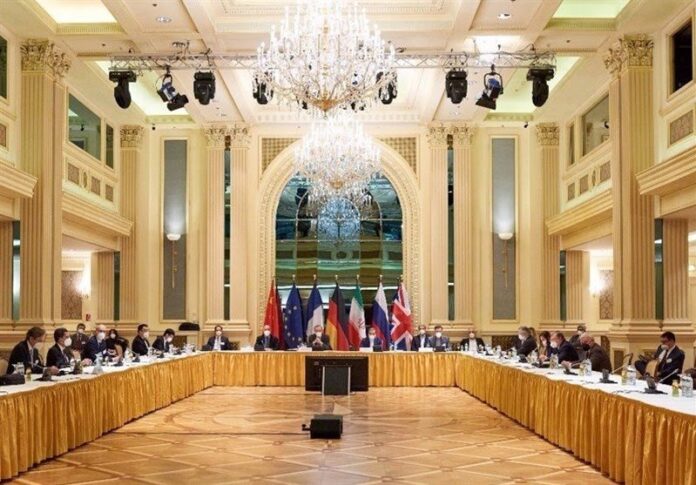
His comments came as nuclear talks resumed in Vienna on Thursday, with a United States delegation headed by Malley expected to join the negotiations on the weekend.

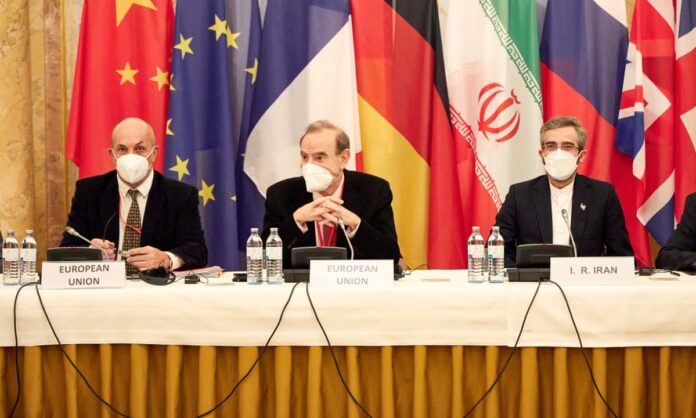
Malley and his team have not been participating directly in the discussions, but engaging the Iranians through intermediaries from countries that remain parties to the 2015 deal – the UK, Russia, China, France and Germany.

Malley also reiterated Washington’s call for direct negotiations with Tehran, telling Al Jazeera that US negotiators are prepared to meet Iranian diplomats “at any time and any place”.

Iran previously rejected that offer, saying the US – which withdrew from the deal in 2018 under then-President Donald Trump – is no longer part of the agreement. Tehran is holding talks with the signatories of the deal as part of the JCPOA commission.

“We’re prepared to meet with them face-to-face,” Malley continued, adding, “We think it’s far superior to indirect negotiations. And we’re dealing with something this complex, with so much mistrust, with so much potential for misunderstanding.”

The US and European officials had voiced disappointment with Iran’s posture after the resumption of the Vienna talks last week, accusing Tehran of not showing seriousness in the effort to restore the pact.

The ongoing seventh round of negotiations was the first under Iranian President Ebrahim Raisi.

Asked about the prospect of a military confrontation with Tehran amid growing tension between Israel and Iran, Malley stated, “We are privileging the path of diplomacy. We think it’s the best way. It’s best for us. We suspect it’s best for Iran, but Iran will have to decide.”

Trump unilaterally withdrew from the JCPOA in 2018 and started a “maximum pressure” campaign of sanctions against the Iranian economy that his successor Biden has continued to enforce.

Tehran has been escalating its programme in response to Washington’s withdrawal from the pact.

Iranian officials say they want all the sanctions lifted immediately, while the US administration is calling for a mutual return to compliance that would see an end to nuclear-related sanctions and a scaling back of Iran’s nuclear programme.

On Tuesday, the Biden administration announced new sanctions against two Iranian security agencies and several officials linked to them, citing human rights abuses.

That prompted a rebuke from Iranian Foreign Ministry spokesman Saeed Khatibzadeh, who said on Twitter that “doubling down on sanctions won’t create leverage—and is anything but seriousness & goodwill”.

White House spokeswoman Jen Psaki noted on Thursday that the only way for Iran to get sanctions relief is to return to nuclear compliance with the JCPOA, however.

That was reiterated by Malley, who stated the US remained “prepared to get back into the deal as soon as possible – as soon as Iran is”.

“Then we would lift all of the sanctions that are inconsistent with the JCPOA. But in the meantime, we can’t stand by and not be prepared for a world in which Iran may be choosing to delay the programme, [and] try to build more leverage,” he continued.

“We obviously have to respond. And so, that’s what we’re doing. We’re preparing ourselves for that outcome,” he added.

Iran’s football legend rescues convict from hanging

Reports say Daei, along with Karaj City’s prosecutor and the director of Karaj’s prisons, went to visit the family of the victim on Thursday and convinced them to spare the life of the convict.
The family of the victim had been refusing requests for forgiveness for 16 years, but Daei won their consent.
The former footballer is a pioneer in charitable work and has helped people affected by disasters such as flooding and quakes.
Daei was a key player for the Iranian national football team for several years. He played for Perspolis FC in Iran and also for German soccer clubs like Bayern Munich during his football career.
Daei was the world’s top international goal scorer with 109 goals until his record was broken by Cristiano Ronaldo. He is regarded as one of the best Asian footballers of all time.