Saturday, December 27, 2025
Home Blog Page 2216

‘Saudi cities hit by Yemeni missile, drone strikes’

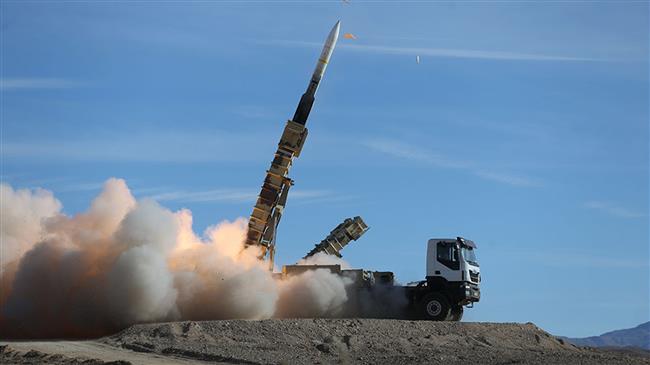
Al-Alam television network cited Saudi sources as saying “several explosions rang out in the [southwestern] Saudi cities of Jizan and Khamis Mushait”.

Yemen’s own War Media outlet confirmed targeting several Saudi cities with missiles and drones.

The counterstrikes shut down Jizan’s airport, where many incoming aircraft were barred from landing.

News sources affiliated to the Saudi kingdom, meanwhile, alleged that the country’s air defense had intercepted and destroyed two drones that were flying towards the Abha International Airport in Asir, another southwestern Saudi Arabian region.

Enjoying complete arms, logistical, and political support from the United States, Saudi Arabia and a number of its allies started a war against Yemen in March 2015.

The military campaign has been seeking to restore power to Yemen’s former Washington and Riyadh-aligned officials.

The war has stopped way short of the goal, while killing tens of thousands of Yemenis in the process and pushing the entire Yemen close to the brink of outright famine.

The Yemeni armed forces and their allies have vowed, though, not to lay down their arms until Yemen’s complete liberation from the Saudi-led aggression.

Iran: No direct talks recently held with US

Khatibzadeh, speaking at his weekly presser on Monday, added some messages about the topics of the negotiations (and no more than that) were received from the EU’s Deputy Foreign Policy Chief Enrique Mora in writing and orally from the beginning of the talks and the responses were given at the same time.

Regarding reports about the Iranian ambassador to Yemen leaving the country, Khatibzadeh said Mr. Irlou needed immediate medical care and this issue was for several days on Iran’s agenda, adding that several countries in the region including Iraq helped Iran.

He said the ties between Iran and Yemen National Salvation Government are stronger and closer than ever before, adding that Iran remains committed to give both political and economic assistance to it.

Khatibzadeh noted that the only way of helping with the Yemen issue is to heed the demands and will of the Yemeni people.

Khatibzadeh also rejected US claim that Iran has harbored al-Qaeda leaders, saying such baseless allegations are made by Washington every now and then.

On Iran’s agreement with the International Atomic Energy Agency over the installation of cameras at the Karaj site near Tehran, Khatibzadeh said there will be no problems in the Iran-IAEA ties as long as issues remain within the technical confines.

Elsewhere, Khatibzadeh touched on a claim that Iran is enriching uranium to 90 percent purity.

He said Tehran, as a member of the IAEA, has always lived up to the Nuclear Non-proliferation Treaty and the agency is fully aware of Iran’s activities. He added that the level of enrichment will be decided by Iran’s needs.

Also on the Vienna talks, Khatibzadeh noted the US has not presented any tangible text to the P4+1 while Iran has put forth two documents that embody previous texts. He added that if the other sides come to the negotiating table with tangible proposals, an agreement will be reached in the shortest possible time.

Khatibzadeh also spoke of Iran’s relations with Saudi Arabia. He said Tehran is awaiting a response from Riyadh and progress in talks with the Saudis is contingent upon the other side’s seriousness.

Khatibzadeh added that Iran invites Saudi Arabia to resort to diplomacy and non-interference in the internal affairs of other nations.
On Britain’s debt to Iran, the Foreign Ministry spokesman said London has not yet taken any practical measure in this regard and made paying the debt conditional on other issues.

Putin: Russia foils 32 terror attacks in 2021

“Over recent years, there are significant progress and positive dynamics in this challenging, extremely responsible area [the fight against terrorism]. There has been a dramatic decline in the terrorist threat,” the Russian head of state said in a video statement on the occasion of the Security Agency Worker Day.

According to Putin, “Over the past eleven years, more than 200 terrorist attacks have been foiled, the number of terrorist crimes has decreased dramatically over this period.”

“The vast majority of such crimes are nipped in the bud,” he added.

“Over an 11 month-period this year, 61 crimes have been prevented, including 32 terrorist attacks, thanks to your effectiveness and coordination. This is a good result, but there are still many issues,” the Russian president addressed the employees of the security agencies.

Putin added that the fight against terrorism should be tough and uncompromising.

“At present, there is a challenging international situation. The nature and scale of current challenges and risks make higher demands on the work of special services. First of all, a tough and uncompromising fight against terrorism is your main, priority task,” the president stressed.

Putin said that the fight against terrorism should be tough and uncompromising.

“At present, there is a challenging international situation. The nature and scale of current challenges and risks make higher demands on the work of special services,” he noted.

“First of all, a tough and uncompromising fight against terrorism is your main, priority task,” Putin added.

Iran warning: Crushing response to Israel attack on nuclear sites

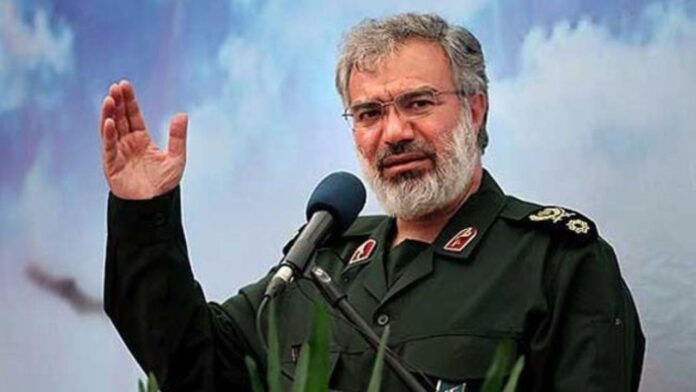
According to Nour News website that is close to Iran’s Supreme National Security Council, Commander of the Khatam-al Anbiya Central Headquarters Major General Gholam Ali Rashid issued the warning on Monday during military drills by the Islamic Revolution Guards Corps.
“Any threat against the nuclear and military sites of the Islamic Republic by the Zionist regime is impossible without a green light by the US and its support,” he said.
“If such threats are materialized, the armed forces of the Islamic Republic of Iran will not hesitate and will launch crushing attacks on all centers, bases, the routes and the airspace used for passage in the attacks as well as the source of the attacks based on previously exercised operational plans.”
His comments come after the Israeli minister of military affairs said in September that the regime is preparing a strike on Iran. American and other Israeli officials have also made similar suggestions over the past months even as Iran engaged in the Vienna talks on revival of the 2015 nuclear deal.

Iran Calligraphy Heritage in Malek Musuem

The 16th session of the United Nations’ Intergovernmental Committee for the Safeguarding of Intangible Cultural Heritage in Paris has recognized the “National Program to Safeguard Traditional Art of Calligraphy in Iran” as an intangible heritage.

This program aims to expand informal and formal public training in calligraphy, publish books and pamphlets, hold art exhibitions, and develop academic curricula while promoting appropriate use of the calligraphic tradition in line with modern living conditions.

The Iranian calligraphic art is well-represented in Malek National Library and Museum in the capital Tehran, where a special hall has been allocated to calligraphy since a few years ago.

‘Europeans should pay cost of Iran hosting illegal migrants’

The ministry’s deputy for security Hossein Zolfaghari said after a meeting with the UN High Commissioner for Refugee Filippo Grandi in Tehran that Iran can no longer pay the heavy cost of hosting such migrants.
“We have 2,000 kilometers of borders only with Afghanistan and Iran also pays a hefty price to prevent narcotics, terrorist groups, etc., from entering its territory. But the Europeans has paid no compensation for all of these even as they are the beneficiaries here.” he said.
“The truth is that assistance [by the international community] accounts for less than 5 percent of the costs incurred on Iran,” he added.
“As long as there is instability in the region, there will be no reduction in the number of refugees. The result of the wrong policies of some western countries is the refugees whose number rise every single day,” he said.
The official added that some 4 million Afghans including refugees and illegal migrants live in Iran. He said 700,000 have only entered Iran this year, most of them after the recent developments in Afghanistan.
Zolfaghari said Iran has tried to prevent unnecessary illegal migration. But he said hundreds of such people are now residing in refugee camps set up in eastern Iran and are refusing to return to their country.
He said Iran even did not discriminate between its own and other nationals when administering coronavirus vaccines, adding that these people have received 3.4 million doses of COVID jabs.

UN: Afghanistan economy in “free fall”

Afghanistan’s economy is in “free fall”, the UN Emergency Relief Coordinator announced, warning that if decisive and compassionate action is not taken immediately, it may “pull the entire population with it”.

Speaking virtually to the 17th Extraordinary Session of the Organization of Islamic Cooperation (OIC) Council of Foreign Ministers in Islamabad, Pakistan, Under-Secretary-General for Humanitarian Affairs Martin Griffiths painted a grim picture of 23 million people facing hunger; malnourished children overflowing in health facilities; 70 per cent of teachers working without salaries; and millions of students – Afghanistan’s future – out of school.

Moreover, this is occurring as the value of the Afghani currency plummets, a lack of confidence in the financial sector destroys trade and the space for borrowing and investment dramatically constricts.

“The need for liquidity and stabilization of the banking system is now urgent – not only to save the lives of the Afghan people but also to enable humanitarian organizations to respond”, he added.

The UN official welcomed the decision by the World Bank’s Afghanistan Reconstruction Trust Fund to transfer $280 million by the end of December to the UN Children’s Fund (UNICEF) and the World Food Programme (WFP).

“This step should be followed by reprogramming of the whole fund to support the Afghan people this winter”, he continued, saying, “Families simply do not have the cash for everyday transactions, while prices for key commodities continue to rise”.

The cost of wheat and fuel are up by around 40 per cent and food now accounts for more than 80 per cent of the average household expenditure.

And as international development support has frozen up, basic social services that all Afghans depend on are collapsing.

Griffiths cautioned that by the middle of next year, universal poverty – reaching 97 per cent of the population – could be “the next grim milestone”.

“Within a year, 30 per cent of Afghanistan’s gross domestic product could be lost altogether, while male unemployment may double to 29 per cent,” he spelled out.

The OIC met to express their willingness to help avert disaster and contribute to the humanitarian endeavour.

“The United Nations stands firmly with you, and in solidarity with the people of Afghanistan,” stated the Relief Coordinator, explaining that next year, the UN would seek its largest-ever funding appeal of $4.5 billion “to help the most vulnerable in Afghanistan”.

The plan is a stopgap measure for over 21 million people who need lifesaving assistance and must be funded as “a matter of priority”.

“The crisis is huge. Our humanitarian response is effective and continues to scale up, thanks to generous donor support and your sustained engagement,” he noted.

Afghanistan will not get through the winter on emergency aid alone, the UN official flagged, stressing the need for “flexible donor funding” that can be used to ensure salaries for public sector workers and support to basic services, such as health, education, electricity and livelihood.

And going forward, continued constructive engagement with the de facto authorities is imperative to “clarify what we expect of each other”.

“The consequences of inaction on these three fronts are clear: Afghanistan will collapse, people will run out of hope, and the region – and indeed the world – will see destabilization increase,” he underscored.

Noting that the meeting was being held at “a moment of exceptional gravity for the people of Afghanistan”, the senior UN official pointed out that “we have the advantage of being forewarned of the fate that awaits them if we do not act”. Acknowledging that the meeting has provided both a chance and an opportunity to do so, he warned that “if we do not act with urgency and with a collective will, then there will be a terrible reckoning”.

“We cannot fail to do what we know is right, and what we know is possible,” concluded the Emergency Coordinator.

Pakistani Army chief: Terrorism Tehran and Islamabad’s common enemy

General Bajwa was speaking during a meeting with Iran’s Foreign Minister Hossein Amir Abdollahian in Islamabad on Sunday.

Pakistan’s Chief of Army Staff also stressed the need for closer cooperation with Iran on Afghanistan, especially in the fight against terrorism.

He described terrorism as a common enemy of Iran and Pakistan.

Iran’s Foreign Minister Hossein Amir Abdollahian also referred to cooperation between Tehran and Islamabad in border areas and called for mutual cooperation to further increase border security.

The Iranian foreign minister said fighting terrorism is an area of cooperation between Iran and Pakistan.

Amir Abdollahian is in Islamabad to attend the meeting of the foreign ministers of the Organization of Islamic Cooperation.

Iranian FM: Iran ready to help form inclusive govt. in Afghanistan

Amir Abdollahian made the comment in a meeting with Pakistani Prime Minister Imran Khan in Islamabad on Sunday.

He said the only pathway to final peace and stability in Afghanistan is the formation of a broad-based government representing all ethnic groups.

He also stressed the need for cooperation between all Islamic countries to swiftly deliver humanitarian aid to Afghanistan.

Amir Abdollahian added that the Islamic Republic of Iran has supported the sending of humanitarian aid to the country.

He said Iran has also kept its borders open and is ready to cooperate with all countries to deliver aid to the Afghan people.

The prime minister of Pakistan also supported the formation of an inclusive government in Afghanistan and stressed the need to help the Afghan people in the current situation given that winter has arrived and Afghans lack fuel and food. Imran Khan also spoke about ties between Iran and Pakistan. He referred to different areas of cooperation, underlining the need for cross-border cooperation, especially cross-border trade, and the formation of border markets.

Amir Abdollahian is in Islamabad to attend an emergency meeting of the foreign ministers of Islamic countries.

Iranian FM: Afghanistan crisis can be solved through inclusive government

Amir Abdollahian was speaking the at the ministerial meeting of the Organization of Islamic Cooperation in Islamabad on Sunday.

He added that security and stability in Afghanistan is possible only through the formation of an inclusive and effective government representing all ethnic and religious groups.

Amir Abdollahian warned that a delay in the formation of a broad-based government will give the enemies of the Afghan people the opportunity to create chaos, poverty and famine in Afghanistan through the spread of terrorism.

The Iranian foreign minister also spoke of Iran’s efforts to help Afghan refugees. He said the Islamic Republic has hosted millions of displaced Afghans for the past 40 years, adding that more than 5,000 Afghans enter Iran daily.

Amir Abdollahian urged the international community to give assistance to Iran for the Afghan refugees.

He further slammed the US move to freeze Afghanistan’s assets, saying Washington must unlock them to help meet the humanitarian needs of Afghans.

The foreign minister said since the beginning of the recent developments in Afghanistan, Iran has tried to facilitate human and commercial traffic by opening its borders and has provided extensive assistance to the government and people of Afghanistan in the fight against Covid 19, including vaccination of Afghan nationals residing in the Islamic Republic of Iran.

Amir Abdollahian also touched on the Palestinian issue. He said the return of all Palestinians to their ancestral land and the formation of a Palestinian state throughout their historic homeland with al-Quds as its capital should be emphasized by the OIC.

He added that the experience of the so-called peace process with the fake Israeli regime and the normalization of relations with Tel Aviv show that the Palestinian issue can only be resolved with a complete and real end to the illegal occupation of this Islamic land.