Monday, January 12, 2026
Home Blog Page 2162

‘US has no control over consequences of General Soleimani’s assassination’

The ministry made the announcement in a tweet, adding the assassination of the anti-terrorism icon also showed Washington could commit a crime without having any control over consequences thereof.

It also said the absence of rationality in the US actions is the main cause of its decline.

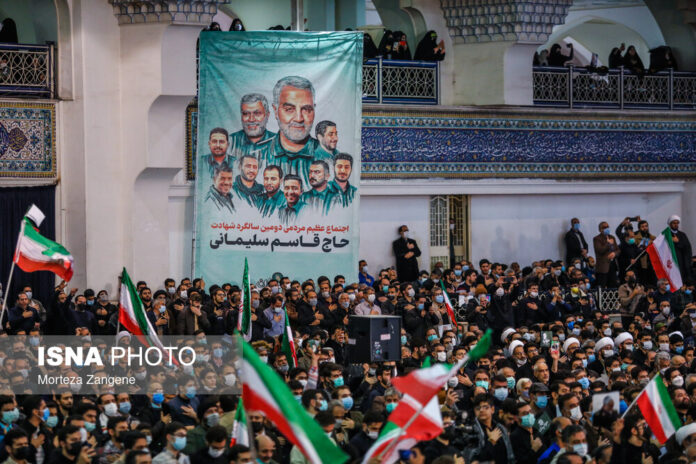
Monday, January 3rd, was the second anniversary of the assassination of General Soleimani in a US drone strike. Iran has called for the trial of the perpetrators of the attack, vowing to also exact revenge on them.

The drone strike, which also killed General Soleimani’s companion Abu Mahdi Muhandis and a few others, was carried out by direct order of former US president Donald Trump.
Trump’s secretary of state Mike Pompeo was instrumental in pushing for the assassination of General Soleimani as well.

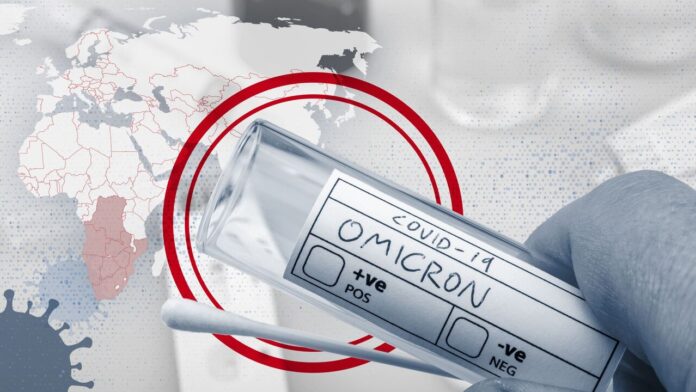
Iran makes Omicron testing kit

The President of Kashan University of Medical Sciences in central Iran said the kit has been produced in the Molecular Biomarkers Laboratory of Kashan University of Medical Sciences by Majid Lotfinia, a member of the scientific board of this university.

Seyyed Alireza Moraveji added that the kit can detect different strains of the coronavirus including alpha, beta, gamma, epsilon, eta, zeta, utah, delta, delta plus and omicron.

The president of Kashan University of Medical Sciences further referred to the assistance of this university in the production of the diagnostic kit. He said the testing kit has been produced with the help of Kashan University of Medical Sciences, especially Dr. Hamidreza Banafsheh, the university’s Vice Chancellor for Research and Technology.

Moraveji said that a year of research was spent to make this kit. He added that 20 foreign companies have also produced the test kit and the product of Kashan University of Medical Sciences is quite similar to those made outside Iran, though with one fifth of the cost of foreign ones.

Ulyanov: U.S. sanctions obstacle to progress in Vienna talks

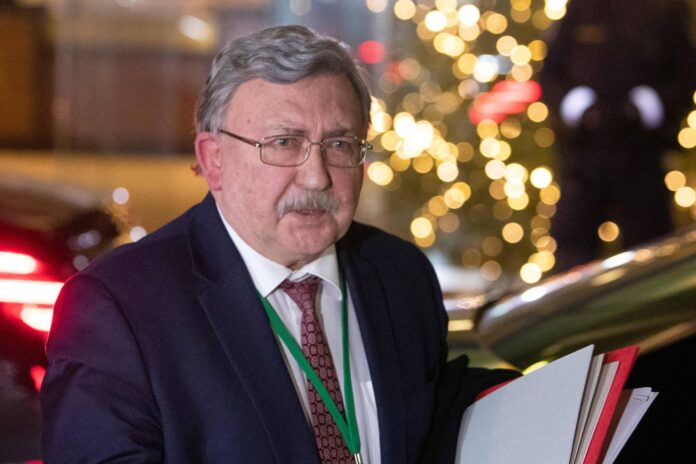
Russia's Governor to the International Atomic Energy Agency (IAEA) Mikhail Ulyanov is pictured at the Coburg Palais, venue of the Joint Comprehensive Plan of Action (JCPOA) after the meeting aimed at reviving the Iran nuclear deal, in Vienna on December 27, 2021. (Photo by ALEX HALADA / AFP)

Mikhail Ulyanov described the American sanctions as an obstacle to progress in the ongoing negotiations in the Austrian capital.

“In the Vienna talks, we must focus on the issue of removing U.S. sanctions,” the senior Russian diplomat said on Tuesday.

He also said he is surprised by the skepticism of the Western parties about the seriousness of Iran in the negotiations.

Also on Tuesday, the Russian chief negotiator sat down for talks with head of the Iranian delegation in Vienna Ali Bagheri Kani as part of intensive negotiations that resumed on Monday after a New Year break.

Ulyanov said in a tweet that the two sides discussed outstanding issues that have to be addressed during the talks in Vienna.

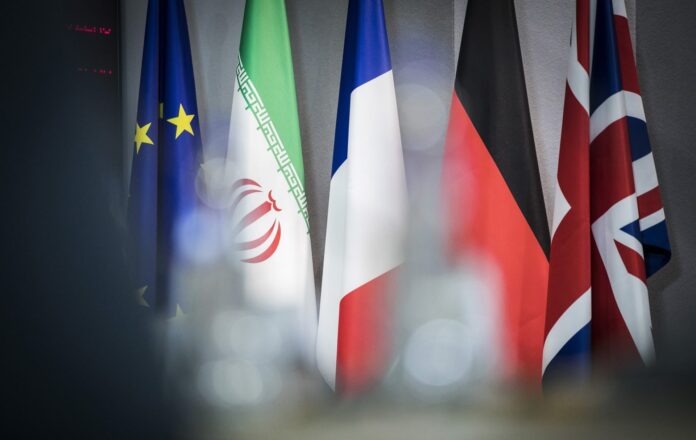
Senior diplomats from Iran, Russia, China, Britain, France and Germany are engaged in the eighth round of talks to try to find a way to remove sanctions against Iran and allow the United States to return to the 2015 agreement.

Iran insists that the talks must lead to the removal of all American sanctions that were imposed against Iran following America’s unilateral withdrawal from the Joint Comprehensive Plan of Action in May 2018.

Tehran has also demanded credible guarantees that the U.S. will not abandon the deal again.

The Islamic Republic has refused to sit down for direct talks with American diplomats who are also present in the Austrian capital. Iran and the U.S. convey their messages via the P4+1 group.

Iranian sources: No deadline exists for reaching deal in Vienna

Vienna talks

Arabic Sky News, quoting the Iranian sources, said the claim by the US and European sources is false.

Earlier, Politico cited officials close to the negotiations as saying the window for reaching a deal could close by the end of January or early February.

Meanwhile, British, French and German diplomats said talks to revive the 2015 Iran deal must be completed within weeks not months.

Iran has repeatedly said it will not give in to pressure over the Vienna talks nor will it accept a deal that does not fulfill its interests.

Iranian Foreign Ministry Spokesman Saeed Khatibzadeh also said recently Iran will not accept any artificial deadline and it hopes the US and other Western countries will not believe their deadlines and will think of a good deal.

Khatibzadeh also said the window for reaching a deal will not remain open forever. He noted that Iran will never carry the burden of keeping the nuclear deal alive alone.

China: US Assassination of Gen. Soleimani war crime

“The assassination of Qasem Soleimani is another example of how the US has wantonly undermined the norms governing international relations based on the UN Charter,” Foreign Ministry Spokesman Wang Wenbin stated at a press conference on Tuesday.

“It is also one of the war crimes the US has committed with abuse of force,” he added.

“The US could go as far as to perform ‘targeted killing’ of a sovereign state’s military leader through terrorist means in violation of international law, and also to kill hundreds of thousands of innocent civilians around the world,” the spokesperson noted.

“All these illegal and brutal acts in the eyes of people around the world have been hidden by the US behind the facade of ‘the rules-based international order’ as it claims,” he continued.

The top Iranian anti-terror commander was assassinated outside Baghdad airport in a drone strike, ordered by then-US President Donald Trump, back in January 2020. Other officials, including Iraqi Popular Mobilization Forces leader Abu Mahdi al-Muhandis, were killed in the attack as well.

“The US repeats the mantra of ‘upholding the rules-based international order’, but facts have proved time and again that what the US really cares about is no more than the rules that meet its needs and serve its interests,” the Chinese official said.

“What it is committed to is nothing but an order that maintains the US’ hegemony and enables it to override the international community,” he continued, adding, “But such rules and order that violate international law will not be accepted by the people in Iran, the Middle East and the rest of the world.”

On Monday, Iranian President Ebrahim Raisi stated top US officials behind the assassination of Ge. Soleimani must be put on trial. Raisi named Trump and ex-Secretary of State Mike Pompeo as the main culprits behind the assassination, warning that failure to put them on trial for the attack will lead to Muslims’ revenge.

While Trump claimed the assassination was commissioned to prevent presumably imminent attacks on US personnel across the region, allegedly plotted by Soleimani, no evidence to back up such an assessment has ever emerged.

The assassination prompted an uproar in Iraq, with the country’s parliament adopting a non-binding resolution demanding the withdrawal of foreign troops from the country shortly after the killing.

Iran itself responded with a volley of ballistic missiles that hit two US-occupied bases in Iraq. While no US soldiers were reported killed in the strikes, some 110 received traumatic brain injuries.

Iran Judiciary seeks prosecution of 127 over General Soleimani assassination

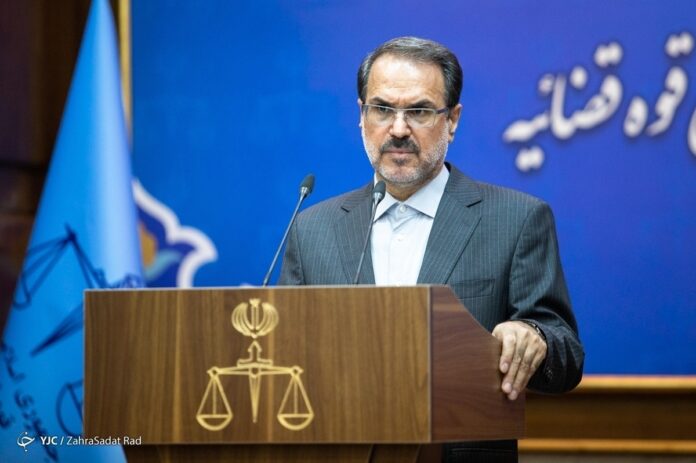
A day after the second anniversary of the assassination, the Iranian Judiciary’s Spokesman Zabihollah Khodayian said the Islamic Republic has sent 11 letters of request to 9 countries asking for measures against the culprits.

He also said Iran and Iraq have signed a memorandum of understanding in this regard adding that two neighbors have formed working groups which will soon hold their third joint meeting.

Khodayian expressed hope that with cooperation from the vice president for legal affairs and the department for international affairs of the Judiciary, the assassination of General Soleimani will be followed up on more seriously internationally.

General Soleimani and Iraqi commander Abu Mahdi al-Muhandis, who played a key role in the fight against the Daesh terrorist group in Iraq and elsewhere in the region, were killed in January 2020 in a U.S. drone strike which was directly ordered by former U.S. president Donald Trump.

In response, Iran launched a missile attack on an Iraqi base hosting American troops, but also pledged to bring those involved in the assassination to justice.

ICRC renews alarm over Afghans’ dire situation

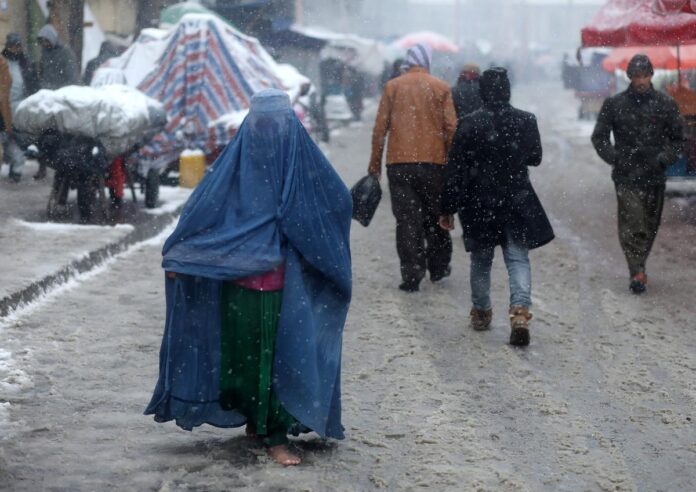
“Heavy snow in Kabul today. Temperature might drop to -9 this week,” Fillion tweeted, stating that he was hearing “stories of people burning furniture, shoes or tyres to keep warm”.

“Due to economic collapse, thousands of Afghans are left with nothing to cope with increasing challenges,” he hastened to add.

The United Nations estimates that nearly 23 million Afghans – about 55 percent of the population – face extreme levels of hunger, with nearly nine million at risk of famine as winter sets in.

In winter, most of the provinces in Afghanistan become harshly cold, with temperatures dropping below freezing levels.

This year, as the South Asian country grapples with its worst humanitarian crisis, fueled by freezing of assets by the US and its international allies, millions face difficult living conditions.

UN agencies had earlier warned that millions of Afghans could run out of food before the onset of harsh winter and around one million children were at the risk of starvation and death.

Taliban, which came to power after a sweeping takeover in August, has been trying to rebuild the country’s battered economy, but the US sanctions have severely impeded the efforts.

Almost five months after the US-led coalition hastily abandoned the country, millions of Afghans are on the brink of starvation, with no food and no money.

Parallels are already being drawn between Afghanistan and Yemen, the two strategically located, mineral-rich countries plundered and destroyed by foreign aggressors.

Soon after the Taliban laid siege to Kabul mid-August, US and its international partners raced to cut off Afghanistan’s access to international aid and froze roughly $10 billion in assets belonging to the country’s central bank.

The move triggered the rapid collapse of public finances and precipitated the current crisis. European Union also then followed the suit, stopping development assistance to the country, followed by the International Monetary Fund and World Bank.

A looming humanitarian catastrophe, economic crisis, and unemployment are the main challenges people in Afghanistan are facing today.

“After the political change, all aid agencies cut off their aid to Afghanistan, there were a lot of problems in the country,” Ahmad Wali Haqmal, spokesperson for Taliban’s Finance Ministry, was quoted as saying.

Taliban’s acting Minister of Economy, Din Mohammad Hanif, said earlier this week that the activity of the Asian Development Bank–which was providing salaries for a number of employees–have been halted and most of the half-finished projects from the previous government were suspended.

A top official of the UN World Food Program recently termed it the “worst humanitarian crisis on earth” while a senior executive of the UN Development Programme described it as the worst humanitarian disaster he has “ever seen”.

“US will be forced to flee region, thanks to General Soleimani”

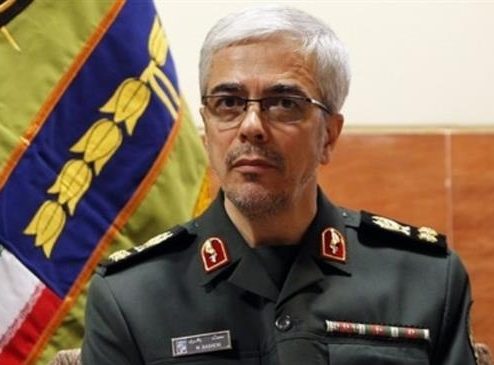
General Mohammad Hossein Baqeri

General Mohammad Bagheri added that the US will be forced to leave the region, and wherever there is a trace of General Soleimani, the foothold of Zionists and the US is shaky.

Bagheri also vowed to continue the path of General Soleimani to the end and to resist for the ideals of Imam Khomeini, founder of the Islamic Republic, and martyrs.

He also echoed Iran’s leader’s remarks about General Soleimani that Hajj Qassem and Abu Mahdi al-Muhandis, top Iraqi commander, should not be viewed as one person, and that they should be seen as a school and a way.

Bagheri further described General Soleimani as a seasoned diplomat who at the same time humiliated the enemy on the battlefield as an informed and brave commander.

General Soleimani and Abu Mahdi al-Muhandis were assassinated in a US drone attack outside Baghdad airport on January 3, 2020.

Iranian footballer Sayyadmanesh in IFFHS team of 2021

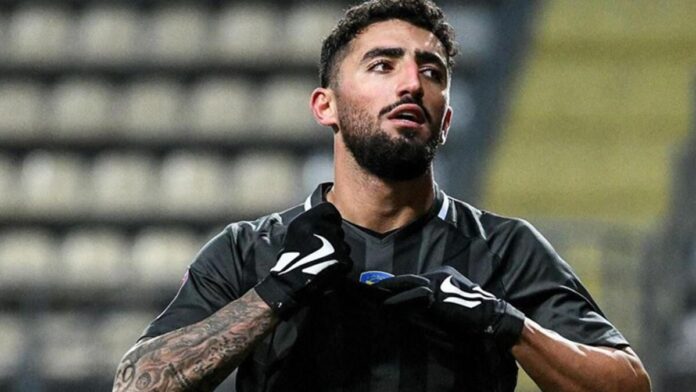
The Fenerbahce winger stole the show last year in Ukraine league. He joined Zorya Luhansk on loan in October 2020 and scored 12 goals in 35 matches for the team.

Japan has three players in the list. South Korea and Uzbekistan have two players each in the list.

IFFHS MEN’S YOUTH (U20) AFC TEAM OF THE YEAR 2021:

Goalkeeper: Abduvokhid NEMATOV (Uzbekistan/Nasaf Qarshi)
Right Back: Shumpei NARUSE (Japan/Nagoya Grampus)
Center Back: Ibrokhimkhalil YULDOSHEV (Uzbekistan/Pakhtakor/Nizhny Novgorod)
Center Back: Jassem GABER (Qatar/Al Arabi Doha)
Left Back: Thomas AQUILINA (Australia/Western Sydney)
Offensive Midfielder: LEE Kang-in (South Korea/Valencia/RCD Mallorca)
Center Midfielder: Daiki MATSUOKA (Japan/Sagan Tosu/Shimizu S-Pulse)
Midfielder: Takefusa KUBO (Japan/Getafe/RCD Mallorca)
Right Winger: JEONG Sang-bin (South Korea/Suwon Bluewings)
Forward: Allahyar SAYYADMANESH (Iran/Fenerbahce/Zorya Lugansk)
Forward: Mohammed MARAN (Saudi Arabia/Al Nassr/Al Tai Club)

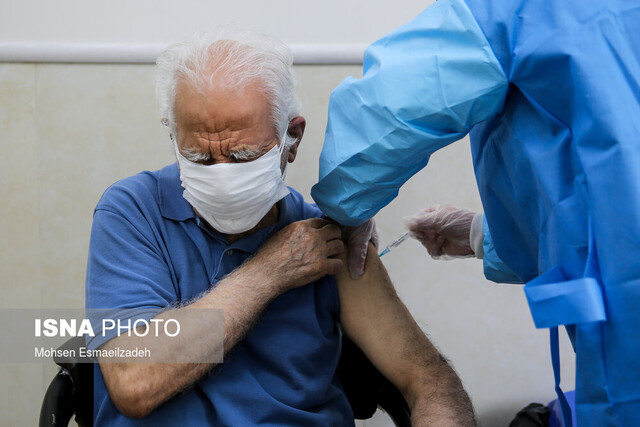
Iran Covid: Administered vaccines nearing 121 million

COVID-19 Vaccine in Iran

Health Ministry figures show that 120,971,244 doses have been injected to people in the country until Tuesday, January 4, 2022.

A downward trend in Covid deaths and infections has held over the past months thanks to the vaccination campaign that was rolled out in summer.

The Health Ministry on Tuesday reported 34 more deaths from Covid in Iran over the past 24 hours.
It also logged 2,471 new cases of Covid.

Iran has largely been intact by the new Coronavirus variant known as Omicron, which is highly contagious. But authorities say it’s highly likely that the strain will reach Iran soon, shooting up daily cases.