Saturday, April 25, 2026
Home Blog Page 210

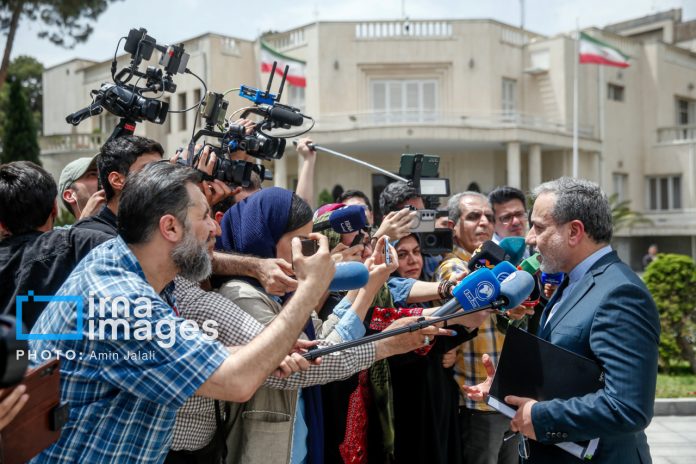
Iran says ready for negotiations with U.S. and Europe, rejects ‘deceptive’ rhetoric

Speaking after a cabinet meeting on Wednesday, Araghchi said Iran is awaiting an official announcement from Oman regarding the time and location of the fifth round of indirect talks with Washington.
He also noted that further discussions with European counterparts are planned, with deputy-level negotiations scheduled for Friday in Istanbul.

“We are very interested in reaching a regional understanding that can enhance security and mutual understanding between Iran and its neighbors – without the interference of foreign powers,” he said.

Araghchi criticized US President Donald Trump’s recent remarks, calling them “highly deceptive.”

He said Washington remains the primary cause of Iran’s economic hardships, citing decades of sanctions and military threats.

He dismissed Trump’s characterization of Iran as a regional threat, pointing instead to US support for Israel.

“The same countries speaking of regional prosperity ignore who really causes instability,” he said.

He emphasized that maximum pressure policies have already failed and warned that mischaracterizing Iran’s role in the region is “a deliberate distortion of reality.”

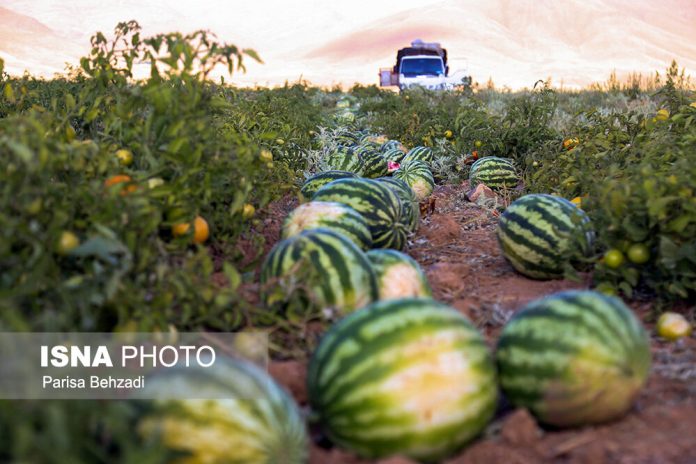
Iranian MP responds to Russian claims on watermelon safety: “A promotional stunt for Dagestan produce”

Peyman Falsafi, Deputy Chairman of the Iranian Parliament’s Agriculture Committee, said the claims – made by Russian MP Abdulkhakim Gadzhiyev – were baseless and politically motivated.

He argued that the statement served as propaganda against Iranian produce, intended to boost the profile of local Russian crops from the MP’s own constituency.

“Iran’s agricultural products, including fruits and vegetables, are regularly tested and monitored by the country’s Plant Protection Research Institute. These tests confirm that nitrate and pesticide residues remain within safe limits,” Falsafi said, citing routine scientific assessments.

He also questioned the credibility of the nitrate-detecting device used in the video shared by the Russian MP, calling for evidence-based dialogue instead of public theatrics.

Highlighting Russia’s strict import controls, Falsafi added that no agricultural products can enter the country without clearance from customs and health authorities. “If Iranian products made it to Russian markets, it means they passed all required health certifications,” he concluded.

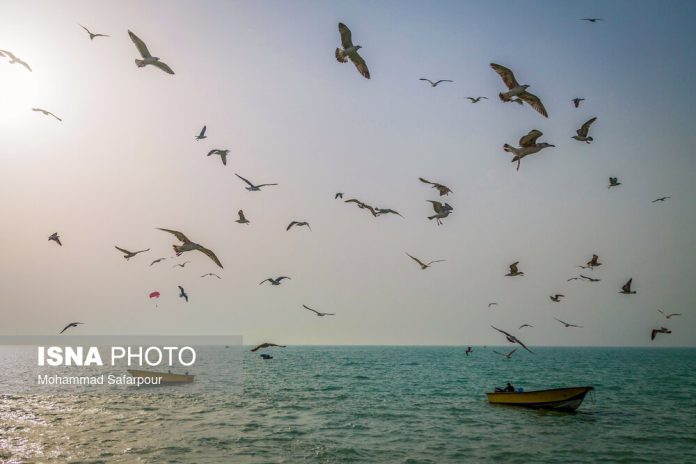
Iran to pursue legal action against Google over Persian Gulf naming dispute

Hossein Dalirian, the spokesman of the center, condemned the recent use of “fake and fabricated names” in place of “Persian Gulf” on some international platforms, including Google Maps.

He emphasized that the move has sparked strong public backlash in Iran and has even drawn criticism from some international figures, like US president Donald Trump.

Dalirian called the change a “deliberate distortion of a well-established historical and geographical fact,” stating that such actions violate international norms concerning standardized geographical names.

“The name ‘Persian Gulf’ has been used for thousands of years in historical documents, maps, and treaties,” he said, citing the recognition of the term by international bodies such as the United Nations Group of Experts on Geographical Names and UN resolution 715.

He stressed that Iran views the use of alternative names as a direct affront to its national identity and a breach of Article 19(3) of the International Covenant on Civil and Political Rights.

Dalirian added that Iran will soon hold a legal coordination meeting with top legal experts and governmental representatives to explore international avenues for legal recourse.

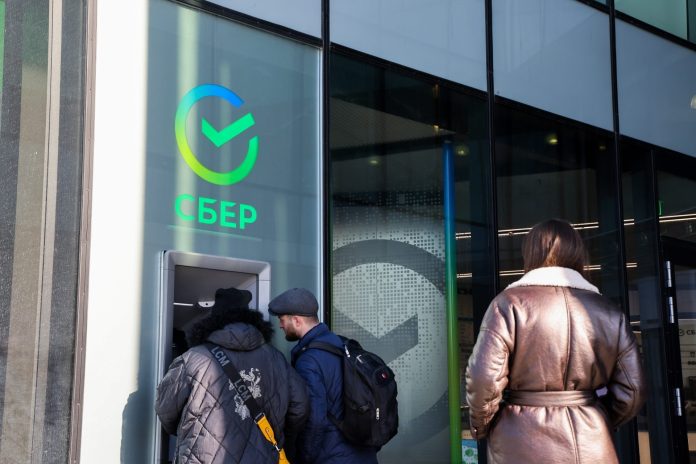
11 Russian banks now support Iranian bank cards in cross-border payment integration

Russian Bank Sber

Hamidreza Norouzi, Director of Payment Systems Oversight at the Central Bank of Iran, stated that the first phase of the Shetab-Mir card network integration was launched in September 2024.

This allowed Iranian citizens and tourists to withdraw cash and check balances at Russian ATMs using the “Kahroba” application. To date, over 2 million transactions worth more than 5 billion rubles have been processed through this system.

In a televised address, Norouzi also announced the launch of the second phase, enabling Russian “Mir” cardholders to make retail purchases in Iran using the “MirPay” app. Currently, over 163,000 point-of-sale terminals in Iran accept MirPay, with expansion underway in key tourist destinations.

He further noted that the third phase will soon be implemented, allowing Iranian cardholders to make retail and commercial purchases in Russia. These transactions will be settled using the “Mir-Business” exchange rate, updated daily, facilitating cross-border financial settlements between the two banking networks.

The integration aims to boost tourism, trade, and financial independence amid ongoing Western sanctions on both nations.

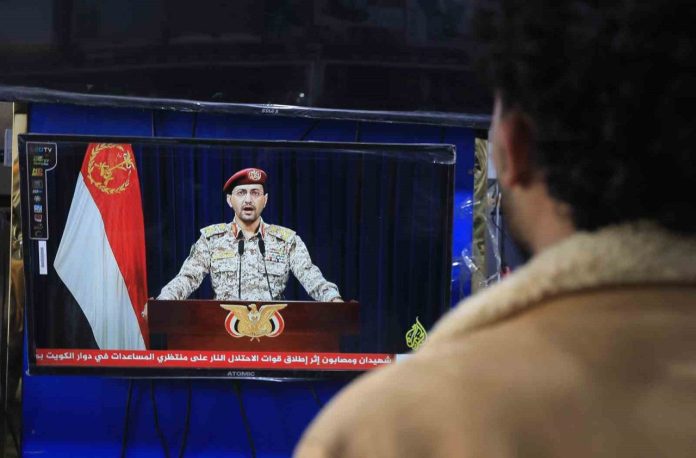
US spent $1bn bombing Yemen’s Hothis but failed to gain air superiority: NYT

Yemen Houthi

Citing Washington officials, a report on Monday stated that the Yemeni group shot down numerous American MQ Reaper drones and fired at naval ships in the Red Sea right up until the moment a truce was agreed.

Trump announced last week that in exchange for the US ceasing air strikes on Yemen, the Houthis had agreed to stop attacking vessels – though attacks on Israeli ships and territory would continue.

The Houthis had targeted what they said were Israel-linked ships in the Red Sea since November 2023, in solidarity with Palestinians under Israeli onslaught in Gaza.

In mid-March, the US president launched Operation Rough Rider, a bombing campaign on Yemen which he had hoped would force the Houthis into submission.

But what had emerged after one month of the campaign was that the Houthis had shot down several American MQ-Reaper drones and continued to fire at vessels in the Red Sea – including an American aircraft carrier.

A Houthi field commander told Middle East Eye last week that the group shot down seven MQ Reaper drones in recent weeks. He also added that two fighter jets were downed by the Yemeni group.

According to the New York Times, the two $67m F/A-18 Super Hornet jets had in fact accidentally fallen off the US’s flagship aircraft carriers into the sea. Two pilots and a flight deck crew member were wounded in the incidents.

The report stated that Houthi air defences nearly struck American F16 and F-35 fighter jets, which could have resulted in US casualties.

It added that a month into the offensive, Washington had already burned through $1bn of weapons.

The offensive was originally planned to last up to ten months, and also aimed to target Houthi leaders, in a similar strategy to Israel’s war against Hezbollah in Lebanon, the Times reported.

The US military carried out over 1,100 strikes, which it said killed hundreds of Houthi fighters.

But Yemenis told MEE earlier this month that many of the raids targeted areas with no Houthi presence, killing scores of civilians.

One strike on a migrant detention centre in Saada, northwest of the country, killed 68 African migrants and wounded dozens more.

The ceasefire came about following talks between Steve Witkoff, Washington’s Middle East envoy, and Omani officials, the Times reported.

US Central Command was subsequently sent an order on 5 May to “pause” offensive operations.

Officials stated that Trump was ready to move on from the campaign and there was a concern that drawn-out fighting could drain resources away from the Asia-Pacific region.

The offensive used so many precision munitions that there were concerns it may have implications in the event of the US needing to fend off a Chinese invasion attempt in Taiwan.

The Houthi field commander on the al-Jawf front line in northern Yemen, who identified himself only as Ali, said: “When Trump began the aerial campaign, he said he would annihilate us.”

But after over a month, he said that Trump had “learned his lesson”.

“Fighting against Yemen is not an easy adventure,” he continued, adding, “Such a loss was not envisioned in Washington.”

Trump himself appeared to acknowledge and commend the resistance put up by the Houthis.

“We hit them very hard and they had a great ability to withstand punishment,” the president told reporters last week.

“You could say there was a lot of bravery there.”

The Houthis have since continued attacking Israel, with a ballistic missile – which was intercepted by Israeli air defences – triggering air raid sirens in Tel Aviv on Friday.

“Our attacks on Israel will persist no matter what, and Gaza will remain a vital question for Yemen,” the field commander stated.

The year and a half long Red Sea campaign, which involved over 250 attacks on military and commercial ships, resulted in the biggest disruption to global trade since the Covid-19 pandemic.

Fearing bombardment, vessels travelling from Europe to Asia avoided the traditional Suez Canal route leading to the Red Sea and the Gulf of Aden.

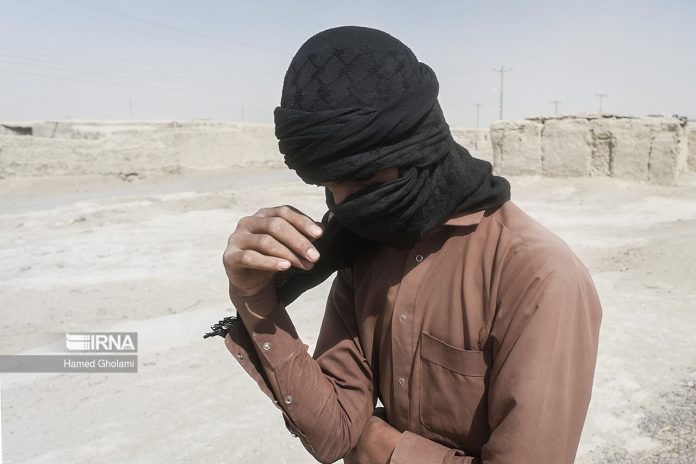
Dust storm triggers orange alert across 13 Iranian provinces; schools and offices shut down

Dust Storm

The Iranian Meteorological Organization reported a sharp decline in horizontal visibility and a rise in pollution levels, prompting emergency measures in several provinces.

In East Azarbaijan, all schools, universities, government offices, and banks were closed on Wednesday following a decision by the province’s emergency pollution committee. Provincial capital Tabriz recorded an air quality index (AQI) of 450, categorized as “hazardous” for all groups.

In West Azarbaijan, schools in six cities, including Urmia and Mahabad, were shut down. Authorities warned vulnerable groups –children, the elderly, pregnant women, and those with respiratory or heart conditions – to avoid outdoor exposure and use N95 masks if necessary.

Kordestan, Zanjan, and Ilam provinces also suspended in-person schooling, with Ilam delaying office hours by two hours due to heavy dust influx.
Emergency services remain on high alert as visibility dropped to as low as 1,500 meters in some areas.

Officials continue to advise the public to stay indoors, keep windows closed, use air filters, avoid outdoor exercise, and hydratre to counter the health risks associated with the dust storm.

Iranian official slams Trump’s Persian Gulf claims: “The Name Is Not Up for Debate”

Ali Akbar Salehi

Ali Akbar Salehi responded on the social platform X, stating, “The name ‘Persian Gulf’ was not given by permission, and it will not be taken away by delusion. It has been, is, and will always be the Persian Gulf.”

Salehi’s response came after US media reported that Trump had considered using the term “Arabian Gulf” during his trip to the region to appeal to Arab allies.

According to CNN and the Associated Press, Trump had planned to push for the alternative naming, but changed his mind after he faced direct opposition from Iranian officials.

US outlets acknowledged that Iranian resistance played a key role in forcing Trump to abandon the effort. Despite this, Trump claimed in his speech in Saudi Arabia on Tuesday that he had prevented Iran from using the name “Persian Gulf.”

The remarks touched a raw never in Iran over the historic body of water’s name, with Iranian officials and public continuing to assert their position on international platforms.

Rights groups urge UK to end all arms sales to Israel as court case begins

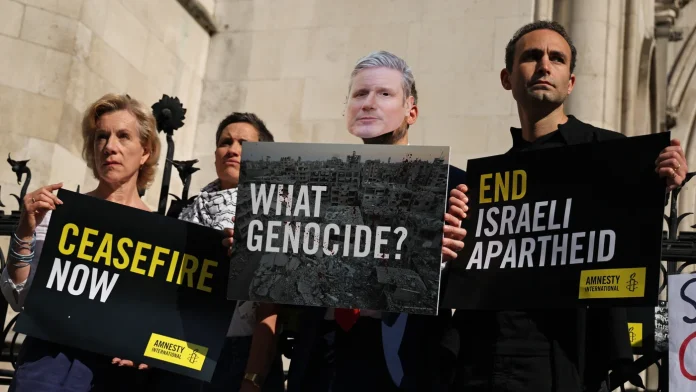
Holding Palestinian flags and signs calling on the government to “stop arming Israel”, dozens of campaigners joined the lawyers leading the case to demand an end to all UK arms exports to Israel as its war in Gaza enters its 20th month with more than 52,000 Palestinians killed.

Groups present at the protest included Palestinian rights group Al-Haq, which bought forward the current case with the support of the Global Action Legal Network (GLAN), Amnesty International, Human Rights Watch and Oxfam.

Zarah Sultana, a suspended Labour MP, joined the protest alongside independent MPs Jeremy Corbyn, the former Labour leader, and Imran Hussain.

Sultana told Middle East Eye that British arms exports to Israel made the UK “complicit in genocide” in Gaza.

“Every F-35, which is described as the most lethal fighter by its own manufacturer, is dropping 2,000-pound bombs on people in Gaza and decimating whole neighbourhoods and universities,” Sultana added.

“And with 15 percent of every F-35 made here in the UK, it makes us complicit in the live-streamed genocide unfolding in Gaza.”

Clemence Lagourdat, Oxfam’s humanitarian coordinator in Gaza, also joined the protest and submitted evidence put forward by Al-Haq.

Recently returned from the territory, Lagourdat said Israel was “systematically destroying” Gaza’s infrastructure.

“Bombing has severely affected the entire Gaza Strip. For the court case, we’ve submitted evidence showing that Israeli air strikes have destroyed over 70 percent of Gaza’s water infrastructure,” she told MEE.

“In addition, Israel has systematically blocked the entry of equipment needed for repairs, making it extremely difficult for people to access safe drinking water.”

“When you sell the weapons destroying an entire territory, you’ve made a clear choice: to endanger an entire population,” she continued.

The legal challenge brought by the rights group began just over a week after the 7 October 2023 Hamas-led attacks and Israel’s subsequent ground invasion of Gaza.

Nineteen months later, Israeli forces have killed 52,908 Palestinians in Gaza, as the four-day judicial review opened on Tuesday.

The case has had dramatic developments.

In February 2024, a judge dismissed the case, stating there was “no realistic prospect” of proving that the government’s arms export decisions were legally flawed.

However, a successful appeal revived the case. Even as court proceedings moved slowly, documents submitted to the court revealed key details about UK arms exports to Israel that the government had not made public.

In September 2024, just hours before Al-Haq and GLAN were set to request a full suspension of UK arms exports to Israel, the newly elected Labour government announced a partial suspension affecting around 30 licences.

This shifted the focus of the case to UK-made components for F-35 fighter jets. Though direct exports of these parts – critical to Israel’s attacks on both Gaza and Lebanon – were suspended in September, the components have continued to be sent indirectly via a global pool supplying spare parts to Israel.

The F-35 programme has stated that it does not track or trace these parts.

The UK government has argued that blocking shipments to the global pool would jeopardise the entire F-35 programme and pose a threat to global peace and security.

But rights groups say the carve-out for F-35 parts undermines international norms and breaches both domestic and international law.

Last week, a report based on Israeli Tax Authority data suggested the UK may still be exporting F-35 parts directly to Israel – sparking questions among arms control experts that are expected to be raised in court.

Trump secures $600 billion Saudi investment pledge on Persian Gulf tour

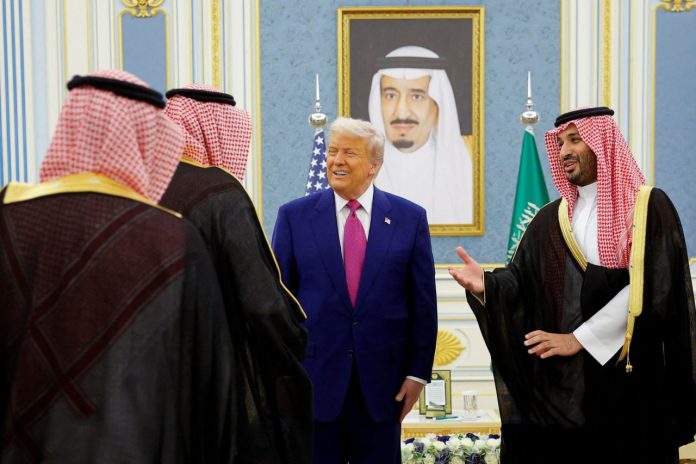
Trump punched the air as he emerged from Air Force One to be greeted by Prince Mohammed bin Salman, who later signed an agreement with the president in Riyadh on energy, defence, mining and other areas.

The U.S. agreed to sell Saudi Arabia an arms package worth nearly $142 billion, according to a White House fact sheet that called it “the largest defense cooperation agreement” Washington has ever done.

The agreement covers deals with more than a dozen U.S. defense companies in areas including air and missile defense, air force and space advancement, maritime security and communications, the fact sheet said.

“Today we hope for investment opportunities worth $600 billion, including deals worth $300 billion that were signed during this forum,” the Saudi crown prince stated in a speech during a U.S.-Saudi Investment Forum session held in Riyadh on the occasion of Trump’s visit.

“We will work in the coming months on the second phase to complete deals and raise it to $1 trillion,” he added.

Saudi Arabia is one of the largest customers for U.S. arms.

Reuters reported in April the U.S. was poised to offer the kingdom an arms package worth well over $100 billion.

“I really believe we like each other a lot,” Trump said during a meeting with the crown prince, Saudi Arabia’s de facto ruler.

The U.S. and Saudi Arabia had discussed Riyadh’s potential purchase of Lockheed F-35 jets, two sources briefed on discussions told Reuters, referring to a military aircraft that the kingdom is long thought to have been interested in.

It was not immediately clear whether those aircraft were covered in the deal announced on Tuesday.

Trump, who was accompanied by U.S. business leaders including billionaire Elon Musk, will go on from Riyadh to Qatar on Wednesday and the United Arab Emirates on Thursday.

He has not scheduled a stop in Israel, a decision that has raised questions about where the close ally stands in Washington’s priorities, and the focus of the trip is on investment rather than security matters in the Middle East.

“While energy remains a cornerstone of our relationship, the investments and business opportunities in the kingdom have expanded and multiplied many, many times over,” Saudi Investment Minister Khalid al-Falih told the investment forum.

“As a result … when Saudis and Americans join forces very good things happen, more often than not great things happen when those joint ventures happen,” he said before Trump’s arrival.

Trump told the investment forum that relations with Saudi Arabia will be even stronger.

He was shown speaking with Riyadh’s sovereign wealth fund governor Yaser al-Rumayyan, Aramco CEO Amin Nasser, and Falih as he toured a hall that showed off models for the kingdom’s flashy, multi-billion-dollar development projects.

Trump called the Saudi crown prince a friend and said they have a good relationship, according to a pool report from the Wall Street Journal, adding that Saudi investment would help create jobs in the U.S.

Trump says he will ease sanctions on Damascus, to meet Syria’s new ruler on Wednesday

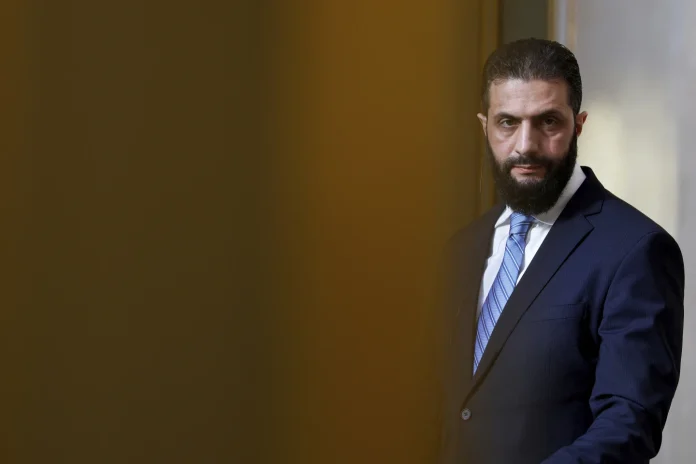
Trump was set to meet Wednesday in Saudi Arabia with Syrian President Ahmad al-Sharaa, the onetime insurgent who last year led the overthrow of former leader Bashar Assad.

He stated the effort at rapprochement came at the urging of Crown Prince Mohammed bin Salman, the Saudi de facto ruler, and Turkish President Recep Tayyip Erdogan.

“There is a new government that will hopefully succeed,” Trump said of Syria, adding, “I say good luck, Syria. Show us something special.”

The developments were a major boost for the Syrian president who at one point was imprisoned in Iraq for his role in the insurgency following the 2003 U.S.-led invasion of the Arab country. Al-Sharaa was named president of Syria in January, a month after a stunning offensive by insurgent groups led by al-Sharaa’s Hayat Tahrir al-Sham or HTS that stormed Damascus ending the 54-year rule of the Assad family.

The U.S. has been weighing how to handle al-Sharaa since he took power in December. Persian Gulf leaders, have rallied behind the new government in Damascus and will want Trump to follow, believing it is a bulwark against Iran’s return to influence in Syria, where it had helped prop up Assad’s government during a decade-long war.

Then-President Joe Biden left the decision to Trump, whose administration has yet to formally recognize the new Syrian government. Sanctions imposed on Damascus under Assad also remain in place.

“The President agreed to say hello to the Syrian President while in Saudi Arabia tomorrow,” the White House announced before Trump’s remarks.

The comments marked a striking change in tone from Trump and put him at odds with longtime U.S. ally Israel, which has been deeply skeptical of Al-Sharaa’s extremist past and cautioned against swift recognition of the new government.

Formerly known by the nom de guerre Abu Mohammed al-Golani, al-Sharaa joined the ranks of al-Qaida insurgents battling U.S. forces in Iraq after the U.S.-led invasion in 2003 and still faces a warrant for his arrest on terrorism charges in Iraq.

Al-Sharaa, whom the U.S. once offered $10 million for information about his whereabouts because of his links to al-Qaida, came back to his home country after the conflict began in 2011 where he led al-Qaida’s branch that used to be known as the Nusra Front. He later changed the name of his group to Hayat Tahrir al-Sham (HTS) and cut links with al-Qaida.

Al-Sharaa is set to become the first Syrian leader to meet an American president since the late Hafez Assad met Bill Clinton in Geneva in 2000.