Saturday, December 27, 2025
Home Blog Page 2096

Iranian FM call on Vienna talks parties to show seriousness, responsibility

Iranian FM call on Vienna talks parties to show seriousness, responsibility

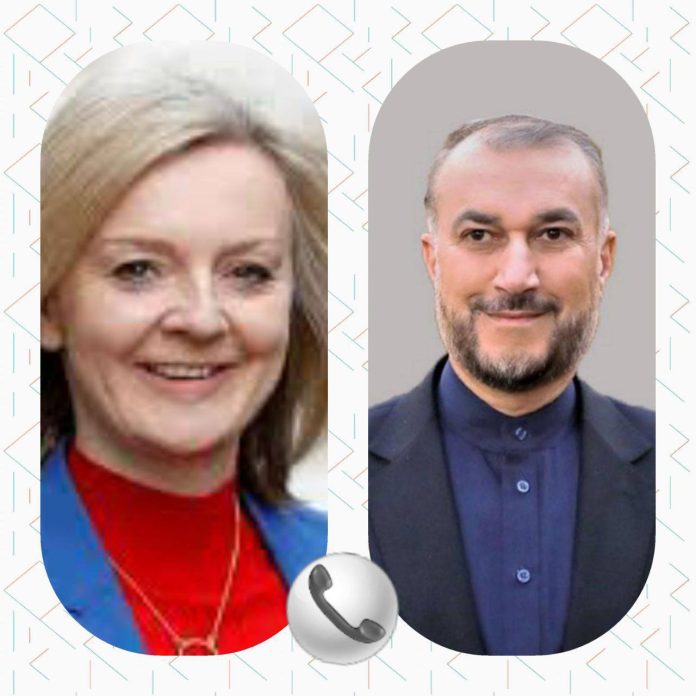
Amir Abdollahian made the statement in a phone call with British Foreign Secretary Liz Truss.

He said the fact that the negotiations have reached this stage is mainly due to Iran’s logical approach and its initiative.

Amir Abdollahian further underlined the need for consensus among all parties to the talks over a single draft agreement and the necessity of including Iran’s legitimate demands in the draft.

Amir Abdollahian also outlined Iran’s principled stance on Afghanistan and said the formation of an inclusive government in the country is highly important.

The top Iranian diplomat also said the international community should immediately deliver humanitarian aid to Afghanistan.

He then turned to the dire humanitarian situation in Yemen, expressing hope that London will fulfill its duty to end the humanitarian catastrophe in the country which stems from the continuation of aggression and war in Yemen.

Elsewhere, Amir Abdollahian described the trend of relations between Iran and the UK as positive.

The British foreign secretary for her part reviewed the state of bilateral ties and the Vienna talks during the conversation and outlined London’s views in this regard.

The British foreign secretary said expanding UK-Iran relations will serve the interests of both sides.

Ms. Truss also referred to the UK’s cooperation with the United Nations in assisting the Afghan people and appreciated Iran’s effective role and cooperation to this end.

Bahrainis mark 2011 uprising, condemn Israeli PM visit

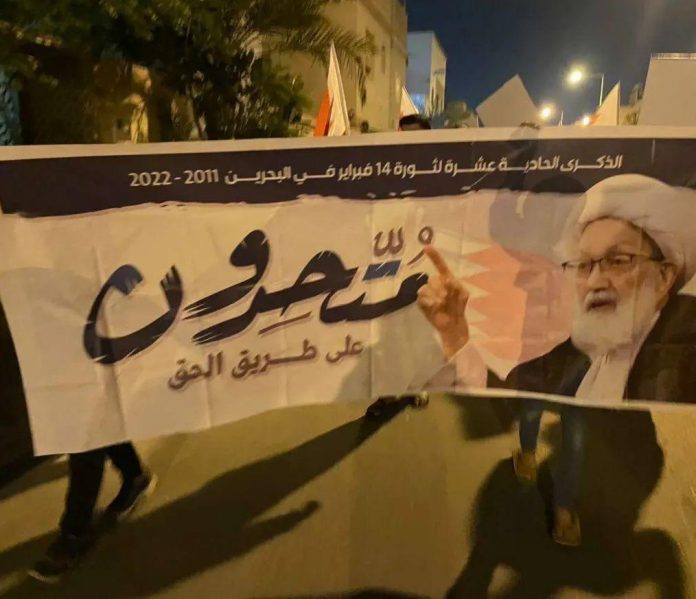
The demonstrators staged mass rallies in Manama as well as in other cities and towns Monday night to mark the eleventh anniversary of the February 14 uprising.

“11 years of patience and steadfastness on the path of truth.. Bahrainis demonstrate in the Muqsha area on the anniversary of the start of the February 14 revolution,” main opposition group, the al-Wefaq National Islamic Society, tweeted.

“Our demands are just… Bahrainis are demonstrating on the anniversary of the start of the February 14 revolution, in confirmation of the continuation of the movement demanding rights,”it added.

Demonstrations have been held in Bahrain on a regular basis ever since a popular uprising began in mid-February 2011, with the participants demanding that the Al Khalifah regime relinquish power and allow a just system representing all Bahrainis to be established.

Manama, however, has gone to great lengths to clamp down on any sign of dissent.

The overnight demonstrations coincided with Bennett’s visit to Bahrain, the first since they established relations under a 2020 US-sponsored normalization deal.

Bahrain normalized its relations with the Israeli regime in mid-September 2020, infuriating Palestinians, who view the deal and the likes with the United Arab Emirates (UAE), Sudan and Morocco as a betrayal of their cause.

Palestinians seek an independent state in the occupied West Bank and Gaza Strip with East al-Quds as its capital.

Bennett’s office said the Israeli premier, who arrived in Manama early on Monday, planned to meet with Bahraini Crown Prince and Prime Minister Salman bin Hamad al-Khalifa.

“The leaders will discuss additional ways to strengthen bilateral ties … especially the advancement of diplomatic and economic issues, with an emphasis on technology and innovation,” it continued.

Footage and photos posted on Bahrain’s social media networks showed protesters marching, chanting slogans and holding up Bahraini flags in condemnation of the Israeli premier’s visit.

The Israeli minister of military affairs, Benny Gantz, also visited Bahrain earlier this month, sparking widespread protests across the country.

Hossein al-Dihi, the deputy secretary-general of Bahrain’s main opposition group, censured Bennett’s visit to the country and said, “We, the people of Bahrain, will remain defenders of the Palestinian cause and do not accept any normalization deal with the occupying regime.”

“Our nation seeks a dignified life and freedom, and the fight against political and financial corruption and the plunder of public property,” he added.

The senior member of the al-Wefaq called for an end to all forms of political repression and plunder of national sovereignty, saying the Bahraini people live under the most oppressive authoritarian regime and suppression of freedoms.

“With the help of each other, we and the opposition have succeeded in showing ourselves to the world, revealing the truth, exposing the government and showing their political, media and legal defeat,” al-Dihi said, adding, “We are outside Bahrain, because our country has become a big prison and the members of Al-Wefaq and the opposition are also detained, and no political work can be done in Bahrain.”

Dihi stressed that “the people of Bahrain will continue to work for justice, freedom and democracy.”

“The Bahraini government is not worried about regional and international developments, but seeks to engage with the Zionists, while all future developments are going against their interests,” he continued.

Palestinian resistance movements Islamic Jihad and Hamas also condemned in separate statements the Israeli prime minister’s visit to Bahrain.

Islamic Jihad said such trips bring nothing but threat and danger to Arab states.

“The movement considered that normalization and receiving Zionist officials are encouraging their aggression against our people and our land,” the statement added, calling on the “brotherly Bahraini people and all the peoples of our nation to continue their rejection of normalization.”

“The Bahraini regime’s reception of the criminal Bennett, in light of the continuation and escalation of the Zionist aggression against our people, our families and our land, especially the city of Jerusalem, is a treacherous stab against our people, a free reward and a cover for the occupation, and encouragement to continue its fascist crimes,” it continued.

The movement called on “the Bahraini people, who have the original positions that we saw in their movement rejecting normalization and the miserable behavior of their regime, to continue their march and movement in order to expose the normalizers.”

Fawzi Barhoum, a spokesman for Hamas, said such visits can never legitimize the regime’s occupation of Palestinian lands, also holding Bennett responsible for the atrocities Israeli forces commit against Palestinian people.

“Hamas expresses its deep regret for Bahrain’s reception of Bennett, who is responsible for the policies of collective punishment and the crimes of displacement, settlement and racism, which are still being committed against our Palestinian people in occupied Jerusalem, Sheikh Jarrah neighborhood, Nablus, Jenin, and besieged Gaza Strip,” Barhoum added.

The Hamas spokesman stressed that such visits by the leaders of the occupation to our Arab and Islamic capitals will not “provide him with alleged legitimacy, and will not cover up his crimes, terrorism and racism, nor will they bring good, security and stability to our region and its peoples, who are still suffering from this colonial Zionist project.”

“We renew our rejection of all forms of normalization with the occupation, and we call on our normalizing brotherly Arab countries to retract this wrong path,” the spokesman noted.

US says nuclear talks at final stage

“The special envoy and his team remain on the ground in Vienna. I have to say that we are going to be a bit more circumspect in terms of progress that we may be seeing on the ground in Vienna precisely because we are in the final stages of what is by any measure a complex negotiation with key stakeholders,” Price stated on Monday.

“The fact is that this is the final decisive period during which we’ll be in a position to determine whether a mutual return to compliance with the JCPOA remains a possibility,” he continued.

“Our European partners as well as China and Russia – all of us urgently seek to achieve an understanding, but time is almost out. Time is very quickly ticking away. We have been very clear that at the current rate of Iran’s nuclear advances, we have little time left, and that’s precisely because at a certain point very soon those nuclear advances will obviate the advantages that the JCPOA, as it was finalized in 2015 and implemented in 2016, initially conveyed,” he noted.

Iran, Russia and China have pushed back on the need to establish a fixed deadline for the nuclear negotiations to conclude. Iranian officials have rejected western diplomats’ remarks about a deadline for reaching an agreement in Vienna talks, and stressed Tehran is only after a good agreement.

“So the teams are continuing to meet. For our part, those discussions continue to be indirect with the Iranian delegation, but we know that we are speaking with one voice together with our P5+1 partners, all of whom recognize the importance of concluding, in whatever form that takes, these talks in short order,” the spokesman announced.

On Monday, Iranian Foreign Minister Hossein Amir Abdollahian called on the US and the West to stop playing with time and wording in the Vienna talks.

He stated Iran is in a rush to reach a good deal with the P4+1 and achieve the rights of the Iranian people within the framework of logical negotiations.

The foreign minister has emphasized that if an agreement is reached in Vienna today and the sanctions on the Islamic Republic of Iran are lifted, it is better for the country than for this to happen tomorrow.

The Iranian foreign minister added that the Western parties to the Vienna talks should show determination to return to their compliance with the nuclear deal, officially known as the Joint Comprehensive Plan of Action, JCPOA.

Amir Abdollahian also said the US officials in their messages to Iran speak of their goodwill to reach an agreement, but “we have yet to see a concrete measure from their side”. He added that Tehran believes that a good deal is at hand in a short term.

Iranian FM: Russia’s concerns over Ukraine understandable to Iran

Russia’s concerns over Ukraine understandable to Iran

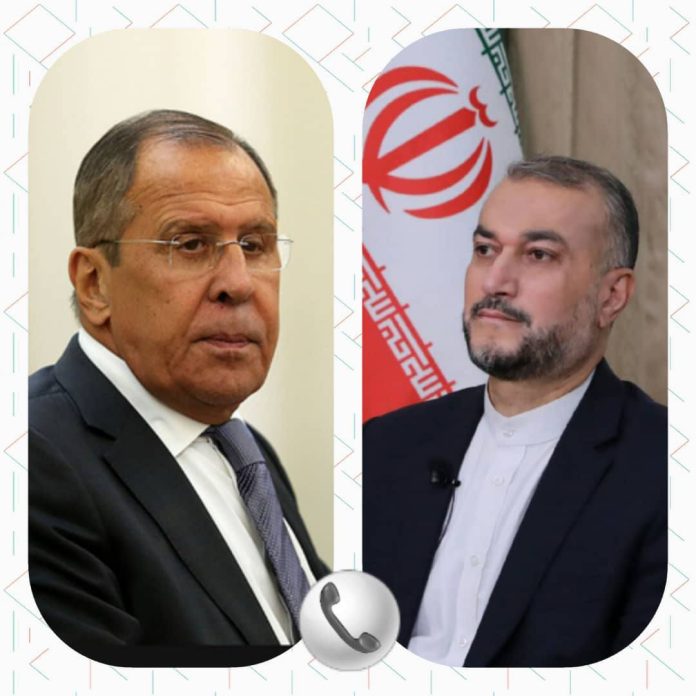
Amir Abdollahian was speaking in a phone call with top Russian diplomat Sergey Lavrov.

He expressed hope that the current crisis will be resolved through peaceful means and pursuit of a diplomatic approach by Moscow and Kiev.

Amir Abdollahian also pointed to the presence of more than five thousand Iranian nationals including students in Ukraine and noted that the Islamic Republic of Iran follows developments in the region with sensitivity.

The Iranian foreign minister then spoke of the forthcoming session of the second P3 + 3 meeting on the South Caucasus, calling it an opportunity for consensus and synergy to deepen cooperation in favor of the interests of the countries and people of the region.

The Russian foreign minister for his part welcomed Iran’s hosting of the next session of the second P3 + 3 meeting on the South Caucasus and expressed hope that this conference will further ensure the interests of regional countries and maintain stability and security in the region.

Amir Abdollahian and Lavrov also discussed the current trend of bilateral ties between Tehran and Moscow during the telephone conversation.

Iran FM criticizes West for prolonging Vienna talks

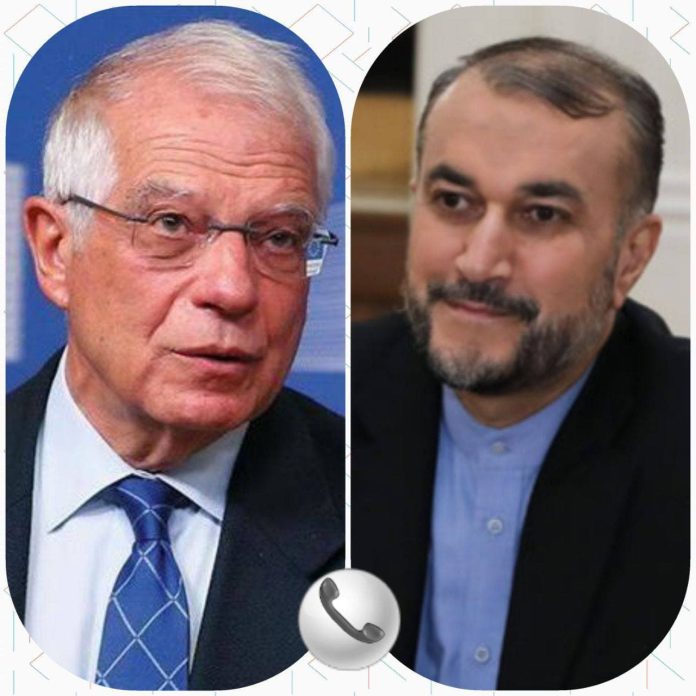
“Some hasty moves, repeatedly playing with the text, and a lack of serious will on the part of the West to reach a good and credible agreement in Vienna have led to unnecessary prolongation of the talks,” Amir Abdollahian said in a phone conversation with European Union Foreign Policy Chief and lead coordinator of the Vienna talks Josep Borrell on Monday.

The Iranian foreign minister stressed that the Islamic Republic will not back down from its red lines, which are based on logic and realism.

He noted that Tehran has presented realistic initiatives during the talks, stressing that it is necessary to include the legitimate rights and demands of Iran in any proposal.

Borrell also said the Vienna talks have reached a critical stage and all parties need to help advance the negotiations through flexibility and by taking into account each other’s capabilities and limitations.

In another telephone conversation with his Russian counterpart, Amir Abdollahian stressed the need for the other parties to the Vienna talks to pay attention to all of Iran’s rights while fulfilling their obligations in any agreement.

Sergey Lavrov appreciated the initiatives and constructive approach of the Islamic Republic of Iran during the Vienna talks.

The Russian foreign minister stressed the need for continued consultations among different parties to the Vienna talks to review the texts and proposals to reach an agreement.

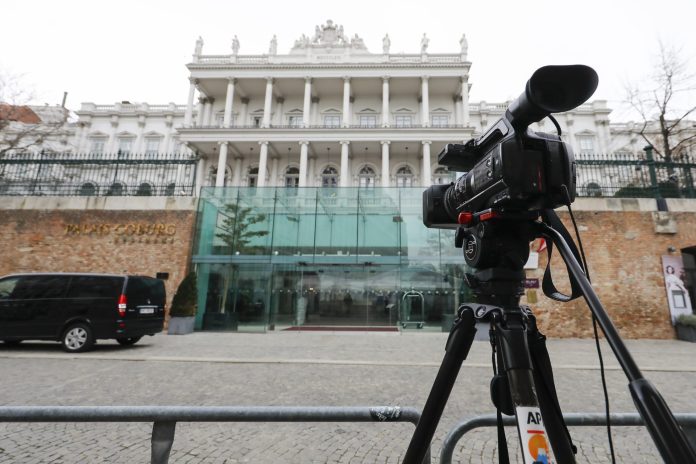
Iran and the P4+1 group namely Russia, China, Britain, France and Germany are engaged in intensive negotiations in the Austrian capital.

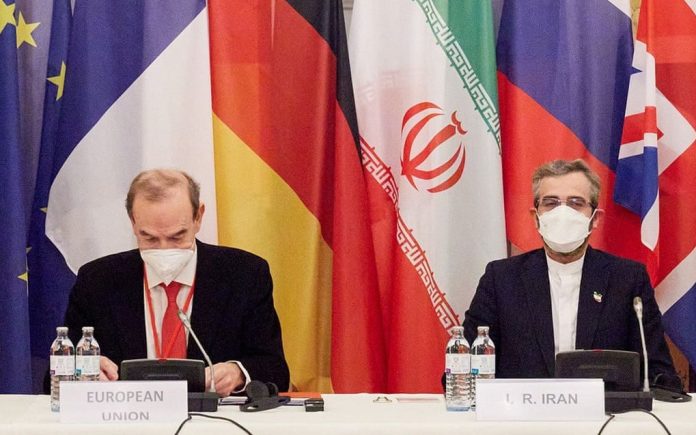
Meanwhile Iran’s lead negotiator Ali Bagheri Kani sat down for talks with Deputy Secretary General of the European External Action Service Enrique Mora on Monday as part of the marathon negotiations.

The eighth round, which began on December 27, has now become one of the longest rounds of the talks between Iran and the P4+1.

Also on Monday, the Austrian Foreign Ministry announced that Foreign Minister Alexander Schallenberg met with U.S. Special Representative for Iran Robert Mali. The Austrian foreign ministry said the Vienna talks have reached a critical stage.

Iran has so far refused to sit down directly with American diplomats; meaning P4+1 negotiators are shuttling between the two sides.

Iran insists that America must remove all sanctions imposed on Tehran after former U.S. president Donald Trump unilaterally abandoned the deal in May 2018 in violation of American commitments. It also says Washington must provide guarantees that it will not leave the deal again.

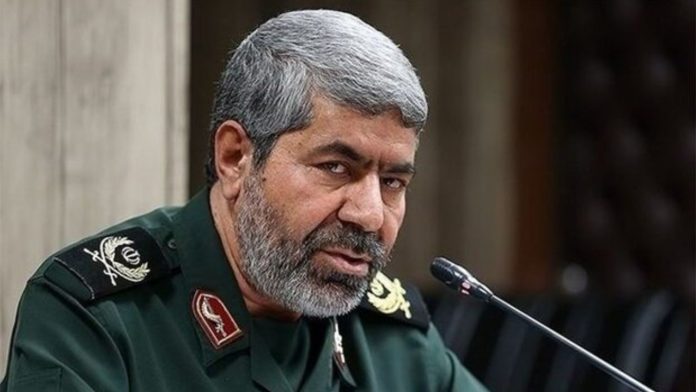
IRGC rejects Radio Farda claims in audio recording

He said in the past 5 years, the IRGC’s supervisory bodies have been suspected of mismanagement and misconduct in one of the companies affiliated with the force and judicial verdicts were issued against people who were found guilty.

He rejected Radio Farda’s claim that General Qassem Soleimani was linked to the Yas Holding affiliated with the IRGC’s Cooperative Foundation.

Sharif added that General Soleimani had no post or role in the Cooperative Foundation, adding such claims show that enemies cannot tolerate the anti-terrorism icon of Iran.

Meanwhile, Mahmoud Abbaszadeh Meshkini, spokesman for the Iranian parliament’s National Security and Foreign Policy Commission, has said, “I have listened to this file several times. The ill-wishers have failed to achieve what they sought and use as an excuse to tarnish the IRGC’s image. The enemy cannot damage the popularity of the IRGC with this psychological war.”

The release of the audio recording of a conversation between the two senior Iranian military officials once again brought the name of the “Yas Holding” case to the fore.

Radio Farda claims it has just received the file, but reformist activist Emadeddin Baghi says the recording is not new and was published in a telegram channel two years ago.

The Yas Holding case has been one of the most controversial corruption cases in recent years, with some calling it the biggest corruption one. In this case, the names of some military figures, including Mahmoud Seif and Issa Sharifi, then deputy mayor of Tehran, Mohammad Bagher Ghalibaf, were heard.

In late March 2021, the judiciary announced rulings issued by a military court in the case. Accordingly, four defendants were sentenced to two to 30 years in prison on charges of complicity in gang fraud, complicity in money laundering, and illegal seizure of funds.

Mahmoud Seif, Issa Sharifi and Mahmoud Khakpour were respectively sentenced to 30, 20 and 5.5 years in jail as well as cash fine and returning of the embezzled funds.

Massoud Mehrdadi was given a 2-year imprisonment.

Iranian official: Some difficult issues in nuclear talks still remain unsolved

Vienna-talks

A senior Iranian official told Reuters that “some 30% of difficult issues remain to be resolved but it is possible to reach a deal by early March”.

A second Iranian official said Tehran was also insisting on being able to seal and store its advanced centrifuges inside Iran, rather than dismantling and sending them abroad, as Western powers have called for.

He added Tehran further wants the removal of some 300 extra sanctions on Iranian entities and individuals not related to the nuclear deal.

A Western diplomat has also stated “reaching a deal is possible around early March, if all goes well”.

On Monday, Iranian Foreign Minister Hossein Amir Abdollahian called on the US and the West to stop playing with time and wording in the Vienna talks.

He stated Iran is in a rush to reach a good deal with the P4+1 and achieve the rights of the Iranian people within the framework of logical negotiations.

The foreign minister has emphasized that if an agreement is reached in Vienna today and the sanctions on the Islamic Republic of Iran are lifted, it is better for the country than for this to happen tomorrow.

The Iranian foreign minister added that the Western parties to the Vienna talks should show determination to return to their compliance with the nuclear deal, officially known as the Joint Comprehensive Plan of Action, JCPOA.

Amir Abdollahian also said the US officials in their messages to Iran speak of their goodwill to reach an agreement, but “we have yet to see a concrete measure from their side”. He added that Tehran believes that a good deal is at hand in a short term.

Earlier, a senior US official had noted that major issues on the table remain unresolved.

Negotiations are both “closer than we have been to a deal”, in that some progress has been made, and “closer than we have been to breakdown”, as time for agreement runs out, the official added.

“Both outcomes are still very possible,” the official continued.

Western leaders say time is running out for a viable accord. The US administration has also announced that only a “handful” of weeks remain before ongoing advances in Iran’s nuclear program will make agreement impossible.

Iran, Russia and China have pushed back on the need to establish a fixed deadline for the nuclear negotiations to conclude. Iranian officials have rejected western diplomats’ remarks about a deadline for reaching an agreement in Vienna talks, and stressed Tehran is only after a good agreement.

Foreign Ministry Spokesman Saeed Khatibzadeh stated on Monday “talks are not at a dead end…Iran has already taken its political decision by staying in the deal despite the US withdrawal”.

Intensive diplomatic talks continue in the Austrian capital of Vienna between Iran and the P4+1 group of countries to discuss all possible ways to salvage the 2015 nuclear deal by removing all sanctions imposed by Washington against Tehran.

China urges US to take active measures in nuclear talks

Vienna talks

“Negotiations on resuming compliance with the JCPOA have entered the final stage, presenting an important opportunity to bring the agreement back on track,” Foreign Ministry Spokesperson Wang Wenbin stated at a press conference on Monday.

“At the same time, there are still some important issues that need to be resolved. All parties are conducting intensive consultations to seek a package solution,” he added.

“As a Chinese saying goes, ninety miles is only half of a hundred-mile journey, for the going is toughest toward the end. In the final stage of negotiations, all parties should persevere, uphold mutual respect, think out of the box, gather consensus and strive for breakthroughs on outstanding issues,” he added.

“It is incumbent on the US, the culprit of the Iranian nuclear crisis, to take further active measures in exchange for reciprocal steps by the Iranian side so that all remaining issues may be resolved at an early date,” the spokesman noted.

“China always adopts an objective and just position, constructively participates in negotiations, actively mediates on sticking points, and works toward all parties’ reaching practical and reasonable solutions. Going forward, we will continue to work with all relevant sides to advance the compliance resumption talks and also resolutely safeguard our own legitimate and lawful rights and interests,” he continued.

Intensive diplomatic talks continue in the Austrian capital of Vienna between Iran and the P4+1 group of countries to discuss all possible ways to salvage the 2015 nuclear deal by removing all sanctions imposed by Washington against Tehran.

Iran has put many offers on the table and encouraged the other side to come up with new proposals to resolve the outstanding issues.

Earlier, Iran’s foreign ministry spokesman denied claims the Vienna talks have hit an impasse, adding it is possible to reach a deal right now.

Speaking at his weekly news briefing, Saeed Khatibzadeh said the talks are continuing and negotiating teams are engaged in consultations as before.

Khatibzadeh however stated the negotiations move forward slowly on days when tough issues are on the agenda.

He noted that the other sides have reached the  point where they must take political decisions as Iran did so years ago.

“We are awaiting the West’s response to Iran’s initiatives,” Khatibzadeh continued.

The spokesperson stressed that the US is not trustworthy and Iran wants concrete guarantees so Washington will not be able to make a mockery of international law again.

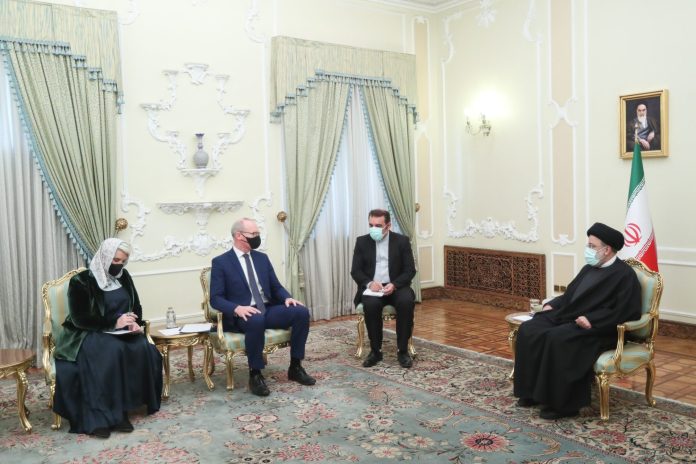
Raisi: Iran wants sanctions to be lifted genuinely 

Iran wants sanctions to be lifted genuinely 

He was speaking during a meeting with Irish Foreign Minister Simon Coveney in Tehran on Monday.

Raisi said Iran demands necessary guarantees in the talks before the revival of the 2015, nuclear deal, JCPOA.

He also added the main prong of his administration’s foreign policy is to protect the interests of nations and mutual respect.

On ties with Ireland, Raisi said that Tehran and Dublin have huge potentials to expand their ties in different fields including trade. Referring to the cooperation capacities of the two countries in various sectors, including energy, science and technology, industry and agriculture, Raisi said the volume of trade between Iran and Ireland can be much higher than the current level.

The Irish foreign minister also stressed that his country attaches special importance to the development of relations with Iran.

Hr said, “We believe we are at a strategic stage in our relations with Iran and want to develop and improve the level of ties.” Coveney also said Dublin wants to reopen its embassy in Tehran.

He also spoke of the JCPOA.

“Ireland believes that the Iranian people are disillusioned and have no trust in the nuclear negotiations because of the US failure to keep its word,” said the Irish foreign minister.

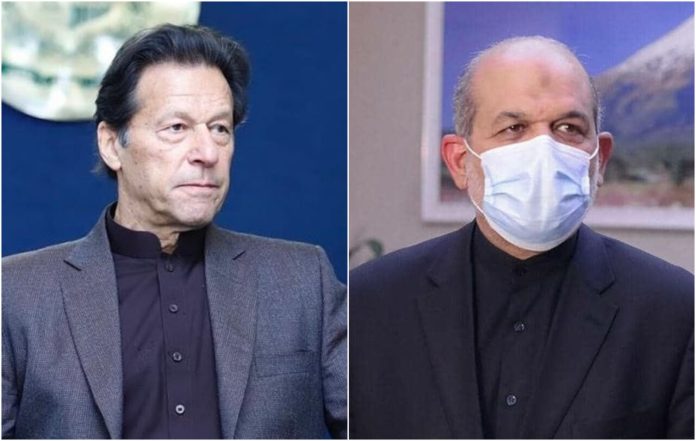
Pakistani PM calls for expansion of ties with Iran

Pakistani PM calls for expansion of ties with Iran

During the meeting, Imran Khan called for expansion of relations between Tehran and Islamabad in various fields like trade along the border.

Imran Khan also said military action has never been a solution to the problems of Afghanistan and the global community must now play its role in rescuing the Afghan people from the severe humanitarian and economic crisis they are facing.

Earlier, Vahidi met with Pakistani Army chief Qamar Javid Bajua and Interior Minister Rashid Ahmad.

During the meetings, the two sides underlined the need to further strengthen border control and security and economic cooperation.

Vahidi told the IRIB reporter in Islamabad that Iran and Pakistan have ready potentials to boost ties and regional coordination.

He referred to his meeting with the Pakistani Army chief, saying security cooperation with Pakistan is at a good level.

With the launch of the ECO freight train of Islamabad -Tehran- Istanbul and the strengthening of rail transport lines between Iran and Pakistan, the ground for the development of bilateral trade has been provided more than before.

The Iranian interior minister also praised the efforts of Iran and Pakistan to increase the number of border markets, saying this will strengthen bilateral economic ties.

Vahidi added that political relations between the two countries are at a good level and that Iran and Pakistan are engaged in positive negotiations to cooperate in regional issues.