Saturday, April 4, 2026
Home Blog Page 2

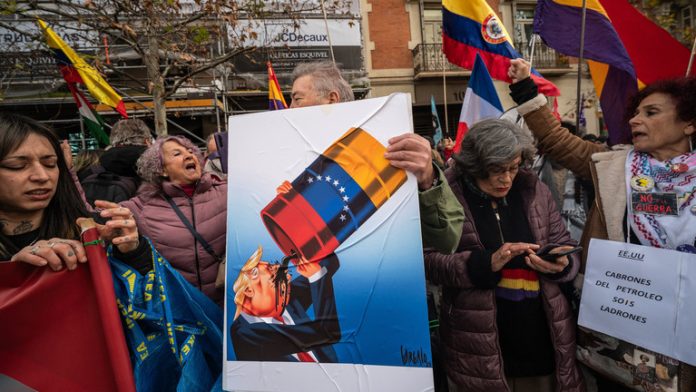
Americans split on Trump’s action to capture Maduro: Poll

Pollsters found that 36 percent of Americans “strongly or somewhat support” Maduro’s ousting, while 39 percent “strongly or somewhat oppose” it. Twenty-five percent said they were not sure.

Democrats were mostly against the operation, at 63 percent, while 14 percent supported it. Among Republicans, 13 percent said they were against ousting Maduro and 66 percent backed what happened.

Independents were mostly opposed to Maduro’s removal, with 44 percent opposed and 27 percent in favor.

CBS News/YouGov also found that 36 percent of Americans think the U.S. is better off following Maduro’s removal, while 10 percent say the U.S. would be better off with him in power. The poll shows that 55 percent are unsure what his removal means for the U.S.

Maduro and his wife Cilia Flores were captured and brought to the U.S. to face charges, including narco-terrorism conspiracy, cocaine importation conspiracy, possession of machine guns and destructive devices and conspiracy to possess the weapons. Both were indicted in the Southern District of New York.

“I am a decent man — the president of my country,” Maduro told a federal judge as he gave his not guilty plea on Monday.

The indictment claims that Maduro gave drug traffickers diplomatic cover, ran his own cocaine trafficking operation with Flores and has ties to terrorism and drug trafficking groups over a 25-year timeframe.

President Trump has threatened other countries following the strikes on Venezuela. He warned that Mexico should “get their act together” unless he sends the military after drug cartels, then suggested Cuba is “ready to fall,” highlighting the island nation’s economy and reliance on Venezuela.

Trump also threatened Colombia, calling its president Gustavo Petro a “sick man who likes making cocaine and selling it to the United States, and he’s not going to be doing it very long.” On Wednesday, Trump spoke with Petro by phone, during which the U.S. president said he “appreciated his call and tone.” The two plan to meet at the White House “in the near future,” Trump wrote on Truth Social.


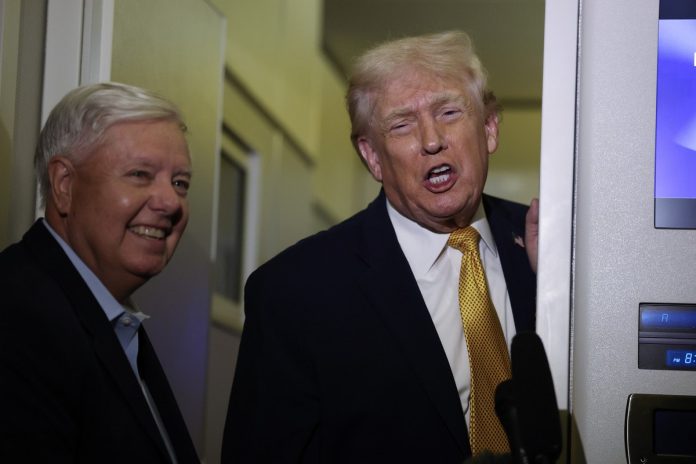
Senator Graham says Trump ‘greenlit’ tough Russia sanctions bill

Senate Republicans have talked for months about voting on a strong Russia sanctions bill sponsored by Graham and Sen. Richard Blumenthal (D-Conn.) that would impose major sanctions on countries that buy Russian uranium and petroleum products.

“After a very productive meeting today with President Trump on a variety of issues, he greenlit the bipartisan Russia sanctions bill that I have been working on for months with Sen. Blumenthal and many others,” Graham said in a statement released Wednesday evening.

“This will be well-timed, as Ukraine is making concessions for peace and [Russian President Vladimir] Putin is all talk, continuing to kill the innocent,” Graham added.

“This bill will allow President Trump to punish those countries who buy cheap Russian oil fueling Putin’s war machine.”

The South Carolina senator made the announcement the same day Russia deployed a submarine to deter the U.S. Coast Guard from seizing a tanker flying the Russian flag that attempted to evade a U.S. blockade of Venezuelan oil exports.

The tanker was initially flying under the flags of Comoros and Guyana before the Coast Guard closed in on its pursuit of the vessel, which had been headed toward Venezuela before the U.S. interdiction attempt.

The Graham-Blumenthal sanctions bill would authorize the president to increase tariffs on countries that knowingly purchase Russian oil or uranium to 500 percent.

It would also ban U.S. exports of energy products to Russia and prohibit investments in Russian energy.

Senate Majority Leader John Thune (R-S.D.) had talked about moving the sanctions legislation before the August recess, but it stalled amid wavering support from Trump while he was attempting to negotiate an end to the Russia-Ukraine war.

A companion House measure sponsored Rep. Brian Fitzpatrick (R-Pa.) has more than 150 co-sponsors.

Speaker Mike Johnson (R-La.) said over the summer that he wanted to wait to move the House version of the Russia sanctions bill until after a 50-day deadline set by the White House for Russia-Ukraine peace talks.


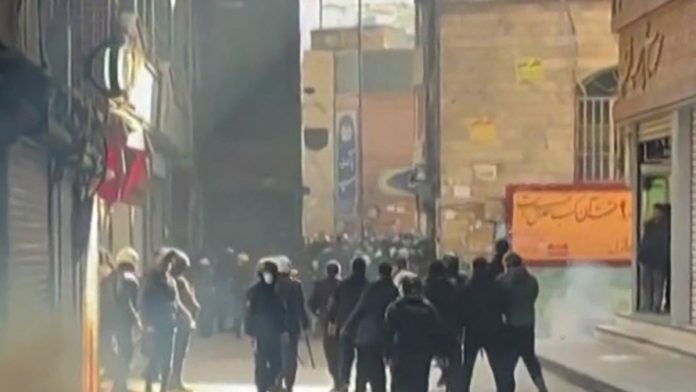
Iranian president orders administration officials to talk to protestors

Fatemeh Mohajerani wrote in a post on the social media platform X, “Protesters are our children, and the shedding of even a single drop of blood causes deep sorrow for the government”.

She added that by listening to the voices of protesters, the government will not allow demonstrations to be exploited or appropriated by particular political currents.

According to Mohajerani, the president has instructed all ministries and government bodies to take action, in line with their respective responsibilities, to engage in dialogue with the public and follow up on people’s demands.

Protests have been recently held in many Iranian cities over dire economic conditions, most notably soaring foreign currency prices and rising inflation.

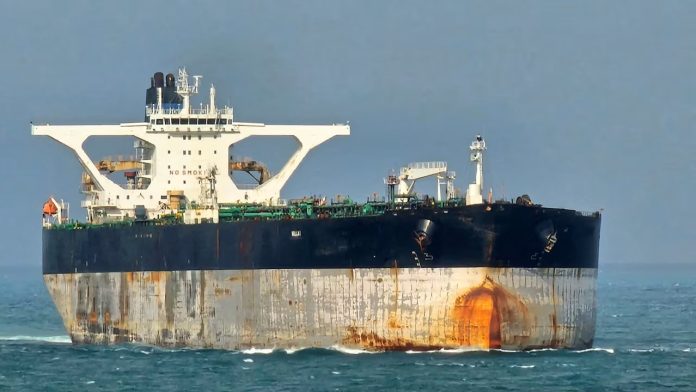
US confiscates Russian-flagged oil tanker linked to Venezuela

Originally called the Bella 1, the tanker was sanctioned by the US in 2024 for operating within a “shadow fleet” of tankers transporting illicit oil.

The Russian military had started to move around naval assets and a Russian submarine to protect the Bella 1 leading up to the US seizure of the tanker, according to a US official. But it’s unclear how close those vessels were to the tanker when it was seized on Wednesday.

The tanker was seized by the US is roughly 190 miles off the southern coast of Iceland in the northern Atlantic Ocean, according to ship-tracking website MarineTraffic.

The site shows the tanker taking a sharp turn south around the time that reports emerged of its seizure.

The US separately seized another vessel in the Caribbean on Wednesday, the US Southern Command announced on X. Southern Command announced that the vessel is considered to be stateless and alleged that it was “conducting illicit activities.”

Department of Homeland Security Secretary Kristi Noem celebrated the two seizures in a social media post, saying, “The world’s criminals are on notice. You can run, but you can’t hide. We will never relent in our mission to protect the American people and disrupt the funding of narco terrorism wherever we find it, period.”

The US Coast Guard had tried to seize the Bella 1 tanker last month when it was near Venezuela, but US forces did not board it after the ship turned around and fled.

The US continued to pursue the vessel as it headed northeast, and US P-8 surveillance aircraft were deployed out of RAF Mildenhall in Suffolk, England, to surveil the tanker for days ahead of its seizure as it made its way north and past the UK coast, according to open-source flight data.

Noem also stated in the social media post that the US Coast Guard Cutter Munro had been following the ship “across the high seas and through treacherous storms— keeping diligent watch, and protecting our country with the determination and patriotism that make Americans proud.”

At some point while being pursued, the crew of the tanker painted a Russian flag on its hull, claiming it was sailing under Russian protection.

Shortly thereafter, the vessel appeared on Russia’s official register of ships under a new name — the Marinera. Russia filed a formal diplomatic request last month demanding that the US stop pursuing the vessel.

By claiming Russian status, the legalities of seizing the tanker became more complicated, but two sources familiar with the matter said the Trump administration hasn’t recognized that status and considers the vessel to be stateless.

At a briefing with key lawmakers Monday, Secretary of State Marco Rubio said the US believed Russia could not just claim the tanker, according to a source familiar with the briefing. Rubio discussed the matter only briefly and he did not make clear if the message was conveyed directly to the Russian government.

The US repositioned military assets to the UK ahead of seizing the tanker, CNN has reported.

At least 12 US C-17s landed at Fairford and Lakenheath airbases between January 3 and 5, many originating from airfields in the US.

V-22 Ospreys were also active in the UK over the past several days, with flight data appearing to show them running training missions in the eastern UK out of Fairford air base. And two AC-130 gunships were seen arriving at Mildenhall base in the UK on Sunday.

The UK provided support to the US, according to the British defense ministry.

“UK Armed Forces provided pre-planned operational support, including basing, to US military assets interdicting the Bella 1 in the UK-Iceland-Greenland gap following a US request for assistance,” the ministry announced in a statement.

The UK’s RFA Tideforce tanker provided support for US forces “pursuing and interdicting” the vessel, while its air force “provided surveillance support from the air,” it continued.

The US last used Special Operations Forces and assets to help interdict a sanctioned tanker on December 11, when it supported a US Coast Guard operation near the coast of Venezuela to seize the Skipper, a very large crude carrier that was falsely flying Guyana’s flag.

President Donald Trump last month announced a “complete blockade” on sanctioned oil tankers attempting to enter or leave Venezuela, as a way to pressure the government of then-Venezuelan President Nicolás Maduro.

The US captured Maduro from a compound in Caracas early Saturday morning, and Rubio has stated the US will continue to enforce the blockade as “leverage” over the interim Venezuelan government.



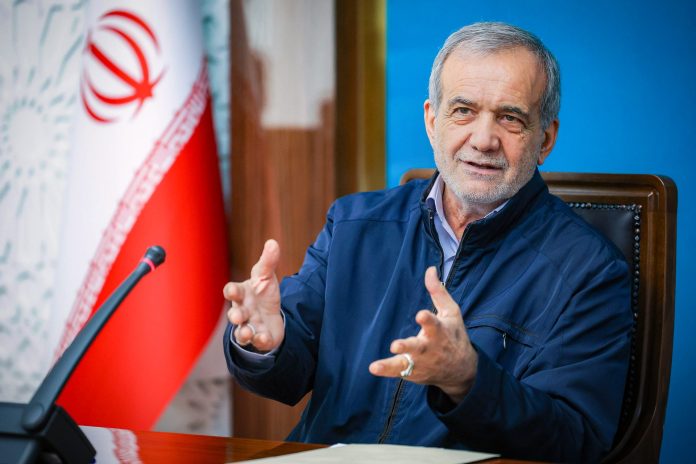
Deputy: Iran’s president orders no crackdown on protesters unless national security threatened

Masoud Pezeshkian

Speaking about the protests over dire economic conditions in Iran, Ghaempanah said that peaceful demonstrations are recognized by the government, particularly those related to rising prices and labor-related demands.

He stressed, however, that incidents involving violence fall into a different category.
Referring to an incident in Ilam several days ago, Ghaempanah said when a group occupies a hospital, law enforcement authorities cannot remain passive and must act to restore order.

He drew a clear distinction between protesters and rioters, saying individuals who resort to weapons, knives, or firearms, or who attack military and security centers, are clear examples of unrest and disorder. Ghaempanah added that the president has explicitly ordered that, to the extent national security is not undermined, there should be no crackdown on protesting citizens.

He also noted that Central Bank’s Governor Abdolnasser Hemmati presented a report at the cabinet meeting, adding that measures are planned to control the foreign exchange rate and that currency fluctuations are natural during an ongoing economic restructuring process.

Regarding those detained during the protests, the executive deputy said security institutions would deal with them with maximum leniency. Ghaempanah underlined that individuals who have not committed acts of violence or have no links to foreign actors will be treated with Islamic compassion.

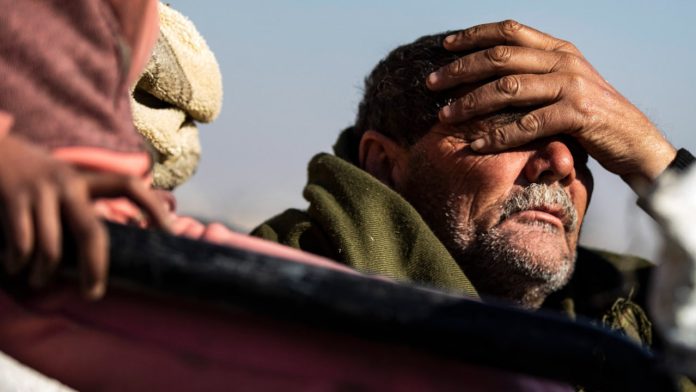
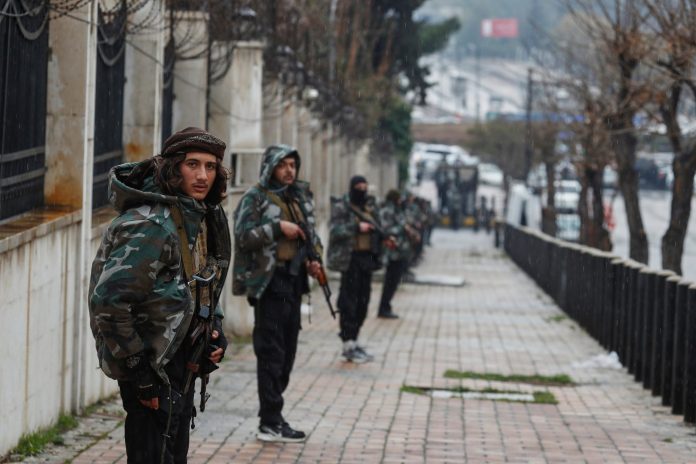
Civilians flee Aleppo as Syrian army declares Kurdish regions ‘military zones’

The deadly clashes, which started on Tuesday, are the worst between the two sides, who have so far failed to implement a March deal to merge the Kurds’ semi-autonomous administration and military into Syria’s new government.

In a statement, the army said that “the Sheikh Maqsud and Ashrafieh neighbourhoods will be considered closed military zones after 3.00pm today”, adding that “two safe humanitarian crossings” would be put in place for civilians to leave.

AFP correspondents in Aleppo saw large groups families with children leaving the neighbourhoods, carrying their belongings with them, some in tears.

“All Syrian Democratic Forces military positions within the Sheikh Maqsud and Ashrafieh neighbourhoods of Aleppo are legitimate military targets,” the army said referring to the Kurdish-led force.

Senior Kurdish official Ilham Ahmed accused Damascus of launching a “genocidal war” against the Kurds, calling on the Syrian government to “pursue a path of reason to resolve problems through dialogue”.

The violence caused the suspension of flights to and from Aleppo’s airport, with schools, universities and government offices in the city shut down.

Tuesday’s clashes killed nine people, mostly civilians, with both sides trading blame over who started the fighting.

Joud Serjian, a 53-year-old housewife and resident of the Syriac Quarter, stated that the violence “reminded us of the war”.

Living in the Syriac Quarter near Ashrafieh, Serjian noted “we have nowhere else to go, so we’ll stay in our home”.

During the Syrian war, Aleppo was the scene of fierce fighting between rebels and forces of ousted President Bashar al-Assad before he regained control of the city in 2016.

Assad was ousted in a lightning offensive by militants in 2024.

Abdul Karim Omar, representative of the Kurds’ autonomous administration in Damascus, told AFP Aleppo’s Kurdish-majority neighbourhoods were “completely besieged”.

He denied that any shells had been fired from these areas, arguing that they are controlled by the Kurds’ Asayish domestic security forces “who only have light weapons”.

Sheikh Maqsud and Ashrafiyeh have remained under the control of Kurdish units linked to the SDF, despite Kurdish fighters agreeing to withdraw from the areas in April.

The SDF controls swathes of Syria’s oil-rich north and northeast, with the backing of a US-led international coalition, was key to the territorial defeat of the Islamic State group in Syria in 2019.

The March agreement on the Kurdish authority’s integration into the state was supposed to be implemented by the end of 2025.

The Kurds are pushing for decentralised rule, an idea which Syria’s new authorities have rejected.


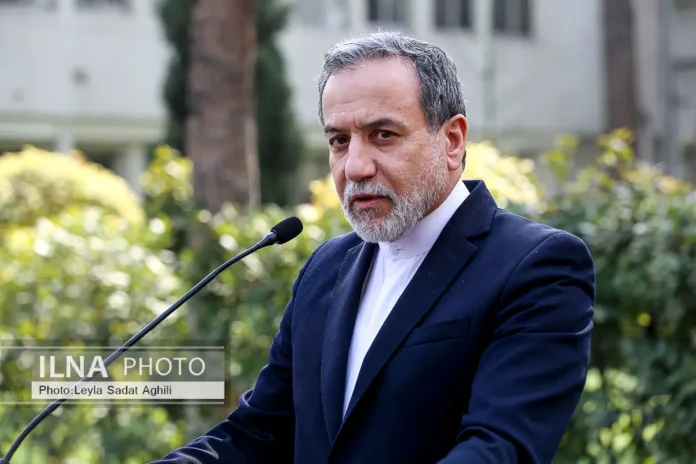
Iran says conditions not ripe for negotiations with US

Abbas Araghchi

Speaking to reporters on the sidelines of a cabinet meeting on Wednesday, Araqchi reacted to the interventionist remarks by US President Donald Trump and his support for rioters, saying that Iran’s internal issues are solely related to the Iranian nation.

He noted that the government and the people are engaged in interaction and dialogue with one another.

Araqchi also said that the present conditions are not appropriate for negotiations with the US because of the policies pursued by Washington.

Iran has never left the negotiating table and has always been ready for talks based on mutual respect and shared interests, but such an approach is currently absent in the US administration, the top Iranian diplomat stated.

Araqchi further announced that he will depart for Lebanon on Thursday, adding that Iran’s relations with Lebanon, encompassing the entire Lebanese establishment and its government, have long existed and that Tehran seeks to expand those ties.

He noted that an economic delegation would accompany him on the visit to Beirut.


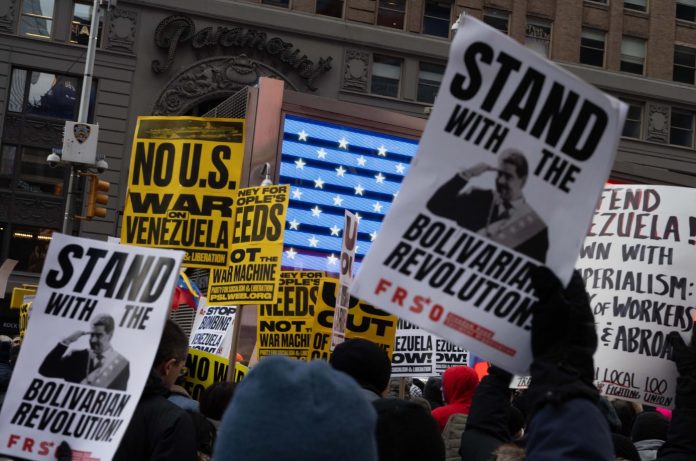
US demanding Venezuela cut ties with Iran, Russia and China: ABC News

US commandos abducted Venezuelan President Nicolas Maduro and his wife, Cilia Flores, during a nighttime raid on Saturday, in what the oil-rich South American country has denounced as a violation of its sovereignty.

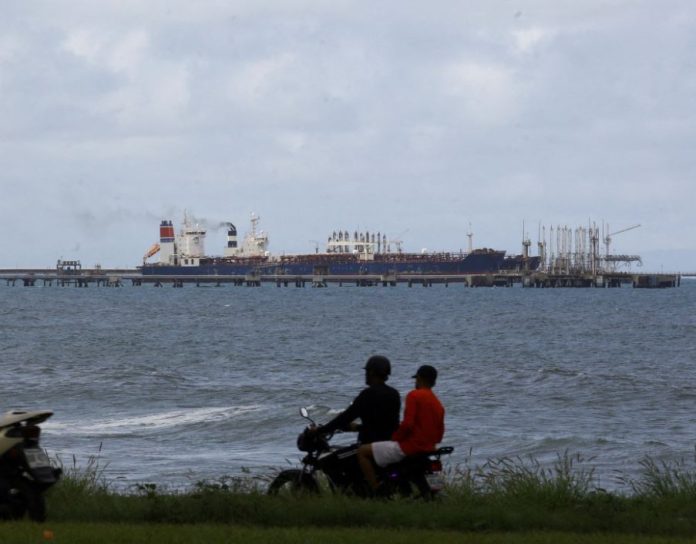
According to ABC, the White House has demanded that Venezuela partner exclusively with the US on oil production and favor it when selling crude oil. President Donald Trump has insisted that American companies have access to Venezuela’s oil industry, which he claimed was unfairly nationalized by Maduro’s predecessor, Hugo Chavez.

On Tuesday, Trump claimed that “the interim authorities” of Venezuela would be “turning over” between 30 and 50 million barrels of sanctioned oil to be sold under Washington’s control.

Delcy Rodriguez, a Maduro ally sworn in as acting president on Monday, declared that neither the US nor any other “foreign agent” would control Venezuela. Authorities in Caracas have demanded the release of Maduro and Flores, both of whom pleaded not guilty to drug trafficking and weapons charges when brought before a New York court on Monday.

“The military operation, without a declaration of war or a UN Security Council resolution, represents an illegal act of armed aggression of a terrorist nature,” Venezuelan Prosecutor General Tarek Saab said.


Trump claims Venezuela to give 30-50 million barrels of oil to U.S.

Trump, in a social media post, said the oil will be sold at its market price, “and that money will be controlled by me, as President of the United States of America, to ensure it is used to benefit the people of Venezuela and the United States!”

“I have asked Energy Secretary Chris Wright to execute this plan, immediately,” Trump wrote, adding, “It will be taken by storage ships, and brought directly to unloading docks in the United States.”

Trump stated that the oil being turned over the US was “high quality” and “sanctioned”.

U.S. crude futures fell 1.3% to $56.39 per barrel on the heels of Trump’s announcement.

The announcement came three days after US forces kidnapped Maduro and his wife in Caracas, and took them to New York, where they are charged in a federal drug-trafficking conspiracy indictment.

Maduro and his wife, Cilia Flores, pleaded not guilty on Monday during their arraignment in US District Court in Manhattan.

During that proceeding, Maduro told Judge Alvin Hellerstein that he had been “kidnapped” and that he was a “prisoner of war”.

The Wall Street Journal reported Tuesday that Trump plans to meet with representatives from the major U.S. oil companies Chevron, ConocoPhillips, and Exxon Mobil along with other domestic producers, at the White House on Friday “to discuss making significant investments in Venezuela’s oil sector”.

Trump has stressed that US oil companies would end up investing billions of dollars to rehabilitate Venezuela’s aging oil production capabilities.

Chevron currently operates in Venezuela, the only US oil company to do so. The assets of ConocoPhillips and Exxon were nationalized by Venezuela’s then-President Hugo Chávez in the mid-2000s.


Israel, Syria agree to dedicated communication line in US-brokered negotiations

The “dedicated communication cell”, as Tuesday’s joint statement described the mechanism, will also facilitate “diplomatic engagement and commercial opportunities”.

Israel and Syria have been in intermittent talks over the last year in an attempt to find a security agreement that would stop Israel’s repeated attacks on its northeastern neighbour.

The latest statement comes after meetings held between Israeli and Syrian officials, including the Syrian foreign minister, in Paris on Monday and Tuesday, as the US attempts to get negotiations back on track.

“The mechanism will serve as a platform to address any disputes promptly and work to prevent misunderstandings,” the statement said.

However, a Syrian official, speaking on condition of anonymity, told the Reuters news agency it would be impossible to move forward on “strategic files” with Israel without a clear and enforceable timeline for the withdrawal of Israeli troops from Syrian territory seized since the December 2024 overthrow of former President Bashar al-Assad.

The official added that the talks ended with an initiative to suspend all Israeli military activity against Syria, something that was not confirmed from the Israeli side.

Israel has illegally occupied areas of the Syrian Golan Heights since 1967, but expanded further into Syrian territory in the past year, including the seizure of the strategic Jabal al-Sheikh, a mountain that lies between Israel and Syria.

Israel has also conducted numerous attacks, including on the Syrian Ministry of Defence building in Damascus.

The Israelis have attempted to paint the new Syrian authorities, led by President Ahmed al-Sharaa, as an “extremist” force despite overt backing for the Syrian leader from US President Donald Trump.

That US support has put Israel under some pressure to reach a deal with Syria, although a comprehensive agreement does not appear to be imminent.

The US Department of State said the agreed-upon communication mechanism would be used “to facilitate immediate and ongoing coordination on [Israel and Syria’s] communication sharing, military de-escalation, diplomatic engagement, and commercial opportunities”.