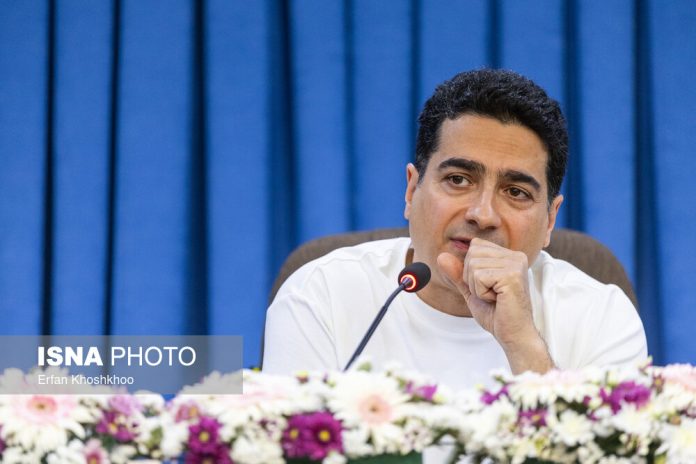
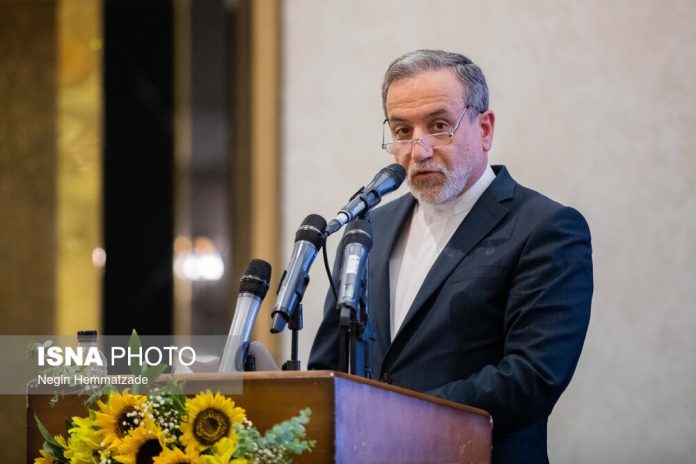
Mohajerani emphasized that from the outset, the government’s stance had been clear: large-scale street concerts, attracting millions, were seen as an opportunity to strengthen national cohesion.
She recalled that similar experiences, such as post-war celebrations in the 1980s, proved such events both possible and unifying when institutions worked together.
Regarding deliberations within the cabinet, Mohajerani explained that while some agencies raised concerns over the scale of public turnout, the government’s preference remained Azadi Square. Azadi Stadium was considered as an alternative but is under renovation.
“The government firmly supported this concert as a means to boost social vitality and national hope,” she stressed, adding that officials must speak honestly with the public and accept responsibility for decisions instead of shifting blame.
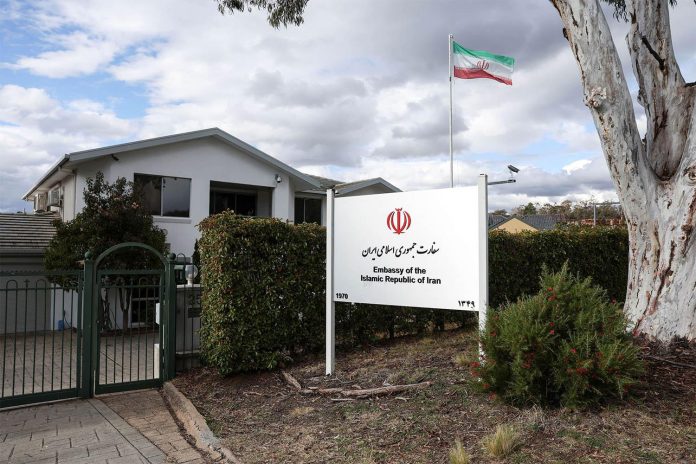
In a statement, the Ministry’s spokesperson described the move as “unjustified,” stressing that Iran continues to provide consular services through its mission in Canberra.
“Our consular section in Australia remains active, and we will make every effort to serve Iranian nationals residing there,” the spokesperson said.
The Iranian Foreign Ministry dismissed allegations of antisemitism against the Islamic Republic as “ridiculous and baseless.”
The development comes after Australia expelled Iran’s ambassador last week in response to allegations linking Tehran to antisemitic arson attacks in Sydney and Melbourne—a move that marked the first such expulsion by Canberra since World War II. In turn, Iran has characterized the charges as politically motivated and accused Australia of undermining bilateral relations.
“Why are we interested in what Russia thinks about troops in Ukraine? It’s a sovereign country. It’s not for them to decide,” Rutte said, adding, “Russia has nothing to do with this.”
Leaders from a so-called coalition of the willing spearheaded by France and Britain are holding talks Thursday to firm up contributions to the planned security guarantees.
“If Ukraine wants to have security guarantee forces in Ukraine to support a peace deal, it’s up to them. Nobody else can decide about it,” Rutte said on a visit to Prague.
“I think we really have to stop making Putin too powerful,” he added, referring to Russian President Vladimir Putin.
Russia has announced it remains firmly opposed to any Western troops being deployed in Ukraine as part of a possible peace settlement.
Western diplomats say that the group of roughly 30 countries discussing a possible “reassurance force” for Ukraine now have concrete numbers of the troops they could commit.
European nations hope that by putting a clear plan on the table they can convince US President Donald Trump to make good on a promise to offer American military backing.
Trump has been pushing to end the war, but the Kremlin has been stalling efforts to organise direct talks between Putin and Ukraine’s President Volodymyr Zelensky.
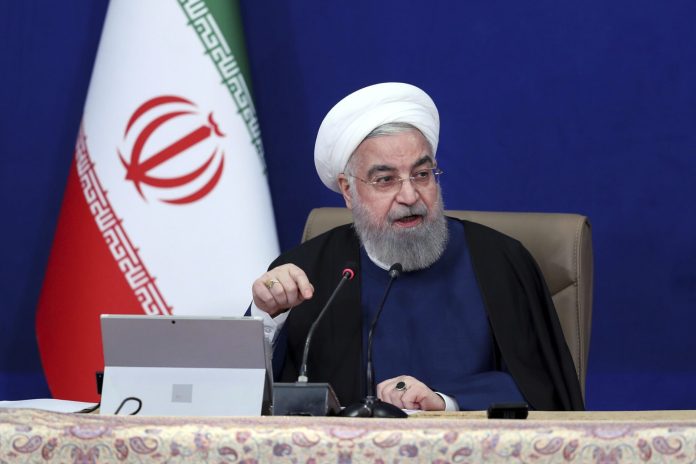
Speaking to his advisers, Rouhani argued that Europe has no legal, political, or moral grounds to pursue the measure.
“The Europeans failed to honor their 11 commitments under the JCPOA. They cannot now accuse Iran of noncompliance,” he said, referring to the 2015 nuclear deal.
Rouhani also dismissed critics inside Iran who opposed the JCPOA.
“Those who called the resolutions just scraps of paper, and those who burned the agreement in parliament, should remain silent now. If we had abandoned the deal when the US did, all sanctions would have immediately returned in 2018,” he noted.
While acknowledging that renewed UN sanctions may not add significant economic pressure beyond US measures, Rouhani emphasized their political and legal weight.
He urged continued diplomacy to prevent escalation: “There is still time to negotiate with the three European countries or the 4+1. This is in the interest of Iran, Europe, the NPT, and the world.”
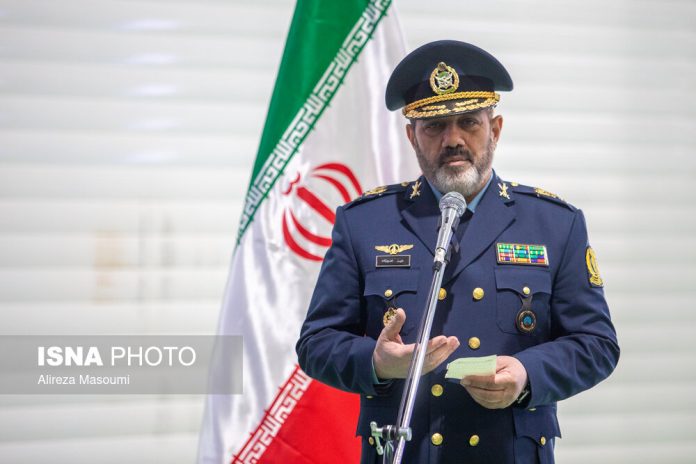
Speaking in a televised interview following President Massoud Pezeshkian’s trip to China earlier this week, General Nasirzadeh highlighted the security and defense discussions held with senior officials attending the SCO summit.
“We had constructive talks with representatives of member states in the fields of security and defense,” he said.
Currently, the SCO’s engagement has largely been limited to counterterrorism efforts and combating drug trafficking. However, General Nasirzadeh suggested that the organization is positioned to play a broader role.
“With the pace of developments, the SCO can extend its scope of activity and form strong security coalitions,” he noted.
Iran became a full member of the SCO in 2023, marking a significant step in its eastward diplomatic and security policy.
Officials in Tehran have since emphasized the potential of the grouping, comprising China, Russia, India, Pakistan, and several Central Asian states, to balance Western-led alliances and enhance regional security cooperation.
Those jailed for long periods without charge or trial include medical workers, teachers, civil servants, media workers, writers, sick and disabled people and children.
Among the most egregious cases are those of an 82-year-old woman with Alzheimer’s jailed for six weeks and of a single mother separated from her young children. When the mother was released after 53 days she found the children begging on the streets.
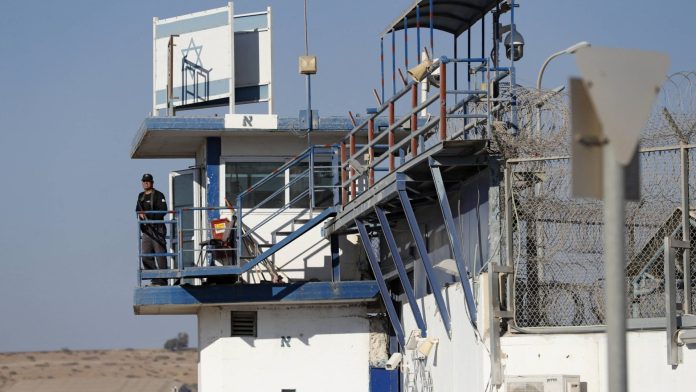
The Sde Teiman military base at one point held so many sick, disabled and elderly Palestinians that they had their own hangar, dubbed “the geriatric pen”, a soldier serving there said.
The scale of civilian detention indicated by Israel’s own data has been revealed in an investigation by the Guardian, the Israeli-Palestinian publication +972 Magazine and the Hebrew-language outlet Local Call.
Israeli military intelligence keeps a database of more than 47,000 named individuals whom it classifies as Hamas and Palestinian Islamic Jihad fighters.
Commanders consider it the most accurate information Israel has on enemy forces, according to multiple intelligence sources. It is based on information including files captured from Hamas, updated regularly and includes names of new recruits.
In May this year the database listed 1,450 individuals in detention, whose files were marked “arrested”. That is equivalent to just one in four of all Palestinians from Gaza held in Israeli jails on suspicion of militant links since 7 October 2023.
At that point in May Israel had detained 6,000 people under its “unlawful combatants” legislation, which allows indefinite imprisonment without charge or trial, official data released after legal appeals showed.
Israel is also holding up to 300 Palestinians from Gaza suspected of taking part in the 7 October attacks. They are in criminal detention because Israel says it has sufficient evidence to prosecute them, although no trials have been held.
Both rights groups and Israeli soldiers have described an even smaller ratio of fighters to civilians. When photos of Palestinians stripped and shackled caused international outrage in late 2023, senior officers told Haaretz daily newspaper that “85 to 90 per cent” were not Hamas members.
The Gaza-based Al Mezan Center for Human Rights has represented hundreds of civilians held in Israeli jails.
“We believe the proportion of civilians among those detained is even higher than Israel’s own figures suggest,” stated Samir Zaqout, Mezan’s deputy director.
“At most, perhaps one in six or seven might have any link to Hamas or other militant factions, and even then, not necessarily through their military wings,” Zaqout added.
Israel’s military announced it had returned more than 2,000 civilian detainees to Gaza after finding no connection to militant activity. Israel was fighting enemies who “disguise themselves as civilians”, but those releases demonstrated “a thorough review process” for detentions, the military said in a statement.
It did not dispute the existence of the database or the figures for May, but claimed that “most” detainees were “involved in terrorist activities”.
In May 2,750 Palestinians were permanently interned as unlawful combatants, and another 1,050 had been released under ceasefire deals, the military noted.
Israeli politicians, the military and the media often refer to all detainees as “terrorists”.
That includes Fahamiya al-Khalidi, an 82-year-old with Alzheimer’s who was abducted with her female carer in Gaza City in December 2023, and held in Israel for six weeks under the unlawful combatant law, prison documentation shows.
She was disoriented, could not remember her age and thought she was still in Gaza, according to a military medic who treated her in Anatot detention centre after she injured herself on a fence.
“I remember her limping badly toward the clinic. And she’s classified as an unlawful combatant. The way that label is used is insane,” the medic announced. Photographs confirm his presence at Anatot at the time.
The Israeli military said Khalidi was targeted “based on specific intelligence concerning her personally”, but the arrest should not have gone ahead.
“The detention was not appropriate and was the result of a local, isolated error in judgment,” the military announced, adding that “individuals with medical conditions or even disabilities can still be involved in terrorism”, citing Hamas’s former military chief Mohammed Deif.
Israel’s unlawful combatants legislation allows indefinite detention without producing evidence in open court.
The state can hold someone for 75 days before allowing access to a lawyer and 45 days before bringing them in front of a judge to authorise the detention. At the start of the war, those periods were extended to 180 and 75 days respectively. There have been no known trials of anyone captured in Gaza since 7 October 2023.
Tal Steiner, the director of the Public Committee Against Torture, said: “As soon as the wave of mass arrests began in Gaza in October 2023, there was serious concern that many uninvolved people were being detained without cause.”
“This concern was confirmed when we learned that half of those arrested at the beginning of the war were eventually released, demonstrating that there had been no basis for their detention in the first place.”
State figures on the number of unlawful combatants were given to the group after it launched a lawsuit. One soldier who served at Sde Teiman military prison, which became notorious for abuse, described mass detentions of elderly and severely ill people.
“They brought men in wheelchairs, people without legs,” he continued, adding these detainees were sent to a “geriatric pen”.
“I always assumed the supposed excuse for arresting patients was that maybe they had seen the hostages or something.”
Hassan Jabareen, the director of the Palestinian legal rights group Adalah stated that Israel’s unlawful combatants legislation was “designed to facilitate the mass detention of civilians and enforced disappearances”.
“It strips detainees of protections guaranteed under international law, including safeguards specifically intended for civilians, using the ‘unlawful combatant’ label to justify the systematic denial of their rights.”
The military medic who treated Khalidi announced that he also treated a woman bleeding heavily after a miscarriage and a breastfeeding mother who had been separated from her baby and asked him for a pump to stop her breast milk from drying up.
Abeer Ghaban, 40, who was held with Khalidi inside Israel, was separated from her daughter aged 10, and two boys aged nine and seven, when she was detained at an Israeli checkpoint in December 2023.
Although officially still married, she was raising them alone, so when she was taken away the children were on their own.
She realised in interrogation that officers had confused her husband, a farmer, with a Hamas member of the same name. One conceded his error after comparing photographs, she said, but she was kept in jail for six more weeks.
Israeli troops deployed to guard Palestinians often opposed releasing civilians cleared of any Hamas links, an Israeli stationed at a military facility said. They wanted to hold them indefinitely as leverage in hostage negotiations.
“We kept releasing people ‘for free’, and it made [soldiers] angry,” the source stated, adding, “[The soldiers] would say: ‘They’re not returning hostages, so why should we let them go?’”
Israeli politicians have expressed similar sentiments.
When Mohammed Abu Salmiya, the director of Gaza’s Shifa hospital, was released last year, Simcha Rothman, chair of the Knesset’s constitution, law and justice committee, complained that he was freed “not in exchange for hostages”.
Rights groups suspect this approach has unofficially been a driver of mass detentions throughout the war.
“Even before 7 October, Israel withheld the bodies of hundreds of Palestinians, using them as bargaining chips instead of returning them to their families for burial,” said a spokesperson for Al Mezan.
“We believe the thousands of civilians from Gaza now in detention are likewise intended to be used as bargaining chips,” the spokesperson added.
The majority of people held as unlawful combatants are also effectively kept incommunicado, deepening anguish for both those in jail and their loved ones in Gaza.
When Ghaban was released, she found her children begging in the street.
“They were alive, but seeing the state they had been in for 53 days without me broke me,” she said, adding, “I wished I had remained in prison rather than seeing them like that.”
The unlawful combatants legislation has been used to facilitate the “forced disappearance of hundreds and even thousands of people”, said Jessica Montell, the director of the legal rights organisation HaMoked.
Nesreen Deifallah spent months searching for her 16-year-old son, Moatasem, who went to look for food on 3 December 2024 and never came home, even checking decomposed corpses in hospital morgues in case she recognised his clothes.
In August a recently freed detainee told Deifallah he had been held with Moatasem.
“I fainted when I learned that my son was still alive,” she stated.
Still she cannot confirm where he is, or contact Moatasem, who was sick, according to the man.
By August Israel’s prison service held a record 2,662 unlawful combatants, data obtained by HaMoked showed. An unknown number more are in military detention facilities.
One Israeli officer who led mass arrest operations in Khan Younis noted that soldiers saw no difference “between a terrorist who entered Israel on 7 October and someone working for the water authority in Khan Younis”.
“As far as I know, none of our commanders used such devices or networks. Many I know for certain did not, and others almost certainly did not. Therefore, the use of these tools for targeting is completely ruled out,” Jalali told local media.
He acknowledged, however, that modern technologies, including mobile phones, can be weaponized. “Every technology has the potential to turn into a threat. The recent pager incident in Lebanon confirms this,” he said, stressing the need for more intelligent use of digital tools.
Jalali also underlined the importance of civil defense preparedness, noting that the 12-day conflict with Israel in June demonstrated the strategic value of resilience measures.
He said Iran had issued detailed operational guidelines to ministries, municipalities, and industries, including drills to secure nuclear sites and essential infrastructure.
Jalali emphasized that broader government and parliamentary support is essential to fund and implement civil defense programs. “Civil defense must become a national priority,” he said.
The contract, signed in late June, describes Google as a “key entity” in supporting Netanyahu’s public relations strategy, the outlet reported.
The campaign began days after Israel blocked food, medicine, fuel and other humanitarian supplies from entering Gaza on March 2. Lawmakers questioned officials about whether the government had prepared for the public relations fallout.
A spokesperson for the Israeli army announced at the time that authorities could launch a digital campaign “to explain that there is no hunger and present the data.”
Since then, government ads denying famine in Gaza have run widely, including a YouTube video from Israel’s Foreign Ministry that declared “there is food in Gaza. Any other claim is a lie.” The clip has been viewed more than 6 million times, much of it boosted through paid promotion.
According to the report, the ads are managed through YouTube and Google’s Display & Video 360 platform and are characterized in government documents as “hasbara” — a Hebrew term often translated as “propaganda.”
Records show that Israel also spent $3 million on ads with the US social media company X and $2.1 million with the French-Israeli platform Outbrain/Teads.
The Gaza Health Ministry reported Tuesday that 185 people, including 12 children, died of starvation in August, the highest monthly figure recorded since Israel’s war on the enclave began nearly two years ago.
The ministry said 70 of the deaths occurred after the UN-backed hunger monitoring system Integrated Food Security Phase Classification (IPC) formally declared Gaza a famine zone last month.
Health officials reported that more than 43,000 children aged under 5 are suffering from malnutrition alongside 55,000 pregnant and breastfeeding women.
Speaking late Wednesday upon returning from President Massoud Pezeshkian’s visit to China, he described the trip as a milestone in bilateral relations and dismissed rumors that Iran’s membership in the Shanghai Cooperation Organization (SCO) could be revoked. “There is no such provision, and member states expressed their support for Iran,” he said.
Araghchi noted that the Iranian president’s meeting with his Russian counterpart was extended due to the breadth of political and economic issues under discussion.
Addressing speculation over the shorter meeting with China’s president, he explained that such encounters are traditionally brief during multilateral summits with many leaders in attendance.
On European efforts to trigger the “snapback” sanctions mechanism, the minister said Tehran, Moscow, and Beijing had submitted a joint letter to the United Nations and were pursuing further initiatives.
He revealed that Russia and China have already drafted a resolution at the Security Council to counter the move, which Iran is actively consulting on.
Araghchi also confirmed ongoing talks with the International Atomic Energy Agency (IAEA), stressing that new circumstances require a new framework for cooperation.
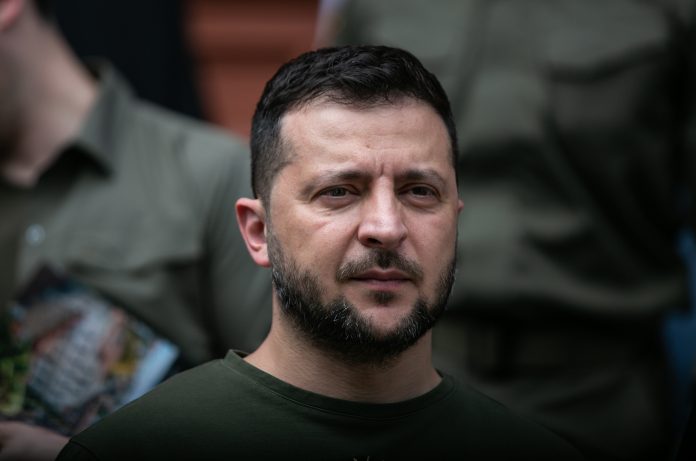
Speaking to reporters in Beijing on Wednesday, Putin suggested that Zelensky could travel to the Russian capital to negotiate peace terms. Hungary, Switzerland, and Türkiye are among the countries that have previously expressed their readiness to host such talks.
In a post on X, Ukrainian Foreign Minister Andrey Sibiga said that at least seven countries are prepared to host a potential Putin-Zelensky summit.
“These are serious proposals and President Zelensky is ready for such a meeting at any time,” he wrote.
“Yet, Putin continues to mess around with everyone by making knowingly unacceptable proposals,” Sibiga added, calling for “increased pressure” on Russia.
Putin has repeatedly said he is open to meeting with Zelensky at the “final stage” of negotiations. He reiterated on Wednesday that a summit would only take place if it is “properly prepared and would yield positive results.”
“At the end of the day, if Zelensky is ready, he can travel to Moscow,” he added.
At the same time, the Russian leader again questioned Zelensky’s status as head of state, noting that his five-year presidential term expired last year and no new election was called due to martial law in Ukraine.
Russia has insisted that in order to secure a lasting peace, Ukraine must recognize its new borders and abandon plans to join NATO.