Monday, December 29, 2025
Home Blog Page 170

Israeli drones drop grenades near peacekeepers in Lebanon: UNIFIL

“This is one of the most serious attacks on UNIFIL personnel and assets since the cessation of hostilities agreement of last November,” UNIFIL said in a statement on Wednesday.

“One grenade impacted within 20 metres [22 yards] and three within approximately 100 metres [110 yards] of UN personnel and vehicles.”

The peacekeepers were working on Tuesday to clear roadblocks that were hindering access to a UN position, UNIFIL added.

Israel has been violating the November ceasefire it reached with Hezbollah, carrying out near-daily attacks on Lebanon, claiming to target Hezbollah sites and members but also killing large numbers of civilians, displacing communities, and destroying infrastructure and residential buildings.

UNIFIL said the Israeli army was informed in advance of its road clearance work in the area, southeast of the village of Marwahin.

“Any actions endangering UN peacekeepers and assets, and interference with their mandated tasks are unacceptable and a serious violation of Resolution 1701 and international law,” UNIFIL added, referring to the resolution adopted at the end of a 2006 war to stop hostilities between Israel and Hezbollah.

The Israeli military said it did not intentionally target the peacekeepers but dropped several sonic bombs near a suspect in a border area without providing evidence. It added that contact was made with the peacekeeping force and it explained details of what had happened.

The UN has expressed “serious concern” about the Israeli grenade attack. UN chief Antonio Guterres’s spokesman Stephane Dujarric said: “Whether or not they meant to do it or didn’t mean to do it, … the Israeli [military was] fully informed in advance of the work that we were doing on road clearance in that area.”

“They knew exactly where we were, when we were going to be there,” Dujarric stated, adding, “And obviously, we’re relieved that no one was hurt, but this could have been very tragic indeed.”

Established in 1978, UNIFIL patrols Lebanon’s southern border with Israel.

Last week, the UN Security Council unanimously extended the peacekeeping mission in Lebanon until the end of 2026, after which a yearlong drawdown and withdrawal is to commence.

The winding-down of UNIFIL has been pushed heavily by Israel and the United States, who accuse the peacekeeping force of providing political cover for Hezbollah since the 2006 war, which ended in an impasse, and of failing to work to disarm Hezbollah – despite that not being the UN body’s stated mission.

Meanwhile, Israel continues to occupy at least five points in Lebanese territory after its invasion of southern Lebanon in October. The ceasefire reached in November stipulates that Israeli forces should withdraw from southern Lebanon, but that has not yet happened.

Hezbollah Secretary-General Naim Qassem has rejected growing pressure to disarm the group, warning that Lebanon’s sovereignty could be achieved only by ending Israeli “aggression”.

Qassem said last month that the Lebanese government must first ensure Israel complies with the ceasefire agreement before talks on a national defence strategy can take place.

“The resistance will remain as a strong barrier, preventing Israel from achieving its goals, and Israel will not be able to remain in Lebanon or achieve its expansionist project through Lebanon,” the Hezbollah chief added.

He dismissed Lebanese government and foreign proposals to integrate Hezbollah’s arsenal into a national defence strategy, insisting that Israel must first withdraw from Lebanese territory, release prisoners and halt its attacks.

Pentagon chief: US seeking ‘deter’ Russia and China

Pentagon

Speaking to Fox News, Hegseth argued that the large military parade in Beijing on Wednesday, attended by Chinese President Xi Jinping and Russian President Vladimir Putin, highlighted the closer ties between the two neighbors.

“Unfortunately, the weakness of the previous administration has driven Russia and China closer together. That was a terrible development of a lack of American leadership and a lack of American strength,” Hegseth said.

“But that’s why President Trump has charged us at the Defense Department to be prepared, rebuild our military in historic ways, restore the warrior ethos, and reestablish deterrence,” he added.

Hegseth later clarified that although the US does not seek conflict with Russia or China, it aims to “maintain strategic advantage.”

Moscow and Beijing have described their relations as a strategic partnership “without limits.” After the West imposed sweeping sanctions in response to the Ukraine conflict in 2022, Russia redirected much of its trade and supply chains toward China.

Both countries have condemned Washington’s “Cold War mentality” and pledged to work toward a fairer, more equitable model of international relations.

Trump warns Putin on Ukraine war

Speaking to reporters at the White House on Wednesday, Trump said he planned to talk to Putin in the coming days, but the Russian leader was aware of his administration’s stance on the war.

“I have no message to President Putin. He knows where I stand, and he’ll make a decision one way or the other,” Trump stated, adding, “Whatever his decision is, we’ll either be happy about it or unhappy. And if we’re unhappy about it, you’ll see things happen.”

Trump’s comments came after Putin said earlier that he would be willing to meet his Ukrainian counterpart Volodymyr Zelensky in Moscow.

“Donald asked me for such a meeting. I said: ‘Yes, it’s possible, let Zelenskyy come to Moscow,’” Putin stated at the end of his visit to China, where he attended Beijing’s commemorations of the 80th anniversary of Japan’s defeat in World War II.

“I have never ruled out the possibility of such a meeting,” Putin continued, adding, “But is there any point? Let’s see.”

Putin added that Moscow would achieve its aims in Ukraine militarily if it could not reach an agreement.

“Let’s see how the situation develops,” Putin said.

Trump has suggested a one-on-one meeting between Putin and Zelenskyy as part of his efforts to bring an end to the three-and-a-half-year-long conflict.

Despite Trump’s pledge to bring a swift end to the conflict, Moscow and Kyiv remain far apart on the terms of any potential peace agreement.

Russia has announced that any deal with Ukraine would need to include land in four regions it has annexed since 2022, while Kyiv has ruled out ceding any territory.

Putin says ready to host Zelensky in Moscow

Vladimir Putin

The Russian president was speaking to gathered media on Wednesday at the Diaoyutai Residence in Beijing, China, marking the end of a 4-day visit – his longest trip abroad since 2012 – to China, that included the SCO summit, bilateral talks and a military parade on Tiananmen Square.

“It’s a path to nowhere, to just meet, let’s put it carefully, the de-facto head of the [Ukrainian] administration. It’s possible, I’ve never refused to, if such a meeting is well-prepared and would lead to some potential positive results,” Putin stated, in response to a question on whether he planned to meet Zelensky.

US President Donald Trump asked the Russian president to hold such a meeting during their summit in Alaska last month, Putin added.

“If Zelensky is ready, he can come to Moscow, and such a meeting will take place,” he stated.

At the same time, Putin reiterated concerns about the legitimacy of the Ukrainian leader and whether meeting him would actually be “meaningful.” Zelensky’s presidential term has long run out, and no legal mechanism to extend it exists in Ukraine, he added.

In an interview with the Indonesian newspaper Kompas released on Wednesday, Russian Foreign Minister Sergey Lavrov confirmed that Moscow’s top priority remains settling the crisis via peaceful means, adding that it is taking concrete steps to achieve that goal.

Lavrov recalled that Moscow initiated the resumption of direct Russia-Ukraine talks this spring, resulting in three rounds of direct negotiations in Istanbul, Türkiye. He noted that the sides reached “certain progress,” including prisoner exchanges and the repatriation of the bodies of dead soldiers.

Foreign peacekeepers ‘unacceptable’ in Ukraine: Russia

Maria Zakharova

“Russia does not intend to discuss foreign intervention in Ukraine, which is fundamentally unacceptable and undermines all security, in any form or format,” she said in response to European Commission President Ursula von der Leyen announcing that a postwar plan to send troops to Ukraine is being discussed.

Moscow has already rejected the deployment of any NATO-linked peacekeepers, with Russian Foreign Minister Sergey Lavrov calling it a “foreign military intervention.”

The Kremlin has repeatedly issued maximalist demands to Ukraine and has refused to engage in leader-level talks as Ukraine and its allies work towards ending Russia’s war against Ukraine.

Von der Leyen has told the Financial Times that Europe was preparing “pretty precise plans” for potential peacekeeper deployments.

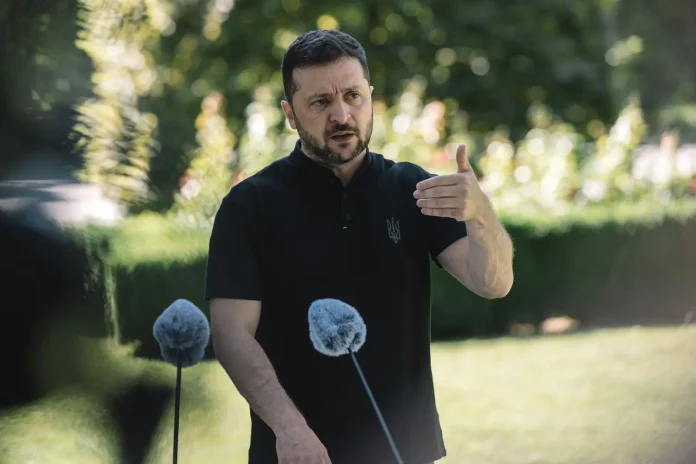
President Volodymyr Zelensky arrived in Paris ahead of a high-level meeting of the so-called “Coalition of the Willing.” Participating nations are expected to discuss what security guarantees can be provided to Ukraine once a ceasefire or peace deal is secured.

Trump urges Hamas to free all 20 hostages in Gaza ‘immediately’

Israel Hostages Hamas

“Tell Hamas to IMMEDIATELY give back all 20 Hostages (Not 2 or 5 or 7!), and things will change rapidly. IT WILL END!” Trump wrote on his social media company, Truth Social.

The president did not elaborate on what measures he would take if the hostages were released or what “end” he was referring to.

Around 250 hostages were taken to Gaza following the cross-border attack by Hamas on Israel on Oct. 7, 2023.

Tel Aviv estimates there are 50 Israeli hostages still in Gaza, including 20 alive. Meanwhile, rights groups say more than 10,800 Palestinians are held in Israeli prisons under torture, starvation, and medical neglect.

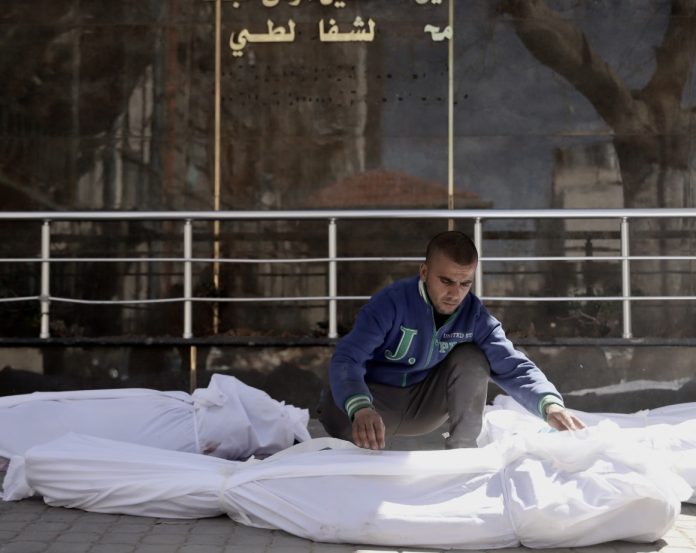
Israel has killed nearly 64,000 Palestinians in Gaza since October 2023. The military campaign has devastated the enclave, which is facing famine.

Last November, the International Criminal Court issued arrest warrants for Israeli Prime Minister Benjamin Netanyahu and his former Defense Minister Yoav Gallant for war crimes and crimes against humanity in Gaza.

Israel also faces a genocide case at the International Court of Justice for its war on the enclave.

International efforts for a ceasefire since Israel shattered a truce in March have so far failed.

Rare footage of endangered Persian leopards captured in Iran’s Bamou National Park

Iran Leopard

The images were recorded using night-vision cameras. The Persian leopard is among the most threatened big cats in the world, with its population declining due to habitat loss, poaching, and human conflict.

Iranian authorities and conservationists have been making extensive efforts to protect the species and prevent its extinction.

Related footage:

Over 1.2 million illegal Afghans return from Iran this year

Afghan Refugee in Iran

However, he said more than two million undocumented foreigners still remain in Iran.

Rezaei added that Iran had accepted many Afghans during times of crisis, as they sought refuge across the border.

He said talks have been held with Afghan authorities to encourage people to stay in their own country.

According to him, many Afghans voluntarily returned with their families, and Iran even set up stations at eastern borders to provide them support on their way back.
At the same time, law enforcement forces have detained some individuals who refused to comply with return regulations.

Rezaei stressed that all undocumented foreigners will be identified and removed, while legal residents are allowed to continue living in Iran.

He also said Iran has persuaded Afghan officials to control their citizens so that they would not cross the border illegally into Iran.

Illegal settlers’ unit paid $1,800 a day to demolish Gaza homes: Haaretz

Gaza War

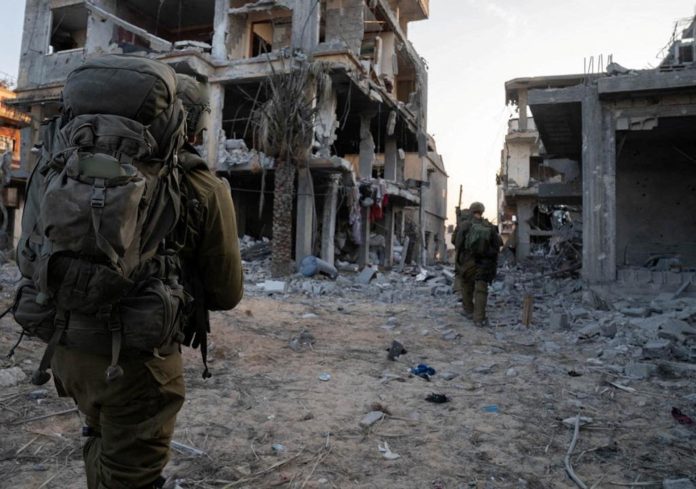
According to Haaretz daily, the “Uriya” unit has been active for a year, demolishing Palestinian homes and tunnels with heavy machinery.

Its members, paid about $1,800 a day, have exposed both Israeli soldiers and civilians to grave risks by entering potentially booby-trapped sites and using Palestinians as human shields.

Haaretz linked the settler group to Betzalel Zini, brother of incoming Shin Bet chief David Zini, saying it consists of small demolition teams recruited through private contractors. They are often seen across Gaza operating bulldozers and excavators for one purpose – destruction.

The paper added that Abraham Azulay, a 25-year-old from the Yitzhar settlement, was part of Uriya when he was killed two months ago in Khan Younis, southern Gaza, after a bullet struck the cabin of his bulldozer.

The daily said Uriya members are recruited through social media groups, many from illegal settlements and associated with far-right activism.

Military sources told the newspaper the operators lack professional training, do not belong to any formal framework, and ignore safety rules, raising concerns about accountability.

The unusually high wages, the paper added, have made the work attractive beyond ideology, turning demolition into a lucrative business for the unit’s members.

Haaretz, citing military officers, warned that bulldozer drivers were increasingly influencing tactical decisions on the ground, contributing to unnecessary casualties. One operator from the Yitzhar settlement was reportedly killed in Khan Younis two months ago while working as part of Uriya.

The Israeli army denied the report, describing Uriya as a legitimate reserve engineering force.

Israel has killed more than 63,600 Palestinians in Gaza since October 2023. The military campaign has devastated the enclave, which is facing famine.

Last November, the International Criminal Court issued arrest warrants for Israeli Prime Minister Benjamin Netanyahu and his former Defense Minister Yoav Gallant for war crimes and crimes against humanity in Gaza.

Israel also faces a genocide case at the International Court of Justice for its war on the enclave.

Israel says plans to annex 82% of occupied West Bank

Israel settlement expansion

“Israeli sovereignty will be applied to 82% of the territory,” Smotrich, the leader of the far-right Religious Zionism Party, told a press conference in Jerusalem.

“It is time to apply Israeli sovereignty in Judea and Samaria (West Bank) and remove once and for all the idea of dividing our small land,” he said.

The extremist minister stated that the Palestinians’ affairs will be run by the Palestinian Authority, which will be later replaced with what he called “regional civilian management alternatives.”

Smotrich added the main principle of the annexation is “the maximum land with minimum Arab population.”

“There will never, and can never be, a Palestinian state in our land,” he claimed.

“If the Palestinian Authority dares to rise up and try to harm us, we will destroy them just as we do to Hamas.”

Smotrich called the West Bank annexation “a preventative step” against moves by many countries to recognize Palestinian statehood.

Several countries, including Belgium, France, the UK, Canada, and Australia, announced plans to recognize Palestinian statehood during the upcoming meetings of the UN General Assembly on September 8-23, joining 147 nations that already do.

Smotrich called on Prime Minister Benjamin Netanyahu “to make a historic decision to apply Israeli sovereignty to all open areas in Judea and Samaria (West Bank).”

On Aug. 20, Israel approved a major settlement project, called E1, which aims to split the occupied West Bank into two parts, cutting off the northern cities of Ramallah and Nablus from Bethlehem and Hebron in the south and isolating East Jerusalem.

The international community, including the UN, considers the Israeli settlements illegal under international law. The UN has repeatedly warned that continued settlement expansion threatens the viability of a two-state solution, a framework seen as key to resolving the decades-long Palestinian-Israeli conflict.

In an advisory opinion last July, the International Court of Justice declared Israel’s occupation of Palestinian territory illegal and called for the evacuation of all settlements in the West Bank and East Jerusalem.