Saturday, April 18, 2026
Home Blog Page 169

Zelensky will have to make a deal with Putin: Trump

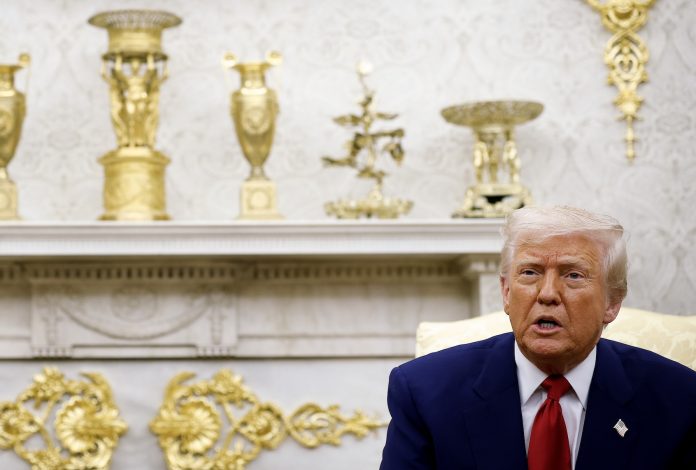
WASHINGTON, DC - APRIL 07: U.S. President Donald Trump, accompanied by Israeli Prime Minister Benjamin Netanyahu, speaks during a meeting in the Oval Office of the White House on April 7, 2025 in Washington, DC. President Trump is meeting with Netanyahu to discuss ongoing efforts to release Israeli hostages from Gaza and newly imposed U.S. tariffs. (Photo by Kevin Dietsch/Getty Images)

Trump, who has been pushing for direct talks between Zelensky and Russian President Vladimir Putin to bring an end to the hostilities, previously claimed that he would need to “intervene” personally to bring them together.

Speaking to reporters on Tuesday as he was departing for London, Trump repeated several times that “Zelensky’s gonna have to make a deal.”

Putin has said he is ready in principle to meet Zelensky and suggested the Ukrainian leader could travel to Moscow for talks. Kiev has rejected the idea, saying it would not accept “deliberately unacceptable proposals.”

At the same time, the Russian president has questioned Zelensky’s legitimacy and also expressed doubt about whether talks with him would be “meaningful.” Zelensky’s presidential term expired in May 2024, but he has refused to hold elections, citing martial law.

Moscow has insisted on a peace agreement that addresses the underlying causes of the conflict. It has demanded that Ukraine maintain neutrality, stay out of NATO and other military blocs, demilitarize and denazify, and accept the current territorial reality – including the status of Crimea and the other regions that voted to join Russia in referendums in 2014 and 2022.


Iran: Any hostile action against Tehran to End understanding with IAEA

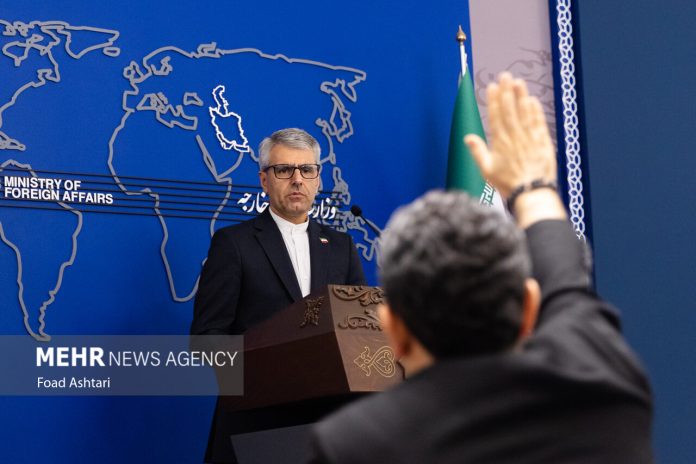
Esmail Baghaei

Esmail Baqaei, commenting on the Iran–IAEA understanding, said: “The IAEA has its own narratives regarding how Iran should implement its safeguards commitments under the new circumstances, but Iran insists that the Agency must only perform its technical duties, and no country can oblige Tehran to adhere to an understanding whose very basis has changed.”

Regarding the ongoing IAEA General Conference in Vienna, the Iranian Foreign Ministry spokesperson stated: “The draft resolution proposed by Iran at the IAEA General Conference is based on well-established rules of international law, including IAEA Resolution 533, and its purpose is not to create a new rule.”

Referring to US threats to oppose the adoption of this resolution, he added that these threats are a continuation of the recent US policy of either threatening or withdrawing from various international organizations such as the International Criminal Court, the World Health Organization, and UNESCO over the past months.

Baqaei emphasized that such actions are an example of unprecedented threats against multilateralism and the rules that have formed the basis of international relations among states for the past 80 years, adding Iran expects all countries to stand up against the violation of these rules.

Regarding the European reaction to the Iran–IAEA agreement, Baqaei said: “Iran has always shown that it does not turn away from diplomacy, and now it is time for the other parties to adopt a positive and reciprocal approach.”


Families of American citizens killed by Israel say Trump administration refuses to investigate

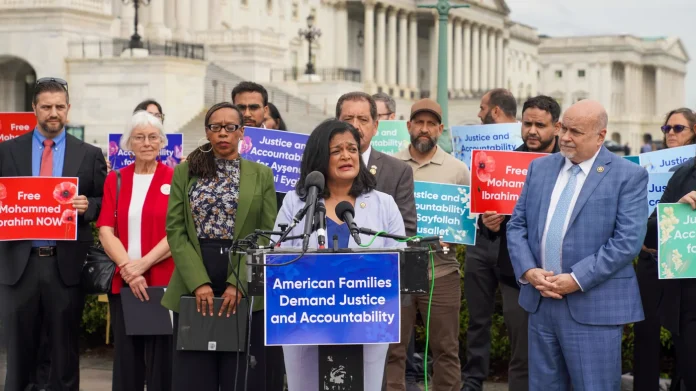
“My colleague and I pushed over and over again for accountability with absolutely no forward movement, no transparency, no insistence that the US protect, at the very minimum, its own citizens against Israeli government forces that have now killed eight US citizens and countless others with impunity,” Jayapal said.

Jayapal was speaking at a press conference alongside the families of Rachel Corrie, Sayfollah “Saif” Musallet, Tawfic Abdel Jabbar, Aysenur Ezgi Aygi and Mohammed Ibrahim, all US citizens who were killed either by Israeli forces or settlers.

Eight US citizens have been killed, primarily in the last three years, and it is the first time that the families have joined forces to demand a US-led investigation and accountability into their deaths.

The US government has so far failed to investigate the deaths of those killed, and there have been no prosecutions of the Israelis behind the killings or justice for the families left behind.

Jayapal stated that she had recently spoken to the US ambassador to Israel, Mike Huckabee, and he promised to demand answers and accountability, but has failed to do this so far.

“The American people and these families deserve answers, and the US government has to use our leverage to ensure that the Israeli government cannot kill our citizens and cannot continue to commit genocide of Palestinians,” Jayapal added, referring to the genocide in Gaza that has killed nearly 65,000 Palestinians so far.

Jayapal noted the US had leverage as the most prominent backer of military aid to Israel and needed to demand that Israel’s government “comply with international law”.

Representatives Jesus “Chuy” Garcia, Rashida Tlaib, Mark Pocan, Summer Lee, Lateefah Simon and Delia Ramirez were also at the press conference and have been pushing for accountability.


European Commission President facing two no-confidence motions over trade deals, Gaza war: Politico

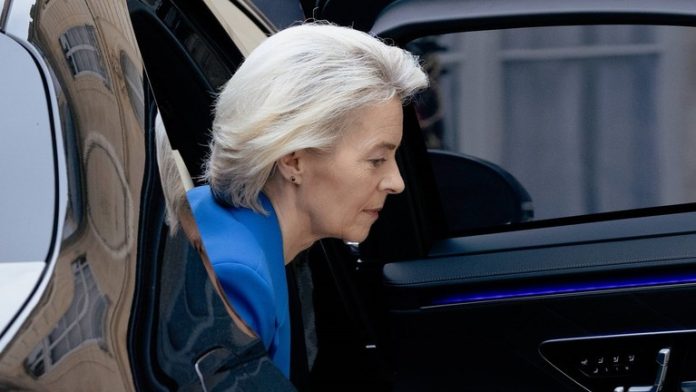
The motions of censure are scheduled to be debated during the plenary session from October 6 to 9. The motions submitted against von der Leyen, a divisive figure in Brussels, come from both right and left – the Patriots for Europe and The Left parliamentary groups.

The Patriots for Europe have accused her of lacking transparency and accountability, particularly in relation to the EU’s trade agreements with the United States and the South American trade bloc Mercosur. “The EU is weaker today than ever due to the persistent failure of the president of the Commission to cope with the most pressing challenges,” the group stated in its motion, as quoted by Politico.

The Left has also criticized von der Leyen’s trade policies but placed greater emphasis on the EU’s handling of the conflict between Israel and Hamas in Gaza. The group argued that the Commission has shown inaction and failed to hold Tel Aviv accountable.

Both motions were filed at midnight on September 10, which was the earliest opportunity following a previous no-confidence vote in July. Von der Leyen survived that vote, which was initiated by Romanian right-wing MEP Gheorghe Piperea and focused on the so-called Pfizergate scandal. The controversy stemmed from the disappearance of text messages between von der Leyen and Pfizer’s CEO during negotiations for a major Covid-19 vaccine procurement.

Von der Leyen, a former doctor and German defense minister, was accused of a lack of transparency in negotiating the multi-billion-euro deal. She dismissed the allegations against her as “simply a lie” and branded her critics “conspiracy theorists.”

The initiative ultimately failed, supported only by 175 MEPs with 360 voting against it. To pass, two-thirds of the 720 MEPs must vote in favor. No-confidence motions used to be quite rare at the EU Parliament. Prior to the July vote, such a motion was last tabled against Jean-Claude Juncker in 2014.

Iran FM: E3 move to activate snapback lacks political, legal legitimacy

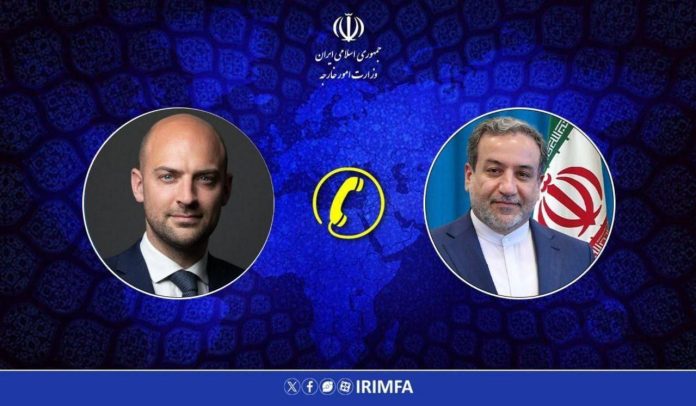
Araqchi also reiterated the purely peaceful nature of the Islamic Republic of Iran’s nuclear program.

Referring to the recent agreement between Iran and the International Atomic Energy Agency (IAEA), he stated that the Islamic Republic of Iran has always considered diplomacy the only solution to international issues, including its nuclear program, and is ready to engage in any fair and balanced solution that ensures mutual interests.

During the talks, French Foreign Minister Jean-Noël Barrot also expressed concern over the growing tensions and emphasized the importance of maintaining dialogue and the need to return to a diplomatic path.

Both sides also discussed the state of bilateral relations, including consular matters, and stressed the need to continue direct contacts and consultations.

Top aid groups urge world leaders to stop Israel’s genocide in Gaza

With an estimated 65,000 Palestinians killed in Israeli attacks so far in Gaza, including more than 20,000 children, the agencies warned early on Wednesday that almost 1 million more people are now “on the precipice of an even deadlier period in Gaza’s story if action is not taken”.

“The inhumanity of the situation in Gaza is unconscionable,” the groups said in a joint statement, warning that Israel’s latest efforts to forcibly displace Gaza City’s population through a ground occupation are aimed at making the enclave’s largest urban area “deliberately… uninhabitable”.

“As humanitarian leaders, we have borne direct witness to the horrifying deaths and suffering of the people of Gaza. Our warnings have gone unheeded and thousands more lives are still at stake,” the agencies added.

“More than half a million people are starving. Famine has been declared and is spreading. The cumulative impact of hunger and physical deprivation means people are dying every day.”

Despite the well-documented horrors that have unfolded for almost two years under Israel’s siege of the Palestinian territory and enforced starvation of the enclave’s civilian population as they try to survive under military fire, “world leaders fail to act”.

“States must use every available political, economic, and legal tool at their disposal to intervene. Rhetoric and half measures are not enough. This moment demands decisive action,” the aid groups said.

“History will undoubtedly judge this moment as a test of humanity,” they stated, adding that UN members must take action, or their “complicity” will set a “dangerous precedent for the future”.

Christopher Lockyear, a signatory to the joint statement and the secretary-general of Doctors Without Borders, known by its French acronym MSF, said on Monday that Israel’s military onslaught in Gaza amounts to “the systematic destruction of a people”.

MSF is clear, Lockyear said: “Israel is committing genocide against Palestinians in Gaza and doing so with absolute impunity.”

“The Israeli military has attacked everything and everyone in Gaza,” he added.

Signatories to the statement also include Islamic Relief Worldwide, ActionAid International, CARE International, Handicap International, Save the Children International, the Norwegian Refugee Council and Médecins du Monde.

On Tuesday, Navi Pillay, the chairwoman of the UN’s Independent International Commission of Inquiry on the Occupied Palestinian Territory, said the world body had determined that Israel was carrying out genocide in Gaza.

Among those most responsible, based on their own statements, for the genocide were Israeli Prime Minister Benjamin Netanyahu, former Minister of Defence Yoav Gallant and President Isaac Herzog, Pillay added.

The UN Commission, in its report, “concludes that the Israeli authorities and Israeli security forces have the genocidal intent to destroy, in whole or in part, the Palestinians in the Gaza Strip”.

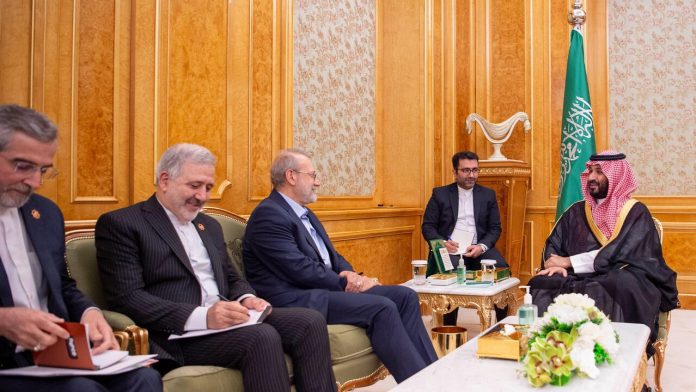
Iran’s security chief meets MbS in Riyadh

The meeting took place at Al-Yamamah Palace in Riyadh on Tuesday. It marks a new phase in the Tehran–Riyadh diplomatic engagement.

Larijani traveled to Saudi Arabia at the invitation of the kingdom’s defense minister, leading a delegation that included Deputy Secretary for International Affairs Ali Bagheri Kani and Persian Gulf Affairs Advisor Mohammad Ali Bek.

The visit follows a series of high-level exchanges between the two countries, including the Saudi defense minister’s trip to Tehran earlier this year.

The meeting comes just one day after President Masoud Pezeshkian met with bin Salman on the sidelines of the emergency Arab-Islamic summit in Doha, where both sides expressed satisfaction with the growing momentum in bilateral ties in the wake of the China-brokered detente in 2023.

Larijani’s visit to Riyadh is his third regional trip since assuming office on August 5, following earlier stops in Iraq and Lebanon.

Iranian officials say the renewed diplomatic outreach reflects efforts to stabilize regional dynamics and expand cooperation with neighboring states.


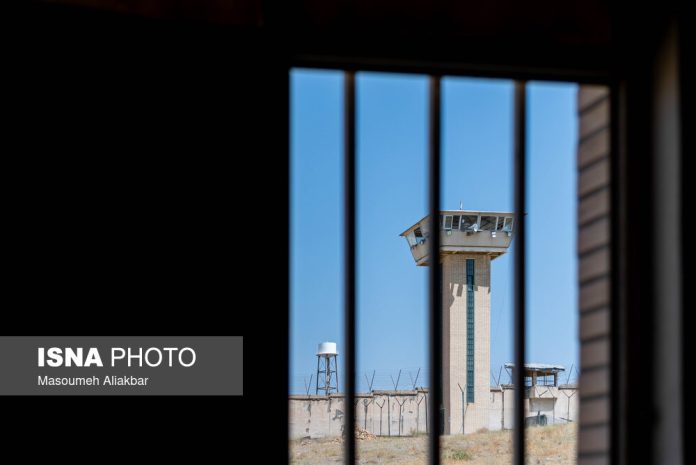
Iran executes man convicted of spying for Israel

Iran Prison

Shahbazi was hanged on Wednesday morning after his death sentence was upheld by the Supreme Court. Authorities said he had engaged in intelligence and security cooperation with Israel and shared classified information with its operatives.

Shahbazi worked as a contractor in industrial cooling systems, gaining access to sensitive sites, including telecommunications, military, and security facilities.

Officials said he passed on details about data centers and infrastructure vulnerabilities in exchange for money and the promise of residency abroad.

The case linked Shahbazi to Esmaeil Fekri, another Iranian executed in June on similar charges of collaborating with Mossad. According to officials, the two coordinated projects, with Fekri handling computer networks while Shahbazi leveraged his technical access to restricted locations.

Investigators said Shahbazi held encrypted online meetings with Mossad officers, provided project data, and received payments in cryptocurrency.

Following his arrest, Shahbazi’s case was reviewed in court with legal representation, and he was convicted of “corruption on earth” through espionage.

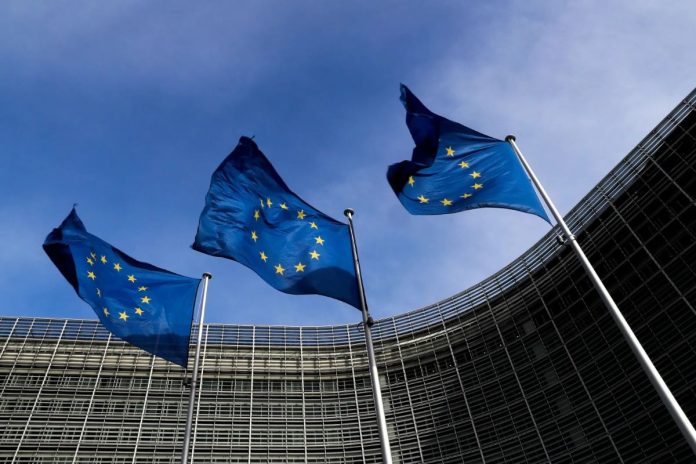
EU postpones new Russia sanctions indefinitely: Politico

The European Union

The proposed 19th package of measures targeting Russian oil exports and the banking sector over the Ukraine conflict was due to be presented on Wednesday. However, it has been dropped from the European Commission’s agenda indefinitely, several EU diplomats told Politico on Tuesday.

According to the report, the suspension comes as Brussels is increasing pressure on Hungary and Slovakia to cut their energy reliance on Moscow in light of a fresh ultimatum to do so from Washington.

Trump, who has so far refrained from imposing direct sanctions on Russia, reportedly said over the weekend he was ready “to move ahead” if Washington’s European partners halt Russian oil purchases. He has also urged the EU to slap tariffs of up to 100% on China and India – the key buyers of Russian oil since the escalation of the Ukraine conflict in 2022. Russian President Vladimir Putin has warned Western nations against adopting a “colonial” tone toward China and India and trying to “punish” them.

As part of its sanctions’ pressure, Brussels has pledged to phase out Russian fossil fuels entirely by 2027, but several member states – including Hungary and Slovakia – continue to oppose the move, citing risks to their national energy security. The European Commission has recently proposed scrapping unanimous voting on the bloc’s foreign policy decisions to sideline dissenting members.

Russia has denounced Western sanctions as “illegal,” stating that they have not only failed to derail the national economy, but have provided an impetus for domestic development. Russian officials maintain they seek a long-term peace, accusing Kiev and its Western backers of undermining the process.

US issues new Iran-related sanctions

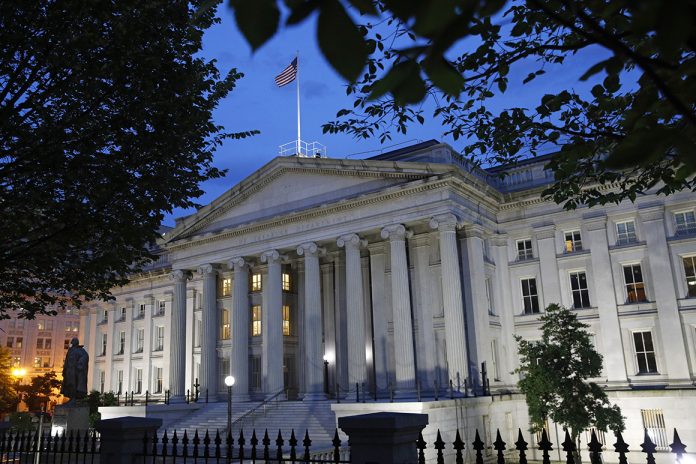
United States Department of the Treasury

The US Department of the Treasury said in a statement on its website on Tuesday that it had designated four Iranian nationals and a dozen companies in Hong Kong and the United Arab Emirates (UAE) for their roles in funds transfers benefiting Iran.

The designations by the US Treasury’s Office of Foreign Assets Control (OFAC) included Alireza Derakhshan, Vahid Derakhshan, Arash Estaki Alivand, and Leila Karimi, four individuals who OFAC claimed had used a network of front companies in Hong Kong and the UAE to facilitate Iran-related transactions.

It added the transactions included the purchase of $100 million worth of cryptocurrency for oil sales for the Iranian government, as well as funds transfers for the purchase of products on behalf of the Iranian armed forces and defense ministry.

The Treasury announced that the sanctions issued on Tuesday are the second such action taken against the so-called Iranian shadow banking network since February 4, when US President Donald Trump signed a presidential memorandum ordering a campaign of maximum pressure on Iran.

Iran has repeatedly dismissed the significance of US sanctions and their impacts on the country’s ability to export oil and receive its proceeds.

Reports and figures published by major international data analytics firms have shown that Iran has been able to sell more oil since Trump began his second term in office in January.

Iranian authorities say US sanctions are desperate attempts by Washington to force Iran to change its political and military strategies.