Saturday, April 18, 2026
Home Blog Page 167

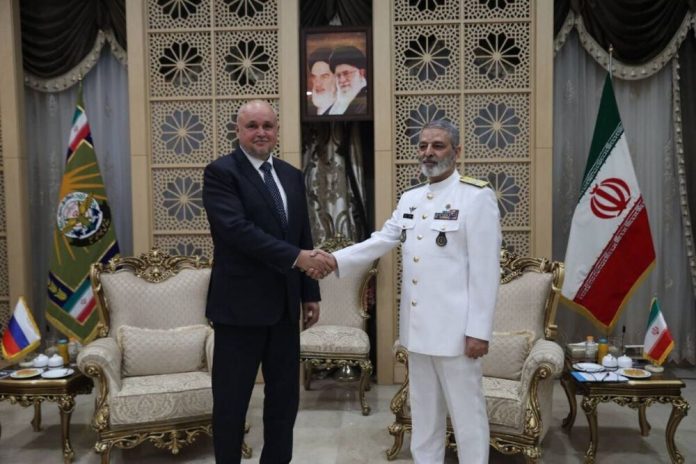
Iran’s top military chief: Diplomacy best path to resolving disputes

Speaking in Tehran during a meeting with Sergey Tsivilev, Russia’s Minister of Energy, Mousavi highlighted the opportunities for expanding cooperation between Tehran and Moscow in the face of heavy Western sanctions imposed on both countries.

He praised Russia’s firm stance at the United Nations and the International Atomic Energy Agency in condemning the Zionist regime’s recent attacks on Iran, calling Moscow’s position “resolute and constructive.”

“While Iran has demonstrated to the world that it has never been the aggressor, it is committed to diplomacy and negotiations as the most effective path to overcoming challenges,” Mousavi said.

He cautioned, however, that enemies in the past have misused dialogue as a pretext for deception, recalling that the U.S. and the Zionist regime launched an imposed war against Iran despite diplomatic engagements.

He stressed that Iran’s Armed Forces responded with strength and determination.

For his part, Tsivilev expressed condolences over the loss of Iranian commanders and scientists in the recent Israeli attacks and endorsed Mousavi’s call for strengthening bilateral commissions to enhance cooperation.

“I fully agree that Iran and Russia must raise their economic and defense cooperation to the highest levels,” Tsivilev affirmed.

Israeli army to flood Gaza City with explosive-laden robots: Report

Israel Army

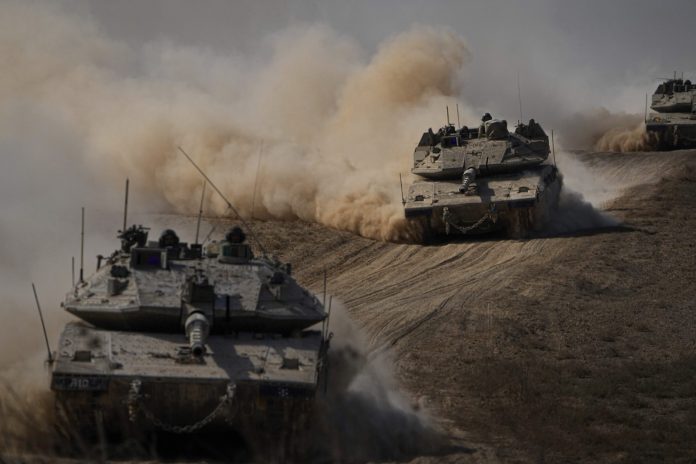
Known in Gaza as “booby-trapped robots”, the vehicles are decommissioned armoured personnel carriers (APCs), rigged with explosives and operated remotely by Israeli forces.

They are driven deep into urban areas before being detonated, causing massive blasts and widespread destruction.

The practice is referred to by the Israeli military as “suicide APCs.”

Israeli outlet Walla reported that the military has stationed a large number of these outdated APCs along the Gaza boundary, converting them into “mega-explosives” for use in its ground offensive, which it said began on Tuesday.

Earlier this month, the Jerusalem Post said the use of old M113 APCs had tripled under the orders of Southern Command chief Yaniv Asor.

According to Israeli media, the explosions are so powerful that some have been heard as far away as central Israel.

Palestinians say the blasts are “earth-shaking” and cause widespread terror and destruction in their wake.

“They’re extremely powerful. They reduce entire buildings to crushed rubble,” Hamza Shabaan, a Gaza City resident who witnessed the robots’ explosions, previously told Middle East Eye.

“They are far more devastating than air strikes.”

At least 100 explosive robots were used in densely populated areas between 13 August and 3 September alone, according to the Gaza-based Government Media Office.

The nonprofit Euro-Mediterranean Human Rights Monitor reports that around 300 residential units are destroyed daily due to these explosions.

The use of these robots is occurring at an “unprecedented pace”, suggesting a strategy “to wipe the city off the map”, Euro-Med Monitor announced.

“Meet Israel’s most dystopian weapon used to terrorise Gazans into fleeing south: APC vehicles repurposed into robotic giant bombs,” Palestinian researcher Muhammad Shehada wrote on X.

“Israel’s army has been swarming Gaza city with those APCs to indiscriminately barrel bomb overcrowded neighbourhoods & create chaos,” he added.

This method is not new. Explosive-laden APCs were reportedly used across Gaza during the early months of the genocide, despite initial denials from the Israeli military.

Testimonies from soldiers from as early as July 2024 confirmed their deployment.

According to a recent Maariv report, the tactic was first developed after the 2014 Gaza war.

It has since become “a method of operation that enables the clearing of roads, the demolition of buildings, and the destruction of enemy infrastructure without exposing forces to direct threats”.

But it’s not just “suicide APCs” massed along the Gaza border. The Israeli army has also positioned dozens of heavy engineering vehicles, according to Walla.

These include both civilian and military-grade equipment – some armoured against missiles and explosives – intended to support ground forces and destroy “threatening infrastructure and structures”.

“In the past week, dozens of heavy vehicles have been moved to the Gaza border,” Walla reported.

“A large number are already inside. More are expected to join in the coming days.”

A military source told the outlet that the vehicles are “awaiting orders to enter both central and secondary missions”.

The army reportedly places “great importance” on these machines and is working to get them fully operational.

The equipment, manufactured in the United States, recently arrived in Israel following delays by the Joe Biden administration. Their shipment was later approved under President Donald Trump.

Since the start of the war, these vehicles, often operated by settlers and far-right “hilltop youth” hired for the task, have been used to systematically demolish homes and civilian infrastructure across the Gaza Strip.

 

79,000 Israelis left occupied territories in 2024, outnumbering newcomers: Official figures

According to the Central Bureau of Statistics (CBS), Israel’s population reached around 10.148 million people, with a growth rate of 1.0%.

Of this figure, roughly 7.758 million are Jews (78.5 percent), about 2.13 million are Arabs (21.5 percent), and around 260,000 are foreign nationals.

The count also includes some 400,000 Palestinians in East Jerusalem, which Israel occupied in 1967 and unilaterally annexed in 1980 — a move not recognized by the UN.

The bureau said approximately 179,000 children were born in Israel in 2024, while around 50,000 people died.

It said about 25,000 new immigrants arrived in Israel and 5,000 others entered under the family reunification program.

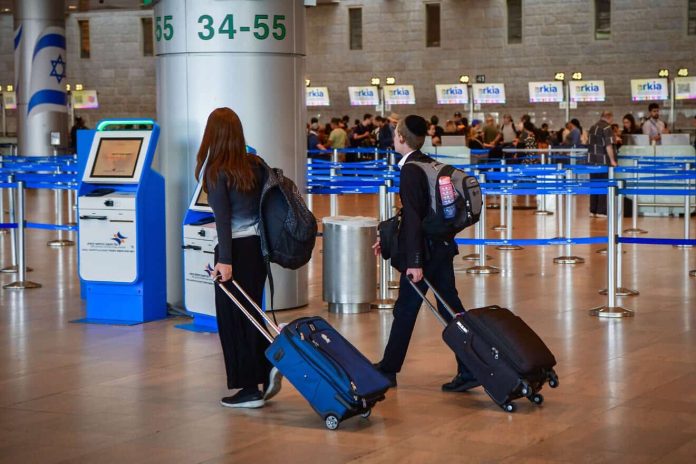
In addition, nearly 21,000 Israelis who had previously emigrated returned to the occupied territories, while some 79,000 left Israel.

In 2023, around 55,300 Israelis emigrated, while about 27,000 returned or moved to Israel, according to official figures.

Tensions have grown inside Israel and with neighboring countries over Tel Aviv’s ongoing war on Gaza, where more than 65,000 people have been killed since October 2023.

Israel also launched a war against Iran in June, near-daily strikes in Lebanon and Syria, and military assaults in the occupied West Bank.


Poll finds huge support for global cooperation, but failing grades for UN, others

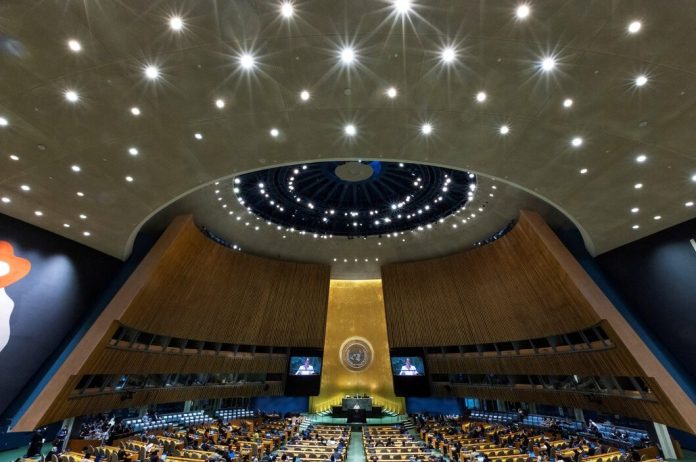
The survey, commissioned by the Rockefeller Foundation and conducted in 34 countries from August 8 to September 10, offers a grim picture of confidence in multilateral institutions at a time when the United States and other advanced economies are slashing development aid and funding for global projects.

Despite cuts in development spending and rising nationalist rhetoric around the world, 75% of those surveyed said they support global cooperation if it is proven to effectively solve problems, but just 42% see it being in their personal interest.

Nine out of 10 of those surveyed said global cooperation is important to address jobs and employment, 92% wanted cooperation on trade and economic development, 93% on food and water security and 91% on global health.

To help bridge the gap, Rockefeller announced it was launching a $50 million initiative – “The Shared Future” – that will focus on reviving international cooperation, restructuring global health and re-imagining humanitarian food systems.

Rockefeller Foundation President Rajiv Shah said the poll results showed a hunger for smarter and more creative solutions to replace outdated international institutions and systems.

“The institutions that worked to advance human progress in the 20th century are struggling to meet the challenges of the 21st,” Shah stated, adding, “This moment of transformation is an opportunity to build on what’s working, forge new partnerships and leverage new technologies to deliver results for the world’s most vulnerable people.”

However, trust in global institutions lags far behind. Only 58% of those surveyed had trust in the United Nations, which is gearing up for next week’s General Assembly meetings, 60% in the World Health Organization and 44% in the International Monetary Fund (IMF).


Saudi Arabia and Pakistan ink mutual defence pact

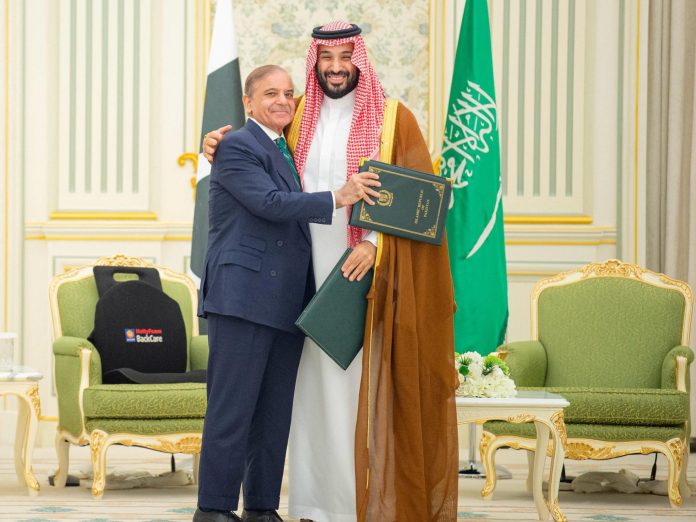
Pakistan said the agreement “reflects the shared commitment of both nations to enhance their security and to achieving security and peace in the region, adding that the “agreement states that any aggression against either country shall be considered an aggression against both”.

Asked by Reuters whether the agreement would place Saudi Arabia under Pakistan’s nuclear umbrella, a senior Saudi official stated, “This is a comprehensive defensive agreement that encompasses all military means”.

Saudi Arabia and Pakistan have enjoyed close military ties for decades. The Financial Times cited a Saudi official saying that the agreement had been under discussion for two or three years.

But the deal’s timing comes after Sunni monarchs were shocked by Israel’s attack on Qatar last week. Middle East Eye revealed that the Trump administration approved the attack beforehand, as subsequent reporting from Axios confirmed.

Qatar, Saudi Arabia and the UAE are all strong US partners that are home to US military bases. Qatar is home to al-Udeid, the largest US military base in the region.

The Persian Gulf states have long relied on the US to underwrite their security and have watched warily as Washington acquiesces to Israeli attacks on Syria, Lebanon and Iran despite their tense relations with the Islamic Republic.

However, few officials in the region expected Israel to attack Qatar with US backing, a major non-Nato ally that has been mediating between Hamas and Israel.

“This could potentially have profound implications for how regional states view US security guarantees,” Ted Singer, former head of Middle East operations for the US Central Intelligence Agency, told MEE after the Israeli attack.

The agreement was signed by Saudi Crown Prince Mohammed bin Salman and Pakistan’s Prime Minister Shehbaz Sharif in Riyadh.

Pakistan’s army chief, Field Marshal Asim Munir, was also in attendance. The Pakistani military exercises outsized influence in the country.

The defence pact is likely to have deep implications for the region. Pakistan has close military and economic ties with China, but Munir visited the White House earlier this year in a sign that Islamabad was also courting the Trump administration.

The US and Pakistan cooperated extensively on security during the US war in Afghanistan, but the relationship waned as a result of the US withdrawal and Beijing’s rising influence.

Saudi Arabia also enjoys good relations with Pakistan’s historic rival, India. Pakistan and India engaged in a deadly air war in May that almost brought them to the brink of nuclear conflict. Pakistan thanked US President Donald Trump for mediating an end to the war, but India bristled at the suggestion that it wanted a truce, hurting ties with the US.

Saudi Arabia’s nod to Pakistan will not go unnoticed in Washington. Islamabad has strongly condemned Israel’s genocide in Gaza and also criticised Israel’s attack on Iran, its neighbour, in June.

Analysts say that Pakistan was alarmed by the precedent set by US and Israeli air strikes on Iranian nuclear facilities – and the potential extension of Israeli aerial dominance near Pakistan’s western frontier.

Pakistan is the only Muslim-majority country with nuclear weapons. It has always framed its arsenal as for defensive purposes, but does not have a “no-first-use” doctrine, which rules out preemptively attacking foes with nuclear weapons.

Israel is widely understood to possess nuclear weapons.

Saudi Arabia’s decision to forge a defence pact with Pakistan comes after it was rebuffed by the US, which wanted to condition a defensive agreement and the sale of civilian nuclear technology to Riyadh on normalising relations with Israel.

Saudi Arabia forcefully pushed back on US lobbying efforts ahead of Trump’s visit to the region in May, MEE reported.

Crown Prince Mohammed bin Salman has labelled Israel’s war in Gaza a genocide.

Saudi Arabia maintains close security ties with the US, and the crown prince is understood to have a strong relationship with Trump.

In May, Trump credited the crown prince for convincing him to drop sanctions on Syria. Riyadh also successfully lobbied the US to stop its attacks on the Houthis in Yemen earlier this year.

The kingdom pledged over $600bn in investments in the US when Trump visited.


Iran calls on E3 to act ‘responsibly’ amid ‘snapback’ threats

In a joint phone call with the E3 counterparts and the EU’s foreign policy chief, the Iranian foreign minister warned that triggering the so-called snapback mechanism would undermine diplomacy and unnecessarily escalate tensions.

Araghchi said the European push to restore the previously lifted UN Security Council sanctions lacked any “legal or logical basis,” especially given Iran’s cooperation with the International Atomic Energy Agency (IAEA).

The Iranian minister added Tehran has developed a clear framework for fulfilling its safeguards obligations under the new circumstances, following the US-Israeli acts of aggression.

Tehran, Araghchi stated, has employed a responsible approach and expects international recognition of the value of its constructive behavior.

“It is now up to the other side to seize this opportunity to continue the diplomatic path and prevent an avoidable crisis.”

He also urged the E3 to demonstrate a genuine commitment to diplomacy rather than yielding to actors who disregard international law.

Araghchi reiterated Iran’s readiness to pursue a fair and balanced solution that protects mutual interests. However, he underscored, this requires a responsible stance on the part of the European powers.

“Achieving such a goal requires a responsible and independent approach from the three European countries and refraining from being influenced by actors who show no regard for diplomacy or the principles and norms of international law.”

The phone call concluded with an exchange of proposals aimed at sustaining diplomatic momentum.

The ‘snapback’ is the 2015 nuclear deal’s dispute resolution mechanism, under which parties who believe Iran has dishonored its commitments can move to restore six previous Iran-related Security Council resolutions adopted between 2006 and 2010.

The European parties have accused Iran of non-compliance over its decision to reduce commitments in response to the US withdrawal from the 2015 deal, known as the Joint Comprehensive Plan of Action (JCPOA).

Iran argues that the E3 cannot invoke the mechanism as they first violated the agreement by refusing to compensate for the US withdrawal, which prompted Iran to reduce its commitments.


Iran tells UN Security Council Afghan migration poses growing strain

Afghan Refugee in Iran

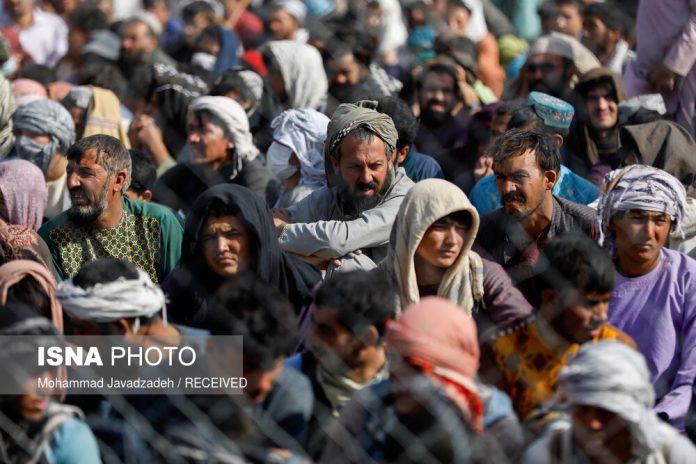
Speaking on Wednesday, Iravani said Iran has “no choice but to return undocumented Afghan nationals” due to mounting pressures, which he said have worsened following Israeli aggression against Iran earlier this year.

He stressed that Iran has carried the burden of hosting Afghan refugees for decades, often without adequate international support, and cannot continue to shoulder the responsibility alone.

The envoy also expressed condolences to Afghanistan over the recent deadly earthquake and noted that Iran had promptly dispatched humanitarian aid, pledging to continue assistance.

He underlined that Afghanistan’s future must be determined by Afghans themselves through an inclusive political process that respects sovereignty and protects the rights of all citizens, especially women and girls.

Iravani warned against politicizing humanitarian aid or using sanctions as leverage, urging the release of Afghanistan’s frozen assets by the US.

He reiterated Iran’s support for a stable, independent, and peaceful Afghanistan and affirmed cooperation with regional and international partners to achieve this goal.

Syria’s president says negotiations with Israel could lead to results ‘in days’

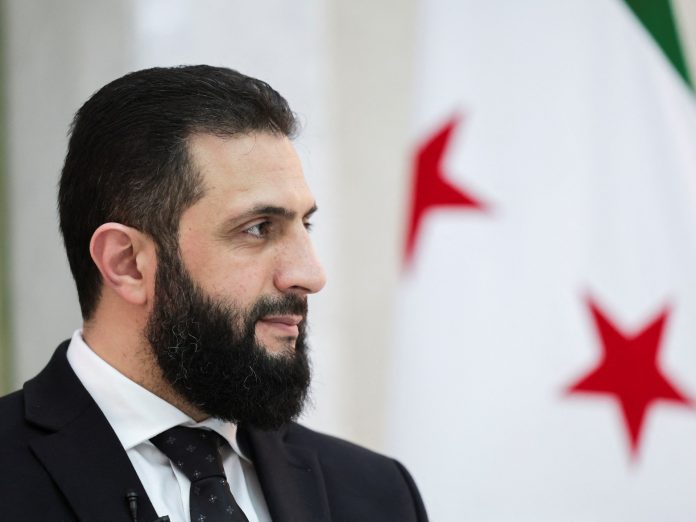
Al-Sharaa, who led the force that overthrew former President Bashar al-Assad in December, ending the country’s 13-year war, made the comments to reporters on Wednesday.

Israel responded to al-Assad’s overthrow by declaring that a 1974 security agreement with Syria had collapsed, and increased the amount of Syrian territory Israel controlled, as well as ramping up air attacks in Syria, killing several Syrian soldiers over the past few months.

The United States, which has backed Syria’s new authorities, has attempted to broker a deal between Syria and Israel.

However, al-Sharaa said that the US had not pressured Syria to make a deal with Israel, and was instead acting as a mediator.

The Syrian president added that the potential agreement between Israel and Syria would need to respect Syria’s airspace, which Israel has repeatedly violated for years, as well as Syria’s territorial integrity. He added that the United Nations would need to monitor any agreement.

A security agreement could lead to other agreements being reached, al-Sharaa said, but a normalisation agreement between the two sides was not currently on the table.

Israel’s most recent ground incursion in Syria came on Sunday, when Israeli soldiers carried out searches in the towns of Saysoun and Jamlah, in southeastern Deraa.

The day before, al-Sharaa had confirmed that talks with Israel had begun, in an attempt to restore the 1974 agreement, which followed the 1973 war between Israel and Syria.

Syria failed to retake the occupied Golan Heights, which Israel had taken in 1967, in that war. A demilitarised buffer zone was established as part of the 1974 agreement, but Israel violated the agreement by seizing the buffer zone and areas outside it after the fall of al-Assad.

Israel has also bombed targets across Syria, including the Ministry of Defence in Damascus in July. That month, Israel supported Druze militiamen in Suwayda against local Bedouin tribal fighters and Syrian government forces sent to end fighting between the Druze and the Bedouins.

In his comments to reporters on Wednesday, al-Sharaa said that Israel and Syria had been “four to five days” away from reaching a security agreement before the violence in Suwayda in July.

Al-Sharaa added that Israel had conducted more than 1,000 air strikes and more than 400 ground incursions in Syria since the December 8 overthrow of al-Assad, actions he described as “very dangerous”.

Israel has framed that intervention as being in support of the Druze, a minority also present in Israel, and part of an Israeli demand that Syrian government forces not be present in areas south of Damascus up to the border with Israel.

The Israelis have also emphasised al-Sharaa’s past membership of al-Qaeda, despite the Syrian president’s shedding of those associations.

The news outlet Axios reported on Tuesday that Israel’s demands during negotiations with Syria included the demilitarised zone southwest of Damascus, as well as a no-fly zone in that area, in exchange for an Israeli withdrawal from all of the land it has seized in Syria since December, except for an outpost on the summit of Mount Hermon.

Al-Sharaa confirmed that Israel wanted to remain on Mount Hermon. He added that Syria wanted a deal similar to the 1974 agreement, and said that it was not yet time to discuss the fate of the Israeli-occupied Golan Heights outside of the buffer zone, which Israel illegally annexed in 1981.


Britain to formally recognize Palestinian state after Trump’s visit: Report

Palestine

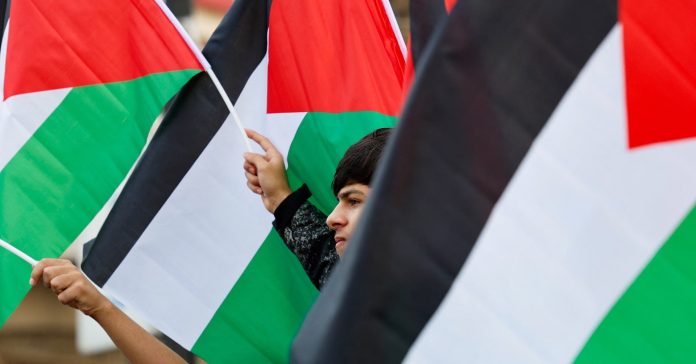
In July, Prime Minister Keir Starmer said the UK will recognize Palestinian statehood at the UN General Assembly in New York in September unless Israel takes “substantive steps” to address the humanitarian situation in Gaza and agree to a ceasefire.

The reason for delaying the announcement until after Trump departs from the UK is because it “could have risked deepening tensions with Washington, after Trump and Secretary of State Marco Rubio offered strong backing for Israel’s ground offensive in Gaza,” the report said.

The prime minister’s spokesman said the recognition was designed to protect the viability of a two-state solution.

“Statehood is the inalienable right of the Palestinian people, and it is absolutely critical in protecting the viability of a two-state solution that we make clear that inalienable right,” he added.

Last year, Ireland, Norway and Spain joined a list of 147 countries that now officially recognize Palestine.

France also announced plans to recognize a Palestinian state during the UN General Assembly, becoming the first member state of the G7, an informal forum of the seven leading industrialized nations and democracies, to do so.

Iranian president: No obstacles to Tehran-Moscow cooperation

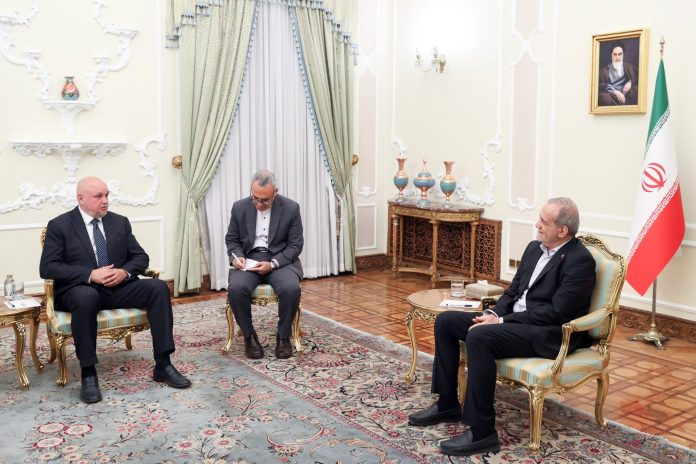
Speaking on Wednesday evening in Tehran during a meeting with Russian Energy Minister Sergei Tsivilev, Pezeshkian welcomed the progress of joint projects and underlined Iran’s commitment to carrying out all agreements reached between the two sides.

He added that “successful cooperation models between independent countries such as Iran and Russia will prove that the era of unilateralism in the world has ended.”

Pezeshkian urged officials from both nations to translate the outcomes of expert-level talks into concrete action “in the shortest possible time,” noting the determination of both himself and Russian President Vladimir Putin to push forward with the agreements.

He expressed hope that ongoing exchanges of high-level delegations would further strengthen the partnership between the two “friendly and allied” countries.

For his part, Tsivilev conveyed greetings from President Putin and praised Iran’s commitment to bilateral projects.

He affirmed that despite external pressures and sanctions, “no obstacle can hinder the constructive economic and trade cooperation” between Iran and Russia.