Wednesday, April 22, 2026
Home Blog Page 155

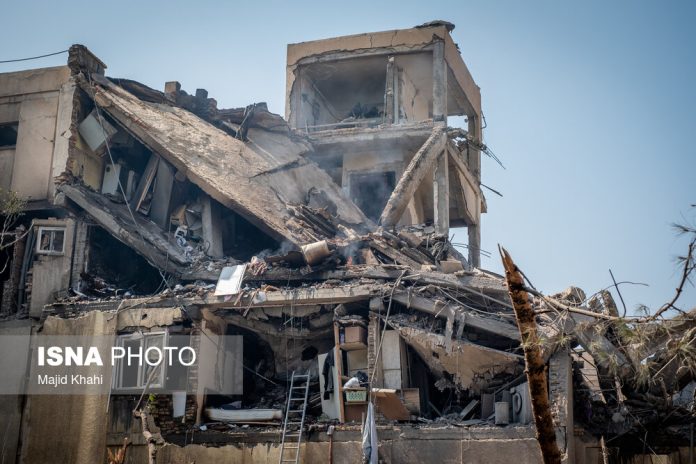
Iran Red Crescent chief: 126 women, 41 children martyred in Israeli aggression; over 8,200 homes destroyed

Speaking at a press conference alongside Foreign Ministry spokesperson Esmaeil Baqaei, Kolivand confirmed that over 8,200 residential units were destroyed across various provinces.

He further noted that five Red Crescent aid workers were martyred, as Israeli forces deliberately targeted ambulances and emergency responders.

Kolivand emphasized the extensive war crimes committed by Israel, including attacks on hospitals and intensive care units, which have been documented and submitted to international bodies such as the International Committee of the Red Cross.

He added that the Iranian Red Crescent, in cooperation with the International Red Cross representative in Iran, inspected several affected areas to verify the scale of the atrocities.

Despite the devastation, including burning homes and casualties among women and children, Kolivand praised the courage and dedication of his colleagues who continued rescue and relief operations throughout the conflict.

More than 80 countries have expressed solidarity with Iran’s Red Crescent regarding these crimes.

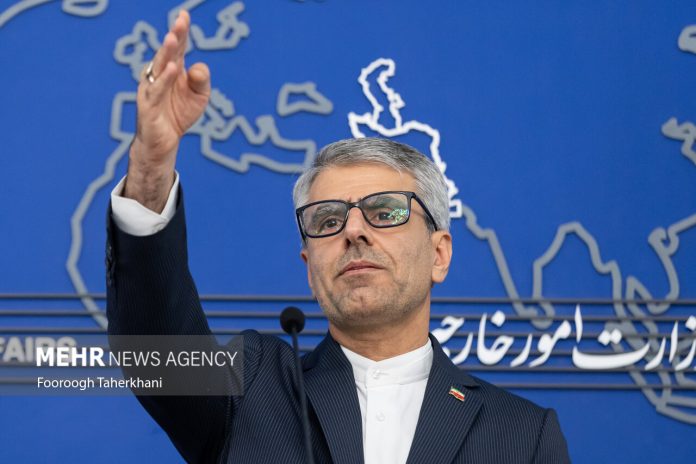
Iran spox: Resorting to snapback against Tehran has no legal basis; Europe failed in own duties

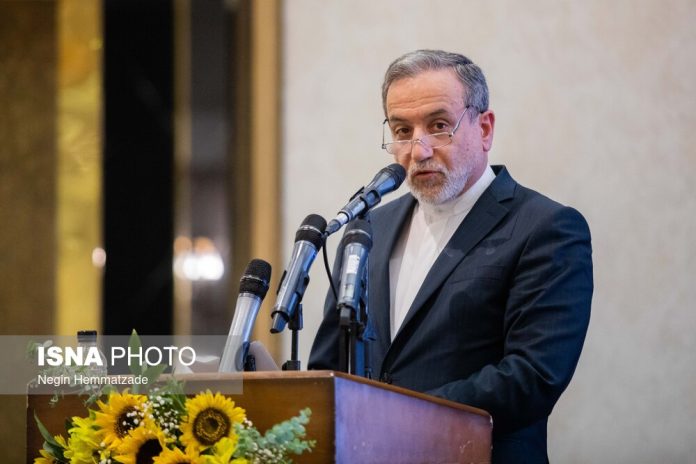
Esmael baghaei

Speaking to reporters on Monday, Baqaei said: “If the European parties to the Iran nuclear deal, JCPOA, had fulfilled their commitments, we would not be facing such circumstances, and Iran would not have exercised its right to reduce its JCPOA obligations.”

He emphasized that Iran still considers itself a JCPOA member and that its reduction in obligations came in response to the flagrant violations of the deal by the US and other parties.

He noted that the European parties themselves have also committed serious breaches of the agreement and failed to uphold their responsibilities, for which they must now be held accountable.

Baqaei stressed that triggering the snapback mechanism is a political move intended to confront Iran and will be met with an appropriate response from Tehran.

“By resorting to the snapback mechanism, the Europeans are essentially declaring that they no longer see a role for themselves in continued diplomacy regarding Iran’s nuclear issue,” he said.

He added that the Islamic Republic of Iran is currently engaged in dialogue with the relevant parties to safeguard its national interests.

Baqaei also criticized Germany, stating: “The presence of US nuclear weapons on German soil clearly shows that Germany has violated its commitments under the Non-Proliferation Treaty (NPT). Yet we are witnessing double standards — while Iran’s peaceful nuclear facilities come under attack, Germany takes wrongful stances toward Iran.”

Top Iranian commander says military prepared for a decade of war

Mohammad Reza Ashtiani

Brigadier General, Amir Mohammadreza Ashtiani, Deputy Chief of Staff of the Iranian Armed Forces and former defense minister, made the remarks in reference to recent military engagements with Israel and the US, stating that Iran suffered minimal equipment damage during the 12-day conflict in June.

“Our equipment hasn’t sustained significant damage, and we have enough supplies to wage war for ten years if necessary,” he said, according to media.

General Ashtiani stressed that equipment alone does not determine battlefield success, explaining, “What truly matters is morale. They say morale is three-fourths of the fight. Our armed forces are experienced, well-trained, equipped with modern systems, and maintain high morale.”

In contrast, he claimed that Iran’s adversaries lack key components of military strength.

“They may have equipment, but they don’t have the will,” General Ashtiani added.

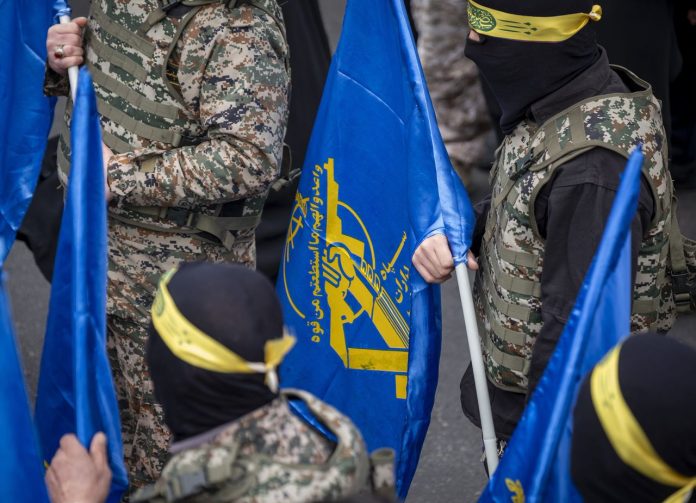
IRGC reports discovery of suspected Israeli drone components near Tehran

IRGC

In a statement released Sunday, the public relations office of the IRGC said that during a routine patrol operation, Basij forces uncovered parts and equipment believed to be associated with unmanned aerial vehicles (UAVs) linked to the Zionist regime.

According to the statement, the discovery took place as part of ongoing security and intelligence patrols aimed at safeguarding the Parand Industrial Zone and surrounding areas.

The IRGC noted that this is the second instance of such drone-related equipment being found in the area since the start of the Israeli aggression against Iran on June 13.

While the statement did not specify the nature or intended use of the equipment, it emphasized the continued vigilance of local security forces in countering threats attributed to foreign espionage elements.

The 12-day conflict between Israel and Iran, which left casualties and damages on both sides, ended in a ceasefire at the end of June.

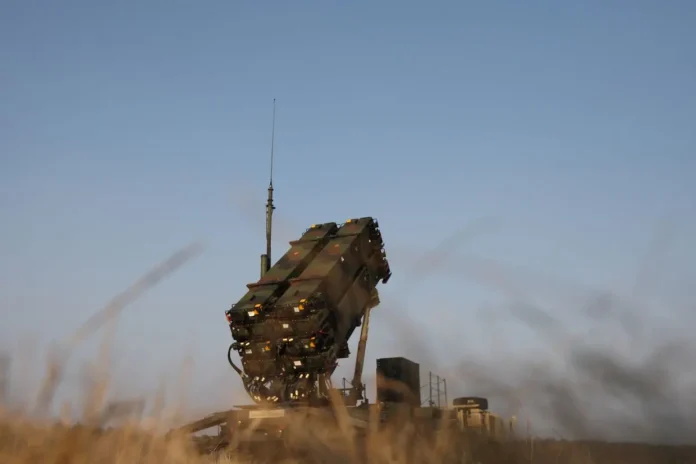
US will send Patriot missiles to Ukraine: Trump

Trump did not give a number of Patriots he plans to send to Ukraine, but he said the United States would be reimbursed for their cost by the European Union. The U.S. president has grown increasingly disenchanted with Putin because the Russian leader has resisted Trump’s attempts to negotiate a ceasefire between Ukraine and Russia.

Ukrainian President Volodymyr Zelensky has asked for more defensive capabilities to fend off a daily barrage of missile and drone attacks from Russia.

“We will send them Patriots, which they desperately need, because Putin really surprised a lot of people. He talks nice and then bombs everybody in the evening. But there’s a little bit of a problem there. I don’t like it,” Trump told reporters at Joint Base Andrews outside of Washington.

“We basically are going to send them various pieces of very sophisticated military equipment. They are going to pay us 100% for that, and that’s the way we want it,” Trump added.

He plans to meet NATO Secretary General Mark Rutte to discuss Ukraine and other issues this week.

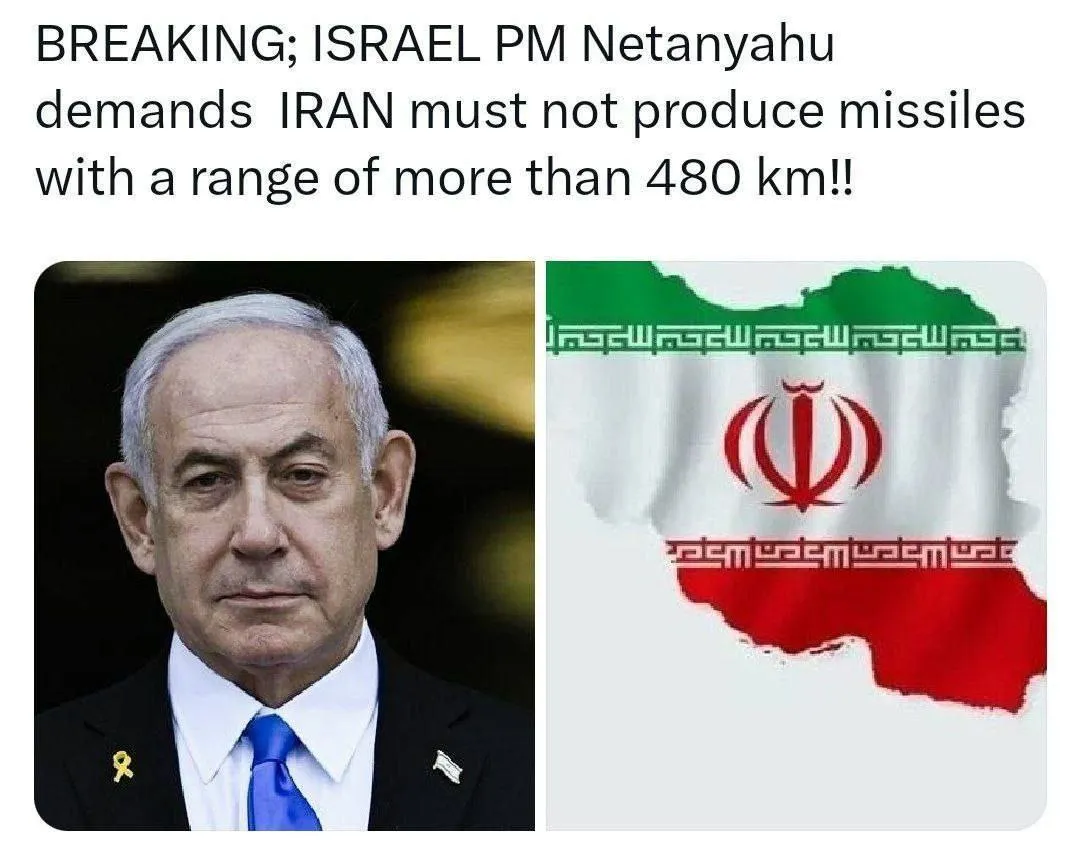
Iran FM rebukes Israeli PM in strongly worded tweet: “What exactly is Netanyahu smoking?”

Abbas Araghchi

Araghchi wrote, “Netanyahu pledged victory in Gaza almost two years ago. The end result: military quagmire, facing arrest warrant for war crimes, and 200,000 new Hamas recruits.”

“In Iran, he dreamed that he could erase 40+ years of peaceful nuclear achievements. The end result: every one of the dozen Iranian academics that his mercenaries martyred had trained 100+ capable disciples. They will show Netanyahu what they are capable of,” he further noted.

The foreign minister added Netanyahu’s “arrogance” doesn’t stop there, explaining, “Having miserably failed to achieve any of his war aims in Iran and compelled to run to “Daddy” when our powerful missiles flattened secret Israeli regime sites, which Netanyahu is still censoring, he is openly dictating what the US should or shouldn’t say or do in talks with Iran.”

“Apart from farce that Iran will accept anything a wanted war criminal has to say, the inevitable question arises: what exactly is Netanyahu smoking? And if nothing, what exactly does the Mossad have on the White House?” he concluded.

Iran FM rebukes Israeli PM in strongly worded tweet: “What exactly is Netanyahu smoking?”

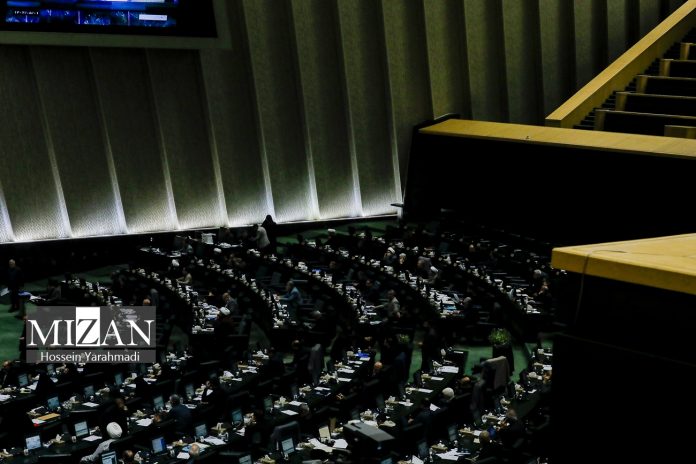
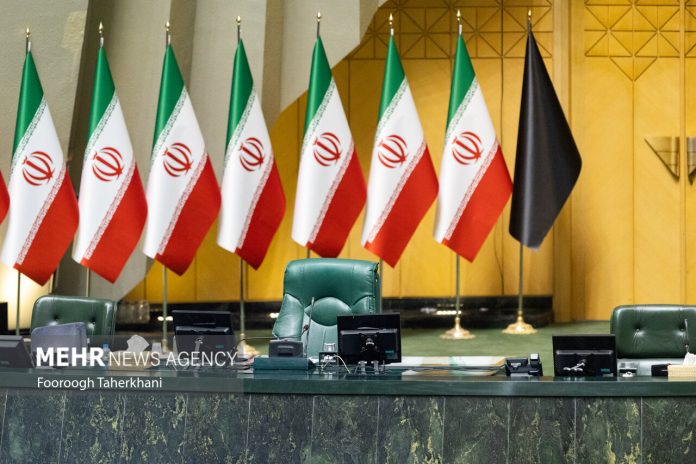
Parliamentary commission approves bill to bolster Iran’s military capabilities

Iranian Parliament

Commission spokesman Ebrahim Rezaei announced that the proposal, titled “Strengthening the Defensive Capacity of the Armed Forces in Confronting the Crimes and Aggressions of the Zionist Regime,” was passed in the presence of senior officials from the Ministry of Defense, the Armed Forces General Staff, the Islamic Republic of Iran Army, and the Islamic Revolution Guard Corps (IRGC). The bill has now been referred to the Commission’s Defense Subcommittee for further review.

Backed by 120 lawmakers and introduced by Tehran MP Ali Khezrian, the bill mandates full disbursement of the defense budget for the year 2025–26, as well as payment of any outstanding funds from the previous fiscal year. It obliges the State Planning and Budget Organization and the Ministry of Petroleum to ensure full financing of strategic defense projects.

The bill further requires the Central Bank to allocate resources, including from unblocked foreign assets, to fund emergency defense initiatives by the Armed Forces General Staff.

According to Rezaei, the commission and defense officials unanimously emphasized the urgency of enhanced military preparedness in the face of mounting threats and pledged robust cooperation to ensure full implementation of the bill.

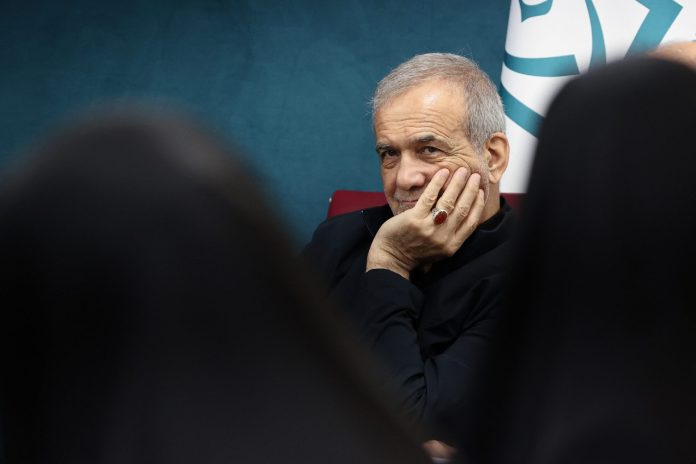
President Pezeshkian: Iran belongs to all citizens—no room for division into ‘insiders’, ‘outsiders’

“We must never divide our people into ‘insiders’ and ‘outsiders,’” Pezeshkian declared.

“Iran belongs to all Iranians—regardless of belief, ethnicity, language, or gender. Disagreement does not equal enmity. We have no right to impose our views on others by force.”

Referring to the recent 12-day war, the President commended the nation’s resilience and collective unity.

“During this difficult time, the people stood firm. Even those who may disagree with us politically, or women criticized for their appearance, took to the streets in protest against the Zionist regime. This is their homeland too,” he said.

He reiterated the importance of people-centered governance: “In both the 8-year war and this 12-day conflict, it was the people—not just the government—who ensured victory. A country cannot be run solely from behind desks; we must harness the strength of our citizens.”

Calling for national unity, Pezeshkian concluded: “The only way to build Iran is through acceptance of diversity, fostering harmony, and joining forces. If we align all capacities and perspectives, we can overcome our challenges and create the Iran we all deserve.”

Iranian parliament pass tougher penalties for espionage and collaboration with hostile foreign regimes

Iran's parliament

The amendments, aimed at addressing the Guardian Council’s concerns, were passed by an overwhelming majority during the July 14th session.

Under the revised bill, any operational or intelligence activity deemed detrimental to national security or in collaboration with Israel or other hostile regimes is punishable by death and confiscation of property. If such actions do not meet the threshold of “corruption on earth”, perpetrators face life imprisonment.

The bill also criminalizes activities that aid hostile regimes economically, technologically, or militarily, with penalties ranging from execution to long-term imprisonment.

Possession or use of illegal communication devices like Starlink for subversive purposes is also penalized.

Meanwhile, the bill targets cyberattacks, espionage drones, and dissemination of sensitive materials to foreign media.

Any filming or transmission of content deemed harmful to national morale or unity could result in imprisonment and permanent disqualification from public service.

Iran’s Intelligence Ministry is tasked with identifying “hostile media” and expedited legal processes have been introduced for related offenses.

Iranian lawmakers underlined that these measures are crucial for safeguarding national security amid increasing regional tensions.

Sand, dust storms affect about 330 million people in 150 countries due to climate change: UN

On Saturday, the UN General Assembly (UNGA) marked the International Day of Combating Sand and Dust Storms and its designation of 2025 – 2034 as the UN Decade on Combating Sand and Dust Storms.

The storms “are fast becoming one of the most overlooked yet far-reaching global challenges of our time”, said Assembly President Philemon Yang.

“They are driven by climate change, land degradation and unsustainable practices.”

The secretary-general of WMO, Celeste Saulo, stated that sand and dust storms do not just mean “dirty windows and hazy skies. They harm the health and quality of life of millions of people and cost many millions of dollars through disruption to air and ground transport, on agriculture and on solar energy production.”

Airborne particles from these storms contribute to 7 million premature deaths annually, said Yang, adding that they trigger respiratory and cardiovascular disease, and reduce crop yields by up to 25%, causing hunger and migration.

“About 2 billion tonnes of dust are emitted yearly, equivalent to 300 Great Pyramids of Giza” in Egypt, Laura Paterson, the WMO’s UN representative, told the UNGA.

More than 80% of the world’s dust comes from the deserts in North Africa and the Middle East, added Paterson, but it has a global effect because the particles can travel hundreds and even thousands of kilometres across continents and oceans.

Undersecretary-General Rola Dashti, head of the UN Economic and Social Commission for Western Asia, told the assembly the storms’ economic costs are “staggering”.

In the Middle East and North Africa, it costs $150bn, roughly 2.5% of gross domestic product (GDP), annually to deal with dust and sand storms, she said.

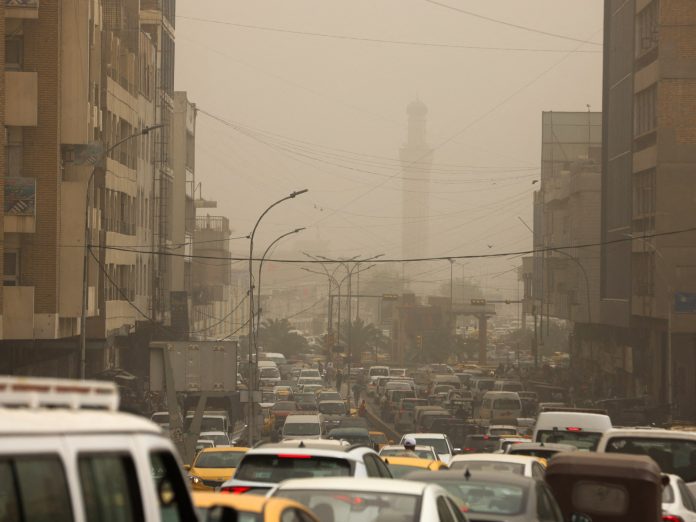
“This spring alone, the Arab region experienced acute disruption,” Dashti added, citing severe storms in Iraq that overwhelmed hospitals with respiratory cases and storms in Kuwait and Iran that forced school and office closures.

Dust from the Sahara Desert in Africa has travelled as far as the Caribbean and Florida, she said. For the United States, dust and wind erosion caused $154bn in damage in 2017, a quadrupling of the amount since 1995, according to a study in the scientific journal Nature.

The WMO and World Health Organization also warned that the health burden is rising sharply, with 3.8 billion people – nearly half the global population – exposed to dust levels exceeding WHO safety thresholds between 2018 and 2022, up from 2.9 billion people affected between 2003 and 2007.