Monday, January 19, 2026
Home Blog Page 1515

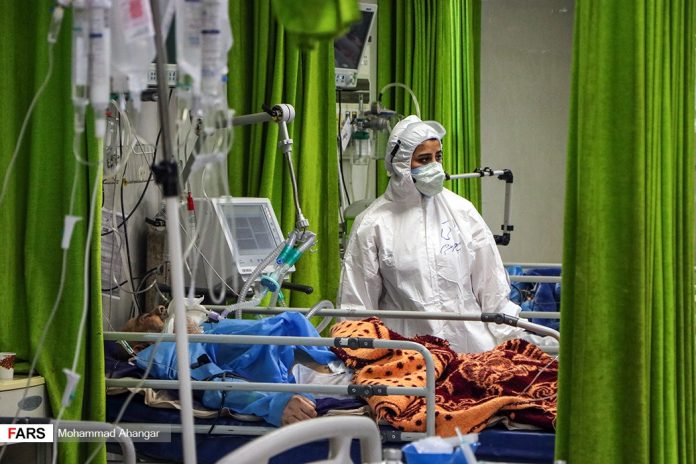
Covid in Iran: 940 new cases, 39 deaths

COVID in Iran

“A sum of 940 new patients infected with COVID-19 have been identified in the country based on confirmed diagnosis criteria during the past 24 hours,” the Iranian Health Ministry’s Public Relations Center said on Monday, and added, “497 patients have been hospitalized during the same time span.”

It further announced that the total number of COVID-19 patients has increased to 7,599,828.

“Unfortunately, 39 patients have lost their lives in the past 24 hours, increasing the number of the dead to 145,652,” the ministry noted.

It expressed satisfaction that 7,349,511 coronavirus patients have recovered or been discharged from hospitals so far.

The center went on to say that 818 cases infected with COVID-19 are in critical conditions.

It added that 56,070,167 coronavirus diagnosis tests have so far been carried out across the country.

The health ministry public relations warned that 18 cities are red, 76 cities are orange, 227 cities are yellow, and 127 cities are blue.

Egypt’s inflation climbs again to reach highest level since 2017

Egypt's inflation

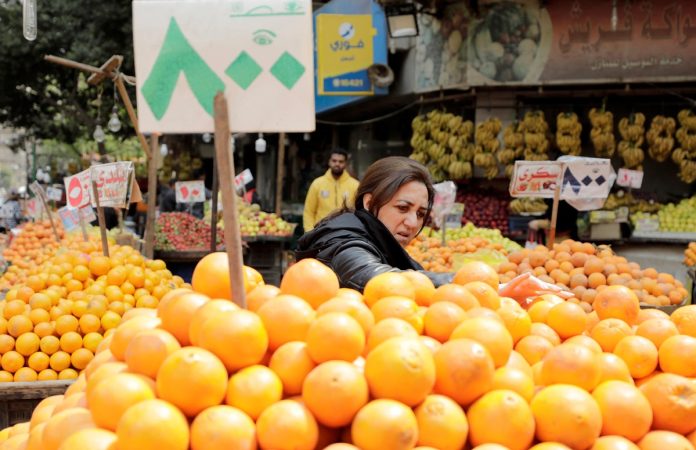
Egypt’s annual urban consumer inflation rate in March increased to 32.7% year-on-year, just shy of an all-time record, from 31.9% in February, state statistics agency Capmas reported.

Month-on-month, urban inflation slowed to 2.7% in March from 6.5% in February and 4.7% in January.

Egypt’s surging inflation rate follows a series of currency devaluations starting in March 2022, a prolonged shortage of foreign currency, and continuing delays in getting imports into the country.

Egypt, which secured a $3 billion financial support package from the International Monetary Fund in December, has devalued its currency by half since March 2022 after the fallout from Russia’s invasion of Ukraine exposed vulnerabilities in its economy.

Though month-on-month inflation slowed, it remained among the highest readings on record.

The increase was driven by a rise in food prices linked to Ramadan-related high seasonal demand, the impact of currency devaluation, particularly in the informal market, and the effect of a raw material shortage, Naeem Brokerage wrote in a note.

The median forecast of 13 analysts polled had shown annual urban consumer inflation rising to 33.6% in March.

Egypt’s highest inflation rate ever was 32.952%, reached in July 2017, eight months after Egypt devalued its currency by half as part of a previous $12 billion IMF support package.

The core inflation rate, which excludes fuel and some volatile food items, is expected to be released later on Monday. The median of the analysts’ forecasts expect that to climb to a record 42.25% from February’s 40.26%, the current record.

Palestinian teen killed in Israeli raid on WB refugee camp

Israeli forces

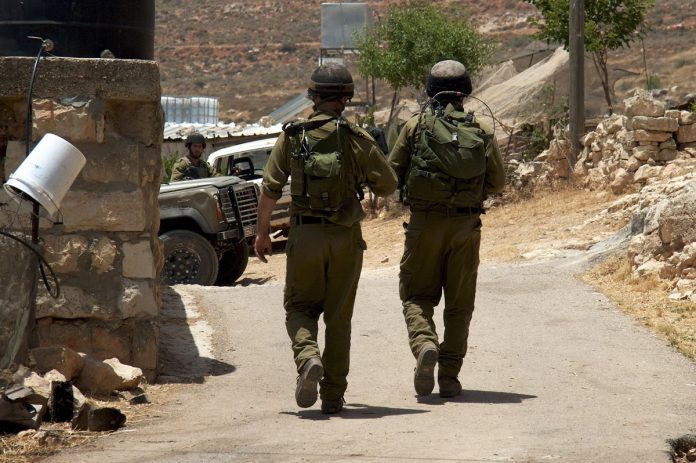
This comes at a time when the Israeli army is guarding thousands of Israeli settlers marching on Monday to the abandoned illegal outpost of Evyatar near the occupied West Bank city of Nablus to call on the Israeli government to legalise the outpost and to “denounce the increased attacks on settlements in recent weeks”.

Thousands of settlers are expected to take part in the march, heavily protected by Israeli forces who will close the march’s path from 10:30am to 5pm. The march has been called under the banner “All of the Land of Israel is ours … We will return”.

At least 27 cabinet members, including Minister of Finance Bezalel Smotrich, Minister of National Security Itamar Ben-Gvir, and Minister of Religious Affairs Michael Malchiali, and Knesset members will attend the march.

The Palestinian Ministry of Foreign Affairs said it considers the march “a dangerous escalation and provocation of the Palestinian people, and an extension of the incitement calls of the Israeli right and the fascist right to deepen settlement at the expense of Palestinian lands, and it has dangerous repercussions on the situation in the arena of conflict”.

The ministry added that it is studying with legal experts the best ways to confront the settlement process, including filing a complaint with the UN Security Council, Human Rights Council and Permanent Commission of Inquiry as well as the relevant international courts.

The march is scheduled to start from the Zaatara military checkpoint towards the evacuated Evyatar outpost on Jabal Sabih in the town of Bita, south of Nablus, in the north of the West Bank.

Last year, Israeli settlers established the illegal Evyatar settlement outpost on private Palestinian lands on Mount Sabih. The Israeli authorities decided to evacuate it after months of Palestinian protests.

Meanwhile, tensions at Al-Aqsa Mosque continued for the fifth day in a row as a group of settlers stormed the courtyards of the compound early on Monday under the protection of Israeli forces. Previously, the occupation forces prevented Palestinian worshippers below the age of 50 from entering Al-Aqsa Mosque to perform the Fajr prayer.

The forces tightened their presence at the Al-Aqsa gates before opening them and after the start of the prayer.

In light of these developments, Israeli Defence Minister Yoav Gallant decided to deploy security reinforcements in the Tel Aviv area starting Monday after the Israeli army conducted an assessment of the security situation there.

Iran army chief says Israel “too small” to pose threat to Islamic Republic

Abdolrahim Mousavi

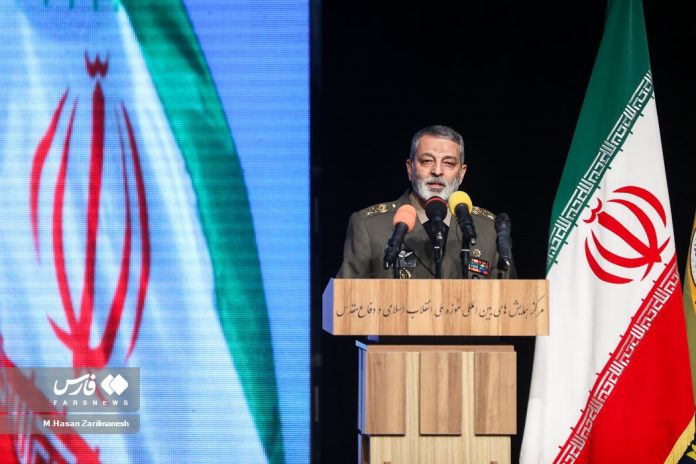
Major General Abdolrahim Mousavi said such comments by Israeli officials are an attempt to hearten Israeli forces and cover up the domestic problems the regime is facing.

“The Zionist regime, which is sinking, and indications of its collapse are now evident more than ever before, is too small to pose a threat to the Islamic Republic of Iran and the unwise and unsound moves by the leaders of the regime will only speed up its collapse,” General Mousavi said.

Iran has warned Israel of retaliation at the right time and place after the regime killed two Iranian military advisors in airstrikes in Syria last week.

Iran says Tehran and Riyadh to exchange envoys soon

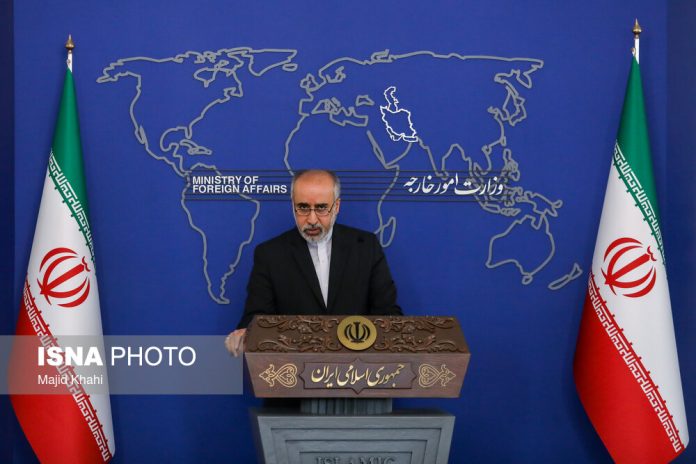
Nasser Kanaani

Addressing the press in his weekly conference on Monday, Kanaani said that in line with a recent accord between Saudi Arabia and Iran to restore diplomatic ties, a Saudi delegation arrived in the capital Tehran on Saturday and is now pursuing the reopening of their embassy in Tehran and their consulate in Mashhad.

According to the same agreement, an Iranian delegation will visit Saudi Arabia to pave the way for reopening Iran’s embassy and consulate in the Arab country as well as the Iranian representative office to the Organization of Islamic Cooperation (OIC) in Jeddah, he continued.

The spokesman expressed hope that thanks to the new circumstances in the region, a sustainable ceasefire will be established in Yemen.

The diplomat further noted that the foreign policy of the Raisi administration has been significant and eye-catching especially when it comes to interactions with neighboring states and other countries.

Touching on the latest developments in Palestine, he said that the Zionist regime, which is facing growing crises in the occupied territories, tries to spill over its woes to other Palestinian lands.

He condemned crimes committed by the Zionist regime against Palestinian worshipers at al-Aqsa Mosque, noting that awareness of the cause of Palestine has improved among Islamic countries and that Muslim and non-Muslim nations will stand against the Zionist regime and show their support for the oppressed Palestinian people.

The Iranian nation will show their support for the Palestinians once more in the upcoming Friday when the Iranians take part in International Quds Day, he added.

Sources say Saudi Arabia to maintain crude supply in several Asian refiners despite OPEC+ cuts

Aramco

This comes after the Organization of the Petroleum Exporting Countries (OPEC) and allies, known as OPEC+, surprised markets last week by announcing an extra output cut of 1.16 million barrels per day (bpd) from May for the rest of the year.

Saudi Aramco’s monthly allocation was being keenly watched by investors as an indicator of whether planned output cuts could tighten supplies in Asia, the world’s biggest crude import market.

People are wondering whether the additional voluntary cut will actually affect supply, or whether it is designed just to shore up oil prices, said a source at an Asian refiner who declined to be named as he is not authorised to speak to media.

The OPEC+ announcement caused Brent and U.S. West Texas Intermediate crude futures , to jump 6% last week, returning to levels last seen in November.

Last week, Saudi Aramco also surprised the market by raising prices for the flagship Arab Light crude it sells to Asia for a third month in May. It also increased the prices of other oil grades to Asian clients amid expectations of tighter market supply.

Asia’s oil demand had been expected to weaken in the second quarter as several refiners in Asia, namely Sinopec (600028.SS), South Korea’s third largest refiner and Aramco affiliate S-Oil Corp (010950.KS), Japan’s Fuji Oil (5017.T) and Idemitsu Kosan (5019.T) are shutting a combined 1.15 million bpd of crude distillation capacity in May.

Still, some investors are bullish about a recovery in China’s oil demand and expect global oil markets to tighten in the second half this year and push prices towards $100 a barrel.

Meanwhile, the Abu Dhabi National Oil Company (ADNOC), a state-owned oil giant from the United Arab Emirates, has informed at least three buyers in Asia that it will supply full contractual volumes of crude in June, trade sources said.

The UAE plans to cut 144,000 bpd from May as part of the OPEC+ cuts.

Iranian daily calls on govt. to stick to policy that led to negotiations with Saudi Arabia

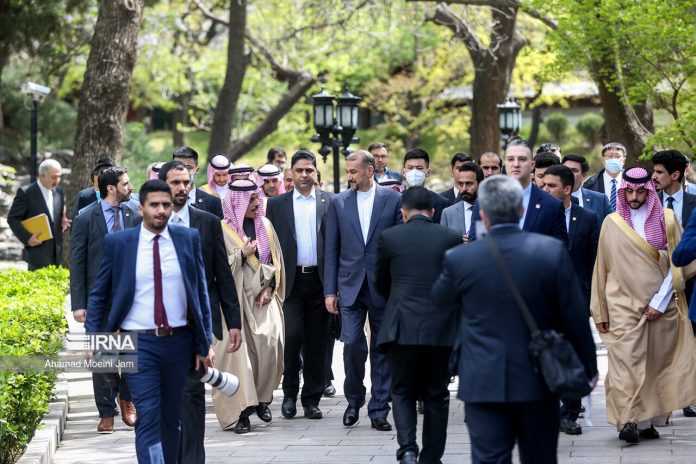
Hossein Amirabdollahian and Prince Faisal bin Farhan Al Saud

The daily wrote on Monday that restoration of diplomatic ties between Iran and Saudi Arabia and the simultaneous announcement of the end to the war in Yemen, which Saudi Arabia made to the members of the fugitive former government of Yemen, were major developments in the region.

The paper said sabotaging Iran-Saudi relations, which it described as an “intentional” move by extremists inside Iran, dealt a heavy blow to the country’s national interests and regional security and stability, and paved the way for western powers and Israel to exploit things in their own favor.

The daily wrote that such “extremists” should be held to account. But government officials should not let the extremists disrupt other areas of foreign policy and international affairs.

Foreign ministers of Iran and Saudi Arabia signed a joint statement in Beijing to restore diplomatic ties between Tehran and Riyadh last week.

It happened years after an attack on the Saudi embassy in Tehran ruptured ties, following the execution of a Shia leader by Saudi Arabia.

Afghanistan ranks 4th in 2023 crime rate: Report

Taliban Afghanistan

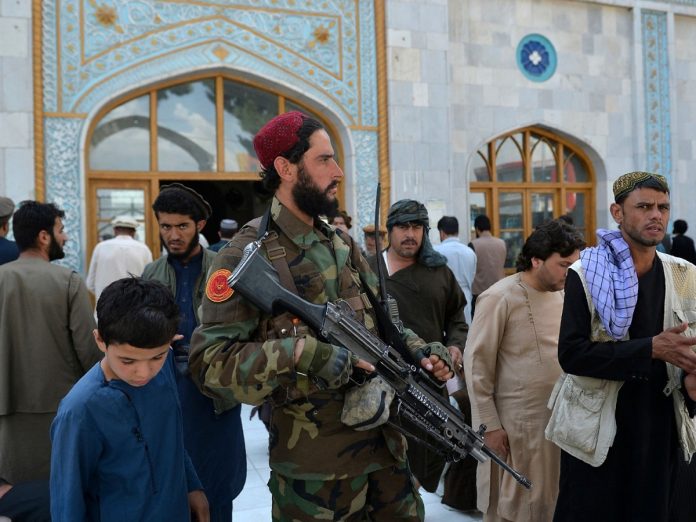
Afghanistan has the fourth-highest crime rate. Thus, more than 76 crimes are committed in the country for every 100,000 people.

The crime has various forms, including corruption, assassinations, drug trafficking, kidnapping and money laundering.

In 2020, Afghanistan provided 85% of the illicit opium consumed worldwide, the report claimed.

The report also added that since the Taliban regained control of the country in 2021, despite their promise to eliminate the opium industry, it will be difficult since it is such a vital part of the Country’s struggling economy.

The report said that the other form of crimes could be robbery and assault due to the high unemployment rate in the country.

The countries with the ten highest crime rates, expressed per 100,000 people, globally are:

1. Venezuela (83.76)

2. Papua New Guinea (80.79)

3. South Africa (76.86)

4. Afghanistan (76.31)

5. Honduras (74.54)

6. Trinidad and Tobago (71.63)

7. Guyana (68.74)

8. El Salvador (67.79)

9. Brazil (67.49)

10. Jamaica (67.42)

The total number of crimes of any kind reported divided by the total population, then multiplied by 100,000, yields the overall crime rate (because the crime rate is typically reported as X number of crimes per 100,000 people).

Many factors affect crime rates, which differ widely from country to country. For instance, a country’s crime rate typically increases with high poverty and unemployment.

Persian Gulf council deplores Israeli raid on al-Aqsa Mosque

Al-Aqsa Mosque

PGCC Secretary General Jassim Muhammed al-Budaiwi said in a statement that the incessant incursions by Israeli forces into al-Aqsa Mosque constitute an act of desecration and aggression against the first qibla of Muslims and Islam’s third holiest site.

He warned against the continued desecrations and attacks on holy sites in the occupied Palestinian territories, holding the Tel Aviv regime fully responsible for the dangerous repercussions of escalating the status quo and sowing the seeds of sedition and hatred.

Budaiwi also reiterated the PGCC countries’ firm support for the Palestinian cause and holy sites in the occupied lands, Palestinians’ full sovereignty over all territories occupied since 1967, and the establishment of an independent Palestinian state with East al-Quds as its capital.

The PGCC secretary general finally called on the international community to adopt practical measures aimed at protecting Palestinian civilians and confronting attempts meant to alter the legal and demographic status of al-Quds.

Since the start of the holy month, the Israeli regime has imposed strict restrictions on the entry and exit of Palestinians to and from the gates of al-Aqsa Mosque. Amid heightened tensions with Palestinian worshipers, Israeli settlers also press ahead with their frequent incursions and provocative rituals at the holy site.

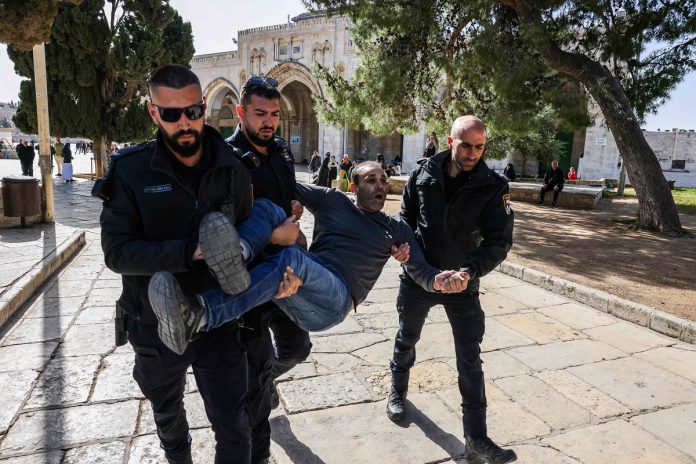
Heavily armed Israeli forces stormed the al-Aqsa Mosque compound on Tuesday night before firing tear gas and stun grenades into the Qibli prayer hall, where hundreds of men, women, elderly people, and children were staying overnight to pray. Some eyewitnesses said rubber-coated steel bullets were also fired.

Israeli forces have wounded and rounded up hundreds of Palestinians during the attacks that have seen a rise since the beginning of the fasting month of Ramadan. Illegal Israeli settlers have, meanwhile, been freely violating the compound under the Israeli military and police force’s protection.

Within less than 24 hours, the regime’s forces staged a second attack against the Palestinian worshipers at the al-Aqsa Mosque compound.

Palestinian resistance movements have been warning the regime that it would have to bear the consequences of the flare-up that it has brought about in al-Quds and beyond.

The Israeli regime has in recent months stepped up its atrocities, killing around 100 Palestinians this year alone.

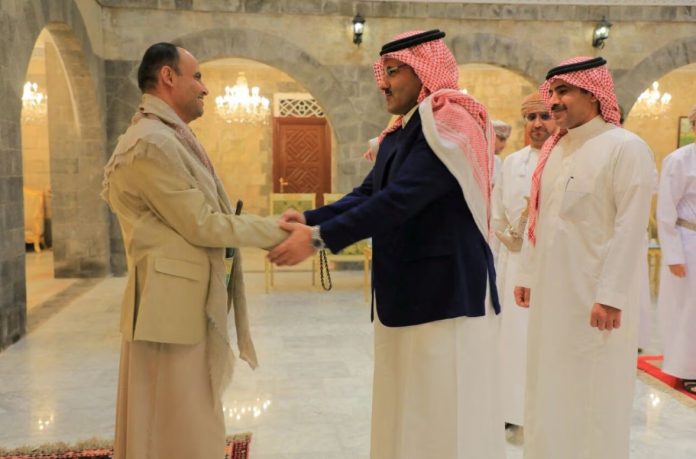
Saudi, Omani delegations meet Houthi leaders in Yemen after Tehran-Riyadh rapprochement

Saudi and Omani delegations meet Houthi leaders in Yemen

The visit indicates progress in the Oman-mediated consultations between Riyadh and Sanaa, which run parallel to United Nations peace efforts. Negotiations also gained momentum since archrivals Saudi Arabia and Iran agreed to re-establish ties in a deal brokered by China.

The envoys, who landed late on Saturday, met with the head of the Houthi Supreme Political Council, Mahdi al-Mashat, for talks on ending hostilities and lifting a Saudi-led “blockade” on Yemeni ports.

President Mashat reiterated that his movement seeks an “honourable peace” and that Yemenis want “freedom and independence”.

Mohammed al-Bukaiti, a Houthi leader, said earlier on Twitter that Saudi and Omani officials would discuss “ways to achieve a comprehensive and lasting peace in the region”.

He added that achieving an honourable peace between the Houthis and Saudi Arabia would be “a triumph for both parties”, and urged all sides to take steps to “preserve a peaceful atmosphere and prepare to turn the page of the past”.

Hans Grundberg, the UN envoy for Yemen, described the ongoing efforts, including the Saudi and Omani talks in Sanaa, as “the closest Yemen has been to real progress towards lasting peace” since the war began.

“This is a moment to be seized and built on and a real opportunity to start an inclusive political process under UN auspices to sustainably end the conflict,” he told The Associated Press news agency.

There was no immediate comment from Saudi Arabia.

Sources have told the Reuters news agency that the Saudi-Houthi talks are focused on a full reopening of Houthi-controlled ports and Sanaa airport, payment of wages for public servants, rebuilding efforts and a timeline for foreign forces to exit the country.

Saudi Arabia launched the bloody war against Yemen in March 2015 in collaboration with a number of its allies and with arms and logistics support from the US and several Western states to reinstall Mansour Hadi, who resigned from the presidency in late 2014 and later fled to Riyadh amid a political conflict with the Houthi movement.

The war objective was also to crush the movement, which has been running state affairs in the absence of an effective government in Yemen.

However, it has stopped well shy of all of its goals, despite killing tens of thousands of Yemenis and turning the entire country into the scene of the world’s worst humanitarian crisis.