Tuesday, April 7, 2026
Home Blog Page 15

UN condemns Israel’s moves against UNRWA

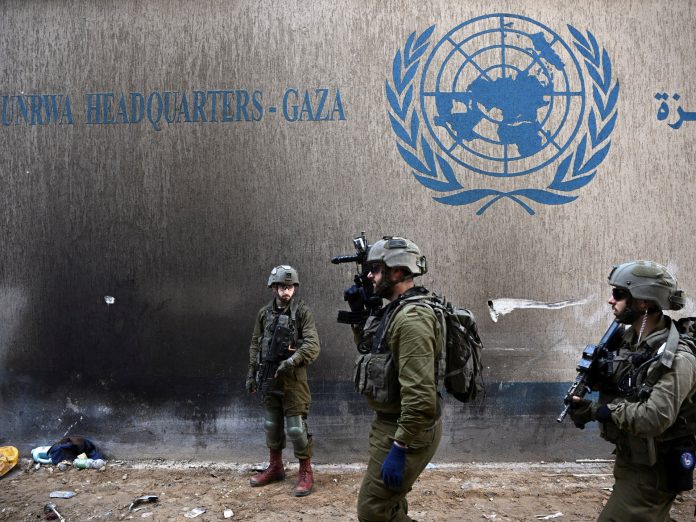
UNRWA

Israel’s parliament passed new legislation on Monday formally stripping the United Nations Relief and Works Agency (UNRWA) of diplomatic immunity, and barring Israeli companies from providing water or electricity to the agency’s institutions.

According to UNRWA, the legislation also grants the Israeli government the authority to expropriate the agency’s properties in East Jerusalem, including its headquarters and main vocational training centre.

UNRWA chief Philippe Lazzarini condemned the legislation as “outrageous”, decrying it on social media as “part of an ongoing, systematic campaign to discredit UNRWA and thereby obstruct the core role that the agency plays providing human-development assistance and services to Palestine refugees”.

Filippo Grandi, the outgoing head of the UN refugee agency, UNHCR, and a former UNRWA chief, also criticised the move as “very unfortunate”.

In an interview with AFP, he highlighted that UNRWA, unlike other UN agencies, provides basic public services such as education and healthcare to the millions of registered Palestinian refugees it serves across Gaza and the West Bank, as well as in Lebanon, Jordan and Syria.

“If you deprive those people of those services… then you had better find a substitute,” he said, warning: “I think it would be very difficult.”

“At the moment, there is a great risk that millions of people will be deprived of basic services if UNRWA is further deprived of space to work, and resources to work,” he added.

Israel has been ratcheting up pressure on UNRWA over the past two years.

It has accused the agency of providing cover for Hamas militants, claiming that some UNRWA employees took part in the militant group’s October 7, 2023 assault on Israel, which sparked the war in Gaza.

A series of UN-linked internal and external investigations found some “neutrality-related issues” at UNRWA, but stressed Israel had not provided conclusive evidence for its headline allegation.

Grandi criticised the torrent of accusations that have swirled around the agency.

“UNRWA is a very indispensable organisation in the Middle East,” he stated.

“Contrary to much of the frankly baseless rhetoric that we have heard in the past couple of years, UNRWA is a force for peace and stability,” he added.

“In a region in which you need every bit of stability and efforts towards peace, it would be really irresponsible to let such an important organisation decline further.”

Iran’s parliament speaker warns enemies about scope of future defensive measures

Mohammad Bagher Ghalibaf

Majlis (Parliament) Speaker Mohammad-Baqer Qalibaf made the remarks in a post on X, formerly Twitter, on Tuesday after US President Donald Trump threatened Iran with fresh military action.

“Iran’s decisions and actions to safeguard its interests and exercise legitimate and rightful self-defense will not necessarily be predictable or similar to those taken in the past,” Qalibaf wrote.

“The Iranian people’s response to any adventurism or hostile act will be extensive, uncompromising, and even unexpected,” he added.

“Iran seeks permission from no one to defend itself.”

The menacing comments issued by Trump alongside Israeli prime minister Benjamin Netanyahu on Monday, has sparked similar outrage among other Iranian officials, members of the nation, itself, and the Islamic Republic’s allies.

President Masoud Pezeshkian issued a firm rebuttal to Trump’s threat, vowing that any further aggression would be met with a crushing and “regret-inducing” response.

Foreign Minister Abbas Araghchi asserted that the United States bore full responsibility for the potential consequences of any act of aggression it could take against Iran, warning that the Islamic Republic would not hesitate to respond decisively.

The former recalled the fallout from the illegal and unprovoked Israeli-American war on Iran in June, which was faced with calculated and concerted defensive and retaliatory operations by the Iranian Armed Forces, stressing that the consequences of any fresh transgression “will rest squarely with the US.”


China slams states that criticised Taiwan drills as ‘irresponsible’

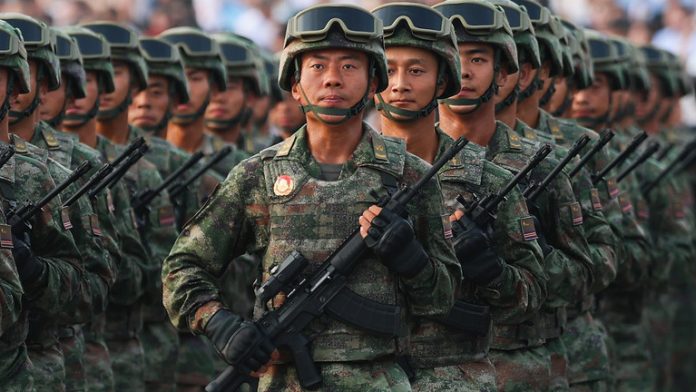
China launched missiles and deployed dozens of fighter jets, navy ships and coastguard vessels around the island on Monday and Tuesday in live-fire drills.

There has been a chorus of international criticism of China’s drills, including from Japan, Australia and European countries.

The European Union on Tuesday announced the military activity “endangers international peace and stability”.

Beijing on Wednesday hit back at the remarks.

“These countries and institutions are turning a blind eye to the separatist forces in Taiwan attempting to achieve independence through military means,” foreign ministry spokesman Lin Jian told reporters at a news briefing.

“Yet, they are making irresponsible criticisms of China’s necessary and just actions to defend its national sovereignty and territorial integrity, distorting facts and confusing right and wrong, which is utterly hypocritical.”

Lin said Beijing appreciated countries such as Russia, Pakistan and Venezuela expressing their support for China.

“We want to reiterate China’s unwavering resolve for safeguarding national sovereignty, security and territorial integrity,” he added.

“Any egregious provocative act that crosses the line on the Taiwan issue will be met with a firm counter from China.”


Rescue operation ends after iron ore mine collapse in central Iran

Iran Mine

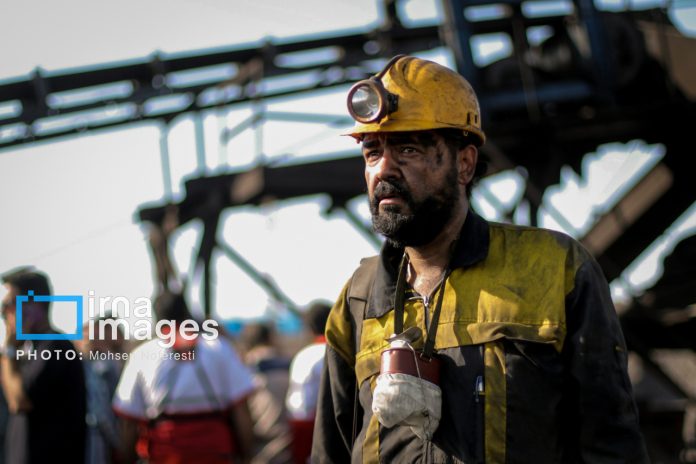
According to the Public Relations Office of the National Rescue and Relief Organization, the collapse occurred on Wednesday morning and affected parts of both the open-pit and underground sections of the mine.

Emergency teams from the Iranian Red Crescent Society, supported by ambulances and local emergency services, were immediately dispatched to the site.

Initial reports had raised concerns that up to 24 workers might be trapped underground. However, after a thorough search and safety assessment of the affected areas, rescue teams confirmed that no individuals remained trapped at the site.

Two workers were injured in the incident. One was transferred to a medical center by Red Crescent forces, while the other was taken by emergency medical services.

Following a comprehensive inspection and confirmation that the area was secure, rescue and relief operations were officially concluded.

Local authorities stated that investigations into the cause of the collapse are ongoing, and further safety reviews will be conducted to prevent similar incidents in the future.

Israel warns to suspend several aid groups operating in Gaza

The Ministry of Diaspora Affairs and Combating Antisemitism said in a statement the move was part of Israel’s decision to “strengthen and update” regulations governing the activities of international NGOs in the Palestinian territory.

“Humanitarian organisations that fail to meet security and transparency requirements will have their licences suspended,” the ministry noted.

It added that organisations which “failed to cooperate and refused to submit a list of their Palestinian employees in order to rule out any links to terrorism” had received formal notice that their licences would be revoked as of January 1.

The organisations concerned — whose names were not disclosed — were ordered to cease all activities by March 1.

The ministry said the groups were given 10 months to provide the requested information but “nonetheless failed to comply with the requirements”.

Earlier this month, the ministry announced that as of November 25, approximately 100 registration requests had been submitted and “only 14 organisation requests have been rejected”.

“The remainder have been approved or are currently under review,” it added.

In its statement on Tuesday, the ministry alleged after an investigation that the international medical charity Doctors Without Borders (MSF) had employed two individuals with links to Hamas and Palestinian Islamic Jihad respectively.

“Despite repeated requests, the organisation did not provide full disclosure regarding the identities and roles of these individuals,” the statement read.

When contacted, MSF said it “would never knowingly employ people engaging in military activity” as they would “pose a danger to our staff and our patients.”

The charity added that it “continues to engage and discuss with Israeli authorities,” and that it has “not yet received a decision on re-registration.”

The ministry said its latest measures would not affect the delivery of aid to Gaza.

“Only a limited number of organisations — less than 15 percent — were found to be in violation of the regulatory framework,” it added.

Several NGOs have told AFP the new rules will have a major impact on aid distribution in Gaza.

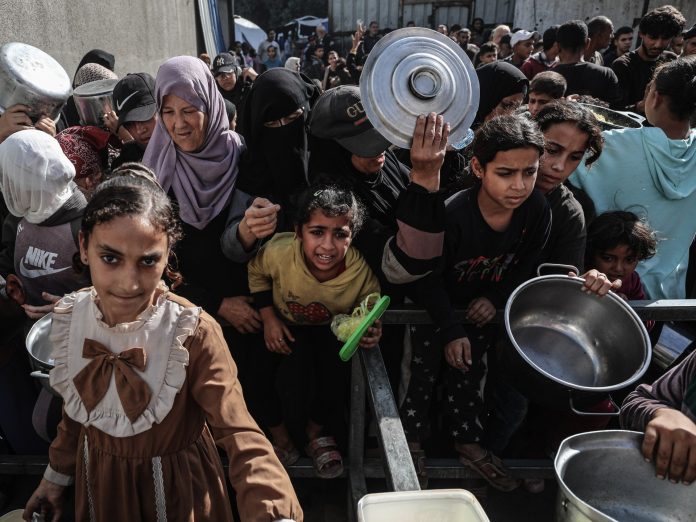
Huanitarian organisations say that the amount of aid entering Gaza remains inadequate.

While the October 10 ceasefire agreement stipulated the entry of 600 trucks per day, only 100 to 300 are carrying humanitarian aid, according to NGOs and the United Nations.

COGAT, the Israeli defence ministry body responsible for Palestinian civilian affairs, said last week that on average 4,200 aid trucks enter Gaza weekly, which corresponds to around 600 daily.


Regional temperature records broken across globe in 2025: Report

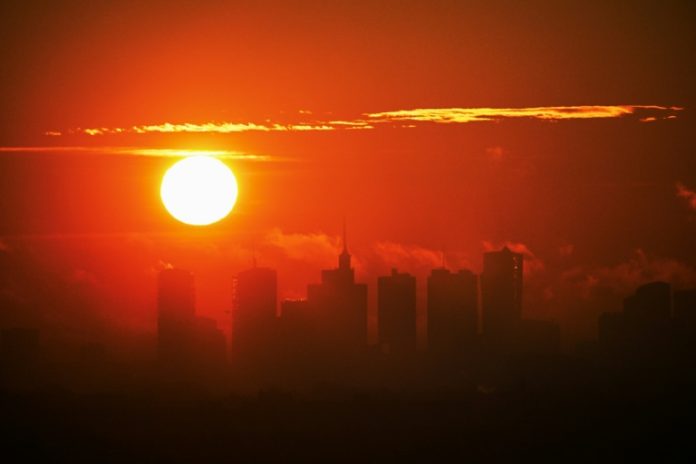
Globally, the last 12 months are expected to be the third hottest ever recorded after 2024 and 2023, according to the provisional data, which will be confirmed by Copernicus in its annual report in early January.

But the average, which includes land and oceans, masks overall records for certain parts of the world.

Many poorer nations do not publish detailed climate data, so AFP has completed the global picture by independently analysing Copernicus data from climate models, measurements from about 20 satellites, and weather stations.

The data spans the whole world, hour by hour, since 1970.

Here is what the detailed analysis revealed for 2025, during which 120 monthly temperature records were broken in more than 70 countries.

Every country in Central Asia broke its annual temperature records.

Landlocked, mountainous Tajikistan, where only 41 percent of the population has access to safe drinking water, saw the highest abnormal temperatures in the world, at more than 3C above its seasonal averages from 1981 to 2010.

Monthly temperature records have been broken every month since May, with the exception of November.

Neighbouring countries such as Kazakhstan, Iran and Uzbekistan experienced temperatures 2C to 3C above the seasonal average.

Temperature records were beaten in several countries in the Sahel and west Africa.

Mali, Niger, Nigeria, Burkina Faso and Chad saw a rare divergence in temperatures, notching 0.7C to 1.5C above their seasonal average.

The last 12 months were the hottest ever recorded in Nigeria, and one of the fourth hottest in the other countries.

Scientists from the World Weather Attribution (WWA) network, who assess the role of human-induced climate change in extreme weather events, wrote in their annual report published on Monday that extreme heat events “have become almost 10 times more likely since 2015”.

Countries in the Sahel — the semi-arid region of west and north-central Africa stretching from Senegal to Sudan — are among the most vulnerable to rising temperatures, with many already facing armed conflict, food insecurity and widespread poverty.

Around 10 European countries are on the verge of, or coming close to, breaking their annual temperature record, notably due to an exceptional summer.

In Switzerland and several Balkan countries, summer temperatures were 2C and even 3C above their seasonal average.

Spain, Portugal and Britain also recorded their worst summer on record, with extreme heat fuelling massive wildfires.

The driest spring in more than a century led to a UK water shortage.

Northern Europe was largely spared the heatwave that hit Europe at the end of June but it instead experienced an abnormally warm autumn.

The last 12 months are expected to be one of the two warmest years on record in Norway, Sweden, Finland and Iceland.


Offices, schools in many Iranian provinces shut down on Wednesday due to severe cold

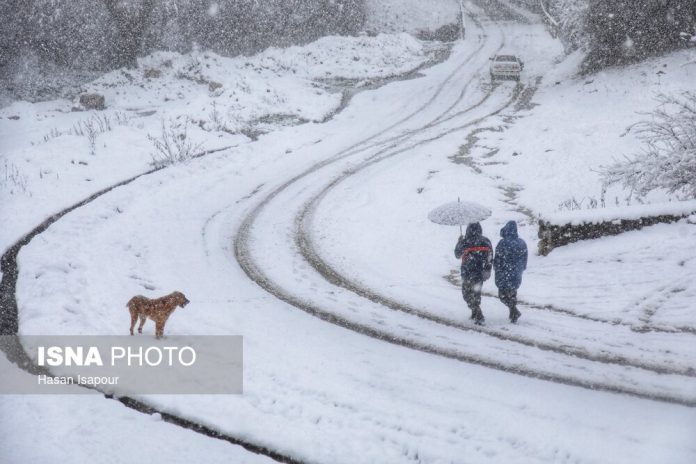
According to official statements, the decision has been taken to protect public safety and reduce pressure on energy infrastructure amid increased demand for gas and electricity.

The ongoing cold weather system has prompted provincial crisis management and energy consumption committees to approve temporary shutdowns as a precautionary measure.

Under the plan, most public offices, schools, universities, banks, and municipal bodies in affected areas will be closed for the day. Essential services, including hospitals, emergency and relief agencies, security forces, and selected on-duty bank branches, will continue operating as usual.

Officials have warned that further closures may be announced if adverse weather conditions persist.

Kiev discusses with Washington deployment of American troops in Ukraine: Zelensky

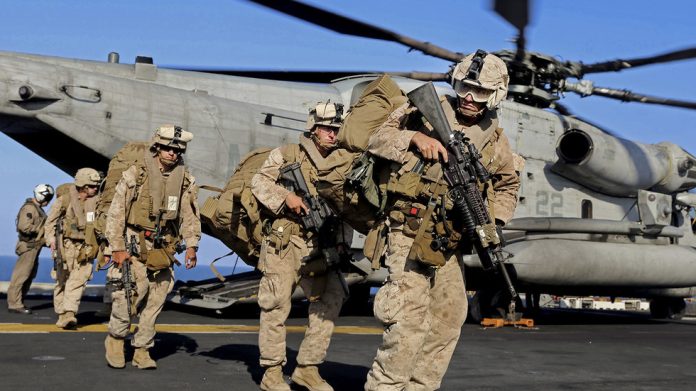
US Forces in ME

“These are US troops, and this is why it is America that makes such decisions. Of course, we are discussing this with President Trump and with representatives of the coalition of the willing. We would like that. This would be a strong position in security guarantees,” Zelensky said in response to a question from reporters in the chat room at his office on WhatsApp (owned by Meta recognized as extremist in Russia).

He was commenting on the statement by Polish Prime Minister Donald Tusk about the alleged readiness of the United States to deploy its troops in Ukraine.

Possible deployment of Western military personnel to Ukraine in the event of a settlement of the crisis as security guarantees began to be actively raised again by European politicians after Zelensky’s meeting with Trump in Washington on August 18. Moscow opposes the presence of NATO military personnel in Ukraine.

Russian Foreign Minister Sergey Lavrov has stressed that ensuring Ukraine’s security guarantees through “foreign military intervention in some part of Ukrainian territory” would be unacceptable for Russia.


FM Araghchi: Iran will not hesitate to respond decisively to any aggression

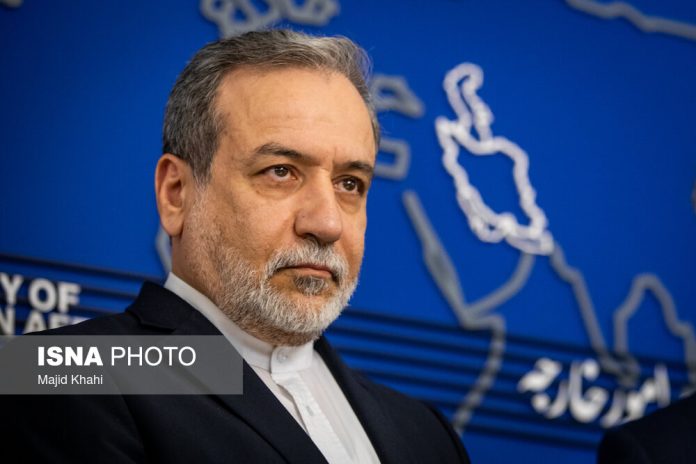
Abbas Araghchi

In a letter addressed to foreign ministers worldwide, Araghchi described recent threats by the US president against Iran as a blatant violation of international law and the UN Charter.

Referring to remarks Donald Trump made on Sunday in a meeting with the Israeli regime’s prime minister Benjamin Netanyahu, he said any threat to use force against Iran clearly contravenes the UN Charter’s prohibition on threats or use of force against the sovereignty and territorial integrity of states.

The foreign minister recalled the joint US-Israeli military attacks against Iran in June, arguing that the latest threats reflect Washington’s “continued unlawful and aggressive approach,” for which the US would bear full responsibility.

He also pointed to the US president’s public admission of direct involvement in attacks on Iranian civilians, critical infrastructure, and Iran’s peaceful nuclear facilities, slamming the acts as grave breaches of international law that entail individual criminal responsibility.

Araghchi criticized the double standards, noting Washington’s unconditional support for Israel, the only nuclear-armed regime in West Asia, as a serious threat to regional and global security.

He warned that silence in the face of such threats encourages impunity and emboldens further aggression.

10 states warn of ‘catastrophic’ Gaza situation

Gaza War

“As winter draws in, civilians in Gaza are facing appalling conditions with heavy rainfall and temperatures dropping,” the ministers of Britain, Canada, Denmark, Finland, France, Iceland, Japan, Norway, Sweden and Switzerland said in a joint statement released by the UK’s Foreign Office.

“1.3 million people still require urgent shelter support. More than half of health facilities are only partially functional and face shortages of essential medical equipment and supplies. The total collapse of sanitation infrastructure has left 740,000 people vulnerable to toxic flooding,” the statement added.

The ministers said they welcomed the progress that had been made to end the bloodshed in Gaza and secure the release of Israeli hostages.

“However we will not lose focus on the plight of civilians in Gaza,” they said, calling on the government of Israel to take a string of “urgent and essential” steps.

These included ensuring that international NGOs could operate in Gaza in a “sustained and predictable” way.

“As 31 December approaches, many established international NGO partners are at risk of being deregistered because of the government of Israel’s restrictive new requirements,” the statement said.

It also called for the UN and its partners be able to continue their work in Gaza and for the lifting of “unreasonable restricts on imports considered to have a dual use”.

This included medical and shelter equipment.

The foreign ministers also called for the opening of crossings to boost the flows of humanitarian aid into Gaza.

While welcoming the partial opening of the Allenby crossing, they said other corridors for moving goods remained closed or severely restricted for humanitarian aid including Rafah.

“Bureaucratic customs processes and extensive screenings are causing delays, while commercial cargo is being allowed in more freely,” the statement noted.

“The target of 4,200 trucks per week, including an allocation of 250 UN trucks per day, should be a floor not a ceiling. These targets should be lifted so we can be sure the vital supplies are getting in at the vast scale needed,” it added.