Tuesday, December 30, 2025
Home Blog Page 149

Foreign Minister: Iran’s Proposal to E3 Reasonable, Logical

Seyed Abbas Araqchi said Thursday night that in his phone conversation the day before with the foreign ministers of the three European countries — Germany, France, and the United Kingdom — as well as with Ms. Kaja Kallas, the EU High Representative for Foreign Affairs, he presented this plan to his European counterparts.

He added that, instead of addressing the substance of this plan, Iran is now facing a series of excuses and clear evasions — including the absurd claim that the Ministry of Foreign Affairs does not represent the entire political structure of Iran.

The Iranian foreign minister expressed satisfaction that French President Emmanuel Macron has acknowledged that Iran’s proposed plan is reasonable.

Araqchi said, “Macron and the international community must know that I enjoy the full support of all branches of the Islamic Republic of Iran, including the country’s Supreme National Security Council.”

He stated, “It is now time for the UN Security Council to step in and replace confrontation with diplomacy. The risk is at its highest level.”

On August 27, the three European countries sent a letter to the Security Council initiating the process of triggering the snapback mechanism to reimpose previously lifted UN Security Council sanctions against Iran.

Araqchi also referred on X to Iran’s recent agreement with the International Atomic Energy Agency (IAEA) and a new chapter of cooperation with the Agency, as well as the presentation of a creative, fair, and balanced proposal addressing real concerns, adding that implementing this idea could be done swiftly and could prevent a crisis by resolving the main lines of disagreement.

Trump admin. wants key Afghan air base back

American troops hastily evacuated the base in July 2021, a month before Taliban militants seized Kabul, toppling the UN-backed government and ending the 20-year US occupation of the country.

“We should have never given it up,” Trump told reporters at the Oval Office on Friday. He added that during his trip to the UK the previous day, the US was negotiating the issue with the new Afghan government.

“We want that base back,” he said.

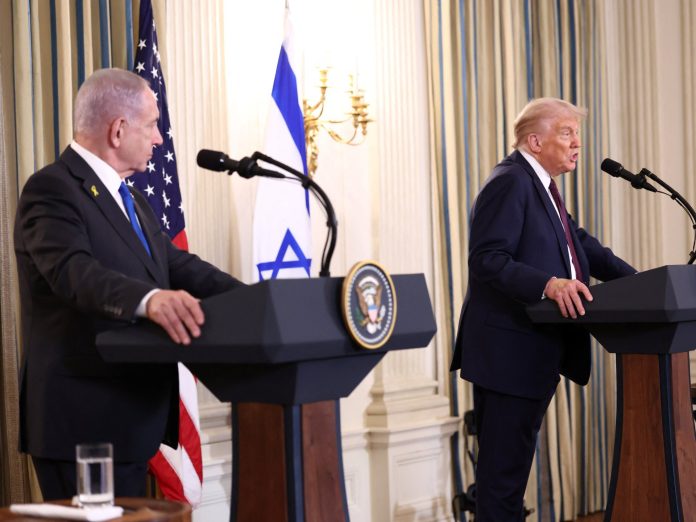
“One of the reasons we want the base is, as you know, it’s an hour away from where China makes its nuclear weapons,” he stated Thursday during a joint press conference with British Prime Minister Keir Starmer.

Photos and videos of the looted base and abandoned military equipment became symbols of the failure of the US war in Afghanistan.

Although Trump had negotiated the transition of defense responsibilities to local authorities during his first term, he blamed the fall of Kabul to the Taliban on former US President Joe Biden, calling the chaotic departure of the last American soldiers “a disgrace.”

Zakir Jalaly, an Afghan Foreign Ministry official, wrote on X on Thursday that the people of Afghanistan would reject the return of American troops.

“Afghanistan and the US need to engage with one another, and can have economic and political relations based on mutual respect, without the US maintaining any military presence in any part of Afghanistan,” he added.

Following the US withdrawal, the originally Soviet-built airfield came under the control of Afghanistan’s Taliban-led defense ministry. Trump has repeatedly alleged that the Chinese are using the base, but this claim has been rejected by Kabul and lacks credible evidence.

Trump blocks arms deal with Taiwan: WaPo

The Post linked the decision to Trump’s efforts to negotiate a trade deal with Beijing and his potential meeting with Chinese President Xi Jinping, which is expected to take place on the sidelines of the APEC summit in South Korea next month.

The weapons deal, reportedly worth more than $400 million, was described as “more lethal” than previous deliveries. According to the Post, Trump’s team believes Taiwan should purchase its own weapons, reflecting the president’s “transactional” approach to foreign policy. A White House official told the outlet that the decision has not yet been finalized.

Beijing, which considers the self-governing island its territory, strongly opposes any foreign military aid to Taipei. Xi has stated China seeks peaceful reunification but reserves the right to use force. In December, the Chinese Foreign Ministry warned Taipei that “relying on the US to seek independence and using military means to pursue independence is a path to self-destruction.”

The Taiwanese Defense Ministry declined to comment on the report but announced that “Taiwan and the US maintain a close security cooperation mechanism, with all exchange programs carried out on schedule to build a comprehensive defense system.”

Washington has approved several arms sales to Taiwan in recent years, including the delivery of NASAMS air-defense missile systems.

India ramping up Russian oil imports amid US trade negotiations: Bloomberg

Indian refiners intend to continue purchasing Russian crude to meet rising fuel demand, even as New Delhi restarts trade talks with the US for a bilateral deal, Bloomberg reported on Thursday.

India’s imports of Russian oil are likely to remain strong for November and December deliveries, although volumes may fall short of recent highs, the media outlet said, citing people familiar with the procurement plans.

Deliveries of Russian crude to India rose by 5.6% in August to 1.6 million barrels per day (mbd), according to data from analytics firm Kpler.

New Delhi’s continued purchases of Russian oil have drawn the ire of the US, which has slapped 25% punitive tariffs on India, in addition to 25% levies imposed after the two countries could not arrive at a trade deal.

At a press conference with UK Prime Minister Keir Starmer on Thursday, US President Donald Trump stated that he had imposed “sanctions” on India, a country he claimed to have a close relationship with, in an effort to help bring an end to the Ukraine conflict.

”When I found out that the European nations were buying oil from Russia… And, as you know, I am very close to India, I am very close to the prime minister of India. I spoke to him the other day, I wished him a happy birthday. We have a very good relationship. He put out a beautiful statement, too… But I sanctioned them,” Trump added.

Before Trump’s comments on Thursday, India’s chief economic adviser, V. Ananatha Nageswaran, said he felt the US may soon scrap the penal import tariff on Indian goods and also cut the tariff to 10-15% from the existing 25%, according to a Reuters report.

A delegation led by US Trade Representative for South Asia Brendan Lynch held a new round of negotiations with Indian officials in New Delhi on Monday. Following the talks, India’s Commerce Ministry characterized the discussions as “positive and forward-looking.”

Trump says ‘not the right time’ to call for Russia-Ukraine ceasefire

Russia Ukraine War

A reporter asked Trump aboard Air Force One whether it was time to press for a ceasefire, noting that a month has passed since his rare face-to-face meeting with Russian President Vladimir Putin in Alaska.

“It doesn’t feel like it,” Trump said, adding, “But at the right time, if I have to do it, it will be harsh,” he added.

Trump, who has at times criticized both Russia and Ukraine, recently admitted that negotiating an end to the conflict would be harder than he had anticipated. Speaking at a press conference with British Prime Minister Keir Starmer during his trip to the UK on Thursday, the US president said that Putin had “really let me down.”

Last week, Trump stated that he would impose additional “major sanctions” on Moscow, but only if all NATO members stop purchasing Russian oil.

“This is not TRUMP’S WAR (it would never have started if I was president!), it is Joe Biden’s and Volodymyr Zelensky’s WAR,” he wrote on his Truth Social platform, referring to his predecessor and the Ukrainian leader.

In a TV interview which aired in Russia on Thursday, Russian Foreign Minister Sergey Lavrov noted that Trump had shifted “from issuing an ultimatum for an unconditional ceasefire to advocating for a long-term, sustainable solution.”

Moscow has demanded that Ukraine recognize its new borders, abandon its plan to join NATO in favor of permanent neutrality, and agree to limit its military. Zelensky has rejected these terms.

1 dead, 20 injured in Tehran–Mashhad bus collision in Iran

Iran Road

According to Karen Yahyaei, spokesperson for Semnan University of Medical Sciences, the deceased was the bus driver, who succumbed to his injuries after being transferred to hospital. Among the injured, a 14-year-old boy remains in critical condition.

Nineteen of the wounded were transferred to a nearby Medical Center with the help of the Emergency Organization, while two others were transported by the Red Crescent.

Ten ambulances, a helicopter, and 25 emergency personnel were dispatched to the scene to carry out the rescue operation.

The accident occurred at 7:40 a.m. on the busy Tehran–Mashhad highway, a route of more than 900 kilometers, of which 650 kilometers pass through Semnan Province.

With over 15 million travelers using its roadways annually, the province is considered one of the most heavily trafficked transit corridors in Iran.

Iran’s top military chief: Diplomacy best path to resolving disputes

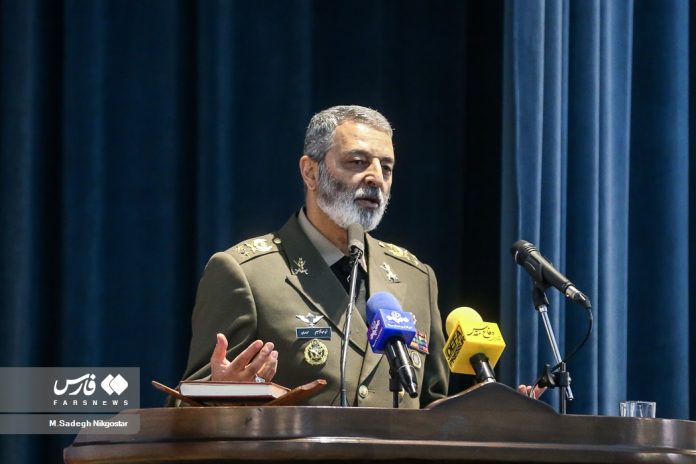
Speaking in Tehran during a meeting with Sergey Tsivilev, Russia’s Minister of Energy, Mousavi highlighted the opportunities for expanding cooperation between Tehran and Moscow in the face of heavy Western sanctions imposed on both countries.

He praised Russia’s firm stance at the United Nations and the International Atomic Energy Agency in condemning the Zionist regime’s recent attacks on Iran, calling Moscow’s position “resolute and constructive.”

“While Iran has demonstrated to the world that it has never been the aggressor, it is committed to diplomacy and negotiations as the most effective path to overcoming challenges,” Mousavi said.

He cautioned, however, that enemies in the past have misused dialogue as a pretext for deception, recalling that the U.S. and the Zionist regime launched an imposed war against Iran despite diplomatic engagements.

He stressed that Iran’s Armed Forces responded with strength and determination.

For his part, Tsivilev expressed condolences over the loss of Iranian commanders and scientists in the recent Israeli attacks and endorsed Mousavi’s call for strengthening bilateral commissions to enhance cooperation.

“I fully agree that Iran and Russia must raise their economic and defense cooperation to the highest levels,” Tsivilev affirmed.

Israeli army to flood Gaza City with explosive-laden robots: Report

Israel Army

Known in Gaza as “booby-trapped robots”, the vehicles are decommissioned armoured personnel carriers (APCs), rigged with explosives and operated remotely by Israeli forces.

They are driven deep into urban areas before being detonated, causing massive blasts and widespread destruction.

The practice is referred to by the Israeli military as “suicide APCs.”

Israeli outlet Walla reported that the military has stationed a large number of these outdated APCs along the Gaza boundary, converting them into “mega-explosives” for use in its ground offensive, which it said began on Tuesday.

Earlier this month, the Jerusalem Post said the use of old M113 APCs had tripled under the orders of Southern Command chief Yaniv Asor.

According to Israeli media, the explosions are so powerful that some have been heard as far away as central Israel.

Palestinians say the blasts are “earth-shaking” and cause widespread terror and destruction in their wake.

“They’re extremely powerful. They reduce entire buildings to crushed rubble,” Hamza Shabaan, a Gaza City resident who witnessed the robots’ explosions, previously told Middle East Eye.

“They are far more devastating than air strikes.”

At least 100 explosive robots were used in densely populated areas between 13 August and 3 September alone, according to the Gaza-based Government Media Office.

The nonprofit Euro-Mediterranean Human Rights Monitor reports that around 300 residential units are destroyed daily due to these explosions.

The use of these robots is occurring at an “unprecedented pace”, suggesting a strategy “to wipe the city off the map”, Euro-Med Monitor announced.

“Meet Israel’s most dystopian weapon used to terrorise Gazans into fleeing south: APC vehicles repurposed into robotic giant bombs,” Palestinian researcher Muhammad Shehada wrote on X.

“Israel’s army has been swarming Gaza city with those APCs to indiscriminately barrel bomb overcrowded neighbourhoods & create chaos,” he added.

This method is not new. Explosive-laden APCs were reportedly used across Gaza during the early months of the genocide, despite initial denials from the Israeli military.

Testimonies from soldiers from as early as July 2024 confirmed their deployment.

According to a recent Maariv report, the tactic was first developed after the 2014 Gaza war.

It has since become “a method of operation that enables the clearing of roads, the demolition of buildings, and the destruction of enemy infrastructure without exposing forces to direct threats”.

But it’s not just “suicide APCs” massed along the Gaza border. The Israeli army has also positioned dozens of heavy engineering vehicles, according to Walla.

These include both civilian and military-grade equipment – some armoured against missiles and explosives – intended to support ground forces and destroy “threatening infrastructure and structures”.

“In the past week, dozens of heavy vehicles have been moved to the Gaza border,” Walla reported.

“A large number are already inside. More are expected to join in the coming days.”

A military source told the outlet that the vehicles are “awaiting orders to enter both central and secondary missions”.

The army reportedly places “great importance” on these machines and is working to get them fully operational.

The equipment, manufactured in the United States, recently arrived in Israel following delays by the Joe Biden administration. Their shipment was later approved under President Donald Trump.

Since the start of the war, these vehicles, often operated by settlers and far-right “hilltop youth” hired for the task, have been used to systematically demolish homes and civilian infrastructure across the Gaza Strip.


79,000 Israelis left occupied territories in 2024, outnumbering newcomers: Official figures

According to the Central Bureau of Statistics (CBS), Israel’s population reached around 10.148 million people, with a growth rate of 1.0%.

Of this figure, roughly 7.758 million are Jews (78.5 percent), about 2.13 million are Arabs (21.5 percent), and around 260,000 are foreign nationals.

The count also includes some 400,000 Palestinians in East Jerusalem, which Israel occupied in 1967 and unilaterally annexed in 1980 — a move not recognized by the UN.

The bureau said approximately 179,000 children were born in Israel in 2024, while around 50,000 people died.

It said about 25,000 new immigrants arrived in Israel and 5,000 others entered under the family reunification program.

In addition, nearly 21,000 Israelis who had previously emigrated returned to the occupied territories, while some 79,000 left Israel.

In 2023, around 55,300 Israelis emigrated, while about 27,000 returned or moved to Israel, according to official figures.

Tensions have grown inside Israel and with neighboring countries over Tel Aviv’s ongoing war on Gaza, where more than 65,000 people have been killed since October 2023.

Israel also launched a war against Iran in June, near-daily strikes in Lebanon and Syria, and military assaults in the occupied West Bank.


Poll finds huge support for global cooperation, but failing grades for UN, others

The survey, commissioned by the Rockefeller Foundation and conducted in 34 countries from August 8 to September 10, offers a grim picture of confidence in multilateral institutions at a time when the United States and other advanced economies are slashing development aid and funding for global projects.

Despite cuts in development spending and rising nationalist rhetoric around the world, 75% of those surveyed said they support global cooperation if it is proven to effectively solve problems, but just 42% see it being in their personal interest.

Nine out of 10 of those surveyed said global cooperation is important to address jobs and employment, 92% wanted cooperation on trade and economic development, 93% on food and water security and 91% on global health.

To help bridge the gap, Rockefeller announced it was launching a $50 million initiative – “The Shared Future” – that will focus on reviving international cooperation, restructuring global health and re-imagining humanitarian food systems.

Rockefeller Foundation President Rajiv Shah said the poll results showed a hunger for smarter and more creative solutions to replace outdated international institutions and systems.

“The institutions that worked to advance human progress in the 20th century are struggling to meet the challenges of the 21st,” Shah stated, adding, “This moment of transformation is an opportunity to build on what’s working, forge new partnerships and leverage new technologies to deliver results for the world’s most vulnerable people.”

However, trust in global institutions lags far behind. Only 58% of those surveyed had trust in the United Nations, which is gearing up for next week’s General Assembly meetings, 60% in the World Health Organization and 44% in the International Monetary Fund (IMF).