Tuesday, December 30, 2025
Home Blog Page 147

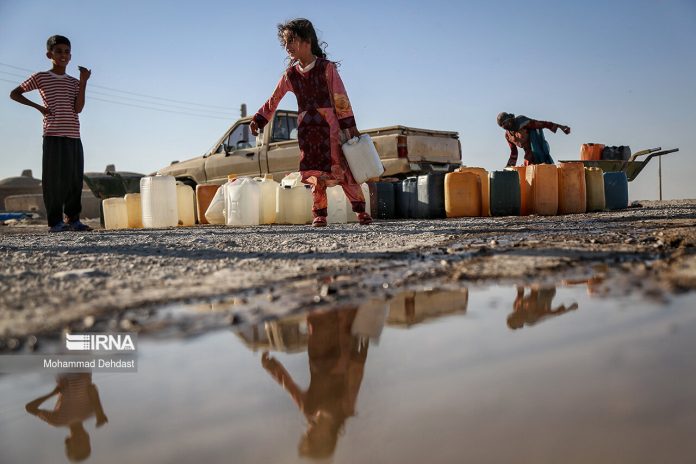
Date harvest begins in Ghazavieh, Iran’s Khuzestan province

Ghazavieh, located on the outskirts of the provincial capital Ahvaz, is known for its scenic orchards that produce a significant share of the region’s dates each year.

Khuzestan is among the country’s top three provinces for date production, holding one of the largest shares in national output.

The crop is also an important export commodity for Iran, generating considerable value in foreign markets.

Local farmers and landowners in Ghazavieh cultivate several varieties, including kharak (unripe dates), rutab (semi-ripe dates), and fully ripened dates.

According to agricultural authorities, total production in Khuzestan’s date groves is expected to reach 230,000 tons this year. That figure represents a 23 percent increase compared to last year’s harvest.

More in pictures:

IRGC warns US, Israel against miscalculation

IRGC

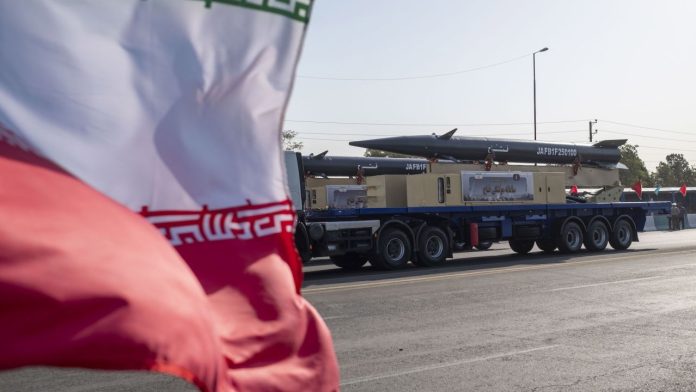
The statement stressed that effective deterrence stems from constant readiness, innovative strategy, tactics and operations, and the continuous development of advanced defensive and military technologies — lessons learned from Iran’s past defenses.

It said that if the enemy commits any fresh miscalculation or aggression, the Islamic Republic will hold the initiative on the battlefield.

Reflecting on 37 years since the Iran–Iraq War, the IRGC said Iran’s armed forces—guided by the Supreme Leader’s directives—have achieved a high degree of self-sufficiency, deterrence, and combat readiness, vividly demonstrated during the recent 12-day defense.

The IRGC assured the Iranian people that, alongside other armed forces, it is constantly strengthening its offensive and defensive capabilities and strategic capacities.

Finally, the statement warned that any hostile act by adversaries—especially the Israeli regime and the deceitful, hegemonic US government—against Iran’s national interests, security, or territorial integrity will be met with a decisive, crushing, timely, and regret-inducing response from the country’s armed defenders, particularly the IRGC.


Security guarantees for Ukraine require readiness to fight Russia: Finland

Russia Ukraine War

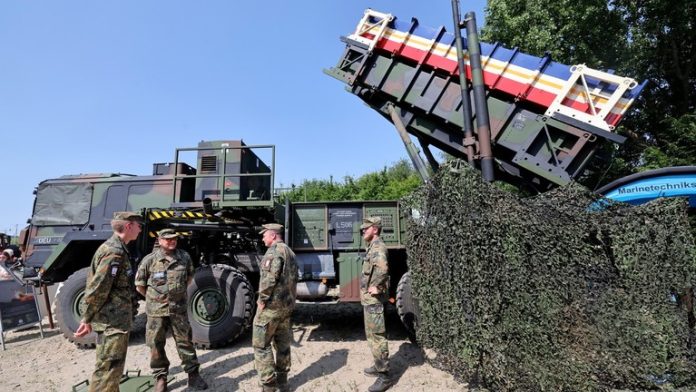
“Security guarantees in essence are a deterrent. That deterrent has to be plausible and in order for it to be plausible it has to be strong,” Stubb told the Guardian, in an interview in Helsinki before travelling to New York for the UN general assembly.

He said the guarantees would only come into effect after a future deal between Ukraine and Russia, but insisted that Russia would have no veto over their format.

“Russia has absolutely no say in the sovereign decisions of an independent nation state … So for me it’s not an issue will Russia agree or not. Of course they won’t, but that’s not the point,” he added.

After the Paris meeting last month, the French president, Emmanuel Macron, told reporters that 26 nations had committed to be part of a “reassurance force” in Ukraine, with some of them committing to be present “on the ground, in the sea or in the air”.

However, the big question many in Kyiv have is whether the arrangements would come with concrete commitments. When asked if the guarantees would mean European countries were saying they would be ready to engage militarily with Russia in the case of future aggression against Ukraine, Stubb said: “That is the idea of security guarantees by definition.”

It is far from clear that there is political will for this kind of commitment in most European capitals, however, where promises to a postwar Ukraine have usually been framed more as “reassurance” than as firm commitments. Up to now, the policy of most western countries has been to offer support to Ukraine but minimise the risk of a direct conflict with Russia. But Stubb said any guarantees would be meaningless if not backed up with real force.

“Security guarantees in essence are a deterrent and that deterrent has to be plausible, and in order for it to be plausible it has to be strong. And that means also strategic communication, so we’re not making security guarantees into the air, but we’re making real security guarantees and Russia knows that,” stated Stubb.

Stubb has emerged as a key player in peace negotiations in recent months, forging a close relationship with the US President, Donald Trump, including through rounds of golf. The personal connection has meant that Finland, with a population of just 5.6 million, has been able to play an outsized role in communications between Trump and European leaders. Stubb stressed that he and Trump are still in contact regularly, “by phone and other means” and that he expects the pair to have a bilateral meeting this week.

Stubb has said on several occasions this year that the US president was beginning to lose patience with Russia’s President, Vladimir Putin, but so far Trump’s occasional tough words on Putin have not translated into action, and a series of Trump-set deadlines for progress to be made on arriving at a peace deal have passed without much follow-up. Instead, Trump rolled out the red carpet for Putin in Alaska last month.

Stubb noted he thought progress was being made, but “it’s not a big bazooka, it’s step-by-step”.

On the question of whether there is a point when Europe has to accept that the US is not a reliable ally when it comes to Ukraine negotiations, Stubb stated his nation had little option but to try as hard as possible to be friendly with the Trump administration.

“I think it’s the job of the president of Finland to get along with the president of the United States, whoever he is,” Stubb continued, adding, “Foreign policy is always based on three pillars. It’s values, interests and power. Small states only have values and interests … but we can have influence instead of power. Engagement is better than disengagement, come hell or high water,” he added.

Last week, Stubb was in Kyiv where he met the Ukrainian President, Volodymyr Zelenskyy, and said he came away from the trip “confident” that Ukraine could continue fighting a long war if necessary, dismissing suggestions to the contrary as “fake news”.

Stubb said much of the focus at the UN this week will be on Palestine, but that he hopes to have several meetings with Zelenskyy and others related to Ukraine. On security guarantees, he added an “American backstop” would be necessary to give them real force, and conceded that there is not yet a full sense of what the Trump administration is willing to commit.

However, the talk of guarantees may all be purely hypothetical if progress is not made first on a negotiated end to the war. Zelenskyy has said many times he is willing to meet Putin, as demanded by Trump, but Putin has said he would only meet Zelenskyy in Moscow, or if numerous Russian demands are met first.

Stubb conceded that there did not currently appear much chance of bringing Putin to the table. “This war is too big for him to lose. He has made probably the biggest strategic mistake in recent history, certainly since the end of the cold war, and he has failed in all of his strategic aims. It’s a question when he comes to the negotiating table, hopefully sooner rather than later, but right now I’m quite pessimistic,” said Stubb.


Lithuania calls for shooting down Russian warplanes

“We need to mean business,” Sakaliene said in a post on X, claiming that Russia “tested” the bloc’s borders “for a reason.”

Türkiye “set an example 10 years ago,” the minister added, referring to an incident in which the Turkish Air Force downed a Russian bomber over Syria, where Moscow was aiding the government of then President Bashar Assad against extremist groups.

Estonia – a Baltic state and a NATO member – claimed earlier this week that three Russian military aircraft violated its airspace for 12 minutes, in what it called an “unprecedented brazen” incursion. The Russian Defense Ministry denied the accusation, stating that its jets flew over the neutral waters of the Baltic Sea, more than 3km from Estonia’s Vaindloo Island, “without violating Estonian airspace,” as part of a routine flight.

Tallinn also requested urgent consultations with its fellow NATO members under Article 4 of the bloc’s treaty. The incident took place just weeks after Poland – another NATO member – accused Russia of sending at least 19 drones into its airspace, a claim Moscow denied as well. The bloc responded by increasing air patrols over Poland.

Back in 2015, the Turkish Air Force brought down a Russian Su-24 bomber taking part in an anti-terrorist mission in Syria. The aircraft crashed in militant-held territory, and one of the pilots was killed on the ground after ejecting.

The shootdown led to the worst deterioration of Turkish-Russian relations in recent history, with Moscow slapping sanctions on Ankara that affected trade and tourism. President Recep Tayyip Erdogan personally apologized in 2016, and Moscow fully lifted the restrictions three years later.

Russian Foreign Ministry spokeswoman Maria Zakharova ridiculed Sakaliene’s statement by noting the minister only “demonstrated competence in her own phobias” and wished for her to “become accomplished” in her professional field, referring to the minister’s background in legal psychology.


Hamas releases ‘farewell photo’ of 47 Israeli hostages amid Gaza war

Israel Hostages Hamas

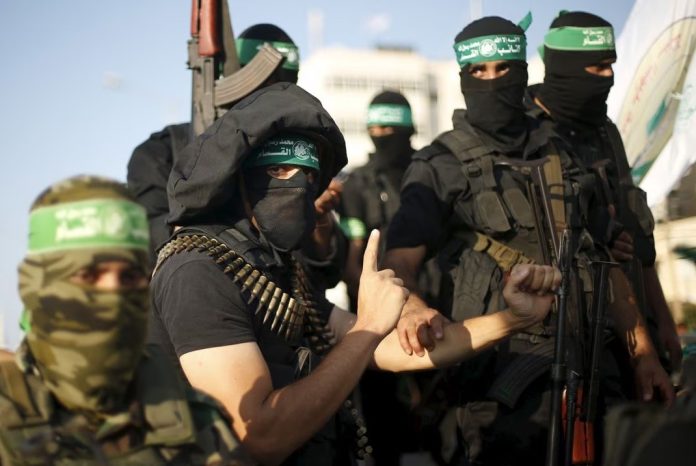
The image was accompanied by a caption in Arabic and Hebrew saying: “Because of [Israeli Prime Minister Benjamin] Netanyahu’s intransigence and [Chief of General Staff Eyal] Zamir’s submission, this is a farewell photo at the beginning of the operation in Gaza.”

Hamas published the picture on its official website, stressing its position that the fate of the captives lies with the political decisions of Israel’s leadership.

Hamas has repeatedly declared its readiness to conclude a comprehensive accord with Israel to release all Israeli captives in exchange for Palestinian prisoners, end the war on Gaza, and ensure the complete withdrawal of Israeli soldiers.

However, Netanyahu has repeatedly rejected such proposals, insisting instead on partial arrangements that would allow him to delay and impose new conditions at each stage of negotiations.

Many in Israel and elsewhere have accused Netanyahu of dragging out the war for the sake of his own political survival, ignoring the hostages’ survival.

On Sept. 9, Israel attacked a residential compound in Doha killing five Hamas leaders as they were discussing a US proposal to end the war in Gaza, where nearly 65,000 Palestinians have been killed since October 2023.

Last November, the International Criminal Court issued arrest warrants for Netanyahu and his former Defense Minister Yoav Gallant for war crimes and crimes against humanity in Gaza.

Israel also faces a genocide case at the International Court of Justice for its war on the enclave.

Qatar files complaint to International Civil Aviation Organization over Israeli aerial attack

The letter was delivered by Abdullah Al-Malki, Qatar’s permanent representative to ICAO, to the president of the ICAO Council, according to the Qatari news agency, QNA.

In its letter, Qatar stressed that the assault represented a “flagrant violation of its sovereignty and the provisions of the Chicago Convention on International Civil Aviation.”

The Persian Gulf state affirmed that it “retains all its rights under international law.”

On September 9, Israel attacked a residential compound in Doha, killing five Hamas leaders as they were discussing a US proposal to end the war in Gaza, where nearly 65,200 Palestinians have been killed since October 2023.


Trump warns Taliban of ‘bad things’ if Bagram Air Base not returned to US

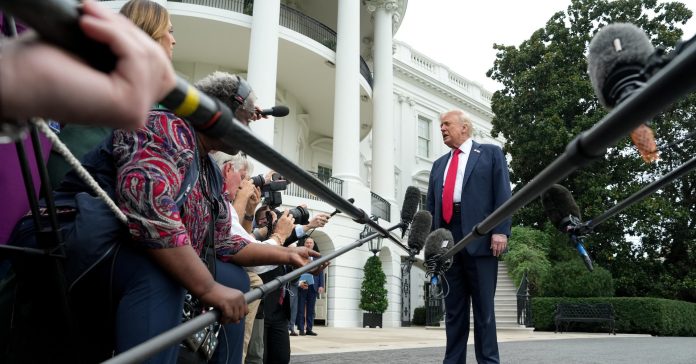
“If Afghanistan doesn’t give Bagram Airbase back to those that built it, the United States of America, BAD THINGS ARE GOING TO HAPPEN!!!,” Trump wrote on Truth Social, signing his name to the end of the post.

Trump just days ago said the United States wanted to wrest back control of Bagram Air Base.

During a joint press conference in Great Britain with that country’s prime minister, Trump stated that the U.S. was “trying to get it back” because the Taliban needed things from the United States.

He also added the base’s proximity to China was a reason why his administration wanted it back.

“But one of the reasons we want that base is, as you know, it’s an hour away from where China makes its nuclear weapons. So a lot of things are happening,” the president stressed during the presser.

Bagram was once the largest U.S. base in Afghanistan during the U.S. war in that country, the longest conflict in the nation’s history. It was abandoned in 2021 when the Joe Biden administration withdrew U.S. forces from Afghanistan.

Trump has regularly criticized the Biden administration’s handling of Afghanistan.

In speaking about the base this week, Trump complained that it had been given back to Afghanistan for nothing.

China and the Taliban have slammed Trump’s statements about retaking control of Afghanistan’s Bagram Air Base.

Iran’s Supreme National Security Council announces suspension of cooperation with IAEA

IAEA

The decision came a day after the United Nations Security Council declined to permanently lift sanctions against the Islamic Republic.

In a statement released Saturday, the SNSC criticized the move by Britain, France, and Germany, collectively known as the E3, as reckless and unjustified, particularly in relation to Iran’s civilian nuclear program.

According to the statement released after the council meeting chaired by President Massoud Pezeshkian, “despite initiatives by the Foreign Ministry to resolve outstanding issues and proposals for further engagement with the IAEA, ill-considered measures by three European countries have effectively led to a halt in cooperation.”

The meeting also addressed regional developments, including the adventurism of Israel.

Officials reiterated that Iran seeks to expand efforts aimed at fostering peace and stability in the region.

The council further reviewed international developments, particularly sanctions and military operations by the US and Israel against Iran.

It assigned the Foreign Ministry to continue consultations in line with national interests and the SNSC’s decisions.

Israel forced displacement of over quarter-million Palestinians from Gaza City: Report

Gaza War

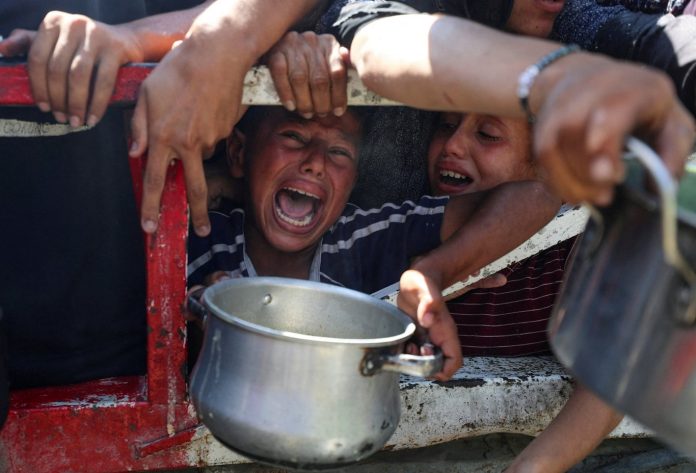
In a statement, the office said more than 900,000 Palestinians remain in Gaza City and northern areas, refusing to leave despite the ongoing destruction and “crimes of permanent forced displacement.”

“While thousands have fled south due to heavy Israeli airstrikes, at least 22,000 have since returned to Gaza City after moving belongings to the south,” it added, citing the absence of basic necessities there.

The office highlighted that the Al-Mawasi area in Khan Younis and Rafah, promoted by Israel as a “safe humanitarian zone,” has instead been bombed more than 110 times, leaving over 2,000 people dead.

It noted the area lacks hospitals, infrastructure, clean water, food, housing, electricity, and education, making life “almost impossible.”

According to the office, Israel has allocated just 12% of Gaza’s total area as “shelter zones” while attempting to force over 1.7 million people into them, comparing these to “concentration camps” aimed at depopulating Gaza City and the north.

The office condemned Israel’s actions as “a full-fledged war crime and crime against humanity,” blaming “Israel, its ally the US, and other states supporting the war” for the consequences.

It called on the international community, the UN, and international courts to take “serious and effective measures” to halt the crimes, hold Israeli leaders accountable, and guarantee Palestinians’ right to remain in their land with safety and dignity.

Israel has been waging a devastating genocidal war on the Gaza Strip since October 2023, killing more than 65,000 Palestinians, most of them women and children, according to the Gaza Health Ministry.

US senators seek to sanction Russia’s ‘shadow fleet’: FT

Iran Oil Tanker

Russia’s shadow fleet has been increasingly targeted by Western sanctions as Ukraine’s international partners seek to limit Russian oil revenues, which help fund Moscow’s war machine.

The shadow fleet includes hundreds of older, often uninsured or poorly maintained tankers. These typically operate under the flags of other countries and have little transparency, making it difficult for regulators to enforce sanctions.

The proposed Shadow Fleets Act, sponsored by U.S. Senators Jim Risch and Jeanne Shaheen, would expand penalties on vessels that have allowed Russia to skirt Western energy restrictions since its 2022 full-scale invasion of Ukraine.

Lawmakers said the measure would also target Russian liquefied natural gas (LNG) projects and Moscow’s defense industrial base.

“(Russian President Vladimir) Putin will use every trick in the book to evade U.S. sanctions, and the U.S. is cracking down on this illicit shadow fleet of ships that he uses to fund his war,” Risch announced in a statement.

The bill has support from both Republican and Democratic parties, including President Donald Trump allies Lindsey Graham and Tom Cotton, according to the Financial Times.

It follows other recent proposals in Congress to escalate economic pressure on Moscow, including efforts to label Russia a state sponsor of terrorism over its deportation of Ukrainian children.

The push comes as Trump’s diplomacy with Putin has failed to yield results. The U.S. president hosted Putin in Alaska in August, warning of consequences if Moscow rejected a ceasefire deal.

So far, Trump has not imposed any major sanctions on Russia apart from the imposition of a 25% tariff on India in August over its purchases of Russian oil.

The European Union is also moving ahead with new measures. The European Commission proposed on Sept. 19 a sweeping new sanctions package that includes a complete import ban on Russian LNG by 2027, penalties on 118 shadow fleet vessels, and restrictions on Russian banks and third-country traders helping Moscow bypass restrictions.

EU Commission President Ursula von der Leyen stated the package is a response to Moscow’s “contempt for diplomacy and international law” after Russian drones recently violated Polish and Romanian airspace.