Friday, December 26, 2025
Home Blog Page 1461

Jordan to host Syria FM for regional meeting

Syrian Foreign Minister Faisal Mikdad

Jordan’s official Petra news agency made the announcement on Sunday, saying the meeting would gather the foreign ministers of Egypt, Iraq, Saudi Arabia and Syria in the capital Amman on Monday.

Jordanian Foreign Ministry spokesman Sinan Majali was quoted by the news agency as saying that the meeting follows a similar gathering held in Jeddah two weeks ago and “builds on the contacts that these countries made with the Syrian government.”

The foreign ministers of the Persian Gulf Cooperation Council (GCC), Egypt, Iraq and Jordan agreed at the summit in the Red Sea city on April 14 that the Arab world must play a “leadership role” in efforts to find a political solution to the crisis in Syria.

The nine-nation talks came after Mekdad had earlier visited Jeddah on an unannounced trip, the first since the outbreak of the war, during which he and his Saudi counterpart discussed “the necessary steps” to return Damascus to the Arab League.

Syria’s membership in the Arab League was suspended following the eruption of a foreign-backed militancy in the country in 2011.

In 2015, Syrian activists said that Saudi Arabia, Qatar, Jordan, and Turkey supported both al-Nusra Front, which is affiliated with al-Qaeda and the Daesh terrorist group in Syria by giving them money or allowing Wahhabi mosques to collect money for them.

Around the same time, former US Senate candidate, Mark Dankof said the United States, Israel, and Saudi Arabia had been involved in creating the Daesh terrorist group to overthrow the legitimate Syrian government.

Saudi Arabia closed its embassy in Damascus and withdrew all diplomats in March 2012. The two governments agreed last month to resume diplomatic relations and re-open embassies.

The UAE also cut its relations with Syria in 2012, a year after Damascus found itself in the grips of foreign-backed violence, but it reopened its embassy in Damascus in 2018.

Turkey’s Erdogan accuses main rival of PKK ties

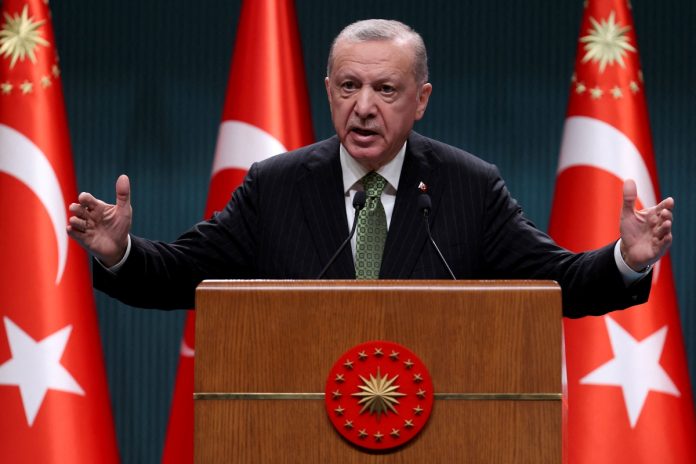
Turkish President Recep Tayyip Erdogan

Erdogan appeared in public for the first time on Saturday as he visited the Teknofest aviation and space fair in Istanbul.

Later in the day, he spoke to his supporters in the city of Izmir, an opposition stronghold.

It came after a stomach infection that kept the Turkish premier off the campaign trail before the country’s presidential and parliamentary elections scheduled for May 14.

On Friday, a Kurdish-Left alliance, including the pro-Kurdish Peoples’ Democratic Party (HDP), called on its supporters to vote for Kilicdaroglu in the elections.

“At this breaking stage of Turkish politics, we have come together to fulfill our historic duty, both as part of our tradition and our debt to future generations”, the alliance said in a statement, adding, “In this context, we share with the public our decision to support Kemal Kilicdaroglu in the presidential elections.”

During his speech in Izmir, Erdogan referred to the Qandil Mountains in the semi-autonomous Kurdistan Region, where PKK bases are located.

“What does Qandil say? We vote for Kilicdaroglu. Qandil, Qandil… What is Qandil? The heads of the terrorist organization are there,” he stated.

The PKK – designated as a terrorist group by Turkey, the United States, and the European Union – has been waging a decades-long armed insurgency against Ankara for greater autonomy for the Kurdish minority in the Turkish southeast.

Erdogan, 69, has ruled Turkey since 2003, first as prime minister and later as president. He is facing criticisms over Turkey’s double-digit inflation and his government’s response to February’s devastating earthquake.

Kilicdaroglu has led Turkey’s main opposition party, the People’s Republic Party (CHP), for 13 years.

The 74-year-old former civil servant has promised to focus on reviving Turkey’s ailing economy and repairing democracy, saying that the nation “cannot afford to lose another five years” to Erdogan.

Most opinion polls have given Kilicdaroglu a slight lead, with expectations that the presidential race could go to a second round.

Suicide cases soaring at alarming rate among Israeli soldiers: Report

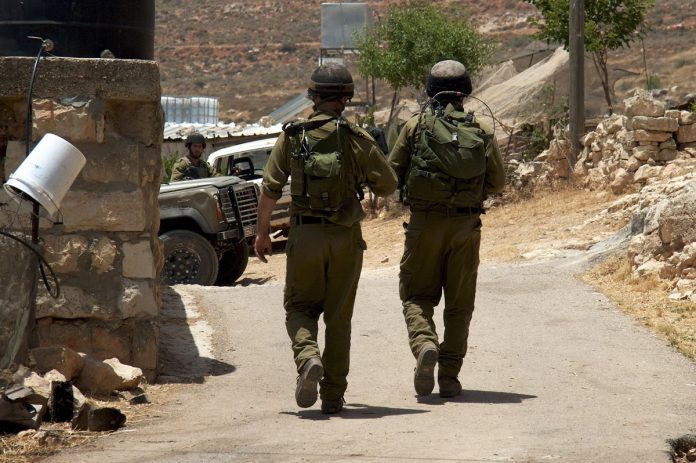
Israeli forces

According to a report published by the Israeli public broadcaster KAN, Halevi described the soaring increase in suicide cases among Israeli troops as a “dangerous and daunting” challenge for the regime’s armed forces.

He instructed military authorities to come up with a plan to put an end to the phenomenon.

KAN highlighted that Israel recorded a sharp increase in suicide cases among its military forces last year, and the chief of general staff of the Israeli military has, for this reason, ordered the allocation of more resources and forces in order to deal with the issue.

Israeli media reported that three Israeli soldiers have taken their lives since the beginning of the current month, of whom two committed suicide last week.

According to the Palestine Today news agency, suicide is still the leading cause of death within the ranks of the Israeli army in non-combat situations, and the number has soared dramatically in recent years.

Official data from the Information and Research Center of the Knesset (Israeli parliament) show that the Tel Aviv regime registers 500 suicides each year, 100 of which are among young people in the 15-24 age bracket.

The Israeli military saw an increase in the number of soldiers killed in uniform over the past year — 44 compared to the previous year’s 31 — as well as a rise in the number of suicides, according to statistics released by the army earlier this year.

Suicide remained the leading cause of death, with at least 14 soldiers believed to have taken their own lives in 2022, compared to 11 in the previous year.

Most of the suicides in the Israeli military last year were conscripted male troops, Brigadier General Yoram Knafo, chief of staff of the army’s Manpower Directorate, told reporters. He said two of the 14 cases were lone soldiers, troops who either do not have family in the occupied territories or are not supported by their families there.

The Israeli military also noted a significant rise in the number of severely injured soldiers in 2022, with 158, compared to 92 in 2021.

Turkish airspace closed to Armenia airline without warning

Armenia airline

“For reasons incomprehensible to us and without any visible grounds, Turkish aviation authorities cancelled the permission previously granted to the FlyOne Armenia airline to operate flights to Europe through Turkish airspace,” stated Aram Ananyan, FlyOne’s chairman.

“Turkish aviation authorities implemented the cancellation without prior notification, putting our airline and our passengers in an uncomfortable situation,” Ananyan added.

FlyOne Armenia, a subsidiary of Moldovan airline FlyOne, began operations in December 2021. In February 2023, Ananyan told Armenpress that the carrier had five Airbus aircraft and offered flights to 14 destinations in eight European and Middle Eastern nations.

Ankara has not had diplomatic or commercial ties with Armenia since the 1990s.

The two nations are at odds primarily over the 1.5 million people that Armenia says were killed in 1915 by the Ottoman Empire, the predecessor to modern Turkey. Armenia says this constitutes genocide, a charge Turkey denies.

But in February, a border gate between the neighbours was opened for the first time in 35 years to allow aid for victims of the devastating earthquakes in southern Turkey.

Key emerging powers sit out US standoff with Russia, China: Pentagon leaks

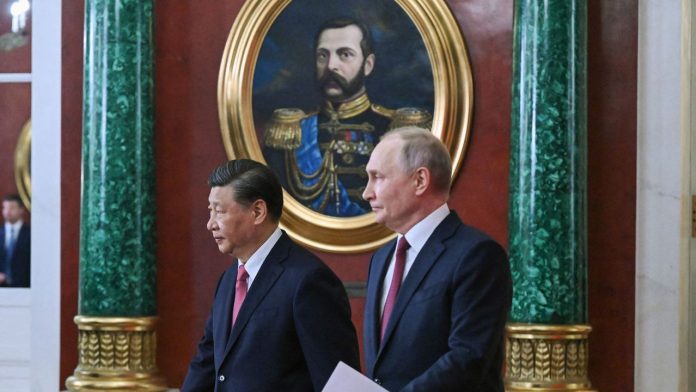
Putin and Xi

An array of major developing nations seek to sit out the US’ intensifying standoff with Russia and China, according to the Pentagon leaks.

The leaks comprise classified US intelligence assessments, which show that such countries as India, Brazil, Pakistan and Egypt try “to straddle allegiances in an era when America is no longer the world’s unchallenged superpower.”

According to the documents, President Joe Biden’s global agenda faces significant challenges as the influential aforementioned regional powers “try to remain on the sidelines” of Washington’s strife with Moscow and Beijing, sometimes capitalizing on this rivalry for their own gain.

As far as Pakistan is concerned, one of the leaked documents cited the country’s Minister of State for Foreign Affairs Hina Rabbani Khar as arguing in March that Islamabad can “no longer try to maintain a middle ground between China and the United States.”

Khar reportedly expressed concern in an internal memo that “the instinct” to preserve Pakistan’s partnership with America may damage Islamabad’s “real strategic” collaboration with Beijing.

On India, one more leaked document indicated that the country’s National Security Adviser Ajit Kumar Doval had earlier assured his Russian counterpart Nikolay Patrushev of New Delhi’s support for Moscow “in multilateral venues, also singling out India’s reluctance to support the Western-backed UN resolution over Ukraine.”

Neither the White House nor the US Department of Defense have commented on the matter.

Carnegie Endowment for International Peace scholar Matias Spektor stated that emerging powers are “recalibrating” as China expands “new economic and military clout” and Russia “demonstrates its ability to deflect Western pressure.”

“It’s unclear who will end up in a pole position in 10 years’ time, so they need to diversify their risk and hedge their bets,” the scholar added.

In the US’ new national defense strategy, which was released in late October 2022 along with the country’s Nuclear Posture Review and Missile Defense Review, the Biden administration labeled China as a “consequential strategic competitor for the coming decades,” while calling Russia an “acute threat.”

“[China] and Russia now pose more dangerous challenges to safety and security at home, even as terrorist threats persist,” the document claimed, adding that both countries have deployed space capabilities that could purportedly target the US’ GPS and other “space-based capabilities that support military power and daily civilian life.”

Speaking to reporters after the strategy’s release at the time, US Defense Secretary Lloyd Austin argued that while Russia “can’t systemically challenge the United States over the long term,” unlike China, it “does pose an immediate and sharp threat to our [American] interest and values.”

As for the classified intelligence documents, they have been leaked on social media sites in the past several weeks, in particular providing intelligence on a spate of sensitive security matters related to the conflict in Ukraine, including Ukrainian air defenses, Russian military activities, and US assessments of the standoff.

The Pentagon confirmed that the documents “appear to contain sensitive and highly classified material,” but insisted that t least some have been doctored.

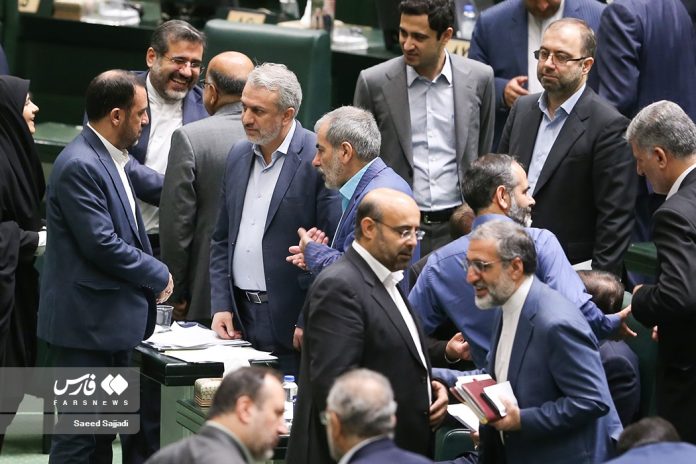
Iranian MPs vote to impeach minister

Reza Fatemi Amin

During the parliament session on Sunday, out of the 266 MPs participating in the voting, 162 lawmakers voted for the impeachment, 102 voted against with 2 abstentions. There were also 6 invalid votes.

Fatemi Amin had survived a similar impeachment last year.

Earlier an Iranian lawmaker had claimed that his colleagues at the parliament were bribed to drop an impeachment bid against Fatemi Amin.

Two major Chinese companies plan to invest in Iran’s Khuzestan: Envoy

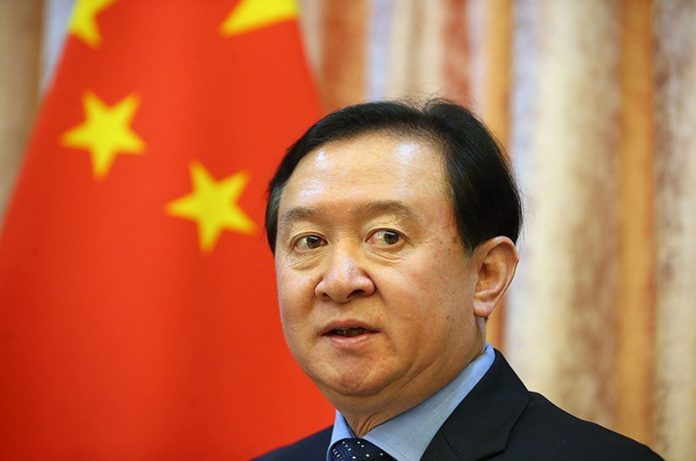
Chang Hua

During a meeting with Khuzestan’s governor-general on Sunday, Hua said other Chinese companies could also come forward with any investment plans as related to the Iranian province.

He expressed hope that given the two countries’ good relations and Khuzestan’s tourism capacities, a large number of tourists would travel to the Iranian province from China and visit its historical sites.

Hua emphasized the need to advertise the province’s tourist spots to attract visitors.

Elsewhere in his remarks, the Chinese ambassador said the boosting of the ties between Iran and China would lead to more Chinese companies entering the Iranian investment market.

This comes as Iran is under US sanctions.

He said Beijing supported Iran’s territorial integrity as strongly as it supported its own and backed “Iran against Western countries, which assail Iran’s and China’s interests under various pretexts.”

He also said the reestablishment of ties between Iran and Saudi Arabia last month — which came after Chinese mediation — was helpful to regional peace and development.

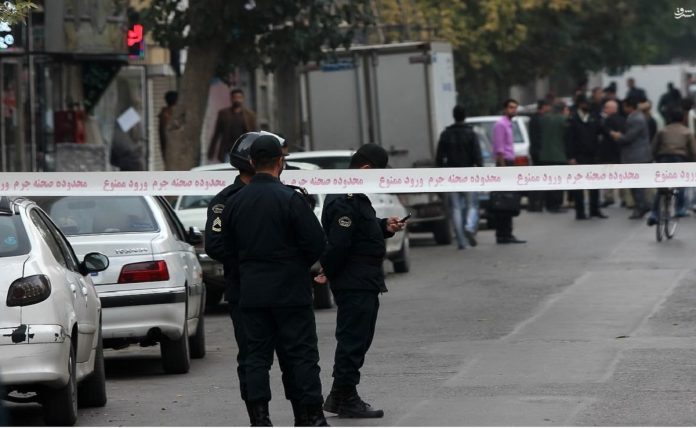
Local police chief, wife shot dead in Iran’s southeast

Iran Police

Saravan’s Governor Saeed Tajlili told IRNA on Sunday that Major Alireza Shahraki was killed in the attack while his wife was wounded when assailants opened fire on them from a Peugeot Pars at an intersection in Saravan earlier in the day.

Tajlili said Shahraki’s wife had been taken to the hospital, where she succumed to her wounds.

Tajlili said an investigation was underway to find the assailants and determine their motives.

Another local police official, Doostali Jalilian, had earlier told IRNA that Shahraki’s wife was in critical condition.

Iran lawmaker who accused colleagues of bribery summoned to court

Iran Parliament

Days earlier, Alireza Beigi had claimed that his colleagues received 70 to 75 SUV cars to drop a previous impeachment bid against Minister of Industry, Mines and Trade Reza Fatemi Amin, who joined another such impeachment session in the Parliament on Sunday.

Fatemi Amin has earlier dismissed the accusations. Beigi was also slammed by Parliament officials and asked to provide evidence for the claims.

In a tweet on Saturday, Beigi said he was summoned both to the Attorney General’s Office and the Parliament’s Committee Monitoring the Conduct of Lawmakers over his claims.

He said he was asked at the Attorney General’s Office to provide evidence in defense of its allegations.

He, however, slammed the session at the Parliament’s Committee Monitoring, which he described as a session of “political prosecution.”

Meanwhile, Fars News Agency reported investigations by its correspondent found an agreement among a group of lawmakers to receive the cars, but the date is vague and cannot thus be verified if the agreement is linked to Beigi’s claims.

Live Update: Russia’s “Special Operation” in Ukraine; Day 431

Russia Ukraine War

Death toll from Ukraine strike on Russian border village rises

The death toll from an overnight Ukrainian strike on the Russian border village of Suzemka has risen to four, the governor of Russia’s western Bryansk region stated on Sunday.

“Two more civilians have been found and removed from the rubble. Unfortunately, both of them died,” local governor Alexander Bogomaz said on on Telegram this afternoon.

A further two people are also being treated in hospital, he added.

Earlier on Sunday Bogomaz had confirmed that two people were killed in the shelling.

Rubble is still being removed and the village has declared a state of emergency.


Ukraine says it retains Bakhmut ‘road of life’

Ukraine remains in control of a key supply route into Bakhmut, a military spokesperson said.

“For several weeks, the Russians have been talking about seizing the ‘road of life,’ as well as about constant fire control over it,” Serhiy Cherevatyi, a spokesperson for Ukrainian troops in the east, stated in an interview with local news website Dzerkalo Tyzhnia.

“Yes, it is really difficult there … (but) the defence forces have not allowed the Russians to ‘cut off’ our logistics,” he added.

The “road of life” is a vital road between the ruined Bakhmut and the nearby town Chasiv Yar to the west – a distance of just over 17 km (10.56 miles).

Yevgeny Prigozhin, the head of Russia’s mercenary Wagner Group reportedly threatened to withdraw some of his troops from the eastern city if Moscow did not send more ammunition.

In a nearly 90-minute video interview with Russian military blogger Semyon Pegov published on Saturday, Prigozhin threatened to withdraw troops from Bakhmut, saying they had enough ammunition left only for days.

“If the shortage of ammunition is not replenished, then … most likely, we will be forced to withdraw part of the units,” Prigozhin added, quoting a letter he said was sent to Russia’s Defence Minister Sergei Shoigu, giving an April 28 deadline.

It was not immediately known when the interview was recorded.


Two killed in missile strike on Russian village: Governor

Two people were killed when a Ukrainian missile hit a Russian village near the countries’ border, the regional governor has stated.

Missiles hit the village of Suzemka, to the east of the frontier between the two countries, according to Alexander Bogomaz, the governor of Bryansk oblast.

“As a result of the strike inflicted by Ukrainian nationalists, unfortunately, two civilians were killed,” he said in a message posted on Telelgram.

“According to preliminary data, one residential building was completely destroyed, two more houses were partially destroyed,” he added.


Ukrainian military intelligence warns Crimea residents to avoid military facilities for “near future”

The Ukrainian defense ministry’s military intelligence service urged residents of Crimea to stay away from military facilities following a massive fuel depot fire sparked by a suspected drone attack in Sevastopol on Saturday.

Calling the blaze “bavovna,” which is used as another word for an explosion in Ukrainian, Andrii Yusov, a representative for the Defence Intelligence of Ukraine, said the fire “is God’s punishment, in particular for the civilians killed in Uman.”

Yusov was referring to the Russian missile strike on an apartment block in the central Ukrainian city of Uman Friday that killed at least 23 people.

“This punishment will be long-lasting,” he stated in an interview with Ukrainian media on Saturday.

“It is advisable for all residents of temporarily occupied Crimea not to stay near military facilities or facilities providing for the aggressor’s army in the near future,” he added.

Yusov claimed the fire “destroyed more than 10 tanks with oil products with a capacity of 40,000 tonnes.”

According to Yusov, the oil products were intended for use by the Russian Black Sea Fleet.

The Russian Defense Ministry has not yet commented on the incident. But the city’s Russian-installed governor, Mikhail Razvozhaev, said the now-extinguished blaze was the result of a drone attack. He added “only one drone was able to reach the oil reservoir” and another one was downed. Four fuel tanks were hit, but no one was injured, he added.

Ukrainian President Volodymyr Zelensky stated in an interview released Saturday that Ukraine is preparing for a counteroffensive, but declined to say when it would happen. He has repeatedly pledged to “liberate” Crimea from Russia. Moscow declared the peninsula annexed since 2014.


Zelensky says counteroffensive “will happen”, but not ready to say when

Ukrainian President Volodymyr Zelensky said in an interview posted Saturday that a highly anticipated counteroffensive against Russian troops is in the works and “will happen.”

“There will be a counteroffensive,” Zelensky stated, while speaking to reporters from Finland, Denmark, Sweden and Norway. A video of the interview was shared to his Telegram account.

“We are preparing for it. It will happen,” he continued.

Zelensky added he believes in the mission’s success and that “we will be able to de-occupy our territories.”

But the Ukrainian president said he is “not ready to say in detail when it will happen and how.”

Ukraine is still in need of “certain weapons,” he noted, and the main risk for his troops is whether they will have enough of the ammunition they need.

“Weapons are decisive in the moments of de-occupation,” Zelensky stated.

Some background: Ukraine has made extraordinary efforts to conceal the start of its strategically vital counteroffensive.

Ukraine’s Deputy Defense Minister Hanna Maliar stated last week that the counteroffensive would not be announced.

Much of the focus of recent speculation centers on the southern Zaporizhzhia region, where Kyiv’s forces could attempt to separate the Russia-annexed peninsula of Crimea from occupied territory in eastern Ukraine and the Russian mainland.


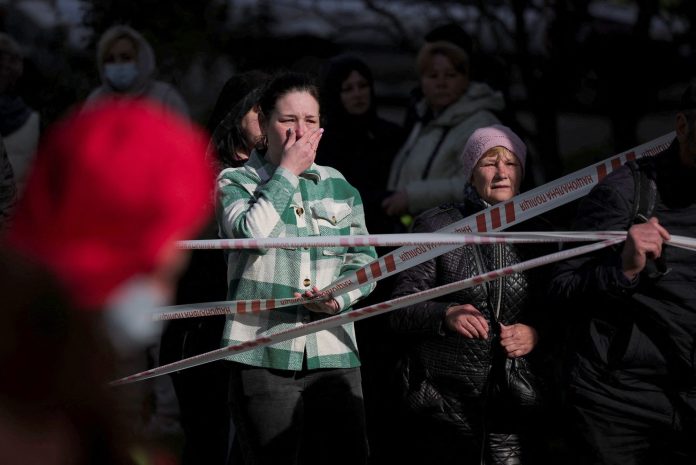
Search and rescue operation ends in Uman apartment strike that killed 23, with 2 still missing

The search and rescue operation in the Ukrainian city of Uman has concluded, following Friday’s deadly missile strike that hit an apartment building, according to regional emergency services and Ukraine’s Minister of Internal Affairs Ihor Klymenko.

The strike left at least 23 people dead — including six children — and they have all been identified, Klymenko said.

Three boys — including a one-and-a-half year old, and two teens who were 16 and 17 — and three girls — aged 8, 11 and 14 — were killed, he added.

Two women remain missing, Klymenko said. They are also presumed dead, Vasyl Kozynenko, Uman’s deputy police chief, told CNN.

The strike is believed to have been the deadliest attack on Ukrainian civilians in months.

A challenging rescue: Seventeen people were pulled from the rubble, with nine suffering injuries, according to Klymenko.

“I am grateful to the rescuers, police, utility workers, and dozens of Uman residents who joined in the dismantling of the collapsed building. The work went very quickly because everyone was in a hurry. We were hoping to find someone alive under the rubble until the last minute,” Klymenko said in a post on Facebook.

The building kept collapsing during the rescue operation and parts of it could not be accessed, according to Yulia Norovkova, a spokesperson for the region’s emergency services. About 150 officers were involved in the recovery efforts.

“More than 100 people have already received psychological help,” Norovkova added.