Wednesday, January 7, 2026
Home Blog Page 1416

Oil minister: Iran sold over 2.8 million refinery spare parts to Venezuela

Iran Venezuela Oil

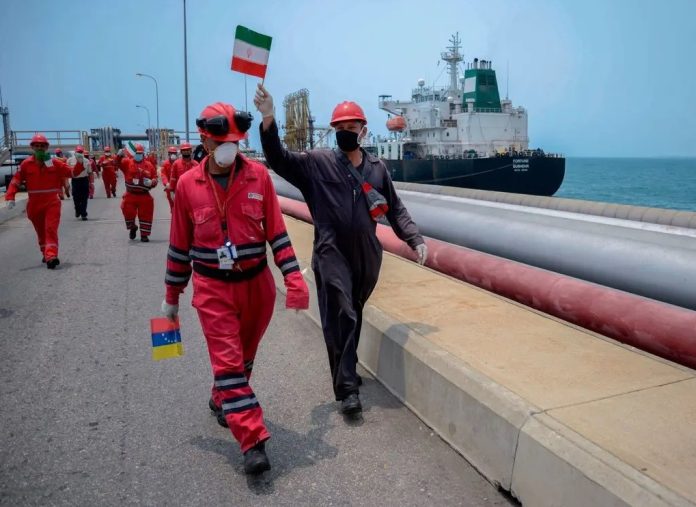
Owji pointed to President Ebrahim Raisi’s visit to Venezuela on Tuesday, adding the agreements signed a day earlier were significant for the two countries’ oil industries.

“There is good capacity and potential in trade with Venezuela because this country has four refineries with a capacity of 1.4 million barrels of oil, but this capacity went unnoticed due to the embargo and the exit of specialized forces,” said Owji, who is accompanying Raisi during his tour of sanctions-hit South American states.

The Raisi administration, Owji added, resumed efforts to broaden energy and trade ties with Venezuela, and so far, more than 2.8 million refinery units have been exported through Iranian manufacturers and contractors.

At a joint presser with Venezuelan President Nicolas Maduro on Monday, Raisi said the value of trade between Iran and Venezuela can increase to $10 billion in the first step and to $20 billion in the second step.

The two countries signed 19 agreements for cooperation in a variety of areas including energy, agriculture, mining and transportation.

Raisi’s tour will also take him to Nicaragua and Cuba.
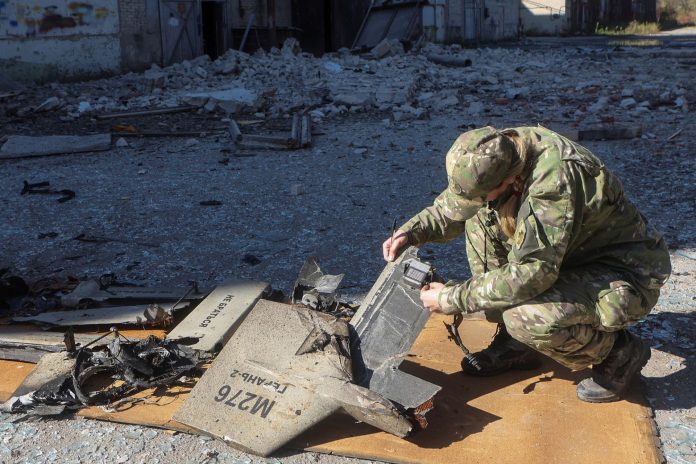
Russia receiving larger consignments of Iranian drones by ship: UK

Russia Ukraine War Drone

“Russia is also working to start domestic production of OWA-UAVs, almost certainly with Iranian assistance,” the ministry added in a tweet.

Iranian officials say Ukrainian officials have failed to provide any evidence for their claim that Russia is using Iranian drones in its war on Ukraine.

Iranian Foreign Minister Hossein Amirabdollahian in November dismissed media controversy over Iran’s alleged support for Russia in the Ukraine war, adding, however, that Tehran had provided Moscow with a limited number of drones months before the war in Ukraine.

He also assured that Iran will not be indifferent if it is proven that Russia has used Iranian drones in the conflict.

Iran has repeatedly expressed opposition to the war in Ukraine.

Atomic chief: Iran had 159 new achievements in nuclear industry last year

Mohammad Eslami

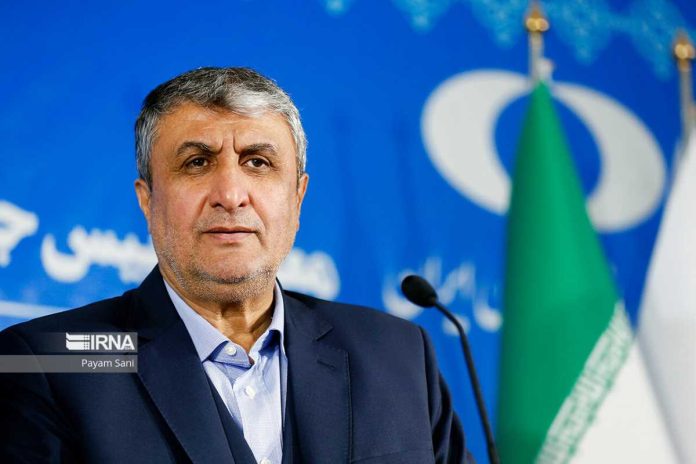
Speaking during a show on national TV, Mohammad Eslami said the wave of unrest, which grappled Iran in 2022, did not stop the country’s nuclear industry from moving forward in various nuclear-related fields such as health, food security, medicine, medications, environment, industry and economy.

Among the achievements, he highlighted the products designed and developed to promote the health sector.

Eslami said the US has imposed a strict embargo on the Iranian companies producing radiopharmaceuticals.

“If we do not have a nuclear fuel cycle, we cannot provide these services to the people,” he said. “Westerners give us neither uranium nor yellow cake, because they wanted our people to be deprived of nuclear medicine and treatment.”

The fuel cycle, he added, is “a prerequisite” for the production of radiopharmaceuticals, and this cannot be done without [uranium] enrichment.”

“We plan to increase the nuclear capacity in these areas by seven times by the end of the next Iranian year (March 2025),” the atomic chief added.

Report reveals FBI’s watchlist bias: 98% of names are Muslim

FBI

A report by a Muslim group in the US has revealed that the overwhelming majority of entries on an FBI watchlist, or over 98%, are Muslim names.

The report, titled “Twenty Years Too Many, A Call to Stop the FBI’s Secret Watchlist,” details the FBI’s use of the Terrorism Screening Database, which it said is targeting Muslims.

It was released by Council on American-Islamic Relations (CAIR) on Monday.

After being provided with a 2019 version of the FBI’s list by a Swiss hacker who discovered it online following its accidental posting by a regional air carrier, CAIR conducted a comprehensive analysis of over 1.5 million entries.

“More than 350,000 entries alone include some transliteration of Mohamed or Ali or Mahmoud and the top 50 most frequently occurring names are all Muslim names,” said the report.

“Of the watchlist entries we’ve reviewed, we estimate that more than 1.47 million of those entries regard Muslims—over 98 percent of the total,” it added.

The report noted that for 20 years, the FBI’s secret list has brought hardship and fear to the Muslim community.

“But the FBI’s next million targets won’t be Muslim. With the War on Terror fog lifting, the FBI’s secret list will one day find a new target. The next targets will be our fellow Americans, and this report is meant as a warning to them,” added the report.

The Muslim group also called President Joe Biden to take action to address the watchlist.

Individuals on the watchlist encounter a range of challenges, including travel restrictions, immigration issues, encounters with the FBI, instances of police violence, difficulties obtaining permits and licenses, professional consequences, and limited access to government buildings.

In a recent incident involving access to a government building, Mayor Mohamed Khairullah of Prospect Park, New Jersey was unexpectedly disinvited by the Secret Service from the White House’s Eid al-Fitr celebration. This disinvitation was attributed to his watchlist status with the FBI.

Iran deputy FM says held talks with delegates of France, Britain, Germany in UAE

Ali Bagheri Kani

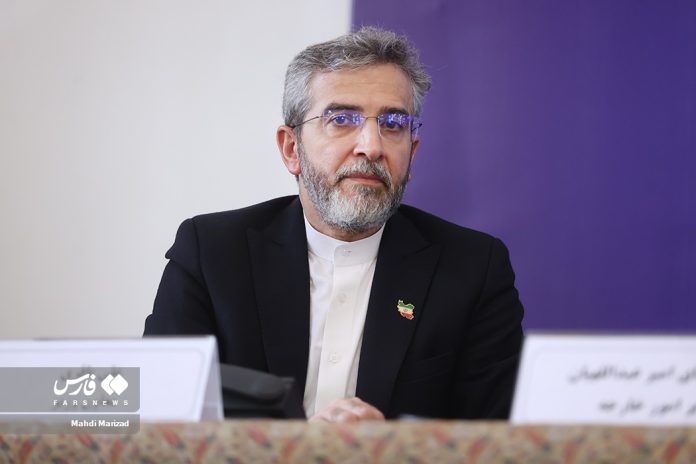
In a tweet, Ali Bagheri-Kani, who also heads Iran’s nuclear negotiating team, said the discussions took place in the United Arab Emirates (UAE), in line with the Islamic Republic’s “diplomatic talks with regional and extra-regional countries.”

The three European countries are signatories to the multilateral 2015 Iran nuclear deal, JCPOA, which has been in trouble due to the US’s unilateral withdrawal in 2018 under former President Donald Trump.

Talks over the revival of the deal have been at an impasse as the US President Joe Biden has been dragging its feet on lifting the anti-Iran sanctions and returning to Washington’s obligations.

The recent talks come as Iran and the US have been engaged in indirect negotiations via intermediaries on a revitalization of the nuclear agreement.

Top diplomat says Russia to respond to West in kind over Iran nuclear talks if necessary

Mikhail Ulyanov

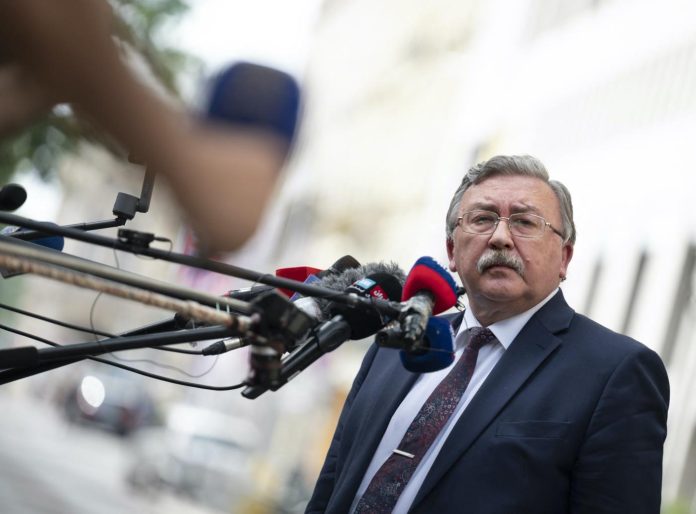
Ulyanov said in a tweet on Tuesday that the Western parties politicized the talks to the maximum possible extent, but their approach has failed to meet their interests.

“Western countries politicized multilateral discussions in Vienna to the maximum possible extent. But now they apparently started to understand that such policy doesn’t correspond to their own interests,” he wrote.

He made clear that Russia’s position will correspond to the West’s policy, adding, “If necessary, we will respond.”

Iran proved the peaceful nature of its nuclear program to the world by signing the JCPOA, commonly known as the Iran nuclear deal, with six world powers. However, Washington’s exit in May 2018 and its subsequent re-imposition of sanctions against Tehran left the future of the deal in limbo.

Multilateral diplomatic efforts to revive the JCPOA have been stalled since last August, with Iran blaming the United States for failing to guarantee that it will not leave the deal again.

Former US President Donald Trump pulled out of the UN-endorsed agreement in May 2018 and imposed what he called “maximum pressure” sanctions against Iran.

Iran has repeatedly announced that the JCPOA revival is possible if the US and the European signatories to the agreement have the will to reach that aim, warning that the opportunity will not last forever.

Egypt to abandon dollar in trade with BRICS

Dollar

According to Moselhy, Egypt is seeking to use local currencies to pay for its imports from India, China, and Russia – key members of the BRICS group, which also includes Brazil and South Africa.

“Nothing of the sort has been implemented but there are discussions so that we can trade in local currencies of countries like India, Russia or China,” Moselhy told Reuters.

The BRICS group makes up 40% of the world’s population and almost a third of the global economy. The bloc members have recently outpaced the G7 in terms of economic growth.

In April, 19 countries expressed interest in joining BRICS, which is gearing up to hold its 15th annual summit in South Africa over August 22-24. The United Arab Emirates, Argentina, Algeria, Egypt, Bahrain, Indonesia, Saudi Arabia, and Iran are among the countries that have formally requested membership.

Egypt is currently trying to buoy its struggling economy, which has been dragged down by a notable decline in revenues from tourism and a surge in commodity prices. Geopolitical tensions have also reportedly prompted foreign investors to pull about $20 billion out of Egypt’s financial markets.

The nation has experienced a sharp surge in inflation over the last year following several waves of currency devaluations, a prolonged shortage of foreign currency, and continuing delays in procuring imports.

Egypt has recently agreed on a $3 billion deal with the International Monetary Fund (IMF), while its Gulf allies have also pledged to come to Cairo’s aid with billions in investments.

Bloomberg earlier reported, citing Moselhy, that India was providing Egypt with a credit line of unspecified size. However, the minister himself denied the claim in an interview with Reuters.

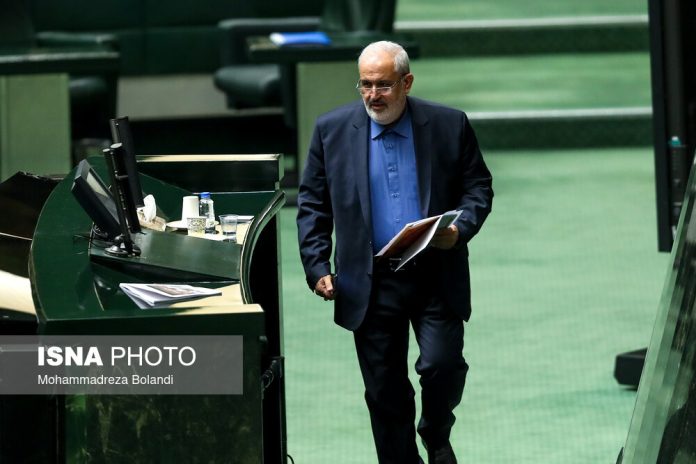
Aliabadi becomes Iran’s new Minister of Industry, Mine and Trade

Abbas Aliabadi

During a session on Tuesday, Aliabadi presented his plans for the post to the Iranian lawmakers and defended his agenda.

At the session, which was also joined by First Vice President Mohammad Mokhber, 157 lawmakers voted in favor of the proposed minister and 58 against. Eight others also abstained.

Aliabadi, 62, will replace Reza Fatemi Amin, who was given a vote of no confidence by the Parliament and dismissed from office in April over his performance and poor handling of the country’s industrial development, specially over the soaring car prices.

Aliabadi holds a PhD in mechanical engineering and has been a professor in the field at various universities.

He has also overseen several developments projects in the country.

Pentagon says 22 U.S. troops injured in Syria helicopter mishap

US Forces in ME

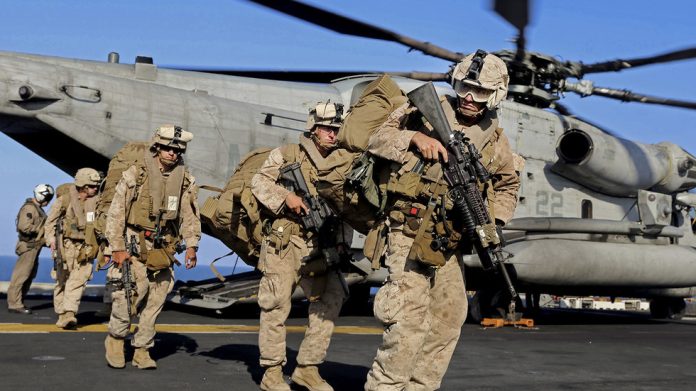
Twenty-two U.S. service members were injured in a “helicopter mishap” in Syria over the weekend, the Pentagon revealed late on Monday.

“A helicopter mishap in northeastern Syria resulted in injuries of various degrees to 22 U.S. service members” on Sunday, U.S. Central Command said in a statement.

The service members are receiving treatment for their injuries, with 10 evacuated to higher care facilities outside CENTCOM’s area of responsibility, the command noted.

“The cause of the incident is under investigation, although no enemy fire was reported,” according to the statement, which did not include further details of the type of helicopter that was involved or time of day the incident took place.

There has been a string of military helicopter accidents in recent months, including in March, when three soldiers were killed, and another injured when two Army helicopters crashed while returning from a training flight over Alaska.

The same month, nine people were killed when two Black Hawk helicopters with the Army’s 101st Airborne Division crashed during a training exercise in Kentucky.

And a Black Hawk helicopter crashed along an Alabama highway during a training exercise in February, killing two Tennessee National Guard pilots.

Economist claims Iran inflation under Raisi set new record high since WWII

Iran Economy

Saed Leylaz, also a journalist and advisor to former president Mohammad Khatami, said, in an interview with Ham-Mihan newspaper, that the inflation rate surpassed 50% in the past Persian calendar year (ended 20 March, 2023), the highest in 80 years.

The inflation rate, he added, “has broken the historical record of inflation after World War II.”

Leylaz accused the administration of having “manipulated” the figures of the inflate rate in the middle of the fiscal year to protect its image, describing the alleged conduct as “morally wrong.”

The Raisi administration says it has set the tackling of inflation and currency devaluation in Iran as priorities for the 2023-2024 budget presented to the Parliament.

Iran’s economy has been subject to draconian sanctions imposed by the US and other Western states.

President Rasi has placed a ‘look-to-the-East’ policy high on its agenda to offset the bans, and has been pushing to promote relations with neighbors, allied countries and Muslim states to that effect.