Monday, December 22, 2025
Home Blog Page 1395

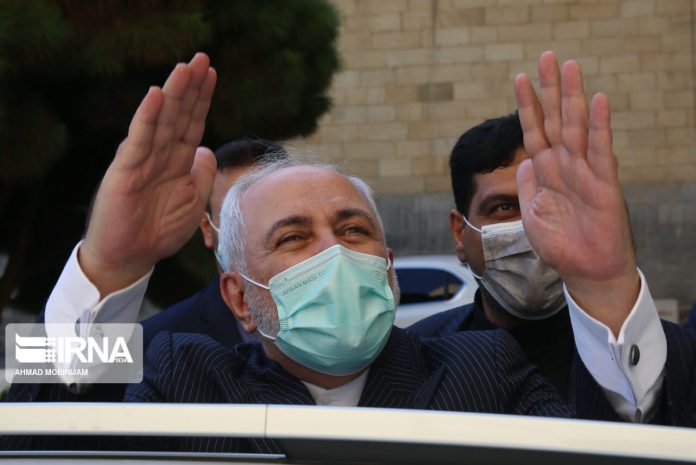
Ex-FM Zarif denies bid to run in Iran’s upcoming elections amid controversy

Javad Zarif

“Neither in the past, nor in the present, nor in the future do I intend to participate in elections directly, by proxy or indirectly,” said Zarif in reaction to the claims, adding that he is even ready to give guarantees on paper.

Zarif has found himself in hot water over his fiery comments about the challenges he grappled with during his previous terms in office.

During a newly-released Club House interview, Zarif defended his foreign policy concessions that led to the finalization of the 2015 nuclear deal with six world powers.

The ex-foreign minister, known as being close to the Reformists, criticized the Principlist camp for trying to run the country based on “dreams” instead of abilities.

The Principlists severely hit back at him, describing his way of thinking as dangerous for the country.

Many also speculated that Zarif’s remarks were a prelude to a Reformist election campaign ahead of the parliamentary vote early next year, and that he tried to win votes either for himself or allies.

Europe should avoid ‘provocative, unconstructive’ attitude to nuclear deal revival: Iran envoy

Iran Nuclear Program

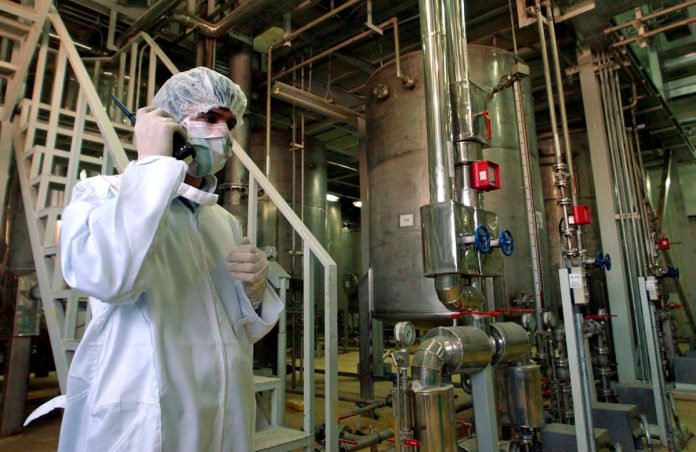
Naziri Asl made the remarks at a session of the Board of Governors of the International Atomic Energy Agency (IAEA) on Wednesday.

He began his address by pointing to the United States and the European Union’s violations of their commitments under the 2015 nuclear deal with Iran, officially called the Joint Comprehensive Plan of Action (JCPOA).

“If there was an international agency to monitor the expansion of unlawful sanctions, its report on violations of commitments by the United States and the E3 in light of Security Council Resolution 2231 (2015) would be extensive,” he said.

Naziri Asl further emphasized Iran’s constructive actions in cooperation with the IAEA, focusing on the previous Board of Governors meeting in March, adding that unreasonable expectations from Iran are illogical.

He stressed that Iran’s nuclear activities, including uranium enrichment at various levels, are entirely peaceful and in line with the rights of the Iranian people based on the Treaty on the Non-Proliferation of Nuclear Weapons (NPT), and are subject to the supervision and verification of the agency’s safeguards.

Referring to the expressed willingness of the United States to return to the JCPOA and the subsequent negotiations, he stated, “Despite the painstaking negotiations that lasted over 18 months, mainly due to the lack of political will and determination by the United States, we were unable to achieve results in the talks.”

Noting that the US government has said on repeated occasions that the revival of JCPOA is no longer a priority for Washington, the Iranian envoy expressed concern that some other parties to the deal have turned a blind eye to this irresponsible viewpoint and are even moving in line with it.

It shows that miscalculations and minor political considerations are overriding the revival of an agreement that the international community spent years to achieve it, Naziri Asl added.

He also referred to repeated statements by certain governments calling on Iran to comply with its commitments, adding that not only do these countries deliberately confuse voluntary commitments with legal obligations, they also do their utmost to hide the very obvious fact that the JCPOA has other parties as well as some annexes that must be implemented by those parties without further delay.

The Iranian envoy also noted that it is a matter of serious concern that in spite of Iran’s widespread cooperation with the UN nuclear agency, the European Union, particularly Germany, Britain and France, continue to resort to outdated tactics and play a dirty game with political motivation to target Iran’s ongoing cooperation with the IAEA.

Blast hits memorial ceremony in Afghanistan, many killed and injured

US says no progress in formation of inclusive govt. in Afghanistan

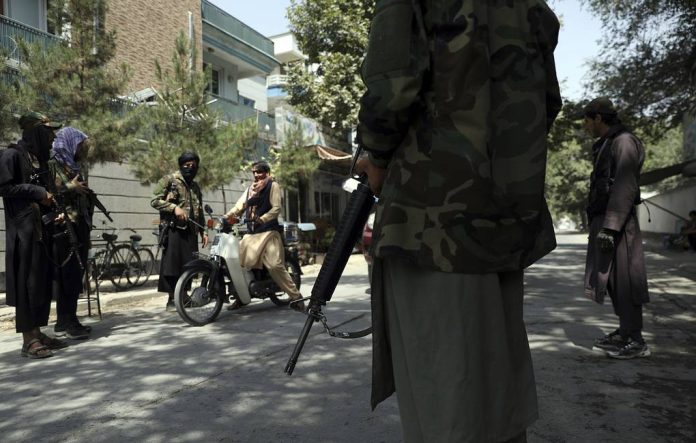
The latest explosion occurred near Nabawi mosque during a funeral for Mawlavi Nisar Ahmad Ahmadi, the deputy governor of Badakhshan. He was killed by a car bomb on Tuesday alongside of his driver in Faizabad, the capital of Badakhshan.

Moazuddin Ahmadi, the provincial director of information and culture, confirmed the explosion but couldn’t provide other detail. He added there are casualties and an investigation is ongoing.

Local sources who spoke on condition of anonymity say the blast happened inside the mosque where Taliban officials and local people attended the memorial ceremony.

The Islamic State group claimed responsibility for Tuesday’s car bombing that killed deputy governor and his driver. Ten people were also wounded in the blast.

Ahmadi was wounded in the explosion and died shortly after at a local hospital, according to the director of the information and culture in Badakhshan.

In December, a car bombing killed Badakhshan’s provincial police chief as he made his way to work.

The regional affiliate of the Islamic State group — known as the Islamic State in Khorasan Province — said at the time that it had carried out that attack. IS added it had parked an explosive-laden car on the road and detonated it when the police chief was close by.

Opposition lawmakers win majority in Kuwait’s parliament

Feuding between the OPEC member state’s appointed government and its elected parliament has hampered fiscal reform for years, including passing a debt law that would allow Kuwait to tap international markets and address a heavy reliance on oil.

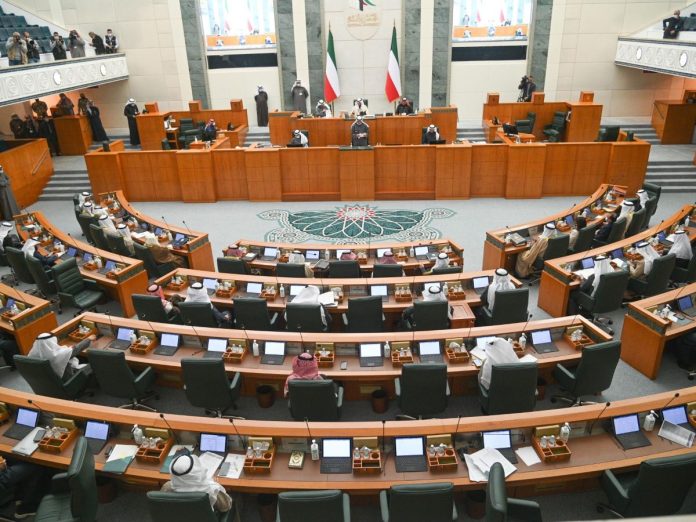
Official results, published by state news agency KUNA on Wednesday, showed 12 new members have joined the 50-seat National Assembly following Tuesday’s vote.

One woman was elected, down from two in the previous parliament, KUNA said. The Shi’ite Muslim bloc got seven seats, two less than last year, and the Islamic Constitutional Movement, the Kuwaiti branch of the Muslim Brotherhood, kept their three seats.

Up to 15 other members will be appointed by Kuwait’s ruling emir to form a cabinet.

Dania Thafer, executive director of Gulf International Forum, said the new lawmakers have the potential to swing votes on certain issues.

Kuwait bans political parties, and candidates run for election as individuals despite their political affiliations. Its legislature has more influence than similar bodies in other Persian Gulf monarchies, including the power to pass and block laws, question ministers and submit no-confidence motions.

However frequent political deadlock has for decades led to cabinet reshuffles and dissolutions of parliament.

“There is now what can be described as a parliamentary majority with reformist intentions,” said Ahmad al-Deyain, of the Kuwait Progressive Movement (left).

He added the majority of the new parliament is made up of individual lawmakers, not a partisan majority with a particular program, who would move away from an opposition position if the government proves reformist.

The 2022 vote was nullified in March and parliament was reinstated under its 2020 composition. In May, that parliament was itself again dissolved for fresh elections.

Mohammad al-Rumaihi, a sociologist at the University of Kuwait, stated the choice of the speaker and the composition of the government will decide on how the parliament will operate.

“It could go both ways, either cooperation — and this is good for Kuwait — or clashes, and we will start again – and another election!” Rumaihi added.

The International Monetary Fund announced this week Kuwait should pass the debt law soon and enact “substantial fiscal consolidation” to reverse a projected decline into fiscal deficit over the medium term.

Macron appoints ex-FM to help break Lebanon deadlock

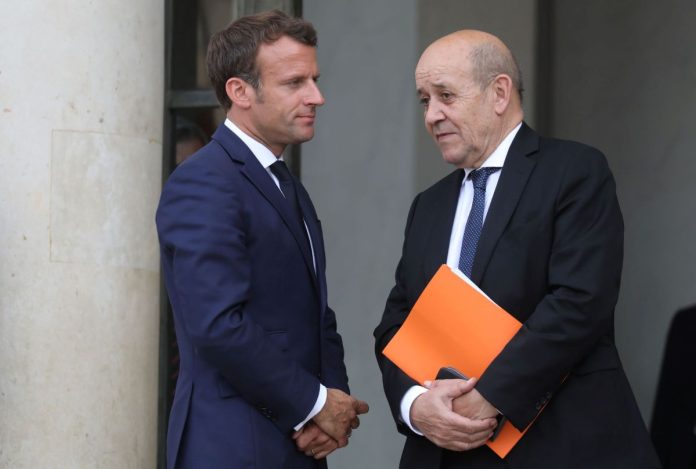
Macron and Le Drian

Macron appointed his former foreign minister as personal envoy to Lebanon just a year after he stepped down and having previously not been able to make any inroads in the political deadlock in the country.

Macron led international efforts after a massive explosion that killed more than 200 people in Beirut in 2019 and destroyed swathes of the capital city. But his efforts afterwards to resolve the political and economic crisis that followed failed.

“In the spirit of friendship that binds France to Lebanon, the President of the Republic continues to act in favour of a solution to the institutional crisis and the implementation of the reforms necessary for the recovery of this country,” the French presidency said in a statement.

“He appointed Jean-Yves Le Drian … as his personal representative in order to discuss with all those who, in Lebanon and abroad, can contribute to breaking the deadlock,” it added.

Le Drian was foreign minister between 2017-2022 and had been in charge of putting several of Macron’s initiatives for Lebanon into motion and coordinating with the French presidency.

A former Socialist lawmaker and defence minister for five years under President Francois Hollande between 2012-2017, Le Drian is deemed a political heavyweight and is the latest politician to be brought back into Macron’s fold over recent months.

After almost four years, France has failed to use its historical influence in the country to push its squabbling politicians to carry out economic reforms that would unlock vital foreign aid.

Most recently it has faced criticism for its role behind the scenes as Lebanon attempts to find a new president.

Lebanon has had no head of state since President Michel Aoun’s term ended at the end of October, deepening institutional paralysis in a country where one of the world’s worst economic crises has been festering for years.

The appointment of Le Drian is also likely to undermine current Foreign Minister Catherine Colonna, a former ambassador, but political novice.

Iran says missile program defensive, rejects west concerns

Nasser Kanaani

Nasser Kanaani said on Thursday Iran’s missile activities are conventional, defensive and totally legitimate in accordance with international law.

Kanaani said such countries, which have themselves a long and clear record in trampling on their own international obligations in various fields such as nuclear tests, the non-proliferation regime, hosting nuclear missiles, and playing a destructive role in regional and international relations, do not have the right to comment on the Islamic Republic’s legitimate and totally lawful defense capabilities.

The action of England, America and Australia in signing the Aukus agreement is a clear example of the political and discriminatory approach pursued by the nuclear powers in transferring technology and highly enriched uranium to a non-nuclear country in violation of the Non-Proliferation Treaty, he added.

Kanaani praised the continuous efforts of the Armed Forces of the Islamic Republic of Iran and their strategic achievements in strengthening the country’s defense power, describing it as a correct and effective measure to create deterrence against foreign threats and defend the national security of the Islsmic Republic of Iran.

Iran’s Islamic Revolution Guards Corps (IRGC) has recently unveiled the country’s first hypersonic missile, designed and developed by experts at home, in the latest remarkable air defense achievement.

Fattah has a range of 1,400 kilometers and is able to breach all anti-missile shields and destroy them.

The speed of the missile can reach 13-15 Mach before hitting the target.
Enjoying a solid-fuel propulsion system and a second-stage mobile nozzle, the missile is capable of maneuvering in and out of the Earth’s atmosphere.

Russia says IAEA board reviews safeguards application deal with Iran

IAEA

“The IAEA Board of Governors has completed consideration of NPT Safeguards Agreement with Iran. One of the main dividing lines in the course of the debate was a dispute, if ‘the glass is half full or half empty’. The answer depended on subjective feelings of the speakers,” Ulyanov wrote on Twitter.

Earlier, Mohammad Eslami, the head of Iran’s Atomic Energy Organization (IAEO), stated that the criteria for Iran to implement its nuclear program are the provisions of the Treaty on the Non-Proliferation of Nuclear Weapons, the guarantees provided under it and the Strategic Action Plan to Lift Sanctions and Protect Iranian Nation’s Interest passed by the Majlis (parliament).

Iran has cautioned the United States that the window of opportunity for an agreement on reviving the nuclear deal will not remain open forever, urging Washington to adopt a constructive approach to salvage the accord.

Iran showed to the world the peaceful nature of its nuclear program by signing the Joint Comprehensive Plan of Action (JCPOA) with six world states — namely the US, Germany, France, Britain, Russia and China. But, Washington’s unilateral withdrawal in May 2018 and its subsequent re-imposition of sanctions against Tehran left the future of the deal in limbo.

Negotiations between the parties to the landmark agreement kicked off in Vienna in April 2021, with the intention of bringing the US back into the deal and putting an end to its “maximum pressure” campaign against Iran.

The discussions, however, have been at a standstill since August 2022 due to Washington’s insistence on not lifting all of the anti-Iran sanctions and offering the necessary guarantees that it will not exit the agreement again.

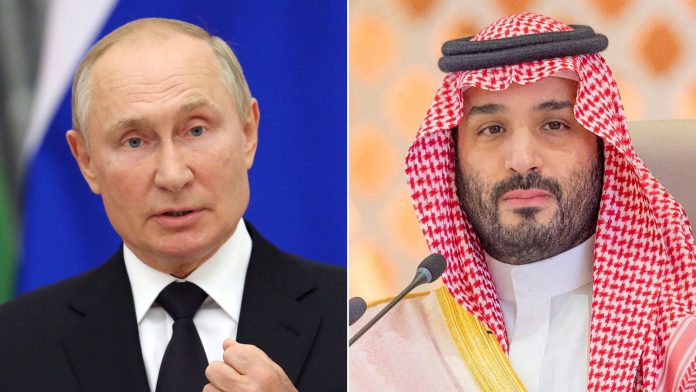
Putin, MbS discuss trade ties, cooperation within OPEC

Putin MbS

“Issues of multifaceted Russian-Saudi cooperation were discussed. Specifically, attention was paid to measures for further strengthening trade and economic ties, and the implementation of prospective joint projects in investment, transport logistics, and energy,” the statement read.

“The two sides discussed in detail how to ensure stability in the world energy market. The sides expressed great appreciation for the level of cooperation within the framework of ‘OPEC Plus,’ which allows for taking timely and efficient steps to maintain the balance of supply and demand for oil. They noted the importance of the agreements reached during the recent ministerial meeting in Riyadh,” according to the statement.

They also discussed “various aspects of Russia-Saudi cooperation in the framework of other multilateral organizations” and “agreed to continue contacts at various levels,” the Kremlin added.

The last time the two spoke on the phone was on April 21, according to Russian state news agency TASS.

OPEC+ is an alliance between the Organization of the Petroleum Exporting Countries (OPEC) and a group of non-OPEC oil-producing countries, including Russia, Mexico, and Kazakhstan.

Formed in 2016, OPEC+ coordinates and regulates oil production and stabilizes global oil prices. Its members produce about 40% of the world’s crude oil and have a significant impact on the global economy.

OPEC+’s decision to cut oil production in April could have big implications for Russia.

After Russia invaded Ukraine last year, the United States and United Kingdom immediately stopped purchasing oil from the country. The European Union also stopped importing Russian oil that was sent by sea.

Canada, France, Germany, Italy, Japan, the United Kingdom and the United States — have also imposed a price cap of $60 per barrel on oil exported by Russia, keeping the country’s revenues artificially low. If oil prices continue to rise, some analysts have speculated that the US and other western nations may have to loosen that price cap.

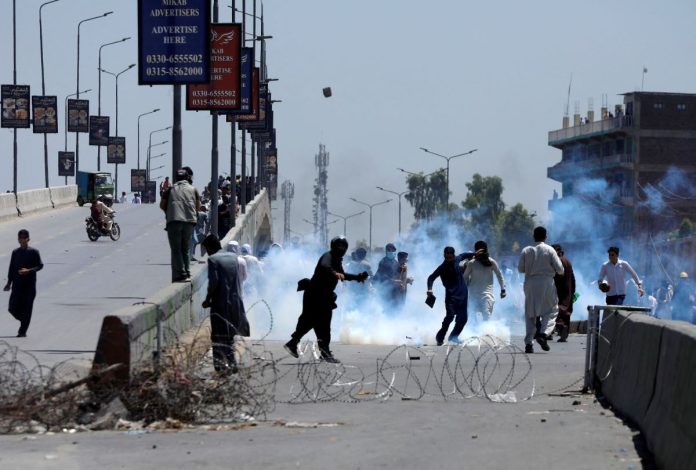
Pakistan military vows to punish ‘masterminds’ of violent protests

Pakistan

After a meeting of its top brass in Rawalpindi on Wednesday, the military said it was determined to bring people who attacked military installations and monuments to justice.

It also denied allegations of human rights abuses after Khan’s Pakistan Tehreek-e-Insaf (PTI) party said some of its members were tortured and physically abused in custody.

“In this regard, efforts to create distortions and attempts to take refuge behind imaginary and mirage human rights violations to create smoke screen for hiding the ugly faces of all involved, are absolutely futile,” it announced in a statement.

“It is time that noose of law is also tightened around the planners and masterminds who mounted the hate ripened and politically driven rebellion against the state and state institutions to achieve their nefarious design of creating chaos in the country,” the military added in its statement.

After Khan was arrested on the premises of an Islamabad court on May 9, thousands of the former prime minister’s supporters took to the streets around the country.

Police and government buildings, as well as military assets and installations, were attacked in the unrest. The government has blamed Khan’s supporters for the violence but the former prime minister has denied the accusations and has called for an independent inquiry.

In the wake of the violence, thousands of PTI supporters, top leaders, as well as journalists, were detained. More than 80 senior members of PTI have quit the party in recent weeks.

Khan, a 70-year-old former cricketer, has consistently denied accusations of corruption, saying the charges are a politically motivated attempt to keep him from running in elections scheduled for later this year.

In a statement issued last week, New York-based Human Rights Watch (HRW) urged the government not to try civilians in military courts, adding the practice violated the country’s obligations under international law.

Dozens of people have been handed over to the military for upcoming trials related to the violence last month.

Separately on Wednesday, police in Pakistan named Khan for abetting the murder of a lawyer in Quetta, the capital of Balochistan province.

Since his removal from power last year, more than 100 cases, including incitement to violence and “terrorism”, have been brought against Khan.

According to Arif Rafiq, a political risk adviser on South Asia, the army statement was indicative that the military was “making it clear that it seeks an end to Khan’s political career and his party as we know it, by any means necessary”.

“It is also signaling that it will not allow any other forces, including the judiciary, to stand in its way,” he told Al Jazeera.

“The Quetta murder case and the language used in this statement indicate the army is shaping the ground for Khan to be potentially tried in cases in which the punishment could be death,” he added.

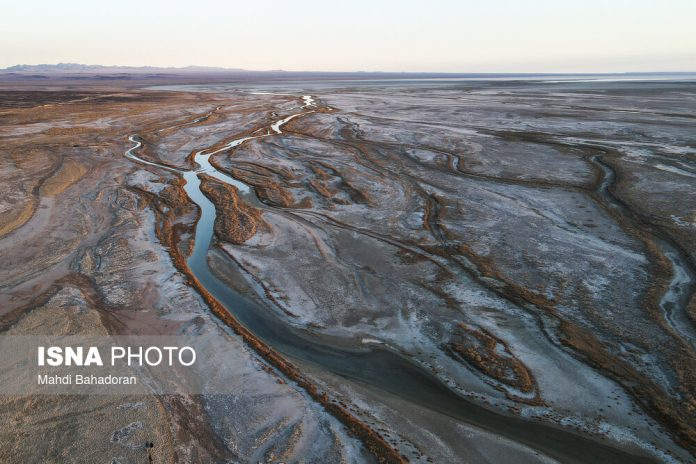
Official: Gavkhoni Wetland in central Iran dried up 100%

Gavkhoni Wetland

Hossein Akbari, a senior official with the local Department of Environment, said Wednesday that water was directed to the wetland in February last year, which helped moist between 6 and 7 percent of the area.

“But, because the flow was not continuous and we faced the hot season, the water transfer operation was ineffective in practice,” he added.

Akbari added that the Environment Protection Organization has been pursuing its legal water rights at “provincial and national levels,” but to no avail.

Gavkhouni is the terminal basin of the Zayandeh River. The saltmarsh of the international wetland, which often dries up in summer, is among the main tourist attractions of the region. It is economically an important feature of the region too.