Sunday, December 28, 2025
Home Blog Page 1337

Sweden re-examining residency permit of Quran burner

Salwan Momika

The migration agency announced it is re-examining his immigration status, after it received information from the Swedish authorities that have given reason to examine whether the man’s status in Sweden should be revoked.

“It is a statutory measure that is taken when the Swedish migration agency receives such information and it is too early to say anything about the outcome of the case,” a spokesperson for the agency said in a statement to Reuters, adding it was unable to comment further due to confidentiality.

According to the Swedish news agency TT, the man has a temporary residency permit in Sweden that is set to expire in 2024.

Sweden has found itself in the international spotlight in recent weeks following protests where the Quran, the Muslim holy book, has been damaged and burned.

Stockholm police have also received applications for demonstrations that included burning other religious books such as the Christian and the Hebrew Bible, prompting many to criticise Sweden.

Swedish courts have ruled that police cannot stop burnings of holy scriptures, but Prime Minister Ulf Kristersson’s government said earlier in July it would examine if there was reason to change the Public Order Act to make it possible for police to stop Qoran burnings.

Israeli court orders removal of Palestinian village to build Jewish neighbourhood

Israel Palestine

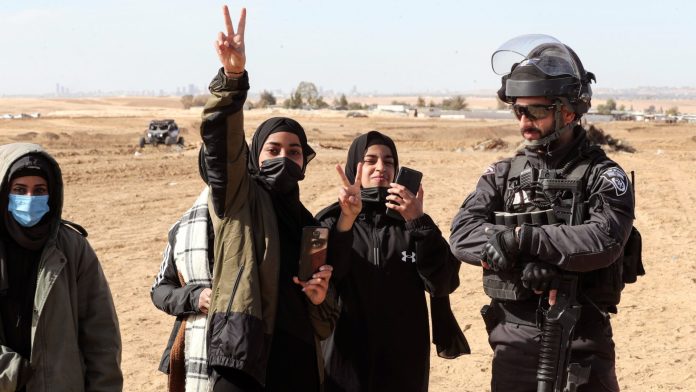
The decision will affect 500 native people from the Ras Jrabah village, who have been left in a state of shock after the decision by the Be’er Sheva Magistrate’s Court on Monday.

Residents of the village, which predates the establishment of the state of Israel in 1948, say the news fell on them like a “thunderbolt” and was difficult to process.

“Young people have been calling me since the morning, telling me about their concerns for the future,” Musa al-Hawashleh, a resident of Ras Jrabah, told Middle East Eye.

“We don’t know where we will go. We have been here before the state of Israel and now we will be expelled from our homeland,” he added.

The Ras Jrabah case began in 2019 when the Israel Land Authority (ILA) filed 10 eviction lawsuits against 127 residents of the village and their families.

The government body argued that the presence of Ras Jrabah – which is unrecognised as an official village by the state – hindered the expansion of the nearby city of Dimona.

Dimona was built on land owned by the nomadic indigenous Palestinian tribe of al-Hawashleh, which also owns land in the adjacent Ras Jrabah village.

The government wants to remove Ras Jrabah – an area of around 34 hectares – and replace it with a new neighbourhood for Jewish citizens called Rotem, which will include thousands of housing units.

Earlier this week, a magistrate’s court ruled in favour of the government and ordered the Palestinian families to leave the village they’ve lived in for generations, giving them a deadline of 1 March 2024.

The families were also ordered to pay a sum of 117,000 shekels ($31,700) to cover legal expenses.

Adalah, the Haifa-based legal centre for Arab minority rights, which is representing the Palestinian residents, said they will appeal against the decision.

It argued that the court “disregarded” the residents’ arguments in its judgment.

“Since the Nakba, the state of Israel has employed a range of tools and policies to forcibly displace the Bedouin residents in the Naqab,” Adalah said in a statement.

“Their livelihood has been confined to restricted areas and segregated townships, and they have been subjected to harsh living conditions, with no regard for their basic needs and way of life,” Adalah noted, adding, “The forced displacement of Ras Jrabah’s residents to expand the Jewish city of Dimona, which was built on the residents’ lands, serves as clear evidence that Israel is committing the crime of apartheid against its Palestinian citizens.”

Hawashleh says that while residents will protest against the decision and fight it all the way in the courts, they have little hope in the current ultranationalist government, which has placed the acceleration of the “Judaisation” of the Naqab at the heart of its guiding policy.

“The new government is worse than the one before, they want to demolish the village to build a new neighbourhood… The government has not offered alternative suggestions,” Hawashleh told MEE.

“It has been difficult to process and explain to the younger people. I worry about them, their future and where they will go,” he added.

According to Adalah, Ras Jrabah residents suggested that their village be integrated into the newly planned part of Dimona, a request that was turned down.

The village is one of around 30 unrecognised Palestinian villages in the Negev region of Israel’s southern territory.

Almost 100,000 Palestinians who hold Israeli citizenship live in these unrecognised villages, which are denied any infrastructure or support from the government.

There are no means of transportation, no roads, no schools, and Israeli authorities don’t collaborate with their local leadership.

Palestinian citizens of Israel are the descendants of the native population which was violently displaced by Zionist militias during the creation of Israel in 1948.

Today there are almost two million Palestinian citizens of Israel, who are estimated to make up 20 percent of the country’s population.

At least 300,000 live in the Negev region, and say that Israeli authorities have attempted to force them out and destroy their nomadic way of life for decades, through various tactics.

These include confiscation of lands from native Palestinians and turning landowners into tenants. Additionally, the Israeli government has been accused of preventing the expansion of Palestinian villages and encircling them with new Jewish settlements.

“The goal of the Israeli government is to take control over Arab land in the Naqab and to expel entire communities from their land,” Youssef al-Atawneh, a Palestinian member of the Israeli parliament with the Hadash-Ta’al coalition, told MEE.

“This has been ongoing since 1948 and some families have been displaced twice,” he added.

The MP said he is collaborating with a Negev-based committee to organise a large-scale protest over the expulsions and projects taking place.

“People are very angry over the racism that is taking place,” he stated.

“But despite the difficult circumstances, fines and displacements, people are remaining steadfast and strong,” he continued, predicting that the recent court decision will likely inflame tensions in the Negev.


Sources say Iran, India set to sign long-term deal on developing Chabahar Port

Chabahar Port

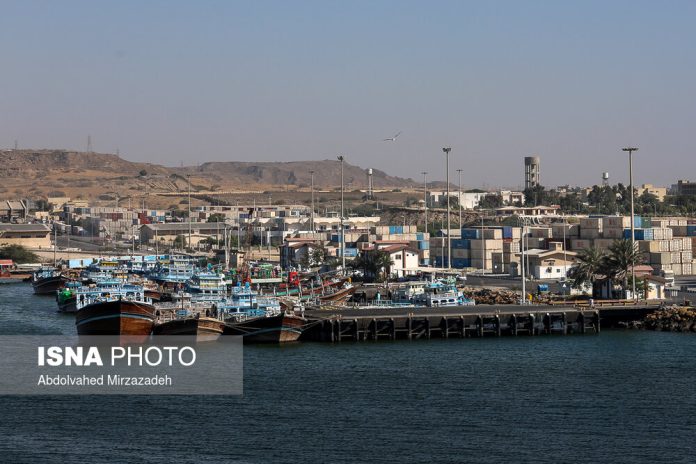
Officials say the contours of the long-term deal will be finalized next month, and an agreement will likely be signed in September.

Currently, India and Iran sign one-year contract extensions for developing and running the terminal at Chabahar Port.

However, India has been urging Tehran to commit to a longer-term pact, providing certainty for investment and development plans for the port designed by India. A long-term contract for 10 years may also provide for automatic renewal.

In 2016, India committed $85 million for the development of the port, along with a $150 million line of credit. As of 2023, India has supplied six gantry cranes to the tune of $25 million for the development of the port.

Chabahar, located in southeastern Iran, was envisioned as a gateway for India to access Central Asian markets.

However, the initiative faced obstacles due to Western sanctions against Iran. In 2013, India pledged $100 million to develop the port, but matters progressed after the 2015 nuclear deal was struck between Iran and the permanent members of the UN Security Council plus Germany.

Also, an agreement was signed between Indian Railways’ IRCON unit and Iranian Railways’ Construction and Development of Transportation Infrastructures Company in 2016 to construct the Chabahar-Zahedan Railway project.

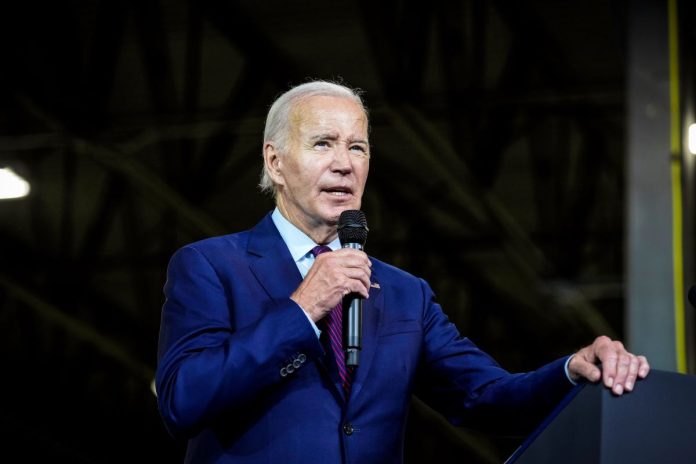
Russia says US media ignoring Biden’s mental deterioration

US President Joe Biden

In his public appearances, Biden “does not properly react to some questions, or does not react at all to what he is told or asked. He gets confused about the people in front of him. Apparently, his consciousness does not reflect reality,” the diplomat told RT in an exclusive interview on Friday.

The issue was brought up by the interviewer, Rory Suchet, who suggested that Biden is “having some issues,” possibly related to the president’s advanced age, a notion that Zakharova dismissed.

“A man in his old age can be wise and a young physically fit man can be stupid,” she argued.

Zakharova acknowledged Biden’s vast political experience, at the age of 80, but noted that people around him have to carefully manage his actions when in public – and that the situation may be even more serious in a private setting.

“I am sorry, things happen to people. But it is frightening when the leader of the US… sees a dead person in the audience,” Zakharova remarked. The diplomat was apparently referring to an incident last September, when Biden asked during a speech where the late Congresswoman Jackie Walorski was. The lawmaker had died in a car crash the previous month.

The White House downplayed the gaffe, with press secretary Karine Jean-Pierre claiming that Walorski was “on top of mind” of the president, ahead of him hosting the family later the same week. Biden’s supporters have brushed aside doubts over his mental readiness to run for reelection next year, and serve a second term, which would see him reach the age of 86 before leaving office.

Zakharova suggested that people “should be honest with themselves” about the situation, and at least “not to be afraid to talk about it.”

Raisi presents to parliament motion to appoint arbiters in dispute with South Korea over frozen assets

The Bank of South Korea

The motion, devised on a proposal by the vice presidency for legal affairs, was forwarded with a cover letter addressed to Iranian Parliament Speaker Mohammad-Baqer Qalibaf on Saturday.

The motion was forwarded “in order for the legal procedure to be taken.”

After former US President Donald Trump unilaterally withdrew the United States from the multilateral nuclear deal with Iran in 2018, he imposed a range of sanctions on the Islamic Republic as well as on third countries doing business with Tehran.

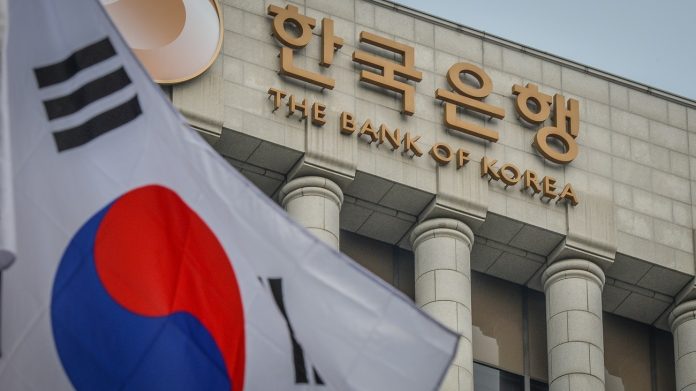
Since then, seven billion dollars in Iranian assets, paid by South Korea to purchase Iranian oil, has been frozen in South Korean banks.

Several attempts to unfreeze the assets have failed so far.

The motion forwarded by the Raisi administration to the Iranian Parliament will potentially open a new path toward resolving the issue, according to Tasnim news agency.

In early October, Iranian media said intensive talks were underway with the US through a regional mediary to pave the way for the release of billions of dollars of Iranian assets blocked in other countries in exchange for the release of American prisoners in Iran.

The focus on the negotiations had been reportedly the Iranian funds frozen in South Korea due to US sanctions on Iran.

Iranian literary critic Shapur Jorkesh dies, aged 73

Shapur Jorkesh

Jorkesh, who was also a translator and a playwright, passed away in Shiraz, the capital city of the southern Iranian province of Fars, on Friday after being hospitalized for ten days due to a lung disease.

The most famous work of Jorkesh is a book named “Butiqa-ye She’r-e Nimaa’i”, which reviews the poems of the prominent Iranian poet Nima Yooshij who is well known for his She’r-e Now – a new style in Persian poetry.

Also, a book named “Love and Death in Sadegh Hedayat’s View” is an eminent research work of Jorkesh which was published about three decades ago.

Hedayat was an Iranian translator and also the writer of the well-known novel “The Blind Owl”.

Deal may be in offing between Saudi Arabia and Israel: Biden

Joe Biden

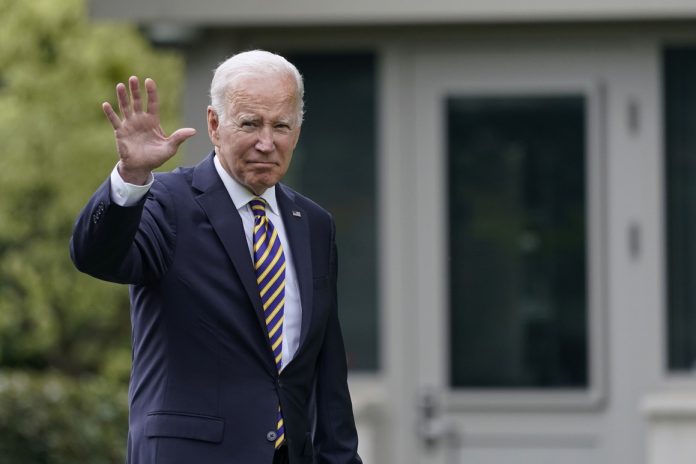
“There’s a rapprochement maybe under way,” Biden told contributors to his 2024 re-election campaign at an event in Freeport, Maine.

The president did not give details about the possible deal.

US officials have sought for months to reach what would be a historic agreement between the long-time adversaries but the Saudis have been resistant.

New York Times columnist Thomas Friedman, in a piece published on Thursday, said Biden was considering whether to pursue a US-Saudi mutual security pact that would involve Saudi Arabia normalizing relations with Israel.

White House national security adviser Jake Sullivan was in Jeddah this week with Middle East envoy Brett McGurk discussing the possibility of a normalization deal, White House officials confirmed.

US officials see a potential deal between Israel and Saudi Arabia as possible after the administration of former President Donald Trump reached similar agreements between Israel and Morocco, Sudan, Bahrain and the United Arab Emirates.

The potential deal, if reached, would be a turnaround for a US administration that has been losing its influence in the region and whose ties with Saudi Arabia have been strained since Biden took office.

Tehran criminal court names 104 fugitive MKO members to be tried

Iran Court

The advertisement appeared in large-circulation newspapers on Saturday, announcing that the named individuals would have one month’s time to introduce defense attorneys to the court.

It said that since a lawsuit had been filed against them earlier, and since their whereabouts were unknown, they would have to come forward and name their attorneys. “Otherwise, the necessary decision would be taken according to law.”

Among the individuals named were Masoud Rajavi and Maryam Qajar Azedanlou (Rajavi), the ringleaders of the MKO terrorist group.

Last month, Albanian police raided a camp where the members of the MKO were housed, seizing computer devices linked to prohibited activities. The raid targeted the Ashraf-3 camp near Manze, a small hill town 30 kilometers (20 miles) west of Albania’s capital, Tirana.

Albania has been sheltering the MKO members at the camp since 2013.

Later, the Iranian Fars news agency reported that some of the devices seized in Manze had been handed over to Iran.

More than 17,000 Iranians, including government officials, have fallen victim to the MKO terrorist acts.

The MKO sided with the regime of former Iraqi dictator Saddam Hussein during the 1980-88 war, involving in the killing of Iranians.

US lawmakers, rights groups urge Biden to withhold military aid to Egypt

Biden Sisi

In a letter addressed to Secretary of State Antony Blinken on Friday, the US lawmakers said Egypt had made little progress on human rights issues, including strengthening the rule of law, protecting media freedoms, and investigating forced disappearances.

The signatories, which included several members of President Biden’s own Democratic Party, urged the Joe Biden administration to withhold $320m in so-called foreign military financing that Washington sends to Cairo each year.

“The [Egyptian] government has not only failed to investigate allegations of human rights abuses, it has also continued to commit ‘significant human rights’ violations such as extrajudicial killings, enforced disappearance, torture and life-threating prison conditions, and severe restrictions on freedoms of expression, assembly, and association,” they said.

The letter (PDF) was led by Democratic Senator Chris Murphy, and senators Bernie Sanders, Dick Durbin, and Elizabeth Warren were among the signatories.

It is the latest effort in the United States to condition American aid to Egypt – a longstanding US ally in the Middle East – on the basis of human rights.

For years, rights groups have accused the government of el-Sisi, who came to power in a 2013 military coup, of jailing tens of thousands of dissidents and outlawing virtually all forms of political opposition.

The US State Department’s annual report on human rights in Egypt also documented the government’s use of extrajudicial executions and torture, as well as the imprisonment of thousands of writers and human rights advocates.

Cairo has denied holding political prisoners and rejected criticism of its rights record, saying its policies are part of a push to tackle “terrorism”.

The US sends $1.3bn in military assistance to Egypt each year, and in 2021, under pressure from lawmakers in Congress, the Biden administration announced it was cancelling $130m of that aid due to human rights concerns.

But lawmakers and rights groups want more of the assistance to be put on hold.

More than 20 human rights organisations on Friday also urged the Biden administration to cut off the $320m in military aid, accusing Egypt of carrying out a “merciless crackdown on the press, political opposition, and civil society”.

“The Egyptian government’s actions in recent months demonstrate that it has not halted its repression campaign or delivered on commitments to meaningfully improve the human rights situation,” the groups, which included Human Rights Watch and Project on Middle East Democracy, stated.

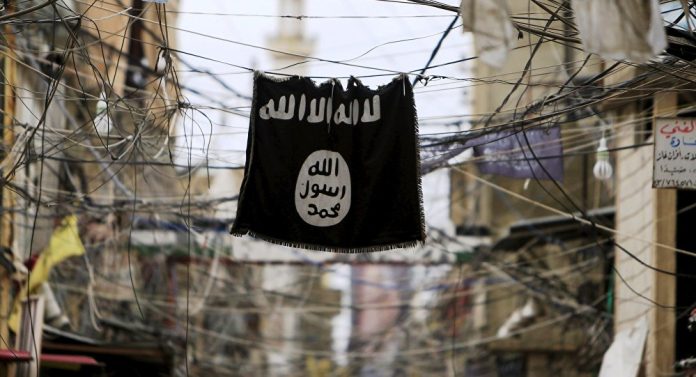
Daesh claims responsibility for attack on shrine near Syria’s Damascus

Daesh

Daesh announced on Friday it was behind a bombing south of Damascus the day before that killed at least six people and wounded 20.

It also claimed responsibility for another attack that took place at the same shrine earlier this week in which two people were wounded.

Shia shrines are a frequent target of attacks by extremists of the Daesh group, not only in Syria but also in neighboring Iraq.

The shrine of Sayeda Zeinab – the granddaughter of Prophet Muhammad (PBUH) and sister of Hussein ibn Ali (AS) – is a site of mass pilgrimage for Shia Muslims from across the world.

The terrorist Daesh group has claimed some previous attacks on the site. One attack in 2017 killed at least 40 people.