Friday, December 26, 2025
Home Blog Page 1328

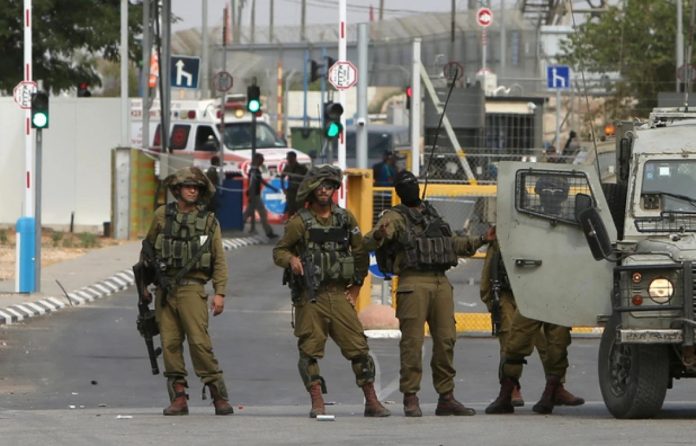
Israeli police kill Palestinian in West Bank

Israeli forces

A Palestinian has been shot and killed by an off-duty Israeli police officer after he allegedly opened fire in an illegal Israeli settlement, wounding at least six people.

The shooting on Tuesday took place outside a shopping mall in the sprawling Israeli settlement of Maale Adumim in the occupied West Bank.

The Palestinian Ministry of Health identified the suspect as 20-year-old Mohannad al-Mazraa from Azariya, a nearby West Bank town.

Hamas, the movement that has governed the Gaza Strip since 2007, praised the attack as “heroic” but stopped short of claiming responsibility.

Israel’s far-right national security minister, Itamar Ben-Gvir, arrived at the site shortly after the shootings. Earlier on Tuesday, Ben-Gvir had led an incursion at the al-Aqsa Mosque compound in occupied East Jerusalem along with dozens of other Israeli settlers.

Fighting between Israel and the Palestinians in the occupied West Bank intensified early last year when Israel launched near-nightly raids into Palestinian areas in the West Bank. Palestinian attacks against Israelis also intensified.

Palestinian and Israeli media reported that Israeli Prime Minister Benjamin Netanyahu and Defense Minister Yoav Gallant were following the security situation in the West Bank.

More than 200 Palestinians have been killed this year in the occupied Palestinian territories and Gaza. The majority of these fatalities have been recorded in the West Bank.

At least 26 people have been killed in Palestinian attacks against Israelis during that time.

Those figures indicate that 2023 is already the deadliest year for Palestinians in the West Bank since the United Nations began keeping track of fatalities in 2005.

Previously, 2022 had been the deadliest year with 150 Palestinians killed, of whom 33 were minors, according to the UN. It was the sixth consecutive annual increase in the West Bank death toll and coincided with the start of near-daily raids on the area.

The rising number of fatalities last year prompted UN experts to condemn the treatment of Palestinians, including attacks on their homes and destruction of their property.

Israel captured the West Bank in the 1967 Mideast war along with the Gaza Strip and East Jerusalem. Palestinians seek those territories for their hoped-for independent state.

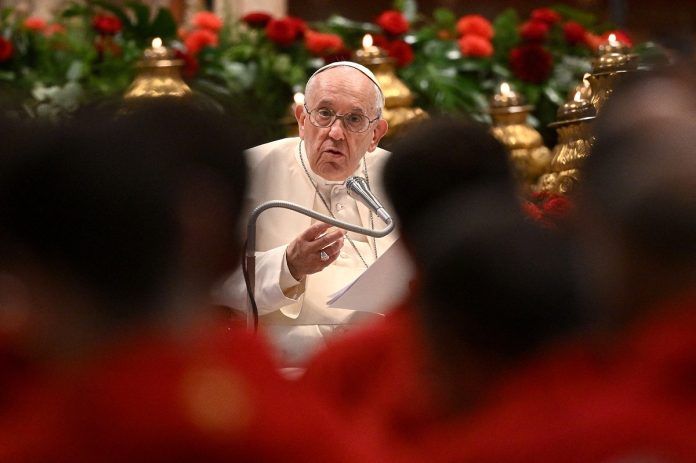
Pope Francis condemns Quran burnings in Europe as ‘barbaric’

Pope Francis

The pontiff made the remarks in a letter on Tuesday, in response to Argentinian Shia scholar Abdul Karim Paz, representative of Argentina’s Islamic foundation.

Last week, Abdul Karim Paz sent a letter to the head of the Catholic Church, in which he condemned the repeated acts of burning copies of the holy Muslim book and said they were against the unity of Abrahamic religions.

“The story of burning the Holy Quran is really a barbaric act. These cases harm and prevent mature dialog between people,” the Pope wrote in response.

Pope Francis has already condemned the sacrilegious acts, expressing “anger and disgust” over the moves.

In an interview with the UAE’s Arabic-language newspaper al-Ittiha in early July, the Pope rejected permitting Quran desecration under the pretext of “freedom of speech.”

His remarks came after Sweden permitted the desecration of a copy of the Quran outside a Stockholm mosque.

Over the past month, the holy Muslim book has been subject to acts of desecration by extremist elements multiple times in Sweden and Denmark, whose governments have sanctioned and justified such insults as “freedom of expression.”

The sacrilegious acts have ignited the ire of the entire Muslim community across the globe. Several countries have summoned or expelled Swedish and Danish ambassadors.

The Nordic countries have deplored the desecration of the Quran but claimed that they cannot prevent it under constitutional laws protecting freedom of speech.

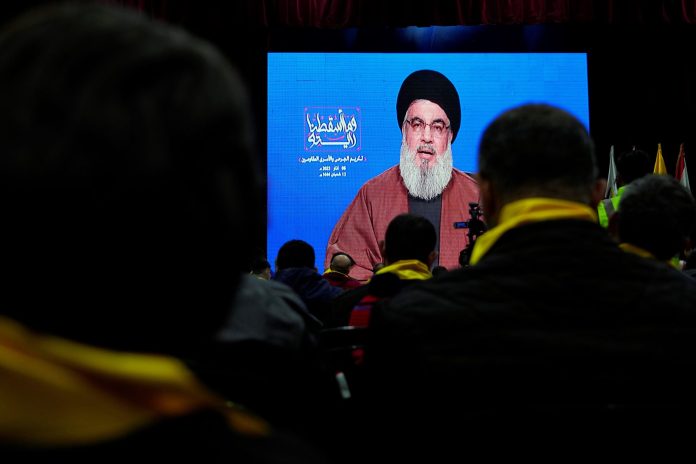
Hezbollah chief: Desecrator of Quran in Sweden a ‘Mossad spy’ who insulted two billion Muslims

Hezbollah Nasrallah

Nasrallah made the remarks during a televised speech on Tuesday in a ceremony held in the city of Nabatiyeh, southern Lebanon, to commemorate the martyrdom anniversary of Imam Hussein (AS) — the third Shia Imam and the grandson of Prophet Mohammad (PBUH).

Nasrallah pointed to the continued desecration of religious symbols and Islamic sanctities in Sweden and took Muslim countries to task for their “weak” support for the Holy Qur’an.

“There is a Mossad spy who is desecrating Islamic sanctities under the protection of the Swedish police, in a manner that constitutes an insulting and offensive challenge to the two billion Muslims in the world,” the Hezbollah leader said.

Stressing that there was no longer any point for Muslim youth to wait for governments and organizations to take action, Nasrallah added, “They must assume their responsibilities and punish more severely those who abuse the Qur’an.”

The Hezbollah chief also said the Swedish government “hypocritically” allows and denounces Qur’an desecration at the same time.

On Monday, two Iraqi men, named Salwan Momika and Salwan Najem, set copies of the Holy Qur’an alight outside the Swedish parliament in the capital Stockholm after the police had granted the permit.

Momika has carried out the same actions twice before in the past 40 days, outside Stockholm’s main mosque and later outside Iraq’s embassy.

Sweden has already seen its diplomatic relations with several Muslim nations strained over previous protests involving the Qur’an desecrations.

In Denmark too, anti-Muslim protesters burned the Qur’an outside the Saudi Arabian embassy in Copenhagen on Monday.

The sacrilegious acts have ignited the ire of the entire Muslim community across the globe. Several countries have summoned or expelled Swedish and Danish ambassadors.

The Nordic countries have deplored the desecration of the Qur’an but claimed that they cannot prevent it under constitutional laws protecting freedom of speech.

Live Update: Russia’s “Special Operation” in Ukraine; Day 525

Russia Ukraine War

Putin says Russia will return to grain deal if expectations are met

President Vladimir Putin has told Turkey’s Recep Tayyip Erdogan that Moscow is ready to return to the Black Sea grain deal as soon as the West meets its obligations to Russia’s grain exports, the Kremlin said.

In a phone call with Erdogan, Putin also listed its reasons for exiting the deal last month.

According to a statement by the Turkish presidency, the two leaders also agreed that Putin would visit Turkey.

A senior Turkish official added that discussions between Ankara and Moscow are ongoing for a visit in late August.


Ukraine’s military adds another drone model to its arsenal: DM

A new model of First Person View (FPV) drones is being adopted by the Ukrainian military, the defense minister announced on Wednesday, as Kyiv increasingly deploys unmanned aerial vehicles aerial vehicles (UAVs) to the front lines.

“This FPV drone, like other models, is manufactured in Ukraine, but mostly from foreign components. The next level is to produce major components in Ukraine and provide diversification to guarantee the independence and stability of the army supply under any circumstances,” defense minister Oleksii Reznikov stated.

In a Facebook post, Reznikov said over the last 15 months the Ukrainian Ministry of Defense has already adopted into service more than 30 UAV models of different types — “reconnaissance, attack, kamikaze drones and barrage ammunition.”

UAVs were first deployed to help artillery locate Russian targets and now, many believe they are being used to hit targets well inside Russian territory.

A recent government initiative called “Army of Drones” relaxed import restrictions and taxes for drone technology, spurring the development of a local industry to better supply the country’s military.

In September, Reznikov said the procedures to accept weapons and military equipment were simplified. “Formalities that used to take up to two years, we now perform in a few weeks,” he said.

Mykhailo Fedorov, deputy prime minister and minister for digital transformation, explained during a drone competition event in June that “FPV drones are becoming more and more relevant on the front line because it’s an opportunity to do a targeted strike, helping narrow the focus of artillery.”

The military needs “tens of thousands of FPV drones every month,” he added.


Russia ready to return to grain deal if it is performed in full: Kremlin

Russia is ready to promptly return to the grain deal but it should be implemented in part pertaining to Moscow, Kremlin Spokesman Dmitry Peskov told reporters.

“Russia, and President Vladimir Putin has already repeated that one hundred times, is ready to promptly return to the deal proper. Not only to talks but to the deal itself. [It] is ready to do [this] immediately. The deal should be simply implemented in part pertaining to Russia. This has not been done up to now,” Peskov said.

The grain deal ended on July 17.

The agreement can be resumed “in a new format” but specific actions of Western countries will be required to this end, Russian Deputy Foreign Minister Sergey Vershinin said earlier.


Ukraine claims small advances in the east, says Russian forces remain mostly on defensive

Ukrainian forces have been able to drive Russian troops from their positions in the eastern part of the country, while elsewhere Moscow’s armies remain mostly on the defensive, Kyiv officials have said.

“In the course of the offensive assault by the Defense Forces, the enemy was forced to withdraw from its positions in the area south of Avdiivka,” the spokesman for the General Staff of the Armed Forces of Ukraine, Pavlo Kovalchuk, said on Wednesday.

Also in the east, Ukrainian troops continue their offensive around the embattled city of Bakhmut.

“[Russia] made unsuccessful attempts to regain the lost positions north and west of Klishchiivka, as well as northwest of Kurdiumivka,” Kovalchuk continued, adding that Ukrainian defense forces continue to hold back the Russian offensive at the Kupyansk and Lyman directions.

Elsewhere on the battlefield, Russian forces are mostly on the defense, but, according to the Ukrainian military, they have tried to recover some of the lost territory on the Velyka Novosilka – Berdiansk axis.

“The adversary launched air strikes in the vicinities of Blahodatne and Staromaiorske (Donetsk oblast),” it said on Wednesday, noting, “The enemy made unsuccessful attempts to regain lost ground east of Staromaiorske.”

“[In Zaporizhzhia] the adversary focuses its main efforts on preventing further advance of Ukrainian troops,” it added.


Moscow calls US reaction to drone attack justification of Kiev’s terrorist methods

The United States pretty much officially justified Kiev’s terrorist methods with it’s reaction to a recent drone attack on Moscow, Maria Zakharova, the Russian Foreign Ministry’s spokeswoman, stated on Wednesday.

“The Kiev regime is doing all this with money and with technical support, weapons, technical information, and so on, precisely from the West. This is how they now reacted to Russia, to Moscow residents who work in the office center. In fact, the United States officially justified terrorist methods and confirmed that civilian objects can be destroyed, endangering the lives of civilians. No words of condemnation,” Zakharova told a briefing.


Moscow calls summits on Zelensky’s peace plan attempt to create coalition against Russia

Meetings on a peace resolution to the Ukraine conflict based on the peace plan of Ukrainian President Volodymyr Zelensky are Kiev’s attempt to create a coalition against Moscow, Russian Foreign Ministry spokeswoman Maria Zakharova said on Wednesday.

“Meetings initiated by the Kiev regime and its Western curators to promote Zelenskyy’s (peace) formula is a trick. It is an attempt to take advantage of sincere intentions of a number of countries to create an anti-Russian coalition,” Zakharova told a briefing.

The diplomat added that these meetings are aimed at monopolizing Kiev’s right to present peace initiatives, while diminishing the importance of peace plans of other countries.


Ukrainian official praises air defences in latest attack

The head of Ukraine’s president’s office has praised air defences for protecting civilians from Russian air attacks but stresses the need for tougher sanctions.

On Telegram, Andriy Yermak said, “Heroic work by the air defence tonight. The Russians again tried to attack civilians, our ports, elevators. They do everything to circumvent sanctions and obtain components for the production of weapons.

“They want to increase its quantity in order to kill people, destroy infrastructure, and cause famine in the countries of the Global South,” he continued.

“It is possible to stop this with tougher sanctions, which will constantly increase and affect the military industry of the Russian Federation. Also, everyone can do more if they block the chains through which Russia receives sanctioned components. Every country can do more,” he added.


Nearly half of those held in Russian detention centers in Ukraine’s Kherson were tortured, subjected to sexual violence: Report

Nearly half of Ukrainians held in detention centers in Kherson by Russian forces were subjected to widespread torture including sexual violence, according to a new report published Wednesday.

The report, compiled by the Mobile Justice Team, part of the UK, EU and US-sponsored Atrocity Crimes Advisory Group (ACA), and was set up by international human rights law firm and foundation, Global Rights Compliance, in April 2022, and is led by world-renowned British Barrister, Wayne Jordash KC. The team’s work is primarily funded by the EU.

The new report reveals analysis of an initial pool of 320 cases of detention in Kherson, across more than 35 identified detention centers.

Of those victims, both male and female, at least 43% explicitly mentioned practices of torture in the detention centers, citing sexual violence as a common tactic imposed on them by Russian guards, with preliminary results showing military personnel were most likely to experience torture.

One of the authors of the report says those with families in the military were also targeted.

“A lot is just punishment, and in, in addition to punishment for [their family member’s] actual military service, it’s also punishment, it seems for the being a Ukrainian citizen really,” Anna Mykytenko, senior legal adviser and Ukraine country manager for Global Rights Compliance told CNN.

At least 36 victims from the pool analyzed mentioned the use of electrocution during interrogations, often genital electrocution by Russian guards. Other victims mentioned threats of genital mutilation, and at least one victim was forced to witness the rape of another detainee by a foreign object covered in a condom.

“In relation to men, it’s more the majority of crimes is sexualized torture, and that’s usually torture of genitalia so that’s a form of punishment [for being Ukrainian] and kind of precludes them from having children,” Mykytenko adds.

The report adds that suffocation, waterboarding, severe beatings and threats of rape were other techniques commonly used against victims by Russian guards in the Kherson torture chambers, according to the specialist unit. Mykytenko says these patterns of rape and torture point to a Russian intent to eradicate Ukrainian identity.

“There is sort of an intent to destroy or eliminate Ukrainian identity because in some cases, it can be seen that those caught or, sometimes almost hunted for, had Ukrainian flags or other state symbols,” she said.

Barrister Wayne Jordash, managing partner and co-founder of Global Rights Compliance, shared a similar view, saying the sexual violence tactics being uncovered underscore Putin’s plan to extinguish Ukrainian identity and include a range of crimes evocative of genocide.

“At the very least, the pattern that we are observing is consistent with a cynical and calculated plan to humiliate and terrorize millions of Ukrainian citizens in order to subjugate them to the diktat of the Kremlin,” he stated in a statement accompanying the report.

Mykytenko does believe some of the patterns seen in Kherson could eventually be considered genocidal, though she acknowledges it is difficult to prove.

Russia has repeatedly denied accusations of torture and human rights abuses in Ukraine despite overwhelming evidence to the contrary, investigated, compiled and shared by international human rights and news organizations.

Russian officials have not yet commented on the report.


Russian drone strike “deliberately” targeted infrastructure on Danube River: Ukraine

Overnight drone strikes in Odesa targeted the Danube port of Izmail, causing damage to some of its structures, the Ukrainian Ministry of Defense has announced.

The military did not specify which of the Danube ports had been targeted but said “the multi-story administrative buildings suffered significant damage.”

Ukrainian air defenses managed to shoot down 11 attack drones over Odesa, which the country’s Southern Command said “deliberately” targeted infrastructure on the Danube River.

“During a night attack in the south of Odesa region, air defense forces destroyed 11 attack UAV,” it added.

“The enemy deliberately tried to destroy the port infrastructure on the Danube. Continuing to terrorize the grain initiative issue, it attacked both the elevator and the grain storage facility,” it noted.

Ukraine’s Southern Command said in a post on Twitter Wednesday: “Ukrainian grain has the potential to feed millions of people worldwide. However, Russia chose the path of killing, starvation, and terrorism.”

Since Russia terminated the grain deal on July 17, Moscow has unleashed a flurry of attacks on grain supplies in key Ukrainian cities and the Danube River has become the latest target.


Latest drone strike in Odesa an attack on “global food security”: Zelensky

Ukrainian President Volodymyr Zelensky stated the latest drone strike on the Odesa port infrastructure by Russia was an attack on “global food security” and called on the international community to intervene.

“Russian terrorists have once again attacked ports, grain, and global food security,” Zelensky said in a Telegram post on Wednesday.

“The world must react,” he stressed.

Zelensky added that “Russia can and must be stopped” in face of attacks that deliberately destroyed Ukrainian grain elevators in Odesa.

Zelensky also commended Ukraine’s air defense units for another “heroic” night, after the Ukrainian air force shot down 23 attack drones that were aimed at Odesa.

“Another night of war, another night of our heroic air defense. We are defending ourselves to the maximum of our capabilities,” he continued.

Since pulling out from the Black Sea grain deal on July 17, Russia has unleashed a flurry of attacks on grain supplies in key Ukrainian cities, including the port city of Odesa. At least 60,000 tons of grain, enough to feed 270,000 people for a year, had been wiped out by Russia’s ramped up assault, British Ambassador to the UN Barbara Woodward said last month.


Ukrainian Air Force says it downed 23 Russian drones that targeted Odesa

The Ukrainian Air Force says antiaircraft units shot down 23 Russian attack drones overnight but admitted that some were able to get through and hit port infrastructure in the Odesa region.

Russian forces attacked with drones over Odesa that were launched from three directions, Russia’s Kursk and Primorsko-Akhtarsk and Chauda in the Russian-occupied Crimea region, the Air Force announced in a statement on Wednesday.

“The forces and means of the Air Force, in cooperation with the air defense of other components of the Ukrainian Defense Forces, destroyed 23 attack UAVs,” it said.

“Most of the ‘Shaheds’ were destroyed in Kyiv and Odesa regions. Unfortunately, some of the drones launched by the enemy hit the port infrastructure in Odesa region,” it added.

Fires broke out after port facilities were struck, including grain infrastructure, according to the head of the military administration in Odesa.


Russian drone strike damages port infrastructure in Odesa region: Ukrainian military official

A Russian drone strike damaged the port and industrial infrastructure of the Odesa region, the head the regional military administration, Oleh Kiper, said on Wednesday.

“At night, the enemy directed attack UAVs to the south of Odesa region. As a result of the attack, fires broke out at the facilities of the port and industrial infrastructure of the region, and a grain elevator was damaged. All response teams are at the scene,” Kiper posted on Telegram.

As of 5:30 a.m. local time, there were no reports of casualties, according to Kiper, though he added that the military command will provide the final data and results of combat work.

The strikes come not long after Ukraine shot down more than 10 drones over Kyiv early Wednesday.


Ukraine shoots down more than 10 drones over Kyiv: military official

Ukraine shot down more than 10 drones over Kyiv, according to Serhiy Popko, head of the Kyiv City Military Administration, in a Telegram post early Wednesday.

Initial information indicates that Russian forces used Shahed barrage munitions in the barrage of attacks, Popko said.

“Drone groups approached Kyiv simultaneously from several directions. However, the air defense forces detected and destroyed all aerial targets – over 10 UAVs – in a timely manner,” Popko stated.

He added debris from the drones has fallen in the districts of Solomianskyi, Holosiivskyi, and Sviatoshynskyi in Kyiv and that some non-residential buildings and road surfaces were damaged, but no serious damage or fires.

He said there is no information on casualties so far.

Early Wednesday, the head of Odesa regional military administration, Oleh Kiper also warned of possible drone attacks on the Odesa region.

Kiper asked people in the Odesa to take shelter while its air defenses were at work, according to a Telegram post.

Both Ukraine and Russia reported cross-border attacks Tuesday. Moscow said Kyiv again attempted a drone strike in Moscow, targeting the exact same building that was hit on Sunday. Kyiv accused Russia of shelling a medical facility in the southern port city of Kherson, killing a doctor and wounding a nurse.


US says signals Russia prepared to return to Black Sea grain deal talks

The United States has been told that Russia is prepared to return to talks on a deal that had allowed the safe Black Sea export of Ukraine grain, but “we haven’t seen any evidence of that yet,” the US envoy to the United Nations stated.

Russia quit the deal in mid-July.

US Ambassador to the UN Linda Thomas-Greenfield said that if Russia wants to get its fertiliser to global markets and facilitate agricultural transactions, “they’re going to have to return to this deal.”

“We have seen indications that they might be interested in returning to discussions. So we will wait to see whether that actually happens,” she added, without giving further details.


F-16 questions linger as Ukrainian pilots set to start training this month

The US is still waiting for European officials to submit a final plan for training Ukrainian pilots on F-16 fighter jets, which the US will have to authorize before the program can actually begin, officials familiar with the matter told CNN.

The training is supposed to start this month, Ukrainian President Volodymyr Zelensky and European officials have said publicly. But two months after President Joe Biden announced US support for training Ukrainian pilots on F-16s, there remain a number of critical details to work out.

It is also still unclear which countries will commit F-16s to the training program—and to Ukraine itself once the program is finished. Transferring the planes to Ukraine will require separate US approval.

US defense officials told CNN that the US is still deciding whether to send American pilots to help train the Ukrainians, but that no decisions will be made until a final training plan is authorized.

The training program is being supported by a coalition of 11 NATO countries and requires official US approval because the F16 is an American technology.

The course itself is expected to be conducted in Denmark and Romania, with help from the Netherlands, Belgium, Canada, Luxembourg, Norway, Poland, Portugal, Sweden and the UK, officials have stated.

But the details, including the dates, locations, and length of the syllabus “are still being worked out,” National Security Council Coordinator for Strategic Communications John Kirby said during a briefing last week.


Economy to see growth of 5 percent in 2024: Ukraine

Ukraine expects its economy to grow by about 5 percent next year, driven by investment in reconstruction and stronger consumer demand, a senior Economy Ministry official has said.

The ministry expects gross domestic product to grow by around 2.8 percent this year, said Natalia Horshkova, head of the ministry’s department for strategic planning and macroeconomic forecasting.

“We expect 5 percent growth in 2024. The driver will be investment dynamics,” she told a roundtable on the economy.

Ukraine’s economy shrank by about a third last year after Russia’s invasion. The annual fall was the largest since independence more than 30 years ago.

Iranian president urges implementation of agreements with Syria

Raisi and Mekdad

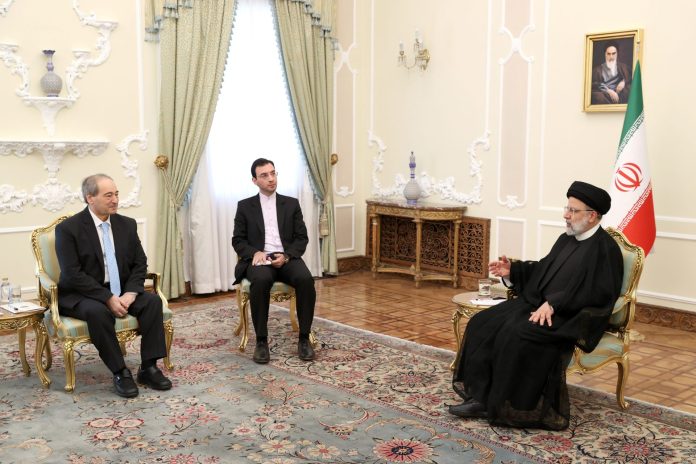
Raisi was speaking during a meeting with three visiting Syrian ministers in Tehran including the Arab country’s foreign minister on Tuesday.

Raisi hailed Syria’s resistance against the all-out foreign-backed war on the country that started on 2011, saying the message that his meeting with Syrian president Bashar al-Assad had was the big victory of the resistance front.

Raisi voiced hope that in addition to the implementation of the agreements signed during his stay in Damascus, the two countries took further steps toward expanding their relations in all areas.

Meanwhile, Syrian Foreign Minister Faisal Mekdad said the initiative of President Assad to send three ministers at once to Tehran was a sign of the deep strategic ties between Iran and Syria.

Mekdad described talks aimed at implementing the Iran-Syria agreements as smooth and very positive.

While presenting a detailed report on the latest developments in Syria, the Syrian foreign minister described the path of the united resistance by Iran and Syria as a shining manifestation of the commonalities between the two countries.

Mekdad said the axis of resistance led by the Islamic Republic of Iran showed that it can thwart any conspiracy against the region.

He also hailed all martyrs of the resistance, especially General Qassem Soleimani.

Iranian security chief: US, Israel use terrorism as a tool to create crises in region

Ahmadian and Mekdad

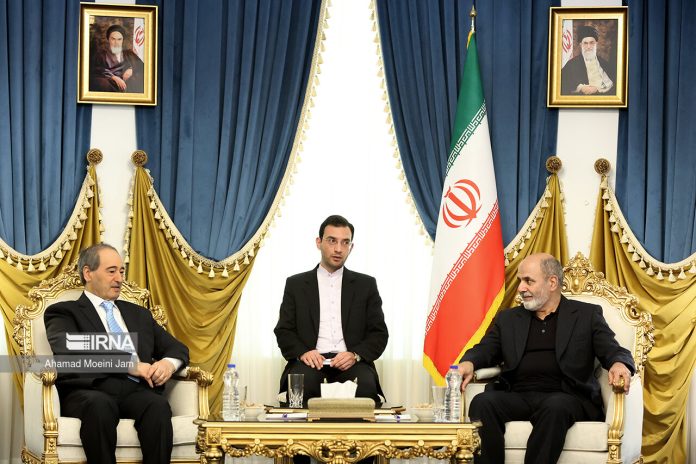
In a meeting with visiting Syrian Foreign Minister Faisal on Tuesday, Ahmadian pointed to the recent terrorist attack in the Zeynabiyah district near the Syrian capital Damascus.

Ahmadian described the attack as a serious warning about the possibility of the rise of terror groups backed by the US and the Zionist regime.

He added that Syria’s enemies are trying to weaken security in the country.

Ahmadian further hailed Syrian President Bashar al-Assad for his resistance and success in foiling the plots of the Western-Israeli front.

He noted that Tehran believes the normalization of ties between Syria and regional countries not only had positive results but it also helped reduce the possibility of interference by extra-regional players.

Ahmadian said the US’s military presence in Syria is a violation of the Arab country’s sovereignty and an attack on its territorial integrity, adding that the US is after reviving the terrorist cells to destabilize Syria.

The Syrian foreign minister also noted that the Zionist regime’s continued aggression against his country is a gross example of state terrorism and as being provocative.

Mekdad said terrorism, military aggression and oppressive sanctions will not weaken the determination of Syrian people to stand up against bulling and greed of their enemies.

US think tank: Support for normalisation deals with Israel plummets in Persian Gulf states

Abraham Accords

The United Arab Emirates (UAE), Bahrain, Morocco and Sudan established official ties with Israel as part of US-brokered Abraham Accords in 2020.

According to the latest surveys, only 27 percent of respondents in the UAE and 20 percent in Bahrain viewed the accords as positive for the region.

That compares with 47 percent and 45 percent in 2020 when the accords were billed as part of a process that may encourage Israel to also work on its conflict with the Palestinians.

In Saudi Arabia, which has not normalised relations with Israel amid a push by Washington for the kingdom to follow in its neighbours’ footsteps, support for the accords also fell by half to 20 percent.

Earlier this year, Saudi Arabia’s Foreign Minister, Prince Faisal bin Farhan, stated the kingdom will not normalise relations with Israel until Palestinians are granted statehood.

“True normalisation and true stability will only come through giving the Palestinians hope. Through giving the Palestinians dignity, and that requires giving the Palestinians a state,” he said on the sidelines of the World Economic Forum in Davos, Switzerland, earlier this year.

Following the report, Anna Jacobs, a senior Analyst on Persian Gulf states at the Crisis Group, said that too often public opinion in [Persian] Gulf countries is underestimated as a factor in government decision making.

“Public opinion matters more to the calculations of leaders in the [Persian] Gulf than many observers think,” she added, commenting on the findings and any potential rapprochement between Israel and Saudi Arabia.

The normalisation deals have also exposed the limitations of any potential benefits that Persian Gulf countries expected to receive, particularly in the case of the UAE.

At the time of the deal between Israel and the UAE, the accords allegedly included a “secret clause” for the US to sell F-35 fighter jets to Abu Dhabi.

Normalisation between the two sides was expected to pave the way for the sale of US fighter jets and advanced drones to the Persian Gulf country.

Crown Prince Mohammed bin Zayed, the president of the UAE, had allegedly insisted that the “multi-billion-dollar arms sale” should be part of the deal, according to report by the Israeli Ynet news outlet citing US and Emirati sources.

By December 2021, the UAE halted talks on a $23bn weapons package that would have included the sale of F35s, drones and other munitions after the Joe Biden administration added requirements.

According to reports, the Americans wanted the UAE to cancel the use of Chinese-made Huawei 5G technology in the emirate, something the UAE was not prepared to do.

Israeli policies in the occupied Palestinian territories have also had an impact on the supposed political benefits of the accords.

Regular Israeli raids in the West Bank in the last two years have resulted in increased tensions in the region as the far-right government of Prime Minister Benjamin Netanyahu seeks to exert greater control on the occupied territories.

At least 202 Palestinians have been killed by Israeli fire this year, including 35 children – a rate of nearly one fatality per day.

A total of 165 people have died in the West Bank and East Jerusalem, making 2023 one of the bloodiest years in the occupied Palestinian territories. Another 36 people were killed in the Gaza Strip.

Israeli actions have also exposed the Persian Gulf countries to criticism that on the Palestinian front they have achieved little in restraining Israeli actions.

Despite support for the accords plunging in Persian Gulf states, trade between the two sides is however on the rise.

In 2022, bilateral trade between Israel and the UAE hit $2.6bn, with that number expected to go up to $3bn this year according to Israeli figures.

Since the accords were signed, more than a million Israelis travelled to the UAE although that has very much been a one-sided trend, with few people from the Persian Gulf looking to travel the other way.

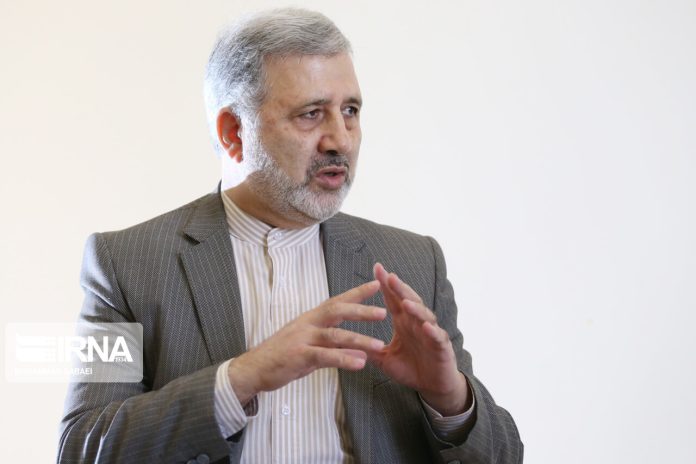
Envoy says Iran-Saudi détente paves ground for new order in Persian Gulf

Alireza Enayati

In an interview with Tasnim News Agency, Enayati said that the new arrangements in the Persian Gulf region have resulted in a shift of security focus from being military-centered to development-centered. Moreover, the concept of security has now moved towards being more inward-looking.

The following is the full text of Alireza Enayati’s interview with Tasnim:

Tasnim: One of the important propositions in the Iran-Saudi Arabia case has been the Yemen issue. What are the latest developments regarding this subject, and what is your assessment of the Yemen debate?

Enayati: I must emphasize that the engagement we had with Saudi Arabia and the progress of these relations from Iran’s perspective have been based on a bilateral approach. It was established, continued, and concluded accordingly, and we highlighted it as a sign of the continuation of Iran-Saudi Arabia relations. However, regarding the Yemen issue, our Saudi brothers have paid attention to it, but Iran’s position is that Yemeni issue is an internal matter and it’s a case that should be managed by the Yemenis themselves.

Of course, since 2015, our stance on Yemen has been clear, as we did not see war as the solution. At that time, Iran proposed a four-month initiative based on a political solution, humanitarian aid, comprehensive dialogue, Yemeni-Yemeni talks, and the formation of an inclusive government. In fact, this has been a position that Iran raised in 2015, and we believe it provides a suitable framework for resolving the Yemen issue.

We have fully supported the ceasefire declared by the United Nations in April of last year. Whenever the ceasefire was extended, we supported the extension. Our emphasis in talks with representatives of the United Nations, Ansarullah, and Omani brothers has been based on the realization of a political solution as a purely Yemeni matter, acknowledging that the Yemeni people are more knowledgeable and aware of their own issues.

We have consistently emphasized the necessity of lifting the blockade and sending humanitarian aid to Yemen in our statements. We hope that the conditions, which currently have a relative calm, can be sustained and lead to positive outcomes. We also aspire to address and remove any issues or obstacles, including those related to humanitarian aid, so that Yemen’s conditions can be provided for by its own people, just like any other country.

Tasnim: Now, new horizons have emerged for the formation of a modern order in the region. What is your analysis of this new order?

Enayati: In the Persian Gulf region, we are facing a complex situation, and the current security regime may lean towards a different direction due to the changes we are witnessing. In discussing the new arrangements in the Persian Gulf region, we believe that security should lean more towards an inward approach, and the countries of the region should take greater responsibility in shaping this regional order.

We believe that what we are currently facing, including military escalations, could lead to a different outcome as a result of these understandings, and we may witness a reduction in foreign forces. We believe that the definition of security has undergone a change, shifting from a military-focused security to a development-oriented security. We should not solely define security in the traditional sense, which is based on arms and military forces. Instead, security should be defined based on economic, social, political, cultural, and people-centric development. This is an approach that Iran deeply emphasizes.

These dimensions, in reality, have become instrumental in the new concept of establishing security and have an impact. These are concepts that we may witness in the Persian Gulf region. Replacing traditional concepts with new ones based on cooperation instead of competition, and emphasizing internal security over the use or presence of foreign forces, along with a combination of cooperation in the Persian Gulf region, could shape the security arrangements for our region. However, in the realm of regional security arrangements, we are confronted with a completely destructive, disruptive, and provocative element known as the Zionist regime, which has recently gained a foothold in the Persian Gulf region.

We believe that this element is both threatening and an obstacle to the formation of a new order through regional cooperation. A regime that is itself an occupier and poses threats cannot be present as an element in the Persian Gulf region. Of course, our friends and brothers, the countries that have relations with Israel, have provided us with the necessary reassurances in various aspects. However, these assurances do not exist regarding the Zionist regime. In any case, this is considered a destructive element. But overall, we expect a new horizon for the Persian Gulf where, with the presence of eight countries through extensive and robust cooperation, it can create a new condition for the region.

We introduced the idea of a regional dialogue forum with the countries of the Persian Gulf as a preamble to this matter, and we hope that in this process, which involves bilateral arrangements with the countries and collective cooperation, we can establish an assembly for conducting discussions. In the near future, we aspire to reach new security arrangements in the region that will secure the interests of both regional and non-regional countries.

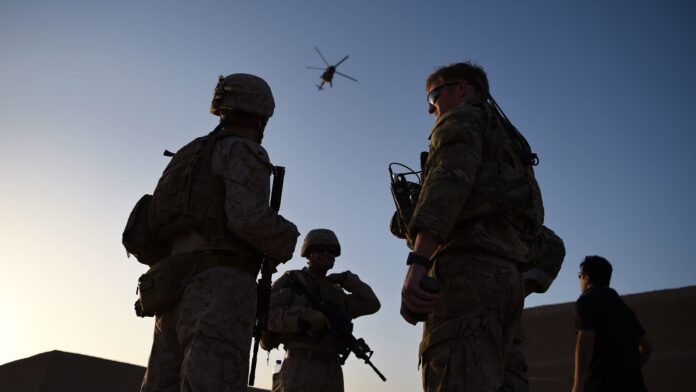
Poll shows Americans’ trust in US military lowest in two decades, citing poor pull-out from Iraq and Afghanistan

US Forces

The poll, which was conducted by Gallup and its results were reported on Monday, was carried out between June 1 and 22.

It showed that only 60 percent of Americans currently express “a great deal” of confidence in the country’s military, which is the lowest figure registered in the past 20 years.

The Gallup report said confidence in the US military “generally held above 70 percent” after the 9/11 attacks and stood there for the next two decades. However, it fell to 69 percent following the United States’ chaotic exit from Afghanistan in 2021, 64 percent in 2022, and 60 percent in 2023.

The figure “was last this low in 1997 and it hasn’t been lower since 1988, when 58 percent were confident,” the Gallup report noted.

“The declines this year were across all party identification groups, with Republicans remaining the most likely to express confidence and independents becoming the least likely,” it added.

Although Gallup linked the decline to the United States’ poorly executed withdrawals from Iraq and Afghanistan, many analysts have also attributed the trust deficit to Washington’s heavy arms supplies to Ukraine, which has been engaged in a war with Russia since last February.

Last month, Under-Secretary of Defense for Policy Colin Kahl acknowledged that the United States’ military aid to Ukraine has placed the country’s arms industry under strain.

According to Kahl, Washington has provided nearly $40 billion in military assistance to Kiev since the start of the war.

This year’s confidence index reflected a four-percentage-point decline compared to last year, when an American think tank rated the US military’s level of capability as “weak,” stating it was incapable of winning a single war against archrivals China and Russia, let alone two concurrent ones.

The report prepared by the Washington-based Heritage Foundation only appraised the Marine Corps as “strong,” while giving the Army a “marginal” rating, evaluating the Space Force and Navy as “weak,” and finding the Air Force to be “very weak.”

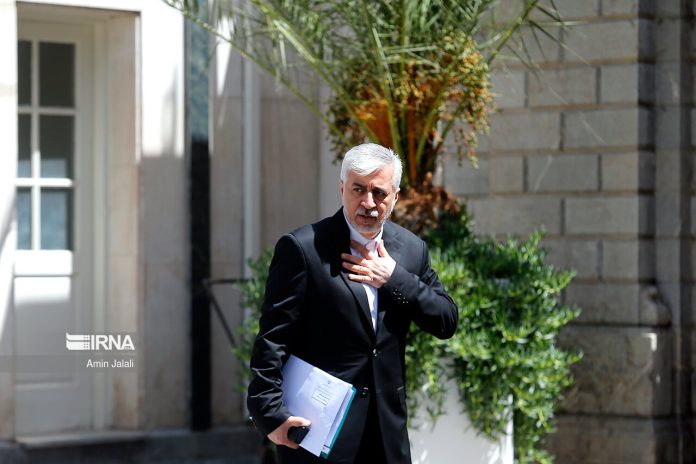
Iran’s Raisi accepts sports minister’s resignation

Hamid Sajjadi

President Raisi accepted Sajjadi’s resignation on Tuesday and appointed Kiumars Hashemi as caretaker minister of sports.

It was the third time Sajjadi was tendering a resignation, due to health issues from a helicopter crash back in February.

Raisi had rejected those resignations.

A copter carrying Sajjadi and other sports officials crashed in Iran’s southern province of Kerman on February 23, killing Sajjadi’s deputy.

The minister suffered brain hemorrhage but survived.

There had been speculation that Sajjadi’s resignation came because some members of the Parliament were planning to impeach him.

In the letter accepting Sajjadi’s resignation, Raisi thanked him and wished him a speedy recovery.