Tuesday, December 30, 2025
Home Blog Page 1273

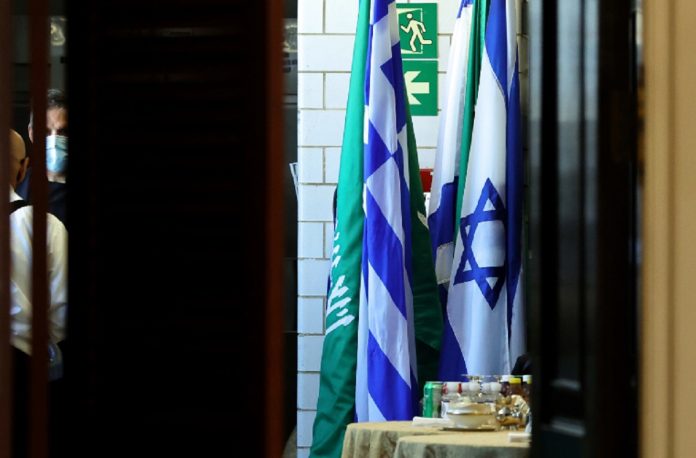
Israeli delegation attends UNESCO meeting in Riyadh, Saudi Arabia

Israel Saudi Arabia Flags

Three Israeli officials were seen sitting at Israel’s chairs of the 45th session of UNESCO’s World Heritage Committee, a Reuters witness said.

Another Israeli official stated the delegation included the Foreign Ministry’s deputy director-general for international organisations and the ambassador to international organisations in Paris.

A delegate from Israel’s Education Ministry and the chair of Israel’s Antiquities Authority also took part in the gathering, the official added.

Public appearances of Israeli officials are rare in Saudi Arabia, but both sides have had covert contacts.

Washington has been pressing its traditional ally Riyadh to sign a normalisation deal with Israel, which would be its biggest diplomatic win in the region and following similar agreements with United Arab Emirates, Bahrain and Morocco, known as the Abraham Accords.

However, Riyadh has so far resisted US pressure and linked the move to the creation of a Palestinian state as part of a two-state solution to the Israeli-Palestinian conflict, along with other demands.

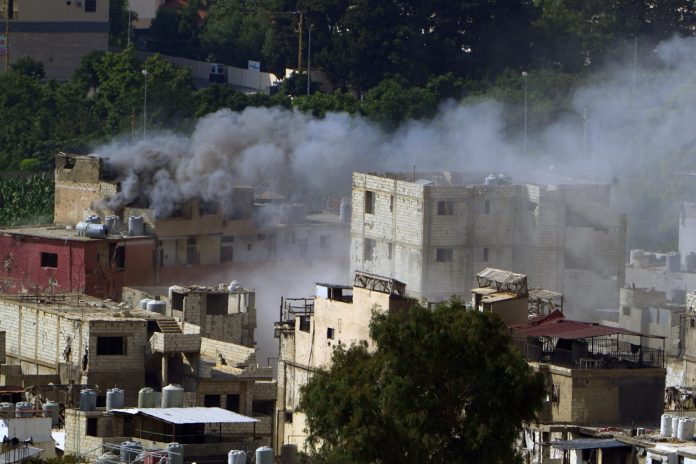
Ten killed, dozens injured as clashes resume in Palestinian camp in Lebanon

The Ain el-Hilweh camp has been rocked by factional clashes since late July between the Palestinian mainstream movement Fatah and fighters. The first round left more than a dozen people dead.

Fighting resumed over the weekend after a month-long ceasefire and has since left at least 10 people dead, according to two Palestinian sources in the camp. Six of them were militants from Fatah and another two were fighters.

The two remaining victims were civilians, a Lebanese security source and two Palestinian sources confirmed. One was killed on Saturday when a stray bullet from the clashes reached a town near the camp, the Lebanese security source added.

Five Lebanese army soldiers were also wounded, one of them critically, when shelling hit two of their positions on the outskirts of the camp on Sunday, according to an army statement.

Ain el-Hilweh is the largest of 12 Palestinian refugee camps in Lebanon, hosting around 80,000 of up to 250,000 Palestinians countrywide, according to the United Nation’s Palestine refugee agency (UNRWA). The camps date back as many as seven decades to neighbouring Israel’s founding in 1948.

The renewed violence has prompted fresh concerns that the clashes could spill over into the adjacent city of Sidon.

Residents fear a similar scenario to the northern Palestinian camp of Naher al-Bared, where Lebanon’s army waged a 15-week onslaught to dislodge militant groups in 2007.

A senior Fatah official is set to land in Lebanon on Monday and the acting chief of Lebanon’s powerful General Security intelligence agency will hold an emergency meeting on the issue.

UNRWA has announced armed groups have taken over eight of their schools, forcing the agency to find alternatives to host students as the beginning of the school year nears.

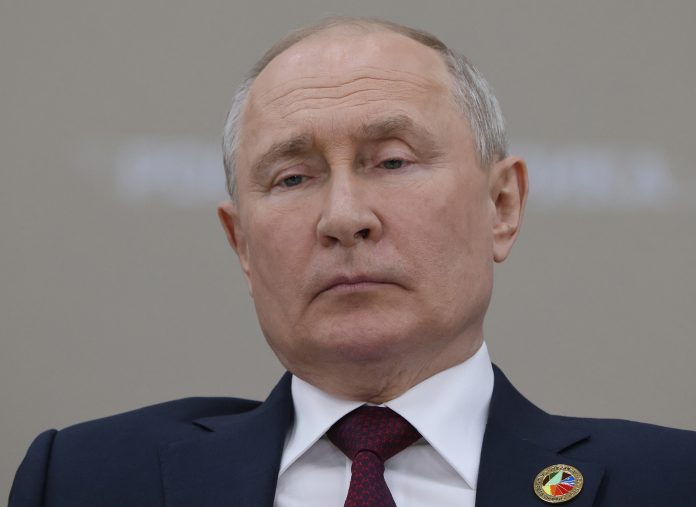
Kremlin says Putin has not decided to run for president in 2024

Vldimir Putin

Peskov, quoted by the state-run media Russia-24, claimed Putin “enjoys absolute support from the population.”

“The president has not yet announced that he will nominate his candidacy. But if we assume that the president does, then it is obvious that in our country at the current stage no one can really compete with the President,” Peskov was quoted as saying.

Preparations for the presidential elections have not yet begun in the Kremlin, Peskov added.

Russia’s next presidential election is due to be held in March 2024, with a possible second round theoretically being held in April.

In 2020, Russian lawmakers voted in favor of a last-ditch proposal to reset the clock on Putin’s presidential term count in an updated version of the constitution, in effect allowing Putin to remain as president until 2036.

Peskov’s comments about the next presidential election come the day after elections were held in several annexed regions of Ukraine. These elections — expected to deliver victories for Putin’s United Russia party candidates, many of whom ran unopposed — were widely dismissed as a sham by the international community.

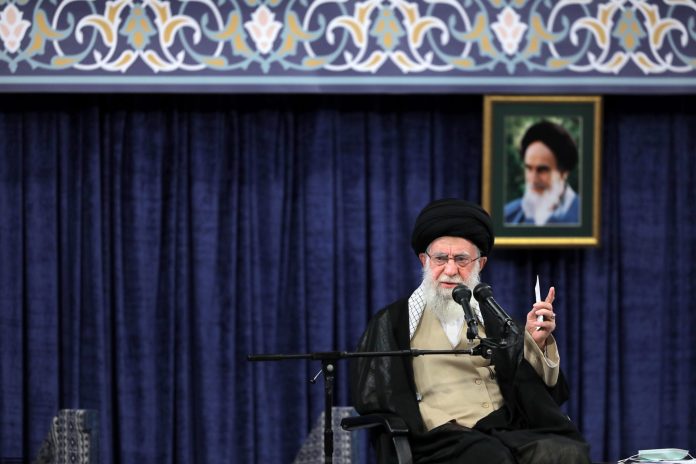
Iran Leader says world on threshold of transformation, arrogant powers to become weaker

“The arrogant power of America and some European countries has weakened and will become weaker,” he said in a meeting with thousands of people from the provinces of Sistan and Baluchestan and South Khorasan in Tehran on Monday.

The US, the Leader added, is working on ethnic and sectarian faultlines in Iran with the aim of creating a crisis in the country.

“Our information tells us that the American government has created a crisis group with the mission to search for the points which they think can be used to provoke a crisis in Iran. With contemplation and study, they have concluded that there are several crisis points in Iran: ethnic differences, religious differences, and the issue of gender and women, which should be provoked to create a crisis,” the Leader explained.

“This is America’s program but camels dream of cotton seeds,” Ayatollah Khamenei noted, using a famous Persian proverb to denote delusion.

About a year ago, Iran was hit by a cocktail of subversive action, which included riots under the moniker of women’s rights after a young girl from Iran’s Kurdistan collapsed at a police station and passed away later in hospital.

The incident was pounced upon by subversive elements in Sistan and Baluchestan and Kurdistan to trigger months of mayhem. Like the Iranian Kurdistan which is predominantly Kurdish and Sunni, Sistan and Baluchestan has a significant Baluch and Sunni population.

Ayatollah Khamenei said, “The enemy is serious in its enmity and planning, but we are also very serious in confronting the enemy.”

“The enemy has targeted two basic points, one is national unity, the other is national security, and we must stand against this plan of the enemy.”

Unity, Ayatollah Khamenei added, means that religious, political, group and ethnic differences should be left aside where the interests of the nation are at stake.

“All people from different ethnicities and religion groups should join together. Since there is a clear direction, this unity is important,” the Leader continued.

As for security, he said, “those who threaten national security are the enemies of the nation; they work for the enemy, whether they realize it or not”.

Ayatollah Khamenei added a big change is in the making in the world, toward which the regional nations should not be indifferent, as they were during the colonial era, or after the First World War.

“The main lines of this transformation are several things: First of all, the weakening of the world’s arrogant powers. The arrogant power of America has weakened and is getting weaker. Another main line of this evolution is the emergence of new regional and global powers.”

“They themselves say that the indicators of American power in the world like economy are declining. One of the most important indicators of American power was the strong American economy; they say it is declining.”

Another line is the US possibility of interfering in other states, Ayatollah Khamenei said.

“America interfered in various governments, but the condition is now declining. Today, America has to create a combined war in order to hit the governments that it wants to hit, which is very costly for it, and will not work out in the end,” he added.

The Leader called the US failure in Syria and the humiliating escape from Afghanistan as two obvious examples of the decline of American power.

As for the decline of Europe, the situation is no better.

“You hear these days how the African countries that were under the influence of France are rising against it one after another,” the Leader said.

“The Western powers, which are headed by America and then Europe, do not have the former power today, they are weakening and this weakness is increasing. Day by day, new powers are rising; this is a great global change.”

Nevertheless, “when we say the enemy is becoming weak, it doesn’t mean that it cannot plot, be hostile and strike, it can,” Ayatollah Khamenei added.

“They are busy planning, we should not sleep, we should not be negligent.”

Ayatollah Khamenei stressed the US plots are not exclusive to Iran. Washington, he stated, has also plans in the region for Iraq, Syria, Lebanon, Yemen, Afghanistan and even for the countries of the Persian Gulf, which are its old and traditional friends.

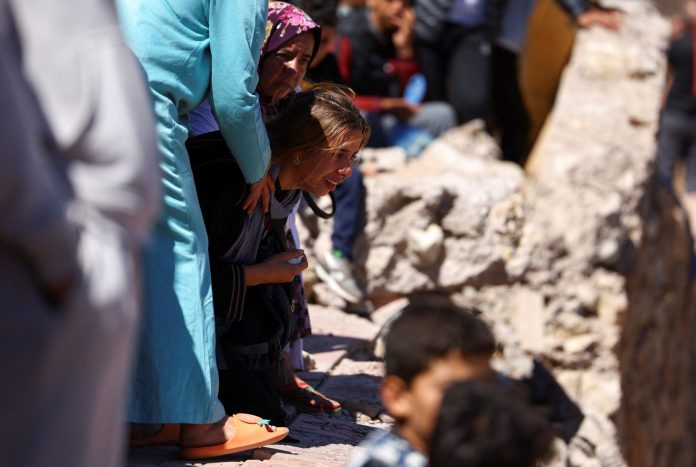
Death toll from Morocco earthquake nears 2,500

With much of the quake zone in hard-to-reach areas, the full impact has yet to emerge. The authorities have not issued any estimates for the number of people still missing.

The earthquake hit after 11pm (22:00 GMT) on Friday evening, according to the United States Geological Survey (USGS). It struck 72km (45 miles) southwest of Marrakesh, Morocco’s fourth largest city.

The epicentre was Ighil, a mountainous rural commune in Al-Haouz province near the Oukaimeden ski resort in the Atlas Mountains.

The quake was felt throughout the country, including in the provinces of Ouarzazate, Marrakesh, Azilal, Chichaoua and Taroudant.

A number of countries have sent messages of condolence alongside offers of aid.

Iran says is in contact with Armenia, Azerbaijan to ease tensions in Caucasus

Nasser Kanaani

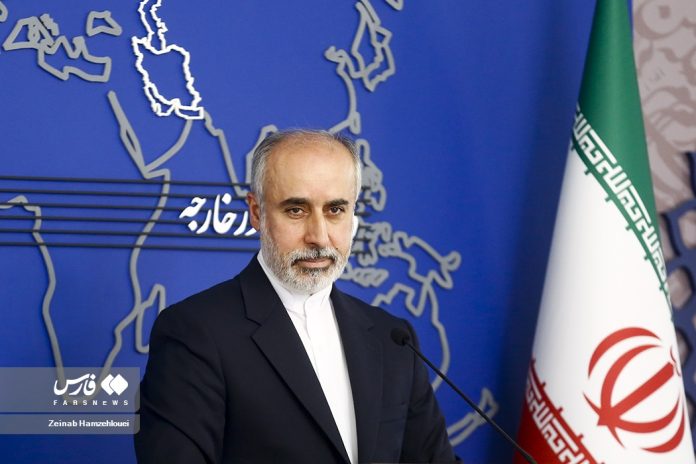
Asked about the possibility of a flare-up of tensions between Baku and Yerevan, Kanaani said at a press conference on Monday that Iran is in contact with the officials of Armenia and the Republic of Azerbaijan.

“The Armenian officials voiced concern about the possibility of (military) clashes, but the Azerbaijani officials gave a message that they have no intention of clashing (with Armenia),” he added, describing the Republic of Azerbaijan’s recent deployment of troops as a “conventional military action” ahead of winter.

“Iran is seriously monitoring the developments. We’d give an assurance that Iran’s borders are safe and we support the security of boundaries,” Kanaani underlined.

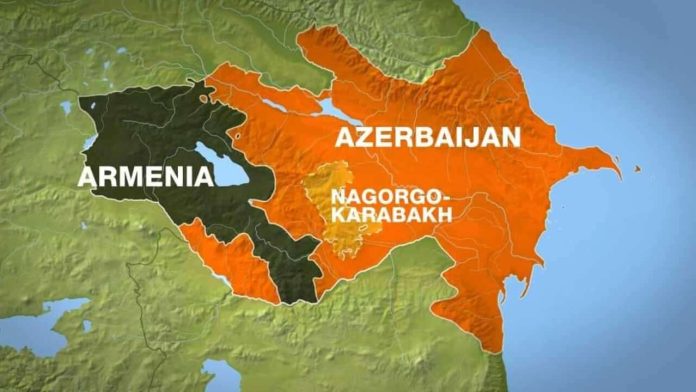
He noted that Iran has unchanging and transparent stances on the situation in Nagorno-Karabakh.

“Iran’s stance on the Nagorno-Karabakh region, which has been announced explicitly several times, is not secret. Nagorno-Karabakh is part of the Republic of Azerbaijan and the rights and security of its residents must be defined within a definite framework,” he underscored.

Reiterating Iran’s call for respect for the territorial integrity of states and avoidance of tensions, Kanaani said a major step in resolving disputes between Armenia and the Republic of Azerbaijan and achieving peace and security is for the two countries to mutually recognize each other’s territorial integrities.

Commenting on assassination threats made by the chief of the Israeli Mossad spy agency against Iranian officials, Kanaani stated such remarks prove that Israel is a “fake, usurping regime that is based on terrorism” and is pursuing terrorist acts to achieve its “illegitimate” interests.

The spokesman vowed that Iran will respond to “any foolish action”, noting that Tehran has proved its ability to ensure its security and has dealt the Israeli regime heavy blows many times.

The Iranian diplomat also cautioned that Iraq’s ultimatum to disarm Kurdish separatist groups will not be extended.

“Iran’s stance is completely clear. According to the agreement reached with the Iraqi government, the final deadline for the disarmament of the terrorist and separatist forces in Iraq’s Kurdistan region ends on September 19 and that deadline will not be extended in any way.”

He noted that the Iraqi government has taken measures in this regard, and has stressed that it will honor its commitments.

Asked about a Reuters’ report that said the transfer of Iranian funds which were blocked in South Korea under the pretext of US sanctions to banks in Qatar will take place as early as this week, Kanaani expressed the country’s hope that “the transfer will be completed in the upcoming days and that the Islamic Republic will gain full access to its assets.”

Iran, under the reached agreement, can use its unblocked funds “to buy unsanctioned goods”, he stressed.

The spokesman also reiterated that the release of the funds has nothing to do with the prisoner exchange agreement with the United States.

“Considering the humanitarian nature of the issue, we are ready to implement the prisoner swap deal,” he said, adding that it could have taken place long ago if the American side had cooperated and had not linked it to other issues such as the nuclear deal, which the US unilaterally abandoned in May 2018 despite Iran’s full and strict compliance.

“We are optimistic that the exchange of prisoners will take place in the near future based on the reached agreement.”

Ex-envoy to Baku: Iran lost many opportunities in Caucasus

Armenia Azerbaijan

The remarks by Afshar Soleimani to ILNA news agency came amid Azerbaijan’s threats to shut off the Zangezur corridor along the Iranian-Armenian border that would obliterate the land border between Iran and Armenia.

Tehran has warned it cannot tolerate the “security threat emanating from growing Azerbaijan-Israel ties”.

Soleimani also blamed Russian President Vladimir Putin’s ‘divergent’ policies in the region that pushed some regional countries to align themselves with the West, referring to the recent plan by Armenia to distance itself from Russia by holding military drills with the United States.

The former envoy noted that the latest transit agreements, most notably in the G20 Summit which wrapped up in New Delhi on Sunday, have bypassed Iran and Russia “due to their foreign policy challenges for the West which bar them from taking advantage of their geopolitical and geo-economic positions.”

On the other side of the spectrum, Iran’s former ambassador to Armenia Seyyed Ali Saghaeian, in an interview with Jamaran news website, dismissed speculations that the tensions between Armenia and Azerbaijan would lead to a new war.

Saghaeian was optimistic that Azerbaijan would not cross Iran’s red lines, explaining that the Islamic Republic has been playing a more active role to help defuse the tensions between its northern neighbors and preserve its national interests.

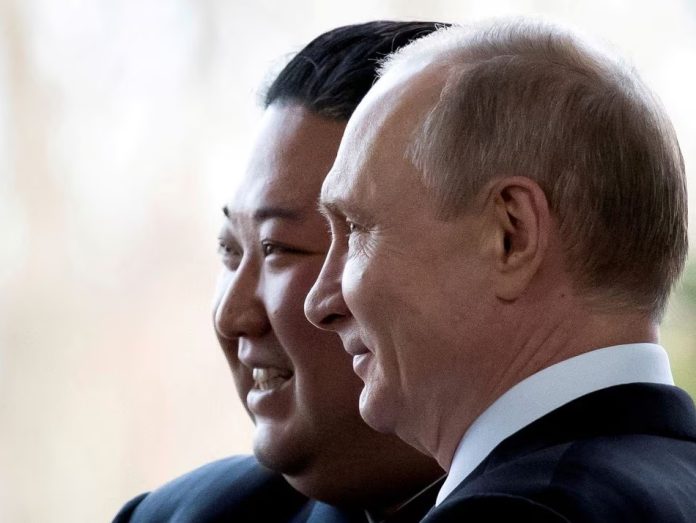
North Korea’s Kim appears to have departed for Russia to meet Putin

Russia’s Interfax news agency reported earlier on Monday that Kim, who rarely travels abroad, was expected to visit Russia’s far east “in the coming days”.

The Kremlin said on Saturday Putin would be in the far eastern city of Vladivostok to attend the Eastern Economic Forum, which opened on Sunday, but said it had “nothing to say” about a possible visit by Kim.

North Korea is one of the few countries to have openly supported Russia since the invasion of Ukraine last year, and Putin pledged last week to “expand bilateral ties in all respects in a planned way by pooling efforts.”

Kim’s last trip abroad in 2019 was also to Vladivostok for his first summit with Putin after the collapse of North Korea’s nuclear disarmament talks with former US President Donald Trump.

South Korea’s Chosun Ilbo newspaper reported Kim left Pyongyang late on Sunday and would meet Putin as early as Tuesday.

The broadcaster YTN reported the special train would take Kim to North Korea’s northeastern border with Russia and the summit was likely to be on Tuesday, though it initially reported it would be on Wednesday. Both reports cited unnamed senior South Korean government sources.

Japanese media reported security was being stepped up and refurbishment was taking place at the main train station in the Russian border city of Khasan, where Kim is expected to enter Russia.

Kim does not travel abroad often and, when he does, it is often shrouded in secrecy and security. North Korea’s state media have made no mention of any plan by Kim to visit Russia.

South Korea’s foreign ministry said it was monitoring developments but declined to confirm any details. Officials at South Korea’s unification ministry said they had no information to provide, while officials at the National Intelligence Service could not be reached.

A summit between Kim and Putin would likely focus on military cooperation and possibly a deal to supply arms, US and South Korean officials and analysts have stated.

The United States has announced it would be a “huge mistake” for North Korea to supply Russia with weapons to use in Ukraine and warned Pyongyang would “pay a price”.

The United States has said talks for North Korea to supply more weapons to Russia are advancing actively despite repeated denials from Pyongyang and Moscow.

The United States and South Korea have expressed concern over the possibility of greater military cooperation between the North and Russia and a potential arms deal.

UK foreign minister to visit occupied territories

British Foreign Minister James Cleverly

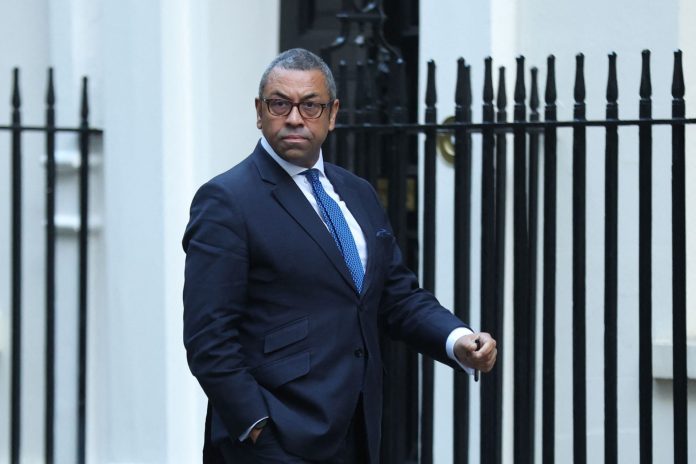
On the visit that begins on Monday, Cleverly will hold talks with Israeli Prime Minister Benjamin Netanyahu and Palestinian Prime Minister Mohammed Shtayyeh.

In a speech at an international security conference on Tuesday, Cleverly will discuss the security challenges facing Israel and the Palestinian territories, as well as the importance of a two-state solution.

He will accuse Iran of “enabling terrorism” through its support of the militant groups Hamas and Palestinian Islamic Jihad, according to a statement.

“The UK and Israel work closely together to keep our people safe,” Cleverly stated ahead of his trip. He pledged “to renew our close security partnership, in the face of unacceptable threats from the Iranian regime”.

He will hold talks with Israeli Foreign Minister Eli Cohen and attend a demonstration of Israel’s “Iron Dome” missile defence system.

During a visit to the Palestinian territories, Cleverly will visit the Jalazone refugee camp in the West Bank to see Palestinian refugees.

Violence in the West Bank has worsened over the past year with frequent Israeli raids and Palestinian street attacks.

Prospects of reviving US-brokered peace talks that aimed to establish a Palestinian state in the West Bank, Gaza and East Jerusalem remain low almost a decade after their collapse.

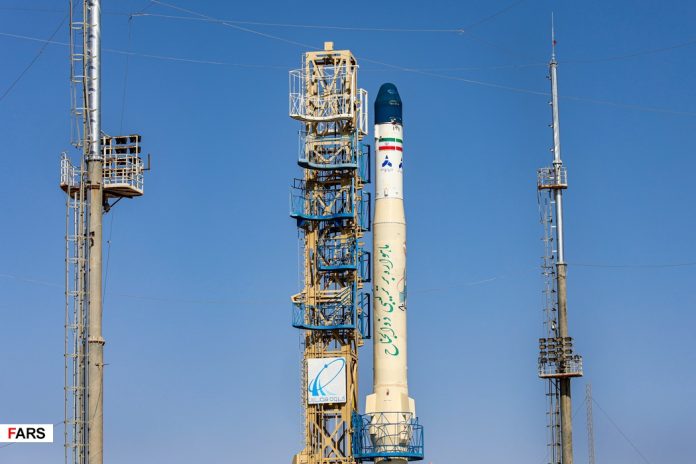
Iran to complete first phase of Chabahar Space Center by March 2025

Iran Zoljanah satellite carrier

Hossein Dalirian said Sunday the space center is one of the major plans of the space agency and as the space field is high on the agenda for the Iranian government, the funds for completion of the first phase have been granted.

The spokesman added Iranian Space Agency experts are planning to launch sun-synchronous missiles with solid fuel strategic launchers in mid-2025 after completion of the first phase.

Delirian also stated that the low orbit launches will constitute the initial plan for the space center, followed by international launches in its 10-year division through 2031.