Merchant ships approach Ukrainian ports for first time since grain deal collapse
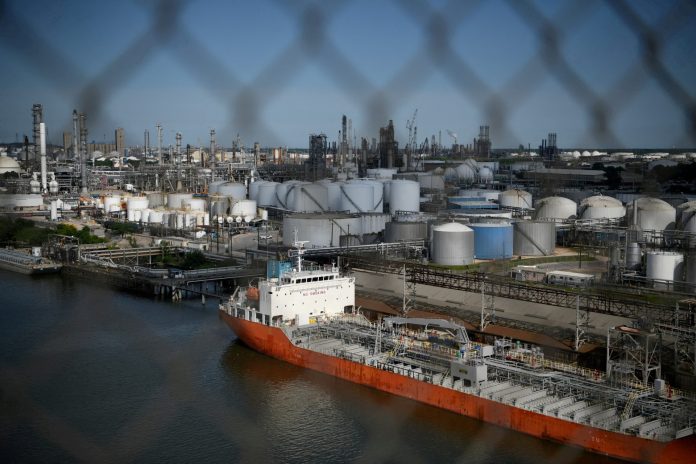
Two merchant ships approached Ukrainian ports this morning in preparation to collect about 20,000 tons of wheat for Africa and Asia, according to a Ukrainian official.
This would be the first such use of key Black Sea shipping corridors since Russia withdrew from an agreement designed to guarantee safe passage for cargo ships carrying grain.
Ukraine’s Infrastructure Minister Oleksandr Kubrakov said the ships, Resilient Africa and Aroyat, were headed to Chornomorsk, one of three main ports near the city of Odesa.
Data from the MarineTraffic website, which tracks shipping movements around the world, at 2 p.m. local time (7 a.m. ET), showed the two ships each about 10 miles off Ukraine’s southwest coast.
Ukraine announced last month that it was setting up “temporary corridors” for civilian shipping after Russia’s announcement in July it was pulling out of the Black Sea Grain Initiative, an agreement brokered by Turkey and the United Nations which provided security guarantees for ships taking Ukrainian grain to world markets.
Five ships have already used the corridor sailing south from Ukraine’s ports, according to the infrastructure minister, but this is the first such passage in the other direction.
Even though merchant shipping companies have started to use the temporary corridors, Ukraine’s navy has warned “the military threat and mine danger from the Russian Federation remains along all routes.”
Russian-installed officials are selling Ukrainian properties in Crimea
Russian-installed officials have announced their plans to sell a raft of Ukrainian-owned properties in annexed Crimea, including a property owned by Ukrainian President Volodymyr Zelensky.
In a post on Telegram, Chairman of the State Council of the Republic of Crimea Vladimir Konstantinov announced plans to sell 100 “nationalised properties.”
“These are residential premises, including the apartment of the Zelensky couple, sanatorium and resort facilities, retail and commercial facilities,” Konstantinov said on Saturday.
The Russian installed authorities expect to raise over 800 million rubles ($8.2 million) from the sale of the properties, according to Konstantinov.
Konstantinov, who is the speaker of the Crimean Parliament, said a specially designated commission will continue efforts to “identify the property of Ukrainian oligarchs in Crimea.”
Russia seized Crimea from Ukraine in 2014. The peninsula’s annexation is considered illegitimate by most global powers.
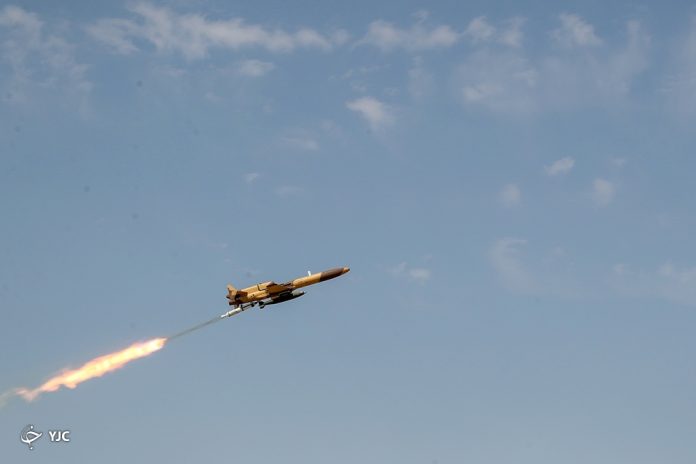
In recent weeks, Ukraine has refocused some of its war efforts on the region, increasing missile and drone strikes on Crimea in an attempt to land both strategic and symbolic blows against Russian forces.
Russia likely boosting missile capacity to target Ukraine over winter: UK
Russia is “likely able to generate a significant stockpile” of air launched cruise missiles (ALCMs) and there is a “realistic possibility” that it will use them against Ukrainian infrastructure targets, the United Kingdom’s Ministry of Defence said Saturday.
“Between October 2022 and March 2023, Russia focused long-range strikes against Ukraine’s national energy infrastructure,” the defense ministry said in the statement posted to X, formerly known as Twitter.
“Open source reports suggest that since April 2023, ALCM expenditure rates have reduced, while Russian leaders have highlighted efforts to increase the rate of cruise missile production,” the defence ministry said.
It concluded, “Russia is therefore likely able to generate a significant stockpile of ALCMs. There is a realistic possibility Russia will again focus these weapons against Ukrainian infrastructure targets over the winter.”
On Wednesday, Ukraine called for tougher and more sophisticated sanctions against Russia following reports that Russia had managed to overcome sanctions and export controls imposed by the West to increase its missile production.
Last winter was cold and dark for many Ukrainians, with Russian forces launching hundreds of missiles and drones at Ukraine’s energy infrastructure — seemingly with the aim of breaking the country’s power grid — temporarily cutting off electricity, heat and water to millions.
At one point last October, about 40% of normal electrical supply was offline in Ukraine, according to Ukraine’s state power generator, Ukrenergo.
G20 declaration was “powerful” despite stopping short of condemning Russia: US
US national security adviser Jake Sullivan defended the final declaration from last week’s Group of 20 summit, which stopped short of explicitly condemning Russia’s invasion of Ukraine.
Sullivan hasn’t received “any kind of formal — or really, informal — reaction from Ukraine with respect to the G20 communique,” he said at a briefing Friday.
Rather, the national security adviser said, Ukraine remains focused on engaging with other countries at peace summits — like the ones held this summer in Denmark and Saudi Arabia — where leaders can “find a way forward toward a common understanding of the principles upon which the just peace should be based.”
Sullivan added the conversations at those two summits actually “bear a strong resemblance” to the propositions laid out in the G20 communique.
He listed the declaration’s four key tenets in regard to Ukraine: “First, the paramount centrality of territorial integrity and sovereignty; second, the statement that it is totally unacceptable for any country to use force to violate the territorial integrity of another country; third, that attacking grain infrastructure and civilian infrastructure should be totally off limits; and fourth, the threat or use of nuclear weapons in a conflict like this should be inadmissible.”
Sullivan pushed back against the idea that the communique was “tepid” in its support for Ukraine, saying those four propositions are “powerful.”
Rather than statements of neutrality, he argued, they “really say to Russia, ‘What you are doing is not acceptable.’”
UN, Turkey working to restart grain deal
Turkey and UN Secretary-General Antonio Guterres are “working hard” to revive the Black Sea grain deal, White House National Security Advisor Jake Sullivan has stated.
Sullivan during a news briefing said the US does not see an immediate pathway back to the deal, adding that “Russia’s excuses, answers on this just keep shifting”.
“We’re going to continue to press on them [Russians]. We’re going to call on the rest of the world to do the same. We know the Turks are working hard at this, Guterres is working hard at this. So we hope that they can generate an outcome,” Sullivan continued.
“But the Russians are not giving us a huge amount of cause for optimism at this moment.”
Zelensky hails EU decision to lift grain export ban as example of true unity
Ukraine President Volodymyr Zelensky has welcomed the EU’s decision not to further expand the ban on grain exports from Ukraine, calling it an example of true unity and trust.
As Poland, Slovakia and Hungary indicated they would impose their own ban after an EU decision to lift it, Zelensky said that if neighbouring countries violate EU law, “Ukraine will respond in a civilised manner”.
“It is important now for European unity to work at the bilateral level as well. So that neighbors support Ukraine during the war,” he wrote on the Telegram messaging app after talks with European Commission President Ursula von der Leyen.
Biden will meet with Zelensky at the White House next week
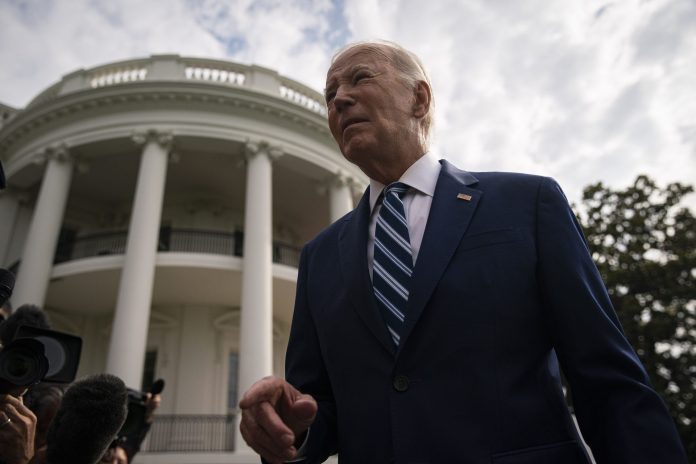
US President Joe Biden will host Ukrainian President Volodymyr Zelensky at the White House on Thursday.
This will be Zelensky’s third White House meeting, National Security Advisor Jake Sullivan told reporters during Friday’s press briefing.
It “certainly comes at a critical time, as Russia desperately seeks help from countries like North Korea for its brutal war in Ukraine, as Ukrainian forces continue to make progress in their counteroffensive,” Sullivan said.
“President Biden looks forward to hearing President Zelensky’s perspective on all of this, and to reaffirm for the world, and for the United States, for the American people his commitment to continuing to lead the world in supporting Ukraine as it defends its independence, its sovereignty and its territorial integrity,” he added.
Zelensky’s visit to Washington comes at a crucial time as some House Republicans have signaled displeasure at additional funding for Ukraine.
“I think he’s looking forward to the opportunity, not just to see President Biden here at the White House, but also to see congressional leaders from both parties, to make the case that the United States has been a great friend and partner to Ukraine throughout this entire brutal war and that the United States should continue to do that,” Sullivan stated.
Russia developing new nuclear submarines and underwater drones: DM
New concepts for submarines and unmanned underwater vehicles are being developed for the Russian Navy, the defense minister said.
“Today, we are actively working on designing multipurpose nuclear submarines, robotic systems and unmanned underwater vehicles,” Defense Minister Sergei Shoigu said Friday, according to Russian state news agency TASS.
Shoigu was speaking during a meeting at the Russian Pacific Fleet Headquarters while on a visit to the Primorsky Krai region in Russia’s Far East.
During his visit, the defense minister also checked the fulfillment of state procurement contracts at the Zvezda submarine shipyard in the town of Bolshoy Kamen and at the Progress helicopter plant in Arsenyev, according to TASS.
UK officially proscribes Wagner Group as terrorist organization
The UK has officially proscribed the Russian mercenary Wagner Group as a terrorist organization, after an order was laid in parliament and backed on September 6 by lawmakers, which will make it illegal to be a member or to support it.
“This order comes into force with immediate effect and will make belonging to the Wagner Group or actively supporting the group in the UK a criminal offence, with a potential jail sentence of 14 years which can be handed down alongside or in place of a fine,” the UK government said Friday in a news release.
Wagner boss Yevgeny Prigozhin and the group’s field commander Dmitriy Utkin died last month in what Western officials believe was a deliberate plane crash, two months after Prigozhin staged a short-lived rebellion against the Kremlin, the biggest threat to Russian President Vladimir Putin’s power in more than two decades.
Most security experts doubt Wagner will survive in its current form without Prigozhin, but that has not stopped the UK to move against the group.
Western nations ‘dream’ of sending troops to Ukraine: Lukashenko
NATO might be just one step away from seeing its troops deployed to Ukraine, President of Belarus Alexander Lukashenko said during a meeting on Friday with Russian leader Vladimir Putin in Sochi.
Speaking about Western claims of Russia supposedly soliciting the aid of foreign mercenaries for its military campaign in Ukraine, Lukashenko said that the US and its allies should look at their own actions first and count all the mercenaries that they, according to him, sent to assist Kiev’s troops.
“Black, Asian and white Americans are fighting for Ukrainians already,” the Belarusian leader claimed.
Washington and other Western nations might not just stop at that, he added, claiming that Western nations are just “dreaming of [sending] their regular military units to Ukraine.”
“Poland has already formed … military units at the border that are ready to enter Ukraine,” Lukashenko said, calling on the West to “look for a beam in their own eye” before giving rebukes to others.
Russia captured several foreign mercenaries in Ukraine: Putin
Russian President Vladimir Putin stated Friday that Russia is detecting foreign mercenaries in Ukraine and that several of them have been captured over the last few days.
“We are detecting foreign mercenaries and foreign instructors both on the battlefield and in the units where training is carried out. In my opinion, yesterday and the day before yesterday someone was taken prisoner once again,” Putin said at a news conference following talks with Belarusian President Alexander Lukashenko in Sochi.
Putin added that Russia does not need to invite people from outside to fight, since it signed up nearly 300,000 people as volunteers to the military recently.
“This morning I got the report — 300,000 contracts were signed by people who, I want to emphasize, are ready to sacrifice their lives in the interests of their homeland, protecting the interests of Russia,” he said.
Putin added the new unites fighting in Ukraine are being equipped with modern weapons and equipment.
Moscow has “never refused to have talks” with Kiev. “So, please – if the other side is willing, let them state that openly”, he stated, adding, “But from the other side we hear nothing.”
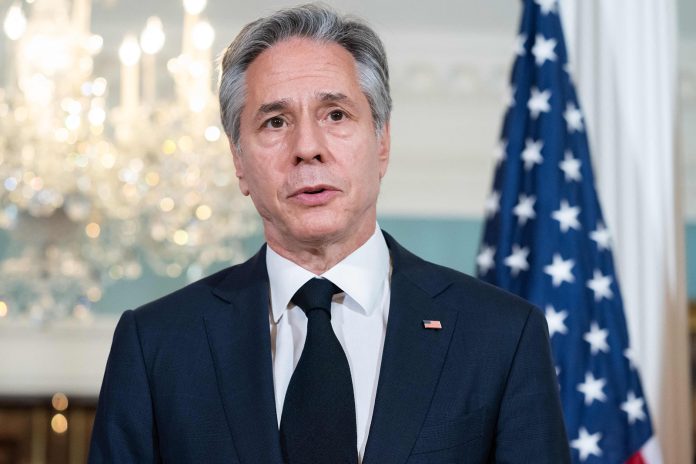
“The tango is a nice dance, of course,” he said, commenting on US Secretary of State Antony Blinken’s words that Russia and Ukraine will finally dance their tango.
“But I think it’s important that Ukraine not forget how to dance the ‘gopak’ (traditional Ukrainian folk dance). That’s what is important. Otherwise, they will always have to dance to the tune of others.”
The United States seeks to resolve all problems from a position of force, be it through the use of economic sanctions, or financial restrictions, or threatening to use military force or compelling the use of force.”
“They are trying to teach someone else, while they themselves are clueless, and they are unwilling to learn,” Putin continued.
No agreements signed between Russia and North Korea: Kremlin
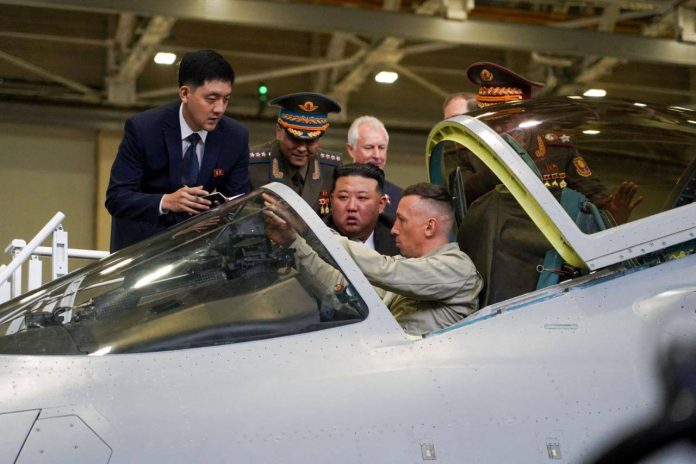
Russian President Vladimir Putin and North Korean leader Kim Jong Un did not sign any agreements during their Wednesday meeting, Kremlin spokesman Dmitry Peskov said Friday.
In the days leading up to Putin and Kim’s meeting, the United States government had warned that Russia and North Korea were “actively advancing” their negotiations over a potential arms deal that could see Pyongyang provide weapons for Moscow to use in its invasion of Ukraine in exchange for sanctioned ballistic missile technology.
The national security advisers of the United States, South Korea and Japan jointly issued a stern warning regarding potential violations of international sanctions by North Korea and Russia, according to a statement released by South Korea’s presidential office.
Responding to the speculation during a regular call with journalists, Peskov said, “No agreements were signed neither on this nor on any other topics.”
“There were no such plans,” he added, echoing the Kremlin’s previous remarks.
Ahead of the summit, US officials warned that Washington “will not hesitate to impose sanctions” if the meeting between Putin and Kim resulted in weapons transfers between the two countries.
The two leaders spoke for a total of five hours Wednesday. Putin described the talks as “highly productive,” but what exactly was discussed — or potentially agreed — has not yet become clear.
Ukraine retakes village of Andriivka near Bakhmut
Ukrainian forces have retaken the village of Andriivka, south of the city of Bakhmut, the Ukrainian military brigade fighting in the area said Friday.
“It’s official: The Third Separate Assault Brigade has liberated Andriivka. 72nd Separate Motorized Rifle Brigade of the Russian Federation – smashed to pieces!” the brigade said in a Telegram post.
“As a result of a lightning-fast operation, the Russian garrison of Andriivka was surrounded, cut off from the main forces and destroyed.”
The brigade said fighting was ongoing and units “continue to consolidate their positions.”
“Taking and holding Andriivka is our way to a breakthrough on the right flank of Bakhmut and the key to the success of the entire offensive,” it added.
The Ukrainian and Russian sides have said that some of the most intense battles in the Bakhmut direction are happening south of the embattled city in the Andriivka area, as both sides strive to mark tangible progress.
The liberation of the village of Andriivka marks a symbolic and strategic victory for the Ukrainian forces, and comes after Wagner fighters left the Bakhmut area.
The General Staff of the Armed Forces of Ukraine announced on its Facebook page Friday, “During the assault operations, they captured Andriivka, Donetsk region, inflicting significant losses on [enemy] manpower and equipment and entrenching themselves on the achieved lines.”
US, South Korea and Japan issue warning on North Korea and Russia’s violation of international sanctions
The national security advisers of the United States, South Korea, and Japan jointly issued a stern warning regarding potential violations of international sanctions by North Korea and Russia, according to a statement released by South Korea’s presidential office.
They convened to discuss the recent North Korea-Russia summit and the regional security landscape during a phone call Thursday evening local time, the statement said.
The advisers emphasized that both North Korea and Russia are obligated to adhere to the UN Security Council resolutions and sanctions, particularly those pertaining to arms trade and military cooperation. They stressed that there would be “clear consequences” if either country were to breach these obligations.
Additionally, the security chiefs highlighted Russia’s greater responsibility as a permanent member of the Security Council to comply with its resolutions, the statement added.
All three countries expressed grave concerns over the discussions between President Vladimir Putin and Kim Jong Un, which included topics related to military cooperation, including the development of intercontinental ballistic missiles, despite repeated warnings from the international community, according to the statement.
The advisers also reached a consensus on the need for enhanced solidarity among their respective countries to monitor arms trade and military cooperation between North Korea and Russia, develop countermeasures, and strengthen international cooperation in this regard, the statement concluded.
Putin met his North Korean counterpart Wednesday in Russia’s Far East, but it is unclear if they struck an agreement.
Lavrov: Zelensky’s peace plan aimed at strategically defeating Russia
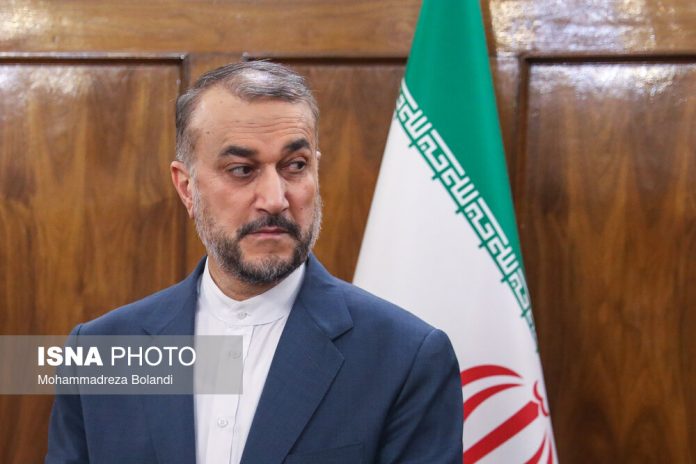
Russian Foreign Minister Sergey Lavrov criticized the peace plan proposed by Ukrainian President Volodymyr Zelensky, stating that it is a strategic attempt to defeat Russia and to persuade Asian, African, and Latin American nations to align with this idea.
“We have always been told by the West that the only basis for any negotiations is the Zelensky formula … It starts with … food security, energy security, physical security of nuclear facilities, humanitarian issues. And then this formula moves to the very thing for which it was made up – strategic defeat of Russia to restore Ukraine’s 1991 borders, to put the Russian leadership under the tribunal, to make Russia pay reparations,” Lavrov said at a roundtable on the Ukrainian settlement in Moscow.
According to the top Russian diplomat, Western countries have been attempting to enlist the support of “global majority countries,” including Asian, African, and Latin American nations, in order to endorse this scheme. They characterize this approach as nothing less than a blatant deception.
Zelensky said in the fall of 2022 that Kiev had its own peace plan to end the ongoing conflict and at the very same time signed a law, prohibiting peace talks with Russia.
Moscow repeatedly stressed that it is open to negotiations that respect the interests of Russian people and recognize the “new territorial reality”. Kremlin officials also announced that Kiev is seemingly not interested in negotiating a solution for the current crisis.
Lavrov added that a “real plot” emerges around the issue of Russian-Ukrainian peace negotiations, attempting to “turn everything upside down”.
“A real plot emerges around the subject of the so-called negotiations, attempting to turn everything upside down through pseudo-diplomacy. Just as it was done during the beginning of the Ukrainian events, which for many years have been prioritized by our Western colleagues, primarily the United States and the United Kingdom. They invested billions of dollars in the Ukrainian opposition and brought it to power through an unconstitutional bloody coup,” Lavrov stated at a roundtable on the Ukrainian settlement in Moscow which included the diplomatic missions from over 30 countries.
The minister also added that many proposals for humanitarian and mediation initiatives have recently been made.