Friday, December 26, 2025
Home Blog Page 1263

Iran censures west-sponsored statement critical of Tehran-IAEA interaction

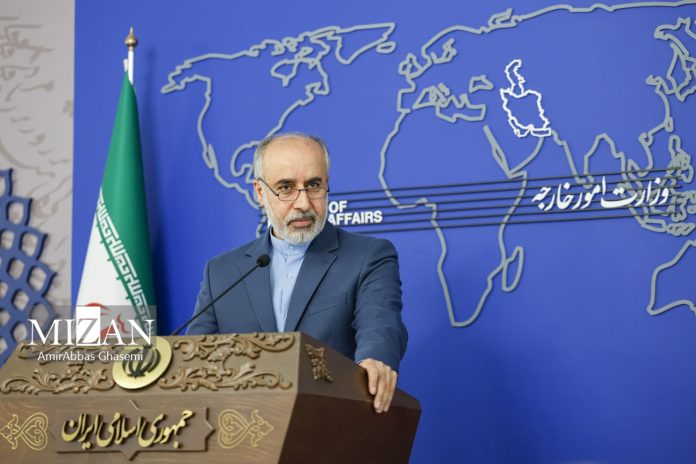
Nasser Kanaani

The statement accused Iran of non-compliance with its safeguards commitments. The document, signed by 62 IAEA member states, called upon Iran to take steps to address outstanding safeguards issues and provide the IAEA with information concerning its new nuclear facilities.

Kanaani said Iran and the IAEA have made “considerable progress” in boosting collaboration based on a joint statement issued in March.

The diplomat added that this course has led to the settlement of several issues, and talks are ongoing on the settlement of other issues, which he stated are of political origins.

The spokesperson stressed that Iran is committed to cooperation with the agency under the safeguards agreement with the IAEA.

“It’s a regret that England, Germany, France and the US, which have certain motivations and positions against Iran, have made Iran-IAEA technical cooperation a subject of their political moves,” he said, adding that the Western states did this in the name of defending the agency and the safeguards, but they aimed to distort the reality of Iran’s sincere cooperation with the agency.

“Of course this measure is not new and also not surprising. In the previous Board of Governors meeting, they had a similar show in the form of verbal attacks and accusations against Iran,” he continued.

Kanaani noted Iran will show reaction to the latest move as soon as possible, stressing that attempts at placing pressure on Iran at the IAEA’s Board of Governors would backfire.

He also hailed a statement in support of the Iran-IAEA cooperation issued by nine countries during the Board of Governors meeting on Wednesday.

That statement, signed by countries including China, Russia, Syria and Venezuela, supported Tehran’s cooperation with the IAEA. It said that Iran’s interactions with the agency should be carried out in a non-political manner, free from external interference, and aimed at resolving the outstanding issues.

Iran has scaled back its commitments under the JCPOA in several phases as stipulated in Articles 26 and 36 of the UN-endorsed accord, starting a year after the US withdrew from the deal and re-imposed its sanctions against Tehran.

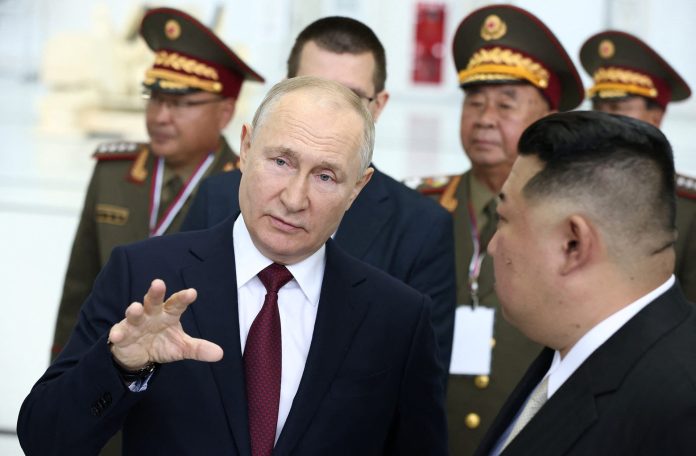
Putin “accepts Kim’s invitation to visit Pyongyang”

Putin and Kim

Kim has invited Putin to travel to the DPRK, the state-run Korean Central News Agency reported, claiming that the offer was accepted.

Kim was received at the Vostochny Cosmodrome in Russia’s Far East region on Wednesday as he tours the country for an official visit. Met by Putin and other top Russian officials at the space-launch site, Kim reportedly invited the president to see his own country in person after the event.

“At the end of the reception, Kim Jong-un courteously invited Putin to visit the DPRK at a convenient time,” KCNA reported, adding that “Putin accepted the invitation with pleasure and reaffirmed his will to invariably carry forward the history and tradition of the Russia-DPRK friendship.”

However, according to Kremlin spokesman Dmitry Peskov no concrete plans had yet been made for such a visit.

“No, not planned yet. There are no such plans yet. But I repeat once again that this is our neighbor, it is in our interests to develop those relations that correspond to our interests,” he told reporters.

Two rounds of bilateral talks were held at the cosmodrome, including one involving North Korean and Russian delegations and another face-to-face meeting between Putin and Kim. The North Korean leader reportedly stressed the importance of the “traditional and strategic DPRK-Russia friendship,” saying it “powerfully encouraged the just struggle for accomplishing the cause of independence against imperialism,” per KCNA.

In addition to Kim, DPRK Foreign Minister Choe Son Hui and several other top officials were invited to the meeting, which was also attended by Moscow’s defense chief Sergey Shoigu, who visited North Korea with a Russian delegation in July.

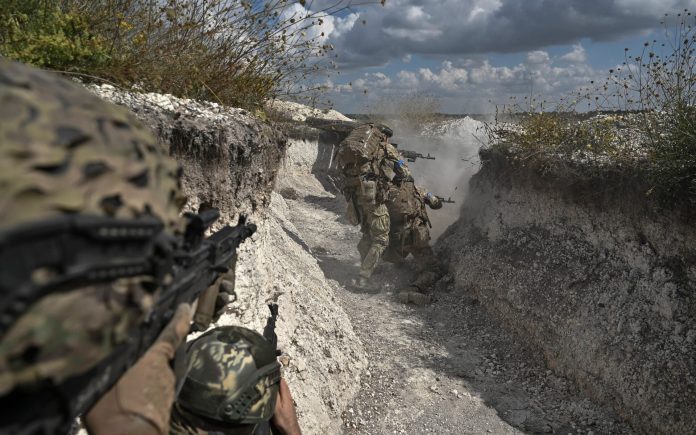
Live Update: Russia’s “Special Operation” in Ukraine; Day 568

Russia Ukraine War

Potential North Korea-Russia arms deal could violate UN resolutions: Japan

Japan warned Thursday that any arms deal between North Korea and Russia following the meeting of their two leaders on Wednesday could potentially violate UN Security Council resolutions.

Tokyo is “closely monitoring the situation with concern,” Japan’s new Foreign Minister Yoko Kamikawa, who took office on the day of the meeting, told a press conference.

She said that any deal between the two countries “could lead to violations of related Security Council resolutions,” and expressed concern that the summit between Kim Jong Un and Vladimir Putin could lead to North Korea giving weapons and other assistance to Russia.

She added that Japan would work closely with the international community, including the United States and South Korea, in monitoring for developments.


Pyongyang and Moscow appear to be pursuing “some kind of military deal”: South Korea

South Korea has expressed “deep concerns” over possible military cooperation between Pyongyang and Moscow following the meeting of Kim Jong Un and Vladimir Putin at a space center in Russia.

South Korea’s Unification Minister Kim Yung-ho said the two countries appeared to be pursuing “some kind of military deal,” pointing to Kim Jong Un’s recent visits to munitions factories in North Korea and his visit to Russia alongside top military officials.

The unification minister also referenced the recent visit by Russia’s Defense Minister Sergei Shoigu to Pyongyang and Moscow’s suggestion that it would support Pyongyang’s satellite development.

The comments come after US officials warned that Putin could use the summit with the North Korean leader to seek weapons after saying arms negotiations were “actively advancing” between the two countries.

“I cannot help but be deeply concerned about military cooperation and an arms deal,” Kim Yung-ho added.

The minister urged Pyongyang and Moscow to stop “illegal acts” that would lead the two countries to “isolation and regression on their own,” and to comply with international norms including the UN Security Council resolutions.

He warned that North Korea would face a “stronger response” from South Korea, the US and Japan, “the more it clings to its nuclear development.”

South Korea’s Defense Ministry spokesperson Jeon Ha-kyu stated Thursday the ministry was keeping “a close eye out” amid speculation that North Korea and Russia may hold a joint military drill in the future.


European Parliament adopts resolution calling Belarusian president “an accomplice” in Russia’s war crimes

The European Parliament called Belarusian President Alexander Lukashenko “an accomplice” in the war crimes committed by Russia in Ukraine in a resolution adopted Wednesday.

“By enabling Russia’s unjustified war of aggression against Ukraine, the Lukashenko regime has become an accomplice in the crimes committed by Russia, which implies responsibility for the destruction and damage caused to Ukraine,” the resolution reads, adding that “the special international tribunal on the crime of aggression perpetrated by Russia against Ukraine must have jurisdiction to investigate not only Vladimir Putin and the Russian political and military leadership but also the Belarusian leadership.”

The European Parliament urged European Union institutions and members “to enable the criminal prosecution of Belarusian officials who are complicit in the crime of aggression, war crimes, crimes against humanity and crimes of genocide committed against Ukraine.”

It called for the establishment of an International Criminal Court country office in Ukraine and “to find legal pathways for seizing assets of the Belarusian leadership and related Belarusian entities involved in the Russian war effort” in order to support the reconstruction of Ukraine.

The European Parliament also called on EU member states to “broaden and strengthen the scope of their sanctions” against Russia. It suggested applying the same sanctions against Belarus as it currently does against Russia.

The parliament also called on Russia and Belarus to be put on “the EU’s high-risk third-country list with regard to combating money laundering and the financing of terrorism.”

The resolution urged the International Olympic Committee and other international sports federations “not to allow athletes from Belarus and Russia to compete in the Paris 2024 Olympic Games or any other international sports events.”

It also labeled Belarus a “satellite state of Russia” and condemned “the deployment of Russian tactical nuclear weapons under Russian command on Belarusian territory,” which it said was made in violation of the Treaty on the Non-Proliferation of Nuclear Weapons and may trigger further nuclear redeployments in the region.


Pentagon watchdog establishes new team in Ukraine to monitor how US aid is used

The Pentagon is establishing a new team in Ukraine to monitor US security assistance to Kyiv, as a growing number of Republican lawmakers are calling for more oversight into how the money is being used.

The Defense Department Inspector General said a senior US representative began work in Ukraine in late August, and additional personnel are expected to arrive by the end of September. The personnel, based at the US embassy in Kyiv, will monitor US aid, which has totaled more than $43.7 billion since the start of the Joe Biden administration.

It marks the first time the inspector general will have personnel based in Ukraine since Russia’s invasion in February 2022, said spokesperson Megan Reed.

The establishment of the new team comes at a critical time for Ukraine aid. The Biden administration recently asked Congress for $24 billion more in assistance, including $13 billion in security assistance, as the president and other senior administration officials have vowed to continue US aid for “as long as it takes.”

But some increasingly skeptical Republicans have raised questions about how much bipartisan support there is for such substantial sums of aid. A growing number of Republicans have begun questioning the wisdom of spending billions of dollars in Ukraine and have called for greater oversight.

Republican calls for more oversight are not unanimous. GOP Senate leader Mitch McConnell said Tuesday that there was already “unprecedented insight into how nearly 30 types of Western weapons systems and vehicles are being used by Ukraine, often down to the serial number.”

The Pentagon has improved its ability to monitor transfers of weapons and equipment to Ukraine through the defense attache in Kyiv and the establishment of the Security Assistance Group-Ukraine, but the military struggled to effectively oversee the shipments when the war began.

A Defense Department inspector general report warned that the ability of the US to monitor billions of dollars in aid flowing into Ukraine faced “challenges” because of the limited US presence. During the first six months of the war, the Office of Defense Cooperation-Kyiv “was unable to conduct required [end-use monitoring]” of military equipment provided to Ukraine.

The report, dated October 2022, underscored how difficult it was for the US to track the vast quantities of weapons, ammunition and equipment during the early months of the war. Criminals, volunteer fighters and arms traffickers in Ukraine attempted to steal some of the Western-provided weapons and equipment before it was recovered by Ukrainian intelligence, the report found.


Ukraine claims that North Korea is already supplying Russia with ammunition

Ukraine is claiming that North Korea is already supplying Russia with ammunition.

“We can say that cooperation continues between North Korea and Russia,” Andrii Yusov, representative of the Defense Intelligence of Ukraine, said in an interview with Ukrainian state media on Wednesday. He added that such intel between the countries is being intercepted and recorded.

Russian requests are mainly for projectiles for artillery and MLRS, Yusov said, referring to rocket launchers.

“This is an important factor that will be felt on the battlefield, unfortunately,” he continued, adding that Ukraine is working on a proper reaction to such cooperation.

Yusof did not provide any evidence that North Korea is already supplying weapons to Russia.

The comments come after United States officials warned that Russia and North Korea could make a potential arms deal that could see Pyongyang provide weapons for Moscow.

North Korean leader Kim Jong Un and President Vladimir Putin met on Wednesday in Russia’s Far East.

Afterward, Putin was asked if he discussed military-technical cooperation with Kim.

The Russian leader acknowledged certain restrictions in place, which he said Moscow fully complies with, but admitted there are areas open for discussion and consideration.


Over 2,000 people evacuated in the Kupiansk district: Regional authorities

More than 2,000 people have left the Kupiansk district as of Wednesday, after a mandatory evacuation was ordered for 56 settlements on August 9, according to Kharkiv regional authorities.

Oleh Syniehubov, the head of the Kharkiv region military administration, said on Telegram that 2,339 people have evacuated so far, including 350 children. He added that another 1,438 evacuated on their own as well, including 164 children.

“The evacuation is ongoing,” Syniehubov continued, stating, “People are reluctant to leave, explaining that this is their house, their land, their home. However, we are working with the national police to evacuate as many people as possible.”

Syniehubov said 12,000 people were still living in the community as of Sunday, as opposed to the 57,000 people who lived there before Russia’s war on Ukraine.

Syniehubov added that the situation on the frontline in the Kupiansk sector remains “difficult.”

“The enemy is forming another ‘striking fist’ to intensify assault operations and try to break through our defenses,” he said, adding, “They carry out assault operations in waves and after suffering significant damage to their manpower and equipment from our military, they are forced to withdraw for renewal to form new assault forces.”

A video posted by Ukraine’s Offensive Guard on Wednesday appears to show an enemy position hit by an intense explosion in the distance. According to the caption, the Ukrainian border guard “used an automatic grenade launcher MK19 to hit the occupiers’ minefields.”


Russia says it destroyed 3 unmanned Ukrainian boats in Black Sea

The Russian defense ministry said it destroyed three Ukrainian unmanned boats in the Black Sea on Wednesday.

The news comes after Ukraine launched an extensive missile attack on the Sevastopol shipyard in occupied Crimea in the early hours of Wednesday.

The ministry claimed air defense forces shot down seven cruise missiles, and that the patrol ship Vasily Bykov destroyed all the unmanned boats. But the ministry acknowledged that “two ships under repair were damaged by enemy cruise missiles.”

The vessels will be fully repaired, the ministry added.


US says it “will not hesitate” to impose sanctions if weapons are transferred between North Korea and Russia

The United States “will not hesitate to impose sanctions” if the meeting between Russian President Vladimir Putin and North Korean dictator Kim Jong Un results in weapons transfers between the two countries, the US State Department announced.

“We have taken a number of actions already to sanction entities that have brokered arms sales between North Korea and Russia, and we won’t hesitate to impose additional actions if appropriate,” State Department spokesperson Matthew Miller said Wednesday.

Ahead of the Putin-Kim summit, US officials warned that Russia and North Korea are “actively advancing” in a potential arms deal that could see Pyongyang provide weapons for Moscow to use in its faltering Ukraine war in exchange for sanctioned ballistic missile technology.

Miller said that the US has not raised the issue of Russia potentially providing nuclear technology to North Korea with China, but that he anticipated they would.

“Secretary Antony Blinken raised North Korea’s nuclear program and North Korea’s ballistic missile program in his engagements with Chinese officials when we were in Beijing, and we’ve regularly raised that in our conversations with Chinese officials,” Miller added.

Miller also condemned North Korea’s overnight ballistic missile launches.


Russia shows desperation by engaging with North Korea: US ambassador to UN

The US Ambassador to the United Nations Linda Thomas-Greenfield said on Wednesday that Moscow’s engagement with North Korea “shows how desperate Russia is.”

Russian President Vladimir Putin and North Korean leader Kim Jong Un sat down for talks on Wednesday at Russia’s Vostochny Cosmodrome space center.

Putin signaled willingness to assist North Korea in developing its space and satellite program Wednesday, as he gave Kim Jong Un a tour of Russia’s vast Vostochny space launch site ahead of their expected arms talks. When asked by a reporter whether Russia would help North Korea launch its own satellites and rockets, Putin responded: “That’s exactly why we came here.”

US officials have warned North Korea it will “pay a price” if it strikes an arms deal with Russia, after saying that negotiations were “advancing” between the two nations.

If Pyongyang provides weapons to Moscow to use in the war against Ukraine, it is “not going to reflect well on North Korea and they will pay a price for this in the international community,” White House national security adviser Jake Sullivan told a news briefing on Tuesday.


Ukraine calls for tougher sanctions after reports Russia has increased missile output

Ukraine announced that sanctions against Russia must be tougher and more sophisticated, after new reporting that Russia is evading international restrictions and increasing its missile production.

Andriy Yermak, head of the Office of the President, said on Telegram: “The more powerful the sanctions, the fewer missiles Russia will produce….If the Western media notice an increase in missile production, it means that sanctions need to be tougher and more sophisticated.”

Yermak was responding to a New York Times report that Russia has managed to overcome sanctions and export controls imposed by the West to expand its missile production beyond pre-war levels, citing US, European and Ukrainian officials.

The NYT reported that “Russia subverted American export controls using its intelligence services and ministry of defense to run illicit networks of people who smuggle key components by exporting them to other countries from which they can be shipped to Russia more easily.”

Yermak said that a special group appointed by the Ukrainian government had “provided detailed proposals to our partners, as well as evidence of foreign components in Russian weapons. The enemy’s military-industrial complex cannot produce missiles without these components.”

“We are working with the governments of our partners. We need to actively cut off oxygen to the Russians,” he added.

The Yermak-McFaul International Working Group last month made recommendations to tighten control over foreign-made components used by Russia in its unmanned aerial vehicle program.

China is the main supplier of critical components for Russian drones, accounting for 67% of shipments, with 17% of them going through Hong Kong, the group reported.

The group called for better international harmonization of sanctions lists and the unification of data on dual-use goods that can be used in both military and civilian applications.

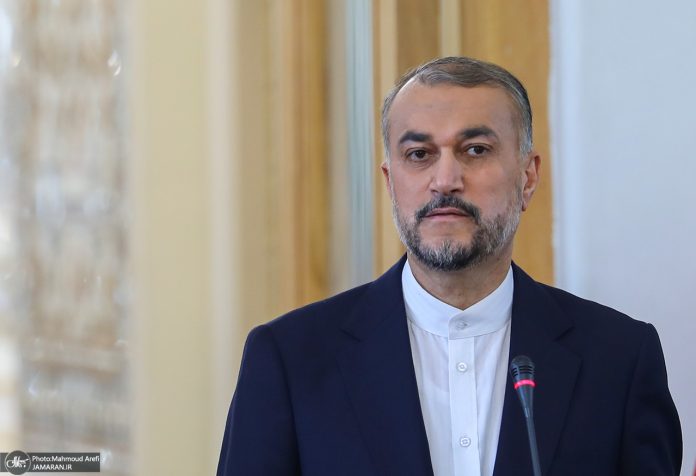
Iran FM to Armenia counterpart: Presence of foreigners in region complicates situation

Hossein Amirabdollahian

Iranian Foreign Minister Hossein Amirabdollahian has held a phone conversation with his Armenian counterpart Ararat Mirzoyan.

In the phone talk, the two top diplomats discussed the ongoing developments in the South Caucasus region as well as ways of enhancing and deepening bilateral ties.

The Iranian foreign minister said he was pleased with the growing trend of bilateral ties.

He also said it is vital to implement the road map on preventing the pollution of the Aras River to preserve its ecosystem.

Amirabdollahian further touched upon a military exercise conducted by Armenia and the United States, saying any presence of foreign forces in the region will further complicate the situation there.

The Iranian foreign minister underscored the necessity of tackling the root causes of differences in order to achieve lasting peace, adding the most effective way to secure and all-encompassing peace is regional talks and mechanisms.

Mirzoyan, in turn, described the promotion of ties with Iran as constructive and significant. He touched upon the deployment of Azeri military troops, saying any changes in the borders of the South Caucasus region will be unacceptable.

The top Armenian diplomat referred to the negotiations held between the two countries’ environment chiefs, and stressed the importance of preserving the environment of the Arash River.

He also said the Armenian soil will definitely not be a place for conducting anti-Iran activities.

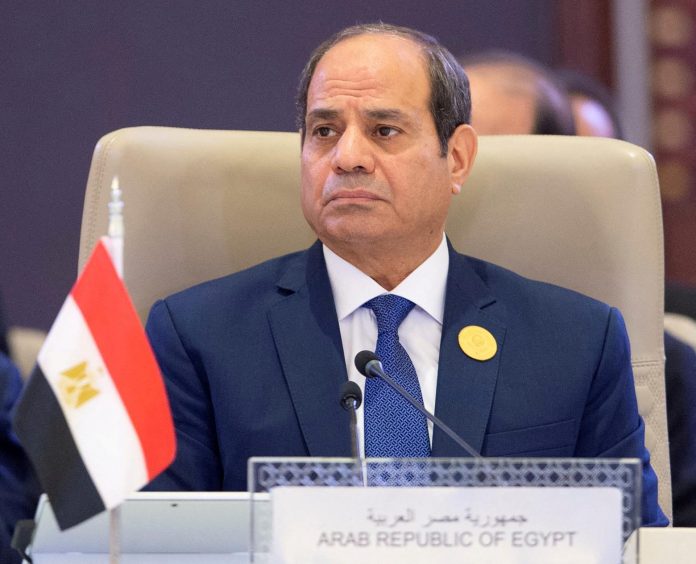
US plans to withhold $85m in aid to Egypt due to political detentions

Sisi

Two other sources familiar with the matter said the $85 million was being withheld and the decision on the other $235 million was expected soon.

“We are consulting with Congress as we finalise our actions,” stated a State Department spokesperson when asked about Senator Chris Murphy’s comments on the Senate floor.

“The administration rightly decided to withhold that first tranche – $85 million tied to the release of political prisoners – because there’s just no question there has not been enough progress,” Senator Murphy, a Democrat, said.

“I would urge the administration to finish the job and withhold the full $320 million… until Egypt’s human rights and democracy record improves,” he added.

Rights groups have long accused Egypt of widespread human rights abuses under President Abdel Fattah al-Sisi’s government, including torture and enforced disappearances.

Egyptian authorities have taken some steps since late 2021 that they say aim to address rights, including launching a human rights strategy and ending a state of emergency, but critics have dismissed the measures as largely cosmetic.

Some high-profile detainees have been pardoned or released but activists say new detentions have outnumbered releases and that thousands of political prisoners remain in jail, with restrictions on free speech as tight as ever.

For decades, the United States has given Egypt about $1.3 billion a year in aid to buy US weapons systems and services. This aid is largely the result of the 1979 Egyptian-Israeli peace treaty.

Over the last decade or so, the US Congress has made some aid subject to human rights conditions.

Under US law, $85 million is contingent on Egypt “making clear and consistent progress in releasing political prisoners, providing detainees with due process of law, and preventing the intimidation and harassment of American citizens.”

These conditions cannot be waived by the executive branch.

A further $235 million is conditioned on Egypt meeting democracy and human rights requirements. These conditions, however, can be waived if the executive branch certifies this is in the US national security interest.

There is a further loophole for the $235 million, which can be given to Egypt regardless if it is for “counterterrorism, border security and nonproliferation programs for Egypt.”

Last year, Washington allowed the full $75 million that was then contingent on progress on political detentions and allowed a further $95 million to go to Egypt under the counterterrorism, border security and non-proliferation exception.

This amounted to a decision to withhold $130 million, the same amount as the year before.

The $85 million withheld “is an important reversal from last year,” stated Seth Binder of the Project on Middle East Democracy rights group.

“But if the administration withholds less than it has the last two years it would in essence be saying to Sisi that it believes the Egyptian government has improved its rights record, which is just not true,” Binder added.

Russia voices annoyance with Azerbaijan, Armenia over elections in Ukraine, Nagorno-Karabakh

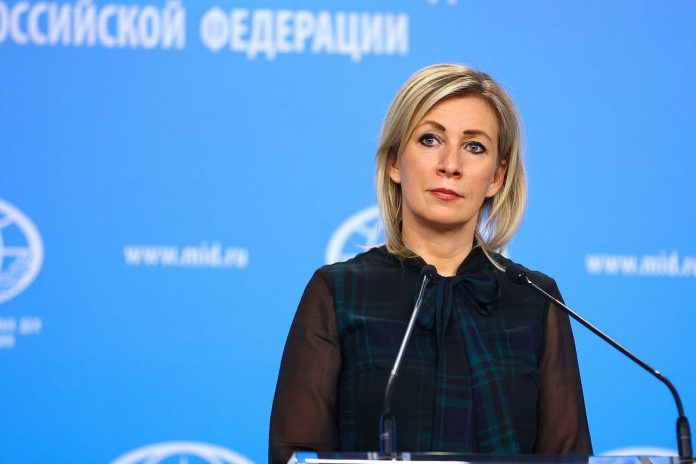
Maria Zakharova

Zakharova’s comments reflected a sharp worsening of Russia’s relations with both countries, which have fought two wars in the three decades since the collapse of the Soviet Union.

Distracted by the war in Ukraine, Moscow is struggling to maintain its position as the leading power and security guarantor in the region.

At the weekend, Azerbaijan released a statement on what it called “sham ‘elections’ in certain territories of Ukraine” – a reference to votes that Russia was holding in four partly occupied regions of Ukraine that it claimed as its own after invading its neighbour last year.

The Azerbaijani statement said the Russian vote was taking place in areas internationally recognised as part of Ukraine and was therefore legally void.

Zakharova told reporters that Russia had lodged a diplomatic protest because the comments were “unacceptable to us and do not correspond to the allied nature of relations between our countries”.

“We proceed from the fact that Baku should treat the territorial integrity of our country with the same respect that Baku expects from us, when it comes to the territorial integrity of Azerbaijan,” she added.

Tensions between Armenia and Azerbaijan have risen in the past week, with each side accusing the other of building up troop concentrations near their borders.

Armenia has accused Russia, which has maintained a peacekeeping force in the region since the last war in 2020, of failing to protect it against what it calls Azerbaijani aggression.

Zakharova stated Armenia’s recent statements had an “unfriendly character” and were damaging to the peace process over Nagorno-Karabakh.

The territory is internationally recognised as part of Azerbaijan but is mostly populated by ethnic Armenians who broke away from Baku in a war in the 1990s.

Removal of terrorist bases in Iraq’s Kurdistan underway: Report

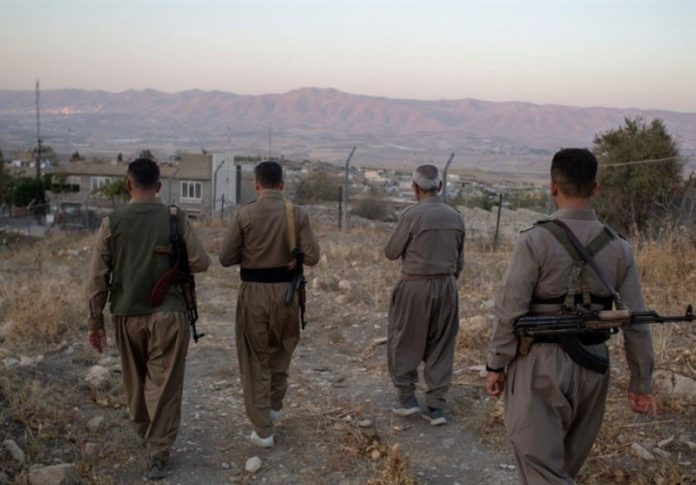
Militants in Iran's Kurdistan

The source said that the bases of terrorist and separatist groups in the Iraqi Kurdistan Region began to be dismantled this morning.

According to the source, all bases of terrorist groups, including the Komalah, Kurdistan Freedom Party (PAK), the Kurdistan Free Life Party (PJAK) and the Kurdistan Democratic Party (KDP) along the common border with Iran and in the other parts of the Iraqi Kurdistan Region near the border areas will be dismantled.

The terrorist groups are going to be relocated to a base deep inside the soil of the Iraqi Kurdistan Region, the source added.

“After this stage, the separatist groups will be fully disarmed, otherwise (if the bases of terrorists are not properly dismantled or if a number of them refuse to be relocated), we (Iran) will return to the conditions before the agreement (with KGR) and will fulfill our duty to safeguard the country’s security,” the source stated.

In July, Iran’s highest-ranking military commander cautioned the Iraqi government that its failure to meet a deadline of September for action against hostile armed groups in its northern regions will result in a fresh round of Iranian military strikes against them.

“Armed secessionist groups are there in northern Iraq that cause insecurity at our borders,” Chief of Staff of the Iranian Armed Forces Major General Mohammad Hossein Baqeri said.

The IRGC launched several rounds of military strikes on the positions of separatist groups in Iraq’s Kurdistan Region in 2022.

The first stage of the attacks began on September 24, after terrorists’ move to ignite riots and unrest along border cities west of Iran.

The move by IRGC Ground Force to hit Iraqi-based Komalah and Democrat terrorist groups came after illegal entry by these groups’ armed teams into the Iranian border cities.

The IRGC has announced, “These terrorists – who are backed by the global arrogance and are based in the Iraqi northern region – were forced to flee the country after accepting heavy casualties.”

The IRGC underlined that Iran on many occasions has warned officials of the Iraqi Kurdistan Region about the terrorist groups’ activities in the region but they have failed to pay necessary attention to the warnings and take proper measures to prevent terrorist moves.

It has also described the operations by the Iranian forces as part of efforts to ensure durable security along borders and punish criminal terrorists.

Tehran public prosecutor wants maximum penalty for Azerbaijan Embassy assailant

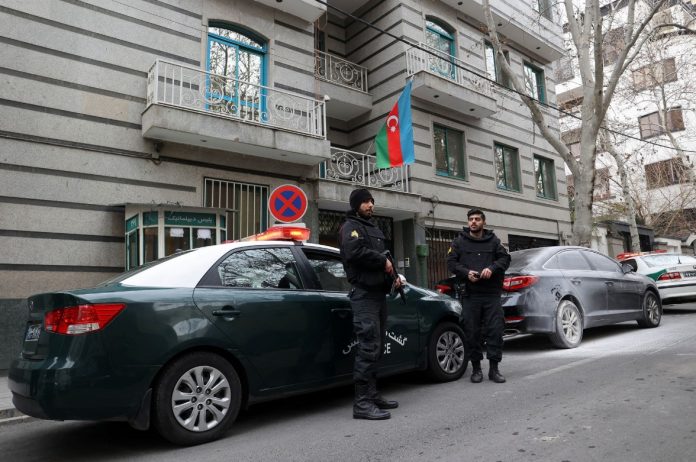
Azerbaijan Embassy Tehran

Ali Salehi, the prosecutor of the Criminal Court of Tehran, pointed out that the judicial system has stepped up the pace and precision of the proceedings against the assailant of Azerbaijan’s embassy in Tehran.

He stated that, “The assault on January 27 with a firearm that caused the death of one of the embassy staff and the injury of two other personnel, as well as the destruction of part of the embassy’s property was carried out with personal incentives.”

Salehi warned of efforts to politicize the issue and stressed that the incident should not lead to deterioration of relations between Tehran and Baku.

The assailant, identified as Yasin Hosseinzadeh, entered Azerbaijan’s embassy in Tehran with a firearm and started shooting, which left the head of the security service of the embassy killed and two embassy guards injured.

After the assailant was arrested by the police, he claimed that his wife visited the embassy last year and never returned.

Iran, Iraq pursing security roadmap to confine terrorists to camps

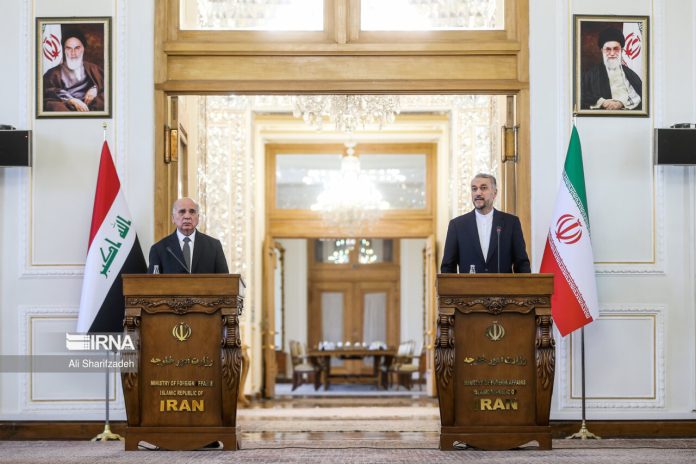
Hossein Amirabdollahian and Fuad Hussein

Amirabdollahian, addressing a joint press conference with his visiting Iraqi counterpart Fuad Hussein in the Iranian capital on Wednesday, stated, “Even one hour of delay in expelling terrorist groups from Iraqi soil will lead to the detriment of the security in Iraq, Iran, the region and the Kurdistan Region.”

The top Iranian diplomat praised Baghdad’s cooperation with Tehran to contain terrorist groups and remove them from areas close to the border with Iran, adding the two countries’ ultimate goal is to disarm terrorist groups.

For his part, the Iraqi foreign minister unveiled a roadmap of security cooperation between Baghdad and Tehran, saying plans are underway to disarm terrorist groups along the border with Iran and relocate them to a camp operating under the supervision of the United Nations.

Fuad Hussein clarified that the Iraqi constitution does not allow any group to stage attacks on other countries from Iraqi soil.

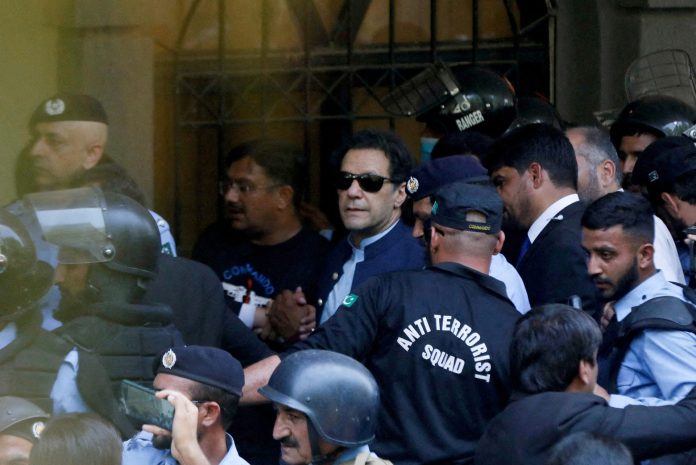
Pakistan court extends ex-PM Imran Khan’s custody for 2 weeks

Imran Khan

The 70-year-old former cricket star has been at the centre of a political crisis since he lost a confidence vote in parliament in April 2022, and his conviction in a separate corruption case last month resulted in him being barred from contesting a national election due to be held in coming months.

In late August, a high court suspended Khan’s prison sentence for corruption just weeks after he was jailed, but a prior order for his remand in custody in the state secrets case prevented his release.

The latest extension of the remand order will keep Khan in jail until Sept. 26, lawyer Naeem Panjutha said in a post on X messaging platform.

In the state secrets case, Khan is charged with making public contents of a confidential cable sent by Pakistan’s ambassador to the United States and using it for political gain, according to a Federal Investigation Agency (FIA) document seen by Reuters.

Khan alleges that the cable proves the United States had pressed Pakistan’s military to orchestrate the fall of his government because he had visited Russia shortly before its invasion on Ukraine in February 2022.

Washington and the Pakistani military have denied Khan’s accusations.

In the corruption case, Khan was sentenced to three years jail for unlawfully selling state gifts during his time as prime minister from 2018 to 2022. As a result, the election commission barred him from contesting elections for five years, and although the prison sentence was suspended last month the conviction still stands.