Friday, December 26, 2025
Home Blog Page 1262

US says Iran’s blocked funds to be transferred to Qatar ‘in coming days’

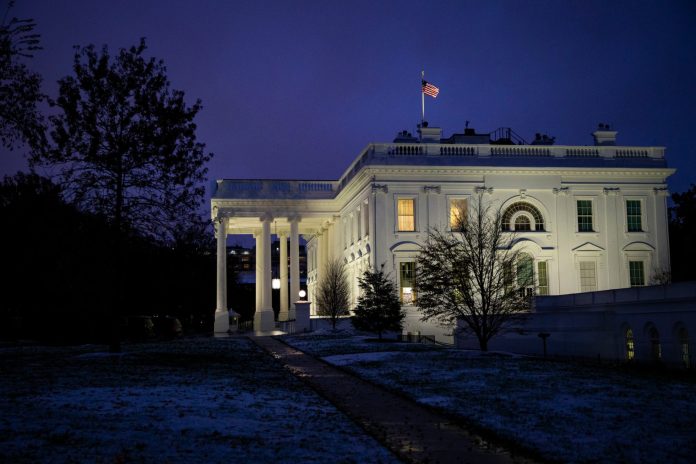
White House

Speaking at a press briefing on Wednesday, Miller did not give the exact details of the transactions and just said that “they move from South Korea, through banks in Europe, ultimately to these end accounts in Qatar.”

In response to a question about the amount of the assets that Iran had now access to and could spend, which had been held in India, Turkey, Japan and South Korea, he said the US does not have “perfect” visibility into the accounts and how they were being used.

The spokesman, however, explained that Washington does have information to conclude that they were “spent down by billions of dollars, in some cases all the way to zero.”

Meanwhile, he stated Washington has complete visibility into the accounts in Qatar and is able to “lock them down” if it sees that Iran is attempting to take actions that are in violation of the agreement between the two sides and breach the US sanctions.

“I’m not going to get into what the exact technical details are, but we have the full agreement to stop their access to this account going forward,” he added.

On Monday, President Joe Biden’s administration issued a blanket waiver for international banks to transfer $6 billion in frozen Iranian assets from South Korea to Qatar with no concern about Washington’s sanctions.

In an exclusive interview with the American broadcast television network NBC on Tuesday, Iranian President Ebrahim Raisi stressed Tehran’s full authority on its recently-released assets, saying it is the Islamic Republic that decides how to spend the funds and that the money will be spent “wherever we need it.”

He added, “This money belongs to the Iranian people, the Iranian government, so the Islamic Republic of Iran will decide what to do with this money.”

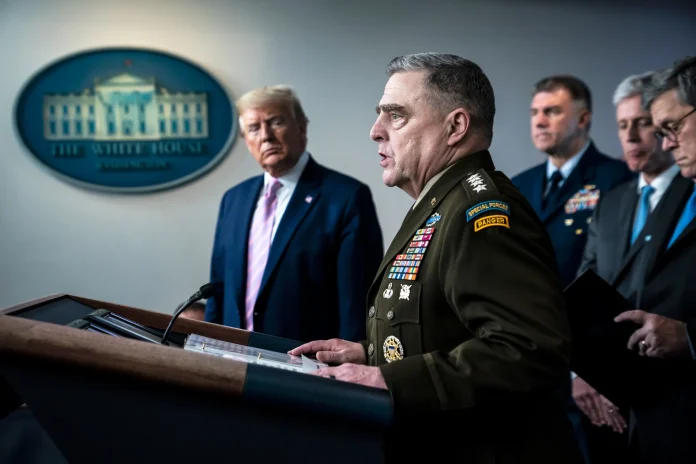
Top US general disputes claim he recommended Trump attack Iran

Mark Milley and Donald Trump

“I can assure you that not one time have I ever recommended to attack Iran,” Milley told CNN’s Fareed Zakaria in an interview.

Milley, an army general who is retiring at the end of the month as the nation’s top military officer, was Trump’s chairman of the Joint Chiefs during the final 16 months of his time in office. He had an outsized role in some of the most consequential events of Trump’s presidency, including the response to the Black Lives Matter protests in 2020 and actions he took after January 6, 2001, when he was concerned that Trump could go “rogue.”

Milley also became a significant figure in special counsel Jack Smith’s indictment of Trump over his alleged mishandling of classified documents, when Trump claimed to have a plan to attack Iran authored by Milley.

Trump was captured on audio tape talking about the plan with biographers for Meadows in July 2021 at his Bedminster, New Jersey, resort, acknowledging he had not declassified the document.

“As president, I could have declassified, but now I can’t,” Trump says of the document, according to the transcript of the tape, which was first reported by CNN.

Milley told Zakaria he did not know the specific document Trump was referring to.

“I don’t know the document they’re talking about. I’ve never seen – no one’s presented me with what it is they’re talking about. So, I really still can’t comment on it,” Milley stated.

“But I can assure you that, you know, a military attack on Iran is a very, very serious undertaking. We have capabilities. We have plans – that’s not particularly unusual – to comment on that. But I am not going to go further and discuss any of the details,” he continued.

In a superseding indictment filed against Trump in July, the special counsel’s team alleged that Trump willfully retained a top-secret document that was a “presentation concerning military activity in a foreign country,” which CNN reported was Iran.

In the July 2021 meeting with Meadows’ biographers, Trump was complaining about Milley shortly after The New Yorker published a story detailing how Milley instructed the Joint Chiefs to ensure Trump issued no illegal orders in the final days of his presidency.

In his book, “The Chief’s Chief,” Meadows references the meeting and the Iran document, claiming Milley urged Trump to attack Iran more than once during Trump’s presidency, but that Trump would not do so.

“The president recalls a four-page report typed up by Mark Milley himself,” Meadows writes.

“It contained the general’s own plan to attack Iran, deploying massive numbers of troops, something he urged President Trump to do more than once during his presidency. President Trump denied those requests every time.”

Milley told Zakaria he did not know what Meadows had written but reiterated he had never recommended an attack on Iran.

“I can tell you with certainty that this chairman never recommended a wholesale attack on Iran,” Milley said.

“And to do that, I think would require a significant degree of risk that we may or may not want to take given the circumstances, but that that part of it didn’t happen. And I’m not sure I don’t know the exact quotes that Mr. Meadows said, but I can assure you I know what I’ve done and it’s not to recommend an attack on Iran,” he added.

Mashhad mourns Prophet’s demise, Imam Hassan’s martyrdom

Iranians mourns Prophet’s demise and Imam Hassan’s martyrdom

Millions of Muslims from across the country, as well as abroad, gathered in Imam Reza’s shrine on Thursday to hold mourning ceremonies.

The Prophet of Islam passed away at the age of 63 in Medina, Saudi Arabia.
Thanks to his teachings and his legacy, Islam is now the fastest-growing major religion in the world.

Imam Hassan Mojtabi, the second Shia Imam, was poisoned to death and martyred by his wife, ordered by then despot Muawiya, in 50 AH at the age of 47.

He and his brother Imam Hussein were the sons of Imam Ali and Hazrat Fatimah, the Prophet’s daughter.

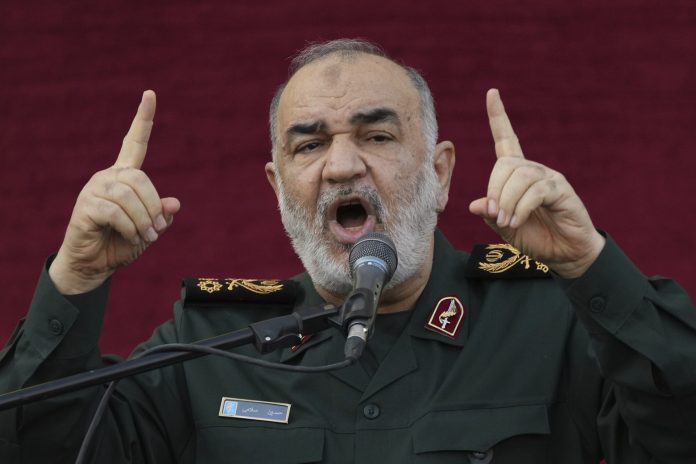
IRGC chief ridicules Mossad threats, boasts all enemy plots failed in past 45 years

Hossein Salami

Major General Salami made the remarks in a gathering of the country’s cyberspace activists on Wednesday, in reaction to the head of the Israeli regime’s Mossad spy agency David Barnea who threatened to target top Iranian figures.

The top Iranian commander said, “The Zionists are dealing with many problems and signs of their decline can be observed. So, they started talking nonsense and threaten to assassinate our commanders.”

The IRGC chief said, “If the previous assassinations have boosted your security, you can continue. But you need to know, if the space between us and you becomes militarized, we can act more freely and your life will become shorter.”

Major General Salami also highlighted the United States’ failed strategies in the region, saying “The wars in Afghanistan, Syria, Lebanon and Iraq showed that the military option is no longer a viable solution for them and that their plots to install puppet governments have failed in the region.”

He also said the military threats and sanctions have failed to intimidate Iran and on the contrary have led to more progress in technology, innovation and social management.

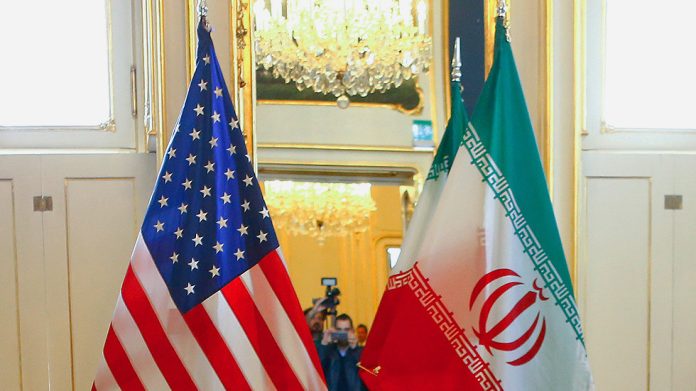
Iran-US prisoner swap set to happen as soon as early next week: Report

Iran US Flags

The people, who asked not to be identified discussing private deliberations, said the exact date of the swap isn’t yet set but it’s likely to be on September 18, a day before world leaders convene in New York for the annual meeting of the United Nations General Assembly.

The prisoner exchange agreement was officially announced on August 10, following two years of indirect negotiations between Tehran and Washington.

In a gesture of goodwill, Tehran has moved four American detainees from prison to house arrest. They joined a fifth American who was already under house arrest in Tehran.

In an exclusive interview with NBC News in Tehran, Iranian President Ebrahim Raisi revealed that the prisoner swap process will be completed as scheduled.

He also added that the American prisoners in Iran are in “very good” health, and that they will soon return home.

The talks, mediated by Qatar, also encompassed the issue of billions of dollars worth of Iranian assets blocked overseas since 2018, when the United States unilaterally abandoned the 2015 nuclear deal and reinstated its sanctions against Iran.

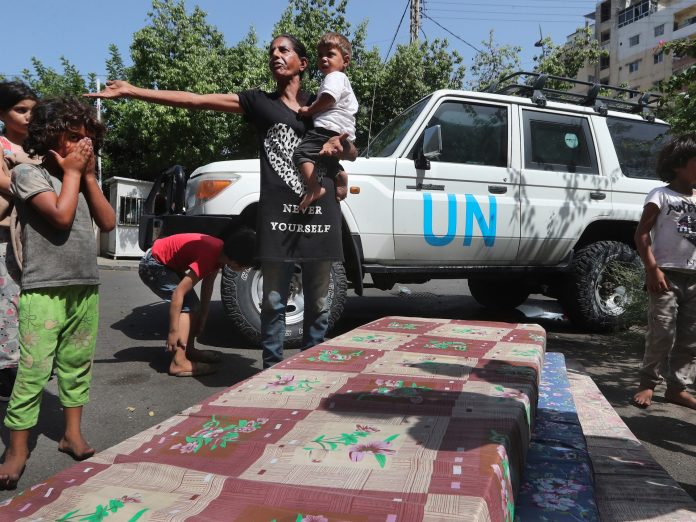
Deadly fighting continues in Palestinian refugee camp in Lebanon, 15 killed so far

Lebanon Refugee Camp

Clashes intensified on Wednesday as a ceasefire fell apart in Ein el-Hilweh refugee camp on the outskirts of the southern port city of Sidon. Scores of civilians have been forced to flee to safer areas as multiple ceasefire agreements have failed to hold.

The refugee camp has been rocked by violence since last week with members of the Fatah movement, which controls the camp, fighting armed fighters, excluding Hamas.

Fatah and other allied factions had intended to crack down on suspects accused of killing a senior Fatah military official in the camp in late July. The first round of fighting then left more than a dozen people dead.

A top official with the Palestinian group Hamas, Moussa Mohammed Abu Marzouk, arrived in Beirut on Tuesday to push for an end to clashes with no success.

He met Palestinian officials, including Fatah’s Azzam al-Ahmad, late on Tuesday at the Palestinian embassy in Beirut, a joint statement said.

They had expressed their “full commitment to consolidating the ceasefire” and agreed to “work to facilitate the return of those forced from their homes”.

But the ceasefire collapsed on Wednesday, causing a mass exodus of residents fleeing bullets and shells.

The United Nations Relief and Works Agency for Palestine refugees in the Near East (UNRWA) has said the fighting has displaced hundreds of families.

Many have taken shelter in nearby mosques, schools, and the Sidon municipality building. UNRWA has relocated some 1,200 people to schools in the area from a mosque near the camp’s entrance.

Ein el-Hilweh – one of 12 refugee camps scattered around Lebanon – is home to some 55,000 registered refugees, according to the United Nations.

By long-standing convention, the Lebanese army stays out of the Palestinian camps and leaves the factions to handle security.

The renewed violence has prompted fresh concerns that the clashes could spill over into the adjacent city of Sidon.

Residents fear a similar scenario to the northern Palestinian camp of Nahr al-Bared, where Lebanon’s army waged a deadly 15-week onslaught to dislodge armed groups in 2007.

Iran denies military build-up at border with Azerbaijan

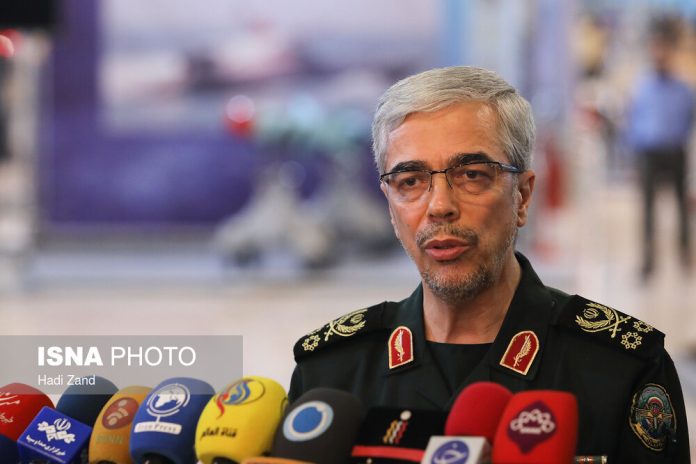
Major General Mohammad Bagheri

He made the remarks in a telephone conversation with Azerbaijan’s Defense Minister Zakir Hasanov on Wednesday. The phone call came as Armenia has warned that Azerbaijan is massing troops on the countries’ shared border and near Nagorno-Karabakh, raising fears it could launch a military operation to grab some areas there.

In recent months, Armenia and Azerbaijan have traded accusations of cross-border attacks.

General Baqeri has reiterated Iran’s policy that the Nagorno-Karabakh region belongs to Azerbaijan, and stressed the country’s readiness to help facilitate a final settlement of the long-running dispute over the region.

According to a statement by the General Staff of Iran’s Armed Forces, the two sides reaffirmed their opposition to interventions by extra-regional powers in the affairs of the Caucuses region.

Hasanov, for his part, said Azerbaijan respects other countries’ sovereignty and does not seek to encroach on its neighbors’ territories.

The Azerbaijani minister proposed holding joint drills between the two countries, and invited General Baqeri to pay a visit to Azerbaijan.

Located in the South Caucasus, the landlocked region of Nagorno-Karabakh has been at the center of a dispute between Azerbaijan and Armenia for more than three decades.

Since gaining independence from the former Soviet Union in 1991, the two neighboring countries have fought two wars, in 1994 and 2020, over the mountainous territory.

Karabakh is recognized as part of Azerbaijan by the international community although it has a predominantly Armenian population that has opposed Azerbaijani governance since the separatist war in 1994.

Tensions remain high and skirmishes along the shared border are a regular occurrence despite mediation efforts by the European Union, the United States and Russia.

Russia brokered a peace deal between the two sides in November 2020, bringing an end to a 44-day war in the region. It has since deployed about 2,000 troops to the region to serve as peacekeepers.

Armenia should not rely on Russia, but must get closer to West: PM

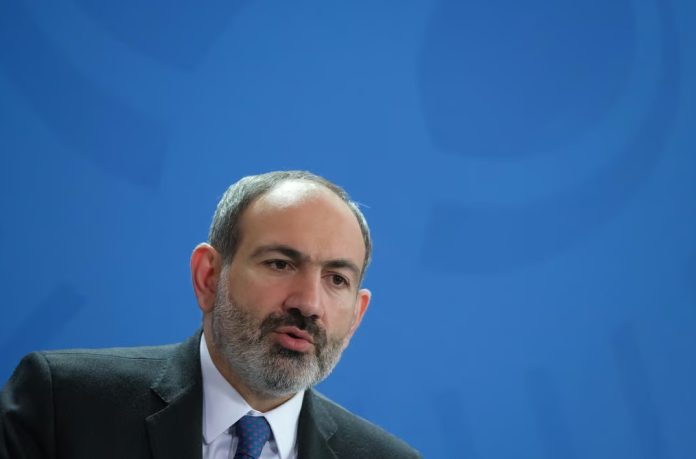
Armenian Prime Minister Nikol Pashinyan

“As a result of the events in Ukraine, the capabilities of Russia have changed.” Without giving the Armenian prime minister’s exact quotes, Politico reported that Pashinyan declared Armenia should not rely on its old ally Russia, but admitted “there was a long way to go before Western countries could be seen as offering the full support Armenia needs,” Pashinyan said, according to Politico.

“We want to have an independent country, a sovereign country, but we have to have ways to avoid ending up at the center of clashes between West and East, North and South,” he stated.

He added that Armenia should try to decrease its dependency on others and described the model wherein the Armenians have to turn to others to protect them as a very faulty one.

The Armenian prime minister once again lambasted Russian peacekeepers for the events in the Lachin Corridor, but added the caveat that the situation would hardly be better if the Russian peacekeepers were not in the region.

Recently, the Armenian leadership has repeatedly bashed Moscow over the situation in the region. Moreover, Yerevan invited the EU civilian mission, which has been operating at the border with Azerbaijan since the beginning of 2023, and then called for enlarging the monitoring mission. On top of that, Armenia hosted the Eagle Partner joint military exercise with the United States in September.

Russian Foreign Ministry Spokeswoman Maria Zakharova said that Armenian officials’ statements more and more often look like “public rhetoric, which borders on something like boorishness,” while Moscow has more and more questions for Yerevan over Armenia’s recent steps.

On September 8, Armenian Ambassador to Moscow Vagharshak Harutiunyan was summoned to the Russian Foreign Ministry, where he was given a stern talking to over Yerevan’s unfriendly moves. However, the Foreign Ministry emphasized that Moscow firmly proceeds from the premise that Russia and Armenia are allies and their agreements on fostering and bolstering relations will be fully implemented to benefit both countries.

Also on Wednesday, the Armenian Foreign Ministry said Armenia offers Azerbaijan to mutually withdraw forces from the border, based on the 1975 USSR General Staff maps.

“The Azerbaijani Armed Forces must be withdrawn from the sovereign territory of the Republic of Armenia. At the same time, while remaining interested in establishing stability and peace in the region, the Republic of Armenia reaffirms its offer to mutually withdraw its forces from the state border between Armenia and Azerbaijan based on the 1975 USSR General Staff maps,” the statement says.

“Led by the feeling impunity, Azerbaijan continues to threaten the world and stability on Southern Caucasus,” the Armenian Foreign Ministry underscored.

“These days, multiple videos are being disseminated on social media, proving that Azerbaijan accumulates forces and high-caliber military vehicles both along the Armenian state border and the contact line with Nagorno-Karabakh in direct proximity of Russian peacekeeping forces’ area of responsibility. Azerbaijani fire is becoming increasingly frequent,” the Foreign Ministry underlined.

The Armenian Foreign Ministry expressed its hope that the stakeholders, “interested in peace and security in the region, that possess mandate on this issue, will exert all efforts and utilize all available mechanisms in order to prevent attempts at further destabilization and illegal use of force in the region”.

Armenian Foreign Minister Ararat Mirzoyan also said on Wednesday that Pashinyan and Azerbaijani President Ilham Aliyev may meet in October in Granada,

“I once said that there are almost always proposals for meetings and negotiations. In fact, such preliminary agreements are in place. After the meeting with the prime minister in Brussels, they said that another meeting with the leaders has been planned, also in October in Granada,” he stated.

Mirzoyan also added that the Armenian side has received responses to its proposals on the peace agreement from Baku, but their positions on essential issues are still far apart.

“We previously handed over the fifth package of amendments to the text of the peace agreement to the Azerbaijani side, and literally yesterday we received new proposals from Baku. Unfortunately, there are some essential issues on which the positions of the sides are still far apart,” he specified.

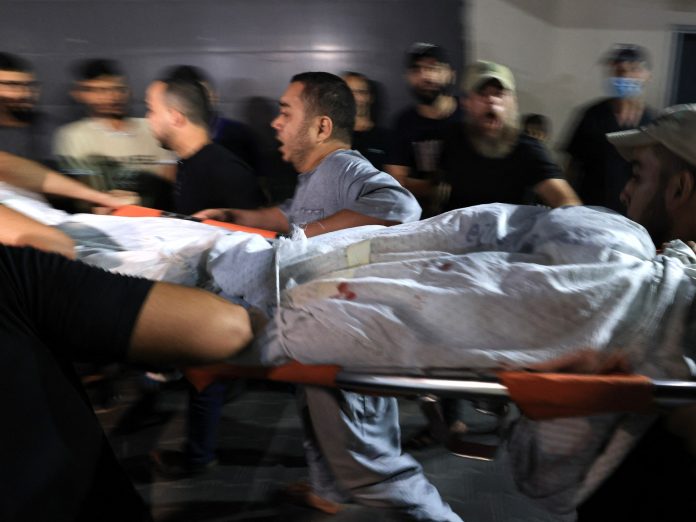
Blast kills 5 at Gaza rally marking 2005 Israel pullout

Blast Gaza Palestine

Wednesday’s explosion took place during a demonstration along the fence marking the anniversary of Israel’s withdrawal from the Gaza Strip in 2005. The event on Gaza’s eastern border was organised by Hamas, the Palestinian group that has governed the territory since 2007.

The demonstrators said Israeli soldiers fired tear gas before the deadly blast.

Witnesses told local media that when a Palestinian Explosives Engineering Unit was trying to defuse an explosive device, Israeli forces opened fire, preventing them from escaping the blast.

The Israeli army, which has carried out several spells of deadly bombing on the besieged enclave, denied involvement. It claimed that demonstrators were trying to throw a bomb over the fence when the device detonated. It released an aerial video showing a blast along the fence. Debris flew into the air, and several people could be seen running away.

Earlier in the day, participants held Palestinian flags and burned tyres to celebrate the anniversary of Israel’s withdrawal.

Suhail al-Hindi, a Hamas leader, praised the end of what he described as “this cruel Israeli occupation from Gaza”.

The enclave of two million people has remained under Israeli land, sea and air blockade with tight control over the movement of people and goods.

Israel has justified the harsh measures saying it is needed to keep Hamas from arming.

Iran says not to tolerate presence of terrorists on border with Iraq

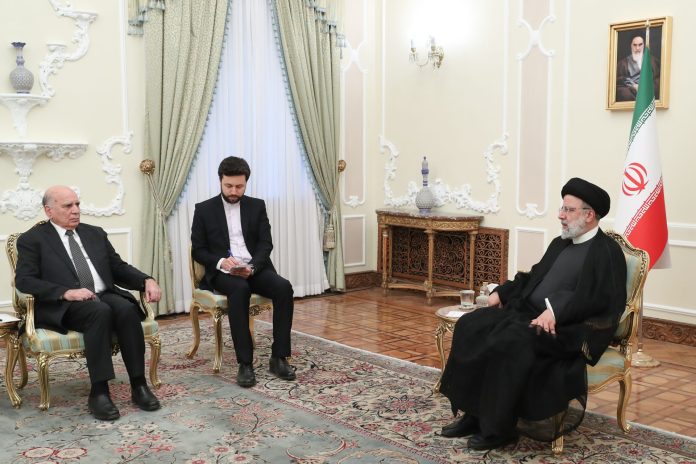
Ebrahim Raisi and Fuad Hussein

The chief executive made the remarks in Tehran on Wednesday to Iraq’s visiting Foreign Minister Fuad Hussein, urging Baghdad to honor its relevant security commitments towards Tehran.

“During the days that Iraq was besieged by the Daesh terrorist group, the Islamic Republic did not withhold any assistance from Iraq, proving itself to be Iraq’s friend during its (the Arab country’s) tough days,” Raisi said.

The president was referring to the military advisory support that the Islamic Republic began providing for Iraq after the latter found itself in the grip of the Takfiri group’s campaign of bloodshed and destruction in 2014.

The remarks came two days after Iranian Foreign Ministry spokesman Nasser Kanaani stated the ultimatum given to Iraq to disarm anti-Iran separatist groups based in the Arab country’s Kurdistan region would not be extended.

“Iran’s stance is completely clear. According to the agreement reached with the Iraqi government, the final deadline for the disarmament of the terrorist and separatist forces in Iraq’s Kurdistan region ends on September 19 and that deadline will not be extended in any way,” Kanaani said at a weekly press briefing in Tehran on Monday.

The spokesperson added that the Iraqi government had taken measures in this regard and had stressed that it would honor its commitments.

Hussein, for his part, considered the constant meetings that have been taking place between the countries’ diplomatic delegations and ranking officials to be an indication of their strong and developing relations.

“Today, the countries’ relations have gone beyond [simple] political, cultural, and economic ties,” he stated, stressing that “we should preserve these unparalleled relations.”

The Iraqi top diplomat laid emphasis on Baghdad’s complete commitment to the implementation of standing security agreements between the countries.

“The Iraqi government will, under no circumstances, allow any movement or group to use the country’s soil to pose a threat or perpetrate an incursion against the borders of Iraq’s neighbors, especially the Islamic Republic, or let them (such groups) deploy themselves on the Iraqi soil,” he emphasized.