Thursday, December 25, 2025
Home Blog Page 1243

Trade between China and Russia on track for record in 2023

Economy Trade

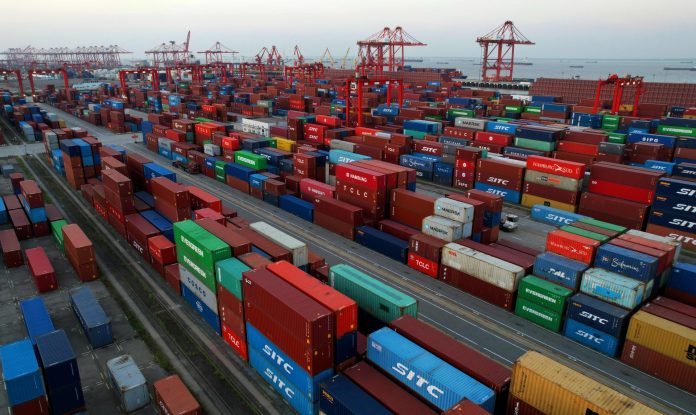
According to the service’s Telegram channel, bilateral trade between the two countries surged by 25% from January to August compared to last year. Data from China’s customs agency showed previously that trade turnover amounted to $155.1 billion during this period.

The Russian customs authority said that Moscow and Beijing will continue to simplify customs formalities to further boost trade, noting “a special interest in organizing a permanent, round-the-clock operation of one of the main transport hubs – the Zabaikalsk-Manzhouli automobile border-crossing checkpoint, as well as of the Pogranichny-Suifenhe road crossing.”

Russia has been supplying China mostly with energy products, such as oil and gas, as well as refined products, agri-food and industrial products. China has been exporting almost all types of goods, including food, equipment, mobile phones, electronics, engineering products, furniture, toys, textiles, clothing and footwear.

During the previous year, trade between Russia and China soared to an all-time high of $190.3 billion. The two nations are now poised to exceed their $200 billion target for this year, and they remain steadfast in their belief that achieving an annual $250 billion in trade is “absolutely realistic.”

The strengthening of economic ties between Russia and China has been fortified by their joint commitment to conducting a significant portion of transactions using their respective national currencies instead of relying on the US dollar. Moscow and Beijing have intensified their efforts to diminish their dependence on the dollar and euro in global trade, especially in light of Western sanctions imposed on Russia and the ongoing trade dispute between the US and China.

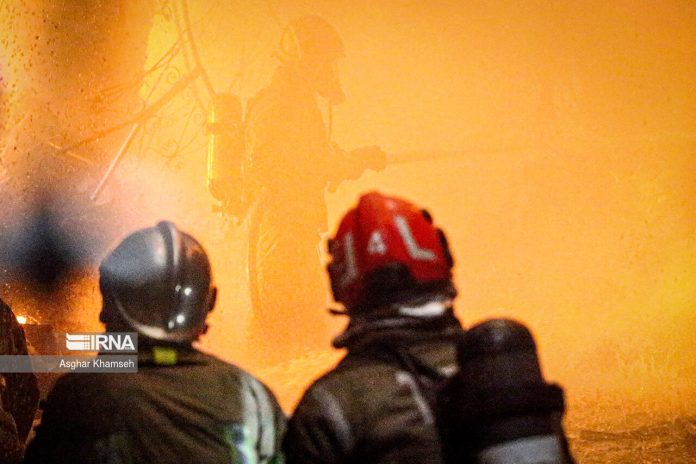
Explosion kills one person in Bandar Abbas gas refinery

Iran Firefighters

The explosion that was blamed on gas leak happened in the condensate tank of the refinery.

Four people were also injured in the incident. Reports say the dead person was a worker that had been initially injured in the explosion but later succumbed to his wounds.

The gas leak happened while workers were doing necessary repair at a procedural unit of the refinery.

US failed to provide redress or compensation to tortured victims of its Iraq prisons: HRW

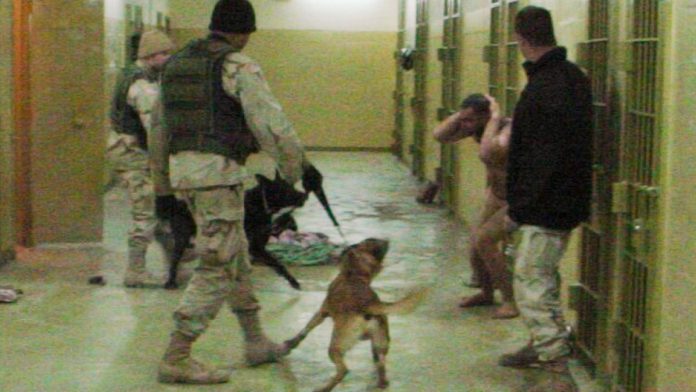
Abu Ghraib prison

An HRW report published on Monday said the New York-based group found no evidence that the US government has paid any compensation or other redress to victims, nor has it issued any individual apologies or other amends.

Between 2003, when the US invaded and occupied Iraq, and 2009, when it closed its largest detention centre in the country, about 100,000 Iraqis were believed to have been held by the US and its coalition allies.

Human rights organisations have documented torture and other forms of ill-treatment by US forces in Iraq in that period, something which forced then-President George W Bush to apologise, although he sought to minimise the systemic nature of the torture by calling it “disgraceful conduct by a few American troops”.

A February 2004 report to the US-led military coalition by the International Committee of the Red Cross (ICRC) said military intelligence officers told the ICRC that up to 90 percent of people in coalition custody in Iraq in 2003 had been arrested by mistake.

Despite a promise of compensation by the US defence secretary at the time, Donald Rumsfeld, that never materialised.

HRW said some victims tried to apply for compensation through the Foreign Claims Act, but a combat exclusion clause in the act hampers requests, alongside another clause that says claims must be filed within two years of the alleged harm.

The report added that Iraqi claims for justice in US courts have also been dismissed through a 1946 law that gives US forces immunity for “any claims arising out of the combatant activities of the military or naval forces, or the Coast Guard, during time of war”.

The only lawsuits that have advanced through courts have targeted military contractors, according to HRW, but those have faced considerable obstacles as well, at times dragging through the justice system since the late 2000s.

“Twenty years on, Iraqis who were tortured by US personnel still have no clear path for filing a claim or receiving any kind of redress or recognition from the US government,” stated Sarah Yager, Washington director at HRW.

“US officials have indicated that they prefer to leave torture in the past, but the long-term effects of torture are still a daily reality for many Iraqis and their families.”

HRW interviewed Taleb al-Majli, a former detainee at the infamous Abu Ghraib prison, who has yet to receive any compensation or recognition from the US government for the torture he suffered.

He was detained in the western Iraqi province of Anbar in November 2003 when visiting relatives and was released without charge in March 2005.

“They took away our clothes. They mocked us constantly while we were blindfolded with hoods over our heads. We were completely powerless,” he said, adding, “I was tortured by police dogs, sound bombs, live fire, and water hoses.”

Al-Majli started biting his hands and wrists to cope with the trauma he was experiencing, a habit he has been unable to abandon ever since, leaving him with perennial purple welts and bruises on his hands and wrists.

“I try to avoid it, but I can’t. Until today, I can’t wear short sleeves. When people see this, I tell them it’s burns. I avoid questions,” he continued.

His children are the only reason he never tried to end his life, he said, but they have not been spared the effects of al-Majli’s imprisonment either, as their mother left and remarried, the son suffers from health problems, and the daughter dropped out of school.

“They stole our future from us,” al-Majli added.

The HRW report said out of numerous cases, only 97 US soldiers implicated in 38 cases of abuse that the US Army Criminal Investigation Division reviewed in Iraqi centres between 2003 and 2005 received punishments.

Only 11 soldiers were referred to a court martial to face criminal charges, nine of whom served prison sentences.

“There is no public evidence that any US military officer has been held accountable for criminal acts committed by subordinates under the doctrine of command responsibility,” the organisation said, adding that presidents from Bush to Joe Biden have rebuffed efforts for meaningful accountability.

There have been efforts to introduce stricter controls on the treatment of people in US custody abroad, including laws by Congress, policy reviews, and an action plan released by the Pentagon last year.

However, HRW reported they have failed to include reliable mechanisms for reviewing past harm done to men, women and children in US custody in Iraq, many of which have gone uninvestigated and unacknowledged for 20 years.

OIC condemns desecration of Holy Quran in Netherlands

Quran

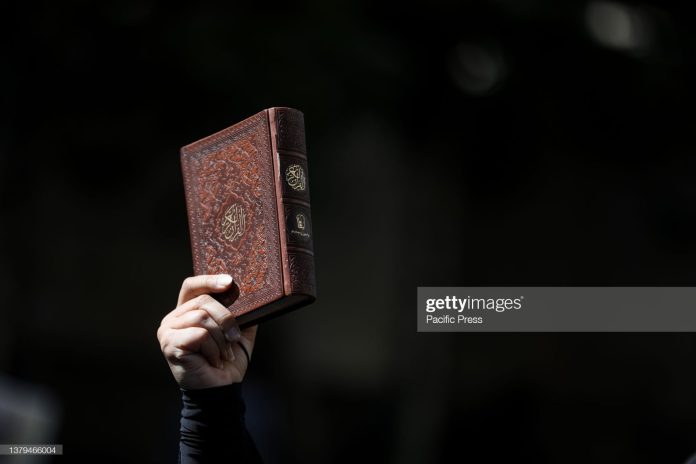
The statement came on Sunday, a day after Edwin Wagensveld, leader of the Islamophobic organization Patriotic Europeans against the Islamization of the West (PEGIDA) movement in the Netherlands, ripped apart a copy of the Holy Qur’an in front of a number of OIC Member States embassies in The Hague.

“The Council condemned all attempts to denigrate the sanctity of al-Mus’haf ash-Sharif (Holy Quran) as well as other sacred books, values, and symbols of Islam and other religions under the garb of freedom of expression, which is contrary to the spirit of Articles (19) and (20) of the ICCPR (The International Covenant on Civil and Political Rights),” read the statement.

The OIC also called upon Dutch authorities “to take necessary measures against such provocative acts, which constitute acts of religious hatred and are in violation of international law, and to prevent their recurrence.”

Wagensveld did the hateful act publicly in front of the Turkish, Pakistani, and Indonesian embassies while insulting Islam and Muslims.

He then tossed pages of the holy book on the ground and demanded the copy he desecrated last month.

He expressed gratitude to the Dutch police for protecting him during the provocative act.

Wagensveld tore the Holy Qur’an in a one-person demonstration in The Hague on January 22 under police protection, and again on February 13 in the city of Utrecht.

Muslim groups gathered at the site, where a demonstration in Rotterdam was planned, and held a counter-demonstration.

PEGIDA’s demonstration was not banned despite the announcement that the group’s members would burn the Qur’an.

On August 18, Wagensveld tore the Holy Qur’an in front of the Turkish embassy in The Hague.

Palestinian teenager succumbs to wounds sustained in Gaza rally

Gaza Rally

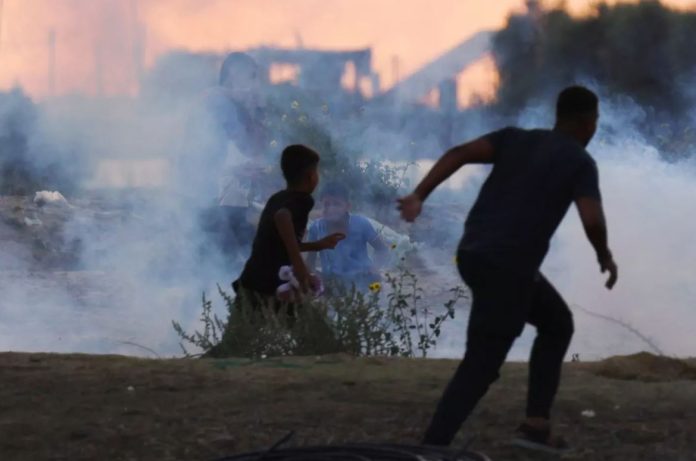
The Palestinian Health Ministry has announced 18-year-old Majdi Ghabayen succumbed to injuries he sustained during a protest that was held along the fence separating Gaza from the occupied territories on September 13 in support of al-Aqsa Mosque.

The Popular Resistance Committees and its military wing al-Nasser Salah al-Deen Brigades mourned Ghabayen, noting that he was one of its fighters who was injured in an accidental explosion that took place during the protests.

On September 13, five Palestinians were killed and more than 10 others injured due to the accidental explosion.

Palestinians have been protesting in eastern Gaza since September 13 almost on a daily basis to show support for al-Aqsa Mosque and Palestinians in the occupied West Bank, amid rising acts of violence by Israeli forces and settlers.

Israelis have been engaged in provocative intrusions into the Mosque, one of the holiest Muslim sites in the world located in occupied east al-Quds, in recent months in what many believe is a plot to divide the mosque and to turn parts of it into a Jewish temple.

The demonstrators also show their solidarity with Palestinians held in Israeli jails and call for an end to the crippling Israeli siege on Gaza.

Gaza, home to about two million Palestinians, has been under Israeli siege since June 2007. The tight blockade has caused a decline in the standards of living as well as unprecedented levels of unemployment and unrelenting poverty.

Seven Palestinians have so far been killed and dozens of others injured at the hands of Israeli forces who attacked the protests in eastern Gaza.

Some 700,000 Israelis live in 279 settlements built across the occupied West Bank and East al-Quds since Tel Aviv’s occupation of the territories in 1967.

The international community regards the settlements as illegal under international law and the Geneva Conventions given that they have been constructed on occupied land.

Iran says to continue nuclear achievements despite sanctions

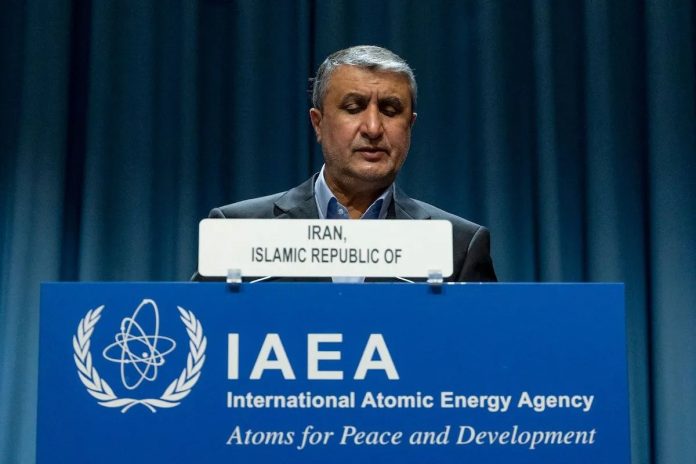
Head of the Atomic Energy Organization of Iran (AEOI) Mohammad Eslami

The head of the Atomic Energy Organization of Iran (AEOI), Mohammad Eslami, made the remarks addressing the 67th Regular Session of the International Atomic Energy Agency (IAEA) in the Austrian capital, Vienna, on Monday.

Eslami also said Iran is planning on increasing the nuclear power’s share in the country’s energy basket to 20,000 megawatts by 2040, and added designing and construction of research reactors and accelerators and irradiation systems for the production and application of radioisotopes in the fields of medicine, agriculture, environment and industry are on the agenda.

Amid Iran’s longstanding spat with the West over its nuclear activities, the Iranian official noted that the Islamic Republic has been consistent in its cooperation with the IAEA and has been open to numerous snap inspections by the agency, drawing a comparison with the Israeli regime’s opaque nuclear policy.

Eslami also asked the IAEA to take tangible measures to remain impartial and avoid disclosing confidential information on Iran’s nuclear activities and sites.

He stated that the Israeli regime’s assassination of Iranian nuclear scientists is against the United Nations Charter and its principles.

The AEOI head said the regime’s expansion of its nuclear arsenal is a source of international concern which flies in the face of the nuclear Non-Proliferation Treaty (NPT) and amid plans to establish a nuclear-free region.

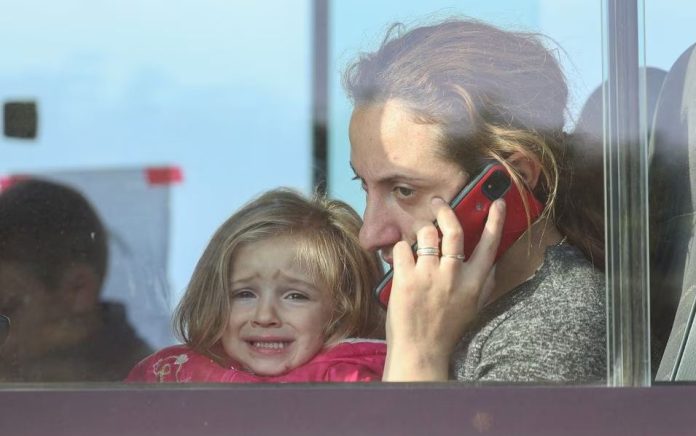
Nagorno-Karabakh’s residents begin to leave en masse for Armenia

Nagorno-Karabakh

The Nagorno-Karabakh leadership told Reuters the region’s 120,000 Armenians did not want to live as part of Azerbaijan for fear of persecution and ethnic cleansing.

Those with fuel had started to drive down the Lachin corridor toward the border with Armenia, according to a Reuters reporter in the Karabakh capital known as Stepanakert by Armenia and Khankendi by Azerbaijan.

Reuters pictures showed dozens of cars driving out of the capital toward the corridor’s mountainous curves.

The Armenians of Karabakh, a territory internationally recognised as part of Azerbaijan but previously beyond its control, were forced into a ceasefire last week after a 24-hour military operation by the much-larger Azerbaijani military.

Armenia and Azerbaijan have fought two wars over the enclave in 30 years — with Azerbaijan gaining back swathes of territory in and around Nagorno-Karabakh in a six-week conflict in 2020.

Turkish President Tayyip Erdogan, who backed the Azeris with weaponry in the 2020 conflict, was due on Monday to meet Azerbaijan President Ilham Aliyev in Nakhchivan — a strip of Azeri territory nestled between Armenia, Iran and Turkey.

Erdogan last week said he supported the aims of Azerbaijan’s latest military operation but played no part in it.

The Armenians are not accepting Azerbaijan’s promise to guarantee their rights as the region is integrated.

“Ninety-nine point nine percent prefer to leave our historic lands,” David Babayan, an adviser to Samvel Shahramanyan, president of the self-styled Republic of Artsakh, told Reuters.

“The fate of our poor people will go down in history as a disgrace and a shame for the Armenian people and for the whole civilised world,” Babayan continued, adding, “Those responsible for our fate will one day have to answer before God for their sins.”

The Armenian leaders of Karabakh said that all those made homeless by the Azerbaijani military operation and wanting to leave would be escorted to Armenia by Russian peacekeepers.

Reuters reporters near the village of Kornidzor on the Armenian border saw some heavily laden cars pass into Armenia.

Armenia Prime Minister Nikol Pashinyan has faced calls to resign for failing to save Karabakh. In an address to the nation, he stated some aid had arrived but a mass exodus looked inevitable.

“If proper conditions are not created for the Armenians of Nagorno-Karabakh to live in their homes and there are no effective protection mechanisms against ethnic cleansing, the likelihood is rising that the Armenians of Nagorno-Karabakh will see exile from their homeland as the only way to save their lives and identity,” he said, according to an official transcript.

The situation could change the delicate balance of power in the South Caucasus region, a patchwork of ethnicities crisscrossed with oil and gas pipelines where Russia, the United States, Turkey and Iran vie for influence.

Last week’s Azerbaijani victory appears to end one of the decades-old “frozen conflicts” of the Soviet Union’s dissolution. Aliyev said his “iron fist” had consigned the idea of an independent ethnic Armenian Karabakh to history and that the region would be turned into a “paradise.”

Armenia says more than 200 people were killed and 400 wounded in the Azerbaijani military operation.

BRICS expansion crucial with more than 80% of world’s oil reserves to be included: Venezuela

BRICS

“The expansion of BRICS is extremely important, particularly in the energy sector, since we are talking about the fact that with the accession of Saudi Arabia, Iran, and countries such as Venezuela in the future, more than 80% of the world’s oil reserves and its production will fall within the scope of BRICS,” Gil said.

Moreover, BRICS’s member states will collectively be the world’s key energy consumer, he added.
All in all, Venezuela’s foreign minister sees BRICS’s expansion as an “ideal alliance of perfect complementarity.”

“This is a new order, not only political but also economic, and, of course, if we manage over time to consolidate the de-dollarization of trade in energy and industrial goods, for example, technologies that are produced in China and India, we will really contribute to the creation of a more balanced world,” he continued.

Venezuela hopes to become a member of the BRICS bloc soon, as it sees support for its application from all member states, including Russia, Gil said.

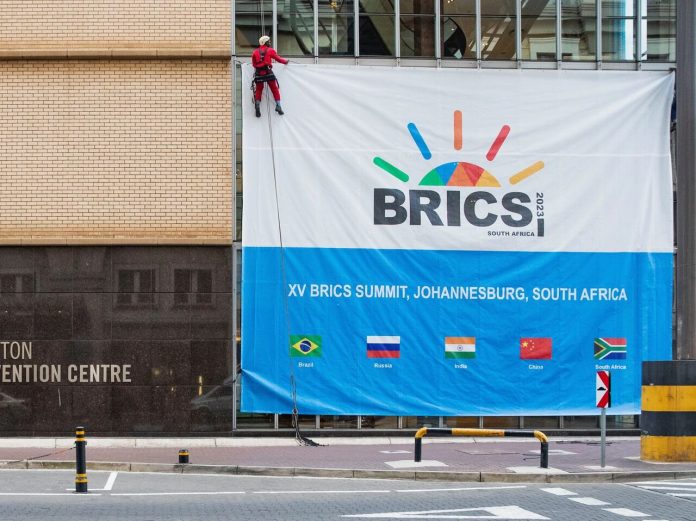
“We took part in the BRICS summit in Johannesburg and we are very happy to be [the bloc’s] partner. We, along with 22 other countries, have applied for membership. We welcome BRICS’s expansion, which it has or will have starting in January, when the presidency will be transferred to Russia. Venezuela is determined to become an official member of the bloc soon. Brazil, Russia, China and South Africa support us decisively, all countries support our candidacy. We have no problems with that and are working on it,” the minister added.

He stated Venezuela was already working in all BRICS commissions and exchanging information with the members.

Venezuela and Russia will soon hold a meeting of the high-level intergovernmental commission and discuss military-technical cooperation, Venezuelan Foreign Minister said.

“All plans with Russia are discussed within the framework of a high-level intergovernmental commission, which will soon hold its meeting, including the issue of military-technical cooperation is also on the agenda,” Gil added.

He also said that the commission has a dedicated sub-commission discussing specifically the possibility of opening a Kalashnikov plant in Venezuela.

Many European, Asian and American companies have shown interest in cooperation with Venezuela in different sectors, including energy, Gil stated, adding that the Latin American country is on its way to becoming the fourth-largest gas reserve soon.

“We have discovered the interest of many companies – European, Asian and American – in participation in different Venezuelan sectors, including energy.”

The foreign minister pointed to a recent gas investments initiative called Global Gateway Investment Agenda, which was agreed by the European Union and the Community of Latin American and Caribbean States at their summit in July.

“We should recall that Venezuela is the world’s largest oil reserve, and very soon we will become the fourth-biggest gas reserve globally. In other words, there are many opportunities, our oil industry is steadily growing. And we really have a lot of interest from different companies,” Gil said.

Venezuela has discussed unconditional lifting of unilateral sanctions against the country with “all members of the international system,” including the United States, he added.

“Sanctions are pointless and must be lifted. Venezuela is prepared to hold and hold negotiations with all members of the international system, including the US, demanding full and unconditional lifting of sanctions,” Gil said.

He stated Venezuelan President Nicolas Maduro tasked a team, led by parliament speaker Jorge Rodriguez, with negotiating specifically with the US and US-supported opposition.

“While the negotiations run their natural course, Venezuela keeps faith that Washington will return to reason and will lift sanctions immediately,” Gil added.

He also said that Venezuela has held a range of “positive” bilateral and multilateral meetings at the UN General Assembly High-Level Week, taking place in New York from September 18-26.

“We have deployed our Bolivarian peace diplomacy. The meetings were very positive and we have found an atmosphere of support for the [Venezuelan] government, primarily with regard to the issue of lifting unilateral coercive measures and sanctions against our country,” the top Venezuelan diplomat added.

Venezuela supports the scenario of a negotiated solution to the crisis in Ukraine, as it believes that weapon supplies and other tools of conflict protraction cannot bring about positive outcomes, Gil stressed.

“Venezuela, as President Nicolas Maduro said, is committed to peace, a genuine peace. We want diplomacy to prevail over weapon supplies.”

“Venezuela joins the call that diplomacy must prevail over weapon supplies and the artificial protraction of the conflict, which does not lead to any positive results,” he said.

The top Venezuelan diplomat added that the security of the Eastern European region should be achieved via diplomatic agreements and expressed support for the initiatives that can produce peace, including those suggested by China, Belarus, Brazil, Mexico and South Africa.

Iraqi central bank says to restrict internal trade to Dinar

Dollar

Al-Allaq was quoted by Iraqi News Agency (INA) as making the remark in a Sunday meeting with the heads of the boards and authorized directors of the banks licensed in Iraq.

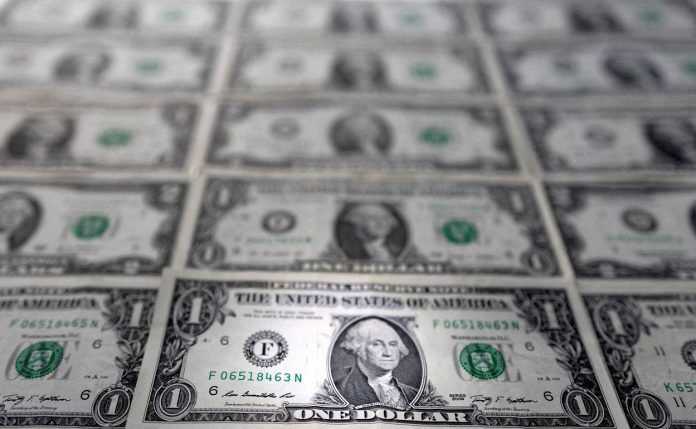
“The coming year will witness the restriction of internal commercial and other transactions to the Iraqi dinar instead of the (US) dollar, except for those delivered to travelers,” he stated.

The official added that the measure was aimed at “controlling the general level of prices and lowering the inflation rate, which is a basic indicator of the effectiveness of monetary policy.”

Al-Allaq noted “the new system of external transfer and sale of the US dollar” was meant to combat money laundering and financing of terrorism, and was also aimed at facilitating direct relations between Iraqi banks and their international counterparts.”

The new development came as the global drive toward de-dollarization rages on unabated amid growing efforts by different countries to ditch dependency on the US dollar and trade with their own national currencies.

US Treasury Secretary Janet Yellen said in the middle of June that Washington should expect a gradual decline in the dollar’s share of the global reserves, as the global de-dollarization move gains momentum.

“We should expect over time a gradually increased share of other assets in reserve holdings of countries — a natural desire to diversify,” she stressed.

Yellen acknowledged that the use of sanctions has motivated some countries to look for currency alternatives.

At present, all indicators show that the amount of US dollars held in reserves by non-US central banks has fallen to its lowest level.

The weaponization of the US dollar in addition to the imposition of US sanctions on perceived adversaries have made other countries wary of utilizing the greenback in their financial transactions.

Iranian daily: Don’t try to conceal Russia’s role in Iraq war

Iran-Iraq War

In an article on Monday, Jomhuri-e Eslami, while confirming the West’s ‘unwavering’ support for Iraq during the 8-year war, noted that the Soviet Union was the largest exporter of military equipment and munitions to Iraq, providing 85 percent of the weapons used by Iraq in its war against Iran in the 80s.

“People remember that most of the fighters that bombed our cities were Russian-made Tupolev, MiG, Sukhoi, and the missiles that targeted our urban areas, and the tanks they used were made by the Soviet Union,” the daily explained, citing confirmed data from online encyclopedia Wikipedia.

“We should not forget the crimes of the West, but highlighting their contribution should not lead us to a point where we forget the East. Clarification means honestly saying all the facts,” Jomhuri-e Eslami concluded.

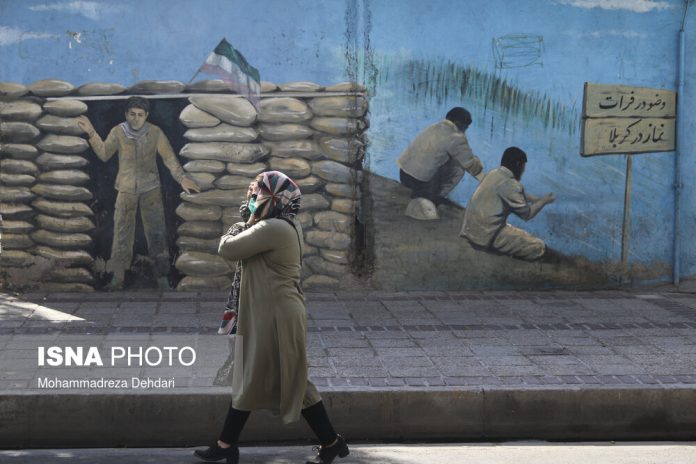
The article is published as Iran is marking the Sacred Defense Week with military parades and unveiling new defense achievements 35 years after the imposed war ended after both sides signed the UN Resolution 598.