Wednesday, December 24, 2025
Home Blog Page 1242

Egypt: Presidential election to be held in December

Egypt Sisi

The National Elections Authority said on Monday that the vote will be held December 10-12.

A handful of politicians have already announced their bids to run for the country’s highest post, but none poses a serious challenge to el-Sisi, who has been in power since 2014 – a year after overthrowing the country’s first democratically elected President Mohamed Morsi of the Muslim Brotherhood.

The Muslim Brotherhood has since been declared a “terrorist” organisation.

Opposition politician Ahmed al-Tantawi, an ex-lawmaker, has stated he will run, and accused security agencies of arresting some of his supporters.

Other candidates who announced their bids include Farid Zahran, head of the Egyptian Social Democratic Party; Abdel-Sanad Yamama, head of the Wafd Party; and Gameela Ismail, head of the liberal Constitution Party (Dostour Party).

El-Sisi’s presidency has been marked by a crackdown on dissent across the political spectrum.

Activists say tens of thousands have been jailed since 2013, often without fair trials, and that the crackdown has continued despite the pardoning of some high-profile prisoners and the launch of a national political dialogue.

Moreover, the economic situation in the country remains dire, as Egypt’s currency has lost half its value since March 2022, and as inflation reached an all-time high of 39.7 percent in August.

The former army chief was declared winner of both the 2014 and 2018 elections with 97 percent of the vote. In 2018 he faced just one opponent, himself an ardent el-Sisi supporter, after the main challenger was arrested and other hopefuls pulled out, citing intimidation.

Due to constitutional amendments in 2019, el-Sisi can stand for a third term. The amendments also extended the length of presidential terms to six years from four, allowing him to stay in office until at least 2030.

Election results are expected to be announced on December 23. In the event of a run-off round, final results should be announced on January 16 at the latest, the National Elections Authority announced.

Iran says Japan proposed initiative to revive JCPOA

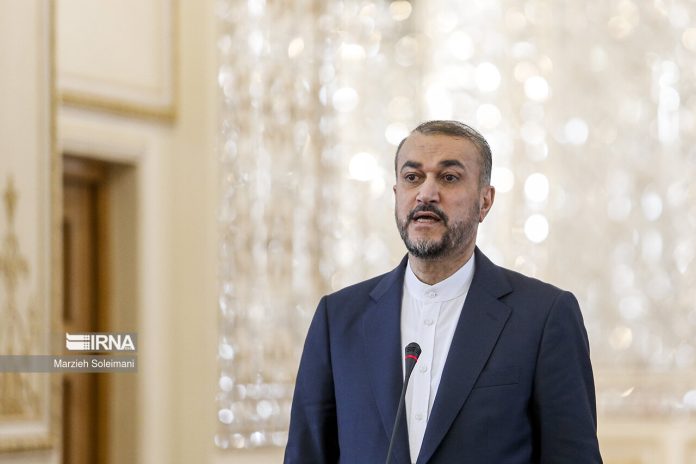
Hossein Amirabdollahian

The minister said that any initiative from Japan that aligns with “Iran’s interests” would be viewed positively by Tehran.

“We support the constructive role of Japan in reviving the nuclear deal,” he added.

The diplomat did not detail the initiative. He stated he received the proposal from the Japanese government when he visited Tokyo in August and met Prime Minister Fumio Kishida and then Foreign Minister Yoshimasa Hayashi.

The United States, under former President Donald Trump, abandoned the Joint Comprehensive Plan of Action (JCPOA) in May 2018 and reinstated crippling sanctions that the agreement had lifted.

The talks to revive the 2015 deal kicked off in Vienna in April 2021, with the intention of removing anti-Iran sanctions and examining Washington’s seriousness in rejoining the JCPOA.

The discussions, however, have been at a standstill since August 2022 due to Washington’s refusal to remove all the sanctions imposed by the previous US administration.

Iranian Military chief warns enemies not to entertain idea of aggression against Iran

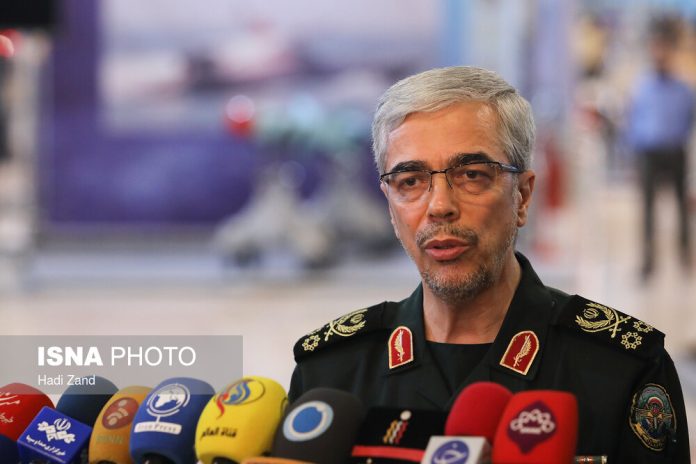
Major General Mohammad Baqeri

Major General Baqeri stated on Monday Iran has amassed such formidable military power that the enemies would not even imagine the possibility of an attack, let alone take an act of aggression.

“We vow to boost the country’s defense power day by day and maintain and enhance our preparedness,” he added.

The Iranian Armed Forces have fingers on the trigger, keep their eyes on the radar screen, and their reconnaissance and intelligence gear are on alert for countering any threat, the general noted, advising the enemies to abandon dreams about attacking Iran.

The top commander had already stated that all Iranian military forces are ready to give a decisive and crushing response to any threat at any level in such a way that the enemies of Iran would regret taking hostile action against the Islamic establishment.

Armenia calls for active communication with Iran during “difficult period for region”

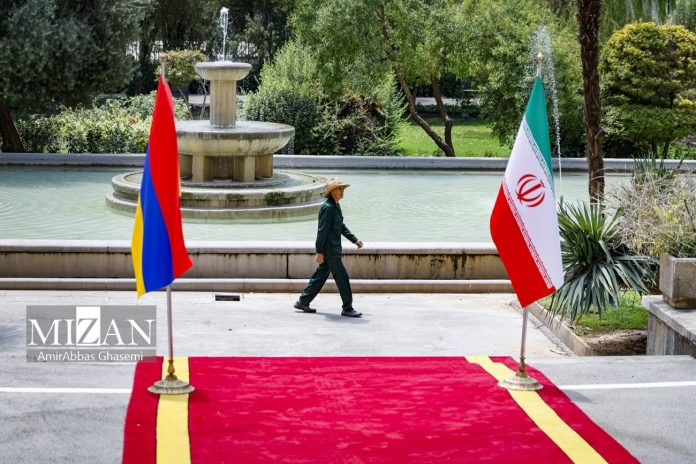
Iran Armenia Flags

Pashinyan made the remark while speaking in a meeting with Iran’s new ambassador to Yerevan, Mehdi Sobhani, on Monday.

Referring to his “reliable dialogue” with Iranian President Ebrahim Reisi, Pashinyan said it paves the way for the consistent deepening of cooperation between the two countries, his office said in a press release.

He also congratulated Sobhani on his appointment to the new post, expressing hope that relations between the two countries would continue to develop and strengthen during the ambassador’s term of office.

Sobhani, for his part, once again reaffirmed Iran’s unequivocal support for Armenia’s territorial integrity.

He expressed concern over the humanitarian situation in the disputed Nagorno-Karabakh region, saying that the security and rights of Armenians living in that region must be guaranteed.

The Iranian diplomat added that the Islamic Republic is keen to develop relations with Armenia in all fields.

The two sides also discussed a host of common issues, including the implementation of joint plans in such areas as economy, trade, development of infrastructure, healthcare, education, science and culture.

Nagorno-Karabakh is a landlocked region in the Caucasus, which lies within Azerbaijan’s borders and is internationally recognized as part of its territory, but is populated mostly by ethnic Armenians.

Armenian authorities, who have been running the region’s affairs without international recognition since the early 1990s, declared on Wednesday that local “self-defense forces” had laid down their arms and disbanded under a Russia-mediated ceasefire following the latest armed clashes with Azeri forces. The truce halted Azerbaijan’s 24-hour offensive against pro-Armenia forces to retake the territory.

Iran has consistently called on Armenia and Azerbaijan to settle their dispute over the Nagorno-Karabakh region through peaceful ways.

Live Update: Russia’s “Special Operation” in Ukraine; Day 579

Russia Ukraine War

Kremlin says US Abrams tanks delivered to Ukraine “will burn”

Kremlin spokesperson Dmitry Peskov commented on the arrival of the US Abrams tanks in Ukraine, saying they “will burn” like other weapons and will not alter the situation in the conflict zone.

“Abrams tanks are such a serious weapon. But remember how President (Vladimir Putin) spoke about other foreign-made tanks, that they burn readily. Well, these (tanks) will burn too,” Peskov said on a regular conference call with journalists Tuesday.

On Monday, the Pentagon confirmed 31 US Abrams tanks have arrived in Ukraine.

Peskov stated that despite their significance, no single type of weapon could change the balance of power on the battlefield and alter the course or the outcome of the war.

“​​All this can in no way affect the essence of the special military operation or its outcome,” he added, using the term that Putin and Russian leaders use to refer to the Russian invasion of Ukraine.


Russia’s defence minister says military is building up firepower

Russia’s military is building up its firepower through supplies of modern weapons, Defence Minister Sergei Shoigu has said, as Russia’s war in Ukraine continues.

Shoigu was speaking at a defence ministry meeting, where he also stated the Russian army was improving training.


Russia publishes video appearing to show Black Sea Fleet commander in meeting as Ukraine claims he was killed

The Russian defense ministry published video Tuesday that appears to show the commander of the Black Sea Fleet, Admiral Viktor Sokolov, participating in a meeting. The video comes after the Ukrainian Special Operations Forces claimed Monday that Sokolov was killed in a strike on Sevastopol military headquarters on Friday.

In the video, a man who resembles Sokolov appears to join the meeting with Defense Minister Sergei Shoigu and other Russian military leaders via video conference.

The nametape on his uniform reads Sokolov V. N. and his screen shows the Cyrillic letters “ЧФ,” the abbreviation for the Black Sea Fleet. He appears healthy.

Kremlin spokesperson Dmitry Peskov earlier on Tuesday refused to comment on the Ukrainian claim that Sokolov had been killed.

“There has been no information from the Ministry of Defense. This is entirely in their purview and we have nothing to say here,” Peskov told reporters Tuesday during a routine call.


Ukrainian shelling in Belgorod damaged power line: Governor

Vyacheslav Gladkov, the governor of Russia’s Belgorod oblast, stated that after the Ukrainian Armed Forces shelled the village of Novaya Tavolzhanka in the region, the power supply line was damaged.

“Also, as a result of the shelling, an outbuilding on the territory of a private household burned down,” he said in a statement on the Telegram messaging app

Operational and emergency services are on site and will begin eliminating the consequences in the near future,” he added.


Most Russian oil exports bypassing price cap: Report

The EU and G7 countries have largely failed to enforce a $60 per barrel price cap on Russian seaborne oil exports, Financial Times reported, citing an analysis of shipping and insurance records.

In August, around three-quarters of Russian oil was reportedly being shipped overseas without Western insurers, which was considered one of the tools helping to limit the price at which Russian crude was being sold on the global market.

About half of Russian oil exports did not use Western insurance services during the entire spring, according to Kpler data, as cited by the media, suggesting Moscow “is becoming more adept at circumventing the cap.”

Meanwhile, global prices for crude are on the rise, nearing 13-month highs. Brent futures for November delivery were trading at $93.51 per barrel on Monday, while US West Texas Intermediate crude (WTI) climbed above $90 per barrel. Russian crude was no exception, with the Far Eastern blend ESPO trading at over $88 per barrel, and with Urals crude above $78 per barrel.

In June, US Deputy Treasury Secretary Wally Adeyemo claimed that the price cap imposed by the Western allies in December was working as intended.

“In just six months, the price cap has contributed to a significant decline in Russian revenue at a key juncture in the war,” he said.

In August, Acting US Assistant Treasury Secretary Eric Van Nostrand said that he was “confident that the price cap is achieving its twin goals of restricting Russian revenues while helping stabilize energy markets.”

According to FT, Russian, Chinese, and Indian insurers have stepped in to replace Western majors, while a “dark fleet” of tankers, built for transporting Russian crude around the world, has helped Moscow to avoid Western insurers and shippers.


Kremlin has “nothing to say” on alleged death of Russian Black Sea Fleet commander

Kremlin spokesman Dmitry Peskov has refused to comment on the alleged assassination of the Russian Black Sea Fleet Admiral Viktor Sokolov.

Ukraine claimed on Monday that Sokolov was killed during its attack on the occupied peninsula of Crimea on Friday.

“There has been no information from the Ministry of Defense. This is entirely in their purview and we have nothing to say here,” Peskov told reporters Tuesday during a routine call.

Ukrainian Special Operations Forces claimed that Sokolov, as well as 33 other officers, were killed in the attack on the Black Sea headquarters in Sevastopol Friday, in perhaps the boldest attack by Ukrainian forces on the occupied peninsula of Crimea so far.


Zelensky’s wife unsure if he will seek re-election

Ukrainian President Volodymyr Zelensky might not run for re-election next year, his wife, First Lady Elena Zelenskaya, told CBS’ Face the Nation, even as with no opposition, the outcome of any election is almost certainly a foregone conclusion.

Zelensky banned all opposition political parties less than a month into Russia’s military operation and consolidated all potentially adversarial media outlets into one state-backed platform. No potential presidential challengers have come forward either.

However, Zelenskaya said that her husband’s decision on whether to run again may be influenced by the difficulties of organizing elections amid a military conflict, with millions of eligible voters scattered all over the surrounding continents. She added that she would nevertheless “support him whatever decision he takes.”

“It will also depend whether our society would need him as a president, if he will feel that Ukrainian society would no longer wish him to be the president, he will probably not run,” she added, admitting that she was uncertain of her husband’s intent.

While Zelenskaya claimed she “didn’t fully endorse” his first attempt at the presidency, she acknowledged that a second try would be “not as scary” due to the couple’s experience. She called the moderator’s question – about how she would feel if Zelensky launched a re-election bid – a “difficult” one.


US running low on cash for Ukraine: White House

The Pentagon will only be able to support Ukraine’s war effort for a “few weeks” should Congress fail to pass a new funding bill, White House National Security Council spokesman John Kirby has claimed.

Speaking to CNN for an interview published on Monday, Kirby was asked what impact a government shutdown could have on US aid to Kiev, as lawmakers continue heated negotiations over a stop-gap budget bill which could contain up to $25 billion in assistance to Ukraine.

“We’ve got a little bit more funding to go, so I think we’ll be ok for the next few weeks or so. But without the supplemental request that we asked for, it will absolutely have an effect on our ability to support Ukraine well into the fall and into the winter months,” the White House official said.

“Not getting that supplemental request if there’s a shutdown – that’s gonna have a significant impact on their ability to succeed on the battlefield.”


UN: There’s “continuous evidence” Russian forces are “committing war crimes in Ukraine”

There is “continuous evidence” Russian forces are “committing war crimes in Ukraine,” the United Nations Human Rights Council has announced.

The council alleged that attacks in Ukraine include “unlawful attacks with explosive weapons, attacks harming civilians, torture, sexual and gender-based violence, and attacks on energy infrastructure”

The council’s Independent International Commission of Inquiry on Ukraine said it had “documented explosive weapons attacks on residential buildings, a functional medical facility, a railway station, a restaurant, shops and commercial warehouses. These attacks led to civilian casualties, the damage or destruction of key facilities, and the disruption of essential services and supplies.”

The commission heard from torture victims and quotes one person as saying, “every time I answered that I didn’t know or didn’t remember something, they gave me electric shocks … I don’t know how long it lasted. It felt like an eternity.”

The commission reported Russian soldiers committing sexual violence against women of ages ranging from 19 to 83 years, and added it continues to “investigate individual situations of alleged transfers of unaccompanied minors by Russian authorities to the Russian Federation.”

Erik Mose, chair of the Commission of Inquiry on Ukraine, told the UN Human Rights Council in Geneva that his team had “collected further evidence indicating that the use of torture by Russian armed forces in areas under their control has been widespread and systematic”.

“In some cases, torture was inflicted with such brutality that it caused the death of the victim,” he noted.


Russian ships in Black Sea still launching strikes after alleged death of top commander: Ukrainian Navy

Russian ships were still launching attacks on Ukraine following the alleged death of the commander of Russia’s Black Sea Fleet, but those attacks are being launched “by inertia,” Dmytro Pletenchuk, spokesperson for the Ukrainian Navy, said Monday on national television.

Pletenchuk was asked about comments made by Ukrainian authorities earlier Monday, claiming that Adm. Viktor Sokolov along with 33 other officers were killed and more than 100 servicemen were wounded in Friday’s attack in Sevastopol.

Pletenchuk said Russian President Vladimir Putin “does not control the actual operation of ships at sea” and relies on his admirals who know “their means and forces, personnel, how to manage them, how to better deploy them. And they can also keep things from him [Putin], not report on certain issues.”

He then claimed, “At this moment, they (the Russian Navy) lost the person who actually manages all of this, and his staff, who manages the fleet together with him. This is a large grouping that requires a great number of managers to run all the processes to make it (the fleet)work as a single mechanism. Imagine that the core part of this mechanism becomes inoperable.”

Pletenchuk went on to say that “yes, last night they (referring to the Russian ships in the Black Sea) were still launching strikes by inertia” but he compared the operations to “a chicken running around without a head.”

“Therefore, as of now, they (the Russian navy) will have respective problems with the control of the troops,” he added.

Earlier on Monday, the Ukrainian Special Operations Forces claimed Sokolov has been killed in Sevastopol on Friday, in perhaps the most daring attack by Ukrainian forces on Crimea so far.

“Eliminated during a strike on the headquarters in Sevastopol Commander of the Russian Black Sea Fleet Admiral Sokolov,” Col. Vladislav Nazarov, spokesperson for the Operational Command “South,” stated.


Death toll in Kherson region rises to 6 after more Russian attacks: Ukrainian military official

At least six people have died and five were injured as a result of Russian shelling in Ukraine’s Kherson region on Monday, Oleksandr Prokudin, head of the region’s military administration, said in an updated post on social media.

“The Russian army again attacked the Dniprovskyi district of the city of Kherson. According to preliminary information, two men and one woman died from their injuries,” Prokudin wrote.

According to Prokudin, three more people were also injured and taken to the hospital.

Earlier, Prokudin reported that three people had died and two were injured as a result of the Russian air strike on the city of Beryslav in the Kherson region Monday.

Prokudin stated that only a quarter of the population remains in the Beryslav community after the civilian evacuations following the intense Russian shelling.

“Over the past two weeks, almost 100 children and their families have left the dangerous coastal communities” of the Kherson region, Prokudin added.


Russia claims to have countered several attacks over the Kursk and Belgorod regions

Russian forces claimed to have thwarted Ukrainian missile and drone attacks on several regions Monday, according to officials.

Moscow’s air defenses shot down four Ukrainian drone attacks over the Kursk region and seven drone attacks over the Belgorod region, the Russian defense ministry and regional officials reported.

Russian forces also stopped a missile attack over Sevastopol, the defense ministry announced.

No significant damage or casualties were reported by the officials in the area.

Mikhail Razvozhaev, a Russian-appointed governor of Sevastopol, stated that “air defense forces shot down one missile” in the area of ​​the Belbek military airfield in Sevastopol, without providing any further details.


Moscow puts ICC chairman on wanted list: Russian media

The Russian Ministry of Internal Affairs has put International Criminal Court Chairman Piotr Hofmanski – along with his deputy, Judge Luz del Carmen Ibanez Carranza, and Judge Bertram Schmitt – on the country’s wanted list, according to a report by Russian news outlet Mediazone.

Details of the criminal cases concerning the ICC officials have not yet been revealed.

Russia says Armenian PM making a big mistake by flirting with West

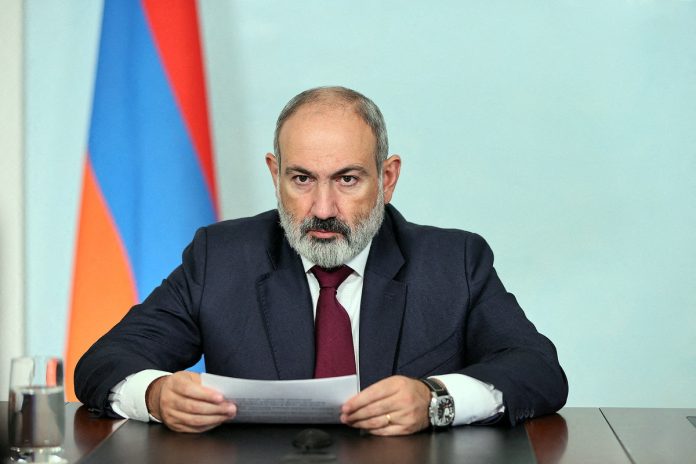
Armenian Prime Minister Nikol Pashinyan

Pashinyan said in an address to the nation on Sunday that Russia had failed Armenia by not providing more help to avert the crisis over the breakaway region, adding that he would have to transform Armenia’s security alliances.

Russia’s foreign ministry hit back with a strongly worded attack on Pashinyan.

“We are convinced that the Yerevan leadership is making a massive mistake by deliberately trying to destroy Armenia’s multi-faceted and centuries-old ties with Russia while making the country hostage to the geopolitical games of the West,” it said.

Azerbaijan seized Karabakh in a lightning offensive last week, sending thousands of ethnic Armenians fleeing into Armenia. Baku has promised to protect the rights of the roughly 120,000 Armenians who call Karabakh home but many refuse to accept its assurances.

Karabakh is internationally viewed as Azerbaijani territory.

Russia, which has about 2,000 peacekeepers in the region, announced Pashinyan was trying to absolve himself “of responsibility for failures in domestic and foreign policy by shifting the blame to Moscow”.

Pashinyan’s remarks about transforming alliances indicate that he is preparing to pivot away from Armenia’s alliance with Moscow towards the West, the Russian foreign ministry added.

Russia noted Pashinyan had “shied away from working in rhythm with Russia and Azerbaijan and instead had run to the West” to resolve the Karabakh crisis and that authorities in Yerevan had stoked anti-Russian hysteria in the Armenian media.

Moscow denied suggestions that it had any hand in protests in Yerevan and cautioned Pashinyan that while Russia did not stoke revolutions, the West did.

“The head of the Armenian government should be well aware that Moscow does not get involved in such things – unlike the West which is pretty adept at organizing ‘colour revolutions’,” Russia said.

Russia blames the United States for stoking so-called colour revolutions in several post-Soviet republics including Ukraine.

Palestinians slam Israel army’s ‘barbaric’ university raid and students arrests

Israel Palestine

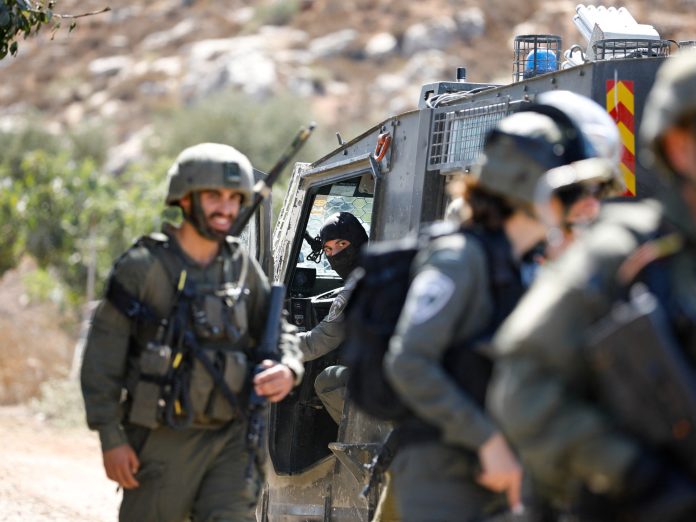
Around 10 military vehicles violently raided Birzeit University’s campus before dozens of special forces disembarked and surrounded the student council building, according to student Basil Barghouti.

Troops assaulted university guards, vandalised the council’s office and arrested eight of its members.

The detained students, including the council’s elected president, Abdul Majeed Hassan, had been barricading themselves inside the building for two weeks fearing arrest by the Palestinian security services.

“The soldiers destroyed the contents of the building and broke equipment that was to be used in activities during next week,” Barghouti told Middle East Eye.

“They also confiscated many items belonging to the student council.”

Along with Hassan, those arrested included senior members of the student council, which is dominated by the Islamic Wafa bloc. The Hamas-affiliated list won student elections in May for the second consecutive year, beating their PA-affiliated rivals.

Birzeit University, located north of Ramallah, is one of the largest educational institutions in the occupied West Bank and maintains its independence from the control of the Palestine Authority (PA).

Student activism at the university is hotly contested and often reflects trends in the wider Palestinian political life.

The Sunday raid came one day after Birzeit opened its doors for the new academic year, a time when there is high demand for the services provided by the student council.

It also follows the violent arrest of elected leader Hassan by the PA forces, who regularly coordinate security matters with the Israeli army, in June.

The 23-year-old was detained with fellow student activist Yahya Farah and held for a month over their student work.

Students from the Islamic Wafa bloc say they have faced continued harassment by the PA forces since, including attempts to arrest some of them.

“The [PA] security services arrested two students on charges of union work because they were students from the Hamas-affiliated Islamic Wafa bloc,” stated Barghouti.

“After that, the students and elected council members began sleeping at the university for fear of arrest,” Barghouti added.

Nour al-Tamimi, a member of the Right to Education Campaign at the university, denounced how the arrests on Sunday were carried out as “barbaric”.

She said the troops threatened the students with their weapons and used dogs to terrorise them.

“We tried to document the toll of violations that occurred that night, and everything we documented confirms that it was a systematic attack directly against the student council at Birzeit University,” Tamimi told MEE.

Such raids into Palestinian universities are not new. Birzeit University was last raided in 2021, and in 2018, when then-council president Omar al-Kiswani was arrested. At least 80 students attending the university are at present detained in Israeli military prisons, according to the university.

The Israeli military claimed the eight students detained on Sunday were recruited by Hamas and were planning an attack against Israel. Similar claims are routinely made by the Israeli military after the arrest of Palestinian activists.

Birzeit University denounced the attack on its campus and the arrest of the students, calling it a violation of “internationally upheld principles”.

“The recurring and brutal invasion is an extension of the military occupation’s systematic policy to break down the educational system in Palestine, particularly attempting to exert control over Palestinian youth, their aspirations and right to education,” the university announced in a statement.

“Birzeit University has been subjected to military raids and arrest campaigns since its establishment, and last academic year several students were shot at and subsequently imprisoned by Israeli occupation forces at the eastern gate of the university.”

The board of trustees at the university urged action by international institutions, calling upon them to protect the Palestinian public and their educational institutions.

Senior US officials visit Armenia after Nagorno-Karabakh operation

US Delegation in Armenia

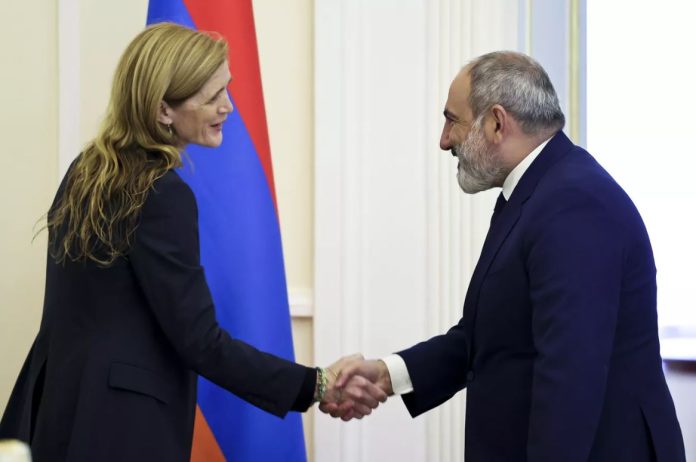
Samantha Power, the administrator of the US Agency for International Development (USAID), is in Armenia along with State Department acting assistant secretary for Europe and Eurasian Affairs Yuri Kim.

Amidst heightened tensions, the visit of Power and Kim to Armenia has added a new layer of complexity to the evolving dynamics in the region.

This visit marks a significant development, being the first time senior US officials have set foot in Armenia since the ceasefire agreement that ended the conflict in Nagorno-Karabakh.

“I’m here to reiterate the US’ strong support & partnership with Armenia and to speak directly with those impacted by the humanitarian crisis in Nagorno-Karabakh,” stated Power, expressing her purpose in Armenia.

The US Embassy in Armenia released a statement emphasizing their support for Armenia’s independence, territorial integrity and democracy.

Deputy Foreign Minister Paruyr Hovhannisyan and Minister of Labor and Social Affairs Narek Mkrtchyan extended the warm welcome, showcasing the importance attached to Power and Kim’s arrival.

However, while US officials aim to focus on humanitarian efforts, there is growing skepticism about their true intentions.

The move to discuss “humanitarian needs” are viewed by some as an attempt to protect [Armenia Prime Minister Nikol] Pashinyan from backlash within his own country as the visit coincides with mounting criticism of the prime minister’s handling of the Nagorno-Karabakh conflict – specifically the ceasefire terms.

Critics argue that American involvement may not lead to a favorable outcome, drawing parallels with past US interventions.

Thus, the visit by American officials to bolster Pashinyan’s position in the face of domestic criticism is seen by some as an unwelcome interference in Armenia’s internal affairs.

The latest comes amid reports that the United States is working on creating an international mission for Nagorno-Karabakh, adding another layer of uncertainty to the situation in the region.

Erdogan says Azerbaijan ‘forced’ to conduct operation in Nagorno-Karabakh

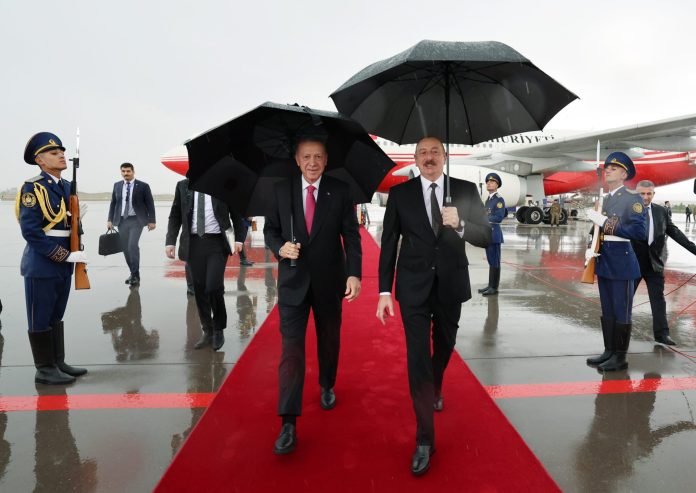
Erdogan and Aliyev

“Regrettably, nothing was done to alleviate Azerbaijan’s concerns in Karabakh. So it was forced to conduct this operation. This Azerbaijani victory has opened the door for full-fledged normalization in the region. I am convinced that we must capitalize on this opportunity. We expect Armenia to respond to the olive branch extended to it and take steps in good faith,” the TRT television channel quoted him as saying.

“There are no losers when a peaceful solution is found. Our duty to our people is to ensure peace, tranquility, and prosperity in the region. We are determined to carry out this duty. And we want our vis-a-vis to demonstrate similar sincerity,” he continued, adding that Azerbaijan’s operation “was held in a very short time and with maximal care for the [security of the] civilian population.”

Aliyev also said on Mondau the reintegration of Karabakh Armenians into Azerbaijani society will be successful.

“The city of Yevlakh hosted a meeting between representatives of Karabakh Armenians and officials from Azerbaijan’s state agencies a couple of days ago. Another meeting is taking place in Khankendi today. I haven’t received a report on its outcome yet, but I am sure that the process of reintegration of Karabakh Armenians into Azerbaijani society will proceed successfully,” Aliyev stated following talks with Erdogan.

According to Aliyev, although it has been only five days since the end of an anti-terrorist operation in Karabakh, Azerbaijan is already sending humanitarian aid to Karabakh Armenians.

“This once again shows that the people who live in the Karabakh Region are Azerbaijani citizens regardless of their ethnic background and the Azerbaijani government will ensure their safety and rights,” he stressed.

On September 19, tensions flared up again in Nagorno-Karabakh. Baku announced it was launching what it described as “local anti-terrorist measures” and demanded the withdrawal of Armenian troops from the region.

Yerevan, in turn, announced there were no Armenian forces in Karabakh, calling what was happening “an act of large-scale aggression.” Residents of the Armenian capital took to the streets to protest outside the Armenian government building, blaming the country’s leadership and Prime Minister Nikol Pashinyan for the situation.

On September 20, the Azerbaijani Defense Ministry announced that an agreement had been reached in coordination with the Russian peacekeeping contingent to suspend the anti-terrorist operation in Nagorno-Karabakh. On September 21, representatives of Baku and the Armenian population of Karabakh met in the Azerbaijani city of Yevlakh “to discuss reintegration issues.” Karabakh residents began evacuating to Armenia on September 24.

Prime Minister Nikol Pashinyan has stated that he expected about 120,000 civilians to leave the region for Armenia due to “the danger of ethnic cleansing”.

The majority of Karabakh Armenians do not accept Azerbaijan’s promises to guarantee their rights.

The first refugees arrived in Armenia on Sunday and 6,650 people have so far entered, Yerevan said on Monday.

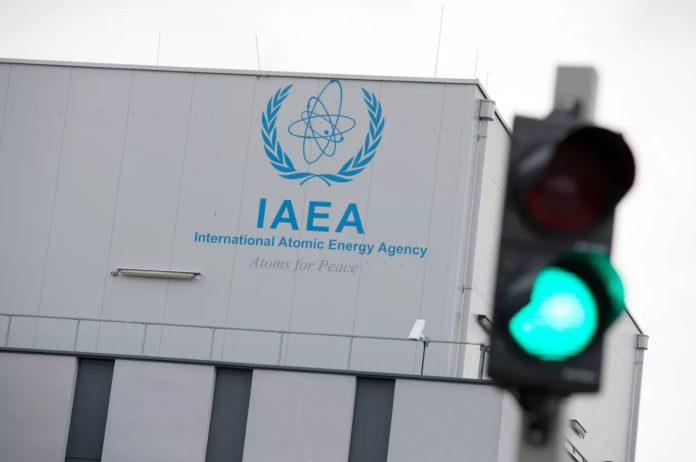
Saudi Arabia says planning tougher IAEA oversight of its nuclear activities

IAEA

Saudi Arabia has a nascent nuclear programme that it wants to expand to eventually include activities like proliferation-sensitive uranium enrichment. It is unclear where its ambitions end, since Crown Prince Mohammed bin Salman has said for years it will develop nuclear weapons if regional rival Iran does.

Riyadh has yet to fire up its first nuclear reactor, allowing its programme to still be monitored under the Small Quantities Protocol (SQP), an agreement with the International Atomic Energy Agency that exempts less advanced states from many reporting obligations and inspections.

IAEA Director General Rafael Grossi has been calling on the dozens of states that still have SQPs to amend or rescind them, calling them a “weakness” in the global non-proliferation regime. The IAEA has for years been in talks with Riyadh on making the switch to a so-called Comprehensive Safeguards Agreement (CSA) for years.

“The kingdom has recently taken the decision to rescind its Small Quantities Protocol and to move to the implementation of a full-scope Comprehensive Safeguards Agreement,” Saudi Energy Minister Prince Abdulaziz bin Salman told the IAEA’s annual General Conference, speaking through an interpreter.

If Saudi Arabia were to introduce nuclear material into its first nuclear reactor, a low-power research reactor in Riyadh that is near completion, it would void the SQP and its exemptions from regular safeguards.

Despite that, its SQP is a sensitive issue given the fears of an arms race in the Middle East. Iran denies seeking nuclear weapons.

Prince Abdulaziz did not say whether on top of a regular CSA Saudi Arabia planned to sign up to the IAEA’s Additional Protocol, which allows for more wide-ranging and intrusive checks such as snap inspections.