Wednesday, December 24, 2025
Home Blog Page 1239

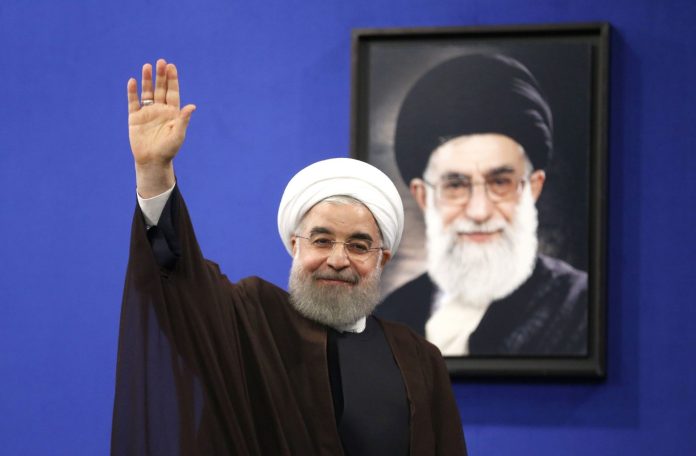
Iranian reformists meet with former president Rouhani in lead-up to parliamentary elections 

Hassan Rouhani

A pro-reform figure named Mohammad Ghouchani has hailed the meeting as “Leaving Behind Passiveness”, implying that the reformists have decided to contest the vote.

A report said the group is going to meet with other reformist figures such as former president Seyed Mohammad Khatami, Behzad Nabavi and Abdollah Nouri.

The Kargozaran will also meet with Hassan Khomeini, the grandson of the founder of the Islamic Republic of Iran Imam Khomeini.

The report added that the Kargozaran aims to make a decision as to running for the parliamentary elections.

It’s however unclear if the reformists will forge an alliance for this purpose as some of them are yet undecided.

Kremlin reminds Hillary Clinton of ‘overload gaffe’ in response to Putin jab

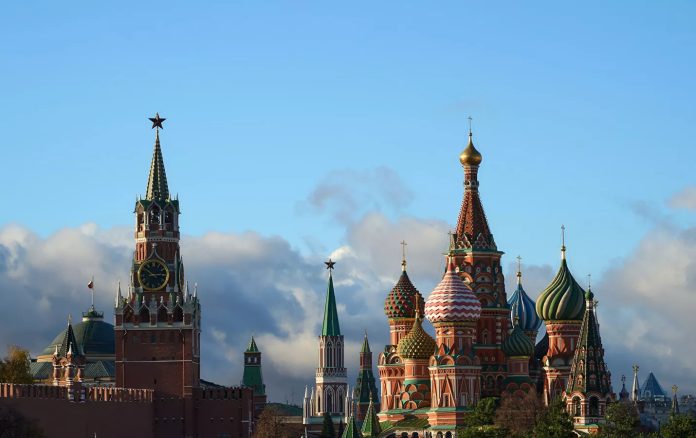
Kremlin

After Hillary Clinton sought to needle Putin over NATO enlargement, the Kremlin on Wednesday hit back by reminding her of her gaffe when she sought to “reset” relations with Russia with a button mislabelled as “overload”.

Returning to the State Department for the unveiling of her official portrait, Clinton said of NATO enlargement: “Too bad, Vladimir. You brought it on yourself.”

Asked about her remarks, Kremlin spokesman Dmitry Peskov said Clinton was known in Russia for her attempts to turn everything upside down, but most of all for her 2009 gaffe when a symbolic button designed to mark a “reset” of U.S.-Russia ties, was instead labelled “overload” in Russian.

“It is clear that this was probably not a deliberate mistake, but very telling,” Peskov added.

At the time of Clinton’s gaffe, Foreign Minister Sergei Lavrov told her the Russian verb the United States had used was incorrect but said the button would be put on his desk.

“It is probably necessary to remind Mrs Clinton of the numerous waves of NATO expansion and the approach of the alliance’s military infrastructure to our borders,” Peskov stressed.

NATO, created in 1949 to provide collective security against the Soviet Union, enlarged after the 1991 collapse of the Union with the inclusion of former Soviet and Warsaw Pact countries.

Launching the invasion of Ukraine in 2022, Putin listed his key aims as halting NATO’s eastward enlargement and ending what he called the “genocide” of Russian-speaking people by “nationalists and neo-Nazis” in Ukraine since Moscow’s 2014 annexation of Crimea.

Putin’s actions spurred Finland, which shares a long border with Russia, to join NATO. Sweden also aims to join.

Iran’s nuclear chief: IAEA inspects Iran 10 times more than other countries 

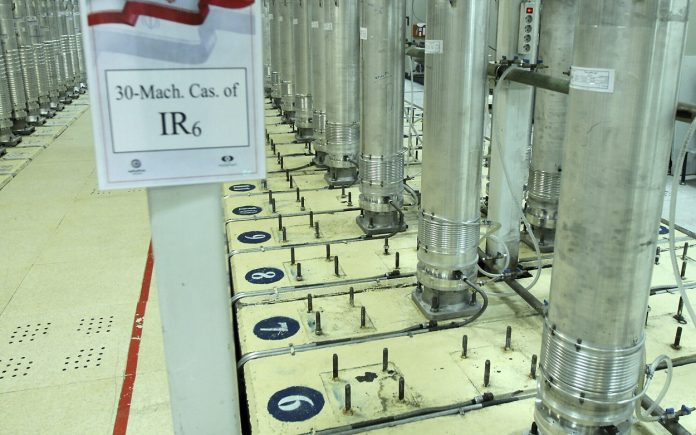
Iran nuclear program

Mohammad Eslami added that this is while Iran’s nuclear facilities account for some 2% of the whole world’s.

Eslami added that it’s not reasonable for us to be inspected ten times more than other nations.

He said nearly 120 IAEA inspectors are trusted by Iran and it would be to the point if Tehran rejected some of the inspectors.

The US and its Western allies have long accused Iran of seeking to build nuclear weapons under the guise of its atomic program. Iran rejects this, saying its nuclear activities are purely peaceful.

Iran also says nuclear arms have no place in its defensive doctrine. The West’s accusations against Iran come as the IAEA has repeatedly said in its reports that it has detected no diversion in Iran’s nuclear materials toward a bomb.

Iran indicts 73 Americans for assassinating General Qassem Soleimani 

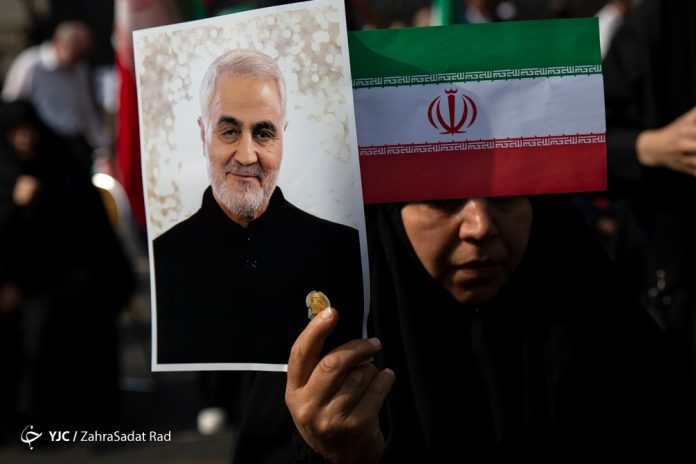
General Ghassem Soleimani

That’s according to the first deputy of the Iranian Judiciary.

Mohammad Mosaddeq noted on Wednesday that Iran’s Judiciary has so far identified 97 people that are implicated in the case.

Mosaddeq added that Iran seeks to bring Former US President Donald Trump to trial over his role in the deadly attack.

He stressed that Tehran has already sent requests for cooperation to 9 countries that are suspected of involvement in coordinating the assassination of General Soleimani and some of those countries have replied to the requests.

General Soleimani, along with Iraq’s Popular Mobilization Units’ Commander Abu Mahdi Muhandis and a number of other companions, was assassinated in a US drone attack in early hours of January 3, 2020 just outside Baghdad’s airport.

Former US President Donald Trump directly ordered the attack.

General Soleimani is credited for defeating the Daesh terror group and its offshoots that were wreaking havoc in the Middle east back then.

General Soleimani is widely revered inside Iran and abroad for his positive role in the fight against Takfiri terrorism.

Saudi envoy cancels Al-Aqsa visit after backlash over possible normalization with Israel

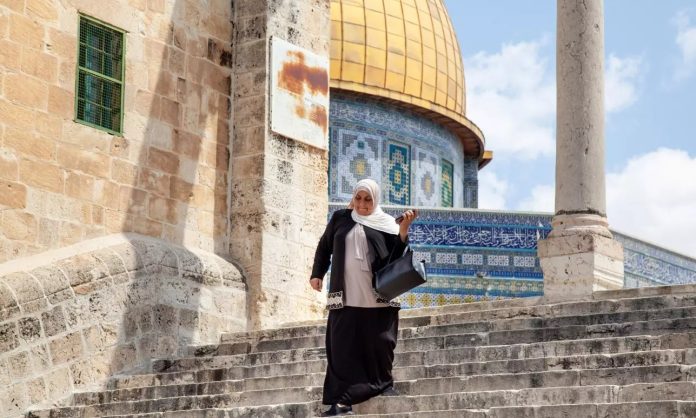
Al Aqsa Mosque

Saudi envoy cancels Al-Aqsa visit after backlash over possible normalization with Israel

Saudi Arabia’s non-resident ambassador to Palestine has postponed a planned visit to Al-Aqsa Mosque on Wednesday. The cancellation came amid criticism made by some Palestinians on social media, who viewed the visit as validating the Israeli occupation of East Jerusalem. Some called for the Saudi delegation to be prevented from entering the mosque.

Quoting a Palestinian source in Ramallah, Haaretz reported that Nayef al-Sudairi, the Saudi ambassador, postponed the visit after hearing “about the sensitivity of the matter” and understanding the “criticism and implications” surrounding it.

The Israeli daily newspaper added that the diplomat planned to visit the mosque at a later date.

The Wednesday visit was not officially announced and was not coordinated with the Islamic Waqf, a joint Jordanian-Palestinian Islamic trust, Haaretz noted.

The Waqf administers the affairs of Al-Aqsa Mosque and often handles visits by official delegations.

Sudairi, who is also Riyadh’s ambassador to Jordan, arrived in the occupied West Bank on Tuesday to meet with Palestinian officials.

During his visit, the first by a Saudi official to the West Bank since the Palestinian Authority (PA) was established, Sudairi met with Palestinian President Mahmoud Abbas, Foreign Minister Riyad al-Maliki and top PLO official Hussein Al-Sheikh.

Sudairi stated the kingdom was “working towards establishing a Palestinian state with East Jerusalem as its capital”.

His trip comes against the backdrop of a warming of ties between Israel and Saudi Arabia.

Deals to establish formal ties between Arab states and Israel are unpopular among Palestinians and supporters of the Palestinian cause.

They are viewed as rewarding Israel for its treatment of the Palestinians, which UN experts and rights groups say amounts to apartheid.

Sudairi’s entry to the West Bank and the now-cancelled visit to Al-Aqsa Mosque would not be possible without the consent of Israeli authorities.

Getting such approvals is seen by many Palestinians as a tacit acceptance of Israeli control over the West Bank and East Jerusalem, which are both under illegal Israeli occupation.

In 2019, self-styled Saudi Arabian blogger Mohammed Saud was chased down and driven out of Al-Aqsa Mosque by Palestinians who called him “trash”, “cheap” and “Zionist”, and spat in his face.

Saud, a vocal admirer of Israel, was on a trip to occupied East Jerusalem officially sponsored by Israel’s foreign ministry.

Sudairi’s Palestine trip came days after Saudi Arabia’s de facto ruler Crown Prince Mohammed bin Salman spoke at length about Saudi negotiations with Israel in a wide-ranging interview with Fox News.

But during the discussion there was no mention of Palestinian statehood, civil and human rights, or any other specifics, raising concern for some Palestinians.

“For us, the Palestinian issue is very important. We need to solve that part,” the crown prince said, adding, “We hope that it will reach a place, that it will ease the life of the Palestinians and get Israel back as a player of the Middle East.”

Pressed on what kinds of things he wanted to see for Palestinians, he was tight-lipped.

“That’s part of the negotiation,” he responded, stating, “I want to see really a good life for the Palestinians,” he added vaguely, without elaborating.

For some Palestinian analysts, the comments were notable for what was omitted.

“Bin Salman’s interview with Fox News [was] very disturbing,” Hani al-Masri, director general of Masarat, the Palestinian Centre for Policy Research and Strategic Studies, told Middle East Eye.

“He did not say a word of anything about the peace initiative, ending the occupation, the Palestinian state, the right to self-determination, and the right of return for refugees. This means that he does not want to commit himself to anything, and this reflects a great willingness for excessive flexibility and illegal bargaining.”

Saudi Arabia never recognised Israel and since 2002 has conditioned a normalisation deal on Israel ending its occupation and the establishment of an independent Palestinian state in the West Bank and Gaza Strip, with East Jerusalem as its capital.

Yerevan says over a third of Nagorno-Karabakh’s ethnic Armenians fled region

Nagorno-Karabakh

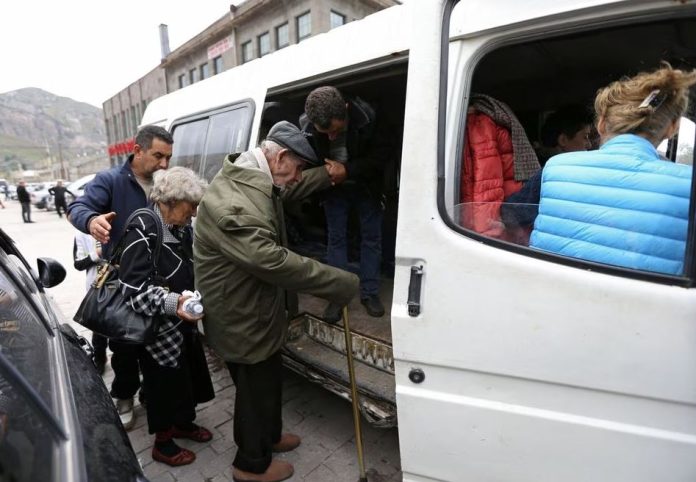
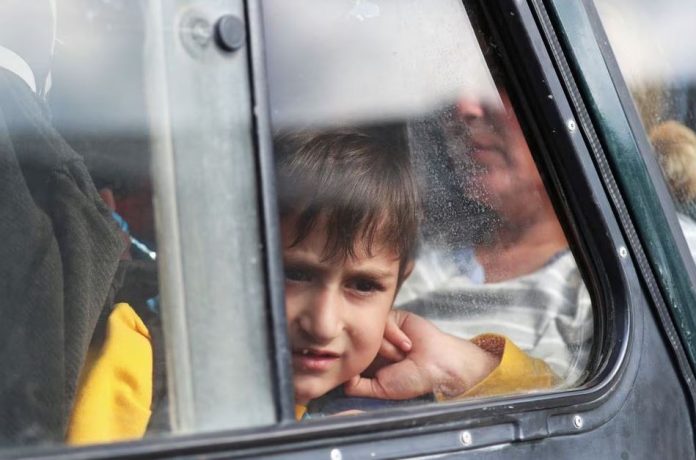
The Armenian government said that about 47,000 “forcibly displaced” people have moved from the long-troubled region to Armenia.

Azerbaijan launched a military offensive on September 19. A day later, separatist authorities said they were forced to lay down their arms and agreed to a Russia-brokered ceasefire.

Nagorno-Karabakh’s ethnic Armenians announced at least 200 people died in the fighting, including 10 civilians. Azerbaijan’s Ministry of Defence released on Wednesday a list with the names of more than 150 Azerbaijani servicemen who it said died in the military operation.

“It shows the scale of the operation that was carried out,” said Al Jazeera’s Osama Bin Javaid, reporting from Shusha, known as Shushi to Armenians, in Karabakh.

“We spoke with some people in the Azerbaijani government who said that the advance weapons they saw, and their number, came as a surprise to them as they thought that a disarmament process had already begun in 2020, but it was not the case.

“They [Azerbaijani officials] say it was important to carry out this operation to make sure that Azerbaijani soil is free of any Armenian serviceman, military personnel or weapon that can be used against Azerbaijan,” Bin Javaid added.

While Azeri President Ilham Aliyev promised to guarantee the rights and security of ethnic Armenians, decades of distrust, wars, mutual hatred and violence have left many residents of Nagorno-Karabakh sceptical over the possibility of the region’s peaceful reintegration into Azerbaijani territory.

In recent days, long queues of cars have formed on the road linking the region to Armenia.

Adding to a sense of uncertainty and fear, an explosion at a petrol station near the region’s capital, Stepanakert, where people were queueing to fuel their cars before leaving for Armenia, killed at least 68 people on Monday night, according to Nagorno-Karabakh’s human rights ombudsman Gegham Stepanyan. Another 290 people were wounded, and 105 were considered missing as of Tuesday evening, he said.

Patients are receiving treatment while the process of evacuating the injured continues, the ministry said. But a nearly 10-month blockade imposed by Azerbaijan on the enclave has made medical assistance efforts more difficult due to a long-running shortage of basic goods, from bread to medicine. In December last year, Baku blocked the Lachin corridor, the only road connecting the Karabakh region to Armenia.

Visiting Kornidzor, a town on the Armenian border, USAID’s chief Samantha Power announced more than $11.5m in humanitarian assistance “to address displacement from Nagorno-Karabakh”.

The separatist enclave is internationally recognised as part of Azerbaijan, including by Armenia, but has been populated by a majority of ethnic Armenians who have sought to unify with Yerevan following the collapse of the Soviet Union.

After Azerbaijan and Armenia announced independence in the nineties, Nagorno-Karabakh was at the centre of two wars. Armenians had full control of the territory, and several districts surrounding it in 1994. But Azerbaijan regained control of much of the lost territory in 2020. Both wars caused tens of thousands of civilian casualties, and tens of thousands of internally displaced people and refugees on both sides.

Questions loom now on what will happen in the enclave as two rounds of negotiations on the “reintegration” of Nagorno-Karabakh and its ethnic Armenian population have led to no concrete results.

Iranian minister: Illegal migrants to be extradited

Afghan migrants wrestling tournament Iran

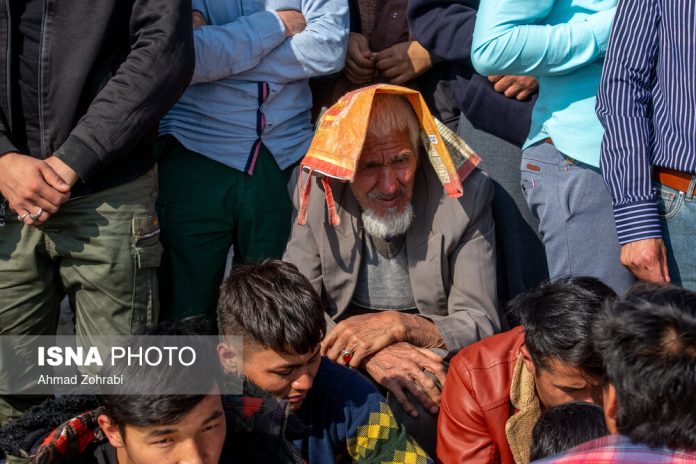
Iranian Interior Minister Ahmad Vahid told reporters on Wednesday that dealing with the issue of migrants and refugees is a priority for the authorities.

Vahidi, however, rejected the statistics published in Iranian media on the number of Afghan refugee population in the country, saying the number of refugees from Afghanistan is less than five million.

Iranians say the influx of refugees after the takeover of the Taliban in neighboring Afghanistan is posing a security challenge for Iran.
They also complain that the refugees are straining the country’s shrinking resources amid crippling Western sanctions.

In recent months, Iranian newspapers have warned of the security repercussions of the growing number of Afghan nationals entering the country, as there are concerns about radicalization among Afghan refugees.

Vahidi also dismissed reports by the Israeli media that a tremor felt on Monday 35km from Iran’s western Ilam Province, bordering Iraq, was caused by a missile attack on an Iranian military base, saying it was caused by an earthquake.

Egypt elections: Dozens of campaign volunteers of Sisi rival captured

Egypt Sisi Election

According to the Egyptian Initiative for Personal Rights (EIPR), the volunteers include four lawyers who joined Tantawi’s presidential campaign in three different governorates.

The four lawers have been identified as Sayed Mohamed Hussein Khadr, Mohamed Ibrahim Mohamed Sayed, Mohamed Ali Abdel Qader Ebada, and Abdel Galil Mahmoud Sherbini Ibrahim.

EIPR pointed out that the detainees are facing charges of “joining a subversive or terrorist group, spreading false news, and misusing social media”.

The organisation added that seven of the detainees were still being held in detention as of yesterday despite the fact that the State Security Prosecution issued a decision on 20 September to release them on bail of five thousand pounds each which their families and lawyers paid last week.

EIPR called on the Public Prosecutor to intervene immediately to ensure the implementation of the decisions issued by his office.

“EIPR lawyers who attended the sessions of interrogation and renewal of detention confirmed that most of the detainees were arrested or summoned to National Security offices in their governorates and interrogated simply for filling out volunteer forms in Tantawi’s presidential campaign, while others just liked the campaign’s Facebook page,” the organisation said in a statement.

“EIPR once again held the National Election Authority and the Public Prosecutor’s office responsible for this security crackdown that violates the constitution and the law,” it added.

Tantawi has previously reported that security forces have arrested some of his associates and relatives and prevented him from holding election-related events.

Earlier this month, a report by Citizen Lab showed that Tantawi was hacked by European commercial spyware several times after he announced his interest in running for the presidency.

A political adviser on Tantawi’s campaign, Ahmed Abdeen, told Middle East Eye that the former lawmaker would push forward with his candidacy despite the hacking.

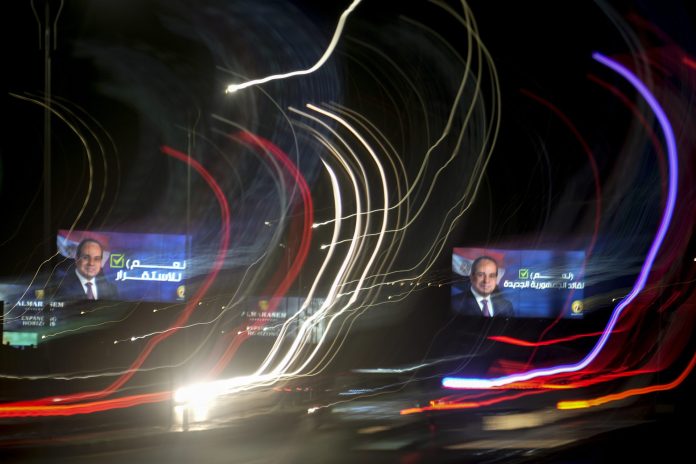
Egypt’s elections authority on Monday announced the timeline for the presidential elections, which will take place on 10 December amid a crackdown on government critics and opposition leaders expected to run against Sisi, including liberal political activist Hisham Kassem.

An estimated 65,000 political prisoners have been languishing in jails since Sisi came to power in 2014, a year after leading a coup that toppled Egypt’s first democratically elected president, Mohamed Morsi.

Sisi won a second term in the 2018 election in a landslide victory, with 97 percent of the vote, against one candidate, himself a supporter of Sisi, after all serious opposition hopefuls had either been arrested or pulled out, citing intimidation.

Constitutional amendments in 2019 paved the way for the 68-year-old former army general to stand for an additional two terms, as well as extending the duration of presidential terms from four years to six.

Israeli tourism minister arrives in Saudi Arabia in first public visit

Israel Tourism Minister Haim Katz

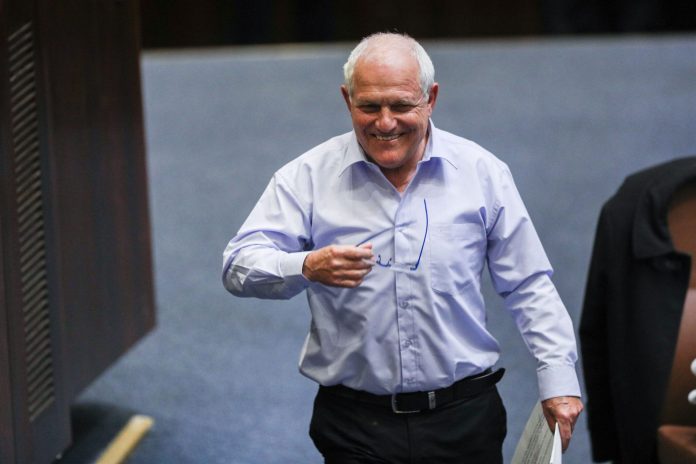
Haim Katz’s two-day visit to Riyadh comes as Saudi Arabia is pursuing a possible United States-brokered deal that would forge formal bilateral relations with Israel. Katz is leading a delegation as part of a UN World Tourism Organization event.

“Tourism is a bridge between nations,” Katz said, according to a statement from his office.

“Cooperation in the field of tourism has the potential to bring hearts together, and economic progress,” he continued, adding, “I will work to advance cooperation, tourism and the foreign relations of Israel.”

The Saudi government did not immediately confirm the visit.

Washington has urged its Middle East allies Israel and Saudi Arabia to normalise diplomatic relations following similar deals involving the United Arab Emirates, Bahrain and Morocco.

The Palestinians have labelled those United States-brokered agreements a betrayal of their plight and quest for statehood.

On Tuesday, Katz reached Riyadh leading a delegation to attend the UN event, the minister’s office said.

“I will act to create cooperation to advance tourism and Israel’s foreign relations,” Katz stated.

The Saudi crown prince and country’s de facto ruler, Mohammed bin Salman, last week told US network Fox that the kingdom was getting “closer” to a deal with Israel but insisted that the Palestinian cause remains “very important” for Riyadh.

In recent months, Israel has already sent delegations to Saudi Arabia to participate in sports and other events, including a meeting of the United Nations Educational, Scientific and Cultural Organization (UNESCO).

Also on Tuesday, Saudi Arabia sent its first delegation in three decades to the occupied West Bank to reassure Palestinians that it will defend their cause even as it forges closer ties with Israel.

“The Palestinian matter is a fundamental pillar,” Naif bin Bandar Al Sudairi, who headed the Saudi delegation and is the new ambassador to the Palestinians, said after meeting top Palestinian diplomat Riyad al-Maliki in Ramallah for talks and to present his credentials.

“And it’s certain that the Arab [Peace] Initiative, which was presented by the kingdom in 2002, is a cornerstone of any upcoming deal.”

The 2002 initiative proposed Arab relations with Israel in exchange for its withdrawal from the West Bank, east Jerusalem, Gaza and the Golan Heights, and a just resolution for the Palestinians.

Al Sudairi’s delegation, which crossed overland from Jordan, was the first from Saudi Arabia to visit the West Bank since the 1993 Oslo Accords. The Accords were meant to lead to an independent Palestinian state, but years of stalled negotiations and deadly violence have left any peaceful resolution a distant dream.

Palestinian leader Mahmoud Abbas, 87, last week again stressed strong reservations about Arab countries building ties with Israel.

“Those who think that peace can prevail in the Middle East without the Palestinian people enjoying their full, legitimate national rights would be mistaken,” Abbas told the UN General Assembly in New York.

When asked whether there will be a Saudi embassy in Jerusalem, Al Sudairi recalled that there used to be one in the occupied East Jerusalem district of Sheikh Jarrah, and said that “hopefully there will be an embassy there” again.

Meanwhile, at a ceremony to mark the 1973 Arab-Israeli war, Israeli Prime Minister Benjamin Netanyahu stated “many states in the Middle East want peace with Israel”.

Netanyahu’s hard-right government has been expanding illegal Israeli settlements in the occupied West Bank.

More than 200 Palestinians have been killed by Israeli fire since the start of this year, according to the health ministry. At least 35 Israelis have also been killed in Palestinian attacks during the same period.

Azerbaijan says ready to organize UN mission to Karabakh

Nagorno-Karabakh

“A phone call of Ilham Aliyev and Antony Blinken took place on September 26. It was stressed that the Azerbaijani side is ready to organize a visit of UN resident coordinator accredited in the country to Azerbaijan’s Karabakh district,” the press service said.

The president added that an effort is under way to defend the rights of the region’s Armenian population in accordance with Azerbaijan’s legislation and international commitments.

On September 19, tensions flared up again in Nagorno-Karabakh. Baku announced it was launching what it described as “local anti-terrorist measures” and demanded the withdrawal of Armenian troops from the region. Yerevan, in turn, said there were no Armenian forces in Karabakh, calling what was happening “an act of large-scale aggression.” Russia has called on the parties to the conflict to stop the bloodshed, end hostilities, prevent civilian casualties, and go back to trying to settle the Karabakh issue diplomatically. On September 20, an agreement was reached to cease hostilities, and the next day representatives of Baku and the Karabakh Armenian population met in the Azerbaijani town of Yevlakh “to discuss reintegration issues.”

Some Karabakh residents began to leave for Armenian territory on September 24. A refugee center opened in the city of Goris not far from the border. A total of 20,000 refugees have already arrived there.

Blinken has emphasized the need to provide security guarantees and protect the rights of the residents of Nagorno-Karabakh, the US Department of State announced.

Department Spokesperson Matthew Miller said in a statement that Blinken emphasized “the need for Azerbaijan to refrain from further hostilities in Nagorno-Karabakh and provide unhindered humanitarian access.”

“He called on President Aliyev to provide assurances to the residents of Nagorno-Karabakh that they can live secure in their homes and that their rights will be protected,” the statement read.

“The Secretary urged President Aliyev to commit to broad amnesty and allow an international observer mission into Nagorno-Karabakh, and noted the President’s public commitments to help build a future for all those in Nagorno-Karabakh based on peace, mutual understanding, and mutual respect,” it added.